
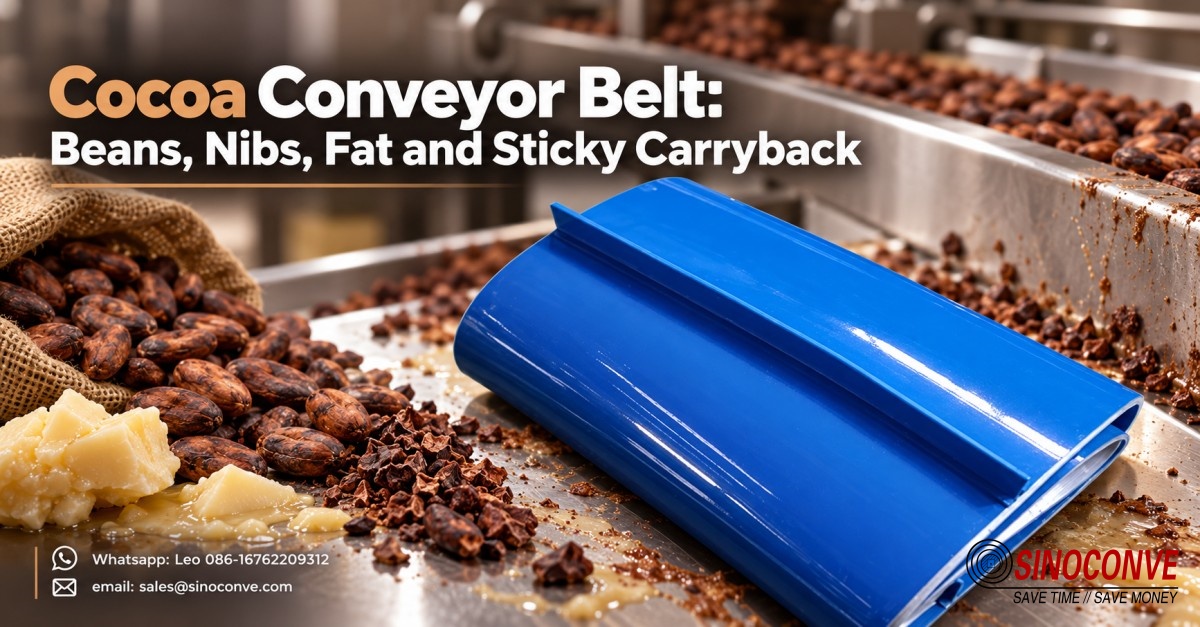
The scraper leaves a nearly bare belt at the head. Down at the return, one roller still wears a brown ring. Someone needs to trace how that ring forms during a normal run. Before selecting a replacement, write “whole bean,” “warm roasted bean,” or “nib” beside this conveyor number. The cleaner and cover choice follows the actual material.

01Look Under the Belt After the Nib Run
At intake, a length of bag string can travel with the beans. Past roasting, broken pieces expose fat that can cling to the next belt. The two positions may share a width on a drawing and still need different surfaces. Show both residues to the crew who has to clean them.
A Wipe at the Head and the Return
With power isolated, wipe the head section, then the return near the roller. A clean first cloth and a stained second one narrow the search to carryback or a dirty roller. The conveyor carryback solutions article offers hardware ideas. For this line, remove the brown collar and watch where it first starts to rebuild.
What belongs to another duty
The malt conveyor belt page concerns wet grain and steep handling. Cocoa has a different nuisance: fat from a broken bean stays on a warm belt. General construction detail is in the food-grade conveyor belt manufacturer and PU belt guide for hygienic food lines articles. For this purchase, take a sample from the nib line rather than judging it by another crop.
02Follow the Product from the Bag Station to the Grinder
Walk from the bag station to the grinder. The intake belt catches the occasional piece of string; the short roaster-side transfer sees warmth; the winnower leaves shell dust; the last nib belt carries the exposed fat. A conveyor systems for food processing diagram should show those conditions at the actual transfer points.
| Line position | What arrives on the belt | What to examine first |
|---|---|---|
| Bag opening and intake | Whole beans with dust, string or occasional foreign material | Impact, screening and cleaning access |
| Roaster discharge | Warm beans; temperature depends on cooling arrangement | Actual product and belt-surface temperatures |
| Cracker and winnower | Broken beans, light husk and nib fines | Extraction, dust accumulation and return rollers |
| Nib transfer to grinder | Smaller pieces with more exposed fat | Release from the cover and carryback after scraping |
Intake impact may justify a tougher build. Nibs after winnowing may need a smoother surface that a cleaner can reach. The industrial conveyor belt reference is useful for the former, but the conveyor belt manufacturer needs a separate duty sheet for the latter. Put the product temperature on each sheet.
03A Cover That Looks Sound but Holds Fat
On the stopped line, one patch feels waxy while the next brushes clean. Mark both with removable tape and repeat the approved cleaning step. If the mark at the splice stays dark, inspect the step before blaming the entire compound. A rubber conveyor belt intended for intake impact may have an entirely different surface.
Do a release trial with the actual product
A sample is only useful if it resembles the belt that will arrive. Request the cover together with its intended joint from the conveyor belt supplier. Use nibs from this process at its recorded running temperature, then clean it as the shift crew would. Keep the stained sample for comparison with the delivered lot.
The scraper has a limit
Loose nibs disappear at the blade; a stripe remains in the corner of a cleat. More spring pressure scores the surface nearby. That makes the corner no easier to clean. The cleaning methods and where scrapers fail discussion helps choose a secondary brush or access change after the actual residue has been located.
04The Husk Finds Its Way Back onto the Return Strand
The winnower throws out shell, but some fines follow the transfer airflow. They settle where fat gives them a place to stick. Look around the hood opening and the return roller rather than at the clean centre of the carrying run. A dust-resistant conveyor belt supply grade by itself cannot remove the leak or the deposit.
One return idler has a dark collar near its left bearing. Remove the collar and watch the next run: if tracking improves, the deposit was doing part of the steering. The conveyor idler roller guide covers replacement choices. Check the adjacent drive cover as well; the transmission belt manufacturer components should not be buried in the same shell fines.
05What Remains After a Changeover Clean
A change from one cocoa origin to another may be governed by the plant’s own flavour or allergen procedure. Hold a light under the joint and cleat roots after cleaning. These corners can retain a little paste even when the broad cover wipes clean. Agree with quality staff what evidence counts as a released line.
A practical check after dry cleaning
Mark the head, tail and joint and wipe each with the approved cloth. If the same corner stains it after every clean, photograph that corner and open up the access. Another ten minutes of general brushing will do little for a pocket nobody can reach. Record the result under the plant’s cocoa and allergen changeover procedure.
06Specify the Cover by Release and Cleaning Method
A cool bean transfer may run well on the proposed PVC; the warm nib conveyor is a different trial. Compare PVC and PU samples using the actual material and the cleaning method, not the names alone. The food-grade PVC belt buyer check helps confirm what the supplier’s declaration covers.
The edge and the joint still touch product
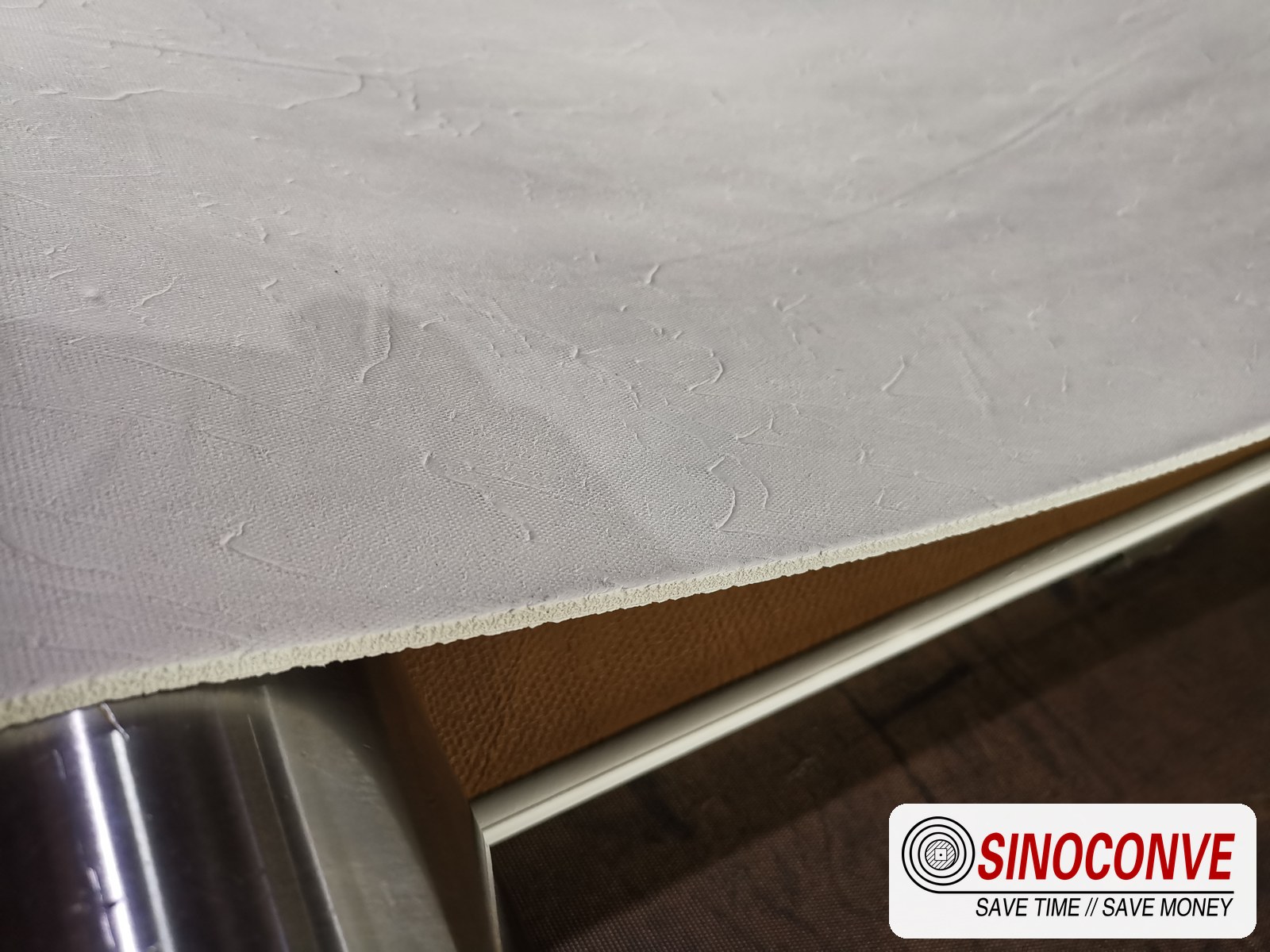
Trace a finger along the stopped belt edge and around the finished joint. A cut edge or raised step offers husk a place to stay. Ask for the edge and joint details on the drawing, even for wholesale conveyor belts. The rubber conveyor belt cover grades page can explain the grade name; it will not tell the crew whether this particular joint is cleanable.
07Food-Contact Evidence for the Actual Belt
The paperwork says the cover sheet is approved. On the machine, the product can also touch a joined edge and perhaps a glued cleat. Have the conveyor belt factory identify those materials in the declaration or provide separate evidence. File the as-built sketch with it; a later patch should be checked against that record.
Stand at the landing point with the plant’s temperature record. The beans may have cooled considerably between the roaster and this belt, or the chute may be hotter than expected. That reading, together with the cleaning method, goes into the enquiry. A heat-resistant conveyor belt range does not by itself answer the food-contact question; get the declaration for the exact grade through the conveyor belt distributor.
08Lift Beans Without Creating More Broken Product
Before specifying higher cleats, count the beans damaged at the top chute and those that roll back at a stop. The present angle might work with a gentler transfer. If a cleat is necessary, run the cleanability trial at its root, where nib paste can sit after the broad cover looks clean. The cleated belt selection for bulk handling guide gives geometry ideas, not a substitute for that trial.
The transition is where trouble starts
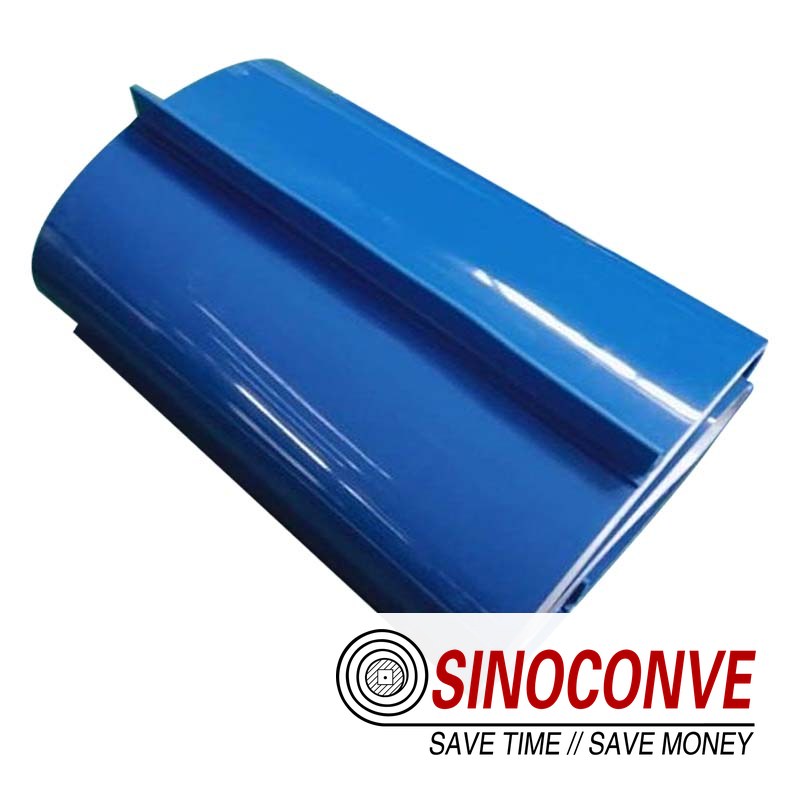
A few beans sit against the bottom cleat after the line stops. At the head, another handful falls back from the chute lip. Count damaged beans before raising speed or cleat height. A cleaner also needs a way into the root of each cleat; the trial should include the return path, not only the loaded climb.
09Dry Cleaning First, Water Only With a Plan
Vacuum loose husk before working on the greasy film. Water applied too early can move fines into the edge or joint and leave a paste under the frame. A wet-cleanable belt still needs drainage, drying time and a procedure for the rollers beneath it. The conveyor belt spray cleaning article applies only where the complete assembly and the plant’s process allow a wet step.
Open the skirt access after the first changeover clean. Is the brown film gone, or has it moved onto a return roller? If the prescribed dry step cannot meet the plant’s limit, reconsider the cleaner, cover or separation of products. Record the failed place before the crew washes it a second time.
10Check Tracking When the Line Is Warm
Cold alignment is a starting measurement. After the line reaches its usual operating condition, observe the belt at the head, tail and return rollers, with and without product. A drift appearing only after a warm-up deserves a check of the loading point, roller deposits and take-up position. The EP conveyor belt tracking guide describes the wider alignment checks.
| Observed symptom | Check on the line | What the finding suggests |
|---|---|---|
| Tracks empty; moves when nibs arrive | Product landing point and skirt contact | Side loading or a material deposit |
| Wanders after warm-up | Take-up position, pulley and roller condition | A changing running condition; record before adjustment |
| One edge polishes or frays | Guard, skirt and frame clearance | Repeated contact at a fixed location |
| Return roller has a brown sleeve | Carryback after cleaner and roller shell | Clean the deposit and revisit release |
By the time the nib line is warm, the belt sits closer to the left skirt. Find the first roller with a lopsided cocoa collar and record where the chute lands. Then compare take-up positions from cold start and steady run. The V-belt manufacturer article addresses a related drive trade, but this conveyor’s tracking record decides the adjustment.
11Acceptance Checks Before the First Beans Run
The receiving inspection should match the process map, not just the purchase order title. On the roaster-side conveyor, check the declared temperature range and measured belt-contact condition. On the nib line, check the cover sample, edge finish and joint. The splice points to verify before ordering checklist supplies questions to put to the maker before the outage.
| Item at acceptance | Record or trial | Reason to pause |
|---|---|---|
| Delivered belt and joint | Grade, width, cover, edge and joint documentation | The installed build differs from the approved sample |
| Roaster-side temperature | Product and belt surface at operating rate | Actual condition exceeds the declared range |
| Nib release and cleaning | Short product run followed by approved wipe | Greasy film remains at a joint or return roller |
| Loaded tracking | Head, tail and return positions after warm-up | Edge contacts a skirt or deposits build on a roller |
A food packaging conveyor further downstream can have a different cleaning and product-contact duty. State where this cocoa-belt acceptance ends. Keep the wipe records and the approved sample with the machine file; those are more useful during a later complaint than a generic “food grade” label.

12Questions from the Cocoa Line
Would PVC release these nibs after cleaning?
It may suit a cool, light transfer. Try the actual nibs at running temperature and check release after the planned cleaning step. A food-contact declaration does not promise low carryback.
Why is the return sticky after scraping?
The blade may leave a thin film, especially at a joint or textured patch. Check cleaner contact, cover condition and deposits on return rollers before adding pressure.
How much husk on the frame is acceptable?
Use the plant’s hygiene and dust-control limits. A growing layer around rollers or hot equipment calls for removal and a check of extraction and sealing.
Can cocoa butter affect the cover?
Some compounds may change with repeated fat contact. Confirm compatibility for the proposed grade and inspect a working sample; resistance to fat and easy product release are separate questions.
Does belt colour decide the specification?
Colour may improve visual contrast during inspection. Choose the material and documented food-contact construction first; colour does not establish compatibility.
What usually fails first after roasting?
There is no fixed order. Look for a greasy return, trapped residue at the joint, edge rub and heat-related change. The first visible fault on your line should guide the repair.
Should origins be separated with a wet wash?
Use the plant’s validated changeover method. Dry removal comes first where water would trap husk or fat; wet cleaning requires a suitable belt, drainage and drying.
Where should the belt specification change?
Review it at the roaster discharge and again after winnowing. The material’s temperature, exposed fat and particle size can change enough to justify another cover or cleaner.
Related Products You May Need
- Food-grade PVC belt for cooler bean and nib transfers
- Rubber belt for intake and shell takeaway duty
- Heat-resistant belt for roaster discharge conveyors
- Full product catalog for process plant belts