

Blog
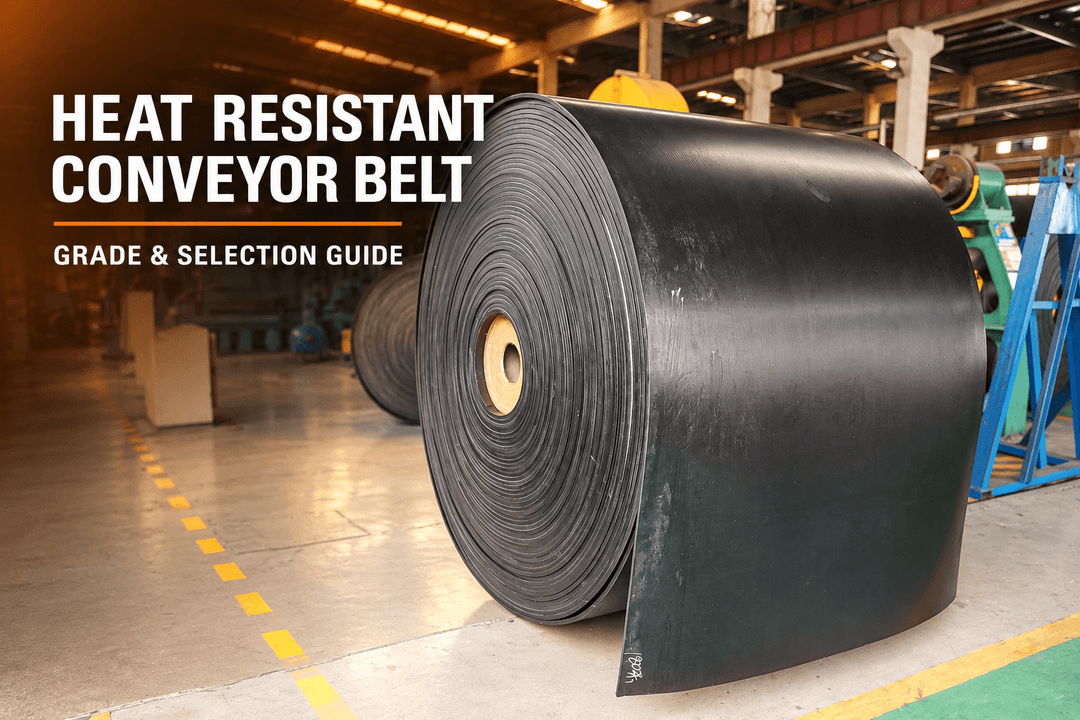
Heat Resistant Conveyor Belt Ultimate Guide (2026): Types, Grades and How to Choose
A heat resistant conveyor belt is not one product — it is a family of constructions chosen by peak material temperature, not by the average on the drawing. This guide walks through the grade table used in practice (T1/T2/T3 alongside HR120–HR200 cover compounds), what each grade actually survives in service, and how to read a supplier's temperature claim before you accept it. You will find a selection matrix that maps material temperature, peak excursions and material characteristics to a recommended cover compound and carcass, plus notes on cement clinker, sinter, foundry sand and fertiliser duties where heat, oil and chemical attack arrive together. We also cover carcass construction, cover thickness, edge protection, total cost of ownership, and the mistakes that shorten belt life in high-temperature service. As a conveyor belt manufacturer we explain what we ask before quoting, how MOQ and lead time work, and how to write a specification that gets comparable offers.
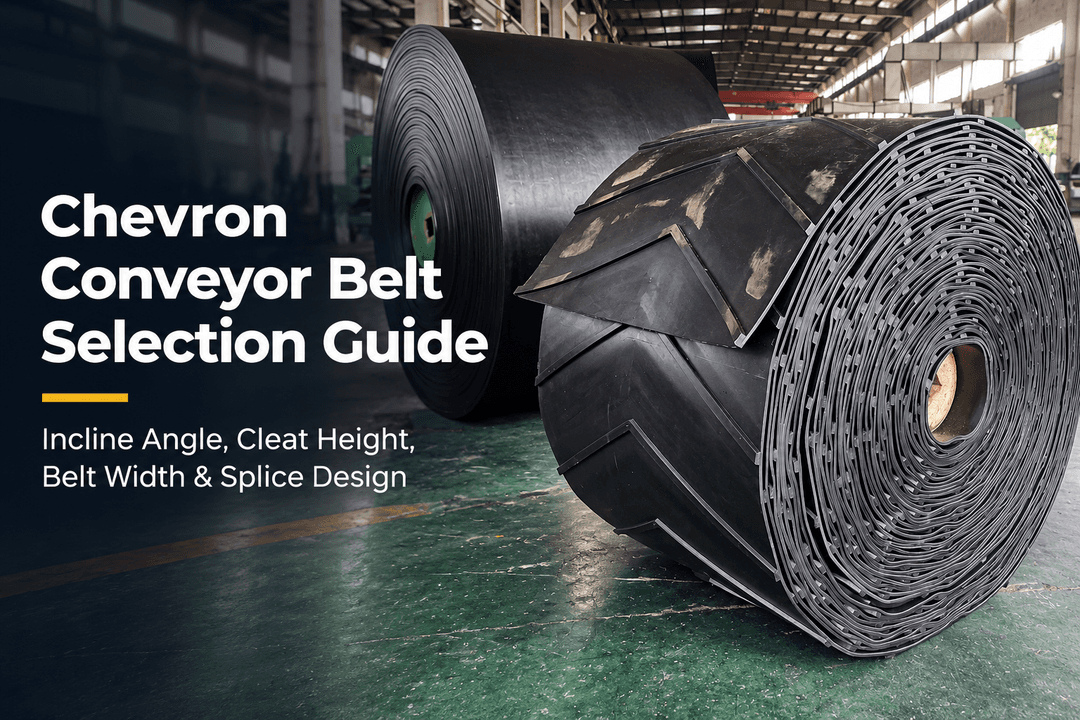
Chevron Conveyor Belt Ultimate Guide (2026): Types, Grades and How to Choose
Chevron conveyor belts only pay off when the incline genuinely exceeds what a flat belt can hold — and choosing the pattern is where most projects go wrong. This guide sets out the decision in order: confirm the real incline after the chute and skirt modifications, then match cleat height and pattern spacing to material size and angle, then check width, carcass and cover grade. It includes a pattern table covering C5, C10 and C15 cleats with cleat width, pitch and height, an incline-to-pattern matrix, and a comparison of chevron, T-cleat and herringbone profiles. We also cover chevron versus corrugated sidewall belts, port and bulk terminal duties, how to splice a profiled belt so the cleats realign, carryback and spillage control, and the selection checklist we use before quoting. Written by a conveyor belt manufacturer that supplies profiled belts into quarry, port and aggregate operations, with MOQ and lead time guidance.
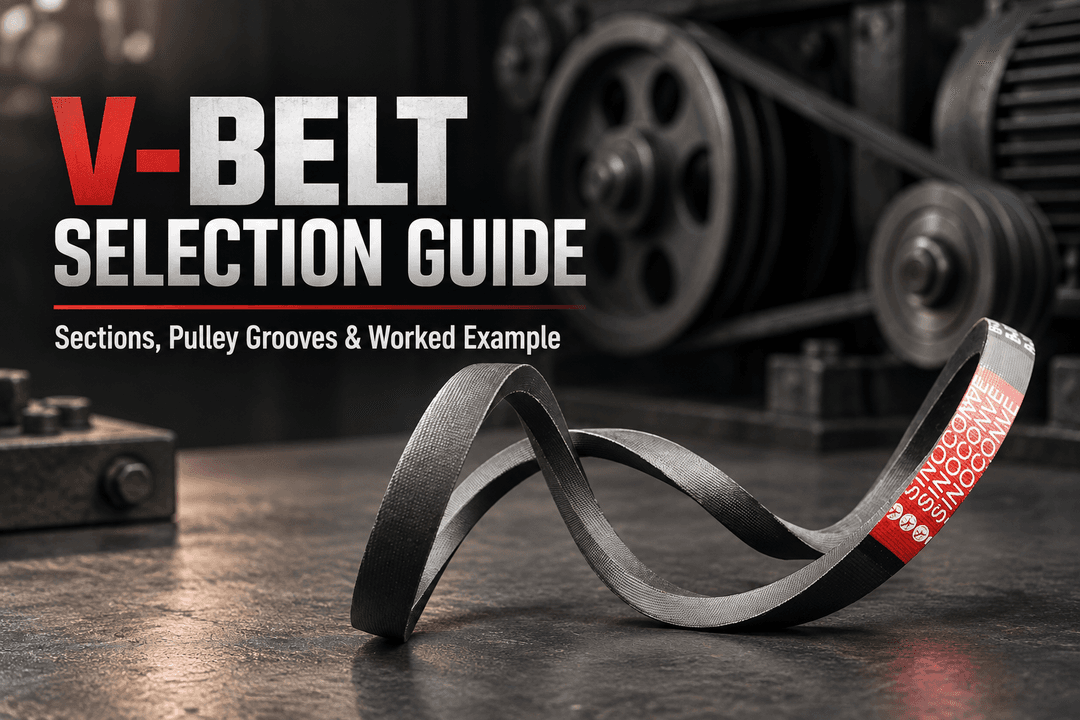
V-belt Ultimate Guide (2026): Profiles, Sizes and How to Choose
Most V-belt failures start with the wrong section, not a bad belt. This guide explains how a V-belt actually transmits torque through the pulley groove, then gives the section table you need — A/B/C/D/E alongside SPZ, SPA, SPB and SPC, with top width, pitch width and height — and why the belt section has to match the groove it runs in. It includes a full worked selection example: design power from a 30 kW motor at 1,470 rpm with a 1.5 service factor, section choice, datum length, number of belts and belt speed check. We also cover what to do when grooves are worn, when to specify cogged, wrapped or raw-edge belts, the difference between industrial and agricultural duty, and where multi-ribbed PK belts take over. A transmission belt manufacturer's view on installation, tensioning, maintenance intervals and the failure modes we see in the field, plus MOQ, lead time and how to get comparable quotations.
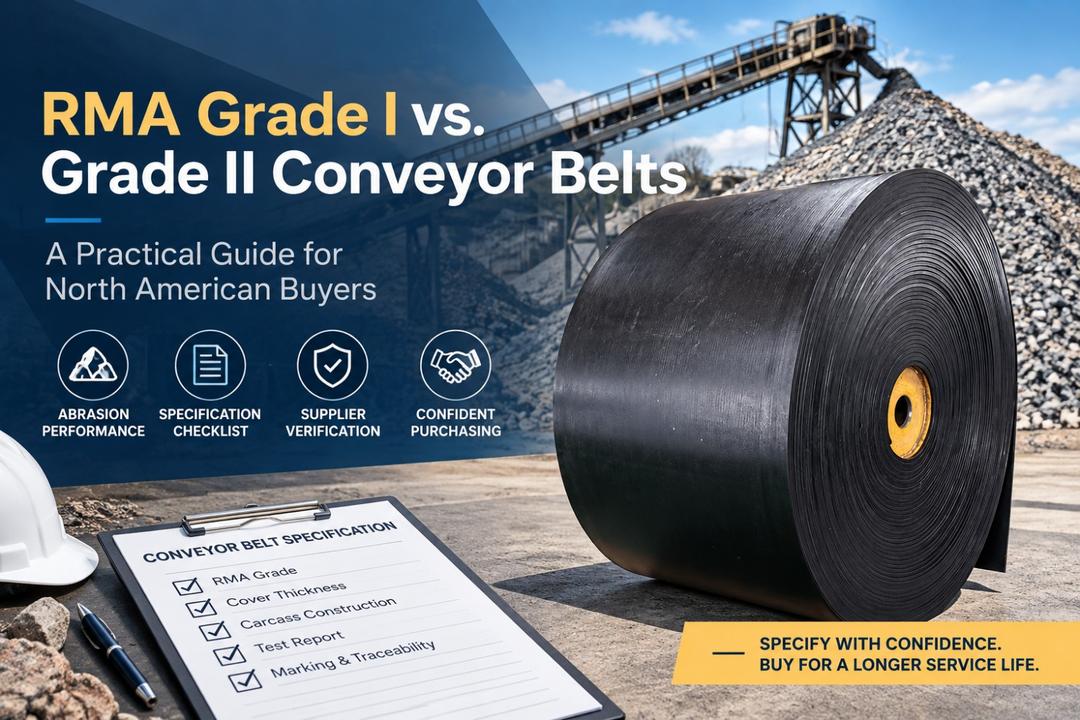
RMA Conveyor Belt Supplier for North American Buyers: Grade I vs Grade II Procurement Guide
North American specifications often name RMA grades, and that is exactly why the claim needs checking. This procurement guide for distributors, OEMs and plant engineers explains what RMA Grade I and Grade II covers actually describe, how the two grades differ on real duties, and how to read an RMA quotation line by line — including the unit discipline that causes most avoidable shortfalls. It sets out the RFQ data pack that produces comparable offers, the factory capabilities that make a grade claim credible, how to read abrasion test evidence, and a worked example of two conveyors where the correct grade decision is not the same. Sections on compliance failures, commercial terms, supplier qualification questions, record-keeping and a twelve-point checklist complete a practical framework for buying service life instead of the lowest price per metre.
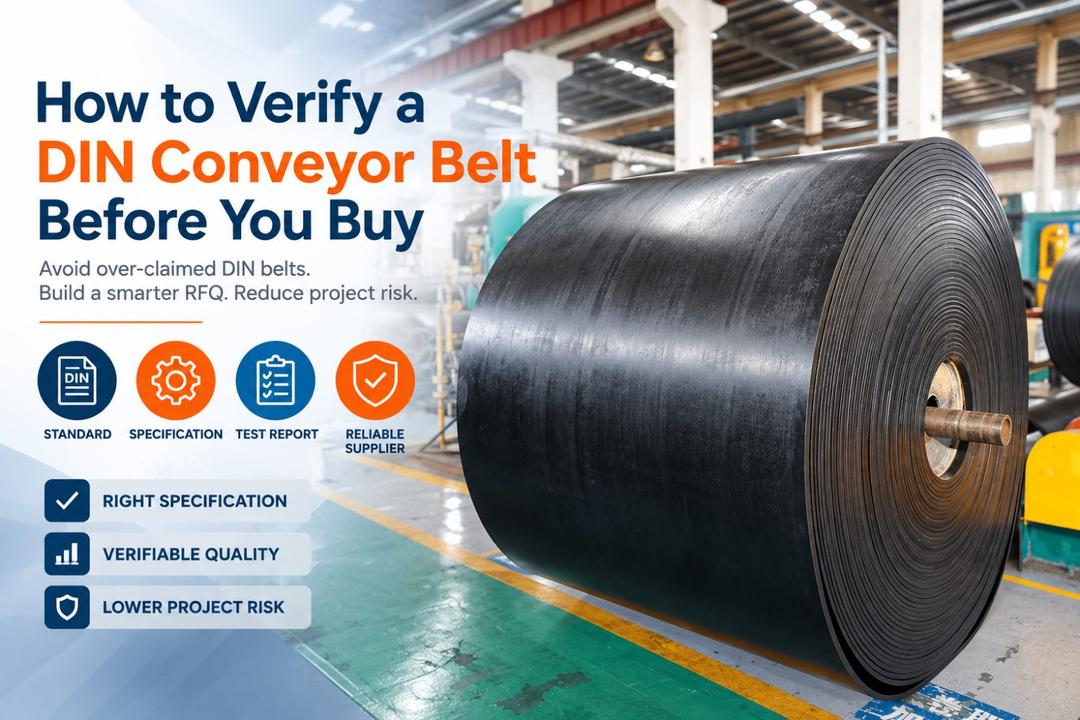
DIN Conveyor Belt Manufacturer: How Buyers Verify DIN 22102 Grade Claims
"DIN belt" is one of the most over-claimed phrases in the conveyor belt trade. This guide shows EU and global buyers how to verify a DIN 22102 grade claim before the container is loaded: what the standard actually specifies, how to read an offer line by line, which RFQ data makes verification possible, what a real manufacturer can show about compounding, building, curing and testing, and how to read a test report so that it applies to your belt rather than to a catalogue. It covers cover grades and duty matching, marking and traceability, nine verification failures that appear in real tenders, commercial clauses that support inspection, and a twelve-point checklist for reviewing any quotation. Buyers who specify first, verify second and buy third spend less time arguing about belts — and suppliers quickly learn which conversation they are in.
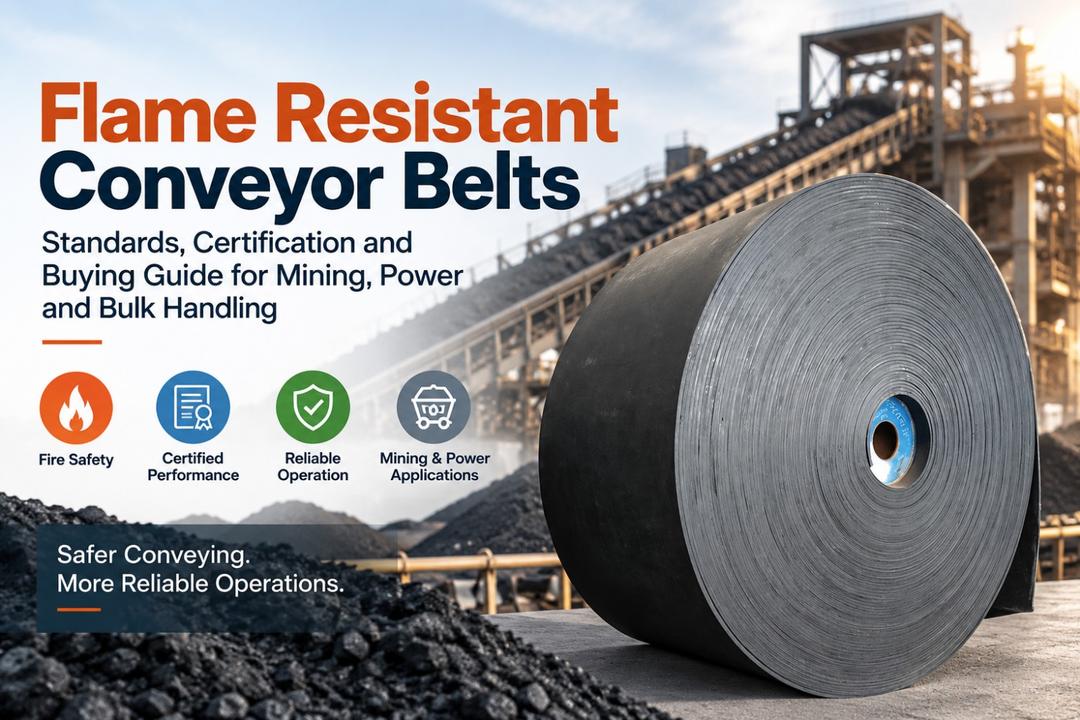
Flame Resistant Conveyor Belt Manufacturer: Standards, Test Evidence and RFQ Requirements
Flame resistant conveyor belts are bought for safety, and that makes the documentation as important as the rubber. This guide is written for mining and power buyers and their engineering contractors: it explains what flame resistance actually requires, which standards and approvals apply in which markets, and how to read a flame-resistant offer so that the certificate matches the construction you ordered. It covers the RFQ data that lets a manufacturer propose a construction satisfying both the fire requirement and the duty, the proof of capability a genuine factory can provide, the four documents that carry the weight at handover, anti-static requirements in dust atmospheres, splicing and installation practice, and nine compliance failures that appear in audits. A twelve-point checklist and a regulatory section covering regulators, insurers and project files close the guide.
Explore more
We are committed to providing you with better products and services. Welcome to browse more content for details