

Take a strip from the worn belt before ordering its replacement. Is the centre cover thin, or has the trouble started at a wet edge or a joint? Those findings lead to different orders. On a copper route, the belt below the crusher sees falling rock; the one leaving a filter sees water and fine concentrate; a berth run has weather and changing transfer geometry to contend with. The same width printed on three drawings does not make them the same duty.

01Where Failure Begins on a Copper Route
A gauge across the carrying face might show plenty of rubber. Turn the belt over at the filter exit and the answer may change: damp fabric at the edge, a joint shoulder that will lift with a fingernail, and a narrow line where draining cake has lain against the surface. None of that looks like the broad, even wear left by sliding rock. Note the exact location before a cleaner or repair crew removes the evidence.
What a cover gauge misses
An old belt on the floor is oddly anonymous. Which end was below the filter? Which edge faced the aisle? A chalk arrow and a tag tied on during removal preserve those answers. Later, when a soft patch is cut open, the fitter can place it back on the conveyor drawing. The cover gauge reading and a close photograph of the joint then have some context.
Water, chemistry and the drop point
Imagine a liner plate that has worn through but has not yet been reported. One lump falls awkwardly, makes a crater, and the belt runs on. Later somebody finds damp fabric at that crater and calls it a water failure. Perhaps water did finish the job. The missing liner still belongs in the repair order, so the next belt does not receive the same blow.
This table is the sort of thing I take to the machine with a pencil. A photograph next to the entry “slips after washdown” can be more useful than a page of general belt ratings.
| Reported sign | Check at the machine | First discussion |
|---|---|---|
| Even cover loss | Wear across load lane | Cover grade |
| Crater below chute | Drop, liner, idler support | Chute and impact bed |
| Wet, soft edge | Cut and liquid path | Edge and bond |
| Slip after washdown | Pulley film and lagging | Water path |
| Crust on returns | Scraper and first rolls | Cleaning access |
| Joint step lifts | Preparation and wet exposure | Field splice |
02Place This Belt on the Plant Drawing
The wider plant drawing is in an overview of complete lines by industry. This discussion stays with a single flight, marked by hand on that drawing. For a conveyor belt manufacturer enquiry, the useful pictures show where the load lands and what the return rolls look like after a shift. A clean product photograph tells us much less.
Which part of the operation?
The pit appears on mining and quarrying line layouts, while the route to the berth appears on port bulk material handling lines. If the question is the filter drive, that is in industrial equipment drives and plant machinery. Bagging later on would take you to logistics and warehousing transfer points. A site may need all four views, but a belt failure investigation still starts with the single flight and its loading and return path.
The nearby guides and this belt
Our mining conveying design guide is for capacity and route design. The quarry and aggregate abrasion article looks closely at dry-rock cover wear; carcass selection is a separate calculation. This page picks up at the awkward handoff between those subjects: a belt can be strong enough on paper and still fail at a wet splice or at one badly supported drop.
03Coarse Ore and the Crusher Drop
The crusher chute looks different while ore is moving. A lump can clip the skirt before it lands, which puts a gouge well away from the centreline shown on the drawing. During a stopped inspection, mark the gouged patch and measure back to the actual chute lip. The next loaded observation will show whether that is the point of contact. If it is, the liner and chute geometry need attention with the belt.
Support beneath the landing point
A thick top cover helps absorb a cut, but it needs support beneath it. A light carcass can flex into the gap between widely spaced impact rolls. At the other extreme, a construction chosen only for tensile strength may be too stiff for the existing pulley and trough. The fabric versus steel cord comparison is a useful starting point for EP versus steel cord, once the loaded tension and the real impact point are known.
A rubber conveyor belt can meet the stated tensile rating and still sit badly on this short run. There is a small drive pulley at one end and a deep trough at the loading point. Ask the installer to check the candidate construction against both, with the joint included. The crusher drive uses another kind of belt altogether; the transmission belt manufacturer needs its sheave groove information for that item.
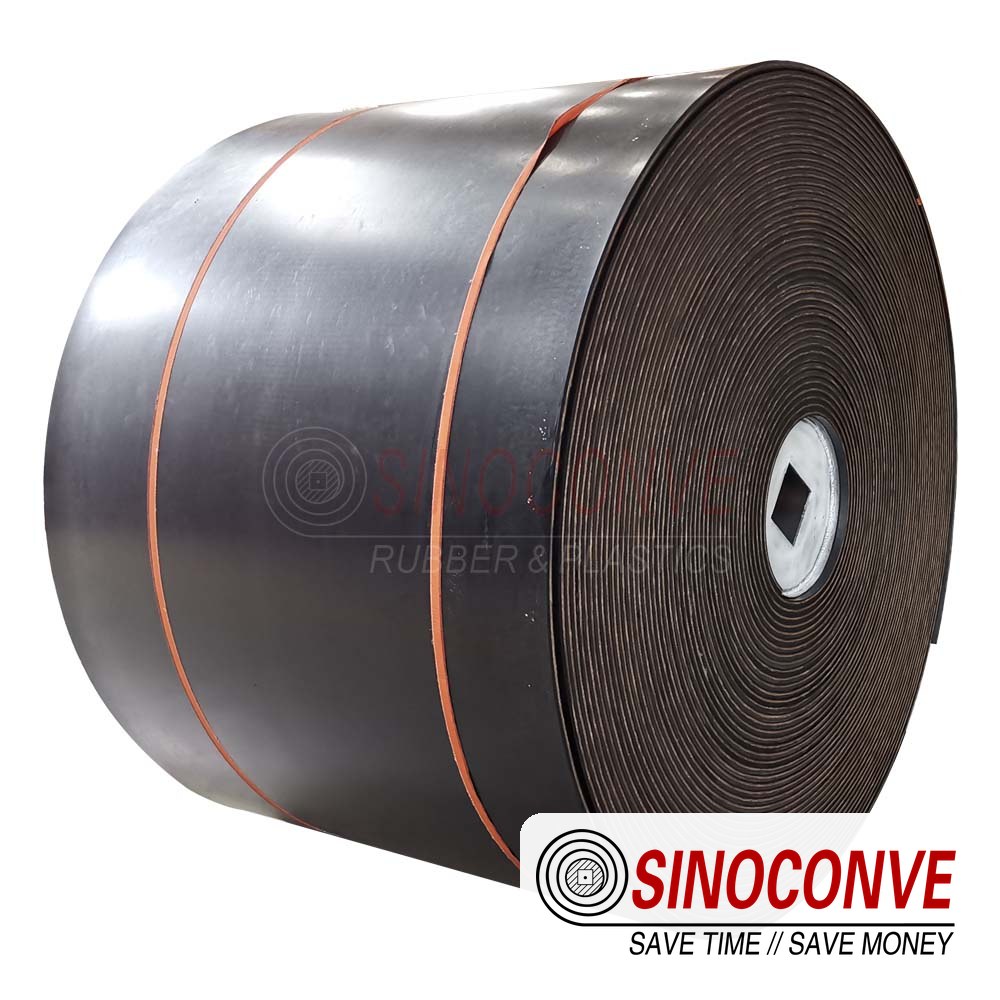
Here are the five positions I would separate on the equipment list. The short notes are prompts for measurement, not grades to order without seeing the site.
| Position | Material | Watch for | Ask about | Clean at |
|---|---|---|---|---|
| Crusher | Lumps, occasional wet rock | One hard landing | Support and cut damage | Load point |
| Concentrator feed | Crushed ore, spray water | Fines beneath skirt | Trough and scraper | First return |
| Filter discharge | Draining cake | Wet edge and splice | Filtrate and bond | Head and return |
| Reclaim | Sticky concentrate | Crusted rolls | Release and access | Tunnel rolls |
| Berth and boom | Shipping concentrate | Moving load line | Tracking and weather | Boom transfer |
04Concentrator Feed and Dirty Water
At the concentrator feed, the rock is smaller and water is everywhere. After a shift, a grey line under one skirt is a better clue than the clean centre of the belt. The stored industrial conveyor belt may have enough tensile rating but refuse to lie flat in this trough. Watch its edges with feed running; if slurry is slipping under them, check the bed, skirt and belt fit before ordering another copy.
The screen drive is close enough for its V-belts to get mixed into the conveyor spares request. Its old loop may be long from years of service and narrow from worn flanks. The V-belt manufacturer will want the sheave groove as well as the part marking before supplying a matched set. On the purchasing sheet I give the screen drive a separate line from the carrying belt.
05Wet Filter Cake and Its Liquid
Under a working filter, the material can still drip. When the press stops, the drips do not necessarily stop with it. Check the tray, the cut belt edge and the return below the discharge after the area has stood. A dark mark that appears only then is worth photographing; the daytime running view alone may miss it. The resulting picture belongs with the filtrate sample sent for the replacement enquiry.
Sample the water, not just the solids
Label the filtrate bottle with its sampling point, shift and process condition. Otherwise a laboratory sheet can be correct and still describe the wrong liquid. Beside it I want to see when the line was washed and which reagents were in use. A crust at the belt edge the following morning is another observation to record. The conveyor belt supplier can then discuss the joint and the edge against an actual cycle of wetting and drying.
Check the fabric edge and splice
There is no reason to reject EP fabric just because the circuit is wet. There is equally little reason to ignore a returned belt with damp, frayed yarn at the edge. The conveyor belt factory should show the wet-service and adhesion evidence for its actual construction. Ask who seals the field-cut edge and who prepares the joint on site. If those jobs are left for the shutdown crew to improvise, a promising laboratory result may not carry over.
06Stockyard Feed and Reclaim
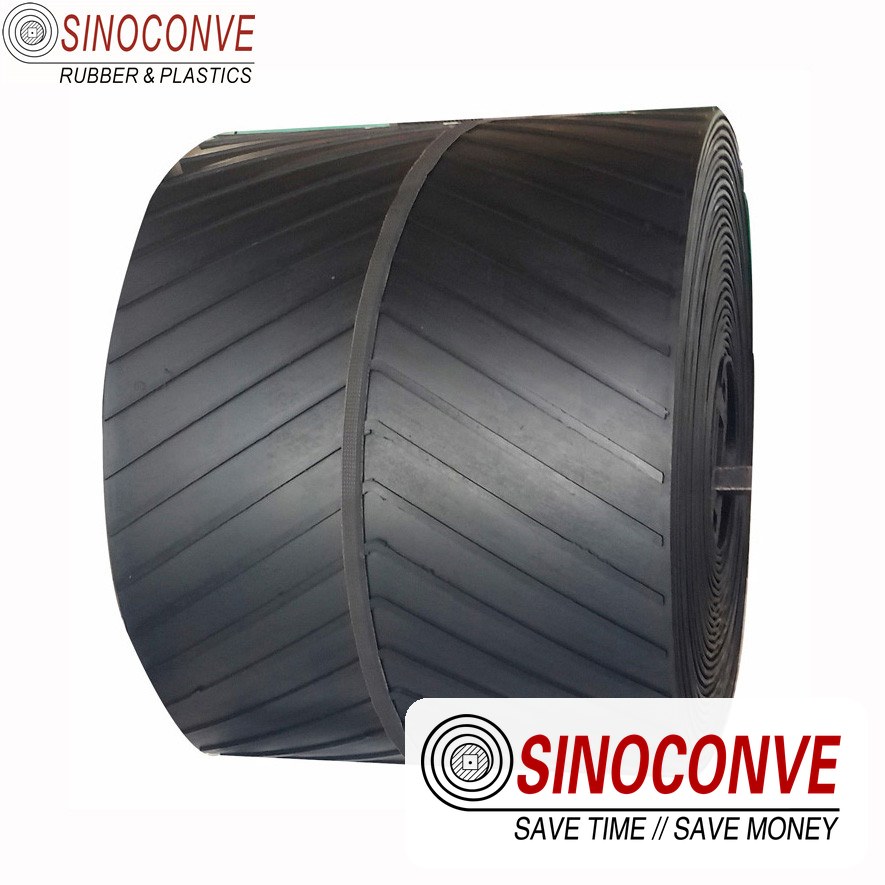
A smooth surface helps cake leave the belt, but it cannot clean an inaccessible return. In a reclaim tunnel, I look first at the roll carrying the largest grey ridge. If the belt starts wandering as that ridge grows, changing the cover alone is a costly experiment. The wholesale conveyor belts list can group spares, provided the buyer has separated this sticky tunnel duty from cleaner flights.
07Berth Run and Moving Shiploader
The berth introduces a moving transfer and weather. A shiploader boom changes position, and the load can move across the trough as it does. Spray may attack exposed hardware while the top cover still looks healthy. Our port conveyor belt selection notes discuss spillage and transfer angles; roller and pulley choices for port systems address the rolls and pulleys. For this belt, record the boom positions in which tracking changes rather than sending the supplier only a fixed elevation drawing.
08Diagnosing Wet Slip
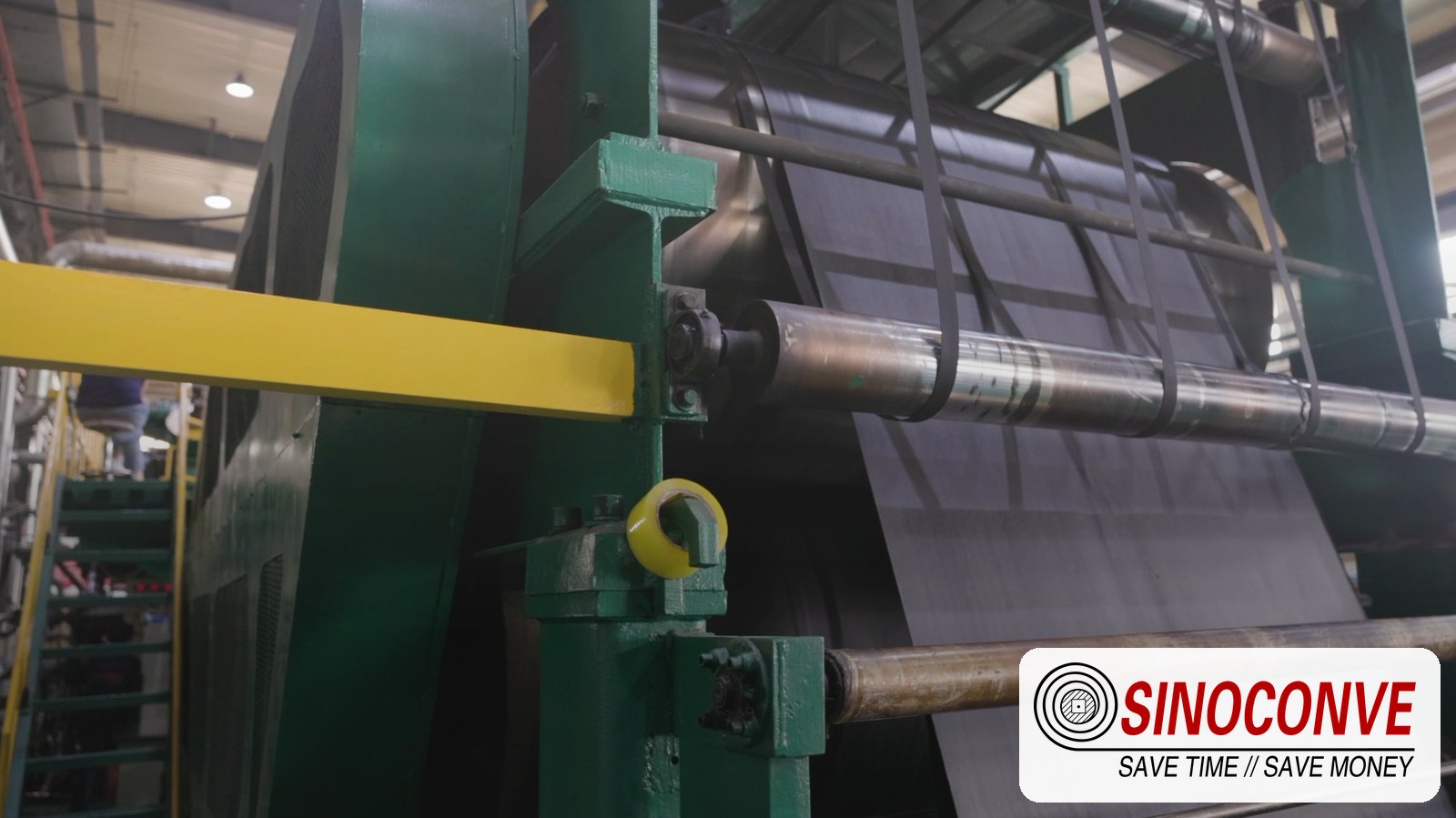
On the wet incline, I watch two things separately. The belt speed can falter at the drive while the load stays with it. Or the belt can keep pace and a smear of concentrate can move backward over the cover. The first points toward traction at the pulley. The second makes a surface profile worth discussing. A note from the operator saying simply “belt slips” cannot distinguish them.
Did the drive slip or the load roll back?
Chevron is an easy answer for a conveyor belt distributor to quote. It is less useful if the drive lagging has become glossy. Let the line run with a normal wet load and note separately what the belt and the material do. The chevron belt guidance for steep bulk handling is for the case where material genuinely slips back on a sound drive; rib roots also add cleaning work that should be priced in.
09From Filtrate Sample to Cover Choice
“Acid resistant” on a quotation needs a laboratory description behind it. The test sheet should identify its liquid and exposure time. At a plant where ore and reagent balance change, save a sample from normal running and, if available, one from an upset. A dry deposit at the edge can be examined with those samples. That gives the compound discussion a real medium instead of a broad label.
What a compatibility test should say
Have the compound supplier state the medium, temperature, exposure time and method used in a compatibility test. Compare them with the plant's filtrate rather than a generic acid label. The notes on belts in chemical and fertilizer plants show how chemical duty can change a cover choice. For the carcass question, EP versus NN comparison is background reading; the actual wet-edge and adhesion evidence still has to come from the proposed construction.
10Carryback on the Return
At the head, a portion of the cake drops and a grey trace can go around with the belt. Follow it to the first return roll. If that roll has built a ridge on one side, note whether the belt begins to move toward the frame after a shift. That is the moment to clean and adjust the arrangement, before a damaged edge becomes the next point where liquid gets in.
The cleaning methods and schedules guide and return-side belt cleaning show options for a film that a blade leaves behind. On this machine, first see whether it passes the blade or is deposited at a later transfer. A wash point must have somewhere to drain. The impact rollers in the loading zone can support the loaded belt beneath falling rock, but a misdirected chute will keep striking the wrong patch.
11Enquiry and Handover Notes
An enquiry that says only “copper ore conveyor belt” makes the supplier guess whether the machine carries rock or draining cake. On the drawing, circle each material change and the damaged section of the old run. The table below fits on an inspection sheet. Attach a close photograph of the edge and the joint; neither can be described well by a width measurement.
| Enquiry detail | Why ask? | Check on receipt |
|---|---|---|
| Material at each point | Changes duty | Run marked correctly |
| Drop and chute | Local impact | Loading support shown |
| Filtrate chemistry | Cover and joint exposure | Test medium identified |
| Washdown and standing water | Wet contact time | Splice procedure |
| Tension and take-up | Carcass and joint | Travel recorded |
| Named test methods | Comparable claims | Results traceable |
The splicing buyer's checklist belongs with the field joint drawing, before a wet shutdown begins. For acceptance, I also keep the test sheet with its method names, not just numbers copied into a quotation. If a sample fails later, the plant can at least compare the same property by the same method.

12Questions From Copper Conveyor Teams
Can a standard EP belt handle copper concentrate?
An EP carcass may be entirely workable, but “standard” says too little for wet cake. Look at the edge sealing, cover-to-ply bond and the proposed splice. Ask what the supplier has tested for prolonged wet contact. If the old belt has a soft edge and sound centre cover, that returned sample is more useful than a new catalogue photograph.
Do we need steel cord on a copper line?
Not because the material is copper. A long single flight may need steel cord after the tension and pulley calculations are done. A short crusher transfer with a hard landing asks a different question, and a fabric carcass may suit it better. Put both the mechanical duty and the field splice method on the comparison sheet.
Why does wet concentrate stick to the belt?
Try this with concentrate actually leaving the filter. The bulk may fall into the chute while a thin grey skin keeps travelling around the head. Watch where that skin goes before turning up scraper pressure. If a water spray is considered, stand under the return and decide where the runoff will collect. Moving the wet patch from belt to floor without a drain is a poor cleanout plan.
Is an acid-resistant belt really necessary?
Maybe. The answer is in the actual filtrate and the failed belt, not only the word “acid” on a process drawing. An edge that has softened or a step that lifts repeatedly calls for a compatibility review. If the belt has instead worn evenly across a dry load lane, a chemical upgrade may solve the wrong problem.
Can impact idlers replace a thicker cover?
At the damaged patch, three pieces have separate jobs. The chute aims and slows the rock. The idlers or bed hold the belt up as it lands. Cover rubber absorbs the remaining contact. If the same patch keeps getting cratered, I would stand at the transfer during a loaded shift and sketch what the stream really does.
Which joint suits a wet concentrate run?
A wet, salty belt that can remain closed through service is a good candidate for a vulcanized joint made under controlled conditions. Some movable machines are built to be opened regularly, though. If fasteners are necessary there, the plant should record their grade and inspect the plates alongside the edge during shutdown.
When does an incline need a profile?
Watch the material on its wettest, finest shift. If it creeps back on a sound, correctly driven belt, a profile may be warranted. If only the drive pulley slips after washdown, start at the lagging and water path. An angle printed on a drawing does not separate those two complaints.
How should we set up spare belts?
Start with the flight whose outage stops production. Then ask which other flights genuinely share its width, carcass, cover and joint. The crusher discharge often deserves a different spare from the wet cake route. Store the roll so water cannot reach an exposed edge, and keep the matching splice materials ready.
Related Products You May Need
- Rubber conveyor belt for coarse ore and concentrate duty
- Steel cord conveyor belt for long berth and trunk flights
- Chevron conveyor belt for wet inclined copper circuits
- Conveyor rollers and impact idlers for loading zones