
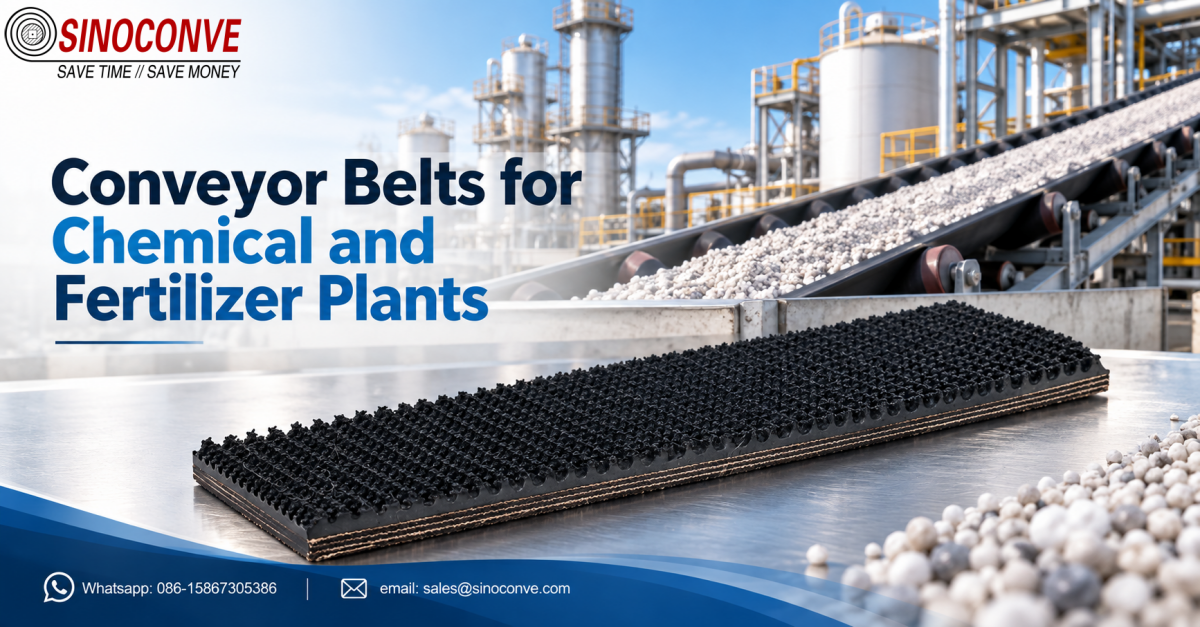
A chemical or fertilizer plant almost never runs on a single belt. The material that arrives at the gate, whether it is damp phosphate rock, prilled urea, ammonium nitrate, potash, or a coated granule, changes temperature, moisture, and abrasiveness at every transfer point, and the belt that survives intake often fails later at the cooler or the bagging line. This guide walks the whole route zone by zone and shows what each section genuinely asks of a conveyor belt for chemical products and fertilizer duty, then turns that into the documents and field checks a buyer should demand before a purchase order is signed.

01The Whole-Plant View: Six Jobs, One Line
Why No Single Belt Specification Fits a Fertilizer Plant
Walk a fertilizer plant from the rail siding to the truck loader and you pass through six different conveying jobs. Raw material arrives damp and lumpy. Crushers and screens punish the cover with impact and sharp edges. Reactors and granulators add heat, steam, and sticky fines. Coolers and curing bays push the belt through condensation. Bagging lines run fast and dusty, while the warehouse runs slow and heavy. Treating all six as one duty is the specification error we see most often. It usually shows itself as a cover torn open in month three while the rest of the line still looks new.
One belt cannot do all six jobs well, and pretending otherwise costs money in both directions. A plant that sizes everything to the hardest single duty pays for abrasion resistance it will never use on the cooler, and a plant that buys one mid-grade belt everywhere pays for extra splice repairs twice a year. After decades of watching these lines from the gate to the bagger, our view is that the correct unit of design is the transfer zone, not the plant.
That is also why the sourcing conversation should start with the material list. A conveyor belt manufacturer who has handled fertilizer before will want to know the product, the throughput, and the ambient conditions before quoting a single meter. The same plant may need a heavy-abrasion rubber conveyor belt at the crusher, a heat-tolerant carcass at the granulator, and a light antistatic belt at the bagger. Buying those from one source keeps the audit trail in one place, which is why a plant-grade industrial conveyor belt supplier and service partner is easier to qualify than three specialty vendors who never talk to each other.
02Zone by Zone: How the Material Changes From Gate to Truck
Reading the Route as a Series of Material States
The fastest way to scope a new belt is to stop thinking about the plant and start thinking about the product's condition at each step. Fertilizer and chemical solids are not constant; they are wet, then hot, then sticky, then cool, then dusty, then packed. Each state has a different opinion about what the cover and the moving parts should be. Lay the route out in those terms and the belt choices begin to write themselves.
What follows in the next five sections is the same logic applied one stage at a time. Keep the table below as the map, because the sections that follow fill in the reasoning behind each row.
Two habits make this reading easier to keep straight. Measure the material where it actually sits on the belt rather than where it left the process, because a granule that is dry at the reactor outlet can still be damp and sticky fifty meters downstream. Then track belt speed alongside the condition, since a fast line turns a mild dust problem into an abrasion problem and a slow line lets heat soak into the cover for longer. We have watched both effects change a belt recommendation on the same product and the same tonnage, purely because two plants ran at different speeds and different ambient temperatures. Walk the route with the drawing open, and mark each transfer point with the condition you actually found there.
| The stage reached along the conveying route | Condition of the material at this stage | What it does to the belt and its parts | The design consequence this creates for the buyer |
|---|---|---|---|
| The intake and unloading stage beside the rail siding or truck bay | Feed arrives damp, caked, or frozen and lands in uneven surges | Skirt rubber, impact beds, and the top cover near the loading point | A heavy abrasion cover with impact idlers packed tighter than the normal pitch |
| The crushing, screening, and milling stage located just after intake | Sharp, dry, abrasive lumps drop from height onto the belt | The cover, the carcass, and the belt edge where loose lumps scatter | A cut and gouge resistant cover over a strong fabric or steel carcass |
| The reaction, granulation, and coating stage inside the process building | Warm, sticky, and sometimes damp material carries heat and fine carryback | Cover hardening, edge cracking, and material stuck on the return strand | A heat-tolerant compound plus a cleaning system that still works when material is sticky |
| The cooling, curing, and finishing stage downstream of the process building | Material cools, releases moisture, and can form a fine drifting dust cloud | Condensation under the belt and fine dust drawn into the moving parts | A moisture-tolerant splice and sealed idlers rated for fine dust service |
| The bagging, palletizing, and truck loading stage at the end of the line | Dry, fine, free-flowing product moves fast and generates static charge | Static build-up, dust collecting in bearings, and tracking drift at speed | An antistatic belt with accurate alignment and frequent tracking checks |
03Intake and Unloading: Caking, Crusting and Wash-Down
What Arrives at the Gate and How It Behaves
Intake is the zone where the material is least predictable, because nobody controls the weather on the far side of the fence. Rock phosphate and potash can arrive at 4 to 8 percent surface moisture, and in a cold month the same load can freeze into slabs that hit the belt as single heavy lumps. The loading point therefore sees two enemies at once. There is impact from irregular chunks dropped from a grab or a tipper, and there is adhesion from wet fines that paste themselves to the cover.
Caking is the quieter problem and the more expensive one over a year. Material that sticks to the belt rides the return strand back under the structure, builds on the pulley face, and slowly changes the belt's running line. What looked like a tracking fault is often just carryback that was never scraped off at the head.
Design for intake comes down to a few choices. A heavier top cover buys impact life, a wing or spiral pulley sheds wet fines instead of packing them, and a well-set primary scraper plus a secondary cleaner keeps the return strand honest. If the plant washes down the loading area, the belt and the splice must tolerate regular water and splash, so a vulcanized splice beats a mechanical fastener in most of these bays. Where the feed is delivered by conveyor rather than truck, the same duty is met by a surface-based conveyor belt supplier who can match cover grade to the measured lump size and drop height.
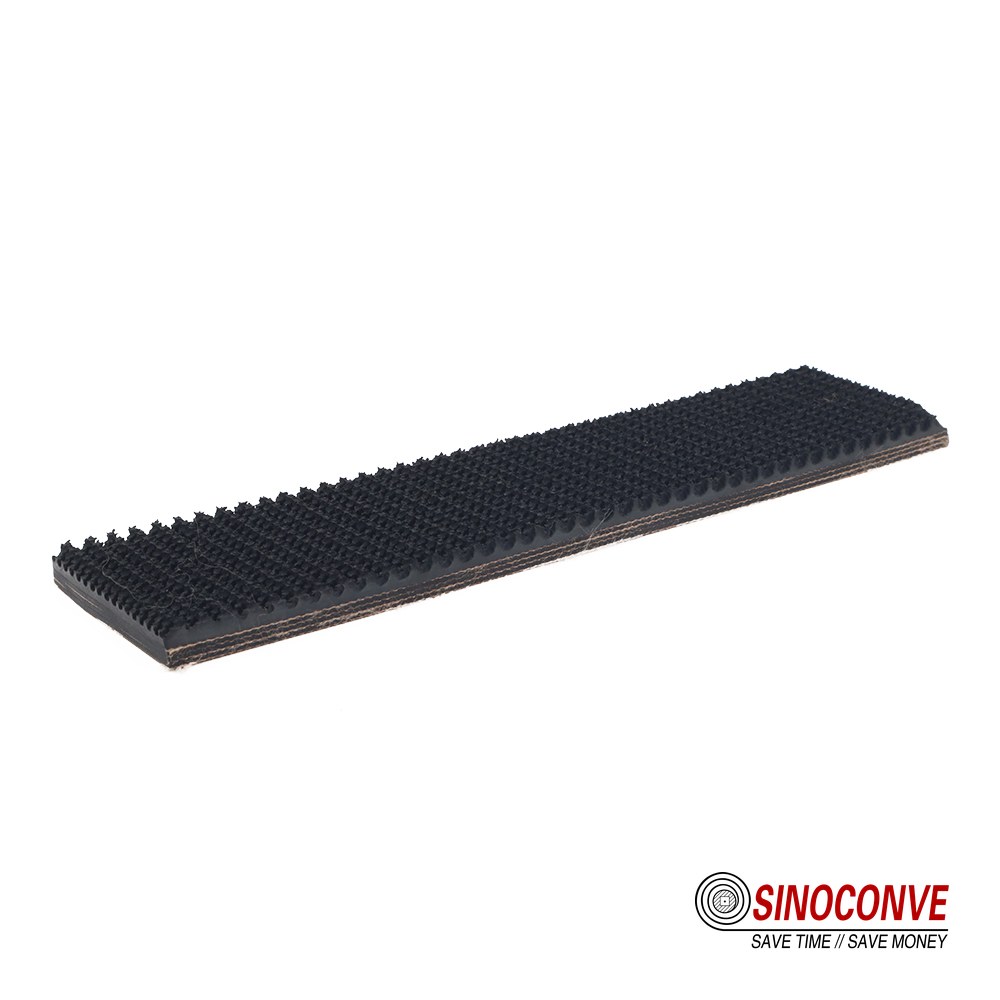
Heavy-duty rubber belt leaving the press, ready to be cut for an intake zone that sees wet and frozen feed.
04Crushing, Screening and Milling: Where Impact and Abrasion Rule
Choosing Cover and Carcass for Sharp, Falling Loads
Once the feed is broken down, the belt enters its hardest physical duty. Lump sizes shrink and edges get sharp, and every screen deck or mill outlet throws material onto a belt from a height. Abrasion here is measured rather than guessed: a cover compound tested to DIN 53516 might read around 90 mm³ of wear for a premium abrasion grade and closer to 150 or 250 mm³ for a general-purpose cover, and that single number predicts far more about service life than the label on the invoice.
Impact and abrasion pull the specification in different directions, and that is worth saying plainly. A very hard cover resists cutting but can chip under repeated shock, while a softer, more elastic cover absorbs impact but wears faster on sliding abrasive. On a single line the crusher discharge and the fines screen may therefore want two different grades, which is exactly the kind of detail a serious conveyor belt distributor will help you sort out before the order, not after the first failure.
The carcass carries the load, so its construction matters as much as the cover. Fabric plies in EP or NN build can be rated to well over 1000 N/mm breaking strength, while a steel cord carcass suits long, heavy runs where stretch has to stay low. Where a plant buys for several lines at once, it is worth asking for a wholesale conveyor belts program that keeps carcass and cover grades consistent across the site instead of drifting from vendor to vendor.
Field note from our engineers: At a potash plant we tracked a crusher belt that was failing at the splice every few months. The cover was fine and the tension was correct. The real cause was a burred pulley face that had never been dressed after the last rebuild, and it was cutting the joint from underneath. Dressing the pulley added more service life than any cover upgrade would have.
05Reaction, Granulation and Coating: Heat, Moisture and Stickiness
Heat Tolerance and the Sticky Return Strand
This is the zone that separates a good fertilizer belt from an ordinary one. Granulators discharge warm, damp product that can sit anywhere from 60 to 90 °C depending on the process, and the surface is often tacky enough to bridge the gap between the head pulley and the first return idler. Heat ages rubber: over time the cover hardens, loses elongation, and begins to crack at the edges, while the splice, which is usually the newest and most stressed joint on the belt, feels it first.
Two rules have served us well here. First, choose a compound rated for a continuous temperature above what the process can actually reach, not the average, because a control upset on a warm afternoon is what kills covers. Second, never let a sticky return strand go unmanaged. A belt cleaner that works on dry fines can smear on warm tacky product, so the cleaning method has to be chosen for the sticky case, not the easy one.
Granulation lines have a second habit worth planning for. The product often leaves the drum warm and soft, then hardens as it travels, so a single belt is asked to carry a material whose surface changes from plastic to brittle in one pass. That transition point is where edge damage usually begins. On a cold night, cooling air can also condense moisture straight onto the belt, adding a wet layer between the cover and the product. Neither condition is a belt fault, but both change what the belt should be, and they belong in the design conversation rather than in a post mortem.
The Drive Side: Fans, Mills and Granulator Motors
Chemical and fertilizer plants do not only move solids on belts; they drive a lot of rotating equipment with belts as well. Mill fans, granulator drives, and small agitators are typically powered by V-belts, and a failed drive belt can stop a production line as surely as a torn conveyor cover. That is one reason we are as much a transmission belt manufacturer as a conveyor supplier, and it is common for a plant to standardize its whole site on one drive-belt profile so that a single warehouse stock covers dozens of machines.
06Cooling, Curing and Final Handling: Condensation and Fines
The Moisture Trap That Sits After the Process
Coolers and curing bays look harmless on a flow diagram. In practice they create the widest swings of humidity on the whole route, because warm product releases moisture as it cools and the belt often runs through air that is colder than the material it carries. The result is condensation on the underside of the belt and in the structure, which rusts idlers, softens mechanical fasteners, and encourages the fine product to cling to the return strand.
Two cheap defenses matter more than any premium compound here. Sealed idlers keep condensation and drifting fines out of the bearings, and a proper return-side cleaning setup stops material from packing against the tail pulley. We have also learned to prefer a vulcanized splice in these sections, since a mechanical fastener that loosens in a wet, dusty environment becomes a tracking problem before it becomes an obvious failure. For plants fighting dust ingress around the cooling circuit, a purpose-built dust resistant conveyor belt and attention to return side belt cleaning together remove most of the daily headaches.
07Bagging, Palletizing and Loading: Fine Dust and Static
Fast Lines, Fine Product and the Charge They Build
The final meters before the truck are where belt speed and product fineness combine into the plant's most overlooked hazard. A dry, free-flowing fertilizer dust moving at speed against a rubber cover generates static charge, and in a building where that dust is airborne, uncontrolled discharge is a real risk. Antistatic and, where the area is classified, flame-retardant belt grades exist precisely for this duty, and they are not optional extras to be trimmed from a quotation.
There is a practical way to decide whether a line needs antistatic belting. Look at whether the dust is fine enough to stay airborne, then ask whether it can be present in a concentration that matters. Check too how the plant already classifies that space. If the area is classified, the belt should match the classification and the evidence should travel with it. If the area is ordinary, a standard belt may be adequate, and buying antistatic grades everywhere would spend money without reducing real risk. That call belongs to your safety team, and it is worth settling before the specification is frozen rather than after.
Dust also shortens the life of ordinary components. It works into bearings, builds on the pulley face, and coats every surface until tracking drifts. Sealed idlers and rollers pay for themselves here in months, and the same sealed construction helps at the bagging head where product leakage is constant.
Bagging machines rarely rely only on conveyor belts; most run their sealing and feed mechanisms off small drives, so a plant usually needs a matching V-belt manufacturer supply as well. Standardizing profiles across the packing hall keeps changeovers fast. It also helps that everything from the heavy conveyor covers to the small drive belts comes out of one conveyor belt factory, so a single purchase order can cover a whole line rather than a dozen separate vendors.
08How Chemical Media Attack Cover, Carcass and Splice
Mechanism First, Grade Second
When a plant asks what belt suits a fertilizer or chemical duty, the honest answer starts with the chemistry rather than a product number. Different media break rubber down in different ways, and the same belt can look perfect on one product and fail within weeks on another that shares the same building. The useful question is not "what grade" but "what is the material doing to the polymer and the textile."
Reading the Table Without Guessing at Numbers
The table below sets out the mechanism behind each common attack, without inventing brand names or specific resistance figures. Resistance depends on compound, concentration, temperature, and exposure time together, so any real recommendation has to be confirmed against the actual product and conditions rather than a generic table.
| The category of attack on the belt | Mechanism at work on the belt | What it demands from cover and carcass |
|---|---|---|
| Inorganic acids and acidic process liquors | They swell and soften many rubbers and can attack textile plies through edge exposure | A compound selected for acid service with tightly sealed edges and a protected carcass |
| Alkalis, lime, and ammonia-bearing process media | They saponify certain rubbers and accelerate cracking under flexing | A flexible, crack-resistant cover and a splice that tolerates repeated flexing |
| Salts, brines, and hygroscopic fertilizer products | They draw moisture, keep the surface wet, and carry that moisture into joints | Moisture-tolerant cover, sealed fasteners, and drainage rather than ponding |
| Oxidizing nitrates and hot reaction products | Heat and oxidation combine to harden the cover and shorten its flex life | A heat and oxidation resistant compound rated above the true process maximum |
| Fine flammable dust and solvent vapour | Static charge accumulates and can discharge near airborne combustible dust | Antistatic and flame-retardant grades tied to the plant's own area classification |
One caution belongs with this table. Chemical resistance is a system property, not a single value. A cover that handles dilute product at ambient temperature may behave very differently with a concentrated stream at 80 °C, and a splice can fail where the cover survives simply because the joint absorbs media along its edges. Treat any resistance claim as a starting point for testing, not a guarantee.
09Heat, Static and Flame: The Three Constraints Buyers Underestimate
Temperature Rating and Why the Average Misleads
Temperature ratings on a datasheet describe a steady condition, and fertilizer plants almost never run steady. A granulator that normally discharges at 65 °C can push past 90 °C during a startup or a control upset, and it is those short peaks that harden a cover and crack its edges. When we specify heat duty, we work from the highest temperature the belt could reasonably meet, then add margin, rather than the number on the operating screen during a calm shift.
The same logic explains why heat-tolerant products are chosen for the whole process section rather than only the hot spots. A belt that is comfortable at the granulator but fails at the first transfer can still stop the line, so the heat rating has to follow the material until it is genuinely cool. Compounds and constructions intended for this duty are described on our heat resistant conveyor belt range, and the underlying cover logic is explained in more detail in our guide to rubber conveyor belt cover grades.
Static and Flame Spread in Classified Areas
Fine combustible dust plus a fast-moving rubber surface is a combination that deserves respect. Static charge builds on the belt and its components, and in a building where airborne dust can fall within an explosive range, that charge has to be controlled rather than ignored. Antistatic grades bleed the charge away, and where the area is classified, flame-retardant grades limit the spread of any ignition. Standards such as EN 12882 and MSHA 30 CFR Part 14 describe the kind of testing usually expected for these duties, and ISO 340 covers flame propagation of conveyor belting.
The boundary between ordinary and classified space is an electrical and safety decision, not a belt-vendor decision. Your plant's process safety team defines the zone; our job is to supply belting whose test evidence matches that definition. Never let a supplier quietly substitute a standard grade for an antistatic one because it was in stock.
Field note from our engineers: In a plant near the coast we once found a "tracking problem" that turned out to be a rusted tail pulley. The cooling section had been running wet for months, the pulley face had pitted, and the belt was climbing the low side. A new belt would have failed the same way. Sealed idlers and a repaired pulley fixed it for a fraction of the belt cost.
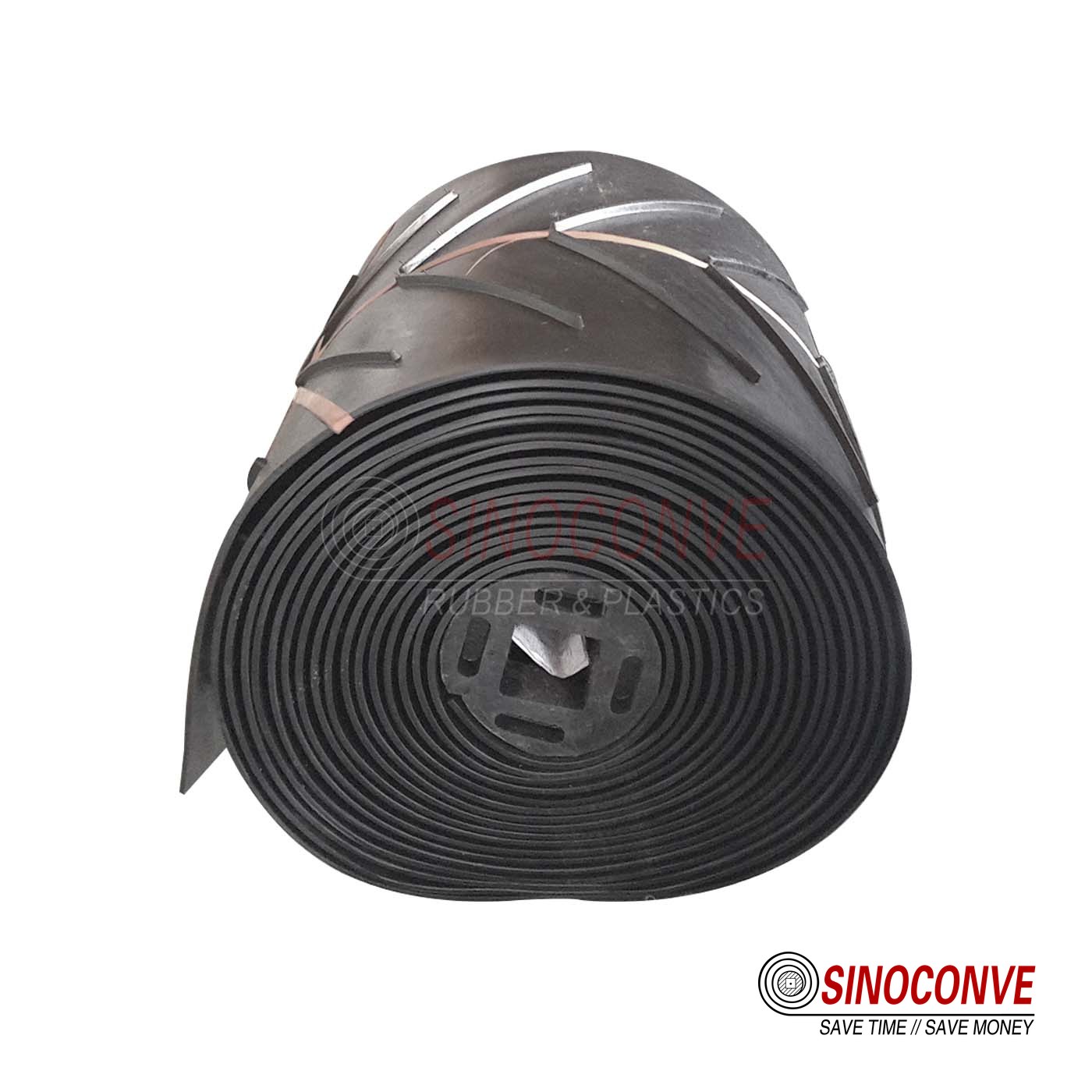
Belt and component condition photographed together, because the two rarely fail in isolation.
10Enclosure, Dust Control and Cross-Contamination
Keeping Products Apart and Dust Contained
A plant that runs several products on the same line has a cross-contamination problem as well as a dust problem, and the two are solved together. Transfer points are usually closed with enclosed chutes, skirt rubber, and dust covers, while belt cleaning is arranged so that carryback from one product does not land in the next. Enclosing a transfer point also keeps corrosive dust off structure and walkways, which quietly extends the life of everything steel nearby.
Rollers and idlers chosen for corrosive and dusty service make this work. A corrosion-resistant roller survives wash-down and salt-bearing dust, and a sealed roller keeps fine product out of the bearings where ordinary rollers would grind to a stop. Many plants get good results by standardizing on one corrosion resistant conveyor roller specification across the whole dusty route, so a spare from one section fits every other section. Where tracking has a history of drifting after each product change, our notes on EP conveyor belt tracking are a useful companion to any enclosure work.
Cleaning systems deserve the same product-by-product thinking. A scraper that handles dry granules well can smear on a warm or moist product, which is why plants often end up with a mixed cleaning strategy rather than one device on every head pulley. Our broader discussion of conveyor belt cleaning methods and schedules covers the trade-offs, including the cases where a scraper will simply not work.
11Component Combination Matrix: Matching Every Part to the Duty
Why Belt, Idlers, Cleaning, Enclosure and Splice Move as One Set
A belt is only as good as the parts around it, and the biggest mistakes we repair are combinations that were chosen separately. A premium cover over cheap open bearings, or an antistatic belt joined with a plain mechanical fastener, is money spent in the wrong place. The matrix below pairs the belt grade with the components that belong with it, and states the boundary where the combination stops making sense.
| Belt grade and carcass for this duty | Idlers and rollers that belong with it | Cleaning method matched to the product | The enclosure and skirt arrangement needed | The splice type and where it stops working |
|---|---|---|---|---|
| Heavy abrasion cover on an EP fabric carcass for the intake and crusher zones | Impact idlers under the loading point and sealed carrying idlers elsewhere | A stiff primary scraper plus a secondary cleaner for wet fines | Deep skirt rubber and enclosed chutes to catch the scatter | Vulcanized splice, because fasteners do not survive heavy impact well |
| Heat and oxidation resistant cover over a heat-stable carcass in the process section | Heat-tolerant sealed idlers spaced for the higher belt tension | Cleaning selected for a warm sticky surface rather than dry fines | Closed chutes that also limit heat loss and fume escape | Vulcanized splice with heat-rated compound, never an ordinary cold joint |
| Moisture-tolerant cover on a sturdy carcass through cooling and curing | Sealed and corrosion-resistant rollers rated for wash-down and damp air | Return-side cleaning that stops material packing at the tail pulley | Drainage-friendly enclosures so water leaves instead of ponding | Vulcanized splice, since wet fasteners loosen and shift the running line |
| Antistatic and flame-retardant belt for bagging, palletizing and loading | Light, fast-running sealed rollers with accurate alignment | Low-friction cleaners that will not abrade a thin cover | Dust covers at the bagging head and around every drop point | Vulcanized splice preferred, with a conductive-safe joint for antistatic duty |
| Long-haul steel cord belt where the run is long and stretch must stay low | Heavy-duty sealed rollers and a matched pulley face on the long sections | Heavy cleaners sized for the belt width and tonnage carried | Fully enclosed galleries where dust and weather both demand it | Vulcanized splice only, because mechanical joints limit cord tension |
The boundary matters as much as the match. Heavy cleaners that suit a thick abrasion cover will chew a thin antistatic belt, and a light fastening method that works on a short line is the wrong choice on a long steel cord run. When in doubt, match the new belt to the components already on the machine, or budget for both together.
Reading the matrix also helps during a rebuild. When a plant replaces a belt because of wear, the same order is often the right moment to revisit the components around it, since a new heavy cover will outlast tired idlers and a worn-out scraper. The reverse is just as true: if the idlers and pulleys are sound and the belt failed through a mismatch, changing only the belt is the economical move. The decision is rarely about price alone. A component that fails mid-campaign costs a stoppage, a crew, and a rushed purchase, and those three together usually dwarf the difference that looked decisive on paper.
12Procurement Documents and Delivery Acceptance
The Paper Trail That Prevents Arguments Later
On a fertilizer site, the belt that arrives is part of a documentation package, and a buyer who only checks the belt is exposed. Cover and carcass certificates prove what was made, antistatic and flame test reports prove the grade, and batch records let you trace a problem back to a production lot if one belt misbehaves. Ask for these before shipment, not after a failure, because a supplier who cannot produce them at order time rarely produces them under pressure.
Acceptance on site is a short, physical exercise if the documents are in order. Measure thickness and width against the drawing, check the cover and edges for cuts, confirm the splice sample or the on-site joint meets the agreed strength, and re-test antistatic properties where the grade matters. Keep the results with the batch record so the history stays with the line.
| Document or check item to request | What each document should actually contain | How to confirm it on delivery |
|---|---|---|
| Cover and carcass material certificate for the batch | The compound grade, carcass type, ply count, and tensile values actually produced | Match the certificate number to the marking printed on the delivered belt |
| Antistatic and flame retardant test evidence where the area is classified | Test method used and the result against the relevant standard for the grade | Re-test surface resistance on a sample before the belt is put into service |
| Chemical resistance statement for the products actually conveyed | Which media were considered and under what concentration and temperature | Cross-check the stated conditions against your own process data sheets |
| Batch traceability record covering every length supplied | Production date, line reference, and the link between belt and certificate | Store it against the asset number so a future failure can be traced |
| Splice or joint report for the installed or field-joined belt | Joint method, temperature and pressure used, and a strength test result if taken | Inspect the joint visually and check it against the agreed splice procedure |
Where a plant relies on vulcanized joints, it helps to standardize on a documented splicing process so every joint on site is made the same way. The reasoning behind joint selection and field practice is set out in our overview of the conveyor belt splicing buyer's checklist, which is worth handing to whoever signs the acceptance form.
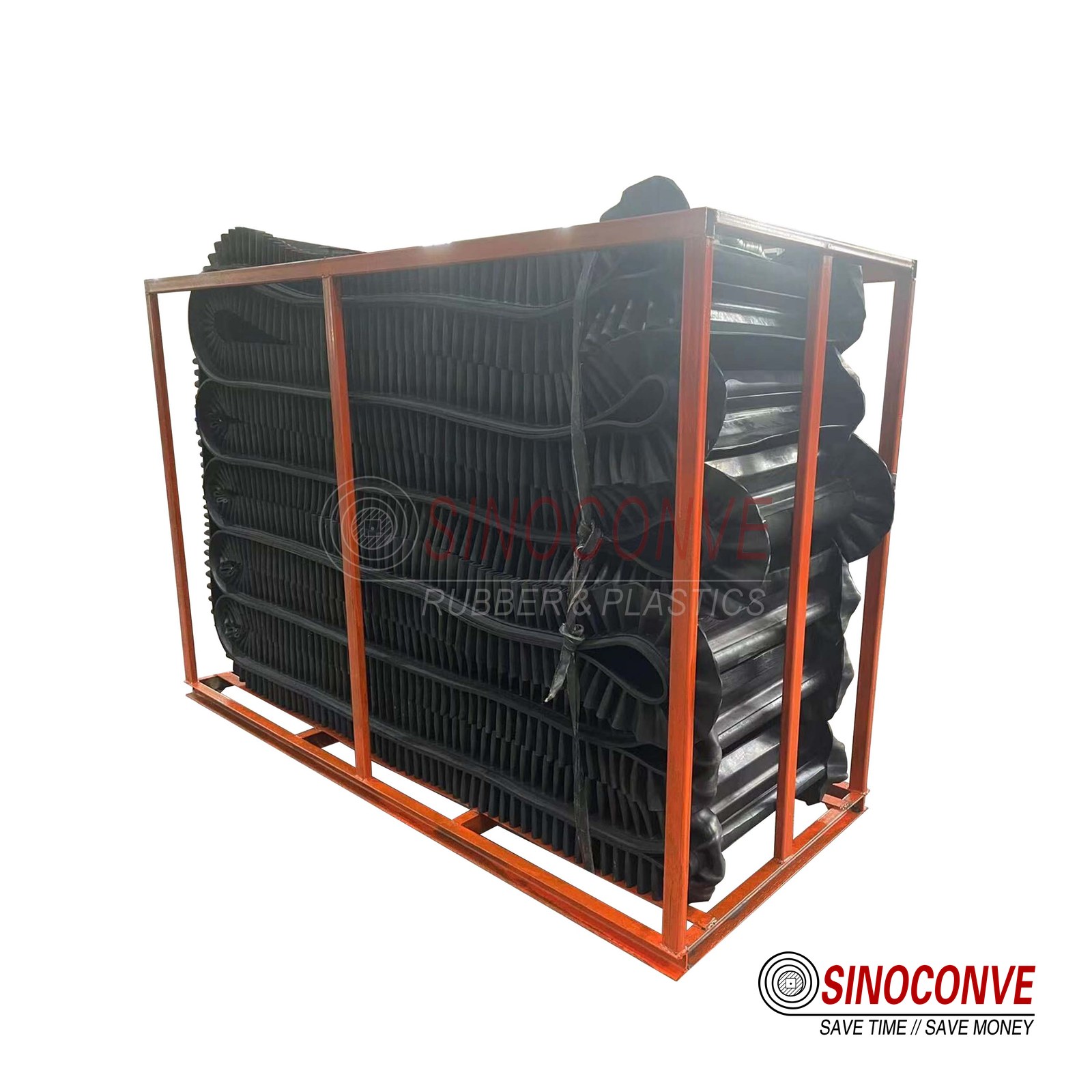
A line runs as one system: belt, idlers, cleaning and splice all arrive from the same order.
13Change Management When You Switch Suppliers
What Must Be Re-Checked at the Same Position
A good belt from a new supplier can still fail at a position where an old belt worked, because the two are rarely identical even when the drawing looks the same. Cover thickness, compound hardness, carcass stretch, and splice geometry can all differ, and any of them can change how the belt tracks or how long the joint lasts. Treat a supplier change as a small engineering project rather than a paperwork swap.
The re-check list is short but firm. Confirm the running tension and take-up travel still fit the new belt's elongation. Verify the pulley and idler diameters suit the new carcass stiffness. Sample-check the first joint and log its strength. Then watch the belt through one full product campaign, because a fertilizer line's hardest week is more informative than its quietest shift.
Documentation is what makes a supplier change safe over time. Keep the old and new belt specifications side by side, note where they differ, and record the first joint's strength so the next switch becomes easier still. If the new belt runs hotter, tracks differently, or needs a different cleaning setup, that observation belongs in the asset file while it is fresh. The plants that manage supplier changes well treat each change as a small experiment with a written result, not as a straightforward re-order.
14Total Cost of Ownership Behind the Purchase Order
Looking Past the Invoice Line
The cheapest belt on a quotation is rarely the cheapest belt on the line. Service life dominates, and on a fertilizer duty the difference between a well-matched belt and a poorly matched one is often measured in campaigns, not weeks. A belt that runs an extra year removes a full shutdown window, and a shutdown window in a busy season costs far more than the belt that needed replacing early.
Spare part commonality is the second lever, and it is easy to overlook. A plant that standardizes idlers, rollers, and drive belts across several lines carries fewer parts, trains fewer procedures, and swaps a failed component faster. The third lever is the compliance cost that hides inside cleaning and dust control; a belt that sheds product cleanly needs less wash water, less labor, and less maintenance on the structure around it. Our guide to the factors behind conveyor belt cost explains how these trade-offs usually play out over a full asset life.
None of this argues for over-specifying every belt. It argues for spending the money where the duty is hardest and being disciplined everywhere else. Buying the right cover at the crusher and a sensible general-purpose belt on a cool, short transfer is a better plan than buying the most expensive belt available for the whole plant.
It helps to separate the two kinds of cost that hide in a conveyor budget. The first is the cost of the belt itself, which is visible and easy to compare. The second is the cost of everything the belt choice causes, and that one stays invisible until it appears as extra cleaning labor, more wash water, a shorter splice interval, or a stoppage that lands in peak season. Buyers who win over a full asset life weigh both, then spend where the duty is genuinely hard and stay disciplined everywhere the duty is mild.
Field note from our engineers: One fertilizer plant asked us to quote the cheapest belt for a long cooling run. We walked it first and found the real problem was a single blocked drain flooding the return side twice a day. Clearing the drain and switching to sealed idlers cut their belt changes from three a year to one, and the belt we eventually supplied was not the most expensive on the list.
15This Guide vs Our Product-Focused Belt Page
Where the Two Pages Split the Work
We already publish a page that answers the product question directly: which belt body suits a chemical or fertilizer duty. That page is about the belt itself, its cover and carcass, and the brief summary of what to choose. This page is deliberately different. It covers the whole plant, the way a route is divided into zones, the constraints each zone imposes, the component combination around the belt, and the procurement and acceptance work that turns a good choice into a reliable line.
Keeping the two separate helps you find the right answer faster. If your question is "what belt material should I use," start with our existing guide, conveyor belt for chemical products and fertilizer, which deals with the belt body and product fit. If your question is "how do I design, source, and accept the conveying system across the plant," you are in the right place, and the two pages are meant to be read together rather than as competitors.
The practical link between them is the specification sheet. Work the belt grade from the product page, then use the zone and acceptance thinking here to decide where each grade belongs and what evidence you need at handover. From the full product catalog, a plant can then pull together the belts, the steel cord conveyor belt options for long runs, and matching conveyor roller components under one technical conversation.

16Frequently Asked Questions
What conveyor belt is used in fertilizer plants?
Most fertilizer plants use rubber belts over an EP or steel cord carcass, with the cover chosen for the dominant condition at each stage rather than one grade for the whole site. Intake and crushing favor a heavy abrasion cover, the process section needs heat tolerance, and the packing hall needs antistatic and often flame-retardant grades. There is no single universal belt, which is why the zone-by-zone approach in this guide matters. The correct answer at your plant depends on your products, your temperatures, and your area classification.
Do fertilizer conveyors need anti-static belts?
Only where fine combustible dust or solvent vapour can build up, but those conditions are common enough in a bagging or milling area that the question should always be asked.
How do you control dust on a fertilizer conveyor?
Dust control starts at the transfer points. Enclosed chutes, skirt rubber, and dust covers stop the fine product from escaping, and belt cleaners at the head pulley stop carryback from re-entering the air behind the belt. Sealed idlers then keep what dust remains out of the bearings, which is where it does the most mechanical damage.
What is the difference between a chemical conveyor belt and a standard belt?
It comes down to the compound and the evidence behind it. A chemical-duty belt uses a cover selected for the specific media, temperature, and concentration it will meet, and it usually arrives with documentation for antistatic, flame, or chemical performance that a general-purpose belt does not carry.
Can one belt type serve a whole fertilizer plant?
No, and trying to force one grade across the whole route is the most common and most expensive source of premature belt failures.
How do you verify a chemical resistant belt on delivery?
Begin with the documents. Match the batch certificate to the marking on the belt, then confirm that any antistatic or flame evidence names the standard and the result rather than just claiming the grade. On site, measure thickness and width against the drawing, look along the edges for cuts, and re-test the properties that matter for classified service. Finally, inspect the joint and store everything against the asset record so a later problem can be traced. A belt with no traceable paperwork is a belt you cannot defend in a safety review.
How long should a fertilizer conveyor belt last?
There is no honest single number, because life tracks the duty more than the calendar. A well-matched belt on a cool, gentle transfer can serve for years, while the same belt misplaced at a hot, abrasive loading point may fail in months.
Which splice is best for a fertilizer plant?
For almost every chemical and fertilizer duty, a properly vulcanized splice outperforms a mechanical fastener, because it resists moisture, dust, and impact without loosening.
Does a chemical plant need a different belt from a fertilizer plant?
Often it does, and the difference is the medium rather than the industry name. A chemical plant may handle acids, alkalis, or solvents that attack rubber in ways a fertilizer line never sees, while a fertilizer line typically combines moisture, heat, and abrasion. The right approach is the same in both cases: identify the actual media and conditions, then match the cover and carcass to them rather than to a general label. Where the chemistry is aggressive, testing a sample under real conditions is worth the wait before the order is placed.
Related Products You May Need
- Rubber conveyor belt for the heavy intake and crushing zones on a chemical or fertilizer route.
- EP rubber conveyor belt with fabric plies sized to your throughput and drop height.
- Steel cord conveyor belt for long, high-tension runs where stretch has to stay low.
- Heat resistant conveyor belt for granulator and cooler sections that run warm product.
- Chevron conveyor belt where a modest incline needs grip that a smooth cover cannot give.
- Conveyor roller and sealed idler sets matched to the dust and moisture of your plant.
- V belt for the fan, mill and bagging machine drives that keep the line turning.
- Timing belt for synchronous drives on metering and dosing equipment around the plant.
- Full product catalog covering belting, rollers and drive belts from one factory.
Related Blog Posts
- Conveyor belt for chemical products and fertilizer - the product-side companion that explains which belt body to choose.
- Rubber conveyor belt cover grades - how cover grade maps to abrasion, heat and cut resistance.
- Dust resistant conveyor belt supplier - belts built for dusty, fine-product environments.
- Return side belt cleaning - stopping carryback before it becomes a tracking fault.
- Corrosion resistant conveyor roller for wash-down areas and salt bearing dust.
- Conveyor belt cleaning methods, schedules and when scrapers will not work - choosing a cleaning approach by product.
- Conveyor belt splicing buyer's checklist - twelve checks to run before any joint is ordered.
- Conveyor belt vulcanising process - what a good vulcanized joint actually involves.
- Steel cord rubber conveyor belt durability and efficiency for long overland and in-plant runs.
- Conveyor roller ultimate guide 2026 - types, materials and load ratings for every duty.