


Seed cotton arrives at a gin as a soft, air-filled mass. A trailer that looks full may hold a fraction of the weight the same cube of wheat would carry, and a load that left the field dry can reach the module pad with damp patches after a forty-mile haul. We have watched a feeder fight one wet slug for twenty minutes and then run clean for the rest of the shift, with nothing changed except the truck at the dump.
That variability is why a cotton gin conveyor belt cannot be bought from a page that lists tensile strength and stops there. The belt has to pull a material that barely presses down on it, release that material at a transfer without tearing the fibre, and tolerate burrs, stalk, sand, baling wire and the occasional rock. We are a conveyor belt manufacturer, and most gin enquiries we answer are not about strength at all. They are about wrap, tracking and clean running.

This page covers belt duty inside the gin yard: receiving, the cleaning house, gin stand feed, the lint flue and condenser, and the transfer to the bale press. Section two draws the boundary against field machinery, spinning and carton lines. It is written for anyone specifying a cotton processing conveyor belt against a real machine rather than a catalogue page.
01Why Cotton Gin Material Behaves Unlike Ordinary Bulk Solids
Put a load of crushed stone on a belt and the burden sits still. Put seed cotton on the same belt and it behaves like a loose blanket with air trapped inside. The difference changes how the belt grips, how the material crosses a gap, and how much of it ends up on the floor beneath the frame.
Low bulk density changes what traction means
Seed cotton in a module or a hopper is mostly air. Loose bulk density is commonly quoted at fifty to ninety kilograms per cubic meter, against roughly 1,500 for sand. A belt carrying it has almost no normal load to work with, so the friction that moves the load comes from cover texture and from the way the fibre mats against itself far more than from weight.
A heavy cover chosen for abrasion resistance adds mass without adding grip, and that mass must be accelerated at every start. On a feeder that stops and starts with the module sequence, the cost shows up as splice fatigue long before the cover wears out.
Trash is part of the stream, not an excursion
Growers deliver what the field gave them. Green bolls, sticks, hulls, sand, plastic twine and cut baling wire all travel with the seed cotton into the receiving pit. The cleaning house removes most of it, but the belt upstream of the cleaners sees the full mixture, and that mixture is abrasive in a way clean fibre is not.
A stick caught under a skirt board does two things at once. It scores the cover in a short arc, and it holds the skirt off its setting so the next hundred metres of cotton spill out along the same line. Fitters usually replace the skirt rubber when the belt was the part that needed attention.
Field note from our engineers: At one gin we were asked to quote a heavier belt because the receiving belt kept drifting. The drift stopped when a fitter found a fist-sized rock wedged behind the tail pulley guard. No belt change was needed.
Dry fibre and a running belt make charge
Cotton is ginned dry on purpose, because moisture blinds the saws and smears the lint. Dry fibre in a dry shed, moving over a rubber surface, generates static charge. Lint then clings to the cover, the frame and the guard mesh, and a mat of lint on a return strand is both a housekeeping problem and a fire risk that has nothing to do with the compound.
What a belt can contribute is a controlled path, and that path is only as good as its connections. A cover described as static-dissipative means little if the frame sits on rubber mounts and the pulleys have never been bonded. Section five sets out how we verify it. No honest supplier can settle that question from a datasheet.
02Keep Four Cotton Duties Separate Before Choosing a Belt
Three enquiries reached us in one week, and every drawing was labelled cotton belt. One showed a cross auger on a picker. One was a gin feeder under a module dispenser. The third was a carton line inside a packing hall two hundred miles from any cotton. Same three syllables, three different machines, and a quote written against the wrong one wastes everybody's season.
Where the field machine stops and the gin starts
A picker does its work at the row. The doffer strips fibre from the spindle drums, air carries it to the basket, and an onboard cleaner may knock out leaf before the module is built. Belts in that assembly run on small pulleys at high surface speed, often with cleats or sidewalls, and they are engineered with the machine. The agricultural equipment page is the right place to start if your duty sits there.
Our boundary begins at the module pad, the trailer dump or the receiving pit. From that point the material is the gin's responsibility, the frames are fixed, and belts are bought on width, length, cover and splice rather than as part of an OEM assembly.
The spinning mill and the carton line are not this purchase
Carding, drawing, roving and spinning run on flat belts, timing belts and spindle tapes. Those drives need precise pitch and no slip, and the products they move are sliver, roving and yarn packages rather than a loose burden on a trough. A timing belt guide is useful reading for a mill, and the textile industry section covers that family.
Carton plants do use rough top covers, which is where confusion starts. There the rough surface grips a folded blank on a short incline so the box does not slide or rotate, and the product is rigid, dry and clean. Lint retention is irrelevant. On a gin, the same texture must release a fibrous mat that wants to stay put. Our warehousing and logistics pages describe the carton duty honestly, and it is a separate quotation.
Table 1 puts the four duties on one page. Read the last column first. If the answer there is no, the rest of this article will send you the wrong way, and a wholesale conveyor belts price comparison across those duties is meaningless, because the constructions differ at carcass level.
| Duty station in the cotton chain | Material that the belt actually carries | Belt property that decides success here | Does this article cover that duty |
|---|---|---|---|
| Picker, doffer and module builder at the field | Seed cotton lifted straight off the row | Thin carcass that flexes around very small pulleys | No, field equipment is specified with the machine |
| Gin receiving pit and cleaning house floor | Seed cotton carrying burrs, stalk, sand and wire | Rough grip plus sealed edges against fine trash | Yes, this is the core duty described throughout |
| Gin stand feed, lint flue and press transfer | Loose lint after the seed has been separated | Light traction that does not felt the fibre surface | Yes, including condenser and bale press feed |
| Spinning mill card, draw frame and roving | Carded sliver, drafted roving and wound yarn | Precise pitch and slip-free power transmission | No, spinning uses flat belts and timing belts |
| Corrugated carton folding and packing line | Flat blanks, folded boxes and sealed cartons | Surface grip that holds box orientation on inclines | No, packaging duty is a separate belt purchase |
Table 1: Four duties that get called cotton belts, and where this article stops.
A gin belt is not a food belt. Lint and seed travel through it, not a product for consumption, so hygiene approvals written for dairy or bakery lines do not transfer. Ask for the cover compound, the edge construction, the splice method and the batch you will actually receive, which is what the industries we serve have in common when a season runs smoothly.
03Receiving Seed Cotton Without Crushing or Bridging
The receiving belt has one job that sounds simple: move a mat of seed cotton from the dump to the first cleaner at a rate the house can swallow. In practice this is where we see the widest gap between a belt that was specified and one that was guessed at. Rate changes by the trailer, moisture changes by the hour, and the machine downstream is far less forgiving than the belt.
Feed the mat, do not squeeze the burden
A module dispenser or a hopper head does the metering, and the belt's task is to carry the released mat away at a steady speed. Operators sometimes try to solve a rate problem by closing the hold-down or raising tension, which presses cotton into the cover and drives trash through it.
We set the belt to run slightly faster than the minimum that clears the opening, and keep the trough shallow so the mat stays open instead of folding into a rope. On a 1,200 mm receiving belt a 40 mm mat at walking pace moves a surprising tonnage, because the material is mostly air. Speed, not depth, is the cheaper variable.
Skirt boards, gaps and the cotton that hides in them
Skirt rubber is where a receiving belt is quietly destroyed. A gap of ten millimetres at the loading point will pass fine trash and hold a stick, and the stick then acts as a fixed scraper on a moving cover. Fitters close the gap to three millimetres to stop the spill, the rubber touches the belt at the splice, and the splice edge lifts within a month.
The workable compromise is a flexible skirt set to the belt maker's gap figure, checked with a gauge at three points along the loading zone, plus a drip edge that keeps spill off the return strand.
Inclines after the green boll cleaner need their own treatment. Damp cotton on a smooth cover slides backwards at the boot and builds a roll that eventually swallows the tail pulley. A shallow cleat or a rough top cover usually fixes it, and a cleated belt on an inclined crop line is the pattern we copy. If the angle is steeper than about twenty degrees, change the layout before the cover, because no texture holds a wet mat on a wall.
The carcass question comes up here. Buyers who also run aggregate lines ask for the heavy construction they use on a crusher feed, and an industrial conveyor belt built for stone duty is a useful reference for what a stiff, abrasion-resistant belt looks like. It is not a template. Stiffness that survives a rock box will fight every small pulley in a cleaning house, and the extra mass accelerates at each start.
What a gin usually wants is a two-ply or three-ply fabric carcass with a modest cover, supplied by a conveyor belt supplier who states the ply count and cover thickness on the quotation rather than in a brochure. We have seen a four-ply belt last eight weeks on a feeder because its splice could not flex around a 250 mm pulley, and a two-ply belt of the same cover run three seasons on that frame.
| Transfer point on the gin floor | What goes wrong when the setting drifts | What we check before blaming the belt |
|---|---|---|
| Module feeder inlet beneath the disperser head | Cotton arches over the opening and feed stops dead | Wrap on the head drum and the hold-down gap |
| First incline after the green boll cleaner | Wet cotton slides back and piles at the boot | Cleat height, incline angle and belt speed |
| Skirt board line along the receiving belt | Trapped trash scores the cover along one lane | Skirt gap, rubber hardness and clamp condition |
| Transfer chute from cleaner into the feeder | Lint bridges across the throat and starves the stand | Chute slope, throat width and belt release point |
| Tail end of the incline before the gin stand | Fine trash packs the return strand and lifts it | Cleaner contact, roller condition and take-up travel |
Table 2: Five receiving and cleaning transfers, the failure each one produces, and the setting we check first.
04Belt Surface, Edges and Splices for Lint Retention Control
Two belts can carry the same tonnage at the same speed and behave nothing alike, because fibre interacts with the surface at a scale a specification sheet rarely describes. Lint does not slide across a cover. It rolls, mats, then anchors on whatever feature is small enough to catch it. Choosing a surface is a decision about what you want the belt to let go of. It is also why a rough top cotton conveyor belt quoted for a feeder can be the wrong cover for a cotton lint conveyor belt ten metres downstream.
Rough top is a family, not a single answer
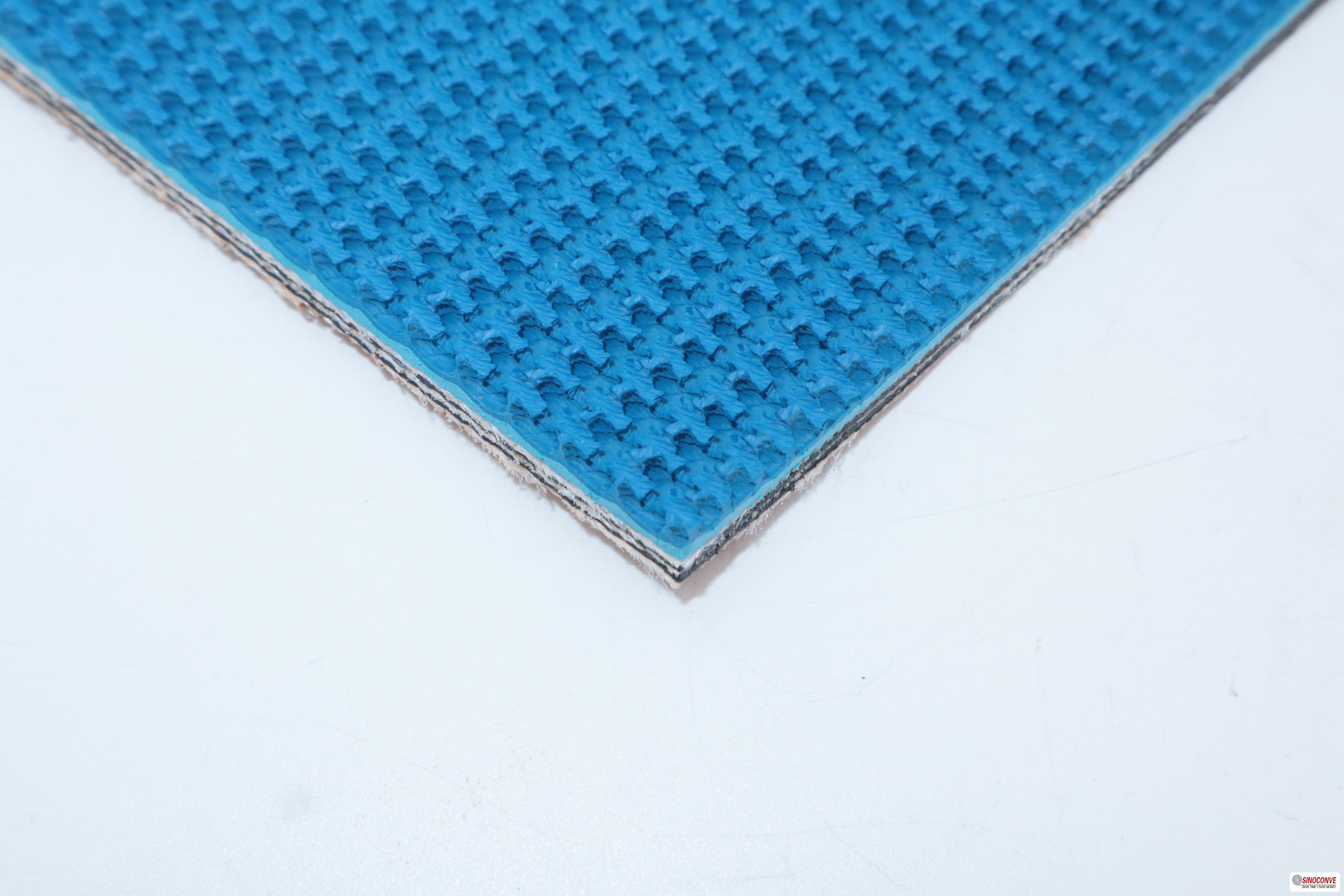
The rough top family runs from a fine shallow impression to a coarse deep waffle. On a gin feeder, a fine pattern of about half a millimetre to one millimetre of relief lifts the mat off the smooth base and gives the fibre something to push against without offering a valley deep enough to pack. The coarse patterns sold for carton inclines hold a box beautifully and hold cotton badly.
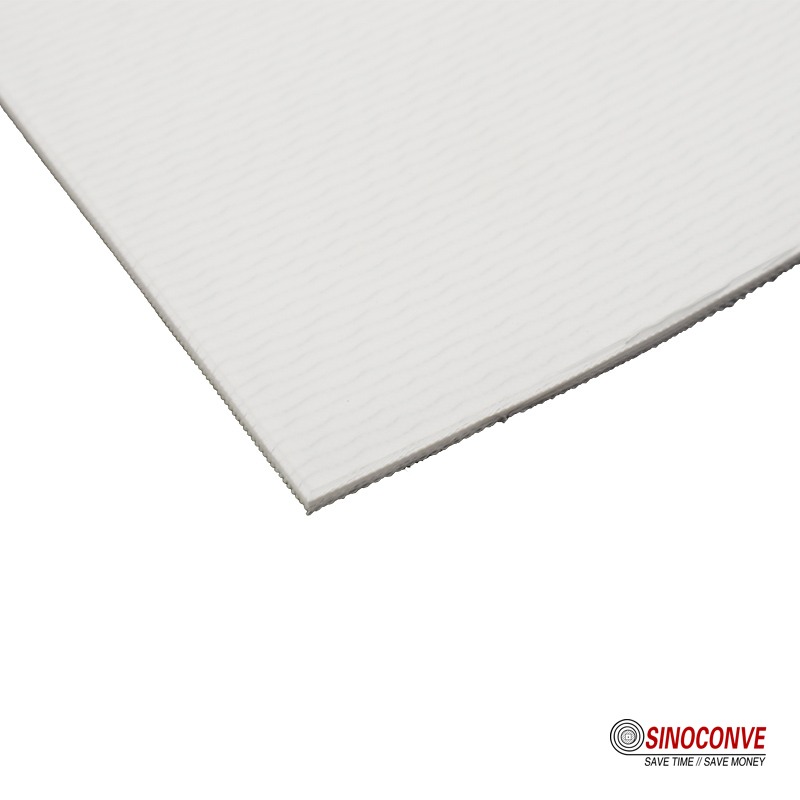
Where the burden is loose lint downstream of the gin stand, many plants run a plain or lightly textured cover instead. Lint that has been opened and cleaned releases more readily from a smooth surface, and the belt cleans with a brush at the tail. The trade is grip on an incline: a plain cover on a fifteen degree lift will shed a light mat during a loaded start, so keep those transfers flat or fit a low cleat.
Compound choice follows. A light PVC cover resists moisture pickup and wipes clean, which suits a cleaning house floor where washdown happens. A rubber conveyor belt handles abrasion from sand and stalk better at the receiving end, and tolerates a warmer drier shed without hardening as fast. Neither compound is a fire rating, and neither turns a normal belt into explosion-proof equipment.
Edges and splices decide where lint collects
An open cut edge exposes fabric plies, and exposed plies wick lint and moisture into the carcass. On a gin that shows up as a swollen soft edge within a season, then as a split running in from the side. A sealed or moulded edge costs a little more per metre and removes the entry point. When buyers compare a PVC conveyor belt quotation against another, the edge treatment is often the only real difference.
Splices are the second collection point. A mechanically fastened joint presents a row of plates and bolt heads, and every one is a comb for lint. On a return strand the comb grows a beard, the beard drags on the frame, and the joint fails at a bolt hole rather than in the belt. For a gin we prefer a vulcanized finger splice, stepped through the cover so the pattern is restored and the joint runs as flat as the belt around it.
Textured covers make that splice harder and more important. The pattern has to be cut back and rebuilt, and a splice that leaves a ridge collects lint at its leading edge within days. We ask for a splice drawing with the quotation, because step length and finger count depend on ply count and on the pulley diameters at that position. The splice versus fastener comparison covers both routes, and the rough top selection guide shows how pattern depth is normally matched to the product.
05Static-Control Verification and Grounding Continuity
Gin houses run dry, and dry fibre moving over rubber charges. Anyone who has walked a cleaning house in February has felt lint lift off a frame and stick to a sleeve. The question a buyer should ask is not whether a belt is anti-static in the abstract, but whether the path from cover to structure is continuous on the machine in front of them, and whether anyone can prove it after the next splice.
What a belt statement can and cannot cover
A compound can be formulated so that it does not hold charge the way an insulating cover does, and a supplier can state that in writing for a specific batch. That statement describes the material. It does not describe your conveyor. Surface contamination, cover wear, a dry cleaning brush, an isolated frame and a splice that interrupts the surface path all sit between the compound and the charge that ends up on the structure.
We therefore treat the belt as one component in a chain and ask the plant to verify the chain. We will not quote a voltage limit, an ignition threshold or a conductivity class, and we will not describe a standard PVC cover as explosion-proof. Those conclusions belong to your process risk assessment and to the people who sign it, and a belt salesman who offers them is guessing about your building.
Where a combustible dust atmosphere can form, the sequence is straightforward. Your safety team defines the area and the acceptable evidence. We supply the compound statement, the batch traceability and the splice method. Your electricians test continuity and record it.
Continuity is harder than it sounds on a gin frame. Bearings sit on grease films, pillow blocks sit on painted steel, and a frame on rubber isolation pads is deliberately insulated from the floor. A reading from the cover to a painted guard can look fine while the guard itself is floating. Test from the cover to the structure the plant uses as its reference, at several points, and log the results beside the vibration readings.
| Item to verify on the running line | Why it matters in a cotton gin | Evidence we ask to see in writing |
|---|---|---|
| Cover compound statement for the delivered batch | Shows what the surface was formulated to do | Supplier declaration tied to the roll number |
| Continuity from cover through pulley to frame | A broken path leaves charge sitting on the belt | Commissioning record signed by the shift fitter |
| Bearing housings and painted pillow block faces | Grease films and paint layers isolate a joint | Photograph and entry for every test point used |
| Splice area immediately after a joint replacement | A new joint can interrupt the surface path | Re-test entry in the maintenance log that week |
| Bonding straps and frame feet around the drive | Vibration and corrosion loosen connections over time | Initials from the monthly electrical walk round |
Table 3: Static-control items a gin can verify itself, with the record that makes the check repeatable.
Two habits make this work. Test after every splice, because that is when the path changes. Test in the same dry conditions each time, because a reading taken in a humid week says little about the week that matters. Dust on a frame is an insulator as well as a fire load, so housekeeping belongs in the same conversation. The dust control discussion covers the belt side of that argument.
06Preventing Lint Wrap, Return Buildup and Tracking Drift
Ask a gin fitter what actually stops a line and the answer is rarely a worn cover. It is a tail pulley with a sleeve of lint around it, a return strand dragging a ridge of trash, or a belt that has crept into the frame until an edge frayed. All three are maintenance problems that look like belt problems, and all three are cheaper to prevent than to repair.
Start at the tail pulley. Wrap begins where the belt reverses around the smallest diameter in the run, and it begins as a thin film rather than a thick rope. The film builds because fibre escapes the skirt line, sticks to the cover and is carried round the pulley where nothing scrapes it off. Once the film becomes a layer, the pulley grows in diameter, the belt tightens, and the edge starts to cup.
Two fixes do most of the work. Close the escape path at the loading point, and fit a scraper or brush that touches the cover across its full width with light pressure. A cleaner set hard enough to squeal will polish the cover and leave it glossy, which makes the next layer stick faster. Set it to wipe, not to shave.
Cleaning the return strand is a schedule, not a device. A primary cleaner at the head removes the bulk of the carryback, and a secondary picks up what the first pushes aside. Neither helps the dust that has already passed. The return side cleaning methods we recommend for fibrous loads combine a light contact cleaner with a weekly inspection of the first three return idlers, because that is where a ridge forms before it becomes a spill.
Scrapers are not always the answer. Lint is compressible, so a steel blade rides over it and a polyurethane blade wears a groove in the centre of the cover. A rotary brush driven from the pulley often works better on a light dry burden,. Our belt cleaning comparison sets out where each method stops working.
Drift is a geometry problem. A belt runs to the high side of a pulley and to the slack side of a frame. When a gin belt drifts, the cause is usually one of five things: off-centre loading, a trough frame out of line, a seized take-up on one side, a worn pulley face, or a splice cut out of square. Tension is rarely the root cause, though raising it will hide the symptom for weeks while the bearings pay for it.
We measure before we adjust. A string line along the trough, a level across the frame at three points, and a check that both take-up screws have equal travel will find most of it in twenty minutes. If the belt is a conveyor belt distributor stock item bought to a standard length, a splice made on site is the usual source of a diagonal that no tracking adjustment can remove.
Idler condition belongs in the same walk. A seized return idler flat-spots the cover, a misaligned idler trains the belt off line, and a worn shell changes the trough profile. The idler selection guide explains the geometry, and the tracking guide covers the adjustment sequence. Where a run is long enough to wander, a self-aligning idler at two or three positions is cheaper than a season of adjustments, and the conveyor roller range includes the sealed versions we fit in dusty return strands.
07RFQ, Acceptance and Shift Inspection Checklist
A gin buys belts twice a year at most, and the person writing the enquiry is often the maintenance planner rather than a belt specialist. That is fine, provided the enquiry carries enough information for the quote to be a specification instead of a guess.
Put these on the enquiry. Belt width, centre distance, head and tail pulley diameters, belt speed, trough angle, design rate in bales per hour, and the moisture range the cotton carries at that point. Add the cover side, the edge treatment, the splice method, the shed temperature, and whether the position sits inside a dust-classified area.
Ask for the ply count, cover thickness and compound on the quotation itself. A quote that says only width, length and price cannot be compared with another, and the checklist for overseas belt buyers lists the fields every quotation should carry. If the belt goes into a press or a feeder that stops under load, say so, because the splice and the cover both change.
Acceptance at goods-in takes an hour. Measure width at three points and length on a marked floor. Check the roll label against the purchase order, and confirm the batch number that will appear on the mill certificate. Look at the cut edge under a light: you should see the ply count you paid for and no loose cords. Check cover thickness at the edges and the middle, because a cover that thins at the edge is where the first split starts.
For an endless belt, run it empty for two hours before loading. Watch the splice pass the tail pulley at least twenty times, and check tracking at the head and at the take-up. Then load at design rate and watch the skirt line for ten minutes, since that is when a gap set cold reveals itself. Write the results on the same sheet as the goods-in measurements; that sheet is what a claim rests on.
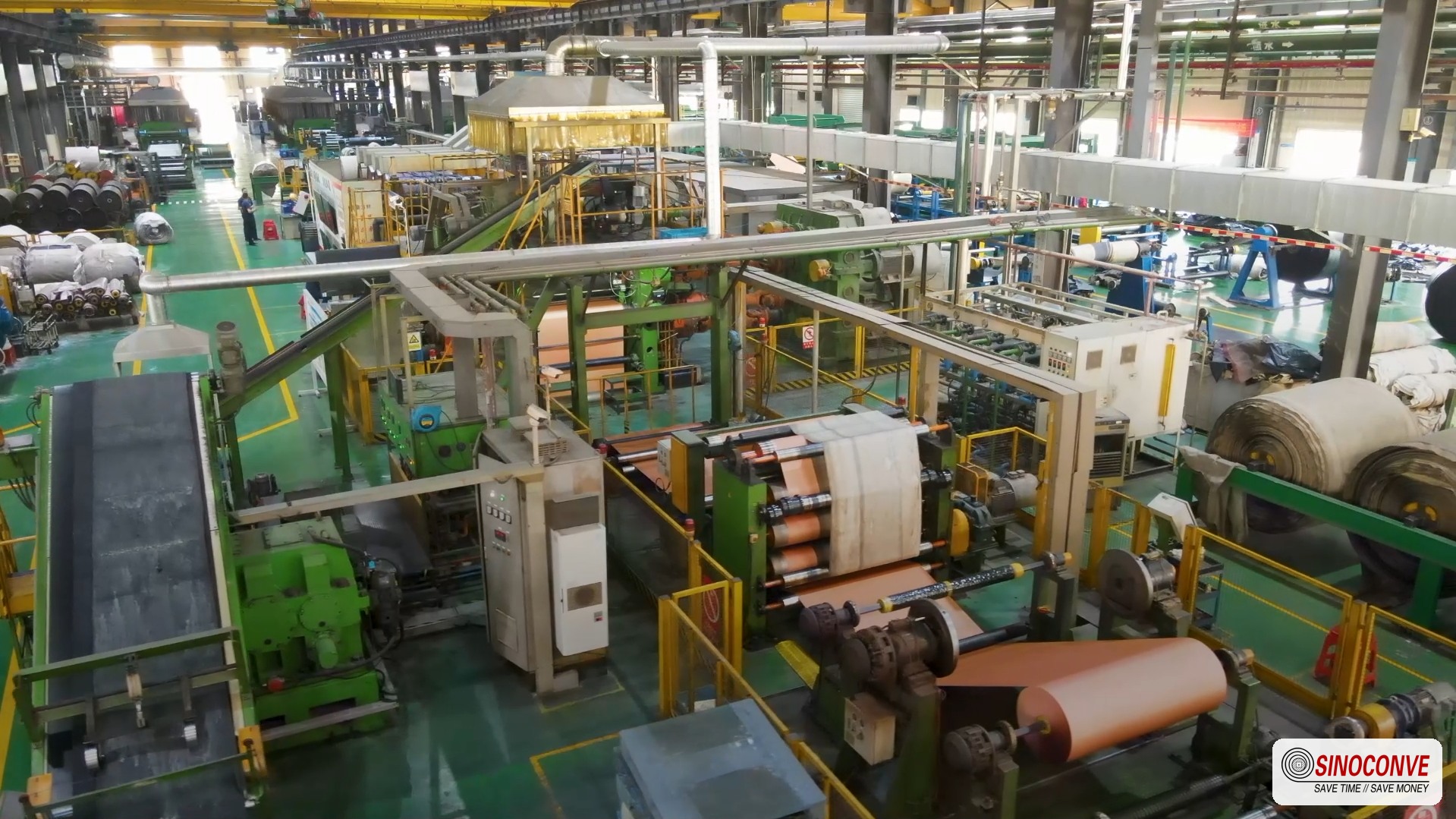
We build to the drawing and keep the batch record, which is why buyers who audit a conveyor belt factory before a season order ask to see the splice bench and the test records rather than the sales office. The same visit is the moment to ask about the drive side, because gin stands, feeders and conveyors run on V-belts that wear on a different schedule. A V-belt manufacturer who can match the drive set to the machine loads saves a planner more downtime than a slightly cheaper cover. Our supplier audit checklist lists the questions for that visit, and the same discipline applies to a transmission belt manufacturer quoting the gin stand drives.
| Check a shift fitter can complete in ten minutes | What a normal reading looks like | Action when the reading has moved |
|---|---|---|
| Belt tracking at the head and tail pulleys | Running centred with equal edge clearance each side | Recheck the trough line before touching the take-up |
| Wrap film on the tail pulley shell | Bare shell across the full face width | Close the skirt gap and reset the head cleaner |
| Material build-up on the first return idler | Light dust only, with no ridge of fibre | Brush down and inspect the primary cleaner blade |
| Cover temperature at the drive pulley | Warm and even across the full belt width | Stop and check tension, bearing drag and alignment |
| Skirt gap along the loading zone | Even gap at three marked positions on the frame | Reset the clamp and inspect the cover underneath |
Table 4: A five-line shift check that catches wrap and drift while they are still cheap.
The value is in the repetition and the trend, not in any single reading. A gin that logs five lines a week replaces one pulley and two belts a season less than a gin that waits for the spill.

08Frequently Asked Questions About Cotton Gin Conveyor Belts
What width and ply count does a gin feeder usually need?
Width is set by the opening above it, not by preference. Most feeder positions we quote fall between 900 and 1,400 mm, and the ply count is two or three on a short run with small pulleys. Send the pulley diameters with the width and the answer stops being a guess.
Is a rough top cover always better for cotton?
No. It is better where the mat has to climb or where the burden is seed cotton straight from the trailer. Downstream of the gin stand, a lightly textured or plain cover releases loose lint more readily and cleans up faster at the tail pulley.
Can the same belt handle seed cotton and lint?
It can run in both positions, and it will do neither job well. Seed cotton brings sand, stalk and wire that cut a soft cover. Lint wants a surface that lets go. Two positions, two covers, and usually two splice designs.
How often should a gin belt be replaced?
There is no interval worth quoting, because a belt on a covered feeder and one under a leaking roof age at different rates. Judge by cover thickness at the edges, splice condition and the amount of lint the return strand carries, checked on a fixed schedule rather than on breakdown.
Do we need a special belt because of static?
Sometimes, and the decision is not ours to make alone. Start with the area classification your own safety team owns, then ask for a written compound statement for the batch you will receive and confirm continuity from cover to structure at commissioning. A belt described as explosion-proof should make a buyer suspicious, not comfortable.
Why does a new belt wrap at the tail pulley within a week?
Because the cause was never the belt. A skirt gap left wide, a cleaner set too light, or a chute throwing fibre past the loading point will wrap any cover within days. Check the tail pulley face for a bare patch, then look upstream at the skirt line.
Related Products You May Need
- PVC conveyor belt with rough top options for gin feeders and cleaning house transfers
- Rubber conveyor belt for abrasive seed cotton receiving duty
- Chevron and cleated belts for short inclines after the cleaners
- Sealed conveyor rollers and return idlers for dusty gin frames
Related Blog Posts