
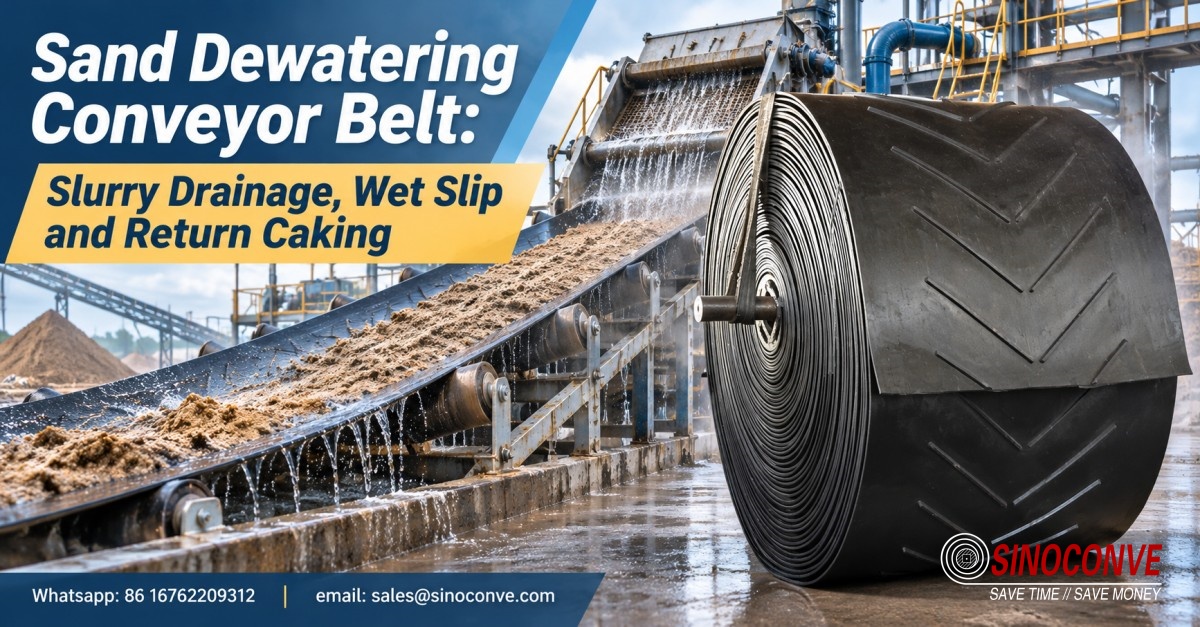
Most of the water that leaves a dewatering screen leaves in the first two meters of the belt that carries the sand away. That is not a figure from a textbook. It is what we see whenever we stand at the discharge lip with a bucket and a stopwatch, and it is the reason so many short sand conveyors fail in ways their maintenance crews never expected. The screen has done its job, the sand looks dry enough to stockpile, and still a thin film of water keeps running out of the mat as the belt begins to climb.
By the time that film reaches the tail pulley it has picked up fines. The fines become a paste, the paste sits on the lagging, and the drive starts to slip on a belt that was perfectly specified for its tonnage. We have walked into plants where the head pulley was blamed for three weeks before anyone looked at the return strand. This article is about the belt between the dewatering screen and the first stockpile or transfer, usually six to twenty meters of run, and about the one after it when the layout is tight.
Everything here comes from our own commissioning and troubleshooting work in aggregate and industrial sand plants. Where we quote a range, it is a range we have measured often enough to trust, not a laboratory promise. Your material, your wash water and your operator will move the numbers, and that is exactly why the checks in section seven matter more than any single specification.

01What the Dewatering Screen Leaves on the Belt
A dewatering screen is a classifier with a drain pan, not a dryer. It removes the water that falls away under vibration and gravity in the seconds the sand spends on the deck. What remains when the sand tips onto the belt is a saturated granular mass with water held between the grains, in the fines that coat each grain, and inside the pores of the coarser particles. Only the first of those drains freely on a moving belt. The other two travel with the load and come out later, usually somewhere inconvenient.
In our experience, a well-run fine material washer hands over sand at roughly fifteen to twenty-five percent surface moisture by weight. That figure is not a target to chase. It is a warning about volume. On a run moving eighty tons per hour, even a modest moisture level means tons of water per shift are riding on the cover, and every liter of it has to go somewhere before the belt reaches the take-up.
Free Water and Bound Water Do Not Drain the Same Way
Free water responds to slope and vibration. Give the trough a three-degree incline and a normal troughing angle, and most of it runs back along the belt toward the load zone, where it pools against the skirt rubber and escapes at the chute. Bound water does not move until the mat is disturbed, which happens at the transfer point, on the incline, or when a plow drags across the surface. That is why a belt can look dry at the head and still be wet at the tail. The water was simply released later.
Fine particles make the problem worse in a specific way. Clay and silt fractions swell, seal the gaps between sand grains, and turn the draining film into a skin. Once that skin forms, water sits on top of the mat instead of passing through it, and the belt behaves like a wet ramp. We have measured a clear difference between a clean crushed sand and a pit sand with eight percent fines passing the smallest deck: the clean sand releases its water in the first meter, the dirty sand carries it eight or ten meters.
The Discharge Profile Changes Three Times a Shift
We ask plants to log three things for a week: the discharge appearance at the start, middle and end of each shift, the water running off the chute lip, and the condition of the return strand at the tail. Those notes are worth more than a moisture test, because they show the range the belt actually has to survive. If you are still specifying the run, send us those notes with your layout and we will read them the same way we read our own commissioning sheets. As a conveyor belt manufacturer working mostly with aggregate plants, we would rather argue about drainage before the belt is built than after the first slip event.
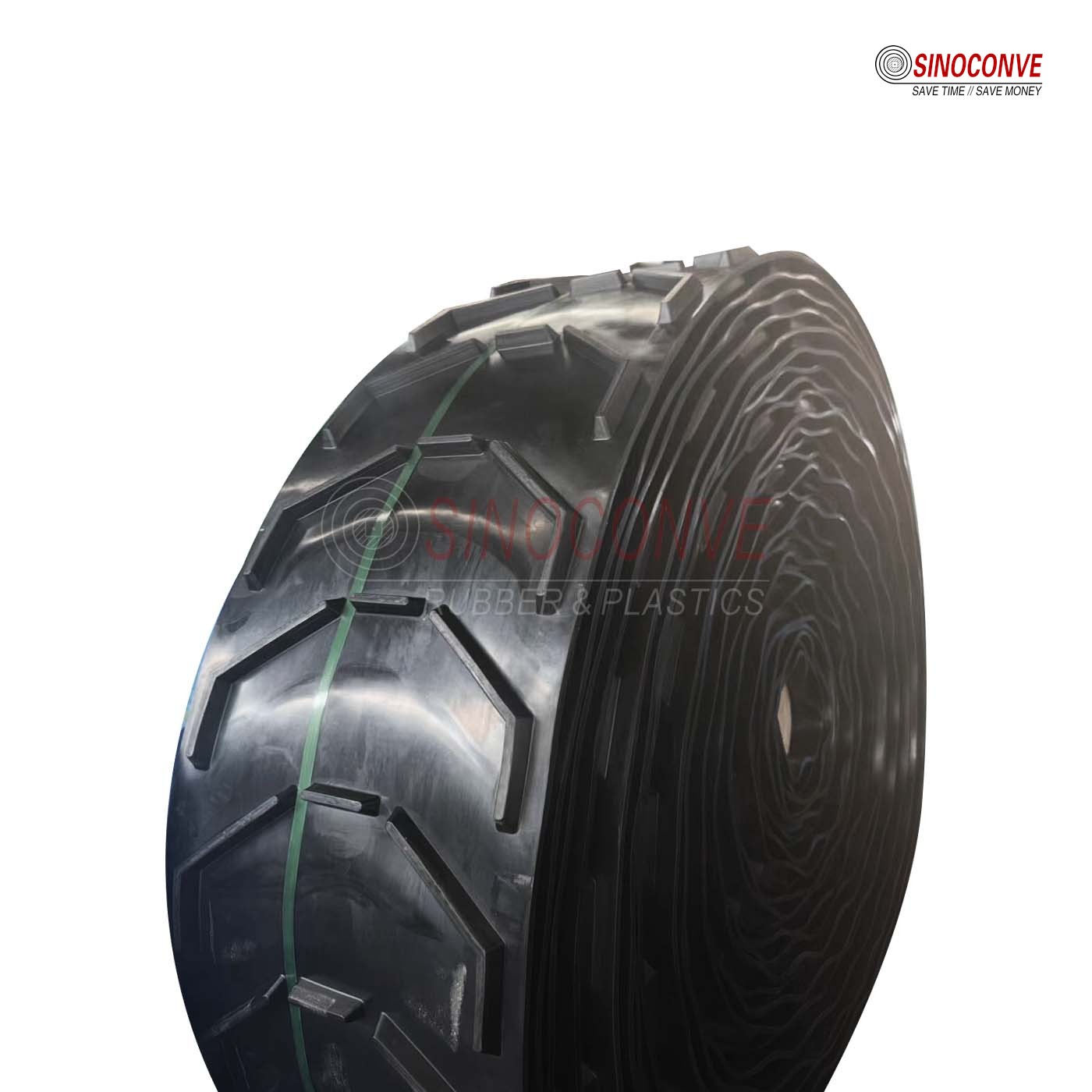
Discharge end of a short sand dewatering conveyor belt; the dark band down the center is water still draining out of the mat.
02Four Failure Points on a Short Wet Belt
Short runs concentrate damage. A two-hundred-meter overland conveyor gives water time to drip off and fines time to settle where you can inspect them. A twelve-meter belt after a screen does everything at once: it takes an impact load, drains, turns over a small tail pulley, and returns through a space nobody wants to crawl into. Four points absorb almost all of the punishment.
The Load Zone Takes the First Hit
Sand does not arrive on the belt, it is thrown onto it. The discharge lip of a dewatering screen sits somewhere between three hundred and six hundred millimeters above the cover, and the material leaves with enough horizontal velocity to land off-center when the feed splits. Water arrives with it, so the impact zone is also the wettest part of the belt. Cover rubber that would survive dry stone for years can be cut and gouged here in months, because the water lubricates the abrasive grains and lets them slide instead of bedding in.
Water Rides the Return Strand Into the Tail Pulley
Here is the mechanism we explain most often, and it surprises people who have only worked on dry systems. Water that has not drained before the head pulley is carried around it, pressed against the belt by the pulley face, and then released onto the return strand. On a short run, the return strand is only a few meters long, so the water reaches the tail pulley in seconds, not minutes. It arrives as a mixture of water and fines, and the fines are the part that matters.
That mixture coats the tail pulley lagging. Rubber lagging that grips well when dry can lose a large share of its friction coefficient once a clay film sits on it, and the loss is not gradual, it is sudden. The belt starts to lag on start-up, the drive draws more current, and the operator hears the slip before anyone measures it. A conveyor belt supplier can specify the right cover for wet abrasion, but no cover compensates for a tail pulley that is being used as a settling tank.
The third point is the trough transition, where a flat belt is forced into a three-roll profile a few meters after the load. Water runs to the center, which is also where the load is deepest, and pushes sideways under the mat, so both edges stay damp even when the middle looks dry. Damp edges are how delamination starts: water wicks into the fabric at the cut edge, the bond softens, and the edge frays from the inside out. Our mining and quarrying industry page covers the wider plant layout, and section six deals with the fourth point, the return idlers that turn that water into mud rings.
| Failure point we find on the short wet run | What the inspection usually shows us | Correction the maintenance crew can make this week |
|---|---|---|
| Dished and polished cover directly beneath the screen discharge lip. | A shallow bowl in the cover with slurry sitting in the low point. | Lower the drop height and widen the stream with a spreader bar. |
| Slurry pooling against the skirt rubber on the loaded side. | Wet streaks along one edge and fines packed under the skirt. | Open a drain gap in the chute and reset the skirt clearance evenly. |
| Tail pulley lagging coated with a paste of fine silt and clay. | Glazed lagging, belt slip on start-up and black water under the frame. | Fit a diagonal plow before the pulley and wash the lagging weekly. |
| Return idlers building mud rings that push the belt off center. | Hard rings of compacted sand on the shell and a wandering belt. | Replace the first two return idlers with spiral or disc types. |
03Where This Article Stops and the Gravel Pit Guide Begins
We publish a separate, much broader guide to gravel pit conveyor belt selection, and readers who arrive here from a search engine sometimes expect the same scope. They are different problems, and mixing them produces bad specifications. The gravel pit article deals with a whole flowsheet: pit feed, scalping, crushing, screening, stockpiling, and the mix of dry and wet belts that a pit needs. This article deals with one narrow, difficult duty: the short conveyor or two that sit immediately downstream of a dewatering screen, where the material is saturated and the layout is cramped.
One Sentence to Keep the Two Topics Apart
If the belt receives material that has just passed over a dewatering deck and still has free water in it, you are in this article. If the belt receives pit run, crusher output, or washed aggregate that has already drained on a stockpile, you are in the other one. That single test resolves most of the confusion we see in tender documents, where a plant asks for one belt specification to cover both duties and ends up with a cover that is too hard for the wet run and too soft for the crusher discharge.
The distinction matters because the failure economics are inverted. On a long dry run, cover wear is the dominant cost and drainage is irrelevant. On a short wet run, the belt rarely wears out; it slips, mistracks, or delaminates at the edge while the cover still has most of its thickness. Buying extra abrasion resistance for a wet short belt is money spent in the wrong place.
What the Full Pit Guide Covers That We Do Not
We keep a second, narrower reference for plants that wash sand only, which is the sand washing conveyor belt supplier guide. Between the three documents, a project engineer can cover the whole plant without reading the same advice three times in different words. The industries we serve page is the right place to check whether your sector has a dedicated page of its own, and the industrial equipment sector page covers the OEM and system-builder view for plants that are still on the drawing board.
04Cover Compound and Surface Pattern for Drainage
Two properties decide how a cover behaves on a wet discharge belt, and they are not the same property. Abrasion resistance controls how long the rubber lasts against sharp sand. Water resistance controls how much strength it keeps after weeks of immersion, and how fast it recovers its hardness after a dry spell. A compound can be excellent at one and mediocre at the other.
Abrasion Resistance Is Not Water Resistance
Natural rubber compounds generally handle wet abrasion well because they resist cutting and tearing under a wet film, and they retain elasticity when saturated. Styrene-butadiene blends tend to be better on dry, hot, sharp duties. For a sand dewatering belt, we usually start from a natural rubber base with a hardness in the low sixties and a tensile strength comfortably above eighteen newtons per square millimeter, then adjust for the water chemistry. Wash water with high sulphate or chloride content will attack some formulations at the bond line, and that shows up as cover separation long before the surface wears.
Our own rubber conveyor belt cover grades reference explains the grade families in more detail than we can here. What matters at the specification stage is that you ask for the wet duty explicitly. An industrial conveyor belt ordered as a general abrasion grade will often be delivered with a compound chosen for dry stone, and the difference only appears after two or three months in service.
Pattern Choice Decides Where the Water Goes
Pattern matters more than most buyers expect. For the discharges we see, a plain cover with a fine longitudinal rib near the edges works better than a deep cleat. The shallow ribs break the sheet flow into channels and let water run to the sides, where a drainage gap in the chute can take it away. Deep chevron or high cleats belong on the incline after the stockpile conveyor, not on the drainage section itself. The chevron product range is the right place to look when the duty is steep and wet, and our quarry aggregate abrasion guide covers the trade-off between pattern depth and cover life.
| Cover or surface option we quote for wet sand | How the water actually behaves on that surface | Duty where we would recommend fitting it |
|---|---|---|
| Plain natural rubber cover in the low sixties hardness range. | Water sheets off evenly and leaves the surface quickly on a slope. | Short level runs directly under the dewatering screen discharge lip. |
| Shallow longitudinal ribs formed into the cover edges. | Flow breaks into narrow channels that run toward both edges. | Belts that climb ten to eighteen degrees after the screen. |
| Deep chevron ribs at fifty millimeters or more of height. | Water collects in the pockets and drains only at the turning point. | Steep stockpile conveyors after the material has already drained. |
| Cross cleats with open gutters between them. | Water runs along the gutter and discharges at the belt edge. | Inclined runs where the load must be held against rollback. |
05EP Carcass, Trough and Edge Rubber
Most wet discharge belts we are asked to quote are copies of the belt that feeds the screen. That is a reasonable starting point and a poor finishing one. The feed belt runs full and fast with dry-ish material; the discharge belt runs shallow, wet and slow, and starts under a load it cannot shed. Water adds mass to the burden, sometimes a fifth more than the dry figure, and that mass has to be accelerated from rest every time the plant restarts after a blocked chute. The trough angle belongs in the same conversation, because thirty-five degrees holds a wet load without pinching it, and a transition of at least twice the belt width keeps the edges from taking a permanent bend. On the drive side, a transmission belt manufacturer should be sizing the V-belts for starting torque rather than running torque, and a v-belt manufacturer who quotes one section for a dry quarry and a wet sand plant has not asked enough about the duty.
Ply Count for a Run That Starts Under Load
For a belt 650 to 800 millimeters wide moving sixty to a hundred tons per hour over ten to fifteen meters, three plies of polyester-nylon fabric usually carry the working tension with a comfortable margin. Step to four plies when the width passes a thousand millimeters, when the lift exceeds two and a half meters, or when the drive is started direct-on-line with a full trough. The margin matters more than the ply count. A belt running at ninety percent of its rated tension will not fail on a dry day, but it will fail on the morning the operator restarts a loaded, saturated belt three times in ten minutes.
Take-up travel is the specification nobody argues about until the belt is short. Short centers need a larger percentage of travel: allow about two percent of center distance plus the splice allowance, which on a twelve-meter run means roughly two hundred and fifty millimeters. Plenty of plants install a hundred and fifty and then wonder why the belt slips after the first month. Polyester-nylon stretches less than nylon-nylon when wet and does not shrink back the way an all-nylon carcass can, which is why the EP versus NN comparison is worth reading before accepting a substitution from stock.
Edge rubber deserves more attention than it gets in most specifications. Sand works at the cut edge from the day the belt is installed, and a narrow edge gum will delaminate within a season. We mold a rounded edge profile at least ten millimeters wide in the same vulcanizing pass as the cover, which is one of the small advantages of building the belt in our own conveyor belt factory rather than buying finished rolls. A rubber conveyor belt for this duty should have that edge detail called out on the drawing, not left to the standard build.
We also see plants store a spare roll outdoors for two years, then fit it in an emergency and watch it mistrack from the first shift. A belt stored flat, out of sunlight, with the edges protected behaves differently. If you buy wholesale conveyor belts for stock, or hold stock as a conveyor belt distributor, ask for the storage instructions in writing and give them to the storeman.
06Tail Pulley Drainage, Cleaners and Idlers
Water removal on a short wet run works as a sequence. Drain the mat before the head pulley. Scrape what remains at the head. Catch what drips on the return strand. Plow the rest away before the tail pulley. Anything that survives all four stages ends up on the floor, which is the only place it does no harm.
Get the Water Off Before the Tail Pulley
The most effective single device on a wet short belt is a diagonal plow mounted on the return strand about a meter before the tail pulley. It is a simple rubber blade set at forty-five degrees across the belt, with a five-millimeter clearance, throwing water and slurry to one side into a launder. We prefer a soft blade with light spring pressure over a hard blade clamped down hard, because a hard blade on wet cover will groove the surface and create a path for water to follow under the blade instead of ahead of it.
At the head end, a primary scraper with a polyurethane blade usually outperforms a hard carbide blade on wet sand. Carbide works well on dry, hot duties; on a wet belt it tends to chatter, and chatter leaves a film. The secondary scraper should be set light and checked weekly, because a secondary that is pressed too hard simply polishes the belt and wears itself out. Our belt cleaning methods guide covers the sequence in more depth, including the cases where a scraper will never work and a water spray is the better answer.
Then the idlers. A standard flat steel return idler on a wet sand belt is a mud collector. The sand sticks to the shell, builds a ring, and the ring becomes a cam that lifts and drops the belt twice per revolution. Spiral return idlers shed most of it, and rubber disc return idlers shed more, at the cost of a slightly higher price and a little more cleaning attention. On the first three positions after the head pulley, where the belt is wettest, the upgrade pays for itself in tracking stability alone. Our conveyor roller guide sets out the load ratings, and the return side cleaning notes explain how to position the first cleaner relative to the pulley.
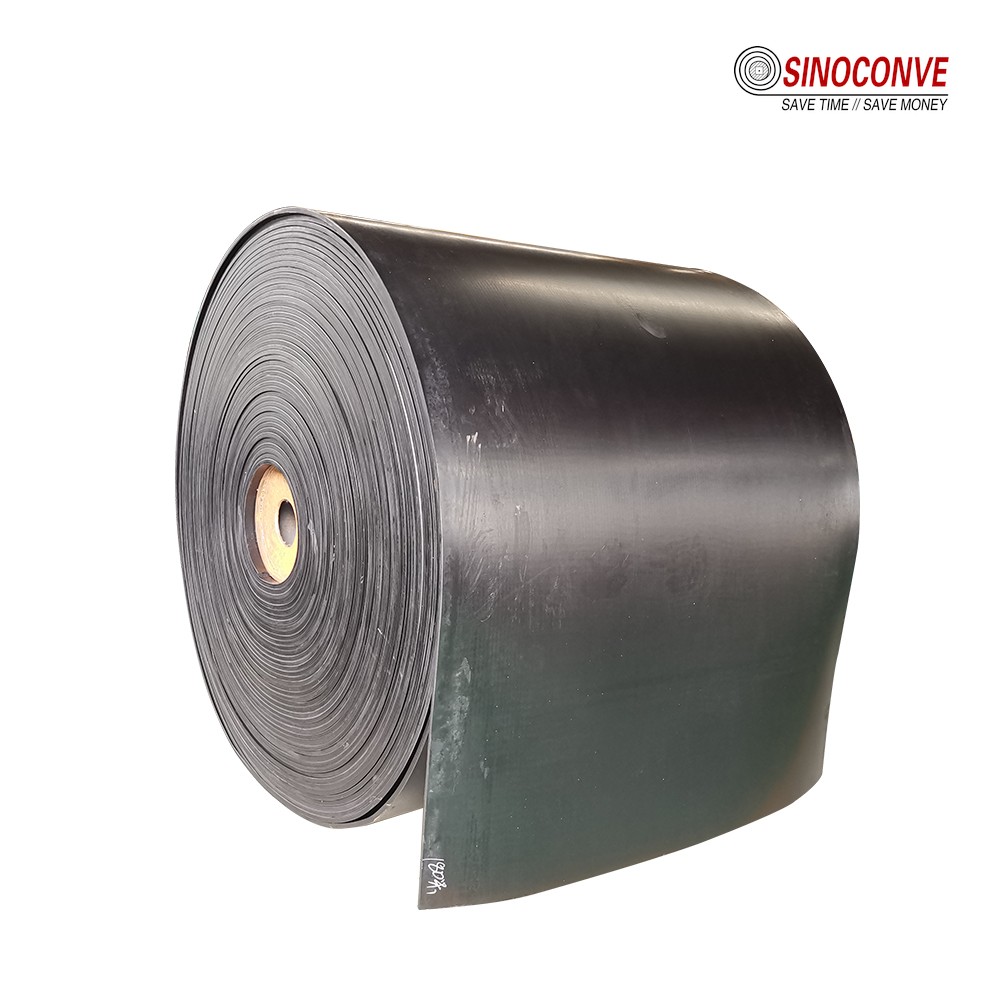
A diagonal plow a meter ahead of the tail pulley, throwing slurry into a launder instead of letting it reach the lagging.
The drive end gets blamed for slip that starts at the tail, so check the transmission before you change pulley lagging. A wet environment changes the friction available at the sheave as well as at the pulley, and a drive sized for a dry burden is suddenly working harder. Belt slip on a drive shows as glazing on the flanks and black dust under the guard, which is a different signature from a slipping conveyor pulley.
| Return side device we fit on wet sand runs | How it copes with slurry and sticky fines | Position where it earns its place on the conveyor |
|---|---|---|
| Diagonal rubber plow with light spring pressure. | Pushes the slurry sideways into a launder before it can settle. | About one meter ahead of the tail pulley on the return strand. |
| Primary polyurethane scraper on the head pulley. | Cuts the wet film without chattering and sheds fines cleanly. | Directly under the head pulley where the belt leaves the drum. |
| Spiral return idler with a continuous helical scroll. | Fines fall away from the scroll instead of building a hard ring. | First three return positions after the head pulley, where the belt is wettest. |
| Rubber disc return idler with spaced resilient discs. | Flexes under a mud load and drops the compacted sand away. | Long return spans where cleaning access is difficult for the crew. |
| Grooved or herringbone lagging on the tail pulley. | Lets water escape through the grooves instead of forming a film. | Any tail pulley smaller than four hundred millimeters in diameter. |
07Wet Slip and Mud Audit: One Shift on Foot
When a plant calls us about a slipping or wandering belt, we do not start with the belt. We start with a walk along the run while it is working, then a second walk while it is stopped. The two walks together take about four hours on a short conveyor, and they answer nine out of ten questions that a specification cannot. What follows is the version of that audit a maintenance team can run without us, using a tape, an infrared thermometer, an ammeter clamp and a notebook.
The Checks We Make on Every Wet Discharge Belt
Start at the discharge lip, not at the drive. Watch the stream for a full minute and note where it lands relative to the belt centerline. A stream that lands a hundred millimeters off center is normal on a split feed; two hundred is a chute problem that will become a tracking problem. Look at the water leaving the chute lip and estimate the flow. If you can fill a one-liter bottle in thirty seconds, you are pouring two liters a minute onto a belt that was designed to carry sand.
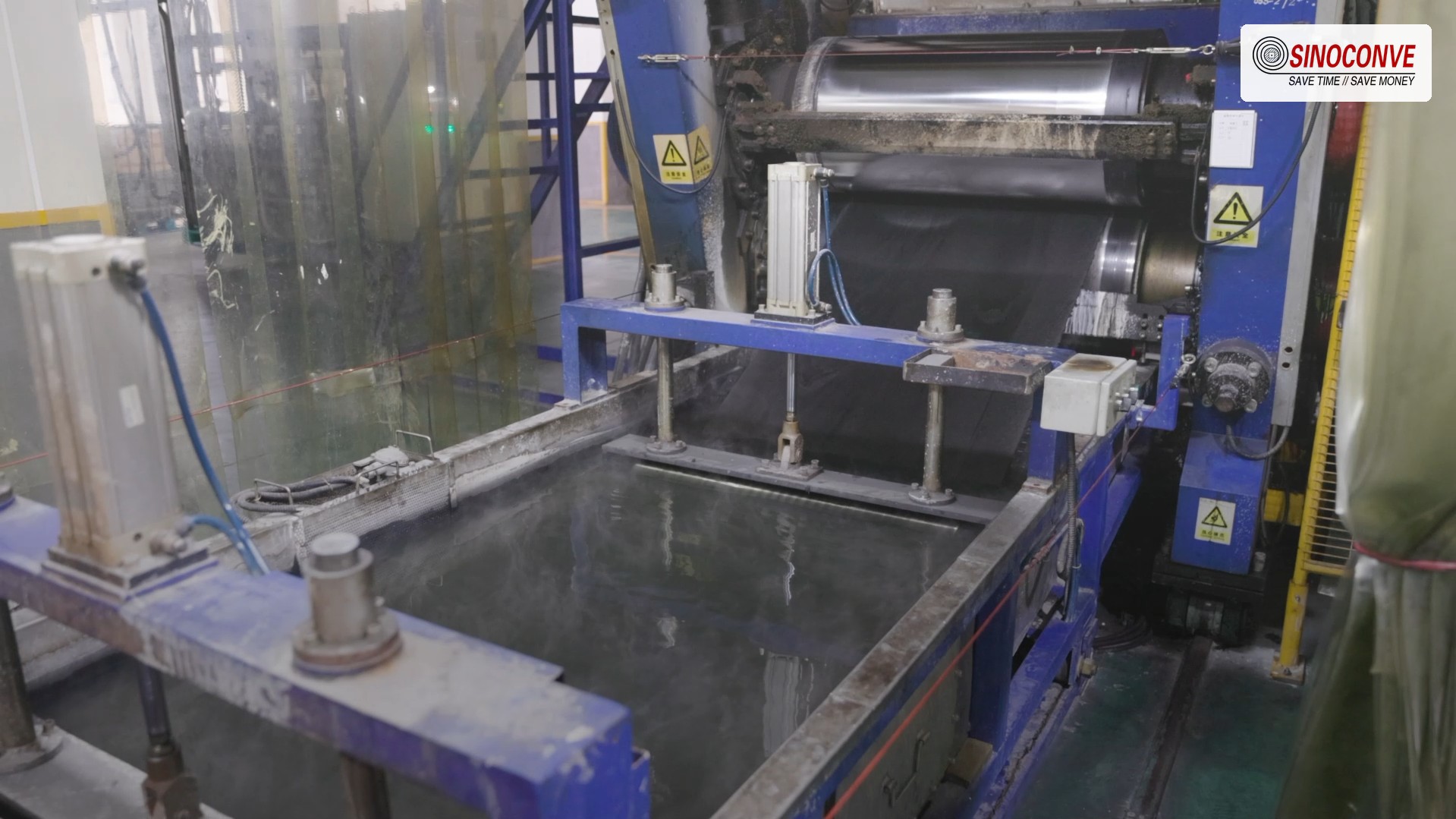
Compacted sand rings on the return idlers of a wet sand belt, the first sign that water is reaching the wrong side of the run.
| Check we carry out during the audit walk | What we record with a gauge or a note | Reading that sends us to the toolbox |
|---|---|---|
| Landing point of the discharge stream on the belt. | Offset from the centerline measured in millimeters with a tape. | Offset beyond two hundred millimeters calls for a chute adjustment. |
| Water volume running off the chute discharge lip. | Time taken to fill a one-liter container from the flow. | A liter in thirty seconds means a drain box is needed. |
| Mud ring thickness on the first three return idlers. | Thickest point of the ring measured against the bare shell. | Rings above ten millimeters justify a spiral idler upgrade. |
| Condition of the tail pulley lagging surface. | Film thickness and whether the paste transfers to a glove. | Any paste film means the plow is missing or badly placed. |
| Slip duration at start-up with a full trough. | Seconds of visible lag and the drive current during that time. | Slip beyond two seconds points to take-up travel or tension. |
| Damp width along each belt edge after the trough. | Distance from the cut edge inward that stays visibly wet. | Dampness beyond thirty millimeters suggests a transition problem. |
| Return strand tracking offset on the structure. | Gap between belt edge and frame measured at two stations. | A change of forty millimeters between stations needs alignment work. |
Field note from our engineers: A sand plant in a humid coastal climate kept losing tail pulley lagging every four months. The team had tried three compounds and two groove patterns. We found the cause in ten minutes: a fabricator had extended the discharge chute to stop a spill, which dropped the stream half a meter closer to the head pulley and shortened the drainage section to nothing. We put a drain box under the new lip and moved the plow forward six hundred millimeters. That lagging is still on the pulley two years later.
Two more checks belong in the notebook even though they are not measurements. Ask the operator when the belt last mistracked and what they did about it. If the answer involves tightening a training idler without checking the load, the belt has a load problem rather than a training problem. Then look at the splice: a wet belt with a mechanical fastener wicks water into the fabric at every hook, while a vulcanized splice with a stepped edge holds far better. Our splice versus fastener comparison explains the trade-off, and the EP tracking guide covers what to adjust when the belt still wanders. The same logic applies at the loadout end, where a wet truck shed floor is a slip hazard, and our logistics and warehousing sector page covers those layouts.

08Frequently Asked Questions About Sand Dewatering Conveyor Belts
What width do we need for the belt under a dewatering screen?
Match the width to the screen discharge opening plus a margin, not to the plant tonnage. A stream spreading across six hundred millimeters needs a belt of at least eight hundred, because it widens as it falls. Undersizing to save money is our most common cause of edge spill.
Can a standard abrasion-resistant belt handle wet sand?
It can handle it for a while, and then it will tell you why that was a bad idea. General abrasion grades are chosen for dry, sharp stone, and some lose hardness and tear strength when continuously wet. Ask for a compound intended for wet abrasion, with a hardness in the low sixties, and confirm the edge gum width at the same time. The EP rubber conveyor belt range shows how the construction is put together.
Why does the belt only slip when the plant restarts?
Because that is when the load is heaviest and the lagging is wettest. Sand settles in the trough while the plant is stopped and water drains to the tail, so the first movement happens against a static load with a lubricated pulley. Check the plow first, then measure take-up travel before touching the drive.
How often should the tail pulley be cleaned?
Weekly on a belt that carries visible free water, and daily during a wet season. Cleaning means removing the film, not hosing the area. A pressure washer aimed at the lagging with the belt locked out takes ten minutes and adds months to the pulley life. If the film returns within a shift, the problem is upstream of the pulley.
Do we need a chevron belt on the incline after the screen?
Only if the incline is steep enough to let the load slide, which usually means above eighteen degrees with wet sand. A chevron profile on a shallow wet run holds water in the pockets and makes the return side harder to clean, so the belt looks more capable while behaving worse. Read the chevron incline notes before trading drainage for grip.
What stops fine sand sticking to the return idlers?
Three things, in order of effect: keep the water off the return strand, use an idler that sheds rather than collects, and give the crew access to clean. A spiral idler will not fix a belt throwing slurry onto its own return side. Fix the plow and scraper first, then change the idlers, then put the cleaning task in the shift checklist.
Related Products You May Need
- EP rubber conveyor belt for wet sand and aggregate discharge duties
- Stone crusher and sand mining EP belt built for abrasive wet loads
- Conveyor rollers and return idlers that shed mud instead of collecting it
- Chevron conveyor belt for the steep lift after the dewatering screen
- Full product catalog covering belts, rollers and drive components
Related Blog Posts
- Gravel pit conveyor belt selection across the whole washing flowsheet
- Sand washing conveyor belt supplier guide for wash plant upgrades
- Conveyor belt cleaning methods, schedules and scraper limits
- Return side belt cleaning for wet and sticky bulk materials
- EP conveyor belt tracking guide for misalignment after water ingress
- Rubber conveyor belt cover grades explained for wet and abrasive duty