Engineered belt solutions for demanding industries worldwide

Recent Posts
Battery Recycling Conveyor Belt: Acid, Spillage and Splice Attack

Battery Recycling Conveyor Belt: Acid, Spillage and Splice Attack

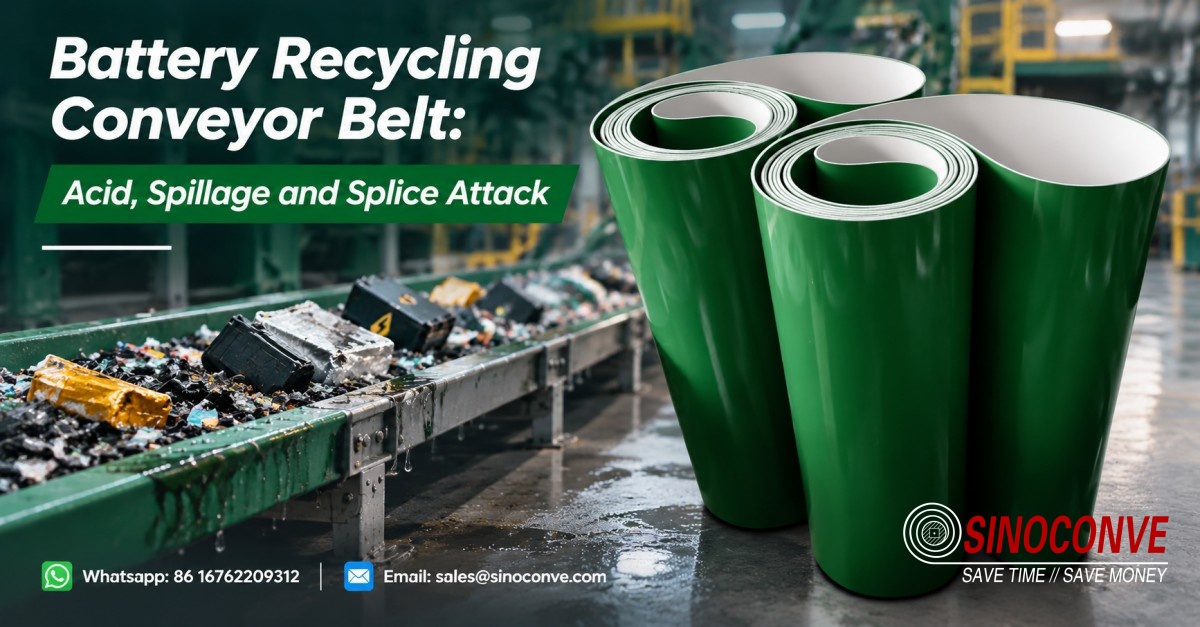
A battery recycling line does not wear a belt out with weight. It attacks it with liquid. Whole cases arrive and get thrown into the feed, some already cracked, and the electrolyte that leaks out is a small volume that keeps arriving all shift. It collects at the lowest point of the trough, it works into the splice overlap, and from there it reaches the fabric carcass, which is the one part of the belt that cannot be repaired. By the time the cover looks damaged, the splice has usually been failing for weeks. This guide follows the acid rather than the tonnage: three segments with three different duties, why the splice fails first, what acid mist and condensation do on the return strand, where washdown water actually goes, how the line sets its boundary against the mixed e-waste and tyre pages we already publish, and what to specify and check on arrival.
Demolition Waste Conveyor Belt: Rebar, Impact and Edge Damage

Demolition Waste Conveyor Belt: Rebar, Impact and Edge Damage

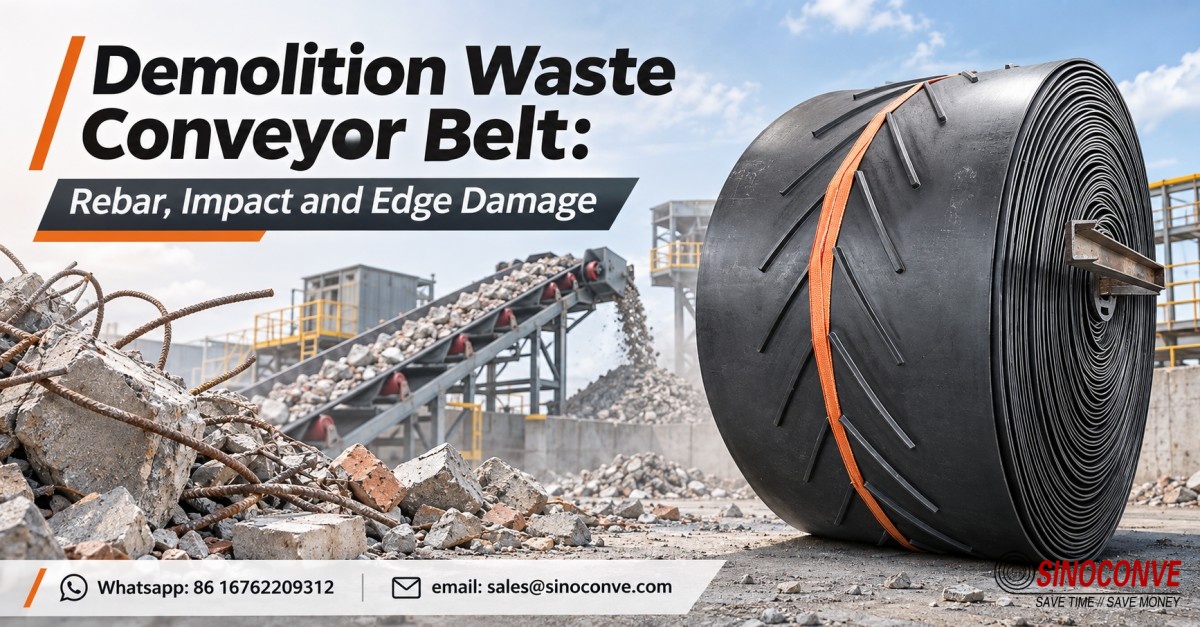
Demolition waste does not wear a belt out, it breaks it. The load arrives as a mixture of concrete, brick, timber, gypsum board and reinforcement, and the pieces that matter are the ones with an edge: rebar, angle iron, cut sheet, a bolt left in a slab. Those do three different things. They puncture and start a rip that runs the length of the belt and cannot be repaired in place. They crush the cover at the first transfer, where the drop is set by the truck or the excavator and not by the belt designer. And they cut the edge, where a sharp end rides the skirt gap and shaves the edge rubber pass after pass. Wet suppression adds a fourth problem, because the slurry it creates hides metal in a film of paste and turns fines into a load that clings. This guide separates the three mechanical failures, covers transfer design, skirt clearance, metal removal and weekly inspection, sets the boundary against e-waste and mining duty, and closes with specification and arrival checks.
Urea Prill Conveyor Belt: Keeping Prills Whole

Urea Prill Conveyor Belt: Keeping Prills Whole

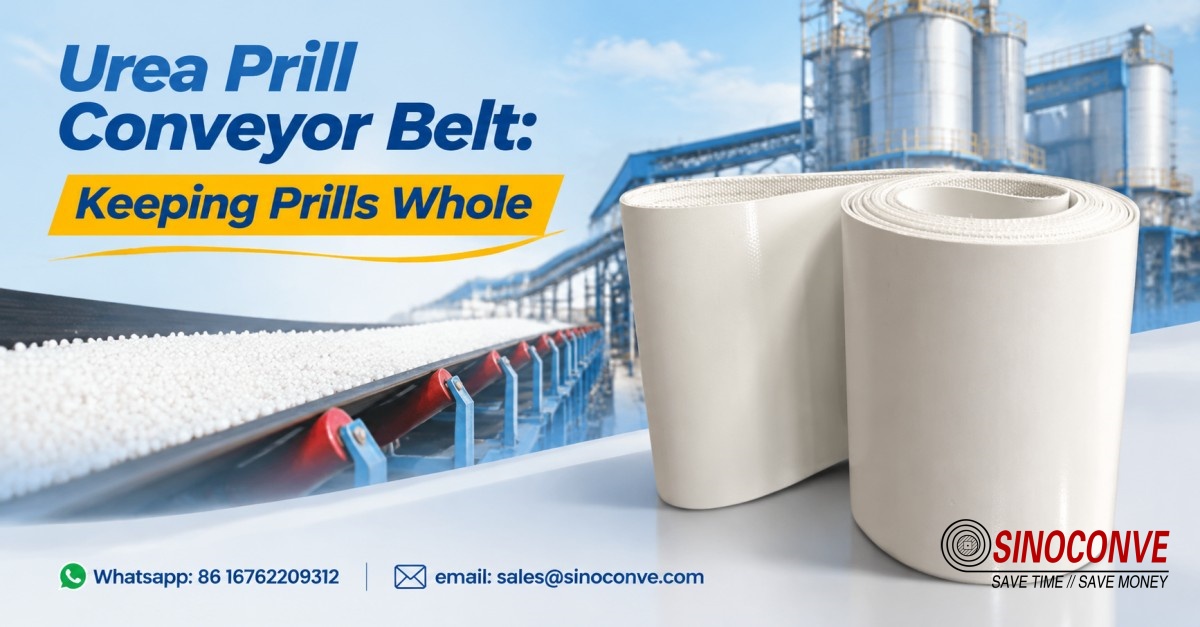
On urea, the belt is judged by what it leaves whole, not by how long the cover lasts. A prill that arrives intact is worth more than a belt that survives a year while grinding every load into dust. Breakage starts at the transfer: a free fall that is too long, a belt speed that throws the stream into the chute wall, a skirt rubber pressed down to stop spillage. The pieces that come off are not harmless. Fines have far more surface per kilo than whole prills, so they take up moisture first, and once they are damp they stick where they land: chute corners, the dead space beside the skirt, the return strand. What follows is a lump that arrives at the next transfer as a solid block and hits the cover harder than any prill could. This guide treats breakage as the root cause, covers the support and cleaner settings that either protect or punish a prill, sets the boundary against the plant level pages we already publish, and ends with what to specify and check on arrival.
Soda Ash Conveyor Belt: Moisture Pickup, Caking and Dust

Soda Ash Conveyor Belt: Moisture Pickup, Caking and Dust

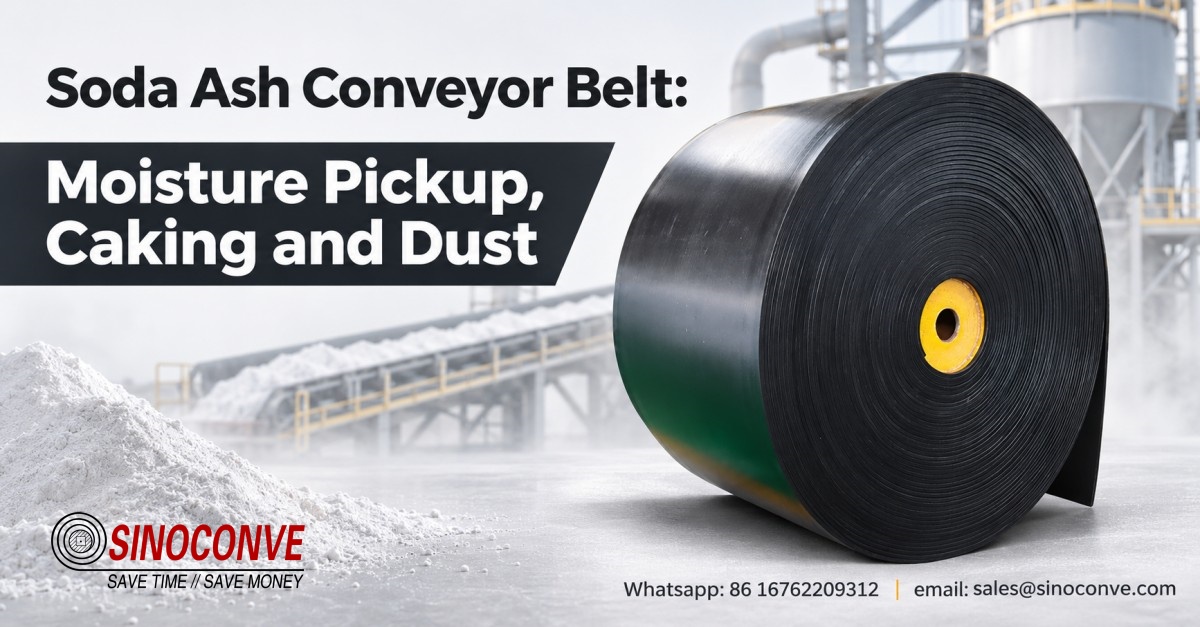
Soda ash is a moisture problem before it is a wear problem. The material leaves the drier warm, meets humid air over the belt, and condenses on the cover. Fines stick to that film, the layer thickens pass by pass, and what started as dust ends as a hard shell that has to be broken off. The mechanical damage arrives with the shell: lumps fall at the transfer point and strike the cover far harder than the material itself ever could, and a lump jammed under a skirt rubber will cut a groove in a single shift. Dust takes the second route, into roller seals and bearing housings, where it seizes a roller and marks the cover with a lengthwise score that reads like poor abrasion resistance but is not. Moisture and alkali together also reach the weakest part of any belt, the splice. This guide follows the caking path, covers contamination control where food grade product shares the line, sets the boundary against salt and general chemical duty, and ends with specification and arrival checks.
Alumina Conveyor Belt: Alkali, Residual Heat and Fine Powder

Alumina Conveyor Belt: Alkali, Residual Heat and Fine Powder

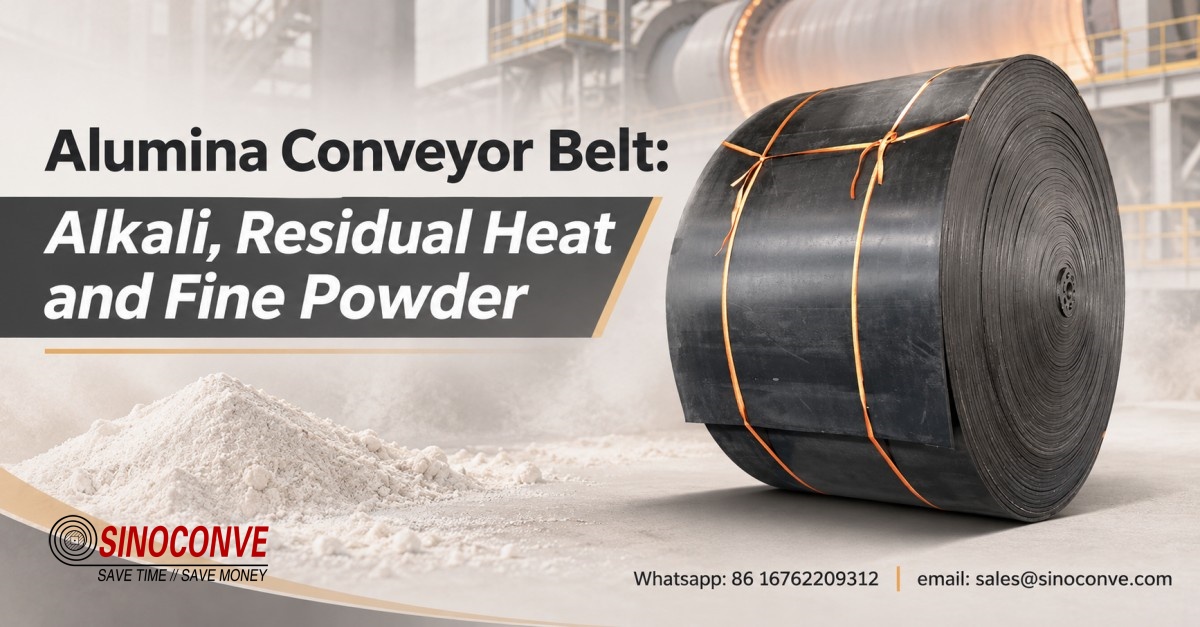
Alumina does not strike a belt the way lump ore does. It works on the cover from three directions at once: the material carries alkali, it arrives warm, and a large part of it is fine enough to stay where it lands. Alkali attack is the hardest of the three to see, because rubber does not fail by being eaten through. It swells, the surface turns tacky, hardness falls, and the cover loses the cut resistance it was bought for. Warmth accelerates that movement into the compound, which is why judging either factor alone understates the duty. The fines add a mechanical problem on top: they adhere while damp, ride back on the return strand, and load the cleaner until it stops cleaning. This guide separates the three mechanisms, explains why edge sealing and ply protection matter more than a thicker cover here, sets the boundary against bauxite and general chemical duty, and closes with the points to settle before ordering and to check on arrival.
Silica Sand Conveyor Belt: Abrasion, Dust and Fine Carryback

Silica Sand Conveyor Belt: Abrasion, Dust and Fine Carryback

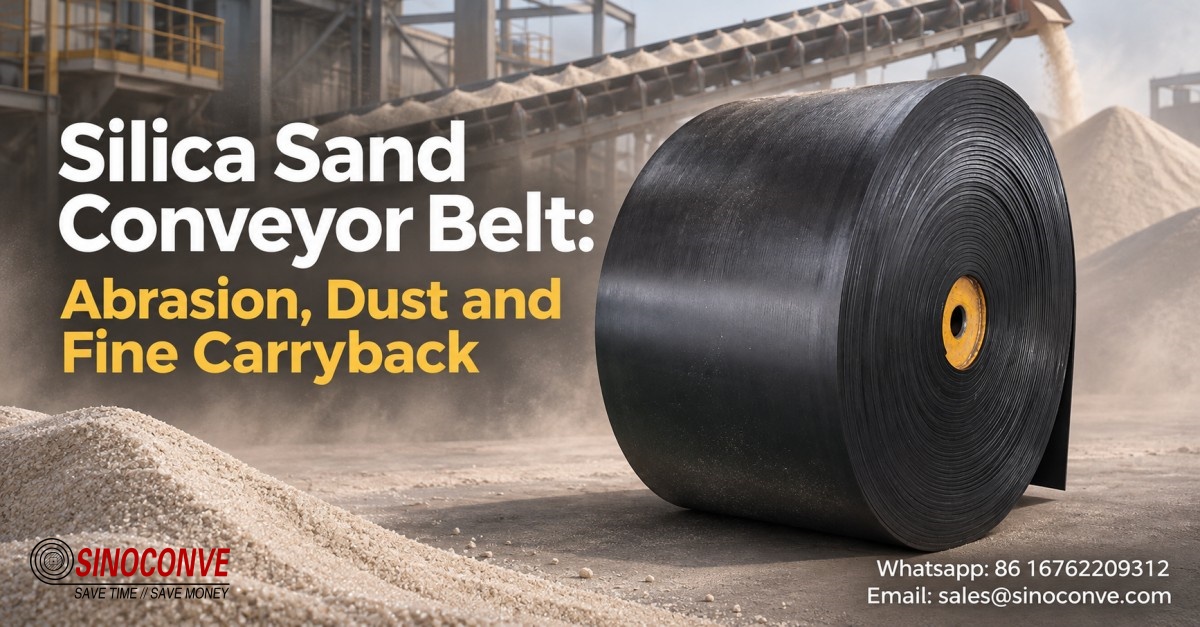
Silica sand does not dent a belt, it thins it. The damage is slow, even and easy to miss until the cover is gone in a band that follows the load centre. What drives that rate is not only how hard the grains are, but whether they flow freely or get trapped between cover and roller, because a grain under pressure cuts far more than one that rolls away. Fine particles also reach places a lump never does: the edge build, the ply ends and the gap behind a skirt rubber. Dust creates the second half of the problem, and the belt cannot solve that alone, since the same fines that settle on the return run also reach the roller seals, and a seized roller marks the cover with a groove that reads like a wear pattern but is not one. This guide separates abrasion from dust damage, explains why cleaner blades round off and stop working without anyone noticing, sets the boundary against glass cullet duty, and closes with the points worth settling before a belt for fine hard material is ordered.


Battery Recycling Conveyor Belt: Acid, Spillage and Splice Attack

Battery Recycling Conveyor Belt: Acid, Spillage and Splice Attack

A battery recycling line does not wear a belt out with weight. It attacks it with liquid. Whole cases arrive and get thrown into the feed, some already cracked, and the electrolyte that leaks out is a small volume that keeps arriving all shift. It collects at the lowest point of the trough, it works into the splice overlap, and from there it reaches the fabric carcass, which is the one part of the belt that cannot be repaired. By the time the cover looks damaged, the splice has usually been failing for weeks. This guide follows the acid rather than the tonnage: three segments with three different duties, why the splice fails first, what acid mist and condensation do on the return strand, where washdown water actually goes, how the line sets its boundary against the mixed e-waste and tyre pages we already publish, and what to specify and check on arrival.

Demolition Waste Conveyor Belt: Rebar, Impact and Edge Damage

Demolition Waste Conveyor Belt: Rebar, Impact and Edge Damage

Demolition waste does not wear a belt out, it breaks it. The load arrives as a mixture of concrete, brick, timber, gypsum board and reinforcement, and the pieces that matter are the ones with an edge: rebar, angle iron, cut sheet, a bolt left in a slab. Those do three different things. They puncture and start a rip that runs the length of the belt and cannot be repaired in place. They crush the cover at the first transfer, where the drop is set by the truck or the excavator and not by the belt designer. And they cut the edge, where a sharp end rides the skirt gap and shaves the edge rubber pass after pass. Wet suppression adds a fourth problem, because the slurry it creates hides metal in a film of paste and turns fines into a load that clings. This guide separates the three mechanical failures, covers transfer design, skirt clearance, metal removal and weekly inspection, sets the boundary against e-waste and mining duty, and closes with specification and arrival checks.

Urea Prill Conveyor Belt: Keeping Prills Whole

Urea Prill Conveyor Belt: Keeping Prills Whole

On urea, the belt is judged by what it leaves whole, not by how long the cover lasts. A prill that arrives intact is worth more than a belt that survives a year while grinding every load into dust. Breakage starts at the transfer: a free fall that is too long, a belt speed that throws the stream into the chute wall, a skirt rubber pressed down to stop spillage. The pieces that come off are not harmless. Fines have far more surface per kilo than whole prills, so they take up moisture first, and once they are damp they stick where they land: chute corners, the dead space beside the skirt, the return strand. What follows is a lump that arrives at the next transfer as a solid block and hits the cover harder than any prill could. This guide treats breakage as the root cause, covers the support and cleaner settings that either protect or punish a prill, sets the boundary against the plant level pages we already publish, and ends with what to specify and check on arrival.

Soda Ash Conveyor Belt: Moisture Pickup, Caking and Dust

Soda Ash Conveyor Belt: Moisture Pickup, Caking and Dust

Soda ash is a moisture problem before it is a wear problem. The material leaves the drier warm, meets humid air over the belt, and condenses on the cover. Fines stick to that film, the layer thickens pass by pass, and what started as dust ends as a hard shell that has to be broken off. The mechanical damage arrives with the shell: lumps fall at the transfer point and strike the cover far harder than the material itself ever could, and a lump jammed under a skirt rubber will cut a groove in a single shift. Dust takes the second route, into roller seals and bearing housings, where it seizes a roller and marks the cover with a lengthwise score that reads like poor abrasion resistance but is not. Moisture and alkali together also reach the weakest part of any belt, the splice. This guide follows the caking path, covers contamination control where food grade product shares the line, sets the boundary against salt and general chemical duty, and ends with specification and arrival checks.

Alumina Conveyor Belt: Alkali, Residual Heat and Fine Powder

Alumina Conveyor Belt: Alkali, Residual Heat and Fine Powder

Alumina does not strike a belt the way lump ore does. It works on the cover from three directions at once: the material carries alkali, it arrives warm, and a large part of it is fine enough to stay where it lands. Alkali attack is the hardest of the three to see, because rubber does not fail by being eaten through. It swells, the surface turns tacky, hardness falls, and the cover loses the cut resistance it was bought for. Warmth accelerates that movement into the compound, which is why judging either factor alone understates the duty. The fines add a mechanical problem on top: they adhere while damp, ride back on the return strand, and load the cleaner until it stops cleaning. This guide separates the three mechanisms, explains why edge sealing and ply protection matter more than a thicker cover here, sets the boundary against bauxite and general chemical duty, and closes with the points to settle before ordering and to check on arrival.

Silica Sand Conveyor Belt: Abrasion, Dust and Fine Carryback

Silica Sand Conveyor Belt: Abrasion, Dust and Fine Carryback

Silica sand does not dent a belt, it thins it. The damage is slow, even and easy to miss until the cover is gone in a band that follows the load centre. What drives that rate is not only how hard the grains are, but whether they flow freely or get trapped between cover and roller, because a grain under pressure cuts far more than one that rolls away. Fine particles also reach places a lump never does: the edge build, the ply ends and the gap behind a skirt rubber. Dust creates the second half of the problem, and the belt cannot solve that alone, since the same fines that settle on the return run also reach the roller seals, and a seized roller marks the cover with a groove that reads like a wear pattern but is not one. This guide separates abrasion from dust damage, explains why cleaner blades round off and stop working without anyone noticing, sets the boundary against glass cullet duty, and closes with the points worth settling before a belt for fine hard material is ordered.
Explore more

We are committed to providing you with better products and services. Welcome to browse more content for details