
Alumina Conveyor Belt: Alkali, Residual Heat and Fine Powder
A belt in the alumina storehouse has begun shedding dust at the first return roller. Somebody writes “abrasion” on the maintenance sheet. Fair enough, until the old belt comes off: most of its top cover is still there. The head pulley cleaner is carrying a ridge of powder, and the splice has lifted at one shoulder. Ordering more top cover would leave the ridge, the roller and the splice exactly where they were.
We need three answers before naming a grade. Where on the refining route is this conveyor? What temperature does the product have when it actually lands on the rubber? And has anyone tested the damp deposit at the scraper for alkalinity? Finished calcined alumina is washed during production; caustic soda used earlier in the Bayer process is not proof that a dry loadout belt is bathing in it. A wet transfer beside a liquor leak is another matter. Put those two belts on one generic “alkali-resistant alumina” order and at least one is likely to be a poor fit.

01Start at the process boundary
A tour of the line is more useful than starting with a brochure. Take the belt from cooler outlet to storage, then follow its empty return. At the first hot transfer, note the product temperature after the cooler has reached normal load. Keep a separate record for startup and any hot surges. At the next transfer, look for wash water, pipe drips and a wet shelf below the chute. At discharge, check where the cleaner drops its scrapings. Is the powder going back into the chute, or accumulating behind the blade and being dragged around the pulley?
There's a distinction in the samples too. A scoop of dry alumina from the belt tells you about particle size. It doesn't tell you the pH of the liquid soaking a splice. If there is a persistent damp patch, sample that particular patch. Write the date, operating state and location on the container. The number is useful only if the sample represents what contacted the belt.
| Conveyor position | Check first | Likely belt concern | Hardware to inspect |
|---|---|---|---|
| Hot discharge or first transfer | Actual product and belt-surface temperatures during startup and steady load | Cover hardening, cracking or loss of adhesion after repeated heat exposure | Chute drop, impact support and ventilation |
| Wet or liquor-adjacent transfer | Deposit pH, liquid contact time and wash frequency | Compound and splice compatibility with the measured fluid | Drainage, edge sealing and cleaner position |
| Dry storage and loadout | Fine carryback, dust escapes and return-idler deposits | Cleaning performance and abrasion at trapped contact points | Primary and secondary cleaners, enclosure and return rollers |
| Port or exposed conveyor | Rain intrusion and wet/dry cycling | Paste build-up, tracking and edge damage | Skirts, covers, collection trays and access for cleaning |
One order form for both ends of the alumina route can be misleading. At the mine, bauxite may arrive in large pieces, and the first drop can leave cuts in a new cover. Once the refinery has made finished powder, the maintenance crew may instead spend its time on dust, cleaner alignment and a return roller packed white. The loading chute still matters; it simply may not be the place where the belt's life is being decided. See the separate bauxite belt discussion for the mine-end conditions.
02Finding the wet contact point
Start with the damp chute. Once the white powder is wiped off, there is a rubber surface to compare with the dry stretch by the tail. Both patches need to cool first. If the chute patch still feels gummy, note the belt position and the last washdown. By morning the evidence may have been scraped away. A change beside the drain points one way; a long scrape on the frame side points another.
An ‘alkali-resistant’ label does not say what liquid the compound can stand. A cool splash, a hot film that sits for a shift and a continuous soak are different tests. Give the supplier the solution identity, concentration where known, temperature and contact pattern. Include the proposed splice materials. The liquid may leave the top cover looking unremarkable while working along an exposed ply at the edge. That possibility is a reason to sample the wet deposit now. Otherwise the next order is built around a chemical that nobody has identified.
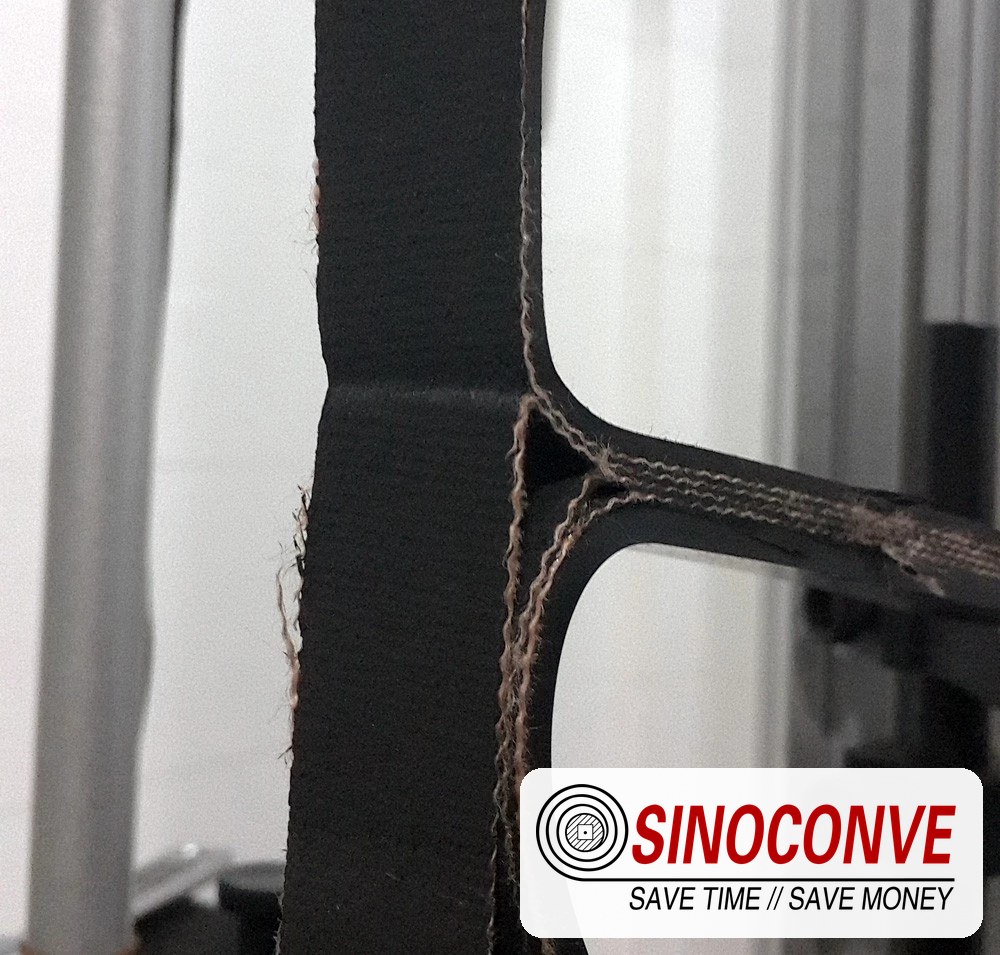
The cut edge in the photograph has more than one possible history. Water can enter exposed plies. A belt that ran against a frame can also fray there, and a weak splice bond may open in much the same fashion. Mark the location of the opening on the conveyor drawing. Does it begin at a wet transfer? Does it follow the same side for the whole run? The pattern makes the photograph useful.
03Residual heat: measure the material at contact
The temperature on the calciner display is easy to find. It is also the wrong number for a belt order. The useful reading is at the chute where product touches the rubber, taken with the line loaded and the cooler working normally. Repeat it on startup if the cooler has not yet settled. Write the duration beside each peak reading. Perhaps the peak lasted a minute while the cooler settled. The following seven hours might have been unremarkable. Both entries belong together on the temperature sheet.
A crew may spot heat damage first at a bend. Under the chute, the cover sits beneath the fresh material. At a pulley, it must bend. A crack seen only at the bend raises a flex question; a brittle streak fixed beneath one skirt asks whether hot powder is lodging there. If the issue is a wet, peeling splice instead, heat alone is a weak explanation. Ask for the proposed cover's temperature test conditions, not a bare ‘heat resistant’ phrase on a quotation.
It is tempting to order another two millimetres of cover. That helps only when there is something to wear away. It cannot change the rubber's response to heat or caustic liquid. The extra rubber has to travel round the same small pulleys. If a thicker construction is proposed, the diameter of the smallest pulley belongs beside the proposed belt thickness on the approval drawing. The heat-resistant belt guide covers the grades. Write the contact-temperature readings alongside it when comparing quotations.
04Fine powder follows the return run
A light dust film is easy to miss at the head pulley. The head pulley has discharged the load, yet a white film continues round with the belt. One return roller wears a thicker coat on its left half. That is enough to push the belt toward a guard. By the time the edge touches the guard, the uneven roller is easy to overlook. Its white crust points back toward the head discharge. If the film got past the head cleaner, the replacement belt will carry it past the cleaner too.
If one stripe survives the head cleaner, look at where it crosses the blade. The belt may have shifted sideways; the blade might also be out of level. Check its contact and the raised splice shoulder while the conveyor is isolated. Powder scraped off at the head ought to fall away. A shelf behind the blade catches it and, as the pile grows, some is carried round again. Water cleaning also needs a drain, or paste will dry below the return run.
On a dry loadout line, the white haze at a transfer may be the larger nuisance. Enclosure and extraction deal with powder in the air. The cleaner deals with the powder stuck to the moving cover. The two jobs need separate checks at the machine. Map where the dust appears before adding equipment, then read the return-side cleaning and carryback notes against the line's actual layout.
05Cover, carcass, edges and splice
Once the exposure record is on the table, the cover decision becomes less mysterious. A cool, dry storage belt may be served by a suitable abrasion-grade cover and a cleaner that works. Warm product asks a heat-ageing question. A belt sitting under alkaline liquid asks a compatibility question. For the hot, wet transfer, put both conditions on the same line of the enquiry. A data sheet with one heat claim and another chemical claim leaves the combined exposure unanswered.
| Observation on the old belt | Possible mechanism | Check before changing specification |
|---|---|---|
| Cover thin across the loaded width | General abrasion or repeated cleaning contact | Wear distribution, cleaner pressure, belt speed and material contamination |
| Soft or tacky patch near wet deposits | Fluid exposure or incompatible cleaning agent | pH, solution identity, contact time and comparative sample testing |
| Hard surface with cracks at bends | Heat ageing or flex fatigue | Actual temperatures, pulley diameter and local operating history |
| Edge fray and exposed plies on one side | Tracking contact, liquid ingress or splice workmanship | Frame clearance, idler alignment, wet zones and splice record |
| White buildup on return rollers | Carryback after discharge | Cleaner setup, belt surface, discharge path and collection |
Cover choice settles only the outer layer. The tension calculation and take-up range settle what has to carry the load beneath it. An EP fabric belt may suit the moderate run in the plant, but the long main line has to be checked separately; matching the old ply count by eye is no calculation. At the wet end, inspect the edges and splice before worrying about another cover grade. A sound face does little good when liquid travels down an exposed ply. Ask for the splice procedure and compatible materials; keep the crew's cure record. The splice checklist can sit beside the crew record at handover.
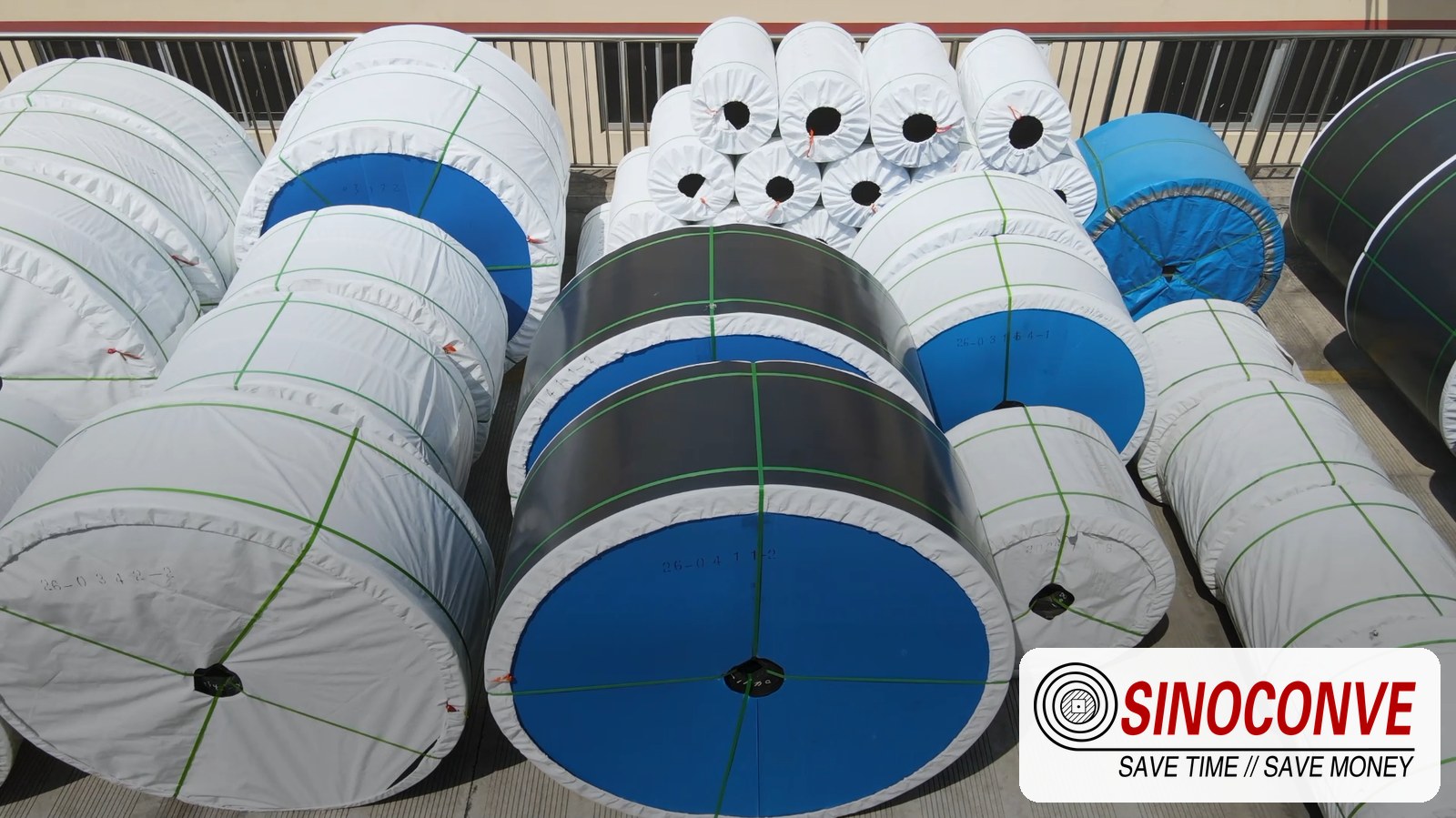
The underside and two splice shoulders are still visible before the cutting starts; add them to the removal photographs. Plot the damage on the conveyor drawing. A cut after a scraper points to different hardware from one under the feed chute. The old belt rating, dimensions and smallest pulley diameter belong beside those photographs in the replacement enquiry.
06What to put in the RFQ
“Alumina duty, 1,000 mm wide” could describe several quite different conveyors. Put the stream in the RFQ—calcined powder, hydrate or a mixture—along with its temperature at the loading chute. Add any wet deposit, speed, incline, trough, pulleys, throughput and cleaner layout. If the old edge failed twice at the same spot, attach the location map.
| RFQ entry | Useful detail to attach | Why it matters |
|---|---|---|
| Material condition | Product name, moisture, deposit pH and any cleaning fluids | Separates dry powder handling from actual chemical exposure |
| Temperature | Normal and peak material temperatures at belt contact, with duration | Sets the heat-ageing duty rather than the upstream equipment rating |
| Machine layout | Measured pulley diameters; drawing with speed, incline and trough angle | Shows whether the proposed carcass can bend and track here |
| Loading and cleaning | Drop height, skirt arrangement, cleaner positions and washdown practice | Shows where impact, paste and return-side buildup begin |
| Acceptance records | Agreed cover properties, adhesion tests, dimensions and splice method | Makes the delivered belt comparable with the quotation |
The cheapest quote may describe the cover in the most general terms. A useful comparison has the compound and test conditions, carcass, edge treatment and splice materials in adjacent columns. For any heat-and-alkali claim, the test exposure should be identifiable. At receiving, compare the roll marking and measurements with that sheet, check both edges and cut a labeled offcut for the maintenance file. Six months later, it is the reference piece for any soft or brittle patch.
07Commissioning checks and a useful inspection log
Before pulling the new belt, clear the old powder and check the return rollers during isolation. Watch the splice pass the cleaners. Run empty, then loaded; note tracking at the head, chute and tail. Afterward, revisit skirt and blade settings. A crust left by the old belt can score a new cover in its first week.
A useful log names places. ‘Belt condition good’ tells the next shift almost nothing. Fix the camera positions in the inspection log: head cleaner, first return roller, splice and each edge. The note beside a photograph should say whether the belt was still warm, just washed, or cold after a night shut down. When a patch turns tacky, harder scraper pressure can erase the clue and damage the rubber. Keep the setting recorded until the patch is investigated. If only one side wears, see what touches it. Such notes let the next buyer tell a material problem from a layout problem.
SINOCONVE manufactures conveyor belts and reviews construction against the recorded duty. Rollers and other components are supplied through qualified partners. Send the transfer drawing, temperature readings and failed-belt photographs with the enquiry.
Request an alumina belt specification review
08Questions that come up during belt replacement
Dry loadout: is there any caustic contact?
Only when caustic liquid actually reaches the line. Finished powder has passed a wash stage before calcination. Its presence says little about a leak or a wet shelf nearby; sample the wet deposit if one exists.
Can the cooled storage line keep a standard abrasion cover?
If the top cover is uniformly worn thin, abrasion deserves attention. If it is still thick while the return rollers carry white rings, start at the cleaner. A measured hot load or alkaline leak would change that judgement.
Where does the white coating on the return rollers come from?
At the head, a thin stripe may escape the blade. Follow that stripe to the first return roller. A matching ring shows where the residue went. Dust blowing in from an open transfer leaves a different pattern.
Is the top cover actually worn thin?
If it is, extra cover can add life. If the thickness is still there but one stripe has softened or been scored by the cleaner, adding rubber leaves the cause in place. The smallest pulley also limits how thick the replacement can sensibly be.
Which samples explain the soft patch?
One strip from the patch, one unused offcut from that roll, and the liquid collected where the patch formed. On each bag, write where it came from; on the liquid jar, add the temperature. Otherwise three anonymous samples arrive at the lab with no way to relate them.
Why not use the bauxite belt specification for alumina?
Bauxite from the mine can arrive in chunks that cut at a loading point. Finished alumina moves as powder. On its conveyor, a cleaner missing a narrow stripe may matter more than impact strength—unless the line has another load or a hot upset to account for.