
Engineered belt solutions for demanding industries worldwide

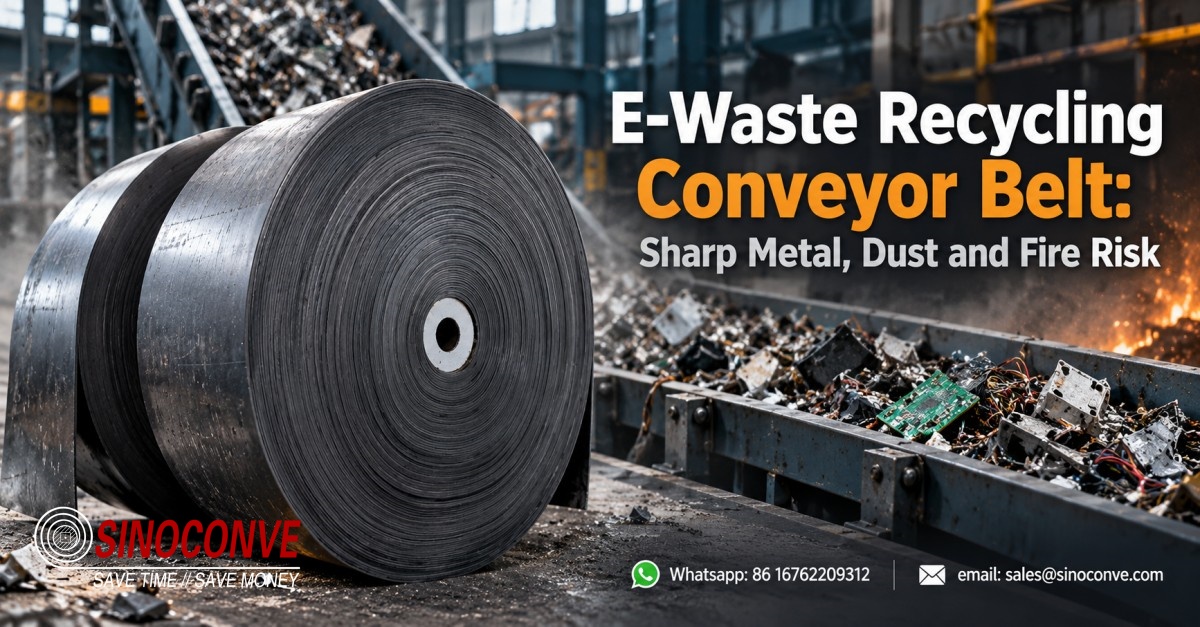
E-Waste Recycling Conveyor Belt: Sharp Metal, Dust and Fire Risk

  • product introduction
Posted by SINOCONVE On Oct 30 2026

E-Waste Recycling Conveyor Belt: Sharp Metal, Dust and Fire Risk

A conveyor that carries intact appliances on Monday may carry shredded circuit boards and loose wire on Tuesday. Calling both loads “e-waste” hides the failure mechanism. The incoming pieces can cut the cover, wrap a shaft, bury a sensor in dust or bring a damaged battery into the line. The belt specification should begin with the segment and the material reaching it.

Contact SINOCONVE about an e-waste recycling conveyor belt

01 Map the material at each transfer

A bent bracket arrives on an edge; a broad casing lands flat. A single average density cannot describe those contacts.

Segment What arrives First question for the belt and frame
Receiving Whole units, casings, boards, occasional protruding metal Does the largest item bridge the loading skirts?
Shredder discharge Mixed chips, sharp edges and wire tails Where does the impact land, and what supports the belt there?
Inspection Spread-out pieces, dust and light foil Can operators see and remove exceptional items safely?
Outbound Dense packages, strapping and residue Can the discharge clear without material staying on the return?

02 Separate cutting, puncture and repeated gouging
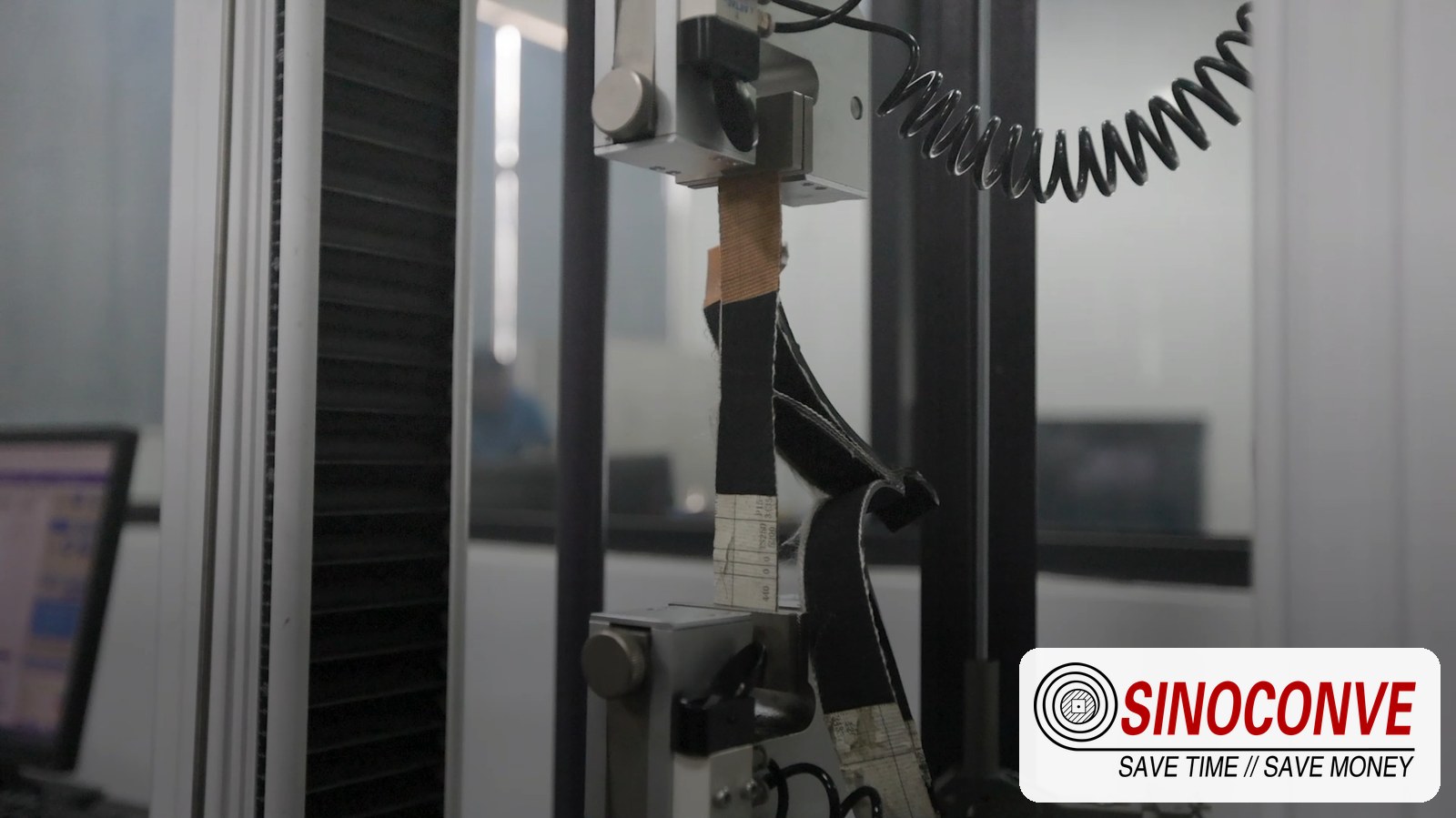
Conveyor belt sample under tensile testing in the SINOCONVE laboratory

An impact cut often starts at the loading point. The belt may have a slit, flap or local exposure of fabric after an awkward chassis corner lands edge-first. Check the fixed structure above that line and the support beneath it before calling the cover too soft.

Support under the drop point changes the load path. A breaker layer can limit damage reaching the load-bearing plies on a specified construction; ask for the belt maker's evidence for that duty. No fabric insert makes the cover immune to a sharp metal point.

Damage signature Look at first Keep for comparison
Single slit near loading Drop height, item orientation and support Photograph both faces and save the object if found
Pin-sized hole Metal point and belt support Mark the hole's position across the width
Long groove Chute, skirt and repeated material lane Measure cover thickness on and beside the groove
Ply separation around cut Cover-to-ply bond and water or chemical ingress Keep a clean cut sample for examination

03 Wire wrapping is a geometry problem

Loose cable and thin foil can escape through a skirt gap, fall from the head or settle on the return. A free end caught at a tail pulley, shaft, bearing guard or exposed roller can wind into a collar. The symptoms may appear first as noise, tracking drift or a changing return path. The belt can be intact while the drive is already under abnormal load.

Walk the path that a loose wire can take. Close unintended openings without creating an inaccessible trap.

Where a cleaner can reach the flat return, verify its contact after the belt is loaded and tracking. If powder collects at a chute transition, move the deposit path or provide an accessible collection point. A maintenance instruction to “clean more often” is weak when a bracket blocks the place that needs cleaning.

04 Put batteries before belt compound in the fire assessment
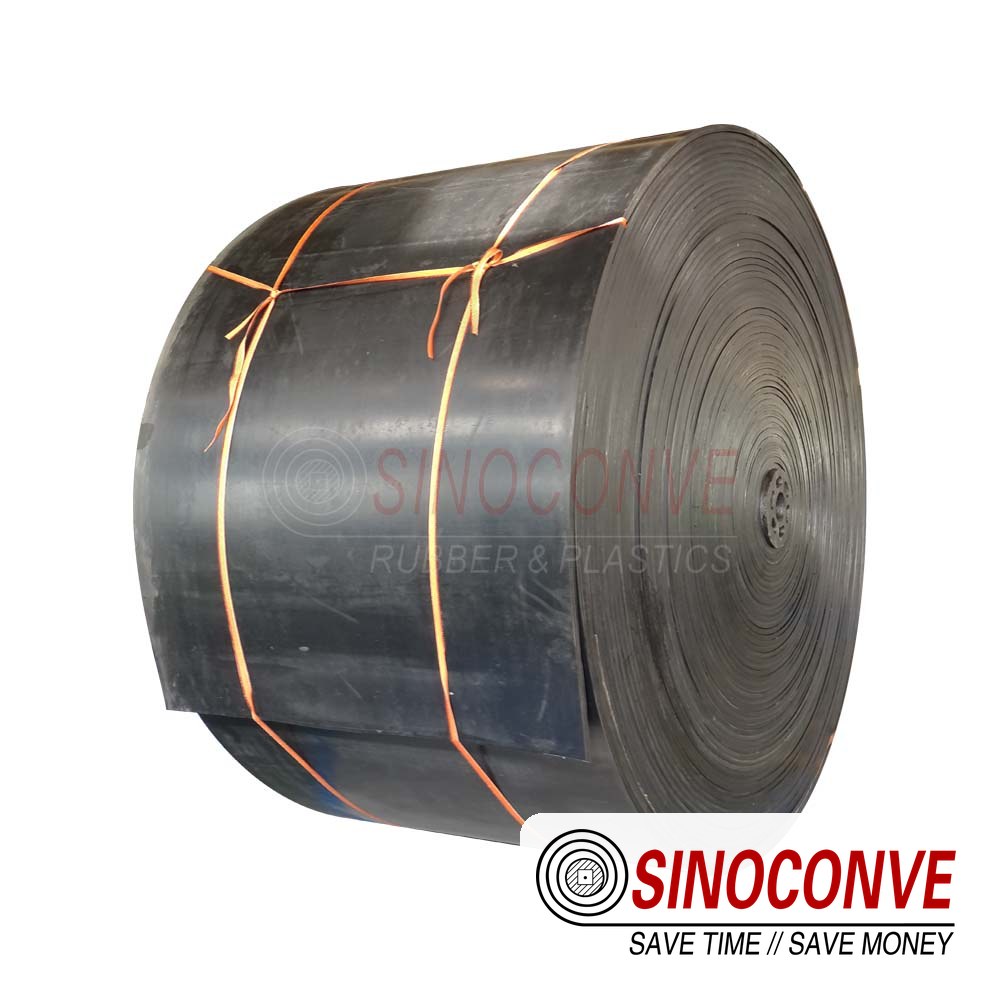
Finished rubber belt roll showing its cover and edge

A damaged cell may arrive hidden in a device. A belt chosen only for cut resistance does not remove that source. Incoming identification and separation, a plan for damaged items, detection where suitable, trained staff and a site emergency response plan belong ahead of any cover grade.

A crushed lithium-ion cell can heat, vent or burn. The belt test describes the belt under test conditions. It says nothing about whether the line can contain that battery event.

Fire-control question Evidence the buyer should request
Battery screening Where devices and loose cells are identified, removed and routed
Detection and controls What alarm stops which feed, and how operators verify the location
Belt material Test standard, result and traceability for the proposed cover
Housekeeping Access to ledges, return and chute deposits; cleaning record
Emergency response Written procedure, training and designated handling of damaged batteries

05 Specify by segment, not by one plant-wide belt code

For e-waste, request evidence on cut and tear behavior, adhesion and any flame requirement that applies. Do not substitute a general “heavy duty” label for those fields. Check the smallest pulley and splice against the proposed construction.

A cleat can help lift material but gives wire and fines more places to stay. Check the incline and cleaning route first.

06 Inspect the new belt against a baseline
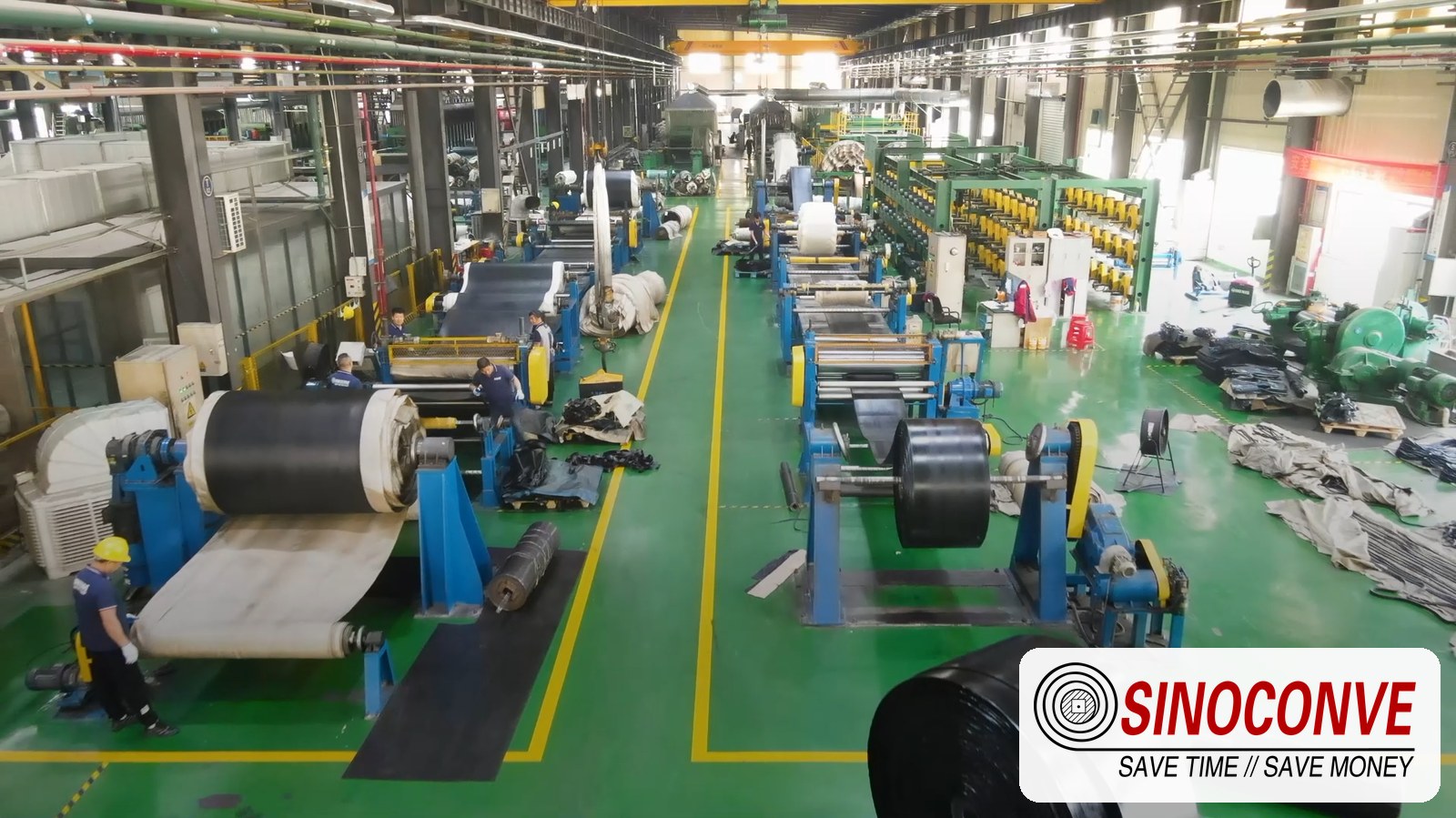
Conveyor belt production at the SINOCONVE workshop

At receipt, compare roll identification with the order. Measure width, covers and the edge; check that the splice plan fits the installed centre distance. Record the pulley diameters and the loading point as built.

Observation Likely next check Record
Cuts clustered under the chute Drop and support geometry Position and depth of each cut
One narrow gouge lane Fixed contact or repeated feed path Distance from belt edge and cover loss
Edge fraying on one side Tracking, skirt and tail clearance Operating position under load
Wire at the tail Escape path from carry or return Where the first wire catches
Powder on return Discharge and cleaner contact Deposit location and cleaning interval

Keep a spare plan for the strand whose failure stops the whole plant. Identify each spare by belt length, width, cover, carcass and joint. A spare roller supplied through a qualified component partner is a separate item from the belt itself.

07 What to send with an enquiry

Send the process stage, photos of the feed and any failed belt, largest sharp object, belt width and centre distance, pulley diameters, speed, load estimate, drop geometry, cleaning method and local fire requirements. Mark the proposed splice position.

Request a conveyor belt quote from SINOCONVE

Frequently asked questions

Can a standard EP belt carry shredded electronics?

It may carry the load, but the answer depends on cover, breaker design, drop point and fire requirements. Compare the damage pattern and actual duty with a proposed construction rather than choosing from the EP label alone.

Will a thicker cover stop punctures?

Inspect impact support, drop height and a possible breaker construction. A long groove also calls for a search for fixed contact.

How do we stop wire wrapping the tail?

Trace where loose wire escapes the carrying path, remove catch points where practical and provide guarded access for inspection and isolation. Bearing seals alone do not stop external wrapping.

Is a flame-resistant belt enough on its own?

No. Battery screening and the site fire response remain separate from the belt test result.

What belongs on the replacement order?

Segment and material, dimensions, covers and carcass, pulley schedule, splice, cleaning arrangement, test requirements and the observed failure. Include the maximum sharp item and loading method.
Featured Blogs

Share On
Featured Blogs
E-Waste Recycling Conveyor Belt: Sharp Metal, Dust and Fire Risk

E-Waste Recycling Conveyor Belt: Sharp Metal, Dust and Fire Risk

Electronic waste is not one material. A single line carries complete units, stripped cases, shredded mix, fine powder and loose cable, and each of those attacks a belt differently. Sheet metal with a torn edge cuts; repeated impact from the same edge dents and chips; wire and foil wrap around anything that rotates; dust from shredding sticks to a damp cover and comes back on the return run. The risk that separates e-waste from other recycling duty is the battery. A damaged cell in the feed is an ignition source, and once it is on the belt the belt becomes fuel, so compound choice, housekeeping and stop-and-clear discipline matter more than headline specifications. This guide covers each segment of the flow, the difference between cutting and puncture, why wrapping starts where material leaves the intended path, how to keep the fire case first in decisions, and what to ask a supplier and inspect on arrival.

Iron Ore Conveyor Belt: Density, Sharp Edges and Impact

Iron Ore Conveyor Belt: Density, Sharp Edges and Impact

Iron ore punishes a belt in three ways at once: it is heavy, it arrives sharp, and it lands hard. That combination changes what to specify. A cover chosen for slow abrasion loses to a cover chosen for cutting, because the damage is a gouge rather than a polish. The carcass question is not simply heavy duty either. It is whether the line needs the impact tolerance of fabric plies at the loading point or the low stretch of steel cord over a long haul, and the answer often differs between the mine conveyor and the overland run that follows it. This guide works from the load itself: what bulk density and lump shape do to the belt cross section, why cut resistance and abrasion resistance are separate properties, how the loading point decides service life more than the carrying run does, and how fines and moisture turn into carryback, misalignment and edge damage. It closes with what to specify, what to inspect on delivery, and the questions worth settling before the belt is ordered.

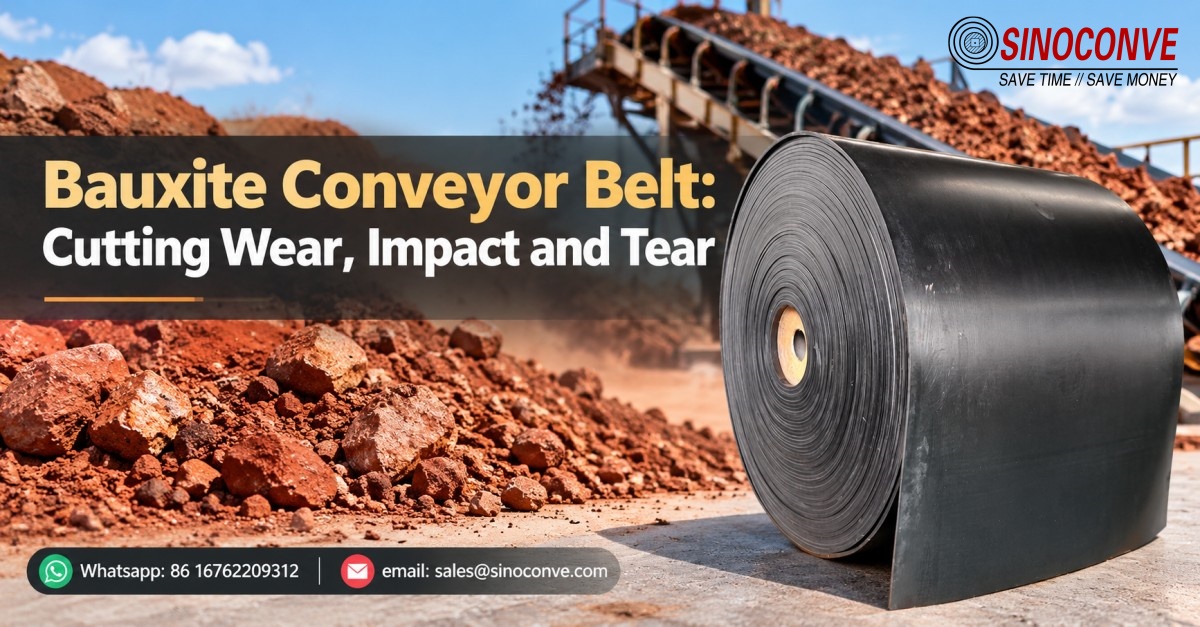
Bauxite Conveyor Belt: Cutting Wear, Impact and Tear

Bauxite Conveyor Belt: Cutting Wear, Impact and Tear

Bauxite does not polish a cover away the way fine sand does. The lumps arrive angular, often wet, and they land hard, so the damage is cutting and impact rather than slow grinding. That single fact changes what to specify: a cut-resistant cover matters more than a hard one, the loading point matters more than the carrying run, and tear protection earns its place because a jammed lump or a piece of tramp steel is what actually stops a bauxite line. Lateritic ore and sedimentary ore behave differently again, one sticky and wet, the other blocky and dry, and a belt chosen for one will disappoint on the other. This guide works from the ore body to the ship loader: lump shape and wear mode, the two ore types side by side, impact at the transfer, tear and tramp metal, wet-season carryback and cleanout, long overland and terminal runs where splice count becomes the availability limit, and the questions to put in a tender. A closing section draws the line against wet acidic concentrate duty.

Nylon Conveyor Belt: Stretch, Moisture and Where EP Wins

Nylon Conveyor Belt: Stretch, Moisture and Where EP Wins

Nylon and polyester both arrive as fabric plies, and both arrive under the same word: fabric belt. The difference shows up months later, in tension travel and in what the carcass does after a wet season. Nylon stretches further under the same load and recovers more of that stretch, which helps at a hard loading point and hurts on a long incline where take-up travel is already tight. Polyester holds its length and resists moisture better, which is why a wash plant or a humid tunnel tends to end up on EP even when the duty looks mild. This guide separates the two on the criteria that actually decide a purchase: elongation and take-up, impact at the transfer, troughing and spillage at depth, moisture regain in the carcass, and what each one does at the splice. It then sets out a selection matrix for distance, start-stop frequency, wetness and impact, and the questions to settle in a tender before the belt is ordered. Where nylon wins, it says so; where it loses, it says that too.

Freezing Conveyor Belt: Frost, Stiff Covers and Washdown Ice

Freezing Conveyor Belt: Frost, Stiff Covers and Washdown Ice

A freezing line damages a belt in a sequence that has little to do with load. The cover stiffens in the cold, so a small pulley starts to crack it; frost forms where warm air meets the cold section and the surface loses grip; then washdown water arrives for hygiene and freezes before the belt dries. Those three effects argue with each other - the compound that stays flexible in the cold is not always the one that releases product or survives a chlorinated cleaner. This guide separates them instead of treating frozen food as one material, and follows the line from raw material intake through preparation, the freezer entry and exit, packing and cold store transfer. It covers why a white belt is chosen for reasons other than colour, where ice collects on idlers and tension ends, how sidewalls and cleats behave when the rubber is stiff, and which questions belong in a tender before a belt is ordered.

Copper Ore Conveyor Belt: Wet Concentrate, Acid and Impact

Copper Ore Conveyor Belt: Wet Concentrate, Acid and Impact

Copper concentrate does not wear a belt out; it soaks the carcass and then breaks the cover at the transfer. Filter cake leaves the concentrator wet, and that water is not clean - it carries residual reagents and sulphates that keep working on polyester fabric long after the surface looks dry. Add the drop at the stockpile and the ship loader, and you get two separate failures on one line: hydrolysis from inside and impact damage from outside. This guide follows the ore from the primary crusher through concentrator feed, filter cake, stockpile reclaim and port loading, and treats each stage as its own duty rather than one generic mine specification. It explains why abrasion resistance alone is the wrong purchase criterion here, how impact beds and chute geometry decide whether a lump dents the cover or reaches the plies, why wet sticky concentrate turns the return side into a carrying side, and where acid, process oil and a humid splice all shorten the same component.

Explore more

We are committed to providing you with better products and services. Welcome to browse more content for details