Engineered belt solutions for demanding industries worldwide

Recent Posts
Is the Depth of a V Belt Critical to Application? An Engineering Answer

Is the Depth of a V Belt Critical to Application? An Engineering Answer

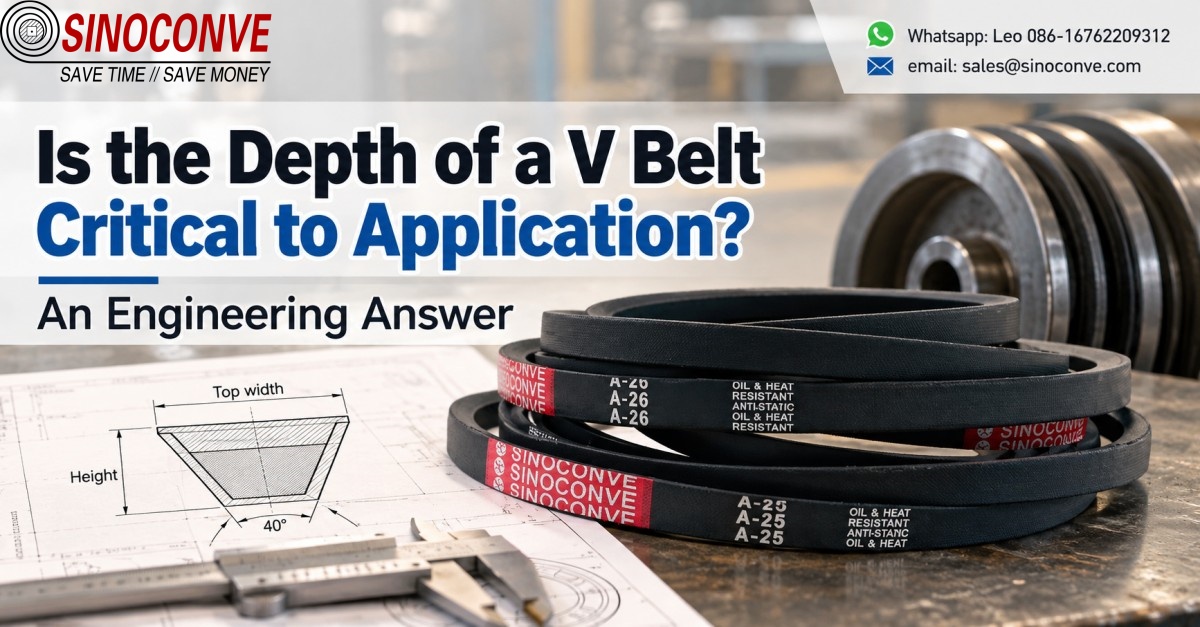
Short answer: the depth of a V belt rarely wrecks a drive on its own, but it is the usual reason a drive ends up under-rated, runs hot or slips on the sheave already bolted to the frame. This engineering answer opens with that two-paragraph prose conclusion, then works the seating logic in full. It covers cross-section geometry and the datum line, the wedge principle that puts the load on the flanks rather than the base, two hand-checkable worked examples on contact area and bending strain, bottoming out and insufficient depth, classic versus narrow sections, how cogging changes flexure rather than the wedge, and a depth-only reference column set. It closes with a symptom-to-cause failure table, a six-step selection procedure that screens pulley diameter against belt height, and the height and set-matching tolerances worth writing into the purchase order.

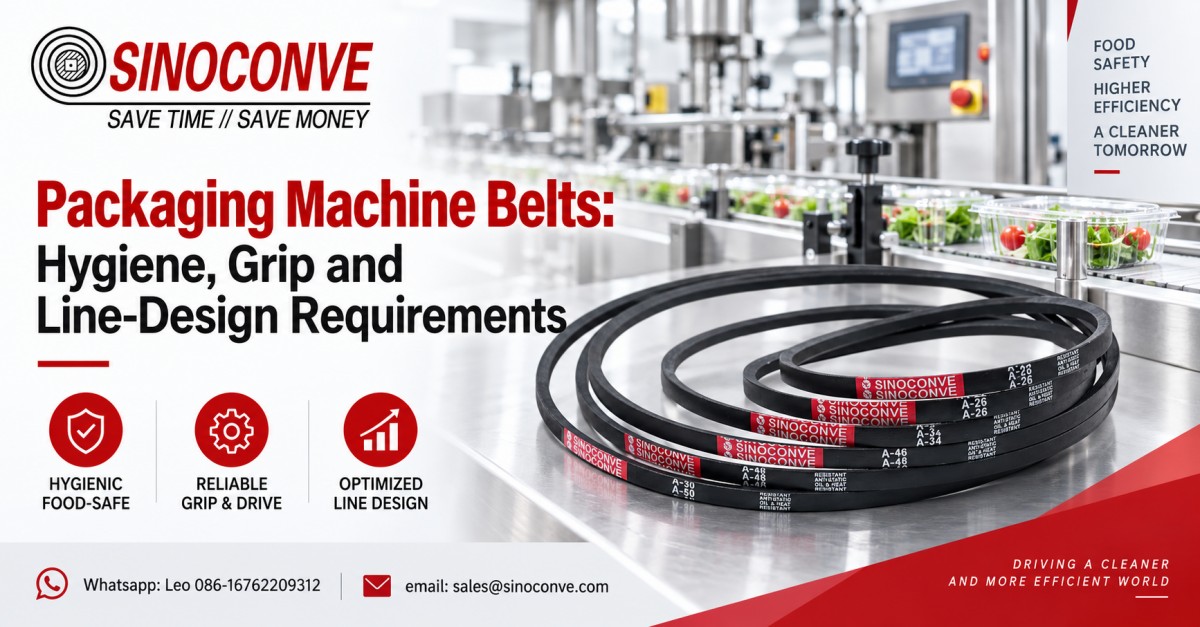
Packaging Machine Belts: Hygiene, Grip and Line-Design Requirements

Packaging Machine Belts: Hygiene, Grip and Line-Design Requirements

Packaging machines usually combine several belt families rather than one universal construction. This guide maps the line from infeed and metering through indexing, sealing, pull-down, labeling, checkweighing, outfeed and accumulation. It shows where flat PVC or PU belts, coated timing belts, seamless loops, side belts, vacuum belts and high-grip profiles belong without repeating the separate coated-timing-belt or PVC-versus-rubber articles. Hygiene is divided into direct food contact, secondary packaging and dry or washdown cleaning regimes, with a document path for the exact quoted construction. Engineering sections cover grip and release, cover hardness, contamination, small pulleys, nosebars, splice geometry, static control, perforations, guides and temperature exposure. Worked examples for pouch, carton and parcel stations lead into incoming inspection, commissioning and a complete RFQ checklist.
Conveyor Roller Ultimate Guide (2026): Types, Materials and Load Ratings

Conveyor Roller Ultimate Guide (2026): Types, Materials and Load Ratings

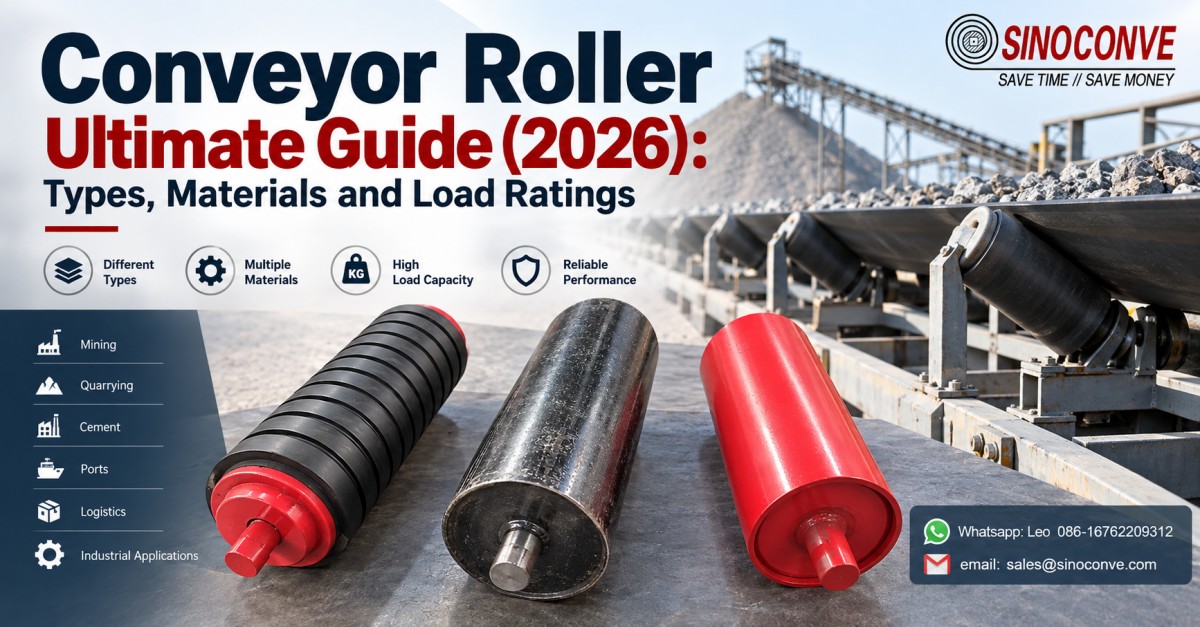
A conveyor roller looks like the simplest component on the line and carries the most expensive mistakes. This guide separates the two questions buyers mix up: where a roller sits, which decides its duty, and what it is built to do, which decides its shape. It walks through the six position-based types from carrying and return through impact and transition, then the function-based families, tracking, spiral and rubber-disc cleaning rollers, and what each one is actually for. Shell material gets its own treatment, carbon steel against stainless, polymer and ceramic, followed by the part that cheap rollers cut first: bearings, seal arrangement and grease. Load rating is worked through with the equation and a full example, because roller pitch and trough angle decide the load long before the shell diameter does. The closing sections cover shell diameter against rotational speed, bearing life, installation and alignment, and the four ways rollers fail.

Conveyor Belt Manufacturer Pricing: What Changes Your Factory Quote in 2026?

Conveyor Belt Manufacturer Pricing: What Changes Your Factory Quote in 2026?

Conveyor belt quotes for the same specification can differ by 30% — and the gap is rarely an accident. This guide explains what actually changes a factory quote in 2026: the materials inside the belt, the RFQ data you send, the order shape you choose, and the commercial layers from packing and freight to payment terms and validity. It walks procurement teams and importers through a twelve-point quote review, shows how to normalize offers so they can be compared line by line, lists the red flags that signal a weak construction hidden behind a low price, and explains how to negotiate cost without buying a weaker belt. Use the tables as your checklist for the next tender.

PU Timing Belt Supplier for Packaging, Robotics and Linear Motion Systems

PU Timing Belt Supplier for Packaging, Robotics and Linear Motion Systems

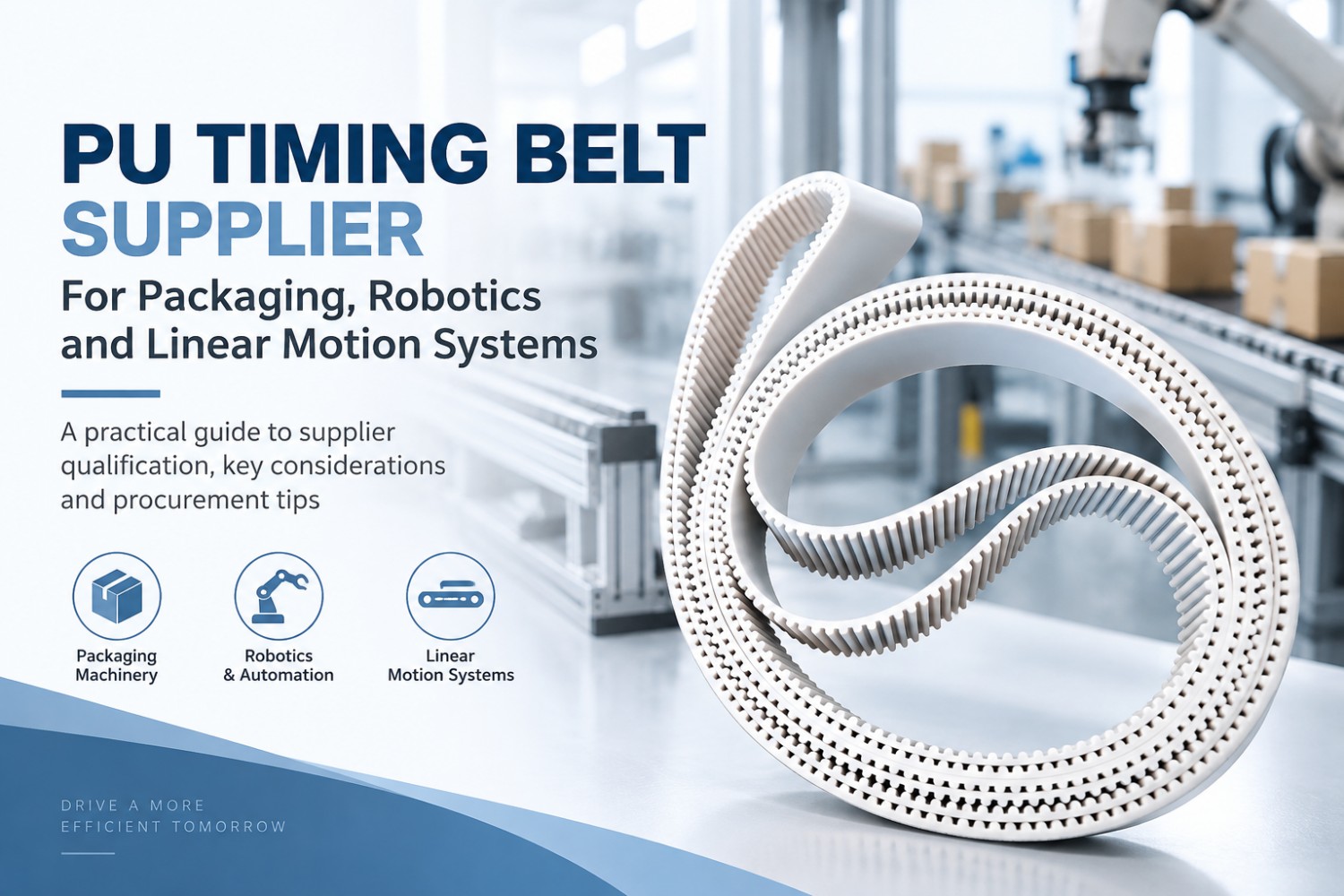
Selecting a PU timing belt supplier for packaging, robotics or linear motion systems requires more than comparing belt price and delivery. OEM buyers need to verify tooth and pulley compatibility, tensile-member construction, working surfaces, motion conditions, sample approval and batch consistency. This guide explains how to qualify polyurethane timing belts technically and commercially, what information belongs in an RFQ, which supplier red flags deserve attention, and how to move from prototype validation to repeatable bulk sourcing.

Anti-Static V-Belt Supplier for Dusty Factories: What B2B Buyers Should Verify

Anti-Static V-Belt Supplier for Dusty Factories: What B2B Buyers Should Verify

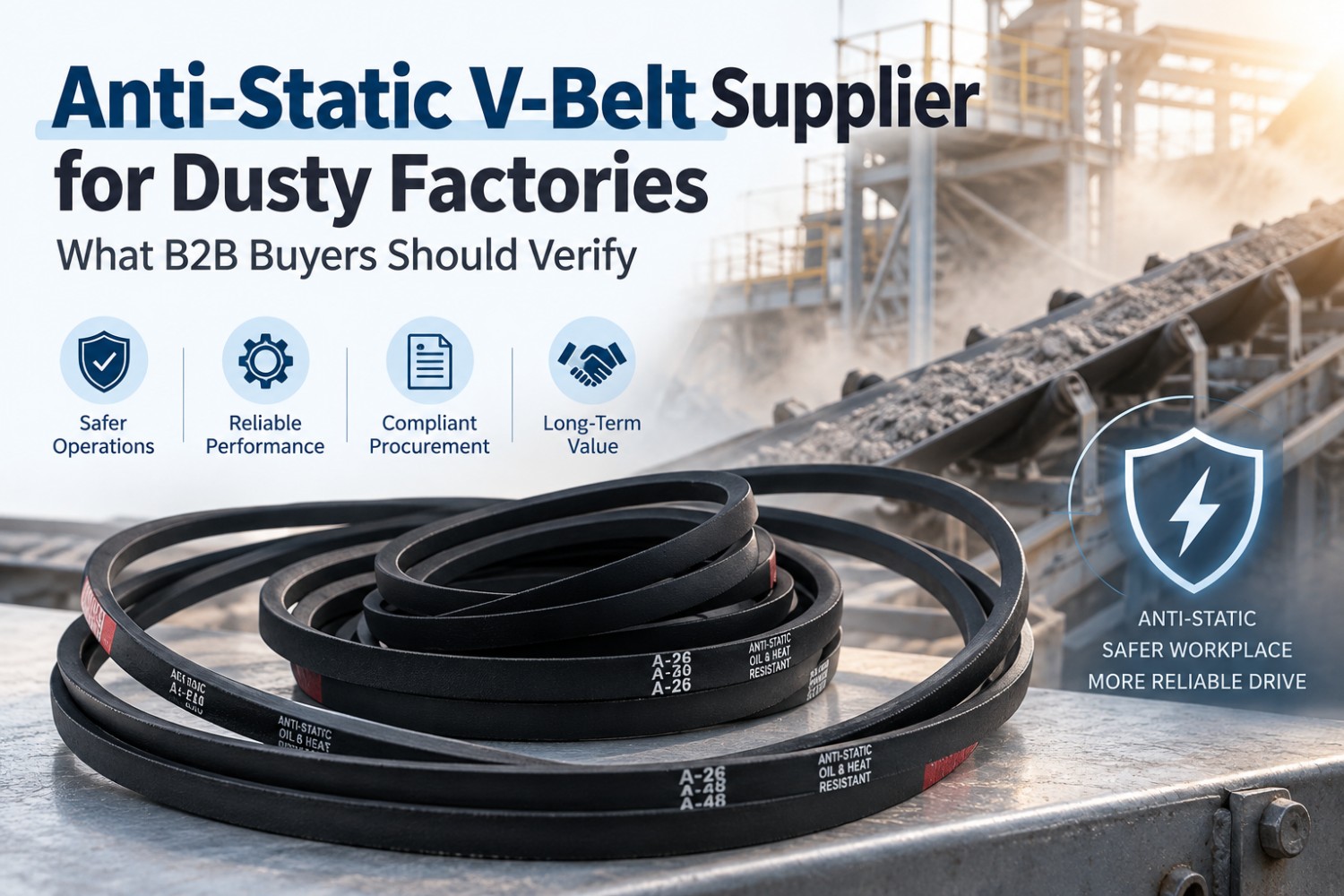
Buying an anti-static V-belt for a dusty factory requires more than checking a catalog claim. Procurement teams need to verify the exact belt specification, applicable electrical-conductivity requirement, test method, documentation, traceability and supplier production controls. This guide explains how B2B buyers can qualify an anti-static V-belt supplier, evaluate ISO 1813-related evidence, avoid common RFQ mistakes, manage sample approval and prepare the technical and commercial information needed for a more reliable bulk-order decision.


Is the Depth of a V Belt Critical to Application? An Engineering Answer
SINOCONVE
Sep 28, 2026

Is the Depth of a V Belt Critical to Application? An Engineering Answer

Short answer: the depth of a V belt rarely wrecks a drive on its own, but it is the usual reason a drive ends up under-rated, runs hot or slips on the sheave already bolted to the frame. This engineering answer opens with that two-paragraph prose conclusion, then works the seating logic in full. It covers cross-section geometry and the datum line, the wedge principle that puts the load on the flanks rather than the base, two hand-checkable worked examples on contact area and bending strain, bottoming out and insufficient depth, classic versus narrow sections, how cogging changes flexure rather than the wedge, and a depth-only reference column set. It closes with a symptom-to-cause failure table, a six-step selection procedure that screens pulley diameter against belt height, and the height and set-matching tolerances worth writing into the purchase order.

Packaging Machine Belts: Hygiene, Grip and Line-Design Requirements
SINOCONVE
Sep 23, 2026

Packaging Machine Belts: Hygiene, Grip and Line-Design Requirements

Packaging machines usually combine several belt families rather than one universal construction. This guide maps the line from infeed and metering through indexing, sealing, pull-down, labeling, checkweighing, outfeed and accumulation. It shows where flat PVC or PU belts, coated timing belts, seamless loops, side belts, vacuum belts and high-grip profiles belong without repeating the separate coated-timing-belt or PVC-versus-rubber articles. Hygiene is divided into direct food contact, secondary packaging and dry or washdown cleaning regimes, with a document path for the exact quoted construction. Engineering sections cover grip and release, cover hardness, contamination, small pulleys, nosebars, splice geometry, static control, perforations, guides and temperature exposure. Worked examples for pouch, carton and parcel stations lead into incoming inspection, commissioning and a complete RFQ checklist.

Conveyor Roller Ultimate Guide (2026): Types, Materials and Load Ratings
SINOCONVE
Sep 21, 2026

Conveyor Roller Ultimate Guide (2026): Types, Materials and Load Ratings

A conveyor roller looks like the simplest component on the line and carries the most expensive mistakes. This guide separates the two questions buyers mix up: where a roller sits, which decides its duty, and what it is built to do, which decides its shape. It walks through the six position-based types from carrying and return through impact and transition, then the function-based families, tracking, spiral and rubber-disc cleaning rollers, and what each one is actually for. Shell material gets its own treatment, carbon steel against stainless, polymer and ceramic, followed by the part that cheap rollers cut first: bearings, seal arrangement and grease. Load rating is worked through with the equation and a full example, because roller pitch and trough angle decide the load long before the shell diameter does. The closing sections cover shell diameter against rotational speed, bearing life, installation and alignment, and the four ways rollers fail.

Conveyor Belt Manufacturer Pricing: What Changes Your Factory Quote in 2026?
SINOCONVE
Sep 10, 2026

Conveyor Belt Manufacturer Pricing: What Changes Your Factory Quote in 2026?

Conveyor belt quotes for the same specification can differ by 30% — and the gap is rarely an accident. This guide explains what actually changes a factory quote in 2026: the materials inside the belt, the RFQ data you send, the order shape you choose, and the commercial layers from packing and freight to payment terms and validity. It walks procurement teams and importers through a twelve-point quote review, shows how to normalize offers so they can be compared line by line, lists the red flags that signal a weak construction hidden behind a low price, and explains how to negotiate cost without buying a weaker belt. Use the tables as your checklist for the next tender.

PU Timing Belt Supplier for Packaging, Robotics and Linear Motion Systems
SINOCONVE
Sep 08, 2026

PU Timing Belt Supplier for Packaging, Robotics and Linear Motion Systems

Selecting a PU timing belt supplier for packaging, robotics or linear motion systems requires more than comparing belt price and delivery. OEM buyers need to verify tooth and pulley compatibility, tensile-member construction, working surfaces, motion conditions, sample approval and batch consistency. This guide explains how to qualify polyurethane timing belts technically and commercially, what information belongs in an RFQ, which supplier red flags deserve attention, and how to move from prototype validation to repeatable bulk sourcing.

Anti-Static V-Belt Supplier for Dusty Factories: What B2B Buyers Should Verify
SINOCONVE
Sep 07, 2026

Anti-Static V-Belt Supplier for Dusty Factories: What B2B Buyers Should Verify

Buying an anti-static V-belt for a dusty factory requires more than checking a catalog claim. Procurement teams need to verify the exact belt specification, applicable electrical-conductivity requirement, test method, documentation, traceability and supplier production controls. This guide explains how B2B buyers can qualify an anti-static V-belt supplier, evaluate ISO 1813-related evidence, avoid common RFQ mistakes, manage sample approval and prepare the technical and commercial information needed for a more reliable bulk-order decision.
Explore more

We are committed to providing you with better products and services. Welcome to browse more content for details