
Why a cleated conveyor belt changes the handling equation
A cleated conveyor belt is usually chosen for one reason: product control on an incline. Once a line starts lifting loose material upward, gravity becomes the quiet problem in the room. Grain, vegetables, seed, pellets, and other bulk items may move fine on a flat run, then begin to slide, roll back, or bunch up as soon as the angle increases. That is where a cleated profile matters. It gives the load a mechanical “step” to rest against, which helps keep materials moving in the intended direction.
For sourcing managers and engineers, the real question is not simply whether a cleated belt works. It is how well it fits the product, the incline, and the handling rate. A belt that looks aggressive enough in a catalog can still perform poorly if the cleat spacing, belt body, or surface finish is wrong for the material. With agricultural products and crop handling in particular, a poor match can lead to rollback, damaged goods, and more cleanup than expected.
Where cleated belts outperform flat belts
Compared with a flat belt, a rubber cleated belt offers a more controlled lift. That difference is easy to overlook until the conveyor angle increases or the product becomes less cooperative. Flat belts depend on friction alone. Cleated belts add a physical barrier between loads, so items stay separated and more stable as they travel.
This is especially useful in inclined conveyor layouts. Instead of relying on surface grip alone, the belt helps “carry” the product up the slope in defined pockets or segments. For crop handling, that can mean less spill at transfer points and fewer instances of product sliding back into the tail section. It is not a cure-all, though. Very wet, sticky, or irregular material can still behave unpredictably, and the belt profile has to be matched to the actual duty.
Common cleat patterns and what they suggest
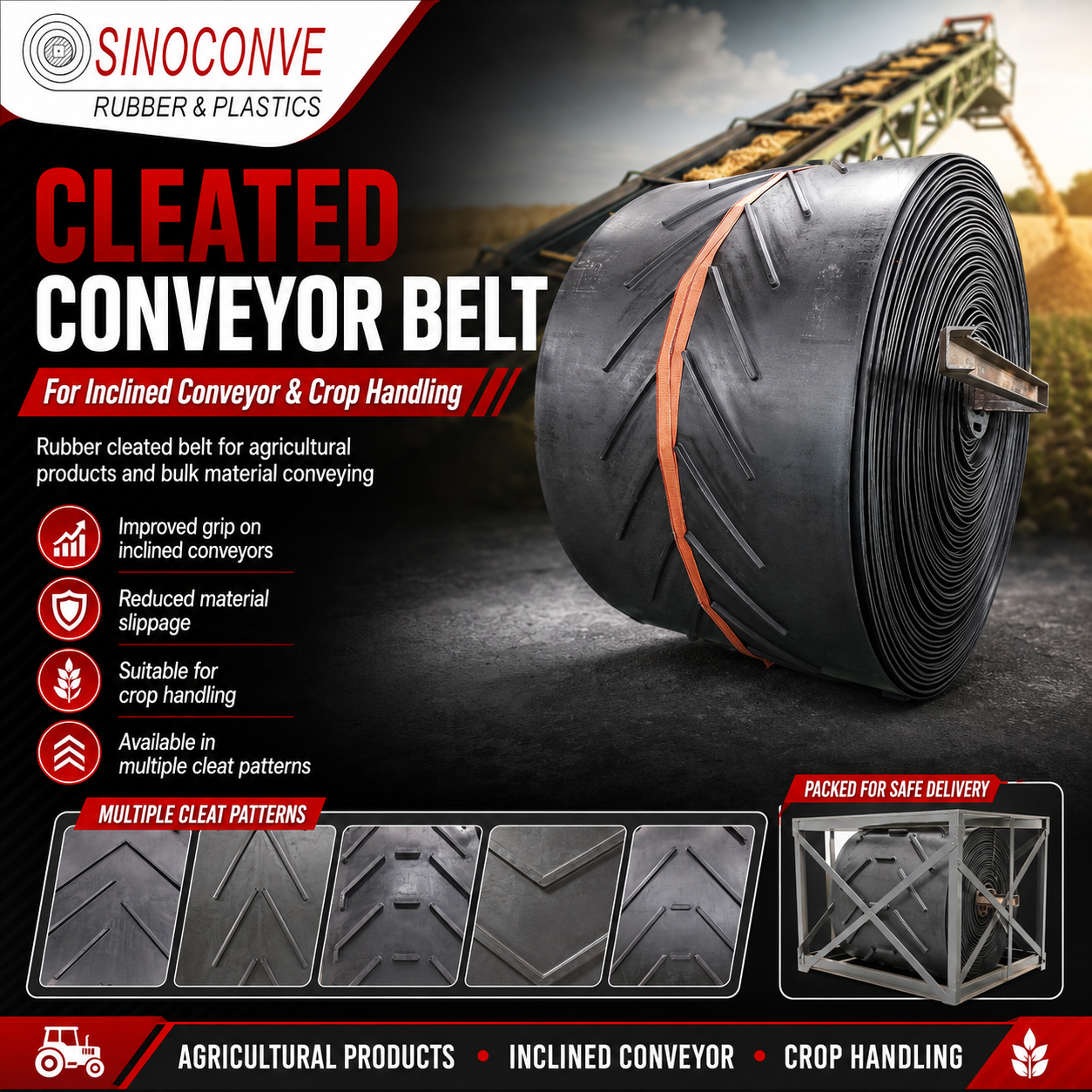
The product shown uses raised cleats in more than one pattern, including V-shaped and angled arrangements. That is worth noting because cleat geometry affects how the load sits on the belt. A V-pattern can help center material and guide it along the conveyor path. Angled arrangements can improve traction and separation, depending on the application. Neither pattern is universally better; they solve slightly different handling problems.
For buyers, this means pattern choice should follow the material flow, not just belt availability. Agricultural products often vary more than people expect. A conveyor moving seed behaves differently from one moving root crops, and both differ again from dry bulk material. Small variations in cleat spacing and profile can change how the load settles between supports.
What to look for when comparing options
1. Incline and transfer conditions
If the conveyor is only mildly inclined, a lighter cleat profile may be enough. As the angle rises, product rollback becomes more likely, and the belt needs stronger grip and clearer segmentation. Transfer points matter as well. If the belt feeds into hoppers, bins, or another conveyor, the cleat design should not create unnecessary hang-up or impact.
2. Product behavior
Crop handling is not a single category in practice. Soft produce, granular goods, and mixed bulk loads each place different demands on the belt. Rounded items may roll. Dusty products may slide. Fragile goods may bruise if the cleats are too aggressive. That is why sample testing, or at least a careful review of similar-duty use, is usually worth the time.
3. Belt construction and handling
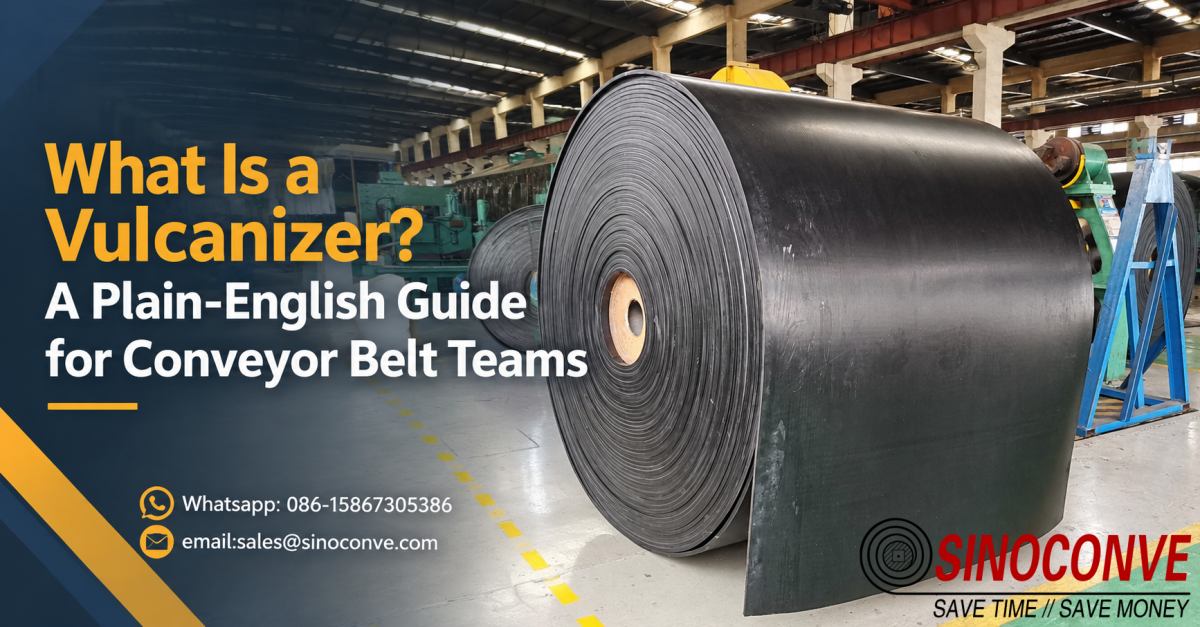
The image shows a wide, heavy-duty rolled belt with an orange transport strap and shipping crate packaging. That tells you something practical: these belts are typically handled as industrial components, not light accessories. Safe delivery and proper storage matter, especially before installation. A rolled format also suggests the belt needs thoughtful uncoiling and alignment during fitting.
Practical cautions buyers should not ignore
One easy mistake is assuming “more cleat” always means “better grip.” Too much cleat can reduce useful contact area, complicate cleaning, or create extra wear. Another common issue is specifying the belt before the conveyor angle and material behavior are fully defined. That often leads to compromise later, which is usually more expensive than doing the selection work upfront.
It is also worth asking how the belt will be maintained. Agricultural environments can be dusty, damp, and abrasive. Even a well-chosen belt will need inspection for edge wear, cleat damage, and buildup around the profile. That is not glamorous work, but it is the difference between a dependable line and one that keeps stopping for cleanup.
When this belt style makes the most sense
A cleated conveyor belt makes the most sense when the application combines incline, bulk flow, and a need to reduce slippage. If the line is flat and the product is stable, a simpler belt may be easier to run and maintain. If the material must climb, separate, or stay controlled between transfer points, the cleated option becomes much more compelling.
For agricultural products and crop handling, that often tips the balance. The belt is not just moving material; it is helping preserve flow consistency through a part of the process where losses tend to show up quickly and visibly.
Buyer takeaway
When comparing belts, focus less on appearance and more on how the profile, incline, and product behave together. A cleated belt that looks right in a photo may still be the wrong answer if the load is delicate, the slope is steep, or the transfer points are unforgiving. The best purchase is the one that matches the real handling conditions, not the idealized ones.
FAQ
Is a cleated conveyor belt only for steep inclines?
No. It is often used on incline systems, but the real trigger is product control. Even moderate slopes can justify cleats if the material slips or rolls back.
Are all cleated belts suitable for agricultural products?
Not automatically. The product type, moisture level, and fragility matter. A suitable belt should support the load without causing damage or excess buildup.
What should be confirmed before ordering?
At minimum, confirm the conveyor angle, product type, handling rate, and whether the cleat pattern fits the flow behavior you need. If possible, request a sample or a closely related application reference before committing.
Next step
If you are evaluating a cleated conveyor belt for an inclined conveyor or crop handling line, start with the product behavior and the conveyor angle. Those two variables usually determine whether the belt will solve the problem cleanly or create a new one. From there, choose the cleat pattern that supports stable movement rather than simply chasing the most aggressive profile.