

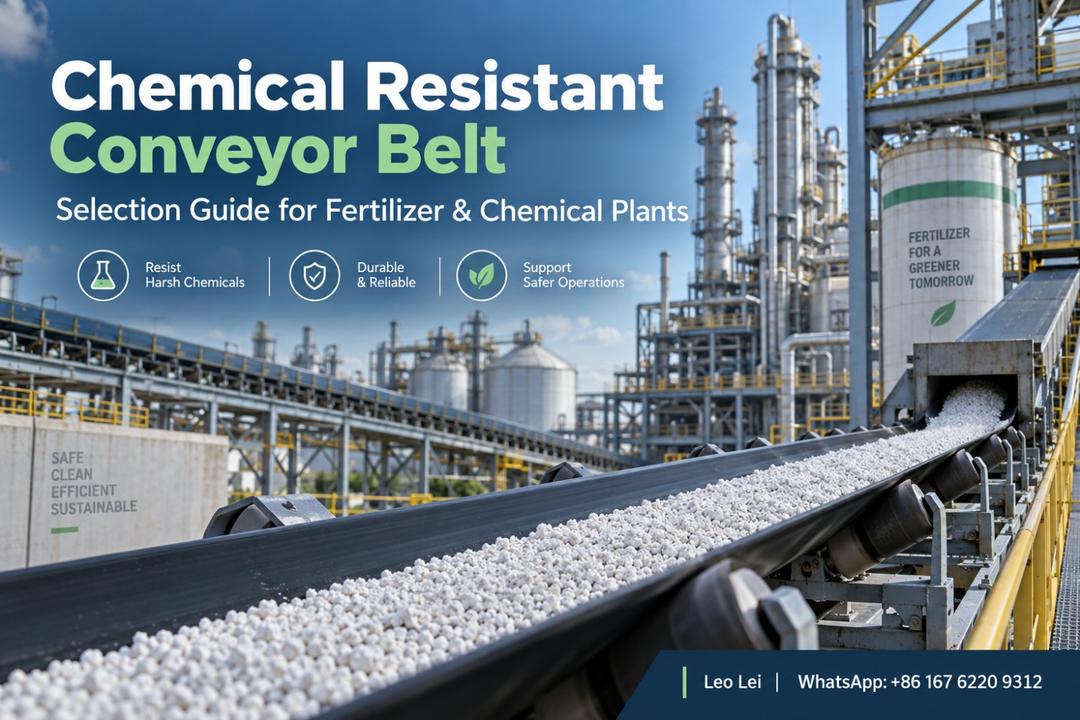
Conveyor Belts for Fertiliser and Chemical Plants: Compound Selection Guide (2026)
Chemical and fertiliser plants punish the wrong belt compound faster than almost any other duty. This guide gives you the selection logic: a compound matrix that maps the medium (sulphuric acid, hydrochloric acid, urea, ammonium nitrate, phosphate slurry, potash, caustic soda, hypochlorite, solvents, oils) against temperature and concentration, and then against cover compound and carcass. It also covers how each chemical class actually destroys rubber — swelling, plasticiser extraction, hardening, cracking and ply separation — with the field signs that tell you which one you are looking at. Four fertiliser duties get their own treatment: urea with its moisture and residual heat, ammonium nitrate with its fire and static requirements, phosphate rock with abrasion plus acid, and NPK blends where everything arrives at once. We also cover carcass and splice selection for corrosive service, the medium information we ask for before quoting, MOQ, lead time and how to write a specification that gets comparable offers.
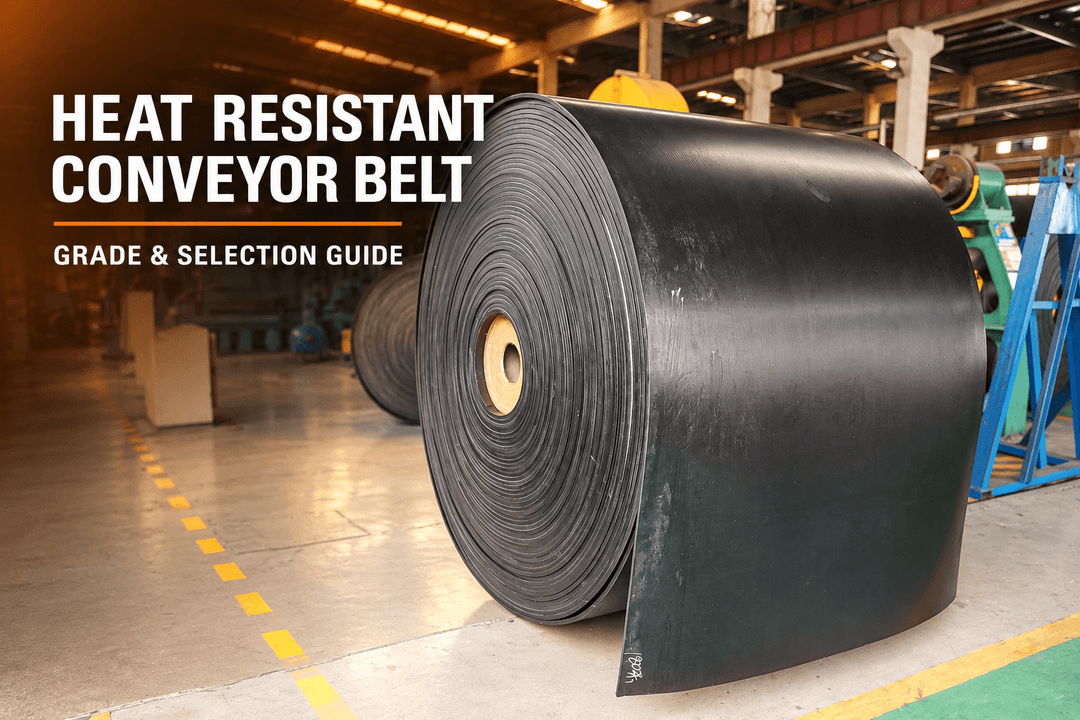
Heat Resistant Conveyor Belt Ultimate Guide (2026): Types, Grades and How to Choose
A heat resistant conveyor belt is not one product — it is a family of constructions chosen by peak material temperature, not by the average on the drawing. This guide walks through the grade table used in practice (T1/T2/T3 alongside HR120–HR200 cover compounds), what each grade actually survives in service, and how to read a supplier's temperature claim before you accept it. You will find a selection matrix that maps material temperature, peak excursions and material characteristics to a recommended cover compound and carcass, plus notes on cement clinker, sinter, foundry sand and fertiliser duties where heat, oil and chemical attack arrive together. We also cover carcass construction, cover thickness, edge protection, total cost of ownership, and the mistakes that shorten belt life in high-temperature service. As a conveyor belt manufacturer we explain what we ask before quoting, how MOQ and lead time work, and how to write a specification that gets comparable offers.
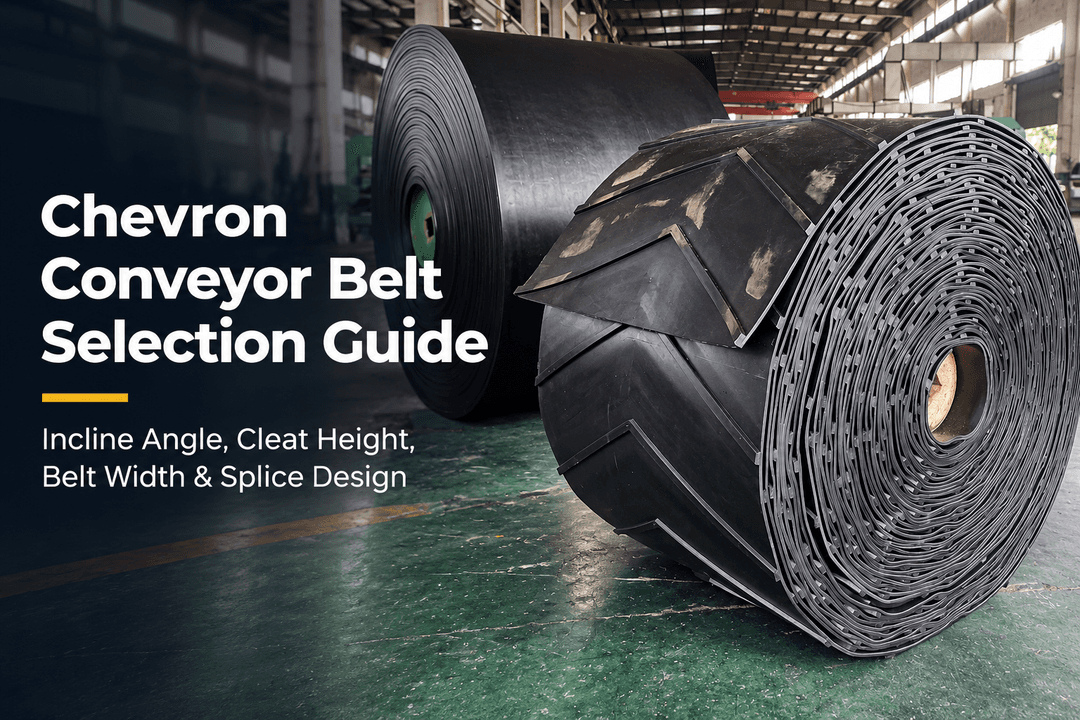
Chevron Conveyor Belt Ultimate Guide (2026): Types, Grades and How to Choose
Chevron conveyor belts only pay off when the incline genuinely exceeds what a flat belt can hold — and choosing the pattern is where most projects go wrong. This guide sets out the decision in order: confirm the real incline after the chute and skirt modifications, then match cleat height and pattern spacing to material size and angle, then check width, carcass and cover grade. It includes a pattern table covering C5, C10 and C15 cleats with cleat width, pitch and height, an incline-to-pattern matrix, and a comparison of chevron, T-cleat and herringbone profiles. We also cover chevron versus corrugated sidewall belts, port and bulk terminal duties, how to splice a profiled belt so the cleats realign, carryback and spillage control, and the selection checklist we use before quoting. Written by a conveyor belt manufacturer that supplies profiled belts into quarry, port and aggregate operations, with MOQ and lead time guidance.
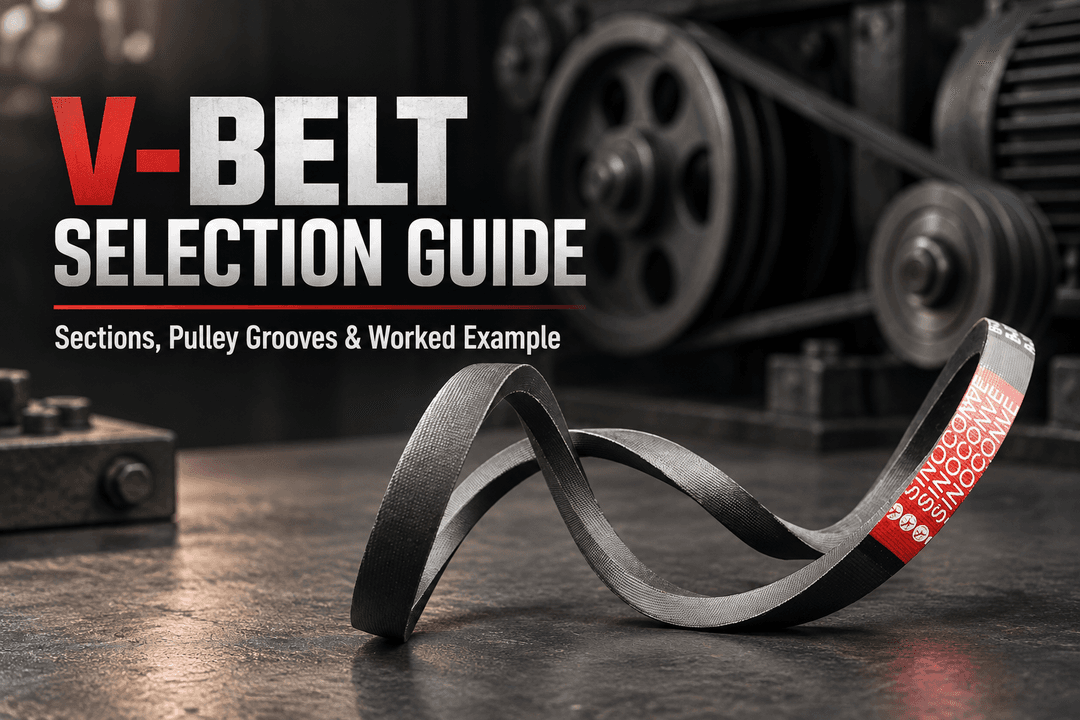
V-belt Ultimate Guide (2026): Profiles, Sizes and How to Choose
Most V-belt failures start with the wrong section, not a bad belt. This guide explains how a V-belt actually transmits torque through the pulley groove, then gives the section table you need — A/B/C/D/E alongside SPZ, SPA, SPB and SPC, with top width, pitch width and height — and why the belt section has to match the groove it runs in. It includes a full worked selection example: design power from a 30 kW motor at 1,470 rpm with a 1.5 service factor, section choice, datum length, number of belts and belt speed check. We also cover what to do when grooves are worn, when to specify cogged, wrapped or raw-edge belts, the difference between industrial and agricultural duty, and where multi-ribbed PK belts take over. A transmission belt manufacturer's view on installation, tensioning, maintenance intervals and the failure modes we see in the field, plus MOQ, lead time and how to get comparable quotations.
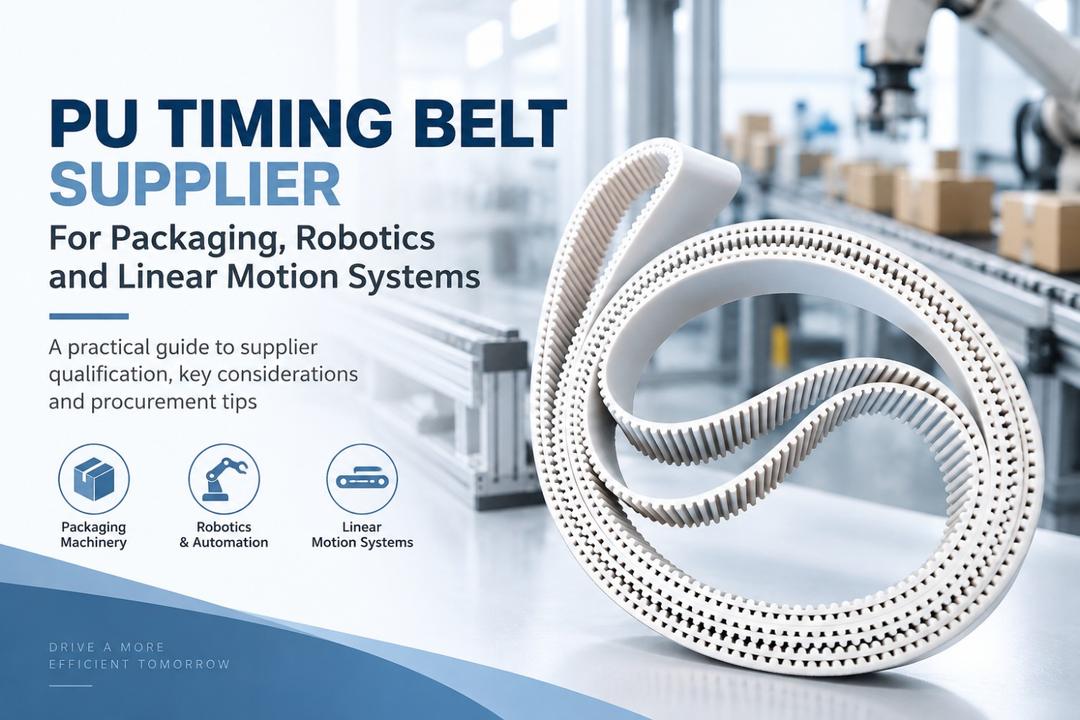
PU Timing Belt Supplier for Packaging, Robotics and Linear Motion Systems
Selecting a PU timing belt supplier for packaging, robotics or linear motion systems requires more than comparing belt price and delivery. OEM buyers need to verify tooth and pulley compatibility, tensile-member construction, working surfaces, motion conditions, sample approval and batch consistency. This guide explains how to qualify polyurethane timing belts technically and commercially, what information belongs in an RFQ, which supplier red flags deserve attention, and how to move from prototype validation to repeatable bulk sourcing.
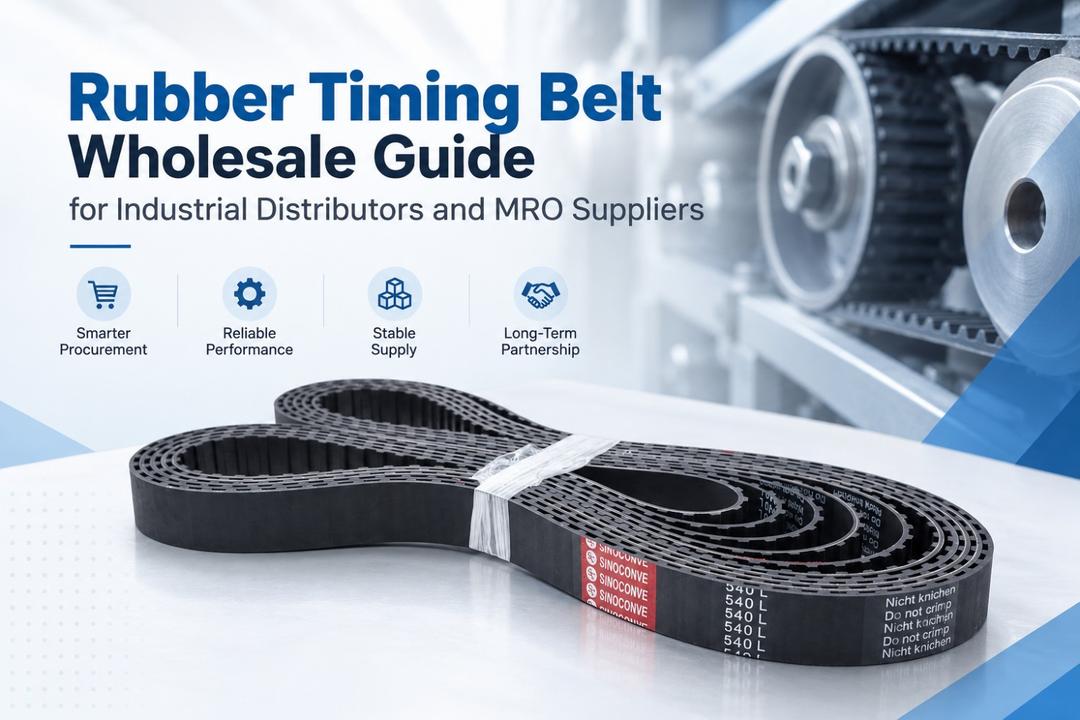
Rubber Timing Belt Wholesale Guide for Industrial Distributors and MRO Suppliers
Wholesale timing belt purchasing requires more than comparing unit prices. Industrial distributors and MRO suppliers need to control tooth profile, dimensions, pulley compatibility, sample approval, batch consistency, MOQ, private labeling, QC documentation and repeat-order identification. This guide explains how to prepare a technically comparable rubber timing belt RFQ, evaluate supplier capability, manage multi-SKU inventory risk and verify the commercial details that matter before moving from samples to bulk orders.
Explore more
We are committed to providing you with better products and services. Welcome to browse more content for details