

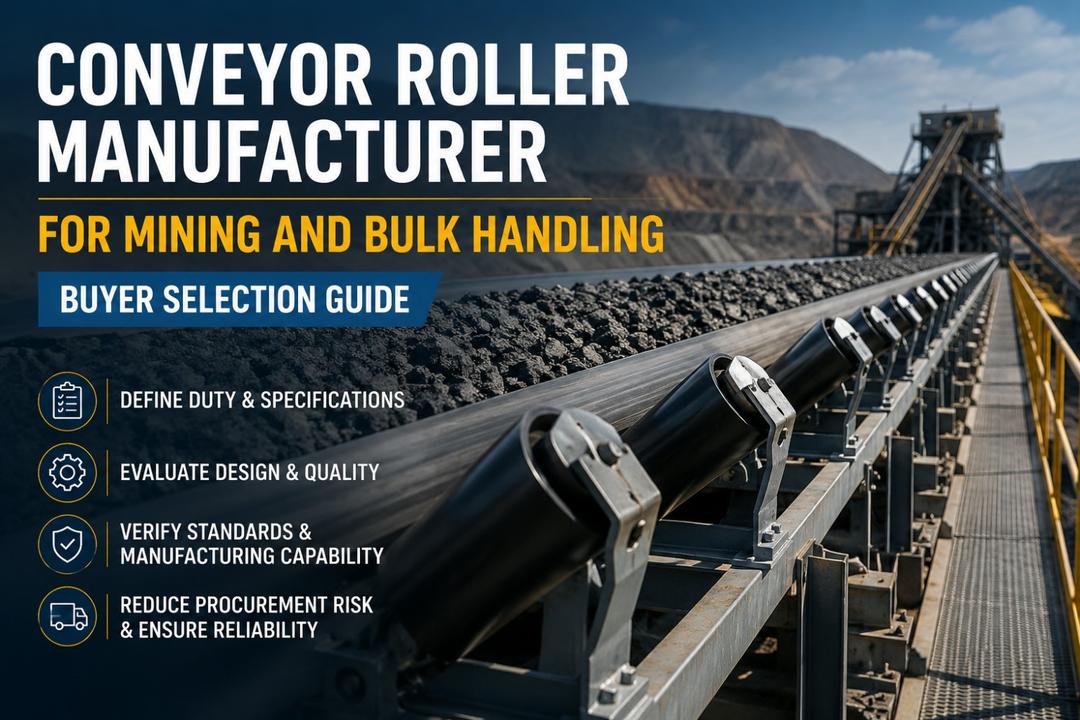
Conveyor Roller Manufacturer for Mining and Bulk Handling: Buyer Selection Guide
Selecting a conveyor roller manufacturer for a mining or bulk-handling project requires more than comparing diameter, length and unit price. This buyer guide explains how EPC contractors and procurement teams can define roller duty, prepare RFQ data, evaluate bearings, seals and dimensional interfaces, verify applicable standards, qualify manufacturing and inspection capability, compare technically equivalent quotations and control project documentation. It also provides practical supplier checks for reducing specification, installation, delivery and repeat-order risks.
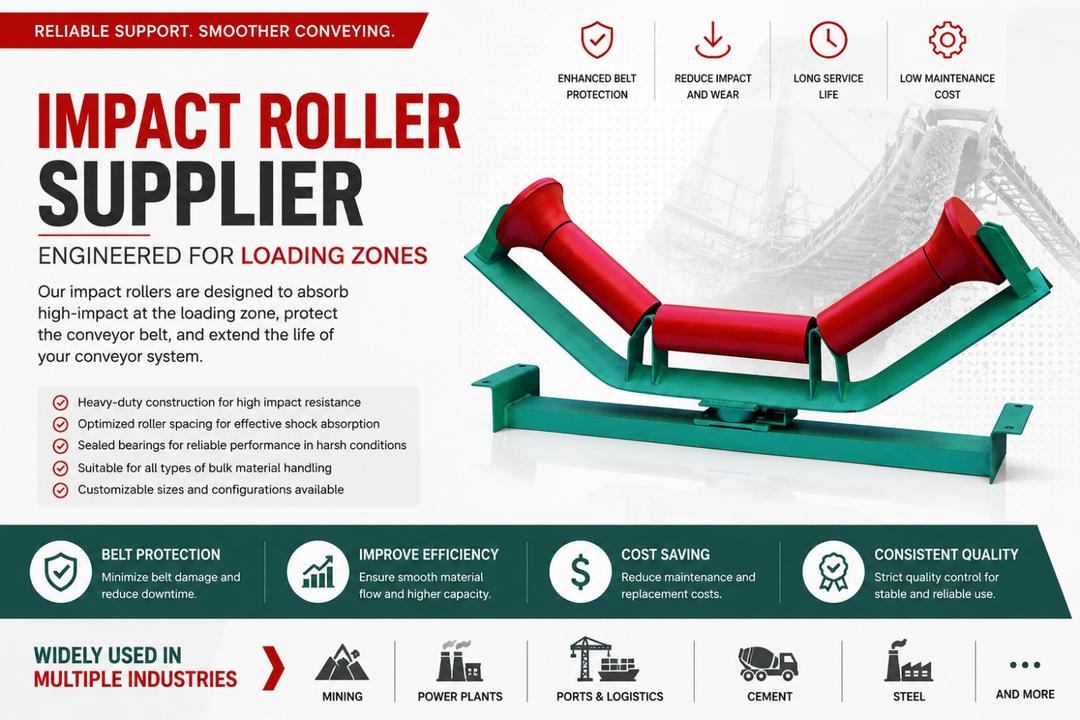
Impact Roller Supplier for Loading Zones: Rubber Rings, Bearings and Shaft Specifications
Impact rollers in conveyor loading zones face repeated shock, contamination and demanding interface requirements. This buyer-focused guide explains how to evaluate an impact roller supplier by rubber-ring construction, bearings and seals, shaft geometry, dimensional compatibility, inspection evidence and loading conditions. It also shows procurement teams what to include in an RFQ, how to normalize competing quotations, what supplier capability evidence to request, and how to reduce the risk of receiving rollers that look correct but do not fit or perform as required.
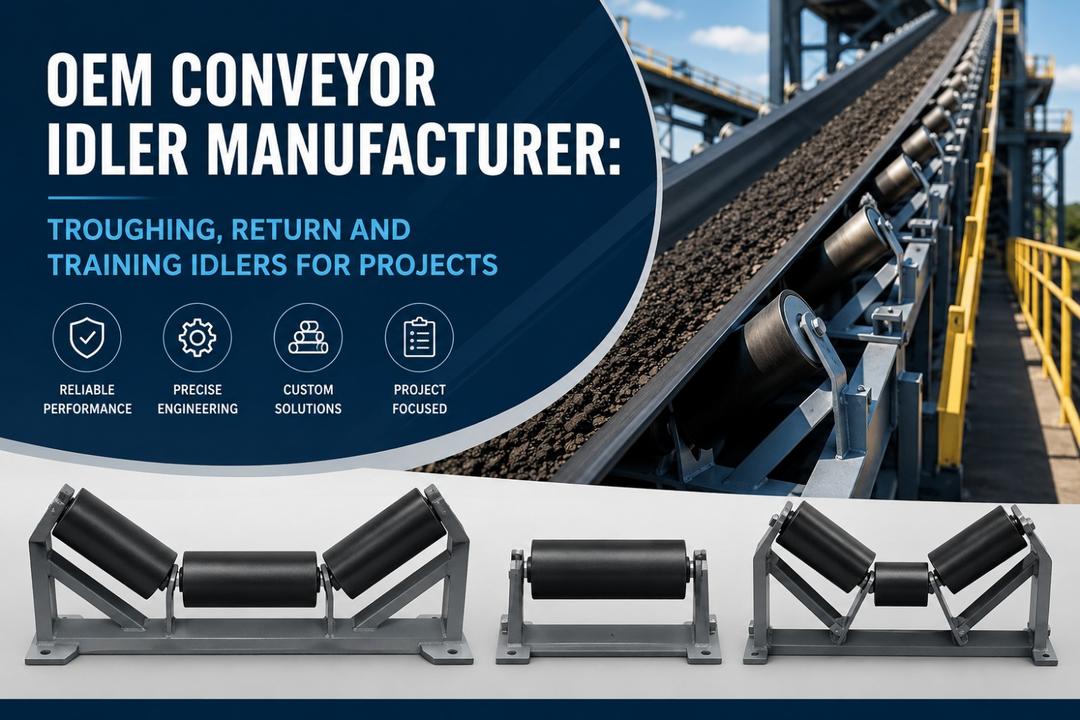
OEM Conveyor Idler Manufacturer: Troughing, Return and Training Idlers for Projects
OEM and EPC conveyor idler procurement requires more than matching roller diameter and belt width. This guide explains how to specify troughing, return and training idlers, control roller and frame interfaces, evaluate bearings and seals, define standards and inspection requirements, and compare suppliers on an equivalent technical basis. It also provides a practical RFQ checklist for project buyers sourcing customized or bulk conveyor idlers, helping reduce drawing errors, quotation gaps, installation mismatches and avoidable procurement risk.
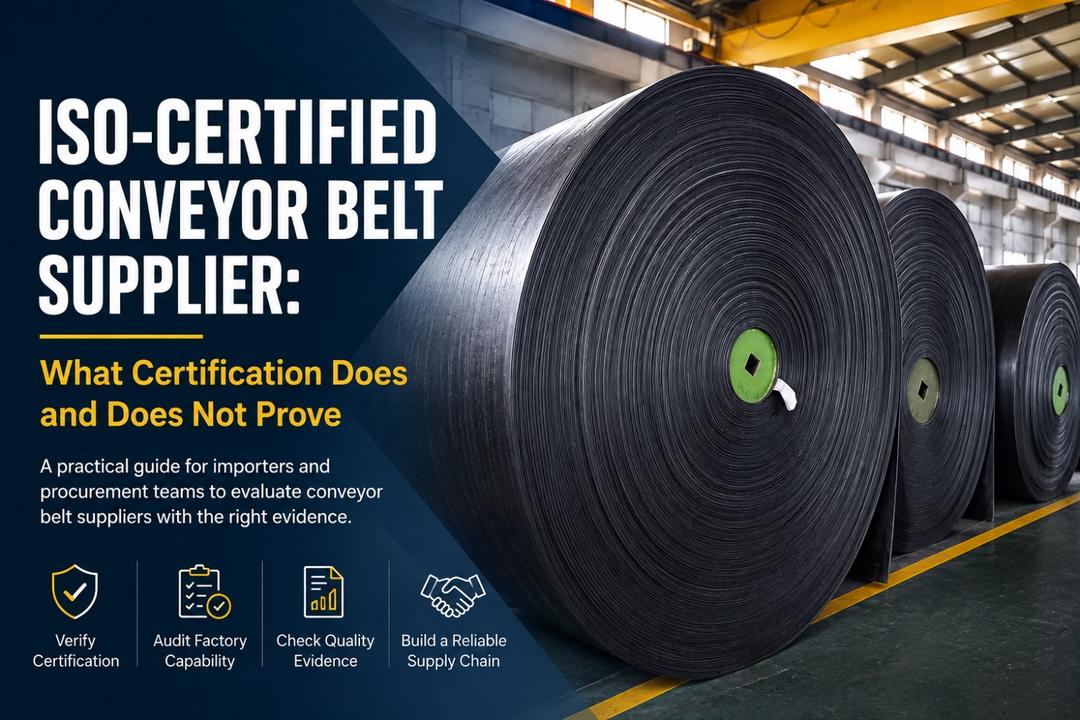
ISO-Certified Conveyor Belt Supplier: What Certification Does and Does Not Prove
ISO certification can support conveyor belt supplier qualification, but it does not prove that a specific belt meets an importer’s technical requirements. This guide explains what ISO 9001 can demonstrate, what buyers must verify separately, and how to audit certificates, factory capability, quality control, test reports and RFQ data. It gives importers, distributors and procurement teams a practical framework for comparing conveyor belt suppliers using relevant evidence rather than relying on certification or marketing claims alone.
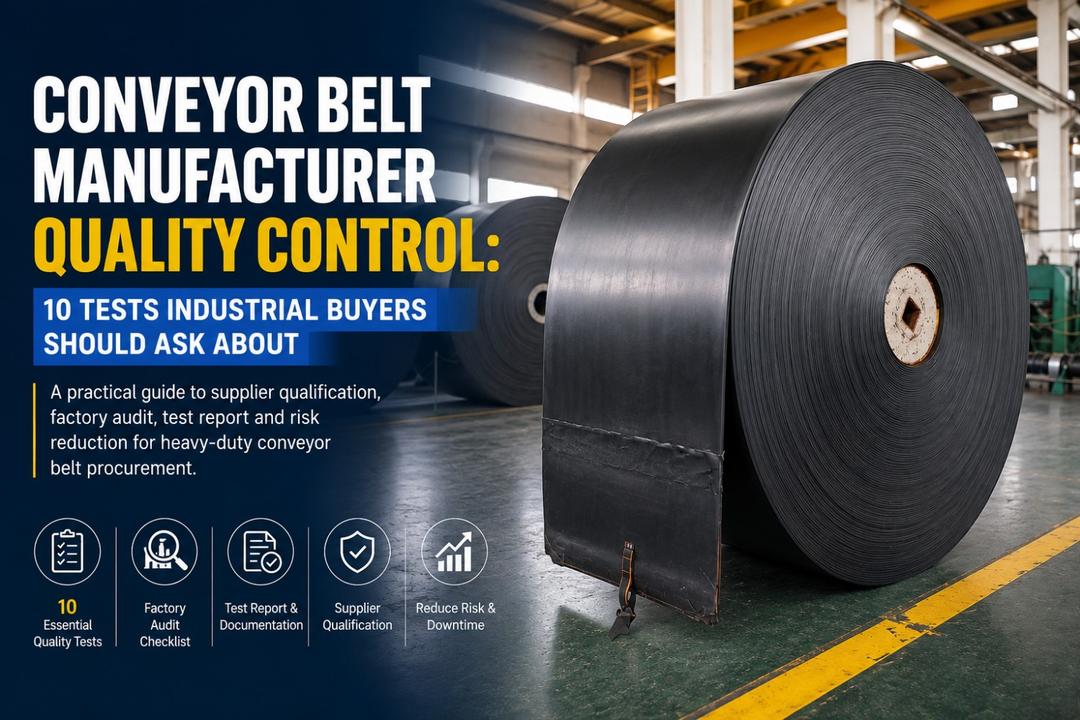
Conveyor Belt Manufacturer Quality Control: 10 Tests Industrial Buyers Should Ask About
Conveyor belt quality cannot be verified by appearance, supplier claims, or a certificate alone. This guide gives industrial procurement teams 10 practical quality-control checks to use when evaluating a conveyor belt manufacturer, from incoming materials and reinforcement testing to adhesion, abrasion, traceability, and final inspection. It also explains how to audit factory controls, distinguish certificates from product test evidence, define an RFQ inspection scope, and compare suppliers against the same technical and commercial requirements.
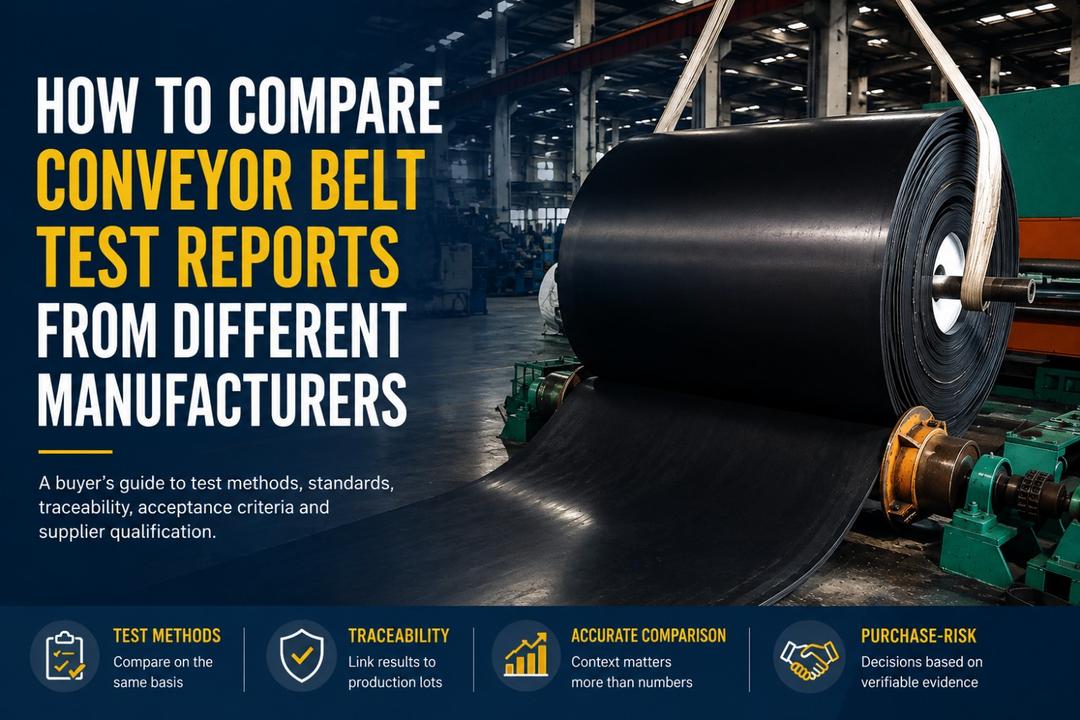
How to Compare Conveyor Belt Test Reports from Different Manufacturers
Conveyor belt test reports are useful only when buyers can compare them on the same technical basis. This guide shows Quality and Procurement teams how to evaluate test methods, standard editions, sample and batch traceability, tensile and elongation data, adhesion, abrasion results, acceptance criteria and third-party reports. It also explains how to connect test evidence with factory audits, supplier qualification and RFQ requirements so that purchasing decisions are based on verifiable production capability rather than isolated laboratory numbers.
Explore more
We are committed to providing you with better products and services. Welcome to browse more content for details