

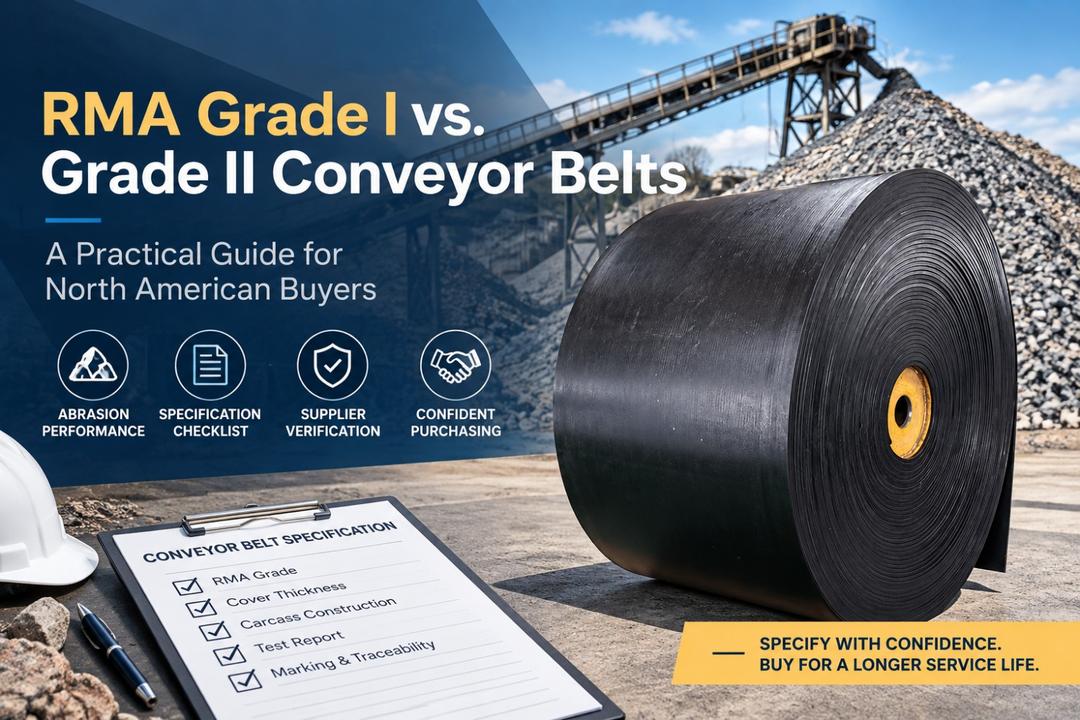
RMA Conveyor Belt Supplier for North American Buyers: Grade I vs Grade II Procurement Guide
North American specifications often name RMA grades, and that is exactly why the claim needs checking. This procurement guide for distributors, OEMs and plant engineers explains what RMA Grade I and Grade II covers actually describe, how the two grades differ on real duties, and how to read an RMA quotation line by line — including the unit discipline that causes most avoidable shortfalls. It sets out the RFQ data pack that produces comparable offers, the factory capabilities that make a grade claim credible, how to read abrasion test evidence, and a worked example of two conveyors where the correct grade decision is not the same. Sections on compliance failures, commercial terms, supplier qualification questions, record-keeping and a twelve-point checklist complete a practical framework for buying service life instead of the lowest price per metre.
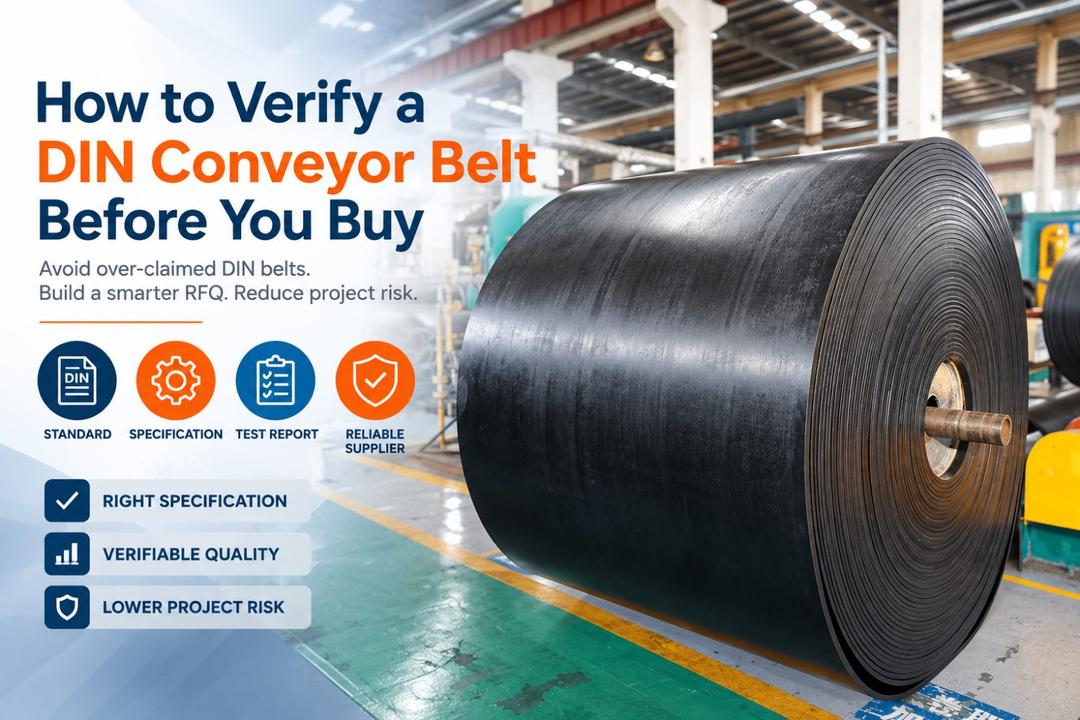
DIN Conveyor Belt Manufacturer: How Buyers Verify DIN 22102 Grade Claims
"DIN belt" is one of the most over-claimed phrases in the conveyor belt trade. This guide shows EU and global buyers how to verify a DIN 22102 grade claim before the container is loaded: what the standard actually specifies, how to read an offer line by line, which RFQ data makes verification possible, what a real manufacturer can show about compounding, building, curing and testing, and how to read a test report so that it applies to your belt rather than to a catalogue. It covers cover grades and duty matching, marking and traceability, nine verification failures that appear in real tenders, commercial clauses that support inspection, and a twelve-point checklist for reviewing any quotation. Buyers who specify first, verify second and buy third spend less time arguing about belts — and suppliers quickly learn which conversation they are in.
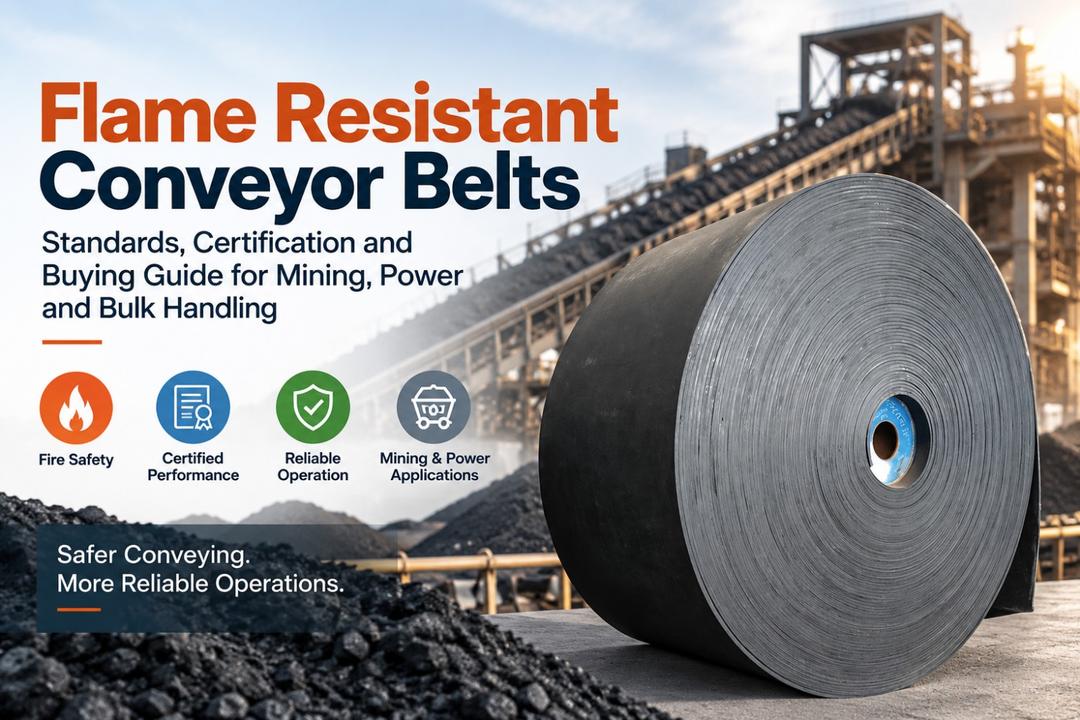
Flame Resistant Conveyor Belt Manufacturer: Standards, Test Evidence and RFQ Requirements
Flame resistant conveyor belts are bought for safety, and that makes the documentation as important as the rubber. This guide is written for mining and power buyers and their engineering contractors: it explains what flame resistance actually requires, which standards and approvals apply in which markets, and how to read a flame-resistant offer so that the certificate matches the construction you ordered. It covers the RFQ data that lets a manufacturer propose a construction satisfying both the fire requirement and the duty, the proof of capability a genuine factory can provide, the four documents that carry the weight at handover, anti-static requirements in dust atmospheres, splicing and installation practice, and nine compliance failures that appear in audits. A twelve-point checklist and a regulatory section covering regulators, insurers and project files close the guide.
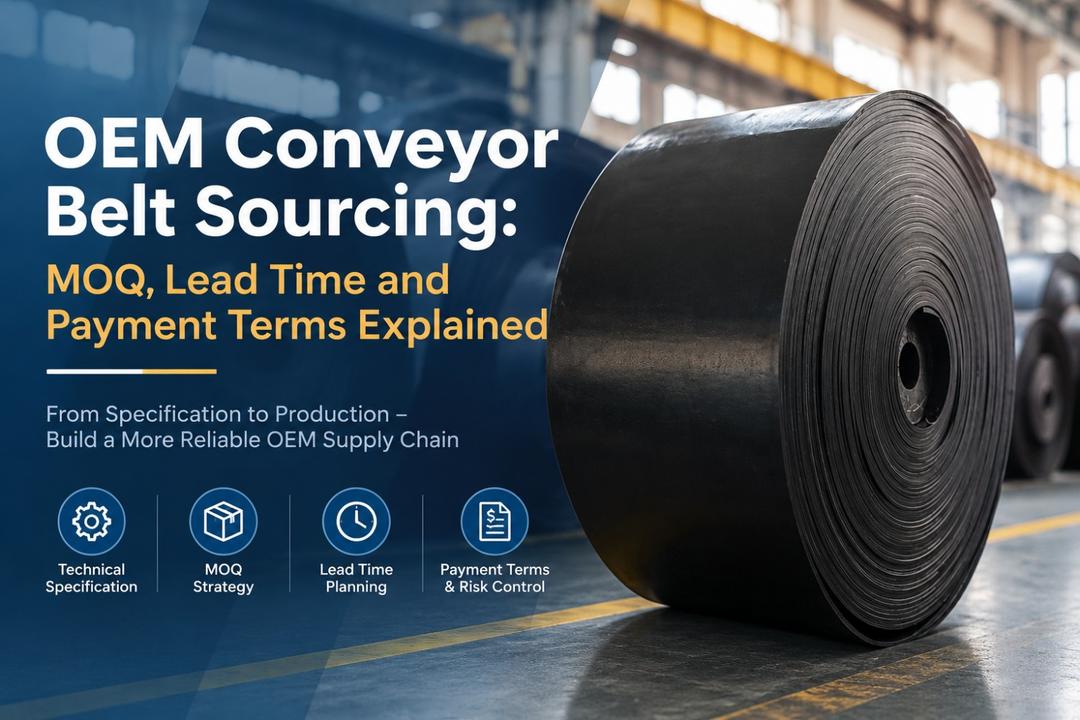
OEM Conveyor Belt MOQ, Lead Time and Payment Terms: A B2B Procurement Guide
OEM conveyor belt procurement fails when technical selection is separated from commercial terms. This guide connects the two: how to specify a belt against a machine, why MOQ is a production constraint rather than a sales policy, what actually consumes lead time, and how payment terms should allocate risk across a project. It includes a total-cost comparison framework, a supplier verification checklist for long programs, the contract clauses worth writing before the first order, and a three-step ramp plan from samples to pilot to series production. OEM buyers will also find a worked end-to-end program timeline, guidance on managing revisions and annual requalification, and practical habits for working with a factory overseas.
Rubber Conveyor Belt Wholesale Price Guide for Distributors and Project Buyers
Rubber conveyor belt wholesale price is not one number — it is the result of construction, order shape, logistics and commitment, and distributors who understand the four can buy better belts for less. This guide covers how wholesale pricing works in the belt trade, the five variables that set your cost, how to plan an opening SKU range without overstocking, why branding and packaging are margin decisions, how project buyers and distributors should be quoted differently, and how to protect specification stability across reorders. It also gives distributors a landed-cost framework, a payment and working-capital discussion, a quarterly review agenda, and a pre-meeting preparation list.
Conveyor Belt Manufacturer Pricing: What Changes Your Factory Quote in 2026?
Conveyor belt quotes for the same specification can differ by 30% — and the gap is rarely an accident. This guide explains what actually changes a factory quote in 2026: the materials inside the belt, the RFQ data you send, the order shape you choose, and the commercial layers from packing and freight to payment terms and validity. It walks procurement teams and importers through a twelve-point quote review, shows how to normalize offers so they can be compared line by line, lists the red flags that signal a weak construction hidden behind a low price, and explains how to negotiate cost without buying a weaker belt. Use the tables as your checklist for the next tender.
Explore more
We are committed to providing you with better products and services. Welcome to browse more content for details