Conveyor Roller Manufacturer for Mining and Bulk Handling: Buyer Selection Guide
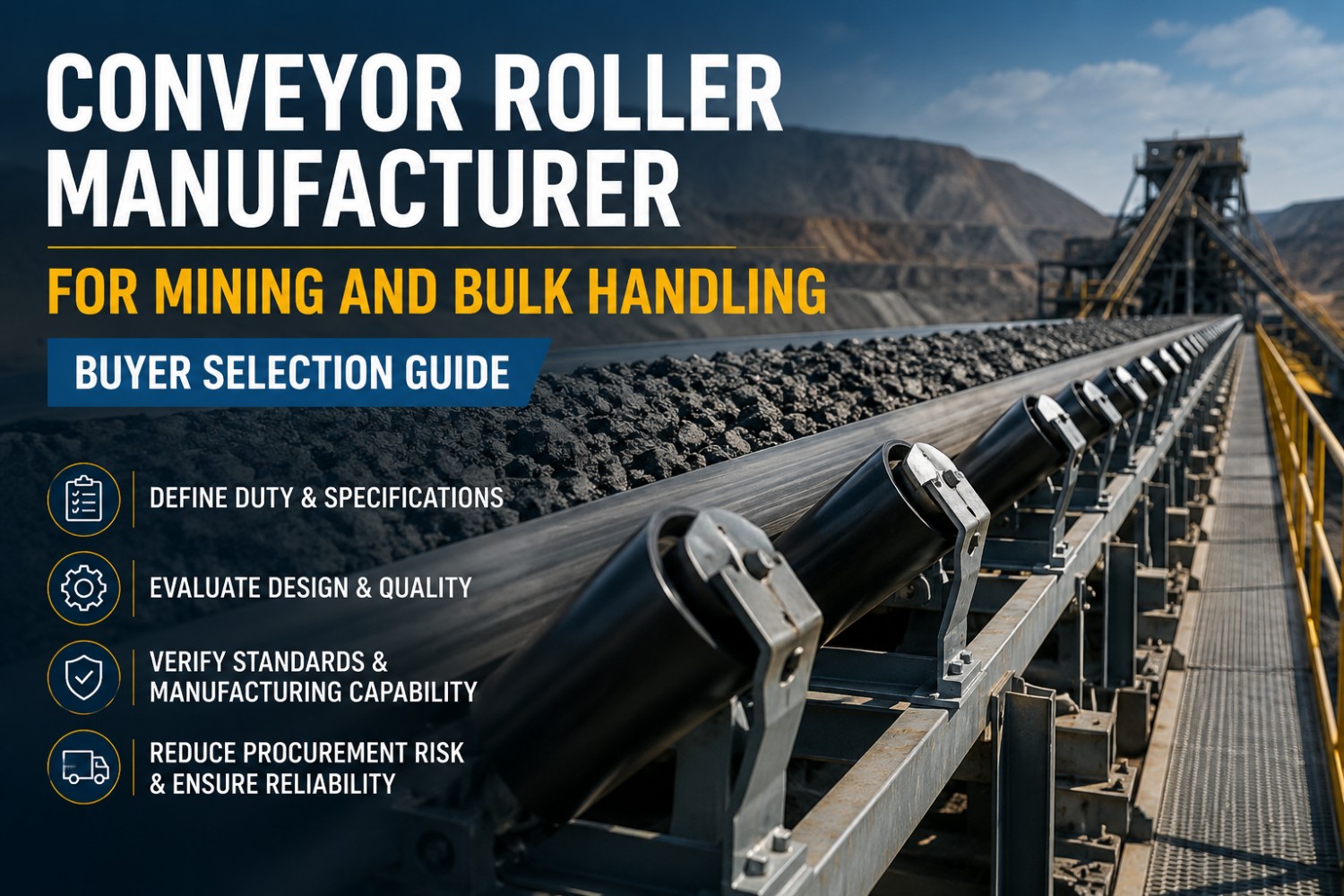
For a mining EPC contractor or bulk-handling operator, approving a conveyor roller manufacturer is not simply a matter of finding the correct roller diameter at the lowest unit price. A roller may fit the drawing and still become a maintenance problem if its bearing arrangement, sealing, shaft support, runout, frame interface, or duty rating does not match the conveyor.
The commercial risk grows with project scale. Hundreds or thousands of rollers may be installed across carrying, return, impact and transition positions. A specification error repeated across that quantity can affect belt tracking, rolling resistance, maintenance workload, spare-part interchangeability and commissioning.
This guide explains how mining companies, EPC contractors, project suppliers and procurement teams can qualify a conveyor roller manufacturer, prepare a technically useful RFQ, compare bids on an equivalent basis and ask for evidence before approving a vendor.

Quick Answer: Do not approve a conveyor roller supplier from a catalogue, price list or sample appearance alone. Verify the application data, roller construction, dimensional interfaces, applicable standard, inspection requirements, manufacturing evidence, documentation control, packing and repeat-order capability before comparing the final commercial offer.
1. Start Supplier Selection With the Conveyor Duty
The first question for a manufacturer should not be “What conveyor rollers do you sell?” It should be “What information do you need to confirm this roller for our conveyor?”
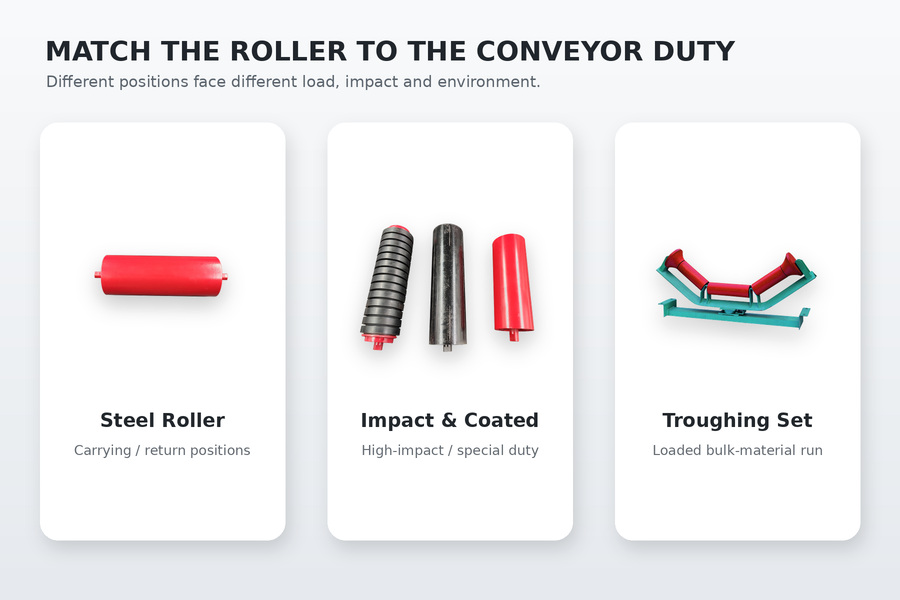
A technically capable supplier needs context because a roller works as part of the belt conveyor system. A carrying roller supporting a loaded mining belt has a different duty from a return roller. A roller below a transfer point may face impact loading, while an outdoor return roller may be more affected by water, dust, carryback or corrosion.
Before requesting a quotation, define the conveyed material, belt width, belt speed, conveyor duty, roller position, trough angle where applicable, idler spacing, environmental conditions and existing mounting arrangement. For replacement projects, drawings and photographs can be as important as a catalogue specification.
| Operating Condition | Procurement Risk | What the Specification Should Address |
|---|---|---|
| Heavy loaded carrying run | Insufficient support or unsuitable roller duty | Load data, roller arrangement, diameter, shaft and bearing design |
| Transfer or loading zone | Impact can damage rollers and increase belt stress | Impact conditions, lump size, loading geometry and support arrangement |
| Dusty or wet environment | Contamination can reach bearings | Seal construction and environmental protection |
| Replacement project | A nominally similar roller may not fit the frame | Controlled drawing, shaft ends, mounting dimensions and frame interface |
| Long conveyor with many idlers | Small specification problems are repeated across many positions | Consistent dimensions, rotation characteristics, quality control and spare interchangeability |
SINOCONVE's conveyor roller range provides a starting point for product review, but an EPC or mining RFQ should still define the actual operating and dimensional requirements rather than relying on a general product category.
2. Conveyor Roller, Idler Roller and Idler Assembly Are Not the Same Purchasing Scope
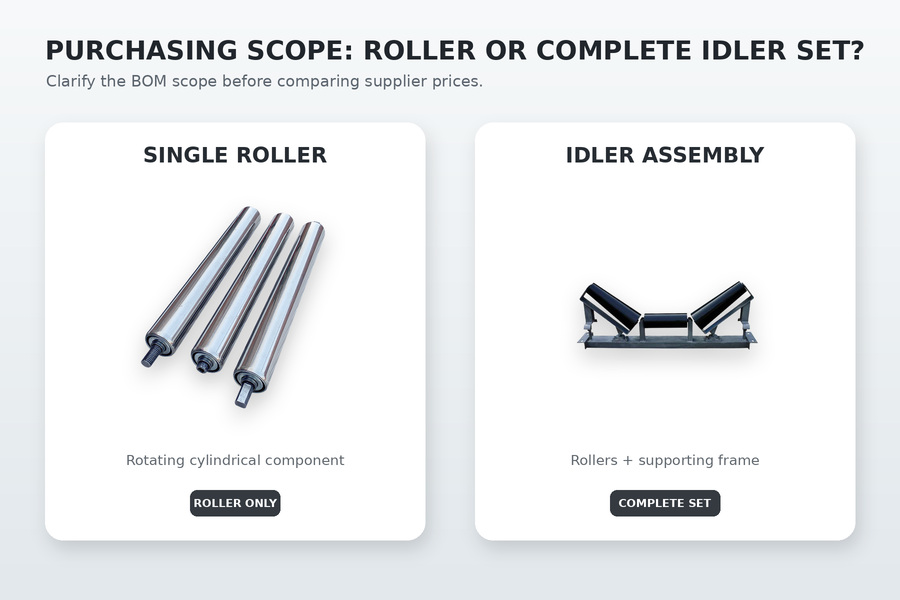
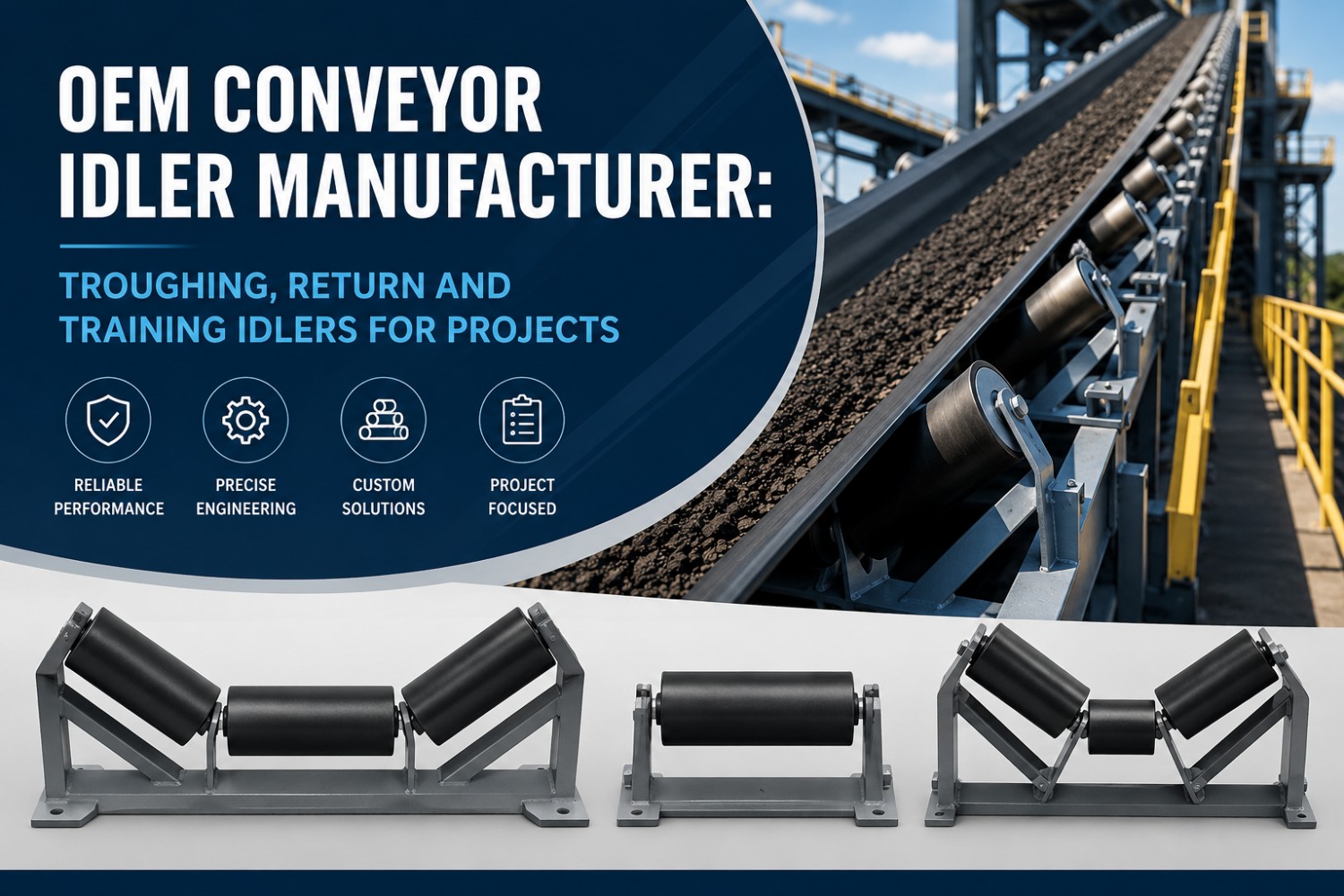
Terminology can create quotation errors. A conveyor roller normally refers to the rotating cylindrical component. An idler roller is a roller used to support the belt. An idler assembly may include multiple rollers together with the supporting frame.
This distinction matters commercially. One bidder may quote rollers only while another includes complete idler sets. The headline prices are then impossible to compare fairly.
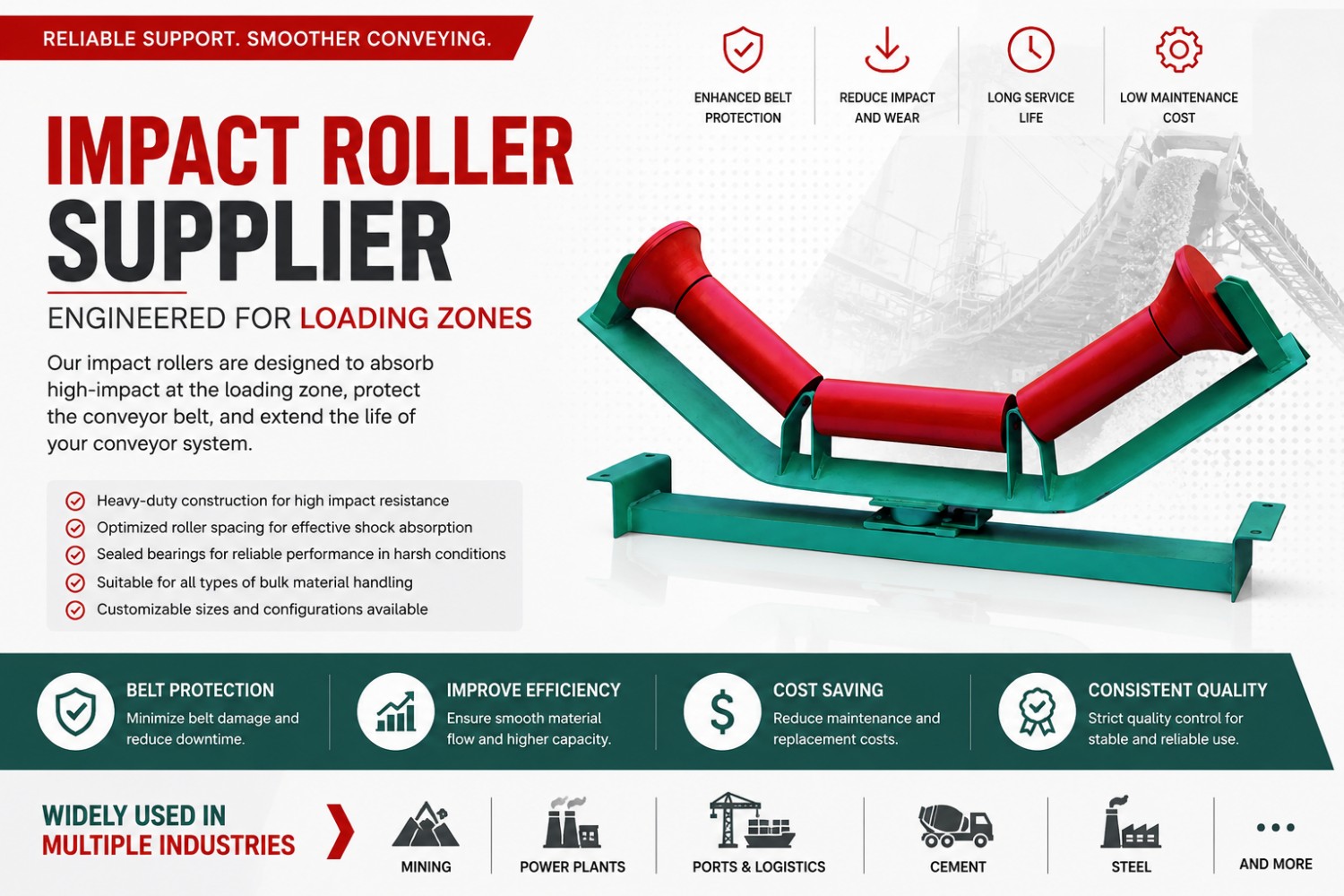
Mining and bulk-material conveyors may use carrying or troughing idlers, return rollers, impact rollers, transition arrangements and tracking-related components. Each position solves a different problem. An idler roller selection guide can help engineering and purchasing teams distinguish these duties before the BOM is released for quotation.
RFQ Warning: Do not use “conveyor roller” as a catch-all description if the project actually requires complete idler assemblies. State whether the quotation covers individual rollers, frames, complete sets, mounting hardware or project-specific combinations.
3. What Should a Mining EPC Buyer Put in the RFQ?
A vague RFQ transfers engineering assumptions to the supplier. It also makes low quotations look attractive because bidders may be pricing different constructions.
A stronger RFQ establishes one technical baseline. For an EPC project, each component should preferably be tied to a BOM item, conveyor number, drawing and revision so procurement, engineering, inspection and the manufacturer are working from the same information.
| RFQ Item | What the Buyer Should Provide | Why It Matters |
|---|---|---|
| Roller duty | Carrying, return, impact, transition, tracking or other specified position | Different positions experience different loads and contamination |
| Belt data | Belt width, speed and relevant belt/conveyor design information | Defines the system in which the rollers operate |
| Material | Ore, coal, aggregate or other bulk material; include lump size and relevant loading data | Influences load, impact, contamination and wear conditions |
| Geometry | Roller diameter and length, trough angle, spacing, shaft ends and mounting dimensions | Prevents fit and interface errors |
| Environment | Dust, moisture, outdoor exposure, corrosion conditions and relevant temperature information | Affects sealing and material decisions |
| Standards | Project-approved ISO, CEMA or other applicable specification and edition | Prevents bidders from assuming different acceptance criteria |
| Inspection | Required inspection points, reports, certificates and third-party requirements | Makes evidence part of the order rather than a post-production request |
| Commercial scope | Quantity, spares, packing, marking, destination and required schedule | Allows a realistic delivered-scope comparison |
4. Evaluate the Roller Construction Behind the Dimensions
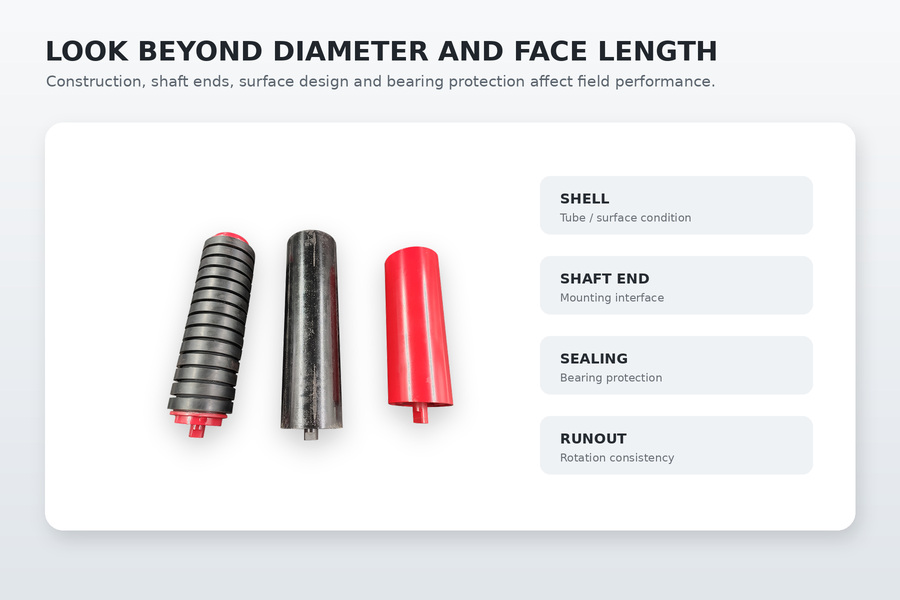
Two rollers with the same outside diameter and face length are not automatically equivalent. For heavy-duty service, buyers should review the complete construction: shell, shaft, bearing arrangement, sealing system, dimensional tolerances and compatibility with the frame.
Bearing protection deserves particular attention in mining. Dust or water entering a bearing can cause progressive resistance and eventual seizure. Simply asking for a “heavy-duty bearing” does not define how the bearing is protected from the environment.
Runout and dimensional consistency also matter. A roller that does not rotate concentrically can introduce vibration and irregular belt contact. Across a long conveyor containing many rotating components, consistency is more valuable than a single sample that merely looks well finished.
The technical issues behind shell construction, shaft support, bearings, sealing and frame fit are covered in more detail in SINOCONVE's guide to conveyor rollers for heavy-duty belt conveyor systems.
5. Use Standards as a Technical Baseline, Not a Marketing Badge
A supplier stating “ISO standard” or “CEMA standard” is not enough. Procurement should identify the applicable document, edition and project requirements in the RFQ and ask the bidder to state compliance and deviations clearly.
For troughed belt conveyors handling loose bulk material, ISO 1537:1975 addresses idler dimensions, arrangement and clearance for specified three-idler configurations. The standard was reviewed and confirmed in 2025, so it remains current. ISO 5048:1989 addresses calculations of operating power and belt tensile forces for belt conveyors with carrying idlers, including conveyor resistances.
For projects using CEMA requirements, CEMA Standard 502-2022 covers bulk-material belt conveyor troughing and return idlers for CEMA classes B through F.
These references do not eliminate project engineering. A standard does not automatically prove that a particular roller construction is suitable for the site's load, contamination, corrosion, impact or maintenance conditions. The buyer still needs to connect the standard to the approved project specification.
Buyer Tip: Ask every bidder to identify exceptions and deviations in a separate technical schedule. “Complies with specification” is less useful than a line-by-line statement showing what is offered, what document supports it and where approval is required.
6. Qualify the Manufacturer Before Comparing Unit Price
A commercial quotation is meaningful only after the technical scope is comparable. Supplier qualification should therefore examine how the manufacturer controls the product and project information, not just whether it can send a catalogue quickly.
Useful evidence can include controlled product drawings, material or component specifications where applicable, inspection procedures, dimensional checks, requested test documentation, traceability arrangements and examples of export packing or marking relevant to the project.
Factory capability also needs to be matched to the actual product being purchased. SINOCONVE was established in 1988 and has more than 35 years of confirmed industrial belt manufacturing experience. The company's wider material-handling product range includes conveyor rollers, while its confirmed conveyor-belt manufacturing resources include more than 200 employees, 26 engineers, a laboratory and 15 quality-control personnel.
Those conveyor-belt factory figures should not be interpreted as conveyor-roller production capacity. For a large roller tender, buyers should request order-specific confirmation of roller manufacturing capacity, production schedule, inspection plan and required documentation before vendor approval.
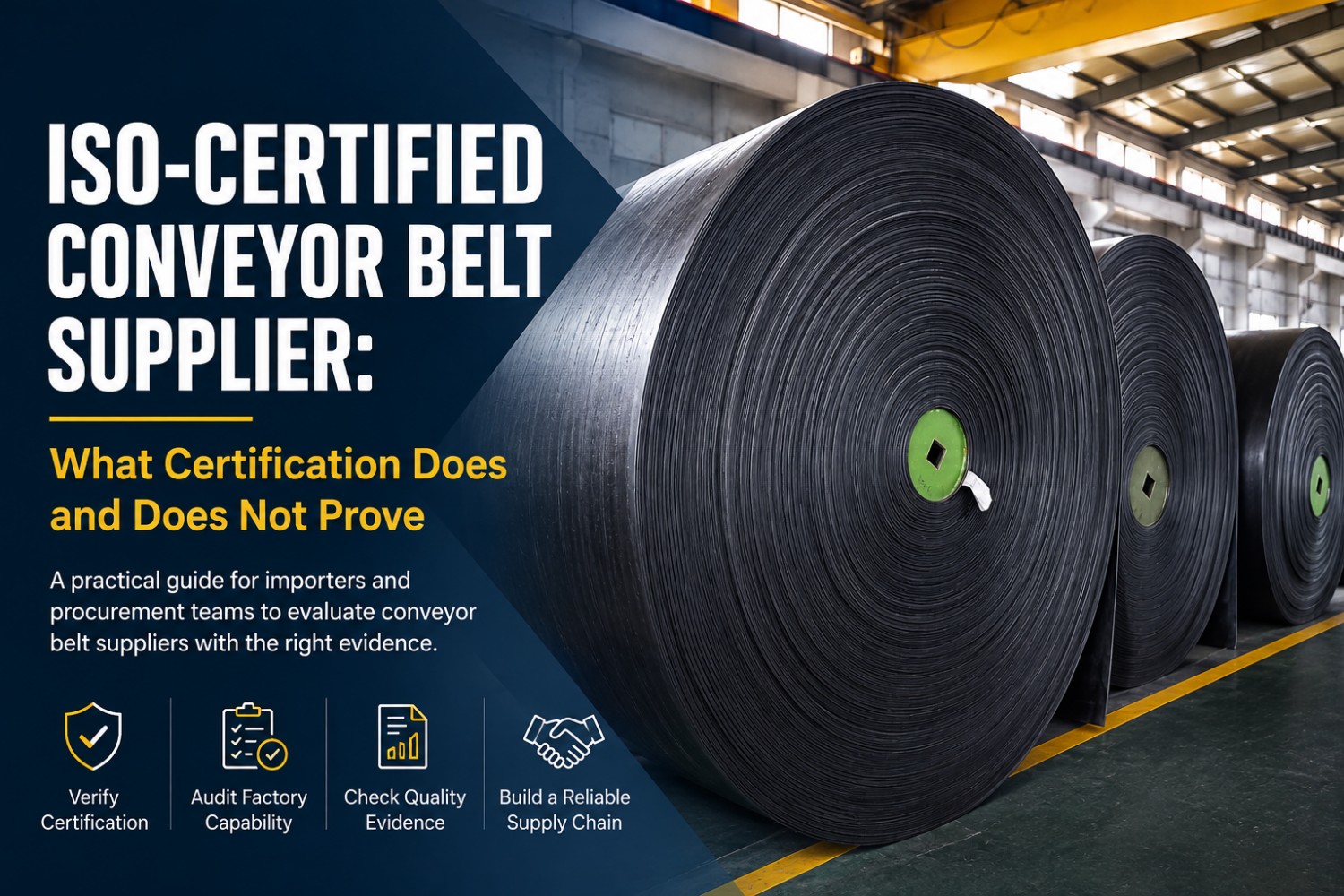
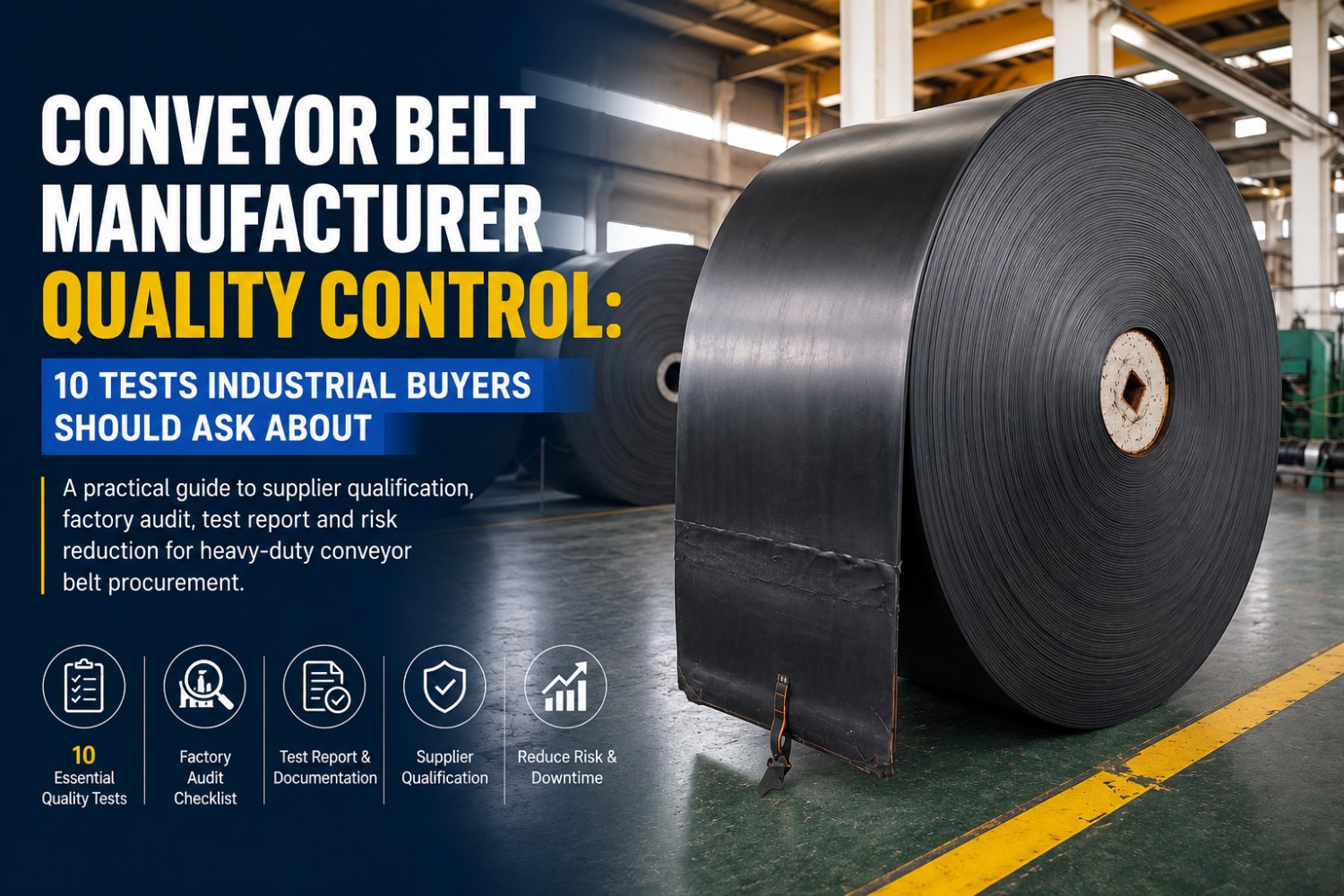
SINOCONVE's quality-control process includes incoming raw-material inspection, production-stage inspection and final inspection before shipment. Product test reports can be provided, and third-party testing can be arranged where a customer specifies particular requirements. More company and manufacturing information is available on the SINOCONVE manufacturing capability page.
7. Compare Approved Vendors on Equivalent Scope
The cheapest quotation is not necessarily the lowest-cost purchase, but neither is the highest-priced roller automatically better. The practical goal is to remove scope differences before price becomes the deciding factor.
| Supplier Check | Evidence to Request | Warning Sign |
|---|---|---|
| Technical understanding | Questions about duty, load, belt, environment and interfaces | Immediate quotation from diameter and length alone |
| Drawing control | Drawing number, revision and approval process | Dimensions confirmed only through informal messages |
| Construction | Clear offered construction and deviations | Generic “heavy duty” description without definition |
| Inspection | Agreed inspection scope and documentation | Test evidence discussed only after production |
| Project execution | Production schedule, packing, marking and shipment plan | Delivery promise without order-specific confirmation |
| Repeat orders | Controlled specification and part identification | Future supply depends on recreating the original specification |
Only after these points are aligned should procurement compare unit price, tooling or development cost where applicable, inspection cost, packaging, freight basis, payment terms, delivery schedule and spare quantities.
8. Check Packaging, Identification and Spare Strategy Before Shipment
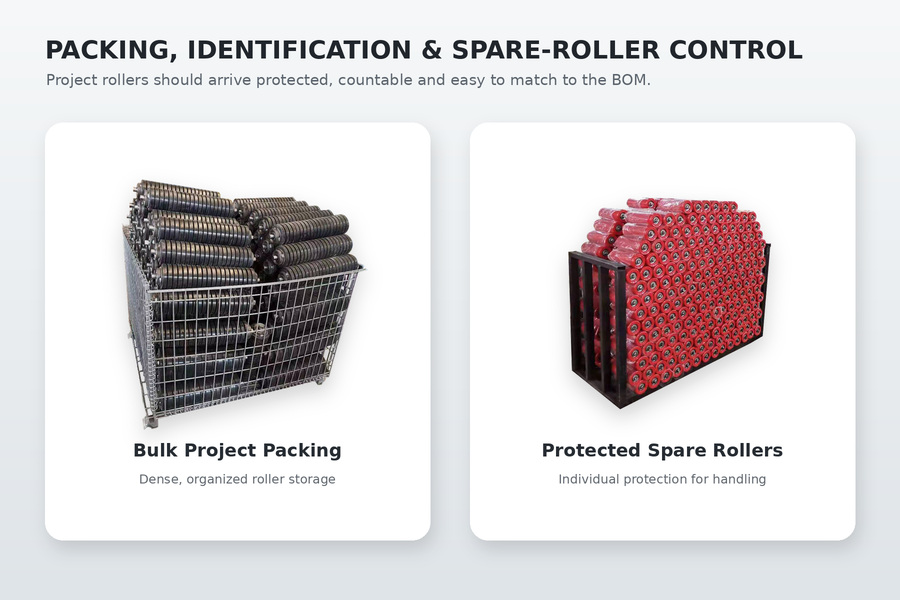
For an EPC project, procurement risk does not end when manufacturing is complete. Rollers arriving at site need to be identifiable against the BOM and installation location. Packaging must also suit the agreed transportation and handling method.
Ask how packages, roller types and quantities will be marked. If several roller configurations look similar, clear identification reduces the risk of installing the wrong component or losing time during commissioning.
Spare planning should also be completed before shipment. Critical positions, installed population, interchangeability, expected maintenance conditions and the project's replenishment lead time all affect the quantity of spares worth holding. A generic percentage is less useful than a spare strategy tied to the actual conveyor layout.
9. Common Procurement Mistakes in Conveyor Roller Sourcing
- Sending only diameter, length and quantity. This may be enough to generate a price, but not enough to prove technical equivalence.
- Assuming every roller with matching dimensions is interchangeable. Shaft ends, mounting details, bearings, seals and frame geometry can differ.
- Using “heavy duty” as a specification. It is a description, not an engineering acceptance criterion.
- Comparing prices before resolving deviations. A cheaper bidder may simply be quoting less scope.
- Requesting inspection documents after production. Required reports and witness points should be agreed before manufacturing.
- Ignoring recurring field failures. A replacement RFQ that copies the old roller without describing seizure, wear, buildup, vibration or tracking problems may reproduce the same failure mechanism.
- Mixing rollers and complete idler sets in one description. Clarify exactly what each BOM item includes.
10. FAQ for Mining and EPC Conveyor Roller Buyers
10.1 What information does a conveyor roller manufacturer need for an accurate quotation?
Provide the roller or idler duty, dimensions, shaft and mounting details, belt width and speed, conveyed material, relevant loading conditions, trough angle or arrangement, environmental conditions, quantity, drawings, applicable standards, inspection requirements and destination. Replacement projects should also include the existing component specification and photographs where useful.
10.2 Should I buy rollers or complete idler assemblies?
That depends on the maintenance or project scope. Rollers alone may be appropriate when existing frames are serviceable and dimensional compatibility is controlled. Complete assemblies may be preferable for new construction or where frames and roller geometry need to be supplied as one controlled interface. Define the scope explicitly in the RFQ.
10.3 Is a larger conveyor roller automatically better for mining?
No. Roller diameter is only one design variable. Load, belt speed, shaft and bearing arrangement, sealing, idler spacing, frame geometry and operating environment must be considered together. Increasing one dimension does not correct an unsuitable overall design.
10.4 What should an EPC contractor verify before adding a manufacturer to the approved vendor list?
Verify technical capability, drawing and revision control, manufacturing scope, inspection procedures, required test documentation, project communication, production planning, packing and identification, deviation management and repeat-order control. For large tenders, request order-specific capability evidence rather than relying only on general company information.
10.5 What standards should be specified for conveyor idlers?
The answer depends on the project and market. ISO 1537 addresses dimensions and arrangements for specified idlers used on troughed belt conveyors handling loose bulk materials. CEMA Standard 502-2022 covers CEMA B, C, D, E and F troughing, return and picking idlers. The EPC specification should identify the required standard and edition instead of asking the supplier to choose one after quotation.
10.6 How should buyers compare two conveyor roller quotations?
Normalize the technical scope first. Compare roller duty, dimensions, construction, bearings and seals, mounting interfaces, applicable standards, inspection documentation, quantity, spares, packing and delivery terms. Price comparison becomes meaningful only when these items are equivalent or the deviations are understood.
11. Prepare the Technical Package Before Requesting the Final Quote
A strong purchasing position comes from having qualified manufacturers quote the same controlled scope. Before requesting the final price, prepare the roller or idler BOM, current drawing revisions, conveyor operating data, installation position, environmental conditions, applicable standards, inspection requirements, quantities, spare requirements, packing instructions and destination.
For a replacement project, include photographs and describe recurring symptoms such as seized rollers, unusual noise, shell wear, contamination, material buildup, vibration or belt tracking problems. That information gives the supplier a better basis for technical review than a part number alone.
SINOCONVE can review conveyor roller requirements against the technical information supplied with your inquiry. Submit your BOM, drawings and project requirements through the SINOCONVE RFQ and contact page or email sales@sinoconve.com. For a mining or EPC tender, ask for order-specific confirmation of the proposed roller construction, manufacturing scope, documentation and delivery schedule before vendor approval.
Related SINOCONVE Products
- Conveyor Roller – Review SINOCONVE conveyor roller products for industrial material-handling applications.
- Industrial Conveyor Products – Browse SINOCONVE conveyor belts, conveyor rollers and related product categories.
Related Technical Blogs
- Conveyor Rollers for Heavy-Duty Belt Conveyor Systems – A technical buyer guide covering roller construction, bearings, seals, frames and RFQ requirements.
- Conveyor Idler Roller Guide: How to Choose the Right One – Selection guidance for carrying, return and other belt-conveyor idler duties.
- Conveyor Roller and Pulley Supplier for Port Conveyor Systems – EPC-focused guidance on BOM control, technical interfaces, documentation and project procurement.
- How to Extend Conveyor Belt Service Life in Mining Applications – Explains how idlers, loading conditions, tracking and other conveyor components affect mining belt performance.