
Why a rough top conveyor belt still matters in modern handling lines
A rough top conveyor belt is one of those unglamorous components that can quietly fix a lot of downstream problems. When cartons creep on an incline, when parcels skew during transfer, or when a light duty conveyor needs a little more grip than a smooth belt can provide, the surface finish matters more than people expect. In packaging lines especially, small slips turn into misaligned stacks, damaged corners, and messy handoffs that slow the whole system.
For engineers and sourcing teams, the real question is not simply whether the belt is “grippy.” It is whether the surface texture, belt construction, and application match the product being carried. A textured belt can help stabilize items, but too much grip can also create drag, tracking issues, or unwanted wear on the conveyed product. That balance is what makes this category worth a closer look.
What the textured surface is trying to solve
The visible value of a rough top conveyor belt is straightforward: increase friction where the load needs help staying put. The raised surface pattern gives the belt more bite against the underside of the product, which is useful on inclines, during acceleration, and at transfer points. It is also common where carton conveying must remain controlled without relying on side rails or aggressive guide systems.
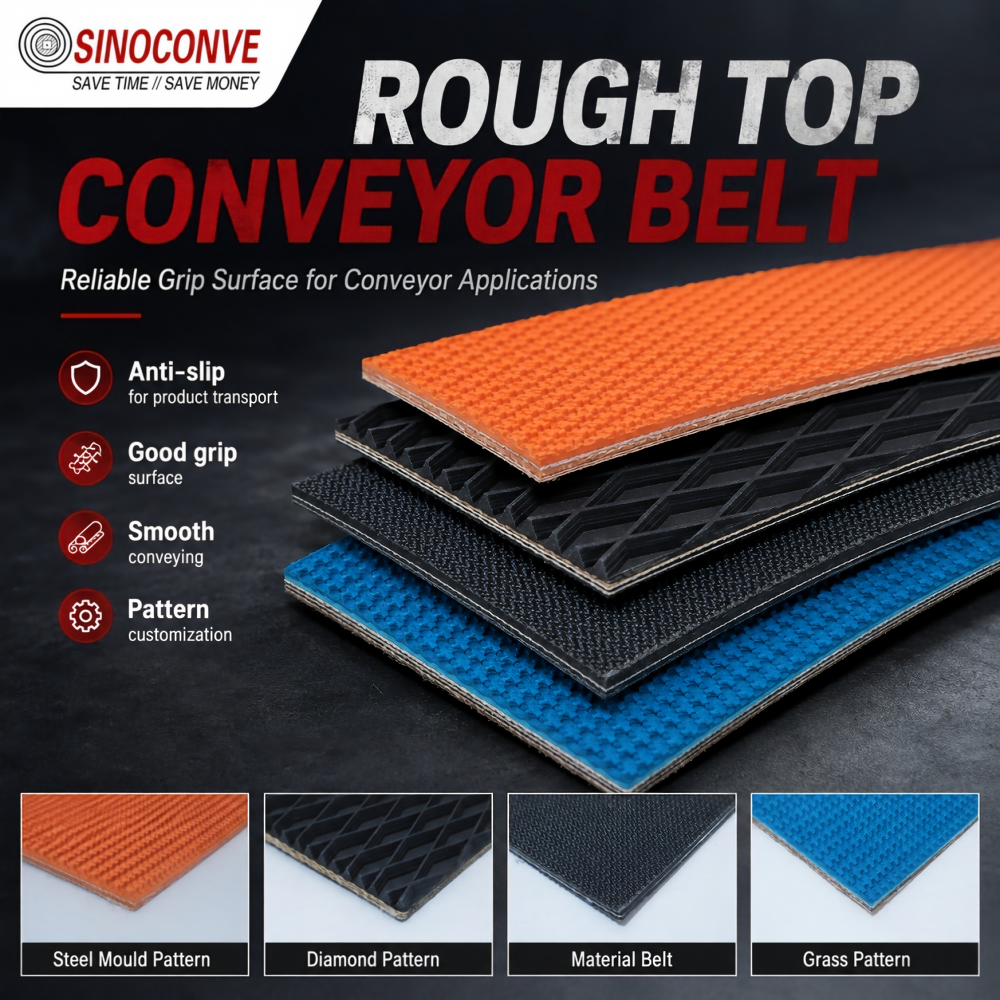
The product information here shows several surface pattern variants, including Steel Mould Pattern, Diamond Pattern, Material Belt, and Grass Pattern. That matters because the “right” rough top is not one universal texture. Different patterns can change how firmly a package sits, how the belt sheds dust, and how smoothly items release at the discharge end. In other words, the surface is not decoration; it is part of the conveying logic.
Where buyers typically use this belt
This type of anti-slip conveyor belt is commonly selected for packaging line duties, carton conveying, parcels, agricultural products, and other light transport tasks where the load is stable enough to move on a textured surface. It is a practical fit when product control matters more than low-friction sliding.
It also fits well in systems that need consistent handling over short and medium runs. A rough surface can help on incline sections where a smooth belt would allow cartons to drift backward or wobble. In transfer zones, it may reduce the risk of a box skating forward too quickly. That said, if the goods are soft, polished, or easily marked, buyers should be cautious. More grip is not always more protection.
What to look at before specifying a belt
Because the exact base material, reinforcement, thickness, and performance data are not stated here, buyers should treat this as a configurable industrial belt rather than a fixed spec product. The pattern type is visible, but the engineering details still need confirmation before purchase.
1. Product stability requirements
If the line handles carton conveying with frequent starts, stops, or inclines, the surface pattern should support the load without causing bounce or slip. For lighter packages, a gentler texture may be enough. For irregular items, a more pronounced pattern may be preferable.
2. Belt behavior in the machine
Surface grip is only one part of the story. Tracking, pulley interaction, and splice style all affect how a belt behaves in service. A rough top conveyor belt that performs well on paper can still be a poor fit if the machine setup is sensitive or the transfer geometry is tight.
3. Cleaning and wear considerations
Textured surfaces can collect dust or product debris more easily than smooth belts. That is a small maintenance issue on some lines and a real nuisance on others. If the application is dusty or frequently washed down, the buyer should ask how the pattern will affect cleaning access and long-term wear.
Pattern customization is useful, but it should be tied to the process
The visible pattern variants suggest custom surface specification is part of the offering. That is useful, because no two packaging line layouts behave exactly the same way. A high-friction belt for incline transport may not be the best option for a transfer section that needs easy release. Similarly, a belt chosen for cartons may behave differently under agricultural packaging or mixed loads.
One practical warning: do not choose based on surface appearance alone. A bold texture can look robust, but the actual decision should be based on load type, incline angle, line speed, and how much surface contact the product can tolerate. Buyers often learn this the hard way after a belt is already installed.
Quick buyer checklist
Before ordering, it helps to confirm the following with the supplier:
• the exact belt material and reinforcement structure
• pattern type and whether it is molded, embossed, or otherwise formed
• thickness and width availability
• compatibility with the conveyor frame and pulley setup
• whether the application is a light duty conveyor or a heavier handling system
• cleaning, wear, and maintenance expectations for the operating environment
What this belt is best for
If your line is losing control of cartons, parcels, or packaged goods on an incline or transfer zone, a rough top conveyor belt is often one of the simplest fixes available. It is not a universal solution, and it should not be treated like one. But for the right packaging line, it offers a practical combination of grip, controlled movement, and manageable cost of implementation.
For sourcing teams, the next step is usually to compare pattern style, construction details, and machine fit rather than shopping by name alone. If the supplier can provide the missing technical data, you can narrow the selection quickly and avoid the usual trial-and-error cycle.
FAQ
Is a rough top belt only for inclines?
No. Inclines are a common use, but the belt can also help wherever a load needs more stability during transfer or acceleration.
Can it replace a smooth belt everywhere?
Usually not. Smooth belts are still better for some release-heavy or low-friction applications. The surface should match the product and the process.
What if I need a custom surface pattern?
That is often the point of this category. Ask for pattern options and confirm how each one affects grip, cleaning, and belt handling in your specific machine.
Next step
If you are evaluating belting for a packaging line or other light material handling system, compare the rough top conveyor belt against your current load behavior and transfer points. A short sample test on the actual conveyor is usually worth more than a long spec sheet with missing data.