
Fire Resistant Conveyor Belt: What Buyers Should Check
A fire resistant conveyor belt should be specified from the risk profile of the line, not from the product name alone. Two conveyors may both carry coal, yet the belt requirements can be different if one line runs in an open yard and the other passes through an enclosed gallery with dust buildup, long idler runs, and limited inspection access.
For buyers, the question is not only whether the belt can resist a flame in a test. The more practical question is whether the belt construction, cover compound, carcass, splice method, and site maintenance plan all fit the operating conditions. A belt with a fire-related label can still fail early if the cover is wrong for the material, the splice is poorly made, or the conveyor keeps generating frictional heat at the same point.
Fire Resistant or Flame Retardant: Do Not Treat the Terms as Identical
In many quotations, fire resistant conveyor belt and flame retardant belt are used almost interchangeably. That can be risky. In practice, the exact meaning depends on the standard, the test method, and the supplier's own grade system. A buyer should ask what has been tested, which part of the belt is covered by the claim, and whether the belt also has antistatic performance if the site requires it.
For coal conveyor belt applications, especially in power plants, coal preparation plants, underground routes, and enclosed transfer corridors, the difference matters. Coal fines, dry dust, friction at a seized roller, and poor housekeeping can create a more serious risk than an open-air aggregate conveyor. Fire resistance should therefore be checked together with abrasion, adhesion, tracking behavior, and splicing reliability.
|
Buyer question |
Why it matters |
What to request from the supplier |
|
Is only the cover flame resistant, or the whole belt construction? |
Some grades focus on cover performance, while others also consider the carcass or belt body. |
Test report, grade explanation, and standard reference |
|
Does the belt need antistatic behavior? |
Coal handling and enclosed conveyors may need both flame resistance and static control. |
Antistatic test information and applicable site requirement |
|
Is the application above ground or underground? |
Underground or enclosed routes usually have stricter safety expectations. |
Local regulation, mine/site specification, or project standard |
|
Will the belt carry hot material or only face ignition risk? |
Heat resistance and flame resistance are not the same selection issue. |
Material temperature range and cover compound recommendation |
Where Fire Resistant Belting Is Usually Worth Considering
A fire resistant belt is not automatically necessary on every industrial conveyor. It is usually considered where the consequence of ignition is high, where inspection access is poor, or where combustible dust and long belt routes make a small incident harder to control. In a coal handling system, for example, the belt may run through transfer houses, galleries, and loading zones where dust, idler condition, and carryback all influence risk.
Power plants, underground mining, coal preparation, cement handling, recycling lines, and enclosed bulk handling routes are common places where buyers ask for this belt type. But the site still needs to define the exact requirement. A warehouse conveyor carrying cartons has a different risk profile from a coal conveyor belt running near dust collection points or hot equipment.
|
Application area |
Typical risk |
Belt selection note |
|
Coal handling system |
Coal fines, dust, long routes, frictional heating from faulty rollers |
Confirm fire resistance, antistatic requirement, abrasion grade, and splice method |
|
Power plant feed line |
Dust, warm environment, continuous operation, difficult shutdown windows |
Balance fire performance with cover wear and replacement planning |
|
Underground mining route |
Restricted escape routes and stricter safety rules |
Do not rely on marketing wording; follow mine/site specification |
|
Cement or clinker-related transfer |
Heat, abrasion, and dust may appear together |
Separate heat resistance from fire resistance during selection |
|
General industrial bulk line |
Mixed material and moderate risk |
Avoid over-specifying if the application does not require it |
What a Roll Photo Can and Cannot Tell You
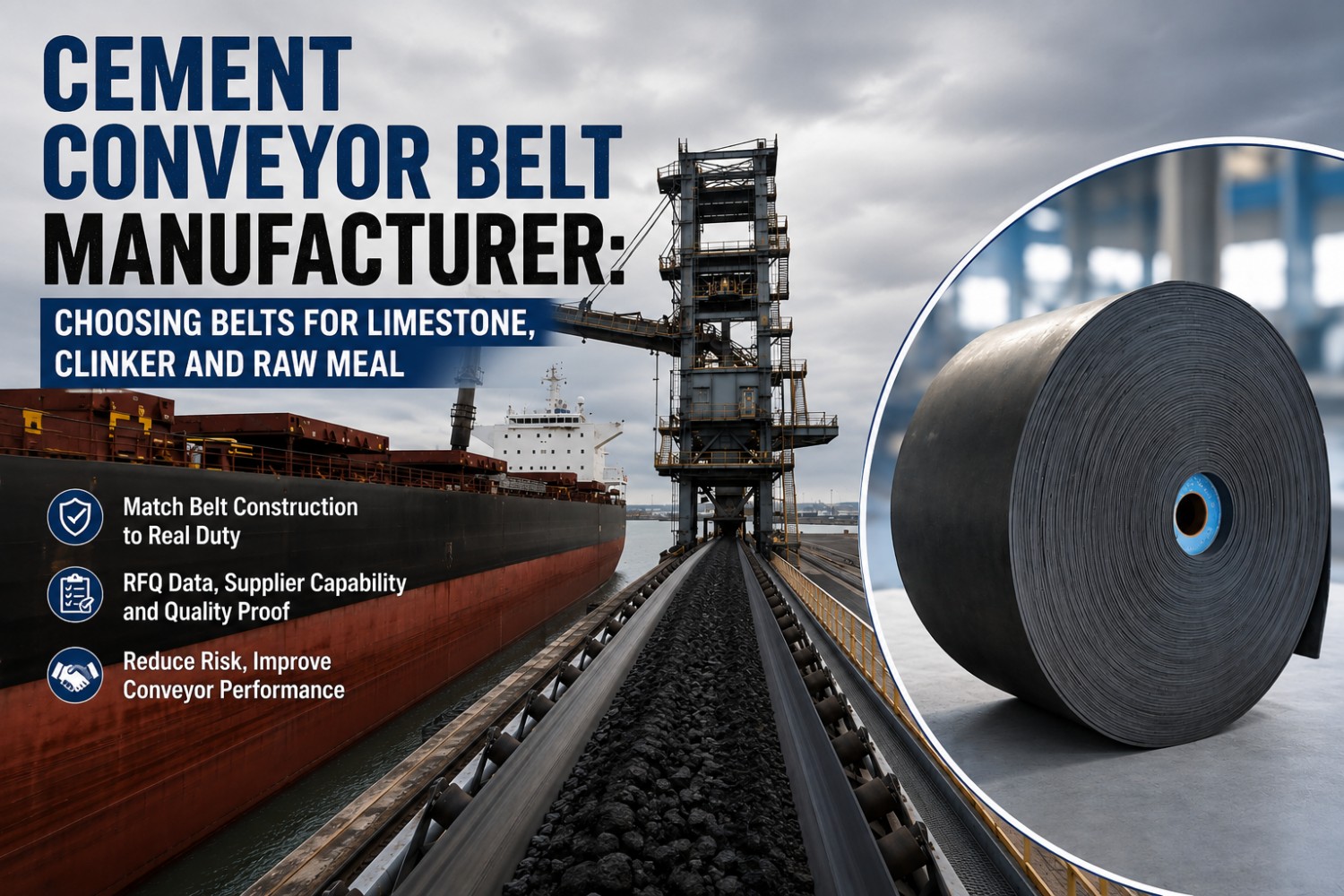
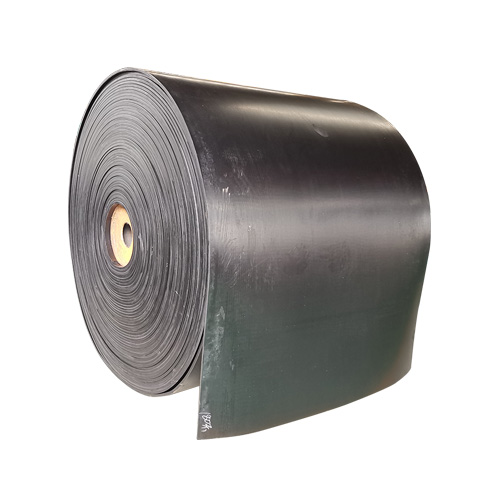
A palletized roll of black belting can tell you something about handling, packaging, and stock format. It may suggest that the buyer is receiving roll material for cutting, splicing, or site installation rather than a finished conveyor component. That is useful for logistics planning.
It does not tell you the full specification. From a roll photo alone, no buyer should assume ply count, tensile rating, cover grade, edge construction, flame test result, antistatic property, or splice recommendation. Those details should be confirmed by written specification and, where required, supporting test documentation.
The Specification Points Buyers Should Actually Check
|
Specification point |
What to check |
Why it affects performance |
|
Cover compound |
Fire-related grade plus abrasion, oil, heat, or weather resistance if needed |
A safe belt that wears too fast still creates downtime |
|
Carcass / reinforcement |
EP fabric, steel cord, or other construction according to tension and route |
Fire performance does not replace strength selection |
|
Thickness and cover ratio |
Top cover, bottom cover, and total thickness |
Too little cover shortens life; too much may affect pulleys and flexibility |
|
Splice method |
Mechanical, cold bonded, or hot vulcanized depending on belt and site |
A weak splice can fail before the belt body |
|
Pulley and idler condition |
Pulley diameter, lagging, seized rollers, belt tracking |
Frictional heating often starts from system problems |
|
Standard and report |
ISO, EN, DIN, MSHA, or project-specific requirement |
The buyer needs proof, not only product wording |
Fire Resistance Does Not Replace Conveyor Maintenance
A fire resistant conveyor belt reduces a certain kind of risk. It does not make a poor conveyor layout safe. A belt rubbing against a frame, a seized idler, a misaligned return run, or a dirty transfer point can still create heat and damage. This is why maintenance teams should treat belt selection and conveyor inspection as one decision.
In many plants, the first warning is not fire. It is a belt running hot near one pulley, a shiny rubbed edge, dust accumulating under the return strand, or material carrying back past the cleaner. Those small signs matter because they show where friction, spillage, and housekeeping problems are building up.
Failure Signs and What They Usually Point To
|
Observed sign |
Possible cause |
Buyer / maintenance check |
|
Edge becomes shiny or frayed |
Belt rubbing against structure or tracking off-center |
Check alignment, idlers, loading symmetry, and take-up setting |
|
Top cover wears quickly |
Abrasive material, wrong cover grade, poor loading chute |
Check material size, drop height, impact bed, and cover recommendation |
|
Splice opens early |
Wrong splice method, poor preparation, high tension at joint |
Confirm splice procedure and belt construction compatibility |
|
Belt surface becomes glazed |
Heat, contamination, slip, or excessive friction |
Inspect drive pulley, lagging, belt tension, and contamination source |
|
Carryback builds under return side |
Cleaner mismatch, sticky fines, poor housekeeping |
Check scraper pressure, material moisture, and cleaning access |
Fire Resistant Belt vs Other Conveyor Belt Choices
|
Belt type |
Best fit |
Main caution |
|
General rubber conveyor belt |
Open, low-risk bulk handling with normal abrasion requirements |
May not meet fire or antistatic requirements |
|
Fire resistant conveyor belt |
Coal, power plant, enclosed galleries, safety-sensitive routes |
Still needs correct abrasion grade, splice, and system maintenance |
|
Heat resistant conveyor belt |
Hot clinker, foundry sand, hot material streams |
Heat resistance is not the same as flame resistance |
|
Oil resistant conveyor belt |
Oily scrap, recycling, machined parts, animal or vegetable oils |
Oil resistance does not prove fire performance |
|
PVC / PVG belt |
Some underground or light-duty coal and enclosed applications depending on standard |
Must match the site standard and construction requirements |
What to Send Before Asking for a Quotation
A supplier can respond faster when the inquiry includes real operating information. Belt width and length are useful, but they are not enough for a safety-sensitive belt. For SINOCONVE or any industrial belt supplier, application details help reduce wrong samples, repeated confirmation, and specification mistakes. That is the practical meaning of Save Time, Save Money in this product category.
|
Information to send |
Why it helps |
|
Material handled and particle size |
Determines cover wear, impact, and dust risk |
|
Operating environment |
Shows whether the belt runs open-air, enclosed, underground, humid, or hot |
|
Required standard or project specification |
Prevents confusion between fire, flame, antistatic, and heat claims |
|
Belt width, length, thickness, and old marking |
Supports accurate replacement matching |
|
Photos of old belt and failure marks |
Shows edge wear, cover damage, splice condition, and tracking problems |
|
Loading point, discharge point, and cleaner photos |
Helps evaluate spillage, carryback, and maintenance access |
|
Preferred splice method and shutdown window |
Affects installation planning and field service |
FAQ
Is a fire resistant conveyor belt always necessary?
No. It depends on the material, site risk, conveyor route, and local or project requirements. Some applications need it; others are better served by a different cover compound.
Is fire resistant the same as heat resistant?
No. Fire resistance relates to behavior around ignition or flame exposure. Heat resistance relates to sustained material temperature. A hot clinker line and a coal gallery may need different belt constructions.
Can a roll photo confirm the belt grade?
No. A photo can show packaging and general appearance, but not ply count, tensile rating, fire test result, antistatic property, or compound grade.
What should a coal conveyor belt buyer check first?
Check the required safety standard, conveyed coal condition, dust and moisture, conveyor route, pulley condition, loading zone, splice method, and maintenance access.
Can the same belt be used in mining, power plant, and packaging lines?
Usually not without specification review. The load, environment, safety requirement, cleaning needs, and mechanical design may be completely different.
Final Buyer Note
A fire resistant conveyor belt should be chosen from the conveyor duty outward. Start with the conveyed material, operating route, safety requirement, and maintenance reality. Then compare belt construction, cover compound, test documentation, and splice plan. Buying by the label alone is fast, but it is rarely the safest or lowest-cost method once the belt is installed in a real plant.