
Why an abrasion resistant conveyor belt matters in heavy-duty conveying
An abrasion resistant conveyor belt is not a generic upgrade; it is usually the difference between a line that keeps moving and one that slowly eats itself from the edges inward. In quarry work, aggregate handling, and other harsh bulk-material lines, belt wear is rarely a clean failure. It starts with scuffed covers, then grooves, then edge damage, and finally spillage, mistracking, and cleanup that costs more than the belt ever seemed to save.
That matters most in operations such as a quarry conveyor or a stone crushing plant, where sharp, angular rock and constant loading punish the belt surface all day long. If the belt also has to run at an incline, the conversation changes again. Material retention becomes just as important as abrasion resistance, because a belt that survives the rock may still lose the rock if the profile is wrong.
What this type of belt is trying to solve
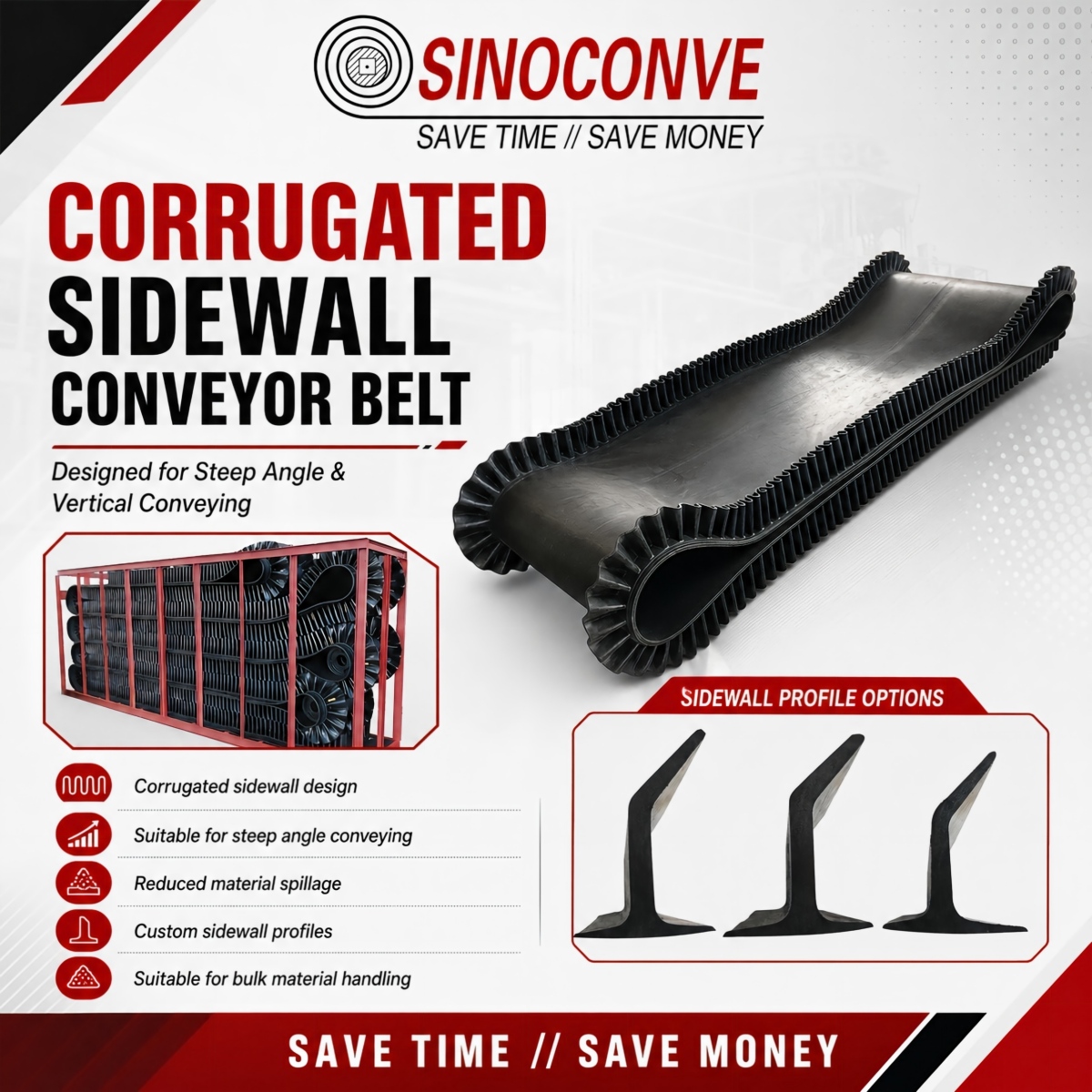
The product category here is a corrugated sidewall conveyor belt, used for steep-angle and vertical conveying of bulk materials. The visible design is straightforward: a flat central belt section with raised corrugated sidewalls along both edges. That geometry helps contain material on the belt and reduces spillage during inclined transport.
For buyers, the practical question is not only “Will it carry the material?” but “Will it carry it without shedding fines, dusting the floor, or forcing a wider transfer footprint?” In many plants, the answer determines whether a belt can replace a more complex conveyor arrangement or whether the process needs another transfer point, more guarding, and more housekeeping labor. Those details sound small until they start stacking up.
Quick reference: where the design fits best
These belts are commonly associated with mining, quarrying, aggregates, agriculture, recycling, and similar process industries. The main use case is bulk material handling where steep incline conveyors or vertical conveying are needed. The image also suggests custom sidewall profiles, which is a useful reminder that geometry often matters as much as belt body selection.
For high-abrasion duty, the belt body itself should be evaluated with the same seriousness as the sidewalls. A sidewall belt can control material flow, but if the cover wears quickly under stone impact or sliding load, the system will still suffer. In other words, containment and wear resistance are linked, not separate purchasing boxes.
How abrasion resistance and sidewall design work together
1. The belt surface takes the first punishment
The belt body in the image appears to be black rubber or a rubber-like conveyor belt material with a matte to semi-matte finish. The exact compound is not visible, so it would be a mistake to claim a specific rubber grade or reinforcement type. Still, in real-world service, the cover compound is what helps the belt resist sliding wear from rock, fines, and repeated loading.
2. The sidewalls control the load path
Corrugated sidewalls are not just for show. They help keep material centered and reduce spillage on steep angles. That is especially valuable where a quarry conveyor has limited horizontal runout or where a vertical lift is the only practical way to gain elevation. The tradeoff is that sidewall belts introduce more fabrication complexity, and buyers should make sure the belt is specified for the actual loading pattern, not just the nominal material type.
3. The system design must match the material
Sharp stone, wet fines, and mixed-size aggregate all behave differently. A stone crushing plant may see highly abrasive fragments with irregular edges, while agricultural or recycling lines may deal with lighter but more variable loads. That means the right belt is not chosen from a catalog image alone. The conveying angle, lump size, drop height, and loading method all influence wear and retention performance.
Buyer criteria that usually decide the job
When engineers and sourcing teams compare options, the first filter is almost always application fit. Is the conveyor running steeply enough to need sidewalls? Is the material abrasive enough to justify a tougher cover? Is spillage a nuisance or a real process risk? If the belt is feeding a crusher, one bad spill can cascade into housekeeping downtime and contamination issues.
The second filter is manufacturability. The visible product appears to be an industrial belt manufactured with molded or attached sidewalls, likely through rubber belting fabrication and sidewall attachment or vulcanization. Buyers should confirm how the sidewalls are joined, because that detail can influence service life. It is also worth asking whether the sidewall profile can be customized for the material and angle in question.
Common mistakes when specifying these belts
The most common error is selecting for one feature only. An operation may ask for an abrasion resistant conveyor belt and forget that the line also needs vertical conveyance performance. Another common mistake is overloading the belt with material that exceeds the geometry’s practical retention ability. If the sidewalls are too low for the incline or the loading point is too aggressive, the best cover compound in the world will not prevent spillage.
One practical caution: buyers often focus on belt width or strength first, but in sidewall systems the profile and loading behavior can be equally important. That is especially true in aggregate service, where coarse particles can chew through poor specifications faster than expected. The belt may look robust on paper and still fail if the transfer point is brutal.
What to ask before placing a production order
Before ordering, teams should confirm the material being conveyed, the steepest operating angle, and whether the line is expected to handle vertical conveying or only incline service. They should also ask for the sidewall profile options, the belt construction details, and the recommended application range. If the vendor uses terms like “suitable for bulk material handling” or “reduced material spillage,” those are useful, but they still need to be tied back to the real process conditions.
The brand shown here is SINOCONVE, with the slogan “SAVE TIME // SAVE MONEY.” Slogans are not specifications, of course. The important part is whether the product design aligns with the material, the incline, and the wear environment.
Practical next step
If you are sourcing for a quarry conveyor, a stone crushing plant, or any steep-angle bulk-material line, start by mapping the load, the angle, and the wear source before comparing belt options. Then ask for the sidewall configuration and the abrasion-focused belt details that matter for your process. That approach usually avoids the expensive mistake of buying a belt that looks right but is wrong for the job.