High Temperature Conveyor Belt: What Buyers Should Check
Buying a high temperature conveyor belt starts with one awkward question: what kind of heat is the belt actually seeing? Many purchasing sheets list only belt width, length, and cover thickness. That is not enough for hot material conveying. A belt working near a furnace discharge, a clinker cooler, a sinter line, or a steel plant transfer point is dealing with heat, abrasion, impact, and repeated bending at the same time.
The purchase is different from a normal industrial conveyor belt order because heat changes rubber behavior. The cover can harden. Adhesion between layers can weaken. The belt surface may glaze, crack, or lose flexibility around pulleys. Once that starts, a line may still run for a while, but the belt is already moving toward early replacement.
For buyers, the useful discussion is not simply whether the product is called a heat resistant rubber belt. The supplier needs to understand the material temperature, the exposure time, the loading point, the return path, the pulley layout, and the maintenance routine. Otherwise, the quote may look correct while the application is still wrong.
Heat Resistance Is Not One Single Condition
Hot material conveying is often described too simply. A belt may be exposed to direct material heat, radiant heat from nearby equipment, or heat trapped around covered transfer areas. These conditions do not affect the belt in the same way.
|
Heat condition |
What happens on site |
Why it matters for the belt |
|
Hot lumps or clinker on the carrying side |
Heat is transferred directly into the top cover, often with impact and abrasion. |
Cover compound, cover thickness, and adhesion become critical. |
|
Fine hot powder or ash |
Material can spread across the cover and stay in contact for longer. |
Surface aging may be slower to notice, but it can affect a wide area of the belt. |
|
Radiant heat near furnace or chute areas |
The belt may heat even before the material fully contacts it. |
Guarding, chute design, and cooling distance should be reviewed. |
|
Intermittent hot loading |
The belt heats and cools repeatedly across shifts. |
Thermal cycling can make cracking and splice fatigue more likely. |
|
Localized friction heat |
Misaligned idlers, seized rollers, or poor tracking create extra heat. |
This is often a system problem, not a belt-grade problem. |
This is why a steel plant may need more than one belt specification across the same facility. A belt used around hot scale or sinter transfer does not face the same duty as a general stockyard belt. Cement clinker, coke, foundry sand, and hot ash also behave differently, especially when lump size and fines content change.
What Buyers Should Confirm Before Asking for Price
A good inquiry for a high temperature conveyor belt should describe the duty, not only the belt dimensions. The following checks help avoid a common mistake: comparing offers before the working condition is clear.
|
Information to confirm |
What to ask |
Risk if ignored |
|
Material handled |
Is it clinker, coke, sinter, hot ash, slag, foundry sand, or mixed material? |
The wrong cover compound may harden, crack, or wear too quickly. |
|
Temperature profile |
What is the usual material temperature and the short-term peak? |
A belt may survive intermittent heat but fail under continuous exposure. |
|
Exposure time |
How long does hot material stay on the belt before discharge? |
Short contact and long contact can need different belt designs. |
|
Lump size and abrasion |
Is the load coarse, sharp, fine, dusty, or mixed? |
Heat resistance alone will not solve cutting or fast cover wear. |
|
Conveyor layout |
What are the pulley diameters, incline angle, loading distance, and return path? |
A heat-duty belt can still fail if bending and tracking are poorly matched. |
|
Splice method |
Will the belt be vulcanized on site or mechanically joined for temporary repair? |
A weak splice becomes the first failure point in hot service. |
|
Storage and handling |
Will the roll be stored indoors, protected from oil, sun, and deformation? |
Poor storage can damage the belt before installation. |
Construction Points That Deserve Attention
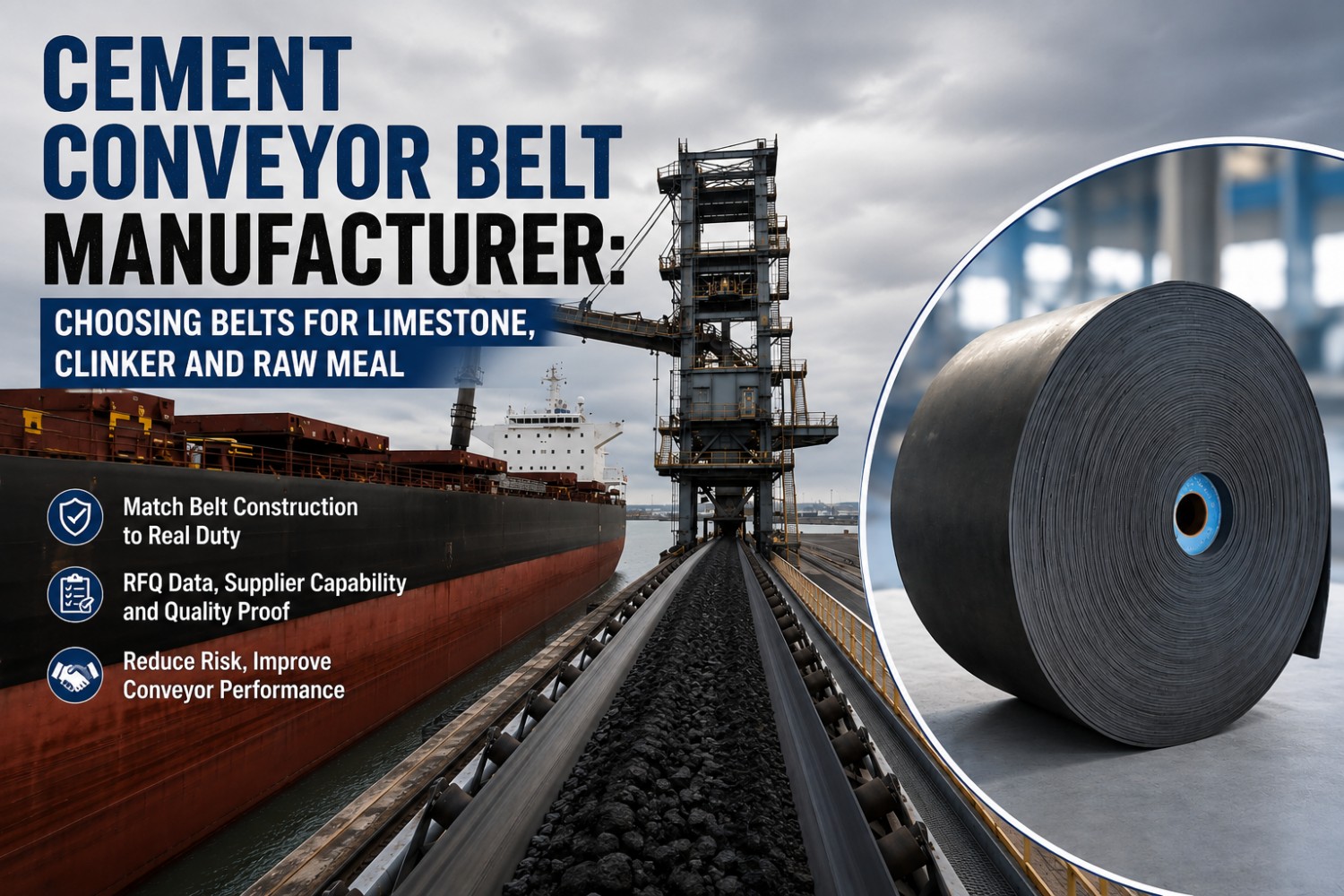
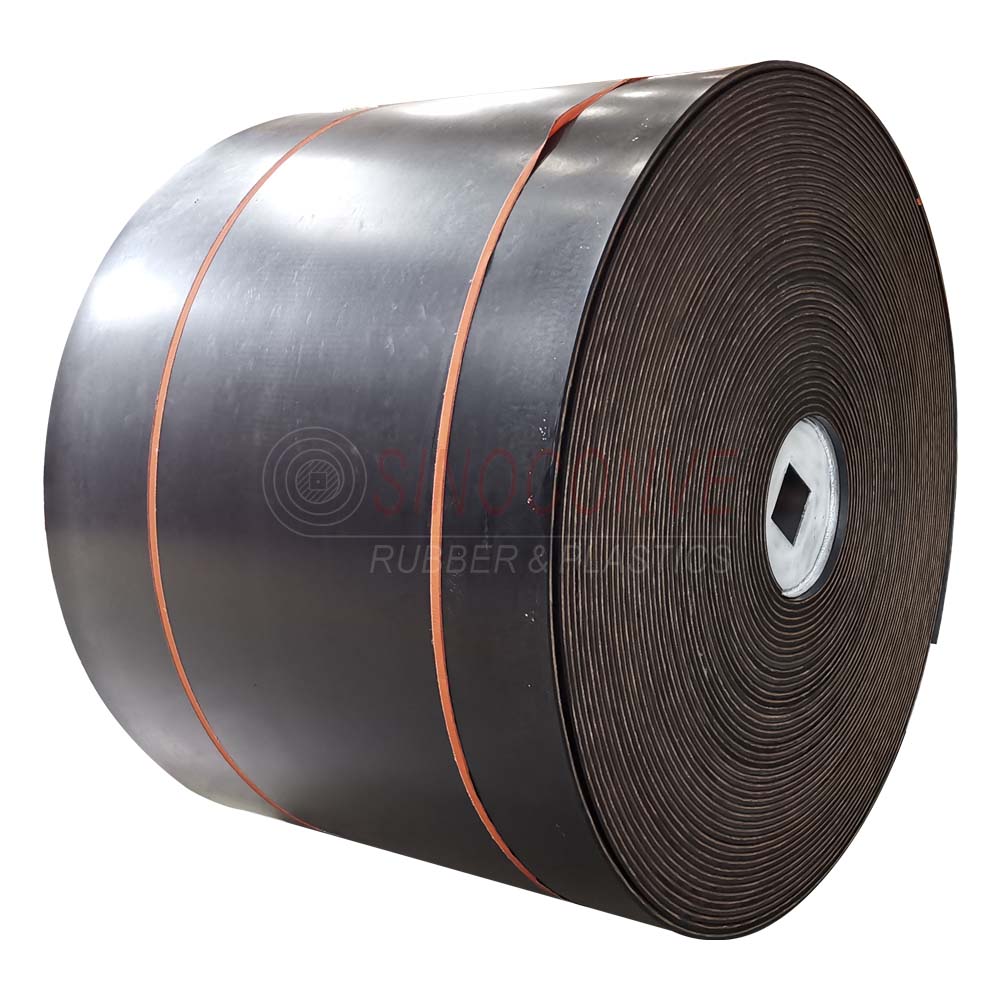
The product may arrive as a clean black roll, sometimes with colored marking stripes or protective wrapping. Roll form is normal for industrial belting, but it does not prove the belt grade. The buyer still needs the full specification.
Cover Compound
The cover is the first layer that hot material attacks. SBR, EPDM, chloroprene, and other heat-duty compounds may be used depending on the manufacturer and grade system. The important point is not the rubber name alone. Ask what temperature range and material type the compound is intended for, and whether abrasion resistance is still acceptable for your material stream.
Carcass and Adhesion
The carcass controls belt strength and shape. Fabric reinforcement is common in many heat resistant rubber belt applications, while steel cord may be used where long distance or high tension is part of the job. In hot conveying, adhesion between layers matters because heat can weaken the bond before the outside cover looks completely destroyed.
Splice Area
The splice should not be treated as a small installation detail. Heat, bending, and tension all concentrate stress at the joint. If the splice material or curing process does not match the belt construction, early opening or edge lifting can appear even when the belt body looks acceptable.
Where High Temperature Belts Are Commonly Used
|
Industry / line |
Typical material |
Main belt concern |
|
Steel plant |
Sinter, coke, hot scale, slag-related material |
Heat aging plus sharp or abrasive particles. |
|
Cement plant |
Clinker, hot cement-related material |
Continuous heat exposure and cover cracking. |
|
Foundry |
Hot sand, castings-related material, return sand |
Heat plus dust and repeated impact at transfer points. |
|
Power plant |
Ash or coal-related hot transfer areas |
Mixed heat, dust, and carryback control. |
|
Drying or processing line |
Heated minerals, fertilizer, chemical bulk solids |
Material residue and uneven heat contact. |
Failure Signs: What the Belt Is Telling You
Old belt photos are valuable. They show whether the problem is mostly heat, abrasion, tracking, impact, or a combination. The table below can help buyers describe the issue more clearly before talking with a supplier.
|
Visible symptom |
Likely cause to investigate |
Buyer action |
|
Top cover hardens and cracks |
Heat exposure above the belt grade, long contact time, or poor cooling. |
Confirm material temperature, exposure time, and cover grade. |
|
Surface becomes shiny or glazed |
Heat aging, friction, or material polishing the cover. |
Check temperature, belt cleaner pressure, and pulley/idler condition. |
|
Cover wears through quickly at loading point |
Hot abrasive material plus impact from chute drop. |
Review loading chute, impact bed, and cover thickness. |
|
Splice opens before belt body fails |
Wrong splice method, poor curing, thermal cycling, or high tension. |
Ask for splice recommendation matched to the belt construction. |
|
Edge cracks or belt tracks badly |
Misalignment, heat distortion, pulley condition, or structure issue. |
Inspect idlers, pulleys, take-up, and frame alignment. |
|
Bottom cover shows heat or friction marks |
Seized rollers, return-side carryback, or poor tracking. |
Check rollers and return path, not only the top cover. |
Steel Plant Buyers: Do Not Specify by Cover Thickness Alone
Steel plant buyers often ask whether a thicker cover will solve the problem. Sometimes it helps. Sometimes it only delays the same failure. If the compound is not designed for the thermal profile, extra thickness can still harden, crack, and lose adhesion. If the conveyor has a sharp chute angle or bad loading control, the cover may be destroyed by impact before heat resistance has much chance to matter.
A better approach is to separate the problem into three questions: What temperature reaches the belt? What mechanical damage happens at the same point? What maintenance access does the site have? The answer usually points to the right belt more reliably than a single thickness number.
General Industrial Belt vs Heat Resistant Rubber Belt
|
Belt type |
Best fit |
Caution |
|
General industrial conveyor belt |
Ambient bulk handling, packaging, light to medium industrial transfer. |
May harden or crack too early if used for hot material conveying. |
|
Heat resistant rubber belt |
Hot clinker, sinter, coke, ash, foundry sand, or heated mineral handling. |
Still needs correct abrasion grade, splice method, and pulley layout. |
|
High temperature conveyor belt with special compound |
Continuous or severe heat exposure where standard heat grades are not enough. |
Technical data and application limits must be verified before purchase. |
|
Steel cord heat-duty belt |
Long distance conveyor with high tension and hot material exposure. |
More demanding splicing and system design. Not always needed for short lines. |
Buyer Checklist for Quotation
|
Send this information |
Why the supplier needs it |
|
Belt width, length, thickness, and current marking |
Confirms base dimensions and replacement reference. |
|
Material name and photos |
Shows whether the load is coarse, fine, sharp, sticky, or dusty. |
|
Normal and peak material temperature |
Helps match the heat grade and avoid under-specification. |
|
Continuous or intermittent operation |
Affects thermal cycling and service expectation. |
|
Loading point and discharge photos |
Helps identify impact, chute angle, spillage, and carryback risks. |
|
Pulley diameter and conveyor layout |
Confirms bending suitability and tracking conditions. |
|
Old belt failure photos |
Shows whether the previous problem was heat, abrasion, splice, or alignment. |
|
Splice preference and site capability |
Prevents mismatch between belt construction and installation method. |
FAQ
Is every black rubber conveyor belt heat resistant?
No. Color does not prove heat resistance. The cover compound, carcass, adhesion system, and test grade must be checked.
Can a normal industrial conveyor belt handle hot material?
Only in limited cases and usually for short exposure. Continuous hot material conveying should be checked against the belt grade and supplier guidance.
What is more important, cover thickness or rubber compound?
Both matter, but compound selection comes first. A thick cover made from the wrong compound can still crack, harden, or lose adhesion.
Why does a heat resistant belt fail at the splice?
The splice may see heat, tension, and bending at the same time. Wrong splice material, poor curing, or thermal cycling can make the joint open early.
What should I send before asking for a quote?
Send belt size, material handled, temperature range, conveyor layout, loading point photos, old belt failure photos, and splice requirements.
Final Recommendation
A high temperature conveyor belt should be specified from the working condition backward. Start with material temperature, exposure time, lump size, abrasion level, loading design, and splice method. Then compare cover compounds, carcass options, and supplier limits. Price matters, of course, but it should come after the belt has been matched to the job.
For a steel plant or any hot material conveying line, the safest buying habit is simple: do not let the product name do all the work. Ask what the belt is designed to resist, where its limits are, and what installation conditions it needs. That is how a heat resistant rubber belt becomes a reliable part of the conveyor system rather than another early replacement item.