
Two overseas quotations can show the same belt width, nominal strength, and cover thickness yet describe products with very different risk. One supplier may have priced a belt built to a defined standard with batch test records and export packing. Another may be working from a short specification copied from an old purchase order. The price difference is visible. The technical difference often is not.
For an industrial buyer, conveyor belt import control starts before the purchase order. Define what must be supplied, how compliance will be demonstrated, what will be inspected before shipment, and who carries each logistics responsibility. A factory visit or polished catalogue can support that process, but neither replaces written acceptance criteria.
Freeze the Belt Specification Before Comparing Prices
A request such as "EP belt, 800 mm wide, 12 mm thick" is not enough for a reliable quotation. It leaves the conveyor belt supplier to interpret the tensile rating, number of plies, cover grade, top and bottom cover split, edge construction, tolerance, and testing requirement.
Start with the conveyor duty rather than the appearance of the old belt. Record the material conveyed, lump size, belt speed, conveyor length and lift, loading arrangement, pulley diameters, trough angle, operating environment, and splice method. Where available, include the original belt data sheet and equipment drawing.
The standard must match the construction. General-use textile belts may be specified against the applicable edition of ISO 14890 or another contract standard such as DIN, RMA, SANS, or BS. Steel-cord belts require a different framework, such as the applicable ISO 15236 series. State the standard number, edition, belt designation, and project-specific deviations.
|
RFQ field |
Why it matters |
Evidence to request |
|
Carcass and rating |
Controls strength and elongation behavior |
Construction statement and test data |
|
Cover grade |
Links the compound to the conveyed material and environment |
Grade designation and standard |
|
Cover thickness |
Affects wear allowance, weight, and pulley behavior |
Top/bottom values and tolerance |
|
Roll length |
Determines installation and splice planning |
Final measured length and roll label |
|
Splice method |
Changes allowance and joint design |
Splice recommendation or drawing |
Do not rely on total thickness alone. A thicker belt may simply have thicker covers; it does not prove a stronger carcass.
Confirm Who Will Actually Manufacture the Belt
The company issuing the quotation may be the factory, an export company, or a trader using several production sources. None of these arrangements is automatically unacceptable, but the buyer needs to know who controls production and quality decisions.
Ask for the legal company name, manufacturing address, product scope, and the name that will appear on the commercial invoice. Check whether the facility makes the required construction in-house. A plant producing standard textile belts may not have the process or equipment needed for a high-strength steel-cord belt or specialized compound.
Certificates should be checked for scope, issuing body, validity, and manufacturing site. A quality-management certificate can indicate that a system is in place; it is not a batch test report. ISO develops standards, while independent certification bodies perform certification. Verify accredited certificates through the issuing or accreditation body rather than accepting an image file at face value.
Useful supplier questions include:
1. Which production steps are completed at the quoted factory?
2. Who approves raw materials and production release?
3. Can the finished roll be traced to production and inspection records?
4. Who can stop shipment if the belt fails an acceptance requirement?
Use Samples for the Right Purpose
A physical sample is useful for checking surface finish, approximate cover thickness, edge appearance, carcass identification, and workmanship. It may also help compare a proposed construction with an existing belt.
A small coupon cannot prove roll length, straightness, consistent vulcanization, steel-cord spacing across the full width, or batch-wide properties. A showroom sample may not come from the production lot.
Identify an approval sample with the proposed specification, compound code, date, and supplier name. Keep one signed or sealed reference piece. The purchase order should state whether the sample is only a visual reference or a binding production reference. For special compounds, confirm that the production lot will use the approved formulation and reinforcement construction.
Where acceptance sampling is required, agree the method in the contract. Conveyor belt sampling standards are revised over time, so state the applicable edition instead of writing only "test according to ISO."
Ask for the Right Test Data
A technical data sheet, certificate of conformity, factory test report, and third-party report serve different purposes.
|
Document |
What it normally shows |
Main limitation |
|
Technical data sheet |
Typical or declared properties |
May not be lot-specific |
|
Certificate of conformity |
Supplier statement of compliance |
May contain little raw data |
|
Batch test report |
Results linked to the production lot |
Depends on traceability and method |
|
Third-party report |
Independent results for identified samples |
Covers only the tested scope |
For textile conveyor belts, relevant data may include full-thickness tensile strength, elongation, cover thickness, adhesion, and cover rubber properties. ISO 283 defines a test method for full-thickness tensile strength and elongation of textile belts. Application-specific belts may require additional tests, such as flame behavior or electrical conductivity, but only when those properties are part of the operating or regulatory requirement.
Before production, define which properties will be tested, the method and acceptance limit, and whether results must be lot-specific, witnessed, or issued by an independent laboratory. Avoid requesting every available test. Focus on the failure modes that matter for the conveyor.
Define Inspection Before Shipment
"Inspection before shipment" should mean more than looking at a wrapped roll. By then, the buyer may no longer be able to see the belt surface, markings, edges, or core.
|
Inspection stage |
Typical buyer check |
|
Before production |
Approved specification, markings, and packing plan |
|
During production |
Traceability and agreed critical process records |
|
Final product |
Width, length, thickness, edges, surface, markings, and winding |
|
Testing |
Results, sample identity, and acceptance status |
|
Loading |
Roll protection, weight, securing, container number, and seal |
For a routine repeat order, factory records and clear photographs may be sufficient. A new supplier, critical shutdown belt, high-value order, or unusual construction may justify on-site or third-party inspection. Write the scope in advance. Otherwise, an inspector may verify quantity and appearance but miss the properties that matter.
The release procedure should also state what happens after a failed result: retest, rework, replacement, concession approval, or rejection. Shipping first and discussing nonconformity later weakens the buyer's position.
Treat Export Packing as an Engineering Requirement
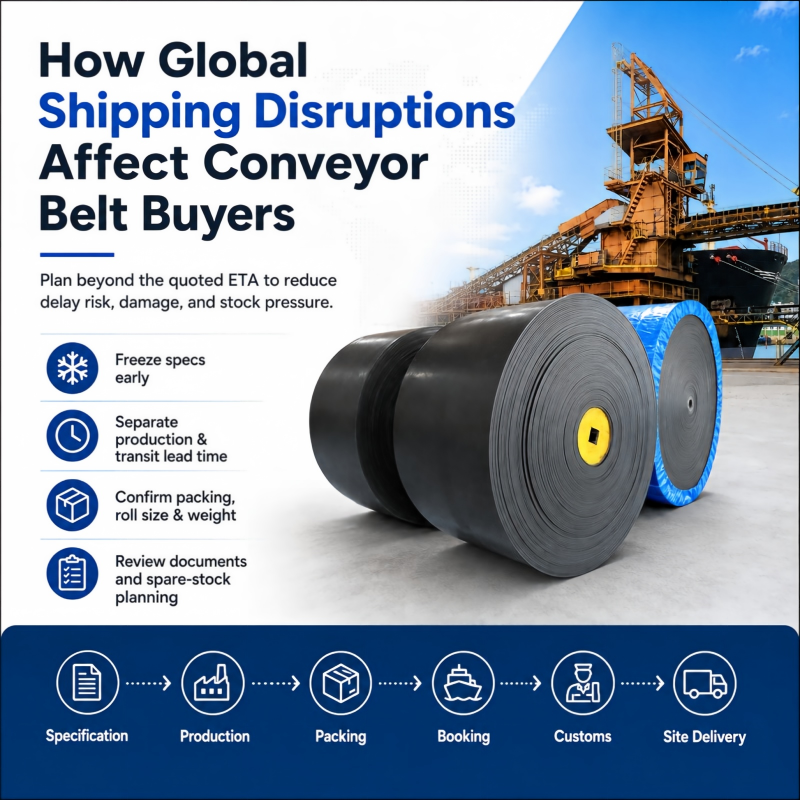
A conveyor belt can meet factory tests and still arrive damaged after poor handling. Heavy rolls create concentrated loads, can move inside a container, and may suffer edge damage if the reel or securing method is inadequate.
Before booking, confirm roll width, outside diameter, core opening, net weight, and gross weight. The destination team must know whether its forklift, crane, shaft bar, spreader, and storage area can handle the roll safely.
The packing specification should cover the reel or core, waterproof wrapping, edge protection, labels, lifting instructions, chocks, blocking, and container securing. The IMO/ILO/UNECE CTU Code gives guidance on safe packing and securing of cargo transport units, while ISO 5285 addresses storage and handling conditions for conveyor belts. If raw-wood reels, pallets, or dunnage are used, confirm destination phytosanitary rules and any applicable ISPM 15 marking requirement.
Request loading photographs showing the roll label, wrapping, securing points, container number, and seal. At arrival, photograph the unopened container and roll condition before unloading.
Review Conveyor Belt Import Documents as a Set
Document errors can delay customs clearance even when the product is correct. Requirements vary by country, Incoterm, payment method, and carrier, but the set often includes a commercial invoice, packing list, transport document, certificate of origin where required, insurance document where applicable, and agreed quality records.
Names, quantities, weights, package numbers, belt descriptions, and country information should be consistent. The packing list should identify each roll separately.
Use the complete Incoterms rule, named place or port, and version in the contract. Incoterms 2020 allocate specified costs, risks, and obligations between buyer and seller, but they do not define the belt specification, payment terms, title transfer, or every consequence of delay. Those items need separate language.
Before balance payment or shipment release, check the final inspection status, roll-by-roll packing list, invoice description, draft transport document, required origin or insurance records, loading photos, container number, and seal.
Compare the Total Risk, Not Only the Price per Metre
A low quotation may exclude testing, robust reels, export wrapping, third-party inspection, documentation support, or a workable roll configuration. Normalize the offers before comparing them.
Ask each supplier to state what is included, what is optional, and what assumptions were made. Compare the same construction, standard, tolerance, inspection scope, packing method, Incoterm, and destination. Also check whether freight is firm or indicative and how long the quotation remains valid.
The cheapest mistake is one found before production. A specification gap discovered after the belt reaches the site may cause local modification, emergency sourcing, or a postponed shutdown.
How SINOCONVE Supports Buyer Verification
Ningbo Sinoconve Belt Co., Ltd. has 35 years of industrial belt manufacturing experience and operates 14 vulcanizing production lines. Its quality process includes raw-material inspection, process control, finished-product inspection, and performance testing, with approximately 15 quality inspection personnel.
For an overseas order, SINOCONVE can review the application and organize inspection, testing, packing, and documentation requirements around the confirmed purchase order. Applicable references may include ISO, DIN, RMA, SANS, or BS requirements depending on the product and buyer request. The goal is not more paperwork. It is fewer unresolved questions before production.
Frequently Asked Questions
Should I approve a conveyor belt from a sample alone?
No. A sample supports visual and construction review, but it cannot confirm full-roll dimensions, batch consistency, or all mechanical properties. Combine it with a written specification and agreed test records.
What test report should I request from a rubber conveyor belt factory?
Request results linked to the ordered construction and production lot for the properties that affect your application. State the test method, acceptance limit, sample identity, and whether third-party witnessing is required.
Is an ISO 9001 certificate enough to approve a conveyor belt supplier?
No. It supports evaluation of the supplier's quality-management system, but it does not prove that a specific belt meets the purchase specification. Verify the certificate and review product-specific records.
When is third-party inspection worth the cost?
It is most useful for a new supplier, critical shutdown belt, high-value order, unusual construction, or strict documentation requirement. Define the scope before production.
Which Incoterm should be used for a conveyor belt import?
The right rule depends on freight control, customs capability, insurance, unloading responsibility, and the named delivery point. Use the full Incoterms 2020 rule and location, then add separate terms for specification, inspection, payment, and delay.
What packing details should appear in the RFQ?
Include maximum roll diameter and weight, core or reel requirements, wrapping, edge protection, labels, lifting method, container securing, and any wood-packaging compliance needed at destination.
Before You Place the Order
A controlled overseas purchase has four linked documents: the technical specification, the inspection and test plan, the packing requirement, and the commercial contract. Each should identify measurable acceptance points.
Before issuing the purchase order, confirm the factory, freeze the belt construction, decide what the sample can and cannot approve, agree the test evidence, define the pre-shipment inspection, and match the shipping term to the buyer's logistics capability. That is the difference between buying a roll of rubber and managing a conveyor belt import.