
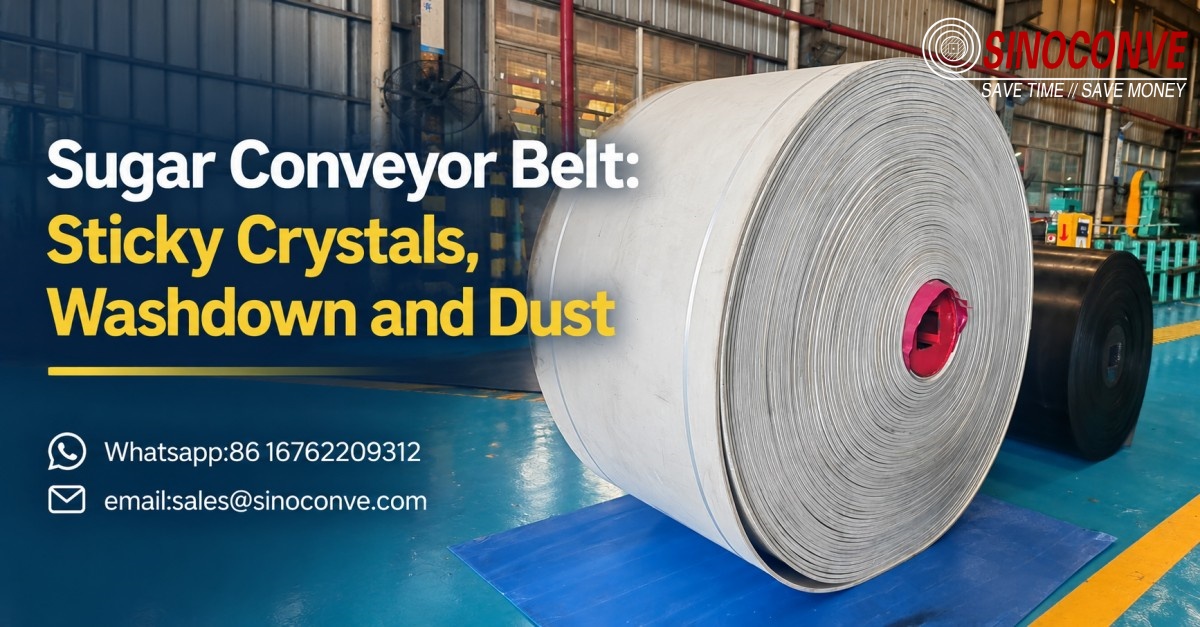
Sugar Conveyor Belt: Sticky Crystals, Washdown and Dust
Inside the tail guard: sugar on a horizontal bracket, although the top cover is clean. It has escaped from the head chute and returned beneath the machine. The bracket makes a shelf, and the pile there is close to the passing edge. Take a picture with the guard open. That physical arrangement, including the location of the chute lip, belongs on the repair drawing.

Order by numbered machine. Beet intake brings soil and clods; cane adds fibres. The centrifuge releases damp crystals, reclaim can release a caked lump, and a filled sack meets only the bagging table. An outdoor run also sees weather. These stations cannot be reduced to one sugar-belt grade.
01 The Failure Order on a Sugar Line
An edge rub may begin with spilled crystals below the tail, lifting a roller into the belt. Clear the pile and compare a loaded run. A pale line inside the fabric suggests water entry instead. Keep a section of the failed edge for examination.
The carrying face can be healthy
Turn the joint through by hand at an isolated stop. A white line in the fabric on one shoulder points to liquid entry even if the top face looks sound. Save a cross-section and the wash log for the replacement supplier.
02 Where This Belt Sits in Our Line Coverage
Before discussing cover grades, locate the machine on a line diagram. The beet receiving belt meets mud and falling clods; bagging may never carry loose sugar. Industry pages describe the broad route. For this loop, the quotation should specify feed, finished joint, smallest pulley and discharge, with dimensions from the installed equipment.
Where to look for related line detail
The jar of white material from the tail can settle an argument that a system diagram cannot. Keep a shift log beside it: time of last wash, first loaded start and weather at the intake. A fault that only occurs with damp product needs to be reproduced with damp product.
03 Receiving at the Beet Pad and the Cane Yard
The beet pad is a soil conveyor first. One lorry unloads reasonably clean roots; the next brings stones and a frozen clod. The intake belt meets both, often within minutes. Film the worst ordinary delivery at the chute and measure the drop to the support below. Grit accumulating beside a skirt can injure the cover even after the clod has passed. The return path needs room to be cleaned.
Cane behaves differently. Long rind and bagasse fibres can wind around a return roller; juice and wash water leave damp tracks where finer material sticks. A tight side skirt may reduce spill while rubbing away the belt edge. The morning inspection should include the skirt underside and the tail, not just the green cane on the carrying run. These two receiving duties need separate drawings even if their nominal tonnage is identical.
04 Where Damp Crystals Leave a Film
Sample the normal centrifuge discharge and any streak from a leaking liquor pipe separately. The discharged crystals are damp bulk material; the leak wets the cover in one fixed lane. A blade tightened to strip that lane may leave a wear line matching the leak. Repair the pipe, then reset the blade and examine the lane before blaming the cover grade.
The wet joint after the surface dries
The retired seam is worth cutting apart. Look for a wet track in the plies near a damaged edge and compare it with the fabric at mid-width. Give both sections to the joint maker, together with the actual rinse schedule. The new seam drawing should specify how that edge is closed.
05 At the Dryer and Cooler: Contact, Not Air Setpoint
The dryer controller reports air temperature, but the belt experiences the crystals that fall onto it. Take the product reading at the discharge, including a stop when material rests in one place. Farther along, the cooler can put cold hardware next to moist air. On a humid morning, condensation may appear on that hardware even with dry product upstream. Note both events on the duty sheet; a single air setpoint describes neither.
Where the duties diverge
Use the table to record the real contact temperature, source of water and available cleaning access for each station.
| Station | Material actually arriving | Clue on the machine | Question for the quote |
|---|---|---|---|
| Beet pad | Roots with soil and occasional clods | Impact mark and grit by skirt | Is the landing supported? |
| Cane intake | Stalks, juice and stray fibre | Wrap on a return shaft | Where does it leave the product path? |
| Centrifuge takeaway | Damp grain with residual liquor | Sticky seam or edge | Is the fabric exposed to liquid? |
| Dryer and cooler | Warm grain, possible cool-surface moisture | Stationary hot patch or local wet band | Which contact cycle is verified? |
| Storage reclaim | Dry grain, fines and occasional cake | Dust leak or tail crust | Where does escaped material collect? |
06 After the Screen: Storage and Reclaim
Bag the white deposit from the return roller. Sugar dust, intact grains and field soil point to different machines upstream. Also locate the cleaner's scrap bin relative to the roller; material that misses it can be picked up again on the belt's lower face.
Reclaim starts deserve a short video. After a damp stop, a lump may drop off-centre from the hopper and produce a few seconds of sideways travel. The empty run can then look perfect. Compare the hopper outlet and landing point before changing any idler setting.
| Complaint | Check while the condition exists | Correct the source |
|---|---|---|
| Crust ahead of the tail | Discharge and return path | Catch carryback before the nip |
| Loaded belt moves sideways | Chute position and accumulated fines | Center the feed and clear deposits |
| Humid-start slip | Drum face and take-up position | Restore traction before adding tension |
| Rinse lifts the joint | Seam profile and edge seal | Approve the closure for that wash |
07 Dust Above the Belt and Slip Below It
A dusty sugar gallery is a plant-level concern. Fine suspended sugar can burn; powder settling on overhead steelwork and inside guards needs a controlled housekeeping and containment plan. The process safety team sets that plan, along with grounding and ignition controls. For its part, the supplier can document the electrical and fire properties of a specific finished belt and joint. A generic 'antistatic' line in a catalogue does not characterize the gallery.
Slip monitoring before cover selection
A speed mark on the belt falls behind one on the powered drum while the line is loaded. Dust covers the drum and the take-up is close to the end of travel. Those three observations belong in the fault log before more tension is applied. Clean and inspect the lagging, then check the loaded speed again. Trip settings belong to the site's controls engineer and its risk assessment, not to a cover-compound label.
08 Plan the Wash Route
During washdown, inspect below the return. A flat bracket can remain wet with dissolved sugar after the upper run has dried. Note where the spray hits a seam or exposed fabric too. Draw the flow path and include pressure and chemistry in the belt enquiry; then decide whether drainage, bracket shape or nozzle position needs changing.
The water that remains after shutdown
Do a second inspection after the last visible drips have stopped. Moisture can remain at the tail nip and under the seam lip. If the bracket below still contains liquid, measure and correct its fall; then inspect the belt through several ordinary wash cycles. The dry dust enclosure is another zone entirely. Its cleaning procedure should be settled with the staff responsible for dust control and hygiene.
09 A Bagging Belt Has a Different Customer
Set a bag on the actual packing table. Under a guide, does the ink scuff? At the nose transfer, does a corner catch or a stitch pull? These are the useful acceptance observations for a filled sack. The heavy receiving specification answers none of them. Include the sack material and dimensions, nose diameter, transfer gap and cleaner's practice in the bagging enquiry. Some crews wipe powder locally; others rinse the whole table.
10 The Outdoor Run to the Ship
Walk the boom after rain. A hood leak may wet only the middle transfer while the feed end stays dry; after a pause, sugar cakes at that one corner. Measure the incline with the normal loaded material. If a raised profile is needed to limit rollback, try cleaning its roots on a sample. That trial is more informative than simply specifying the deepest chevron available.
Salt air attacks the machine around the sugar
A sugar terminal beside the sea is not a salt mine. The marine atmosphere may corrode fasteners, frames and bearings even while the sugar load remains largely dry. Ask the terminal engineer about their protection and access, then specify the belt against the measured product and weather contact. On a long jetty, the practical question for the splice is where it can be made and how a spare loop reaches its frame.
11 Enquiry, Acceptance and Spares
Put one conveyor on each enquiry sheet. Draw its feed and discharge, add the wettest shift and the smallest pulley, then attach the failed belt photograph. A buyer comparing only width and tons per hour may receive two similar-looking quotations for radically different contact duties. The following entries make the order and acceptance test specific.
| Item for the enquiry | Why it changes the choice | Acceptance evidence |
|---|---|---|
| Station and material condition | Beet soil, damp crystal or dry dust are different duties | Named belt grade for this machine |
| Measured contact and stopped-pile temperatures | Dryer and cooler cycles affect cover choice | Written rating for the proposed cycle |
| Smallest pulley, bed and joint access | Controls full-build flex and installation | Approved joint drawing and loaded passage |
| Wash route and water chemistry | Determines edge and joint exposure | Trial inspection after repeated cleaning |
| Dust, slip and site requirements | Affects electrical and fire specification | Applicable evidence for the exact grade |
Acceptance should include a loaded start under the conditions that caused the old complaint. Record edge clearance and the state of the first return roller. Watch the finished joint pass the smallest drum, and look for water retained below the tail after cleaning. Keep the images with the signed drawing. For a spare, confirm its finished loop length and whether the planned stop allows that particular joint to be installed.

12 Questions from the Sugar Line
Will a standard EP belt cope with a sugar line?
EP specifies polyester and nylon reinforcement. The covers, edge seal and joint still have to be selected for this machine. A screened dry transfer and a centrifuge takeaway share little in liquid exposure; the two enquiries should say exactly where wash water reaches the belt.
Is a white cover necessary?
Colour is only one inspection choice. Ask for documentation on the complete belt's food-contact suitability and allowable cleaners. Put a sample on the line under normal lighting, add a little of the usual product residue, and let the quality team assess visibility.
Can a profile help on the incline?
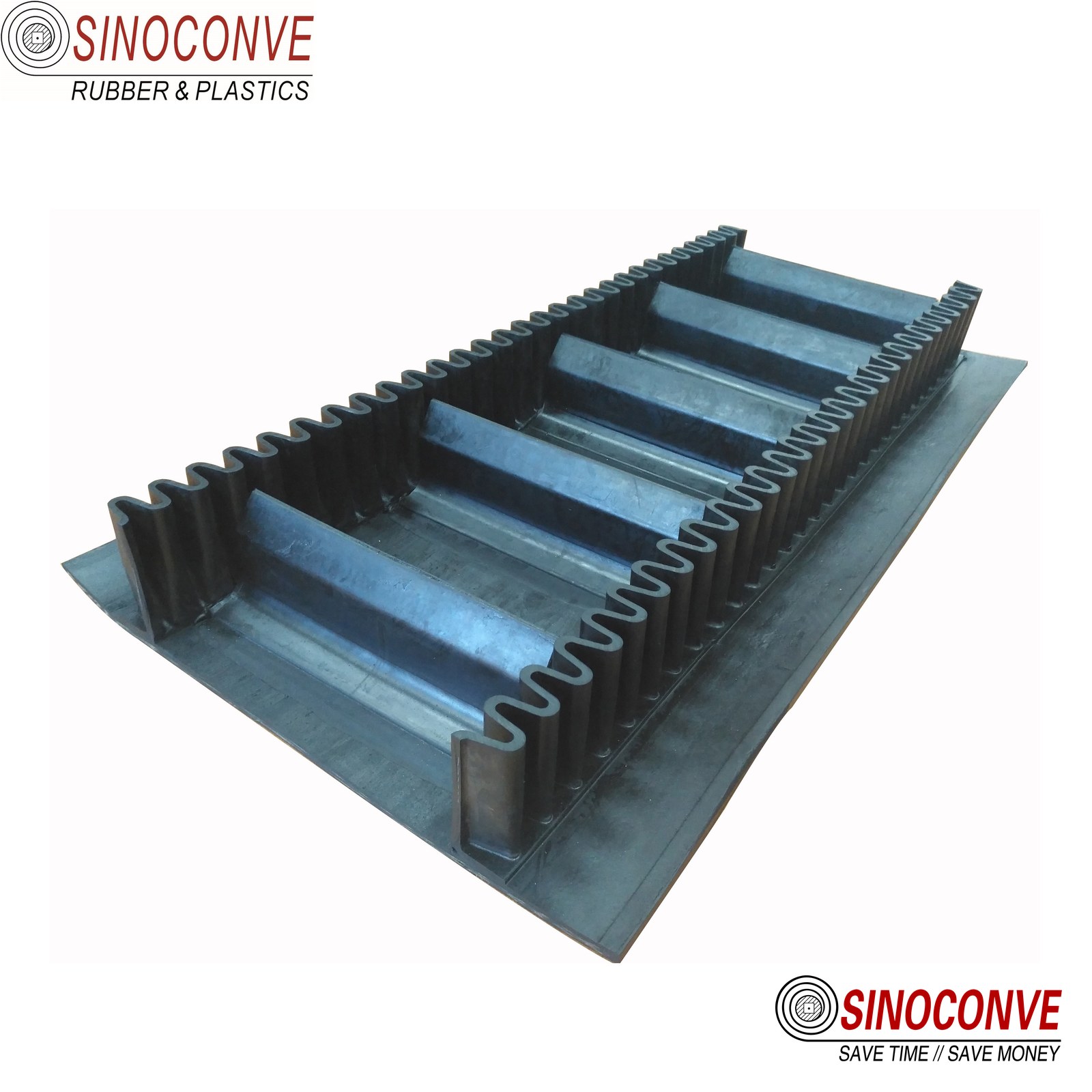
A raised profile can stop material sliding back on a slope, provided the load trial confirms it. Damp sugar also dries at the base of every ridge. Try the intended wash or dry-clean method on a sample profile before adding one. A level conveyor suffering carryback usually gains cleaning work from a profile without solving its discharge fault.
Can washdown damage the belt?
It can when water reaches fabric through a cut edge or poor joint, or sits on the return. With a construction approved for the wash and drainage that works, cleaning removes the deposit that would otherwise cake. Inspect both effects on site.
Is an antistatic belt mandatory around sugar dust?
The plant's applicable hazard assessment and rules decide. Where specified, request test evidence on the actual belt and joint. Enclosure, extraction, housekeeping, grounding and monitoring still need attention beyond the belt.
Can one belt serve the beet and cane sides?
A beet intake may be hit by field stones; cane intake may collect fibres on the tail shaft. Compare their worst shifts and pulley drawings before proposing a shared grade. Equal tonnes per hour say nothing about those two failure paths.
What changes on a jetty conveyor?
On the boom, identify the transfer where rain gets in. The belt on either side may see quite different moisture. Add the loaded angle, drainage route, smallest pulley and the physical space available to make a joint. Those drawings usually expose the practical constraint before the compound discussion does.
When should we clean and what should we stock?
Inspect the first return roller during production. If powder has already made a solid band by mid-shift, change the interval and check again before the material hardens. The spare list should name actual machines. For each, record loop size, joint method, delivery lead time and the stop long enough to fit it. A single plant-wide spare count gives the maintenance crew little to work with.
Related Products You May Need
- Rubber conveyor belts for wet raw sugar and receiving duties
- PVC belting for bagging rooms and light packing lines
- Heat-resistant belts for verified dryer contact
- Chevron belts for selected steep inclines