
Graphite Conveyor Belt: Fine Carbon Dust, Staining and Wear
Some leaves at the head as a pale cloud; some rides back on the cover and turns the first return roller grey. A conveyor can look clean from the walkway while a skirt cavity is packed tight and a nearby motor housing wears a black coat. The useful purchase question is where this particular grade goes after it strikes the belt, not whether graphite is “abrasive.”

01Why Graphite Behaves Unlike a Mineral Filler
Fine particles also move with air displaced by a falling stream. Their electrical properties bring another question for the plant’s dust and ignition assessment. That observation belongs in the site's electrical and dust review before anyone adds an antistatic line to the belt order.
A bag label is a poor test sample. Request powder taken from the running process. The word on the bag conceals differences. For a simple bench comparison, let each grade fall through the proposed transfer height onto a tray.; use the plant's moisture figure alongside what the tray shows. Match those observations to the actual purity limit.
| Graphite received | Behaviour to check at the transfer | Belt-related concern |
|---|---|---|
| Coarse natural flake | Platelets slide and settle near the discharge | Film on cover and drive lagging |
| Fine rounded or processed powder | Fines enter small openings and collect in recesses | Skirt packing and roller-seal ingress |
| Light milled grade | Air visibly leaves the falling stream | Dust at chute joints; material left for the next grade |
02Fine Dust: Where It Goes and What It Bridges
Take two routes around the head pulley. First follow the air from the falling stream: a plume at the chute joint may settle above the belt, on beams and electrical enclosures. Then follow the return strand. Powder pressed into the cover can clear the primary blade and come off at a snub or tail roller several metres later. One extraction hood at the loading point cannot collect that second route.
The skirt is worth opening at a shutdown. Graphite can pack behind the rubber until the strip rides on its own deposit. From outside it still looks like a continuous seal. Lift the strip during a stop. What looks like skirt contact from outside may be a packed deposit. A photo taken while the strip is lifted records where it entered. Where the same position packs again, altering only skirt pressure will repeat the job.
One grey end cap does not condemn an entire roller design. Record the bay number on the drawing and inspect the chute above that roller during the next stop. Use a roller and seal appropriate to the duty, and leave access to inspect its ends.
03Conductive Carryback and the Static Question
Black dust in a motor cover raises questions about containment and electrical equipment. The site's study must answer those questions before a buyer writes 'antistatic' on the purchase order. A belt coupon result cannot stand in for a splice test or installed-machine bonding check. NIOSH's combustible-solid listing for graphite is one input. The process sample and the operations that suspend it supply the site-specific evidence.
If the design calls for belt resistance, put the limit and ISO 284:2025 method on the order. For the first order, keep the vendor's belt and splice records with the commissioning measurements made by the electrician. Check ventilation and terminals for deposited material during the same survey.
04Staining, Cross-Contamination and Product Purity
A grey cover after one campaign is unsurprising. What matters is whether the next product or grade picks up material left in the cover texture, splice, skirt or return enclosure. Set a changeover criterion with the quality team before buying a “non-staining” belt. How much previous grade may remain? Mark the post-cleaning sample points on the changeover sheet. A visually clean cover may not meet a low impurity limit.
At the trial, run the proposed cleanout between two known grades and sample the first material at discharge. If the first bags fail the limit, locate the reservoir. It may be the chute ledge or a fastener recess rather than the cover compound. A dedicated route is appropriate where the contamination allowance is especially tight; elsewhere, a validated cleanout and controlled first-off material may be workable. Do not treat discarded first-off product as an automatic cure without the customer’s approval.
05Abrasion Is Not the Main Wear Mode Here
When somebody reports “the graphite wore the belt out,” ask to see the failed piece. Lay the returned belt on a bench. A narrow polished track at the skirt is different from cleaner damage at a raised joint or a cut made by the frame. The grade can include hard contaminants as well, so ask what was actually carried before attributing every mark to soft carbon.
At the load point, a straightedge makes sag beside the skirt visible. Where the drive slips, wipe the lagging and note whether carbon comes away. Measure remaining cover at the worn line and on both shoulders. These positions make the next cover grade and thickness discussion less speculative.
| Observed pattern | Check near the belt | Likely corrective work |
|---|---|---|
| Smooth cover and drive slip | Lagging film, wrap, tension and belt speed | Clean and diagnose traction before a new compound |
| Grey ridge at skirt | Seal gap and material trapped behind strip | Restore liner and set even contact |
| Stiff return roller | Seal ends and falling powder source | Replace roller and stop recurring ingress |
| Edge wear under load | Feed position, roller deposits and frame contact | Correct loading and tracking before covering damage |
06Cover, Carcass and Edge Selection
Ask the vendor to explain the cover against the submitted graphite sample: the hard contaminants present, release of residue, drive grip and any specified resistance. Hardness alone is a poor proxy for that package of duties; the new cover still has to bend around the existing pulleys. Compare candidate surfaces in a short plant trial if purity or carryback has caused repeated rejection. Record pulley sizes and available take-up before increasing cover thickness.
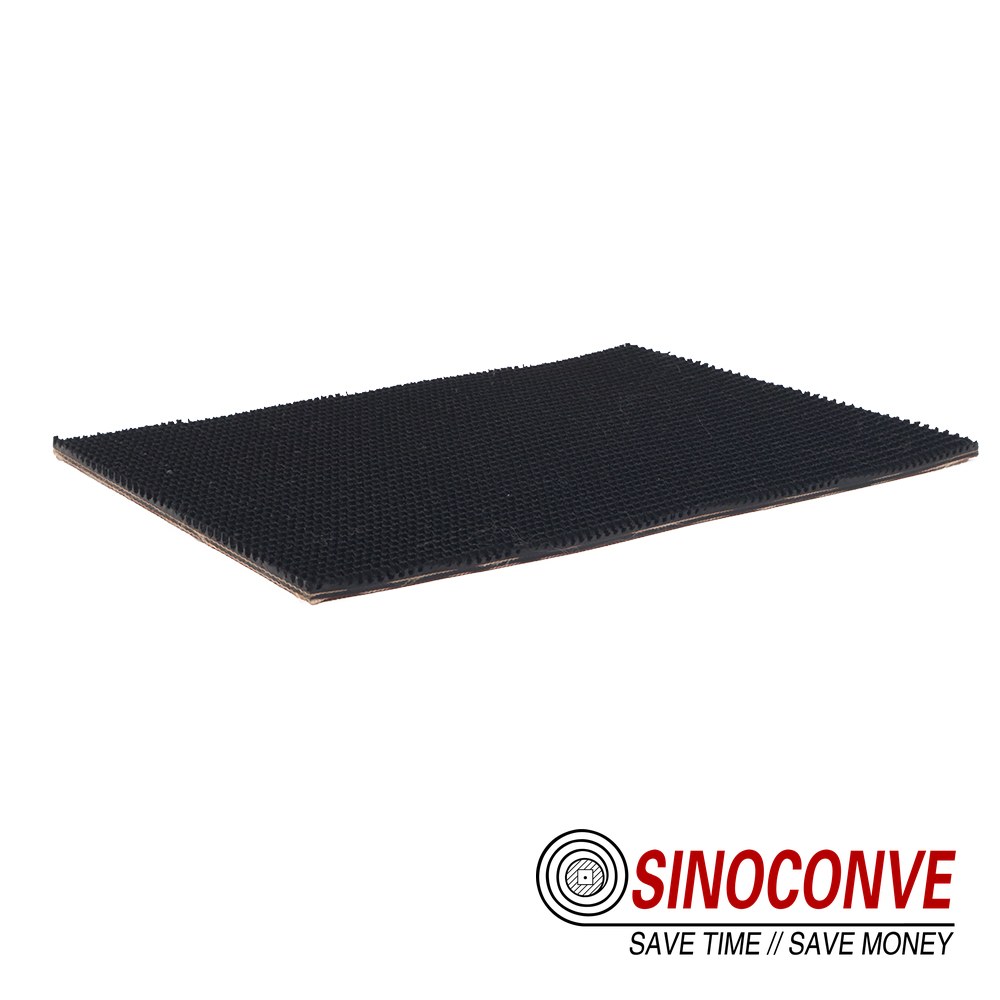
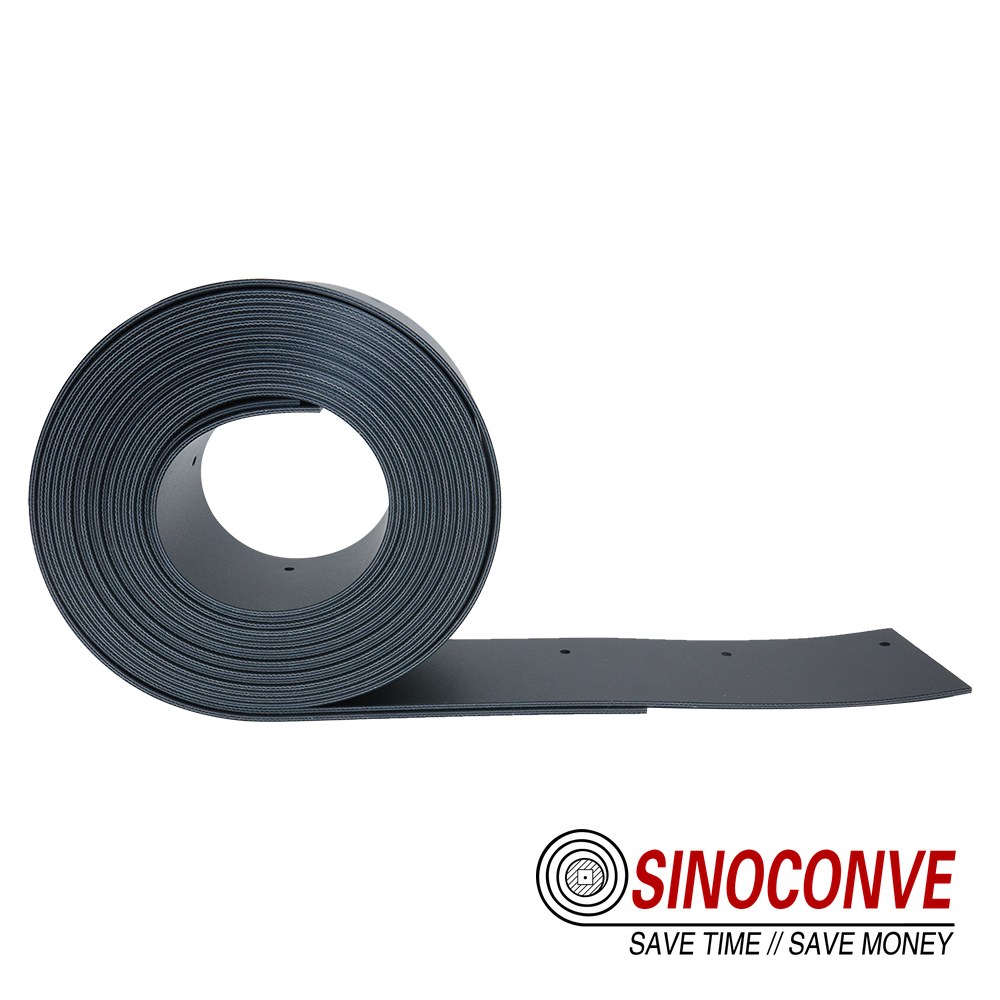
Carcass strength comes from calculated operating tension, starting load, pulley and splice design. An EP fabric build may suit a modest run; a high-tension or long conveyor may call for steel cord. Graphite itself does not make either construction mandatory. On the drawing, state the finished edge and the required width together. On delivery, look for loose yarn where the edge meets the splice. The replacement should be described by full construction, not the phrase “carbon belt.”
07Sealing, Skirting and Transfer Design
Watch a loaded chute before moving the skirt. The falling stream carries air into the enclosure; if that air has no controlled exit toward extraction, dust will escape through joints and inspection doors. Seal the enclosure, control the stream’s landing point and coordinate extraction with the plant’s dust design. The belt must remain supported at the skirt so a loaded trough does not open a moving gap.
An excessively tight skirt can polish a line into the cover and still leak after material builds behind it. A single gap reading is deceptive. With power isolated, take three gap readings along the strip and compare its line with the belt edge. Check the liner plates against the drawing. Clear the packed powder before setting the strip against a supported belt.
08Splice Choice on a Dusty Line
A joint with open pockets offers graphite somewhere to stay. This matters for grade changeover and for cleaner contact. The fastener choice belongs to the actual joint geometry and available shutdown time. Check its profile against the cleaner, skirt, pulley and product purity requirement. Do not condemn or approve it for every graphite line from the fastener name alone.
For a vulcanized splice, ask for the belt maker’s joint layout, compatible materials and a completed cure record. At handover measure whether the finished joint sits proud where it crosses the cleaner. Examine the edge and any change in cover texture. If electrical belt performance was specified, include the joint in the project’s verification plan rather than assuming the cured rubber matches the original sample.
09Cleaning Without Water
During the first shutdown, label several collection points: beam top, return enclosure, and motor casing. Date a photograph of each. The change between photos tells the maintenance team how frequently that particular plant needs cleaning. The dust study governs vacuum selection. Shop air sends powder elsewhere in the building, and a workshop vacuum may lack the protection this duty requires.
A controlled wash is possible where the site has made provision for it. Runoff, electrical isolation, bearing protection and drying need written answers. Then a changeover trial can show whether the first product meets its moisture and purity limits.
10Tracking and Roller Build-Up
The operator's log should say when the drift begins. Does it start as soon as the empty belt runs, only with the chute full, or at a regular interval as the joint passes? In the loaded case, mark the landing position before moving an idler. At the return bay, a graphite ridge can make one roller effectively larger than its mate. After isolation, clean both rollers and inspect their bearings. If graphite soon returns to exactly that pair, a leak above them is more plausible than a frame that needs another idler adjustment.
11Acceptance Checks and a Spares Strategy
The empty trial checks splice passage and gross alignment; the loaded trial checks dust release and tracking across the expected feed range. Put both observations on the handover sheet. Inspect hardware only after isolation. Record baseline photographs of the cover, edges and cleaned return bay, along with belt construction and the cleaner setting.

| Check at handover | How to observe it | Hold the start if |
|---|---|---|
| Loaded transfer | View chute seams and skirt line under normal feed | Dust plume escapes the intended containment |
| Skirt contact | Gauge several points with conveyor isolated | Local hard contact or an open gap remains |
| Splice and cleaner | Run slowly, then inspect stopped joint | Joint snags or leaves a raised pocket |
| Tracking range | Compare empty and normal loaded run | Edge contacts structure or repeats a strong kick |
Base spare stock on the plant’s recorded failure positions and replacement lead time. A kit of the right splice materials, blades, skirt strip and problem-bay rollers can save a second outage. Label the spare belt by complete build and cut length. Two rolls of the same width may have different covers, tensile ratings and joints.
12Frequently Asked Questions
What makes graphite harder on a belt than limestone dust?
On this line, the trouble may be dust in recesses or carbon on lagging rather than cutting of the cover. Examine particle size and foreign grit in both materials, then compare the returned belts.
Do we need a conductive or antistatic cover?
Refer to the site study. Where it specifies resistance, transfer the numerical limit and test method to the purchase order. Retain splice records and the electrician's installed-machine measurements.
Why does the belt slip at the drive after a few months?
A black wipe from the lagging is a clue. Check wrap and take-up against the commissioning figures, then decide whether cover friction is at fault.
Is a mechanical fastener acceptable as a permanent repair?
It depends on the tension, smallest pulley, cleaner clearance and allowable carryover at grade change. Get the joint design approved for those values and inspect the recesses at the next stop.
What sets the cleaning interval?
Measure accumulation at several marked places during early operation. Set the interval before dust reaches equipment, escapes containment or risks cross-grade carryover; revisit it if feed grade or airflow changes.
Will one belt handle several carbon grades?
The belt may carry them mechanically, but the changeover is a product-quality question. Agree a residual limit, test the cleanout and first-off material, and dedicate the route where the limit cannot be met.
What should we hold as spares?
Use the service history and lead time. The exact splice materials, matching roller seals, skirt stock and cleaner blades are common candidates; record belt cut lengths and constructions rather than stocking by width alone.
Can we wash the belt down at the end of a shift?
Only under a site-approved wet-cleaning procedure that manages electrical equipment, slurry, runoff, drying and the next grade’s purity. Where those controls are absent, use suitable captured cleaning rather than a hose or compressed-air blowdown.
Related Products You May Need
Ask for the rubber conveyor belt build by cover, carcass, width and edge finish. EP fabric and steel cord are construction options chosen from the conveyor design. The product catalog and the belt maker’s splice instructions should identify the actual grades offered for this duty.
Related Blog Posts
Our guides to fine-powder belting, conveyor carryback, cleaning methods and EP belt tracking cover the adjoining equipment decisions. The graphite sample and this conveyor’s layout determine which of those problems to solve first.