
A board plant has several different belt jobs behind one gate. Raw gypsum may arrive as rock or wet filter cake. The forming table carries a paper-faced mat that is still setting. Farther along, the handling belt sees a dry board whose corners chip easily. Put the station name on the enquiry before choosing a cover.

01Where the board process changes the belt duty
A belt brought over from the wood line may have the wrong surface for the wet former.
At forming, look for paper drag, slurry residue and water around the return. At the dryer exit, look at the board surface and the belt's exposed edges. These are different inspections from a resin press or a sander, even when both plants call the product a board.
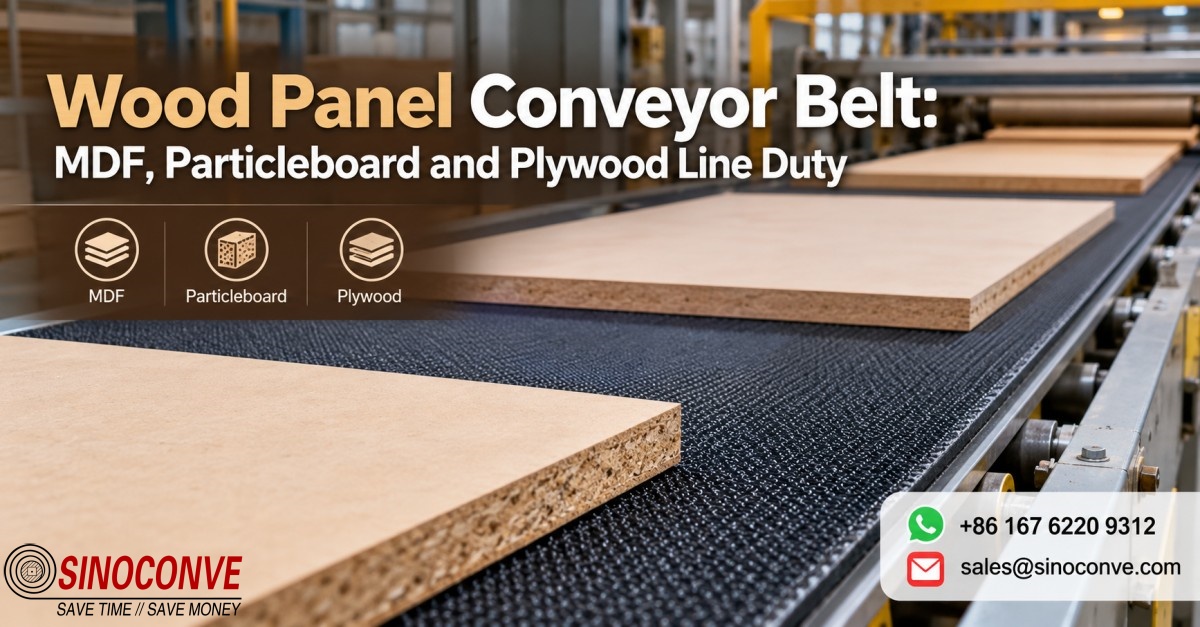
Water enters the board process before the dryer, so follow it through the transfer and return. See: wood panel conveyor belt
A common board width does not make the covers interchangeable. See: conveyor belt manufacturer
02From Rock or FGD Gypsum to Stucco
Natural rock and FGD filter cake do not load a receiving conveyor in the same way. Rock can bring impact at the drop. Cake can stick to the chute and leave a wet return.
The receiving belt needs more than a tonnage figure. See: conveyor belt supplier
The calciner outlet calls for its own temperature reading. The feed side may be damp while the stucco discharge is hot and fine. Do not specify a hot cover from the calciner setpoint: measure the material where it lands on this belt, including a normal start and a sustained run.
| Stage in the board plant and its duty | What the material is doing there | What the belt has to survive |
|---|---|---|
| Raw gypsum receiving and stockpile reclaim | Crushed rock and damp filter cake arrive with free water draining out of the load | Impact at the feed; inspect drainage and the exposed belt edges |
| Calciner feed and hot stucco discharge | Cold damp feed goes in, hot dry stucco comes out as a fine fluid powder | A sudden hot strike on the cover and powder packing under the skirt rubber |
| Forming table and green board set | Slurry sets between two paper sheets while the belt carries a heavy wet load | Water absorption, stucco adhesion and any surface mark that prints through paper |
| Dryer decks and the board cooling run | Steam and hot air pull moisture out of a board that is still fragile | Check the actual dryer support arrangement, heat, humidity and any belt that enters it |
| Trim saws and the stacking end of the line | Knives and saws cut fragile edges before boards are lifted and stacked | Edge cutting, mistracking and surface scuffing at every transfer drop |
03Wet Board at Forming: Water, Slurry and Belt Release
The former supports a wet paper-faced assembly while the core sets. Check a trial board for a repeating line before blaming the slurry mix.
Release is partly a paper question. If dragging begins after a change in facing paper, compare the paper, glue and surface treatment before blaming the belt compound.
Speed at the paper feed and at the former needs to agree. A tracking fault created by over-tension may show later as a poor board edge. The industrial conveyor belt listed for bulk material does not establish a suitable former surface.
At the forming guide, note the edge clearance and any exposed fabric on the return.
04The Dryer Section: Heat, Steam and Cover Life
Many board dryers support product on rollers; a belt after the dryer sees another duty altogether. On a line with a belt inside the heated zone, note its position and the return conditions before discussing a heat grade.
At the hot, humid section, look closely at cut edges and the joint. A dry heat figure does not describe condensation at a return pulley. See: rubber conveyor belt
A cover number without the joint and carcass construction leaves the wettest entry points unspecified. See: heat-resistant conveyor belt
05Stucco Dust: Adhesion, Setting and Cleanliness
Dust around the return rollers
Stucco on the return can set around a wet roller. Look at the roller shell first.
Look for a ridge of hardened stucco on the roller. See: dust-resistant conveyor belt
06Board Edges, Trim and Knife Damage
Edge trim, knife clearance and the damage knives leave behind
Rubber crumbs in the trim waste deserve a look before the next shift damages more of the belt.
Drives at the saw and the trim station
The saw drive is separate from the board-carrying belt. A V-belt manufacturer or transmission belt manufacturer needs the existing belt section, sheave dimensions and observed slip, not the former's cover specification. Clean the sheaves while inspecting the dusty saw area.
07Cover Choice: Release, Grip or Plain
Plain, fine-tex or rough top, and where each one fails
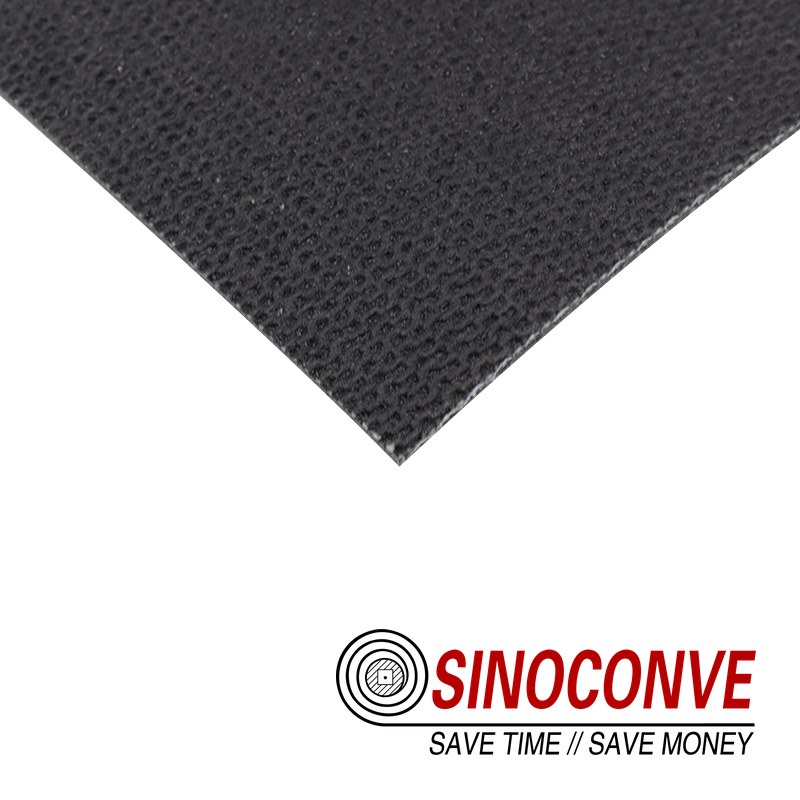
A smooth, cleanable cover may work at forming; more texture can help a dry board at a short transfer or stacker. Test the actual facing paper against a candidate belt before standardising a texture across the plant.
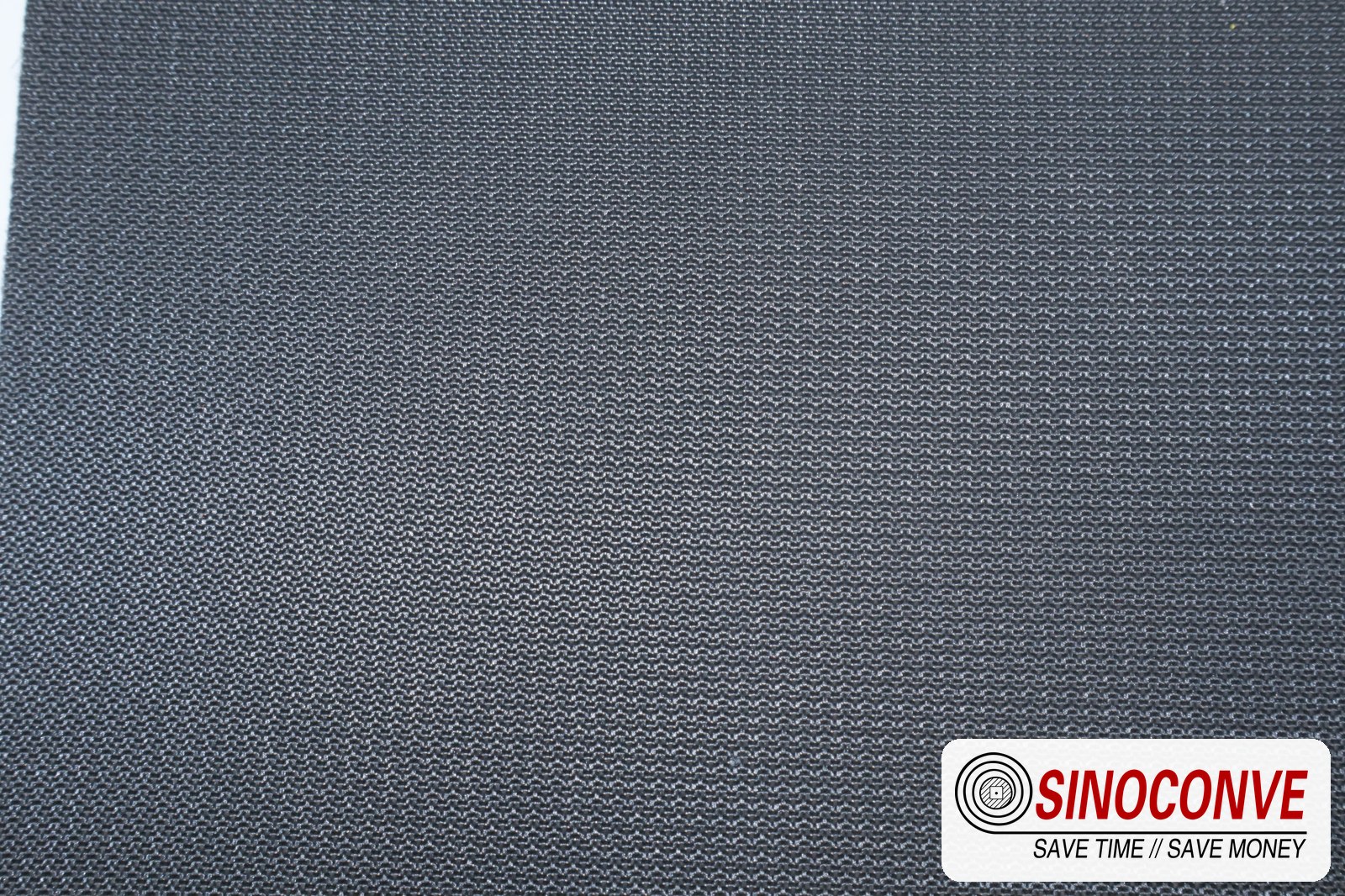
A rough top conveyor belt has pockets that can retain wet stucco, so it deserves caution at the former. It may be useful at a dry stacker. The PVC versus rubber for a wet line comparison covers material families, but a small release trial with the plant's paper gives the most relevant evidence.
When a group buys for several lines at once
Group purchasing often wants one spare roll for every station. Separate the former, any belt inside the dryer, and the stacker before choosing stock. The wholesale conveyor belts catalogue can be used to list the approved builds; each roll needs a clear duty label.
| Failure seen on the line by operators | Usual cause on a gypsum board line | What we inspect first on site |
|---|---|---|
| A faint longitudinal band on the board face | Inspect the cover profile, water exposure and facing paper before assigning cause | Cover profile across the full width and the paper release coating |
| Belt edge fraying and short breaks at the edge | An edge guide shaving the belt or a pulley sitting out of square | Edge clearance at every guide and the pulley face alignment |
| A hard shell of stucco on the return side | Fine dust wetted by dryer condensate and left to set overnight | Return rollers, scraper condition and where the dribble chute discharges |
| Cover cracking across the direction of travel | Check heat history, pulley bending and compound ageing | Cover hardness at the dryer exit and ply adhesion at the edge |
| A splice step printing on every single board | The joint was built with uneven pressure or a folded fabric edge | Splice step under a straight edge and the joint build record |
08Splice and Tracking on a Board Line
Why the joint matters more here than on a quarry belt
A raised splice can appear as a repeated line on board paper. Check the joint profile under a straightedge before production and keep its drawing. The joint method follows the belt construction and the pressure the board applies to it; it should not be chosen by habit.
Our twelve things to verify before you order a splice lists what to request from the splice crew. For this line, keep the cure record, joint dimensions and an image of its finished surface. Ask the conveyor belt factory which procedure matches the approved belt build.
Tracking a belt that never fully dries
Look at tracking with the belt wet and carrying product. A dry empty trial will not reproduce every condition on the forming table.
The tracking an EP conveyor belt guide provides an inspection order. See: conveyor belt distributor
09Transfer, Stacking and Surface Protection
Transfers, drops and the face you cannot repaint
The dry board may be light, but a corner can chip at a short unsupported drop. Check support spacing and the handover height behind the saw. At the stacker, look for face scuffs after a loaded run; the guide position may matter more than cover hardness.
10Cleaning Between Product Changes
Water, scrapers and the order you use them in
Changeover cleaning belongs to the production plan. Remove the last grade’s residue from the belt before restarting.
The conveyor belt cleaning methods notes cover blade positions and schedules. Do not restart a wet former over a patch of unset residue left from the previous grade. See: spray cleaning system
11Acceptance Checks Before a Board Line Starts
The acceptance list we walk with the customer
Before the first saleable board, record belt alignment under load, joint height, edge clearance and the condition of the product face.
| Item to sign off before start-up | How we prove it on site | Why it matters on a board line |
|---|---|---|
| Belt line and pulley alignment across the whole run | A string line along the full length plus a laser on pulley faces | A wet belt will not correct an error a dry belt hides |
| Splice quality and step height at the joint | A straight edge across the joint and a peel check on scrap | Any step prints through the paper for the life of the joint |
| Cover release on the forming table | Run scrap board for one shift and inspect the board face | Release faults show on the product before they show on the belt |
| Dryer belt condition after one heat cycle | Walk the return side after the first full pass through the dryer | Compare belt condition before and after the heated zone if a belt travels through it |
| Edge clearance at guides and skirt boards | Measure the gap at every guide with the belt fully tensioned | Tight clearance shaves the edge and lets water into the carcass |

12Frequently Asked Questions
What is a gypsum conveyor belt?
Name the station: raw material receiving, forming, dryer handling or stacking. Each puts a different surface in contact with the load.
Can a standard EP belt run on a forming table?
Only if its surface, splice and wet-service behaviour have been checked with the actual board and paper. A tensile rating suitable for raw gypsum does not establish that it will release a wet facing without marks.
How do we stop stucco building up on the return side?
The return needs clear rollers and a place for the collected fines to go. Find where moisture reaches the dust.
Which cover suits the dryer section best?
Check the actual dryer layout before choosing a heat grade. If a belt runs inside, give the supplier measured heat and humidity, residence time, pulley positions and the edge construction.
Why does the splice print on the board face?
A high spot or loose edge at the joint can repeat a mark with each belt circuit. A line repeating at the belt-loop interval points back to the joint.
Do moisture-resistant boards need a different belt?
The belt choice may stay the same, but verify release after a product change.
How often should a board-line belt be inspected?
Check the product face and wet return during shifts, then inspect the joint, edges and alignment at planned stops.
What do you need to quote a board-line belt?
Send the station name, drawing, width, pulley diameters, speed and material condition. Include a board-face sample or defect photograph for a forming or stacking belt, and measured dryer conditions if the belt goes inside.
Related Products You May Need
- Rubber conveyor belt for wet and abrasive board plant duties
- Heat-resistant conveyor belt for dryer section service
- PVC conveyor belt for light board handling and stacking
- Conveyor rollers and idlers to support a wet return run