

Biomass Conveyor Belt: Wood Pellets, Chips, Dust and Heat
The fuel ticket says “wood,” but a screened pellet load and a wet chip delivery will leave different evidence on the same belt. Look at what arrives at reception: fines in one sample, bark and soil in another. Then walk the route to boiler feed. The belt sitting after a dryer cannot be chosen from the yard conveyor's duty alone.

01 Why Biomass Fuel Behaves Unlike Mineral Bulk
Tonnes per hour is only one line on the capacity sheet. The chip stream takes up room, so draw the loaded cross-section in the available trough. Then ask what the feeder actually sends: whole pellets with some fines, or long straw fibres likely to hang up around the return. That changes the useful width and the transfer layout.
None of this means a light load automatically mistracks. Belt alignment, loading position, support, pulley condition and take-up still govern tracking. Look at the loaded belt at the feed and transition, then compare it with an empty run.
The industrial belt selection guide covers basic width and tension work. If the same site also carries hard mineral material, compare the separate mining belt guide. The heat-resistant belt guide addresses temperature grades.
02 Moisture and the Return Run
Dampness can be local to the gallery. Steelwork may sweat while the pellets entering the building remain dry. With chips, write down where the wetness began: in the wood as received or on the stockpile after rain. A cleaner sees the residue created by that route.
The location of the first deposit is the clue. Paste just past the head has travelled around the pulley; a pile beneath the loading seal may never have reached the head at all. At shutdown, open the cleaner discharge. A blocked chute can send wet material back down the return even while the blade appears to touch the cover.
| Fuel arriving at the belt | Moisture route to check | Flow issue to observe | Cover or equipment concern |
|---|---|---|---|
| Screened wood pellets | Storage, weather exposure and handling after the mill | Broken pellets and fines may change the stream at transfers | Damp fines can adhere at the head and accumulate on the return |
| Green wood chips | Water within wood plus rain on the pile | Size spread and interlocking can lead to uneven chute discharge | Bark, grit and wet fibre can collect at seals and cleaners |
| Straw pellets or loose residue | Storage conditions and any rain exposure | Pellet integrity or long-fibre bridging varies by feedstock | Fibres can wrap rollers; entrained field grit may wear edges |
That comparison is a starting record, not a universal angle-of-repose chart. Sample the fuel supplied to this plant, including the wettest and most contaminated material it is expected to accept.
03 Pellets, Chips and Straw Are Different Loads
Pellets: protect the shape
A handful from either side of one transfer is more telling when both samples come from the same rate and fuel batch. Spread them out and compare the broken pieces and fines. An increase directs attention to the first hard contact: a liner, the landing belt or a tight skirt. The visible fall height may be only part of the story.
Chips: look for contamination
Two chip deliveries can behave differently in the same chute. Check the size spread and the amount of bark or soil in the stream that caused trouble. If the belt carries parallel wear bands near the skirts, open that zone at a planned shutdown. Look for grit caught beneath the rubber and for a load that lands off center. Harder cover rubber may leave the actual cause untouched.
Straw and residue: allow for fibres
Long fibres can lodge at cleaners and return rollers. Field residue may also bring mineral dirt or ash; its chemistry depends on what was collected and how it was processed. Do not order a different compound merely because the purchase order says “straw.” Identify the actual contamination and the wear mechanism.
04 Dust, Fire and the Belt's Limited Role
Wood dust collected above a gallery is easy to miss from the walkway. Put high ledges on the inspection route along with the transfer and return. The belt's fire rating belongs in the plant hazard assessment, alongside the dust collector, electrical equipment and sources of heat. The required controls come from the whole installation.
The belt quotation should identify the tested construction, including any fire or antistatic performance claimed. An operator's inspection still has to cover rollers that stop turning and dust that settles on steel; no laboratory belt test can find them in service.
The dust-resistant belt page covers containment at the conveyor, and the flame-resistant belt discussion covers cover ratings. The remaining hazards sit outside the belt order: an overheated bearing, an ember in the fuel, hot work near a gallery or a dust collector with inadequate protection.
05 What the Wear Pattern Says
A groove that starts at the skirt tells the maintenance crew where to concentrate the shutdown inspection. Lift the seal only after isolation, and keep the grit that is caught under it. The wear band, seal contact and belt support can then be compared side by side. Ordering a new cover with the same skirt setting repeats the contact.
Keep a little of the grey deposit from the belt, tagged to the current fuel batch. Compare it after drying with what came straight off the cover. That simple distinction can prevent an ash-based cleaning specification for material that is mostly damp wood fines.
Keep photographs from the same belt locations and date them against fuel deliveries. A broad matt area, a cut made by an oversize object and a deep groove under one skirt may all be called “wear” in a shift report, yet they lead to different repairs.
06 Specify the Cover for the Fuel Route
Separate the RFQ by conveyor. At a covered pellet transfer, an ordinary rubber conveyor belt may be enough for the material duty. Beside the dryer, write down hot fuel conditions. In an enclosed dust-handling gallery, bring the site's fire and electrostatic requirements to the supplier. The same product name on all three purchase lines would obscure those differences.
An EP belt quotation is easier to compare when each test result carries a method and sample reference. Put abrasion, adhesion and tear on separate rows. Match the quoted gauge and construction to the wear allowance and smallest pulley on the installation drawing.
The hot end of the system needs two readings: ordinary dryer output and the hottest material encountered during start or upset conditions. Time on the belt belongs in the same record. Discuss the measured duty with the heat-resistant product range and temperature grade explanation in hand. When other properties are needed as well, ask the supplier to identify the exact tested construction being quoted.
A labelled sample of the fuel and a photograph of the old cover make the discussion less abstract.
07 Inclines, Chevron and Sidewall Belts
A smooth belt on an incline may work for one fuel and allow another to roll back. Decide from the angle, speed, loading pattern and measured flow. Chevron ribs can help on a moderate incline, while transverse cleats or a sidewall construction may be considered where the layout is steeper or needs pocketed carrying.
For a chevron, specify pattern height and spacing together with the actual fuel size, the cleaner arrangement and pulley diameters. The chevron belt and chevron selection guide illustrate the option. A sidewall design requires its own layout and return-path check; it cannot be substituted on angle alone.
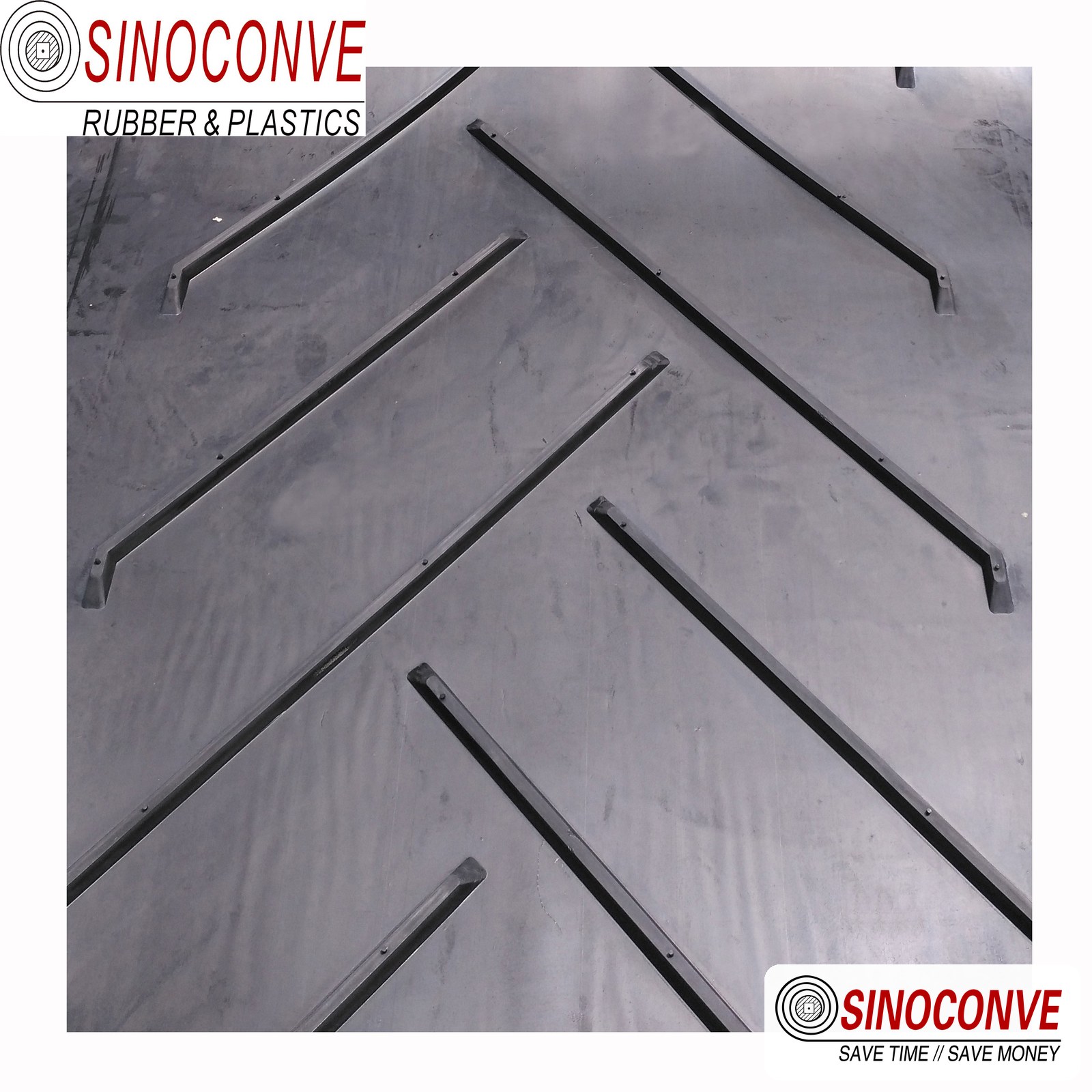
Facilities standardizing spares should first compare pulley geometry and duty across silos. The product catalog, factory page and an example industrial belt construction may help identify the offered options, but a quarry belt designation is not a biomass specification.
08 Transfers, Impact and Belt Support
Where exactly do the pellets start breaking? Take matched samples on either side of the suspect chute while the line runs at its normal rate. At the first hard contact, inspect the liner, the change of direction and the receiving belt's support. An impact bed or idlers may help at the landing point; pinched skirt rubber can still undo that work farther along. The loading-zone support guide covers that part of the layout.
| Finding during inspection | Plausible contributors | Check before specifying a new belt |
|---|---|---|
| Two narrow wear bands near the skirts | Pressure, trapped grit or belt movement | Loading center, skirt contact and support along the zone |
| Wet carryback below the return | Material release, cleaner contact or drainage | Fuel sample, primary and secondary cleaners, discharge path |
| Drift that changes with a fuel batch | Shifted loading, buildup, take-up or alignment | Compare empty and loaded runs; inspect pulleys and idlers |
| Deposit on return idler shells | Carryback, spillage, moisture or condensation | Trace origin and inspect rollers during a safe shutdown |
| More pellet fines after one chute | Repeated hard contact or pinching | Paired samples and observation of the actual transfer |
09 Cleaning and Dust Control
What passes the primary blade? Compare the cover immediately before and after the secondary position, if one is fitted. The plough near the tail has a separate purpose: protecting that pulley from loose debris. Material already lost along the return is a head-cleaning or containment problem. Ribbed and cleated covers need a blade arrangement that reaches the material between their features.
If a wet fibre film survives the blade, more pressure is only one possible adjustment, and sometimes the worst one. Check blade wear, contact and the route into the collection chute. A water wash needs a place for slurry to go. Compare the belt cleaning guide with the carryback guide. Dust entering a return bearing requires attention to roller sealing as well.
10 Tracking, Tension and Splices
“It runs to the left” is too little for the maintenance log. Record the point where movement begins and whether it appears with an empty belt. If the drift starts only after loading, watch the chute and the first troughing idlers. If it begins on the return, inspect the pulley faces and take-up as well. That sequence saves moving an idler that was aligned in the first place.
The take-up setting belongs in the design record. Compare available travel and tension with that record before changing it. Too much pull can shorten bearing and belt life without straightening a skewed load or splice. Joint geometry and workmanship should be reviewed against the approved method; see the splicing guide and EP tracking guide.
11 Acceptance and Spares
Put factory tests and site trials on separate lines of the acceptance sheet. Measure and document the belt as supplied; then run the installed conveyor with representative fuel. A cover adhesion result cannot tell you whether a chute cracks pellets.
| Checkpoint | Evidence to collect | Acceptance basis |
|---|---|---|
| Cover dimensions | Measurement record across specified points | Purchase-order dimensions and agreed tolerances |
| Splice and joint | Approved procedure, materials and inspection record | Belt maker's procedure and contract criteria |
| Cover-to-carcass adhesion | Sample test with method and result | Agreed test value; no visual shortcut |
| Loaded tracking | Observation under representative dry and wet fuel | No sustained edge contact or abnormal drift |
| Carryback and dust | Return-run inspection under typical production | Site's agreed cleanliness and containment criteria |
Keep each conveyor's splice compound, cleaner blades, seal sections and idler sizes together under its equipment tag. Storage dates belong on the kit. For fan and feeder drives, record the actual V-belt sizes beside the drive tag rather than in the main conveyor list.

12 Questions from Biomass Belt Buyers
Can an ordinary belt carry screened pellets?
It may handle a cool, sheltered pellet stream, depending on the design. Dust and fire requirements, temperature, abrasion and the actual environment still need checking. “Standard” is not a substitute for a specified cover and test record.
Why does tracking change after a wet delivery?
Watch a wet run beside the previous dry-shift record. If the feed moved off center or the return picked up paste, deal with that observation before adjusting the trainer.
Does a fire-rated belt solve the gallery hazard?
No. The rating is about the belt under a defined test. It does not detect an overheated bearing or remove a combustible layer from the gallery. Those need the plant's dust and fire controls.
Which transfer is making pellet fines?
Take comparable samples before and after each transfer. The first point where fines increase is the place to inspect for abrupt impacts, speed mismatch or tight seals.
How do we keep fines off the floor beneath the return?
Keep material inside the chute first. Check what passes the head cleaners, then trace the return route and remove settled dust through the site's housekeeping program.
When does a silo incline need a pattern or cleats?
Only if the layout and fuel behavior call for them. Compare the actual incline with smooth and patterned belt options, then check discharge, return cleaning and pulley requirements.
Can the pellet belt also run straw?
Sometimes. Straw carrying field grit may wear a pellet belt differently, and long fibres create their own cleaning problem. Compare samples with the current belt's damage before changing the cover grade.
What should the fuel-yard spare kit contain?
Start with parts that have stopped this line before and parts that take longest to replace. Keep the fitted splice materials, blades and idlers by equipment tag, plus drive spares for critical fans or feeders.
Related Products You May Need
- Rubber conveyor belting for fuel yards and boiler feed lines
- Heat-resistant belting for dryer and kiln discharge points
- Chevron patterned belts for silo incline conveying
- Conveyor rollers and idlers for dusty return runs