
Seafood Processing Conveyor Belt: Washdown, Cold Rooms and Fish Handling

A repeat order is a chance to check what has changed since the last belt was fitted. Has the wash changed? Is the machine now stopping overnight in the cold room? An unchanged belt code can be the wrong repeat order after either change.

01 Start with the Actual Seafood Operation
Whole fish, trimmed fillets and shellfish present different contact conditions. Include ice, loose shell, bones and any cutting carried out beside the conveyor. Identify the contact stage too: an open fillet and a sealed pack put different information on the enquiry.
Look under the return run during the isolated inspection. Record residue on the underside and frame as well as the carrying face. A buyer accustomed to crusher belts will need additional records for the intended food contact.
The enquiry should bring the cold-duty data, wash record and machine drawing together for review.
02 Write Down the Conditions Between Shifts
What happens between production runs matters. The belt may stand cold overnight, then meet a warmer wash. Put the production range, lowest shutdown temperature and wash temperature on one sheet. Attach the cleaning instructions with the use concentration and contact time, then add speed, load and the smallest bends.
What a sample trial can establish
A coupon can reveal visible changes after an agreed exposure. The useful comparison is with an unexposed sample of the same belt, under a test plan agreed with the supplier. Include the joint in that plan. Results describe the exposure tested; estimating working life would also require the effects of load and repeated bending.
Send that sheet with the belt supply enquiry. Keep the results against the exact product code quoted.
03 Check the Wash Product and Dilution
A cleaner's name and working dilution give the supplier something specific to assess. Send those details with the technical data, safety sheet and wash instructions. The foam itself tells you little about its active ingredients.
Get compatibility confirmed for the quoted belt code. Record the approved wash conditions in the procedure, including the rinse where required. File the food-contact declaration separately from this chemical-resistance confirmation. Rinsing remains a step in that agreed routine, rather than evidence of chemical resistance.
The manufacturer's review needs to cover the whole fabrication, down to the sealed edge and attached profiles. An undamaged face says little about a seam beginning to open underneath. The PVC buyer checks are a useful starting point for the paperwork.
Line zoning and cleaning access are covered in conveyor systems for food processing. Keep the food-grade material overview and cold-resistant belt guidance alongside the particular product data. None replaces the cleaning procedure agreed for the installation.
04 Bones, Shell and Knife Marks
A sharp fragment trapped at a scraper can repeatedly contact the same strip of cover. During the isolated inspection, compare its track with the scraper setting and blade condition. Direct knife work requires a separate designated cutting surface.
Look beyond the first nick
Record cut location, length and depth during an isolated inspection. Plot repeated marks across the width and around the circuit. A narrow band of damage makes a matching scraper or guide position worth checking. Keep the findings when discussing a different rubber belt or other construction; the cut pattern supplies evidence for inspection.
Loose material changes the decision
A missing piece of cover brings product disposition into the discussion. Report suspected shedding through the plant's food-safety procedure, including the required product hold and assessment. Record raised flaps and exposed reinforcement as well. Staining in a cut is a reason to examine it, with the cause still to be established.
| Observation | Possible explanations | What to examine |
|---|---|---|
| Cracks become visible during a cold start | Flexing limit, ageing, earlier damage or an unsuitable joint | Product temperature rating, actual bend diameter and crack location |
| White deposit or changed surface appearance | Cleaning residue, abrasion or material deterioration | Cleaning record and supplier assessment; appearance is not a diagnosis |
| Cuts recur near the discharge scraper | Trapped fragments, blade damage or incorrect contact | Inspect blade and joint contact after secured isolation |
The belt-cleaning guide gives more detail on scraper access. A poultry conveyor may raise similar inspection questions, but its product and cleaning conditions still need their own specification.
05 Cold Rooms, Freezers and Small Pulleys
Check the belt after a cold stop
Give the supplier the cold-start condition. A room-air reading taken during production may miss the temperature reached by an empty belt standing through a shutdown. The quotation should address that restart as well as normal running.
Minimum pulley and nosebar limits belong to the exact belt construction, joint and operating conditions. Include reverse bends, cleats and guides in the review. Resolve a bend outside those limits with the supplier before fitting the belt.
Keep a cold-start crack on the defect record even if it becomes harder to see later. Its location, the joint, tension, deposits and pulley arrangement all belong in the investigation. A wavy edge also needs investigation before the take-up is moved.
The same survey can include a separate speed reading for any auxiliary V-belt transmission fitted to the machine.
06 Compare the Proposed Belt Grades
PVC, PU and rubber each include grades with different duties. Compare the proposed codes on the same condition sheet. Homogeneous and modular belts may also suit the operation, provided the machine and sanitation arrangement accommodate them.
PVC at filleting and packing stations
For PVC, look up the oil and temperature limits and the edge treatment offered. Include any curling or texture change on the old belt in the enquiry, with a sample where available. A low-temperature claim needs the proposed code's data sheet behind it.
PU and rubber need their own duty checks
PU formulations and constructions differ in hydrolysis resistance, cut behaviour and temperature limits. Some are designed for cold duty. The rubber option needs an identified compound and reinforcement too. Use the damage record to discuss the proposed construction, with the PVC-versus-rubber guide as background reading.
| Candidate | Low-temperature details | Mechanical and cleaning check | Possible use, subject to approval |
|---|---|---|---|
| Food-contact PVC grade | Confirm running and cold-start limits | Oil exposure, wash chemistry, edges and splice | Filleting, transfer or packing where the grade meets the duty |
| Food-contact PU grade | Confirm the particular compound and bend limits | Hydrolysis resistance, cleaner compatibility and cut exposure | Fillet handling, portioning or cold duty within its rating |
| Food-contact rubber grade | Confirm compound, reinforcement and pulley limits | Fish oils, cleaning agents, abrasion and joint finish | Receiving or other duties supported by its documentation |
For a larger order from the product catalogue, list each line's approved code and fabrication. Similar appearance does not make two belts interchangeable as spares.
07 Plain, Textured or Cleated?
Try the surface with the actual product
A sample that grips a dry hand says little about a wet fillet. Assess sliding, sticking and release using representative product under the proposed operating conditions. Include the incline and the next transfer in that trial.
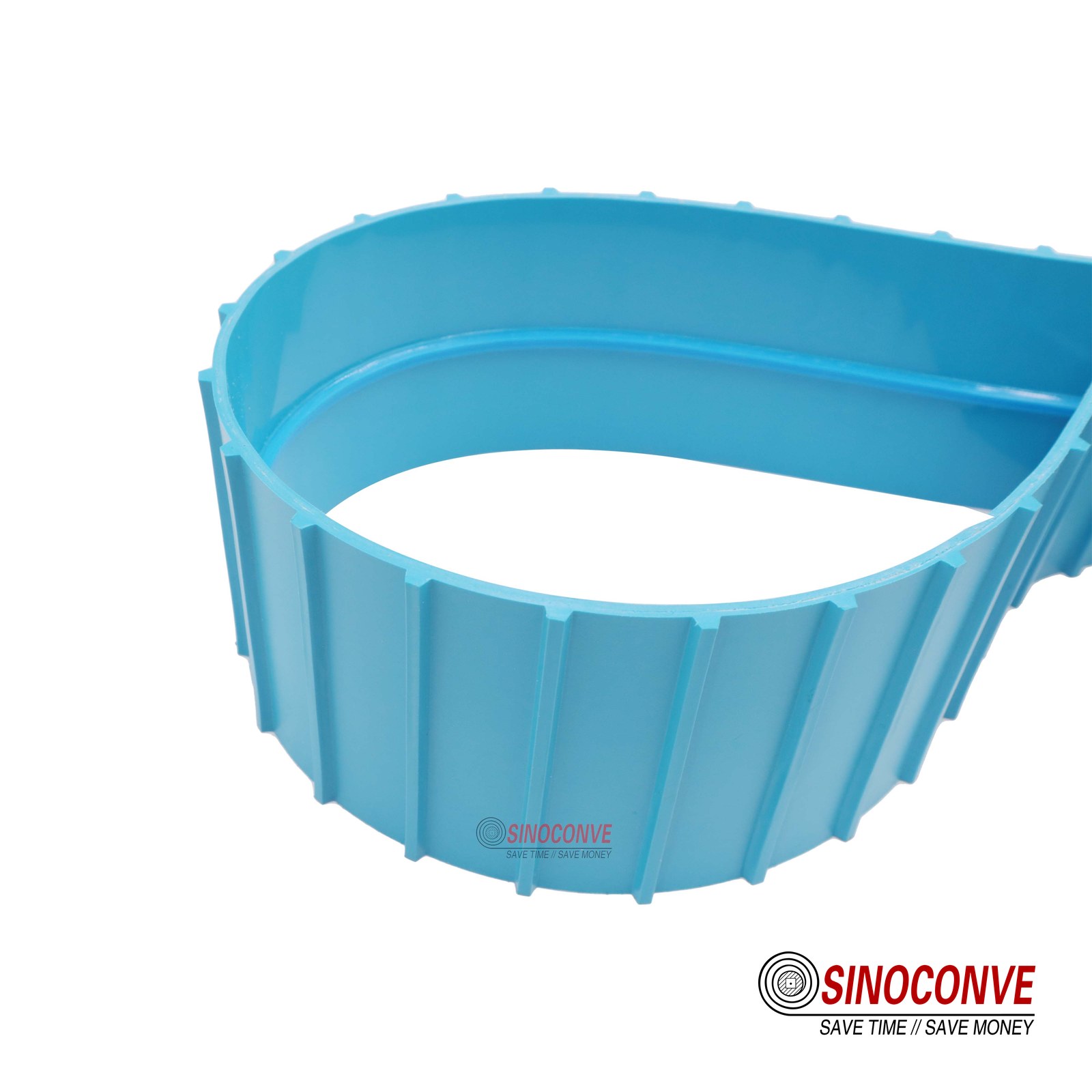
Texture may help handling, but assess whether the cleaning method reaches its recesses. Cleats provide support on an incline; their roots and the spaces behind them also need access. The fabrication drawing needs cleat height, pitch, attachment and the allowable bend.
A bulk-handling profile illustrates shape, but says nothing about approval for exposed fish. Have the fabricator show the joint and cleat-root finish on the sample being reviewed. Keep those details with the drawing used for acceptance.
08 Give Wash Water a Route Out
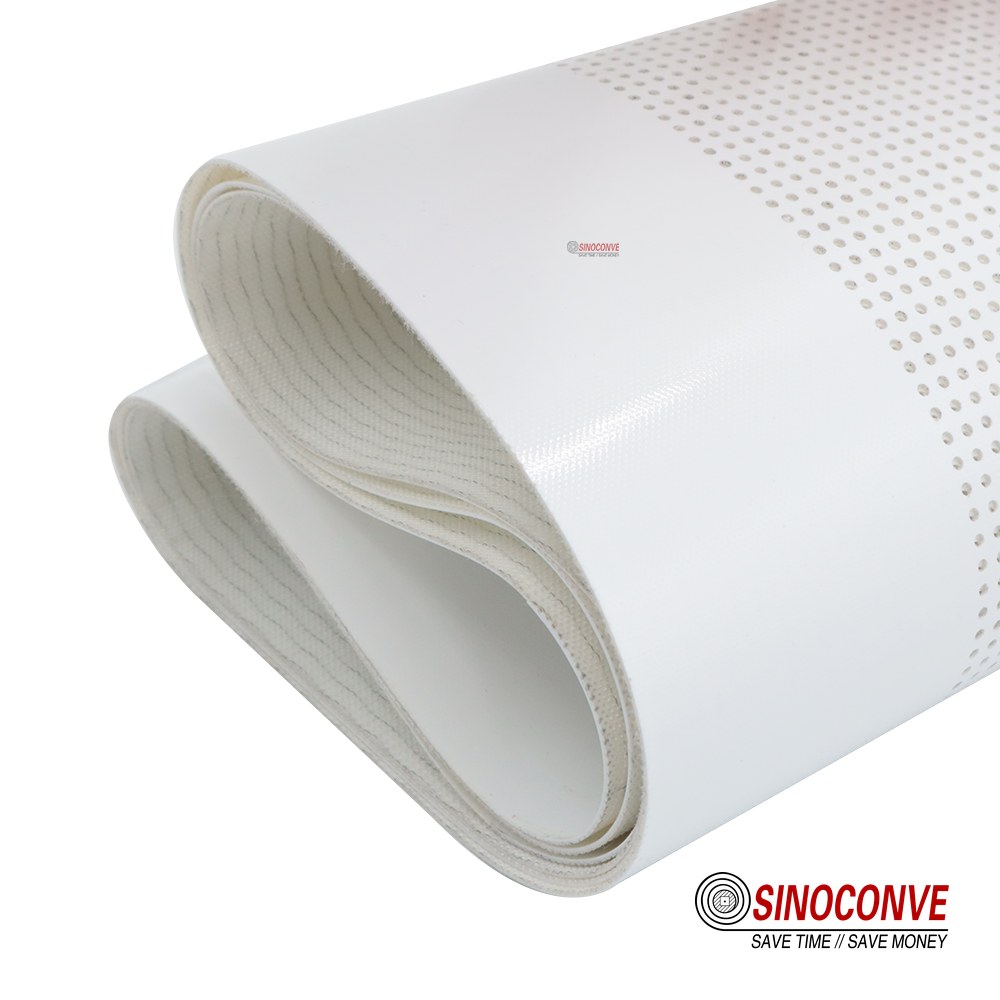
Watch where runoff collects during the cleaning trial, from the carrying surface to the trays below. A tray can collect wash water while leaving it close enough to touch the belt again. The cleaning map should follow that route through the return rollers, supports and drains.
For an open belt, examine what passes through the openings and where it lands. Assess the support left beneath the product and access to those collection points, with drive compatibility checked as part of the design. Open area alone does not establish cleanability.
Have the frame drawing show both the running position and the access arrangement used for cleaning. The release and restoration procedure should leave a known belt setting afterwards. The return-side cleaning guide covers this often overlooked part of the circuit. Send drawings with the enquiry to the SINOCONVE team.
09 Transfers: Product Support and Belt Clearance
Use the smallest fillet expected in production for the transfer review. Include its landing point, the drop and any difference in belt speeds. Observe its underside too when reviewing transfer damage.
Include the transfer plate in the food-contact review and cleaning trial. Removal should give access to the underside and edges, where retained skin or fragments need to be found. Its refitting method needs to restore the specified belt clearance.
Send a dimensioned transfer sketch with the smallest nosebar or pulley. Review that bend against the cold condition; closing a product gap with a smaller nosebar may rule out the belt previously proposed.
10 Separate Slip, Tracking and Drive Problems
Check the speed at each part of the drive path using instrumentation or guarded observations from a safe position. Is the pulley turning at the intended rate? Does the belt follow it? With positive drive, is engagement maintained? Those observations narrow the fault before any tension adjustment.
On friction drive, review the pulley surface, wrap and belt setting against the installation instructions. On positive drive, start at the engagement points and the specified take-up. A belt designed to run at low tension should be set up by its own method.
Record tracking empty and loaded, and again after cleaning. Record the release and retensioning settings in the maintenance notes. Manual access requires verified isolation of the stopped equipment and restraint against stored-energy movement, following the site procedure.
11 Agree Acceptance Before Delivery
Match the declaration to the exact belt and intended food contact, including relevant food types, time and temperature. Confirm coverage of the joint, edge treatment and accessories. An ISO certificate, white colour or a general food-grade claim cannot do that job.
Checks for the purchase and commissioning records
| Item | Evidence or trial to agree |
|---|---|
| Material and cleaning compatibility | Product code, applicable food-contact documentation and supplier review of the actual wash routine |
| Cold flexibility and bending | Approved pulley or nosebar limits; guarded trial under the specified cold-start condition |
| Joint construction and finish | Joining record, dimensional checks and isolated inspection to the belt maker's criteria |
| Texture, cleats and drainage | Representative product trial followed by cleaning verification at accessible and difficult locations |
| Width, edges and tracking | Measurements against the drawing; operating clearance checked empty and loaded |
Run the agreed sanitation checks after the operating trial. Agree the inspection locations, samples and release decision with the hygiene team. ATP, where used, screens for residue; microbiological tests answer a separate question.
The wholesale guide and splicing checklist cover order and joint records. See also: FDA seafood guidance.

12 Frequently Asked Questions
What goes in the replacement file?
Attach the old belt code, dimensions, damage photographs and the duty sheet. The sheet should follow the belt from product contact through cleaning and the next cold start.
Which wash details go to the belt supplier?
The belt code, cleaner identity and the plant's use conditions. Request confirmation for that combination and retain the limits with the wash instructions.
Is a larger pulley the answer to cold-start cracking?
Record the crack and operating condition. Review temperature approval, joint, bend diameter, tension and earlier damage with the supplier before restarting or changing the pulley.
How can fragments collecting at the joint be addressed?
Inspect the isolated joint and scraper arrangement for traps or damage. Assess the finish against the joining specification, then verify cleaning. Joint strength needs the specified joining controls and acceptance evidence.
Does PU always suit a fillet line better?
Compare the actual grades. Include cleaning resistance, food contact, cold operation, cutting exposure and transfer geometry. The comparison belongs to the proposed product codes.
Which surface suits wet fillets?
Trial the proposed surface with the product on the actual incline and transfer arrangement. Include the cleaning trial in that assessment.
How are routine and damage-event checks arranged?
Set routine intervals from the maker's instructions and the site's risk and wear records. Maintenance work or a damage event adds a reason to inspect before release. Carry out manual checks under the secured isolation procedure described above.
Can one belt serve packing and a freezer tunnel?
Yes, if its full construction and joint are approved for both conditions and all bends. Confirm cold starts and warm cleaning, rather than selecting from the packing-room duty alone.
Related Products You May Need
- PVC conveyor belts: confirm the grade for wet processing
- Rubber conveyor belts: specify the required food-contact duty
- Conveyor rollers for the supporting installation
- Heat-resistant belts: assess food-contact suitability separately