
Designing conveyors for a food plant is a zoning decision before it is an equipment decision. Keeping raw product away from ready-to-eat product, and making every belt cleanable and dryable where it sits, decides whether the line passes an audit. On the lines we have helped specify, most hygiene findings traced back to conveyor geometry rather than to the belt compound itself.
What follows is the system-level view we use in pre-engineering: how hygiene zoning constrains layout, how to size belt width and belt speed from a throughput target, how cleaning and drainage have to be built into the frame, and what belongs on a purchase order before you accept delivery. We keep polymer chemistry light here, because a separate note already covers food-contact belt material selection in detail.
Throughput numbers in this article come from real commissioning sheets, not from marketing grids. Treat them as worked examples of the arithmetic, then redo the arithmetic with your own product density and your own peak factor.

01Hygiene Zoning Comes Before Equipment Choice
Most plants can draw four production bands on a plan drawing: raw, ready-to-eat, packing, and high-care. Each one carries its own cleaning frequency, its own washdown chemistry, and its own tolerance for a mistake. A raw receiving hall accepts heavy soil load and large water volumes because the product still faces a cook step downstream. A chilled ready-to-eat hall running at 4 to 6 °C tolerates almost nothing, because there is no kill step left between the belt surface and the consumer.
Get the zone map onto paper first.
High-care areas raise the bar a third time. There, people and product must be separated, tools are colour-coded, and a conveyor that carries finished product may not share a frame, a drain, or a maintenance access route with one that carries raw material. That single constraint often forces an extra transfer into the line, and an extra transfer is exactly where product loss, foreign-body risk, and cleaning labour all increase at once. We have watched a plant save 40 m of belt on paper, then spend the next two years fighting cross-contamination findings at the join.
Mapping the four production zones on a real floor plan
We mark a plan with four colours and walk it at shift start, when the floor is wet and the drains are running. Red for raw, amber for cooked or blanched, green for packing, blue for high-care. Standing in the room tells you things the drawing hides: condensate dripping off a chiller coil, a floor slope that sends water toward a clean zone, a doorway that both a raw pallet and a finished pallet pass through within the same hour. Almost every zoning correction we recommend comes out of that walk, not out of the CAD file.
What each zone actually demands from a conveyor segment
Raw zones want openness and water volume. We normally specify a stainless frame with 2 to 3 degrees of fall toward the drain, contact parts in 304 or 316L, and spray nozzles sized for 8 to 12 litres per minute per metre of belt. Ready-to-eat zones want containment: covers over the product, no horizontal ledges above the belt, and no threaded fasteners sitting in the splash path. Packing zones trade hygiene intensity for gentle handling and low noise, and high-care zones add controlled access, captive tools, and a documented cleaning record for every segment. When we buy frame steel and belting from one conveyor belt manufacturer, the drain slopes and the belt tracking arrive already matched rather than being reconciled on site.
02How Zone Separation Reshapes the Line Layout
Zoning only becomes real when it changes the drawing. A separation wall between a raw room and a ready-to-eat room is easy to sketch and expensive to add later, so the transfer that crosses that wall needs to be designed as a single-purpose device: short, enclosed, and cleanable from the low-hygiene side by a person who never enters the high-care side. In one poultry plant we surveyed, the crossing conveyor was 900 mm long and had three separate crevices where the frame met the guarding. Cleaning it took 22 minutes. Replacing it with a smooth chute and a single covered belt cut that to under 4 minutes per shift.
Drainage direction decides as much as walls do. Floor water must always run from clean toward dirty, never the reverse, which means the high-care floor sits 15 to 20 mm above the raw floor and the conveyor legs must be sealed at the penetration. If your line crosses zones and the floor falls the wrong way, no amount of belt specification will fix the audit finding.
Personnel, tools and product routes as layout constraints
Three routes compete for the same floor area: people, product, and waste. Designers usually resolve product first because it is drawn on the plan, then discover that the only route for a maintenance trolley passes through a cooked zone. Decide the waste route and the maintenance route at the same time as the product route. Coloured tool sets, dedicated cleaning equipment per zone, and a hand-wash station placed before the zone boundary all cost less than the corrective paperwork they prevent. Where a line genuinely cannot be separated, a physical barrier plus a documented procedure is the fallback, and it should be written into the commissioning file rather than agreed verbally.
03System Boundary: Where the Conveyor Starts and Stops
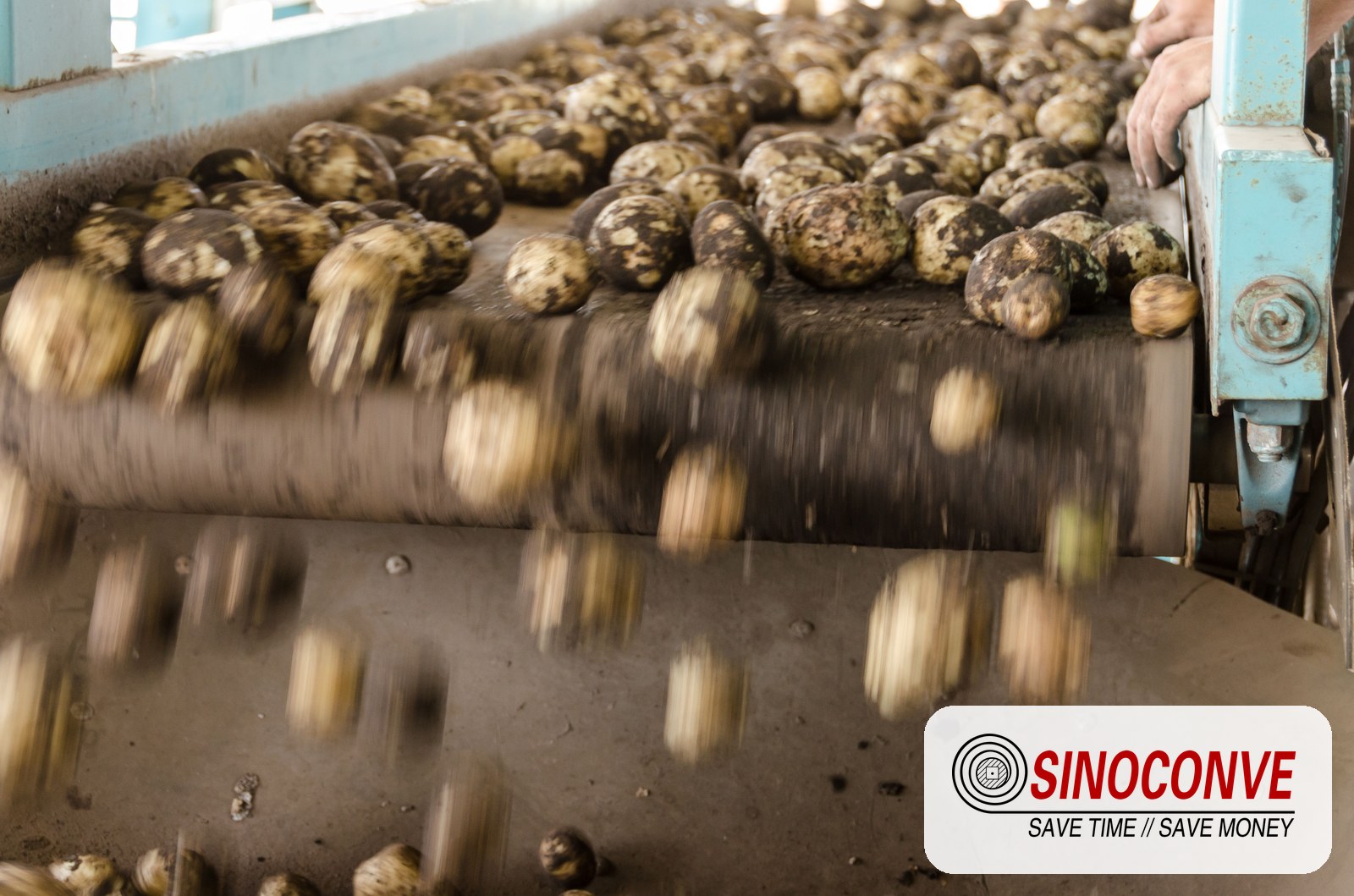
Before anyone quotes a price, we draw a boundary around the system and list the segments inside it. A typical cooked-product line contains a feed conveyor from the process vessel, an incline or a spiral to gain height, a cooling run, one or two transfer points, a metal detection and rejection segment, and a final belt into the packing machine. Each segment has its own drive, its own cleaning regime, and its own acceptance test. Quoting them as one lump hides exactly the details that generate claims after installation.
Naming the segments also exposes the interfaces. The gap between two belts, the height difference at a chute, and the handover from a modular belt to a fabric belt are all points where product can jam, fall, or accumulate moisture. We size each interface for the peak flow, not the average, and we write the interface dimension onto the drawing so the installer cannot improvise it.
Writing a segment list that survives procurement
A usable segment list carries, for each item, the duty in kg/h, the belt width, the belt speed, the belt type, the drive position, the frame material, the cleaning method, and the sensor package. Ours also carries the transfer heights, because a 120 mm drop onto a hard surface bruises soft product and a 300 mm drop raises splash on a wet line. That is seven or eight lines per segment and roughly sixty lines for a modest line. It looks heavy until the first commissioning week, when it turns into the only document that answers every question. Buyers who skip it usually rebuild the list later from invoices, which is slower and less accurate.
04Matching Conveyor Families to Food Duties
A food line rarely uses one conveyor technology from end to end. Receiving may run a heavy modular belt, the cook room a stainless mesh belt, the chiller a spiral cage, and packing a narrow flat belt feeding a tray sealer. Between those stages sit transfer segments and one metal detection station. The matrix below is the version we hand to a project engineer once the process flow is fixed but the equipment list is not.
| Conveyor segment type on the line | Where it earns its place on a food line | What we verify before releasing the order |
|---|---|---|
| Flat fabric belt on a stainless frame | Carries discrete pieces, tray-free portions and light packed goods along straight or gently inclined runs. | Confirm the surface pattern, the sealed edge and the maximum incline before product starts sliding backward. |
| Modular plastic belt with an open hinge structure | Handles wet, abrasive or high-volume product where a continuous smooth surface would be difficult to clean. | Check the open-area percentage, the rod material and whether the hinge line can be opened during cleaning. |
| Spiral and tower system for dwell time | Buys dwell time for cooling, proofing or freezing inside a small floor footprint at controlled temperature. | Confirm the drum gap, the tension system and how the spiral cage sheds washdown water and condensate. |
| Incline and cleated segment between floors | Lifts loose or bulk product between floors without adding a separate bucket elevator to the room. | Check cleat height, cleat pitch and both transition points, where product most often escapes the belt. |
| Transfer and transition segment between belts | Moves product between two belts or between a belt and a machine with a drop the product survives. | Size the drop, the lip overlap and the side guards against peak flow rather than average flow. |
| Metal detection and rejection segment before packing | Inspects and removes contaminated product before packing using a short, rigid and stable belt run. | Keep the run short, the frame stiff and the rejection bin inside the operator's direct sight line. |
Two rules settle most marginal cases. Pick the belt that is easiest to clean without being partly disassembled, because cleaning labour repeats every shift while capital cost is paid once. Then keep the transfer drops small: a guarded 100 mm drop beats a bare 400 mm drop on product quality, on splash control and on cleaning time alike.
Drive selection deserves a line of its own. A short food belt needs only modest power, yet the gearbox and motor still have to survive daily washdown. IP66 enclosures, stainless shafts and food-grade lubricant are the floor we will not go below, and a washdown-rated unit costs far less than the downtime a corroded one creates.
Choosing between a fabric belt and a modular belt
Flat fabric belts win on cost, on smooth product support and on fast splicing. Modular belts win on open structure, on load capacity and on life under constant wetting. If your product is small enough to fall through a 12 mm modular opening, and the pieces carry real value, a fabric belt with a sealed edge is the better answer, and that is usually the run we quote as the industrial conveyor belt baseline. If the product is bulky, hot from a blancher, and the room is washed down twice a shift, modular construction normally repays its higher price within about two years.
05Belt Construction by Hygiene Zone
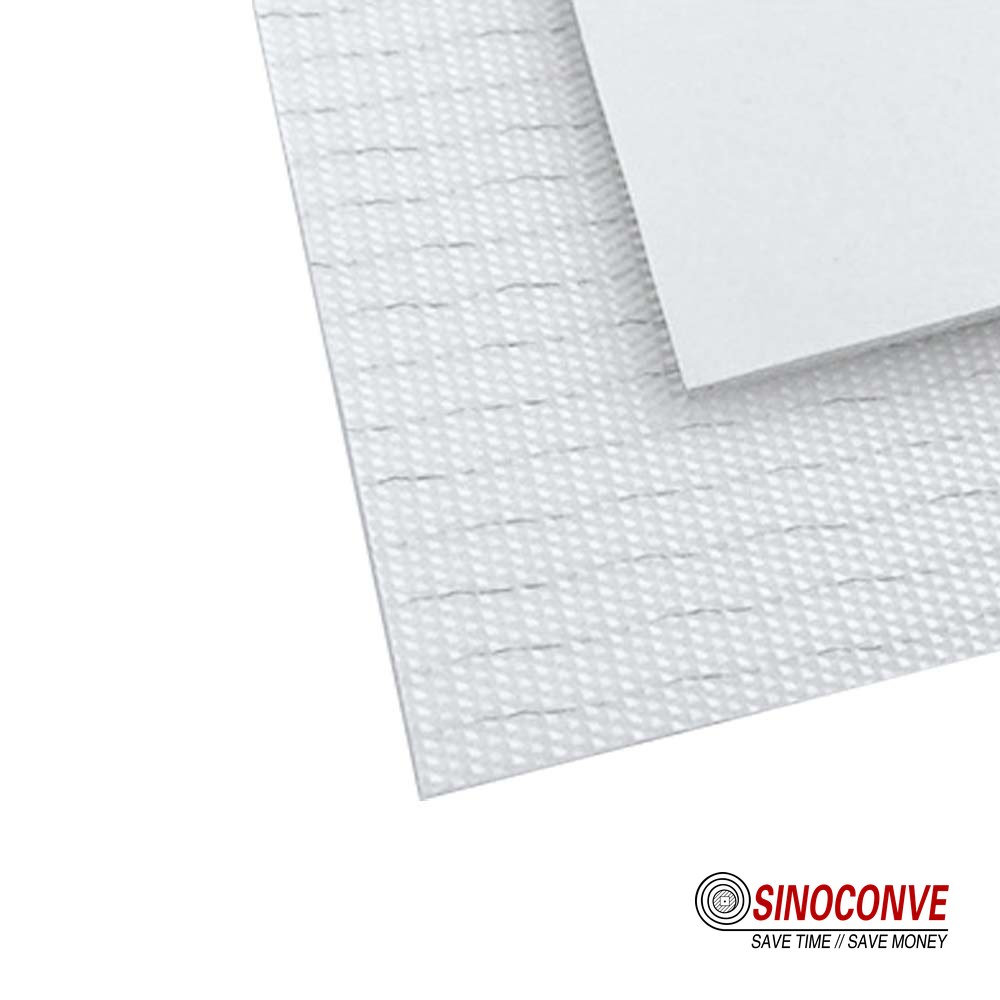
Zone shapes construction more than product weight does. A 4 kg tray of cooked rice in a high-care room calls for a different belt than the same tray weight in a raw staging area, because the room's cleaning chemistry and the consequence of a fragment reaching the consumer are different. Read the table below as a constraint list rather than a shopping list, and note that the light-coloured cover most hygienic rooms eventually settle on is usually a PVC conveyor belt with a sealed edge and a non-porous top face.
| Production hygiene zone within the plant | Belt construction that fits the zone | What the specification has to confirm |
|---|---|---|
| Raw receiving and preparation rooms of the plant | Heavy cover belt with a coarse top surface, sealed edges and a frame that opens easily for cleaning. | Confirm the top cover drains freely and that the edge seal survives a knife-edge scraper. |
| Cooking, blanching and hot fill process rooms | Heat-tolerant belt rated for continuous service well above the highest process temperature. | Confirm the rating at the belt surface rather than in the oven air, and check the splice rating too. |
| Chilling, freezing and cold storage rooms | Compound that stays flexible below zero so the carcass does not crack as it wraps a pulley. | Confirm the lowest service temperature, the pulley diameter and the cold-flex limit together. |
| Ready-to-eat and high-care assembly areas of the plant | Light-coloured belt with a non-porous surface and no fabric weave exposed along the edges. | Confirm the colour contrasts with the product and that migration test reports are on file. |
| Packing and final transfer to the machine | Thin low-friction belt with a smooth surface and quiet running for a machine infeed. | Confirm tracking on short centres and that the surface does not mark printed packaging. |
Colour is a specification item, not a preference. A white belt against white chicken gives an operator almost no chance of spotting a 20 mm fragment, while a blue or green belt against the same product makes the piece visible from two metres away. We have seen a plant switch belt colour across the whole ready-to-eat hall for that reason alone, and the change cost less than a single recall exercise would have.
Where a general rubber conveyor belt stops being the right answer
General-purpose black belting is built for abrasion, impact and outdoor duty, and it is superb in a quarry. In a high-care room it becomes a liability, because the dark cover hides product residue and the fabric carcass wicks water into a cut edge. A rubber conveyor belt still has a place on the receiving dock, on waste runs and on any outdoor leg, and there it will outlast a light belt several times over. Talk to a conveyor belt supplier about which of the two belongs inside the hygienic envelope and which belongs outside it; getting that line wrong is one of the most expensive specification errors we see.
06Cleaning and CIP: Designing for Reach First
CIP design starts with reach, not with chemistry. If a technician cannot see the underside of the belt, the inside of the frame rail and the return rollers without kneeling on a wet floor, the cleaning schedule will collapse inside a month. We set one rule on our own drawings: every surface that touches product must be reachable by hand, brush or nozzle in under ten seconds from a standing position.
That rule changes geometry. Frame rails move outward, belt runs sit near 850 mm working height, and welded boxes become removable covers.
Drying was the part nobody had budgeted for. We timed the washdown at that poultry plant over two nights in April, and the rinse finished at 02:40 while the belt was still sheeting water at the splice three hours later. By Monday the edge seal carried a biofilm that caustic would not shift. Open construction dries faster for a physical reason: air moves under the belt, extraction at floor level pulls vapour out of the frame, and about 2 m of run past the air knife gives the surface somewhere to shed its last film. We now write a dry-by time into the commissioning sheet, 20 minutes after the final rinse.
Washdown trial, second week: Two crews cleaned the same 18 m of ready-to-eat belt on consecutive nights. The crew on the open frame with tool-free guides finished in 34 minutes. The crew on the boxed frame with bolted guides took 61 minutes and still left residue in two corners that only a wipe test found. Same product, same chemistry, same shift. The frame was the whole difference, and before the boxed line was rebuilt the annual labour gap between the two designs ran past four figures of hours.
Making belts, rollers and frames reachable during a shift
Rollers caused the worst cleaning arguments on that frame. Six fixed rollers held a film of product underneath, out of sight of anyone standing at the belt, and the wipe test kept finding it the next day. That is a design flaw, not a discipline problem. We replaced them with removable conveyor rollers on tool-free release and pushed the pillow-block bearings clear of the splash path, so a washdown could not drive water into the housing. The schedules in our field notes on conveyor belt cleaning methods and on return side belt cleaning are the ones we still hand over, because they keep working when a scraper cannot reach the carryback. The same reasoning covered the small drives turning the spiral drum and the scraper shaft, and buying them from a single transmission belt manufacturer cut a breakdown to one phone call instead of three vendors and a guess at pulley groove dimensions.
Resisting cleaning chemistry and the washdown temperature on the belt
Chemistry bit us in the other direction. The cook room ran caustic at 1.5 to 2 percent and 60 to 70 °C, the ready-to-eat hall finished with peracetic acid at 0.15 to 0.3 percent, and the night team still added 200 ppm chlorine on Fridays. Each of the three attacks a different part of a belt: caustic softens some covers over a season, peracetic acid dulls the colour, and chlorine is hard on certain edge seals. We had asked for the compatibility list in writing, and even then the number nobody had measured was contact time. The log recorded spray and rinse; the nozzle dwelled for about 90 seconds on the frame.
Temperature surprised us on the rinse side too. A final rinse at 82 °C against a belt that had been sitting at 6 °C all shift is a hard thermal cycle, and the crazing it leaves behind showed up on two of our lines at their three-year inspection. The cure cost one timer: a 40-second warm ramp ahead of the hot rinse.
07Drainage, Drying and Condensate Control Across the Whole Frame
The drainage survey came before any equipment list. We set a laser level on the floor of the raw hall and found the fall running the wrong way across 6 m of the clean side, so washdown water was crossing under the separating wall instead of away from it.Floor falls of 1 in 80 to 1 in 100 carry water to a channel; anything flatter leaves a film that dries and re-wets all shift. Every conveyor leg that penetrates the slab needs a sealed, sloped plinth, and here the high-care slab sat 15 to 20 mm above the raw slab.
Condensate is quieter, and slower to show itself. On the first trial run, the Tuesday after the freezer was pulled down, we found water beading on the underside of the carryover and dripping onto the discharge end at roughly one drop every four seconds. Nothing was broken; the coil above simply sat at a temperature that put the dew point inside the enclosure. We fitted drip trays with a positive fall to a drain and kept the tray edge clear of the product envelope. Whether a project buys one segment or a hall of wholesale conveyor belts, we now mark the fall direction on every leg and the low point of every tray on the drawing itself.
One detail is non-negotiable: a drying corridor. Two metres of open belt after the air knife gives an operator somewhere to stand and inspect, and it makes a wet belt obvious before it reaches a ready-to-eat room. On the poultry job that corridor caught a failing air-knife nozzle on the second shift. Plants ordering from a conveyor belt factory used to hygienic lines usually get detail of that kind in the standard set.
Spray systems earned an argument of their own. Fixed nozzles cut labour, but they only pay off where the frame drains fast enough to carry the water away, and a nozzle aimed at a bearing housing does real damage. The scraper on that line could not reach the carryback, so we paired a correctly aimed spray bar with the air knife and got a dry, verifiable surface for the first time. We ranked the options in spray cleaning on conveyor belts, and that ranking has held up on every line we have commissioned since.
08Capacity Check: From kg/h to Belt Width and Speed
Sizing was where the arithmetic had to be defended. Discrete pieces are sized by area rate, because the belt only has so much surface to lay them on, while a continuous bed of powder, crumb or diced vegetable is sized by volume rate, because the layer behaves like a fluid. When one client switched the same line from portions to crumb halfway through, the two routes put the belt speed five times apart.
A worked example makes the method concrete. Take a cooked-product line rated at 1,800 kg/h nominal with a measured peak of 2,400 kg/h. Pieces average 40 g and measure roughly 100 mm by 100 mm, and they have to be spread without touching so they cool evenly. Peak piece rate is 2,400,000 g per hour divided by 40 g, which is 60,000 pieces per hour, or 16.7 pieces per second. Place them on a 130 mm pitch to leave a 30 mm gap, and one lane passes 0.55 divided by 0.13, close to 4.2 pieces per second at a belt speed of 0.55 m/s. Four lanes therefore carry about 16.9 pieces per second, which covers the peak with a small margin. Four lanes at 130 mm pitch span 520 mm, and adding 40 mm of clearance each side lands on a 600 mm belt.
The same check on a continuous product takes a different route. Breadcrumb at 1,800 kg/h with a bulk density near 400 kg/m³ gives a volumetric flow of 1,800 divided by 3,600 times 400, or 0.00125 m³/s. Held as a 25 mm layer across 500 mm of usable width, the layer cross-section is 0.0125 m², so the belt needs only 0.1 m/s. A 600 mm belt at 0.1 m/s handles that duty with room to spare, and the drive stays small.
The 400 mm belt, February: A client set a 400 mm belt on a 2,400 kg/h piece line because the existing chute was 400 mm wide. At peak, pieces backed up within nine minutes and the line tripped on a photo-eye almost every cycle. Widening to 600 mm and settling the speed at 0.55 m/s cleared the jams, and the wider belt actually ran cooler, because the drive no longer had to push a stalled bed of product through a transfer.
Peak factor and transfer buffer are the two numbers most buyers leave out of the enquiry. We size every segment for peak flow, then check that the buffer between segments covers the longest stoppage in the chain. During a metal detector rejection cycle of 1.5 seconds, the upstream line keeps delivering 16.7 pieces per second, so 25 pieces have to go somewhere. Spread four across, those 25 pieces occupy just over six rows at 130 mm pitch, or about 0.81 m of belt. We specify a 1.0 m accumulation run ahead of the detector so the reject can complete without halting the cooker.
Incline rises need one more check, since a smooth belt will not hold product beyond roughly 18 degrees without cleats or a textured surface. If the same 2,400 kg/h has to climb 2.4 m, a 15-degree incline with 30 mm cleats at 200 mm pitch is workable, and the drive then has to lift both product and belt mass. That is the point where we compare a matched drive package from a V-belt manufacturer against a geared motor, and where a specialist conveyor belt distributor can usually supply the cleated option off the shelf rather than as a custom build.
09Environmental and Compliance Constraints in Chilled, Cook and Packing Rooms
A food conveyor works across a wider temperature range than most industrial equipment. The same line can pass through a 4 °C chiller, a 90 °C cook tunnel and a 20 °C packing hall within twenty metres, and the belt, the frame and the lubricant all have to survive every one of those rooms. Cold rooms make belts stiff and make some lubricants turn to wax. Hot rooms dry out covers and shorten splice life. Humidity in between feeds the growth you least want near open product.
Temperature bands, foreign-body control and traceability across the shift
Foreign-body control is mostly a geometry problem in disguise. Metal fragments come from worn scrapers, loose fasteners and damaged guards; plastic fragments come from cracked guides, worn scraper blades and broken modular links. The inspection programme on that mixed line targeted 2.0 mm ferrous, 2.5 mm non-ferrous and 3.0 mm stainless test pieces, and those targets only held because the belt itself carried no metal and the detector frame stayed rigid. Traceability did the rest. It tied each batch to the segment it ran on, the cleaning record for that shift and the maintenance history of the belt, so when a complaint arrived six weeks later the investigation closed inside a day.
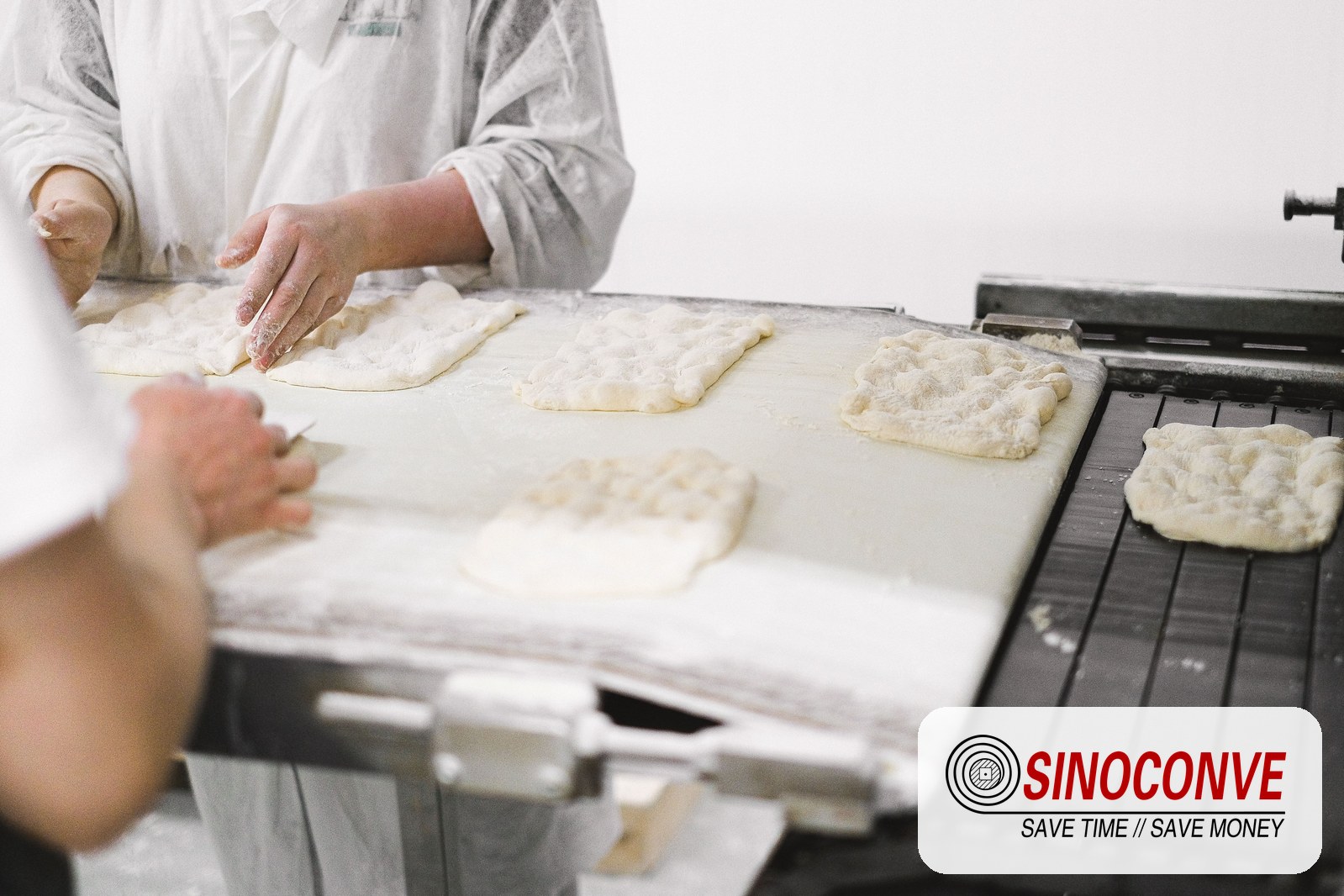
Dry rooms need a different answer. We learned that one the hard way. A bakery washes down with nothing at all, so the risk moves to fine dust settling on frames, bearings and belt returns, which is also a combustible-dust question. Sealed rollers, a belt built for dusty duty and a scheduled dry vacuuming routine replaced the wet clean on the two lines we converted. The hardware side is set out in our note on a dust-resistant conveyor belt supplier, and the pattern it describes applies to any room handling flour, starch or spice blends.
10Siting and Proving the Metal Detection Segment on a Cooked Line
Siting the head comes down to four rules, and almost every false reject we investigate traces back to one of them being ignored. Ours were written after a week of nuisance trips.
| Siting rule we hold to on a cooked-product line | The failure it prevents once the line is running |
|---|---|
| We sited the head after the last point where contamination could enter and before the flow split into packing lanes. | Product can otherwise reach packing with no inspection at all, or be checked twice on the way. |
| We left a full belt length of straight, level run on each side of the aperture. | A head sited on a curve or a slope reads phantom signals and rejects clean product. |
| We kept fillers, chiller compressors and forklift routes well clear of the detector frame. | Vibration from nearby moving metal trips the reject when nothing is wrong with the product. |
| We packed the product flatter before it entered the head so a smaller opening could be used. | Every extra millimetre of aperture height is paid for in lost detection sensitivity. |
Rejection mechanics and the routine that keeps them honest
Rejection is where good designs fail in service. An air blast is fast but noisy and can push product off the far edge; a pusher arm is positive but needs clearance and a maintenance schedule. Whichever we pick, the reject bin stays lockable, visible from the operator station and emptied on a recorded schedule, because a bin that fills silently turns a working system into a decorative one. We asked for a documented test at the start of each shift, at every product changeover and at the end of the shift, with certified ferrous, non-ferrous and stainless test pieces passed three times through the centre and once near each edge of the aperture. Failures then trace back to a specific hour instead of a whole day.
11Procurement Checklist and the Acceptance Criteria We Sign Against
The purchase order is the last place where a design decision can still be lost, and here six measured lines replaced the phrase "hygienic design" so that every bidder priced the same duty rather than the same words. That difference alone paid for the drafting time. An adjective will be read in the cheapest possible way.
Order line one was the belt itself: type, width in millimetres, surface pattern, colour and the food-contact declaration for that zone, all of it matched against the drawing on arrival. Frame steel sat beside it on the same order. We asked for 304 or 316L contact parts, a surface roughness no worse than 0.8 micrometres and a fully welded, ground frame, because one crevice left unground at a leg bracket is the first thing an auditor’s angled torch finds at handover.
Cleaning access is where a cheap bid quietly subtracts value. We required tool-free removal of covers, side guides and rollers, and named the cleaning method for each segment, so a technician could reach every product-contact surface without a spanner. Then we timed a real washdown with a stopwatch. Drainage and drying provisions were the easiest part to leave vague, so we called out the fall direction, the low point of every drip tray and whether an air knife was in scope, then poured water onto the frame at commissioning. Most of it ran under the drive plinth, which then got a 1 in 90 fall on the drawing.
Drive, controls and sensors formed one order line on that job, not three. We fixed the motor rating, the enclosure class, the detection aperture and the rejection mechanism in the purchase document, then ran a full reject test with certified test pieces before anybody signed. Spare parts closed the list. Wear parts were named, part numbers listed, service intervals taken from the maker, and two of each critical item sat on site before the first production run. A missing roller should cost ten minutes, not a stalled shift.
Acceptance checks to run after the first full washdown
Smell and taste are legitimate tests, and we use them. Wipe a clean white cloth across the belt after the rinse, smell it, then check the cloth for residue that survived the wash. A trained nose picks up lingering odour that a swab result will confirm a week later. Surface integrity gets the same treatment on the day of the wash. Run a fingernail along the edge seal and the splice, look for crazing under a torch held at an angle, and photograph anything that looks marginal, so the comparison at six months rests on evidence rather than memory. Then watch the first hour of production. Tracking, transfer behaviour and cleaning-cycle time all reveal themselves once real product is running through the frame.
12Common Design Errors We Keep Finding on Food Lines
Five mistakes account for most of the corrective work we are asked to price, and four of them are decisions made in the first week of design. None of them is exotic. All of them are cheap to fix on the drawing and expensive to fix after commissioning.
| Common design error we keep finding | How it shows up once the line is running | The correction we recommend to the plant |
|---|---|---|
| Cleaning dead ends in the frame | Product and water collect in a blind channel behind the rail and the smell returns each week. | Swap box sections for open profiles and slope every closed pocket toward a drain. |
| Reverse drainage fall across the floor | Washdown water runs toward the clean zone and appears as a positive swab across the boundary. | Re-level the floor or re-set the legs so water always travels from clean toward dirty. |
| Transfer drop set too high at the handover | Soft product bruises at the handover and splash from a 300 mm drop wets the belt edge. | Cut the drop to roughly 100 mm and add a short inclined chute with side guards. |
| Spares that fit only one segment | One failed roller stops the line while three suppliers search for a matching part number. | Standardise belt widths, roller diameters and bearing housings across every segment you buy. |
| Detector mounted on a flexible frame | The head false-rejects whenever a nearby filler or a passing forklift vibrates the line. | Mount the head on a rigid isolated frame and keep moving metal out of its surroundings. |
Why spare-part commonality repays the drawing effort
Standardising costs a little at design stage and saves a great deal later. If four segments share one roller diameter, one bearing housing and one belt width, the maintenance store holds a single line item instead of four, and a midnight breakdown becomes a ten-minute swap. Our conveyor roller guide lists the standard diameters that are easiest to source at short notice. We push clients toward that outcome even when it means one segment is slightly oversized, because the oversizing cost is paid once while the sparing benefit repeats for the life of the plant.

13Questions Buyers Ask Us Most Often
How do I choose a belt width before the equipment vendor is decided?
Size it from the peak throughput and the product footprint, not from the machine that will eventually sit downstream. Work out pieces per second at peak, divide by the number of lanes the width can carry, and the belt speed follows. Then check the result against the smallest pulley in the proposed layout, because a wide belt over a small pulley tracks badly no matter how good the arithmetic is. Lock the width and speed as a requirement in the enquiry, and every vendor quotes the same duty instead of the same price for different hardware.
Is a modular belt always more hygienic than a fabric belt?
No, and the assumption has cost several of our clients real money, because an open modular belt gives soil and bacteria far more surface to hide on unless every hinge line is opened during cleaning.
What washdown temperature should a food conveyor belt be rated for?
Rate it for the hottest rinse the sanitation team will realistically use, not for the average. A final rinse at 82 °C applied to a belt sitting at 6 °C is a hard thermal cycle, and repeat cycling is what produces surface crazing after two or three years. Share the real cleaning procedure with the belt maker and ask for a written compatibility statement covering both the chemical and the temperature.
How much buffer accumulation belongs between two conveyor segments?
Enough to cover the longest routine stoppage in the chain without halting the upstream process. Take the peak piece rate, multiply by the stoppage time in seconds, and convert the result into belt length using the pitch and the number of lanes. On a line running 16.7 pieces per second with a 1.5 second reject cycle, that lands near 25 pieces and roughly 0.8 m of belt, so we specify a 1.0 m accumulation run. Anything shorter and the cooker has to slow down every time the detector fires.
Where should the metal detector sit on a cooked-product line?
After the last contamination risk and before the line splits toward packing, on a short straight run with clear belt either side. Keep fillers, compressors and forklift routes away from the head, and pack the product flatter before it enters the aperture so a smaller opening can be used.
Which documents should arrive with a food-grade belt?
Insist on a food-contact declaration, a migration test report and an odour and taste statement for the exact compound supplied, plus the cleaning compatibility list in writing.
Can a single conveyor cross a hygiene zone boundary?
It can, and many plants have no alternative, but the crossing segment has to be designed as a special case. Keep it short, enclose it, arrange cleaning access from the low-hygiene side only, and make sure the frame drains away from the clean zone. Write the procedure into the commissioning file so the arrangement does not drift once the original project team moves on. A crossing that is undocumented tends to accumulate modifications until it no longer matches its own zoning assumptions.
How often should a food conveyor be cleaned?
Frequency follows the zone, so a raw receiving belt and a ready-to-eat belt in the same building will not share a schedule. Our default starting point is a full wet clean at each production changeover in ready-to-eat areas, with mid-shift spot cleaning at the splice and the edge seal. Then adjust on evidence, using swab results and residue checks rather than habit, and record the change so auditors can see the reasoning.
What is the most common mistake in food conveyor design?
Designing for the drawing instead of the cleaning shift, which is how dead-end frame pockets, reverse floor falls and unreachable return rollers end up in otherwise sensible layouts.
Related Products You May Need
- PVC conveyor belts for hygienic and light-duty food lines
- Rubber conveyor belts for receiving docks and waste runs
- Conveyor rollers
- V-belts for conveyor and process drives
- Timing belts for packaging machinery
- Chevron belts for inclined and outdoor legs
- Full conveyor belt product catalog