
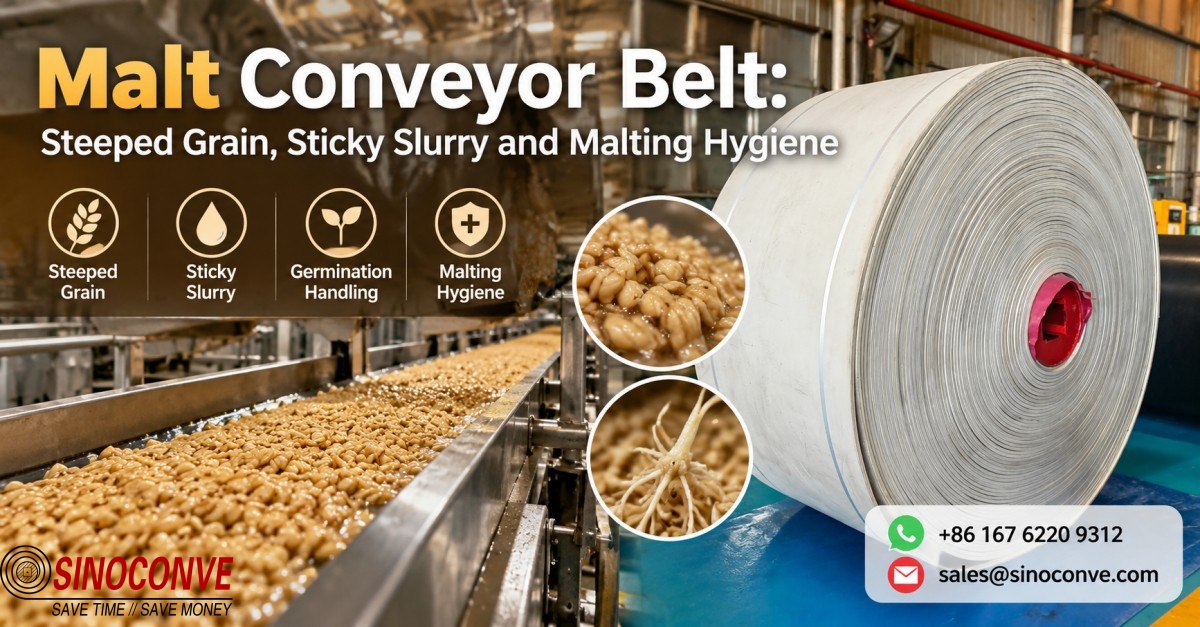
There is no single belt duty called “malting.” One enquiry might be for the short transfer after a steep tank; another for kiln outfeed or the screen around deculming. We ask where the belt sits and what comes off the previous machine. The barley can be dripping, damp or already dry.

01Why Malt Transfers Need Their Own Specification
Ask the operator to keep one small sample of what the cleaner removes. If it pours off as water, the drain and the return path deserve attention. If it stays as a thin patch on the cover, record exactly where the blade passes over it. Photograph the patch before the next wash. A supplier can judge a cleaner setting far better from that evidence than from the word “sticky.”
The return side is the part we want to see in photographs. A rootlet wrapped around an idler might have started at the skirt several feet earlier; a patch of fines behind a bracket may be invisible from the walkway. Include the guard and the available hand space in the photo. Our technical team can review the belting, and the food processing layout guide gives the wider layout context.
02Malt Handling Stops at the Mill
Begin at the mill intake and trace the loose-grain conveyors backward. Whether the malt arrived by truck or from an on-site malt house changes that route. Our beverage packaging guide is for the packaged product after brewing.
Packaged bottles and cans start later
Write the product above each conveyor on the layout drawing. For loose malt, add whether it is wet, warm or producing fines at that position. On a bottle line, write down the package and the rail arrangement instead. This simple annotation prevents a cleaning note from the filling hall being copied onto a grain transfer.
Keep the belt grade, its product-contact declaration and the actual wash chemical together in the purchase file. Those three records answer a more useful question than “Is it food grade?”: does this installed belt suit this product, temperature and cleaning schedule? The product-contact notes can be checked against the chosen cover.
Malt goes to the mill before water enters during mash preparation. That boundary is easy to blur in a general brewery description. We ask which conveyor still carries grain. The PU food belt guide and PVC food belt guide cover food-contact belt types; our factory team can provide them.
03From Steeping to Germination
A steep tank holds the barley. The belt, where fitted, begins at its discharge. Record whether grain still sheds water on landing and show the drain position on the sketch.
Check drainage at the steep discharge
At the end of a wet batch, photograph any fines lodged under the transfer. A clean cover alone misses that problem. At germination outfeed, record any film on the belt and its location, without guessing what produced it.
| Possible station | What may arrive on the belt | Check during selection |
|---|---|---|
| Steep discharge or dewatering transfer | Dripping or surface-wet grain, depending on handling | Drainage, residue at joints and access for inspection |
| Germination transfer, if conveyor-fed | Damp grain; rootlets develop during germination | Snag points, buildup and belt surface compatibility |
| Kiln feed, discharge or cooling transfer | Grain moisture and temperature vary by position | Measure actual heat, dust and flex exposure |
| Deculming, screening or silo feed | Dry malt, rootlets, broken grain or fines | Dust control, return buildup and edge condition |
Cross out every table row that has no belt on this particular process map. Number the remaining conveyors on the drawing, then attach the measured pulley size, hottest contact condition and cleaning step to each number. Our rubber belt range team can use those notes to screen the belt options.
04Kiln Area: Measure the Belt Exposure
The number on a kiln control screen is rarely the number needed for a belt enquiry. It may be the hot air setting, and the outfeed might run after the malt has cooled. Take a reading where the grain meets the cover, including the hottest operating condition the plant expects. Note how long the belt remains loaded there.
Kiln air and belt temperature differ
Send the measurement and its location, rather than ordering a heat grade from the word “kiln.” The grade limit must also make sense with the small pulley, any fines and the cleaning method. Our heat-grade guide outlines the available grades. A fan or screen uses a separate drive; the drive-belt specialists will need its pulley section and existing belt marking.
05Rootlets, Fines and Return-Side Buildup
At the deculmer, draw two arrows: one for cleaned malt, one for the removed rootlets. Identify which arrow reaches this conveyor. A fibre stream may wrap at a skirt or return roller, while the cleaned malt stream presents another mix of dust and kernel impact. The separator name alone does not identify the load.
Find the first place rootlets catch
Follow one caught fibre back to its first attachment point. The roller shell may be where it finally collects, but the opening at a skirt or a damaged belt edge may start the wrap. A dust-sealed rollers addresses bearing protection in a dusty location. Our belt supplier team can discuss the belt return, once the site has photographed its snag point and checked access.
06Carryback and Cleaning Limits
When the scraper leaves a film
If a scraper is leaving a line, look at the blade and at the belt in the same spot. Is the edge worn? Does the cleaner sit level? Has residue hardened there? We do not recommend simply winding up the pressure; first compare the maker’s instructions and the plant’s approved cleaning method. See cleaning-method guide and spray-cleaning guide.
| Observed issue | Possible contributors | Useful first inspection |
|---|---|---|
| Sticky residue near head pulley | Could be damp grain, extract or dried carryback | Identify material; inspect cleaner, cover and return path |
| Fibres gathered at return roller | Rootlets or damaged skirt/edge may snag | Check shell, seals and guards during isolated inspection |
| Cracks or hardening near kiln area | Heat, flexing, age or chemical exposure are possible | Record contact conditions and compare with grade limits |
The screen, brush and kiln fan have drives of their own. Add them to the same outage sheet as the main conveyor, with the belt designation written down. Our V-belt specialists can match a replacement from the marking and pulley section.
07Product Contact, Joints and Washdown
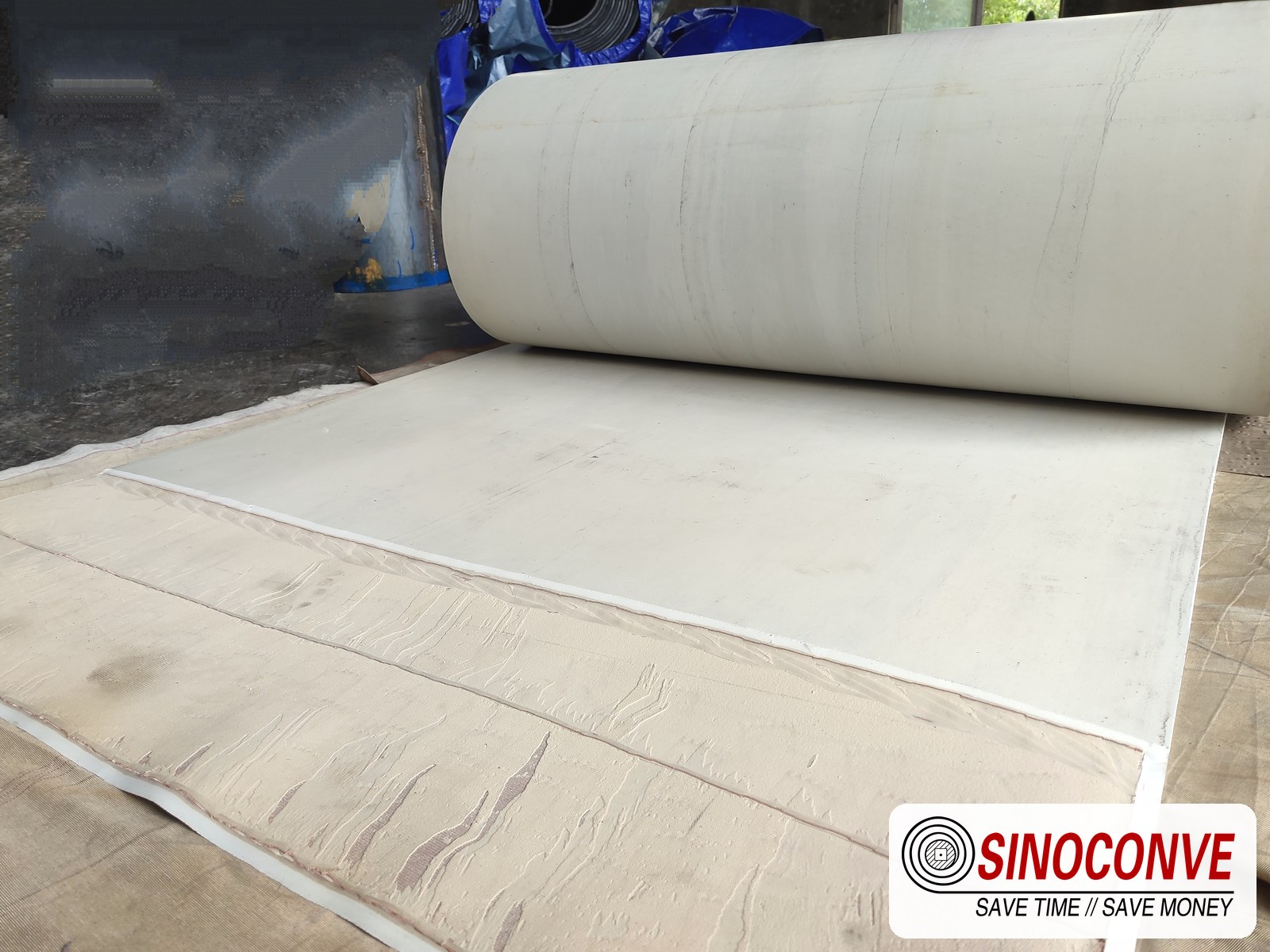
For inspection later, keep the belt declaration and joint drawing with the cleaning instructions. The crew can compare those documents with the installed material and the return path. A smooth cover makes inspection easier, but the grade and joint still need to be documented.
What to inspect at the splice
Check the splice where it passes the cleaner. With the drive isolated, record any blade jump, raised edge or trapped grain and compare the joint drawing. Review exposed fasteners for the product zone and show the cleaning crew the underside access. Specify the belt and joint using OEM PU options and splice checklist; include the distributor team at handover.
08Plain, Profiled or Cleated Covers
Cover surface and incline angle
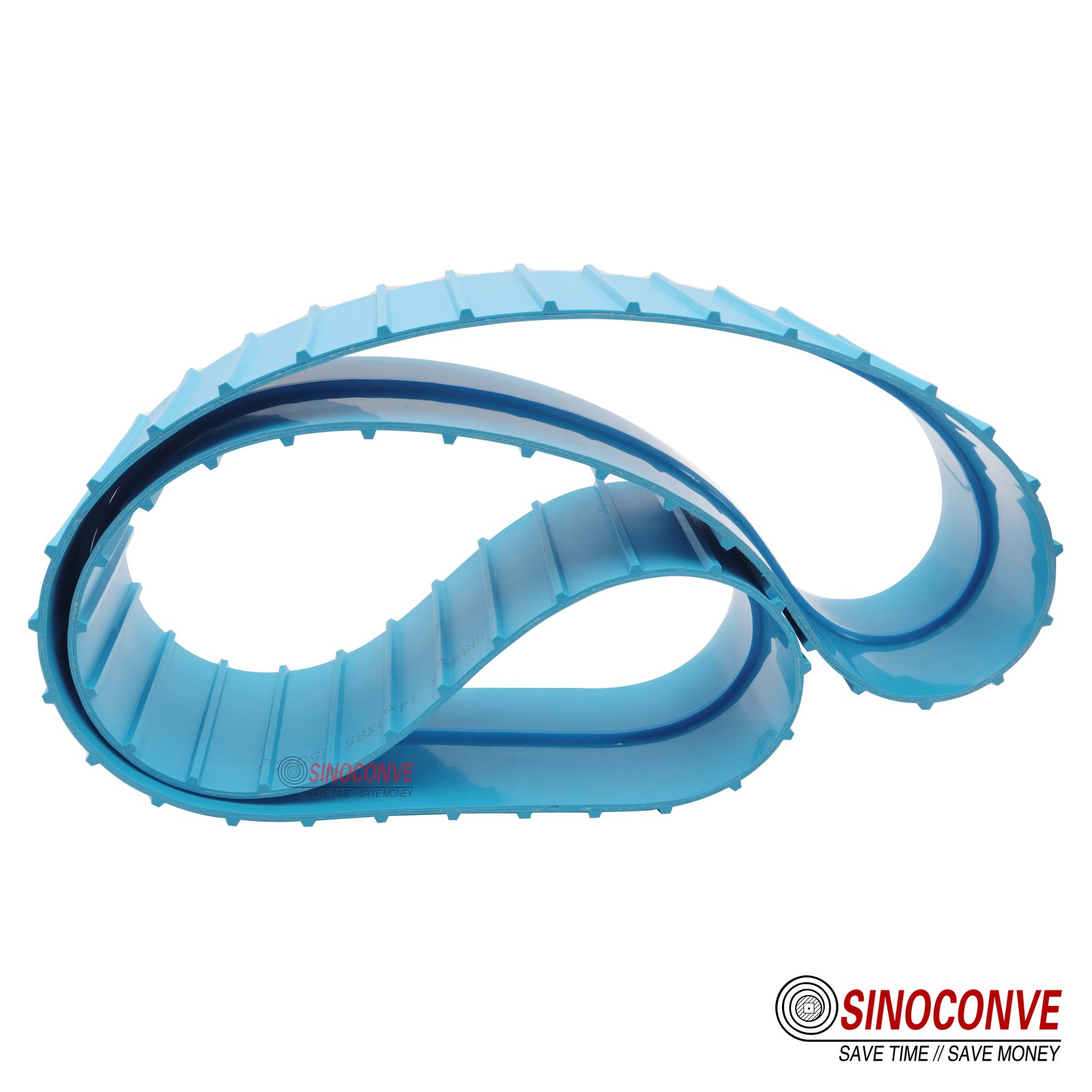
A plain cover leaves fewer pockets for the cleaning crew on a flat run. If an incline sends kernels back, try the incline requirement against a patterned or cleated option; then ask to see how the grooves clean out. Retained fines are a reason to revisit the profile. Our cleated belt guide and sidewall belt guide show constructions for steeper lifts, subject to the actual frame and speed.
Compare pulley diameter with the belt’s minimum bend requirement. A thick quarry-style cover may fail that check on a short malt line. Use the belt catalogue for specifications and treat the quarry-belt example as an example of another duty.
09Reducing Kernel Breakage at Transfers
Where the breakage begins
Take inlet and outlet samples at one transfer, using the site dust-control procedure. If fines rise, examine the chute lip, landing point and speed difference there. Repeat downstream only when the first transfer is cleared.
Check where grain lands relative to belt travel. Also check belt support and skirt clearance. A softer cover is worth discussing only if that transfer is the source and the pulley and cleaner allow it.
10Tracking, Transfers and Silo Infeed
Find the first sideways movement
At a slipping drive, note whether the lagging is worn, wet or coated; check remaining take-up travel while safely stopped. Match what you found to the OEM tension and inspection procedure.
Log where drift starts, with the load condition beside it. Look at the idler and the feed stream nearest that point. The tracking guide gives a sequence; the loading-zone roller guide covers loading impact. Record a moisture change if the batch was unusually damp.
11Run Checks Before the Next Campaign
Before the new campaign, run a representative load and complete the normal approved clean. Examine the drain, return path and splice after stopping. Compare any defect with the belt drawing, photograph it and assign the repair before the first production day. Confirm the spare and the trained fitter on the same checklist.
| Acceptance item | How to check | Pass criterion |
|---|---|---|
| Cover and edges | Inspect the full accessible circuit at safe stop | No damage outside agreed supply tolerances |
| Joint condition | Check joint record and accessible belt surfaces | Matches the approved belt maker method |
| Cleaning access | Run approved cleaning procedure and inspect return | Required areas can be reached under site procedure |
| Tracking under expected load | Observe empty and representative loaded conditions | No abnormal edge contact; within OEM limits |

12Questions from Malt-Handling Buyers
What changes between a dry-grain belt and a malt transfer?
A belt on dry grain and one after a steep tank see different surfaces. Rootlets or warm malt create other duties again. Tell us which transfer the belt serves; that determines the cover and cleaning checks.
Can one belt grade cover several process points?
One grade may serve several locations if the limits work at each one. Compare moisture, heat, pulley size and cleaning across the actual conveyors before grouping them together.
Where should I look for rootlet buildup?
Leave the first loose fibre visible long enough to locate its snag. After isolation, trace it toward the skirt opening, seal or cut edge. Clearing the roller will not correct a damaged part upstream.
How should I compare PU and rubber grades?
Start with the two actual grade sheets. Check the minimum pulley diameter and the cleaning agents first, then temperature, impact and repair method. “PU” and “rubber” describe families of materials; neither word by itself tells the crew how this conveyor will behave.
What should I check when carryback remains?
If the film stays after the normal clean, do not force the scraper harder as the first step. Look at the contact and identify the residue. Then check what cleaning method the belt maker and the plant both permit.
How do I choose an endless or field joint?
Check the installation route for a full belt loop. Where the frame blocks it, plan a field splice from the maker’s drawing, including access, equipment, qualified personnel and the required outage.
Where should I look when malt breaks?
Sample on both sides of the suspect transfer. If breakage increases there, check the lip, speed difference and skirt. That finding should guide any cover change.
What should the maintenance store keep for this belt?
Match the spare to the installed belt drawing, including its joint materials. Label the stored length so a shutdown crew can identify it without guesswork. Keep scraper blades and the fan or screen drive belts on that sheet where the plant uses them; record who is qualified to perform each repair.
Related Products You May Need
- Rubber belting for steep-house, kiln and silo transfer legs
- PVC belting for short hygienic runs and washdown areas
- Chevron and cleated profiles for silo incline conveying
- V-belts for kiln fans, screens and deculming drives