
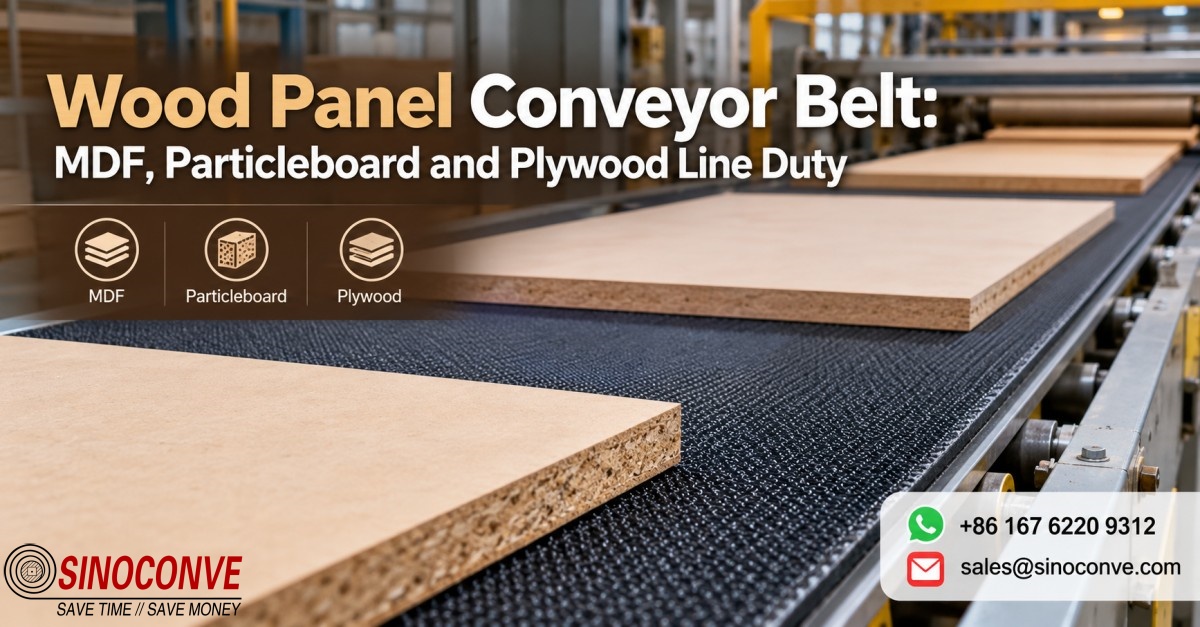
Walk the line before choosing a belt. A loose MDF or particleboard mat needs a stable forming surface; glued plywood veneers arrive as sheets. Once pressed, the panel presents a quite different contact problem at outfeed. Write down the particular machine before discussing material grades.

01What Makes a Panel Line Different From a Sawmill Line
A sawmill handles irregular timber; a panel plant handles mats, pressed boards or veneer layups. Forming needs stable support, hot transfers need verified heat duty, and finished-board handling may need grip. “Wood belt” is too broad a specification.
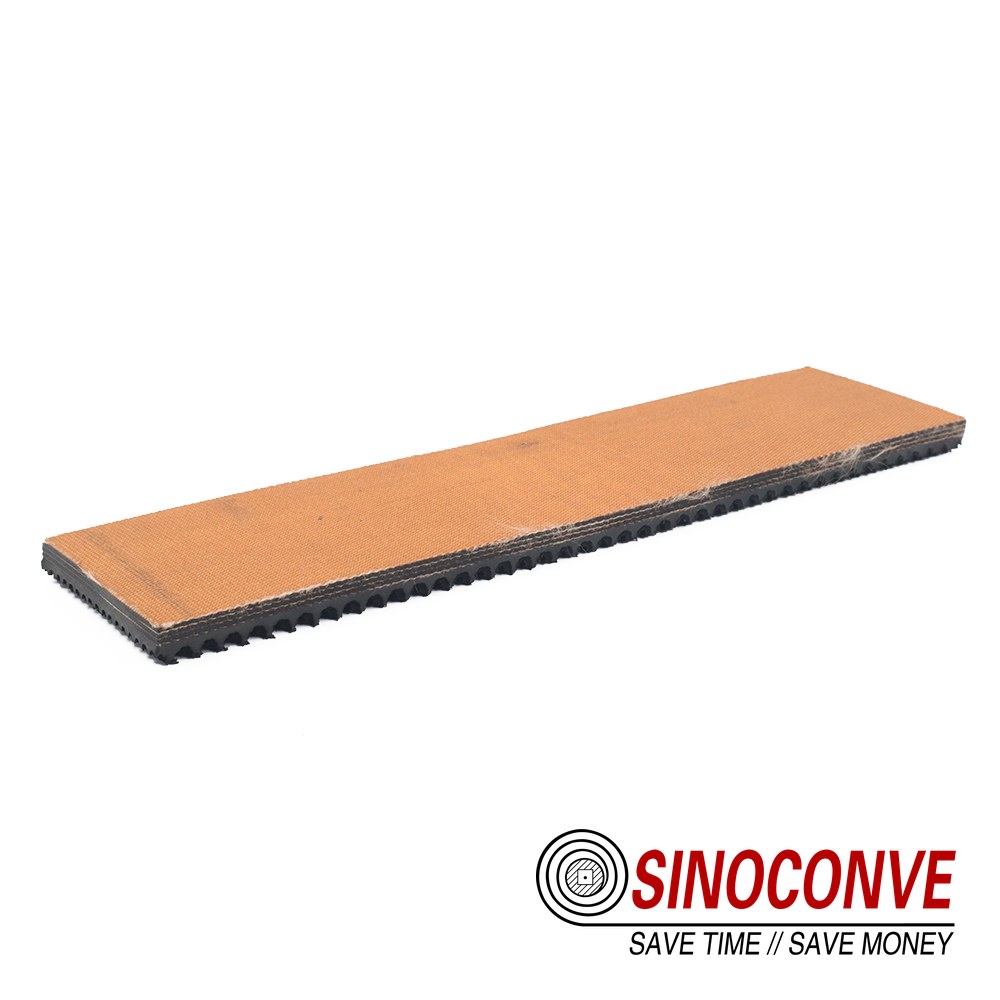
Where the Boundary Actually Sits
For logs, cants and rough lumber, see our mobile portable roller conveyor belt for sawmill. Its mobile sawmill duty is separate from the broad, flat handling needed for a board or an unpressed mat.
MDF and particleboard typically form and prepress a mat. Plywood uses veneer layup and may have a different press and transfer layout. Confirm the product and station before applying one process sketch.
Begin with the machine drawing and our rubber conveyor belt selection guide for industrial lines. A short centre may have a small pulley that limits carcass and joint choices; residue at the former matters more than a generic timber specification.
Specification note: Record pulley diameters, take-up range and the required joint before ordering a wide, short belt.
02From Forming to Pre-Press: The Load Before the Heat
Fibre and chip mats are easily disturbed. A lumpy joint, surface residue or poor transfer can change their profile. The forming belt needs suitable flatness and release. Veneer layups require separate registration checks.
Why the Forming Belt Is Judged on Flatness, Not Grip
Select the forming face against furnish, resin and cleaning. Some lines use coated fabric or polymer belts. Check gauge, joint and minimum pulley diameter with the machine builder; a grippy texture may disturb the mat.
03The Hot Press Exit: Where Belts Meet Heat and Resin
Measure panel temperature where it meets a transfer belt. Platen settings are not the panel contact temperature. Press loading, a steel belt within the press and a separate outfeed are distinct duties.
What Heat Actually Does to a Cover
Hot contact may age the cover; bending loads the carcass and joint. Exposure depends on contact temperature, dwell and return cooling. Check the exact grade and splice against those conditions.
Resin Pickup at the Press Exit
Deposits may form near panel edges, but bands have several causes. Compare them with panel widths and the loading path, then identify the material. Raised residue may affect board travel; it does not prove uncured resin.
| Process station where the board meets the belt | Board temperature and load condition at that station | What the belt surface has to survive there |
|---|---|---|
| Forming or prepress on MDF/PB line | Loose fibre or chip mat before hot pressing | Flat support, release and compatible joint |
| Press outfeed, where a separate transfer belt is fitted | Hot panel; contact varies with station and speed | Measured heat duty, residue and splice integrity |
| Cooler transfer or handling section | Panel temperature falling; support geometry varies | Positioning, suitable friction and residue control |
| Trim offcut conveyor | Sharp strips and variable landing point | Impact at edges, cut wear and scrap clearance |
| Stacker infeed | Finished board, indexing if used | Registration, traction and repeated flexing |
04Cooling and Board Alignment
Some plants use a star cooler; others handle raw boards differently. Identify where a belt actually contacts the board. Cooling can change panel shape, but a skew at the stacker does not by itself identify the cooler as the cause.
Warp, Slip and the Star Cooler
Compare the panel position at the inlet, after any turning device and at stacker feed. Mark the first transfer where the squareness changes. Our rubber conveyor belt range can then be narrowed by pulley size and required board contact.
05At the Sander and Trim Saw
On the sander conveyor, photograph the return and pulley before cleanup; the waste often collects out of sight. At the trim saw, a strip of offcut can wedge beside a guide even when the panel itself tracks cleanly.
Two Dusts With Two Different Risks
At a properly isolated stop, look for a line of powder on one side of a pulley. Note where the extraction duct ends. Our dust-resistant conveyor belt supplier page discusses the belt; sealed conveyor rollers for fine dust addresses idler protection. The plant dust-control plan governs the cleaning method.
If the edge has opened, map the first cut to the offcut drop and the nearest guide. Remove trapped scrap only under the site’s energy-control procedure. The industrial conveyor belt construction is a reference point, not a substitute for this machine’s bend and cut requirements.
06Resin, Glue and the Carryback Nobody Cleans
Inspect return-side buildup. Record its location and identify dust, glue, resin or a mixture. That evidence is more useful than asking for a generic non-stick cover.
Why a Scraper Passes Over Cured Resin
A scraper can remove loose carryback but not every bonded film. Check the maker’s contact-pressure limits before tightening it. Our conveyor carryback solutions page describes the general return arrangement.
Consider the cleaner location in the guarding review. Near a hot pulley, access and blade temperature may differ from the existing position. Ask the belt and cleaner makers for an approved method if the residue has bonded.
For the conveyor belt supplier, one photo of the deposit and the plant’s cleaning instruction will help more than “resin resistant” on a purchase order. Add the board contact temperature and the drawing of the return.
| Failure seen on the belt or the board | Most likely cause on a panel line | Inspection action with the line stopped and locked |
|---|---|---|
| Buildup in bands near the belt margins | Possible resin, glue, dust or cleaner effect | Identify deposit; compare with board widths and contact points |
| Cover cracks or hardens | Possible heat exposure or other ageing | Check grade and contact history; inspect flex and joint |
| Boards out of square at stacking | Transfer, guides or cooler among possible causes | Compare panel position before and after each station |
| Split begins at one edge | Possible offcut strike, trapped scrap or rubbing | Inspect edge and guide clearance with energy isolated |
| Joint lifting on a short conveyor | Possible splice, bending, heat or tension issue | Compare joint with approved design and operating data |
07Choosing the Cover by Station
At each station, ask what the panel must do on the belt. A smooth face eases some cleaning tasks; a pattern can hold a panel on an incline but may leave an impression. Hot outfeed also requires a temperature rating for that actual contact.
Matching Surface to Station
Use the rough top conveyor belt guide for packaging and light duty lines as a profile reference. A freshly sanded face deserves a trial: examine dust lodged in the pattern and check the panel for marks after transfer.
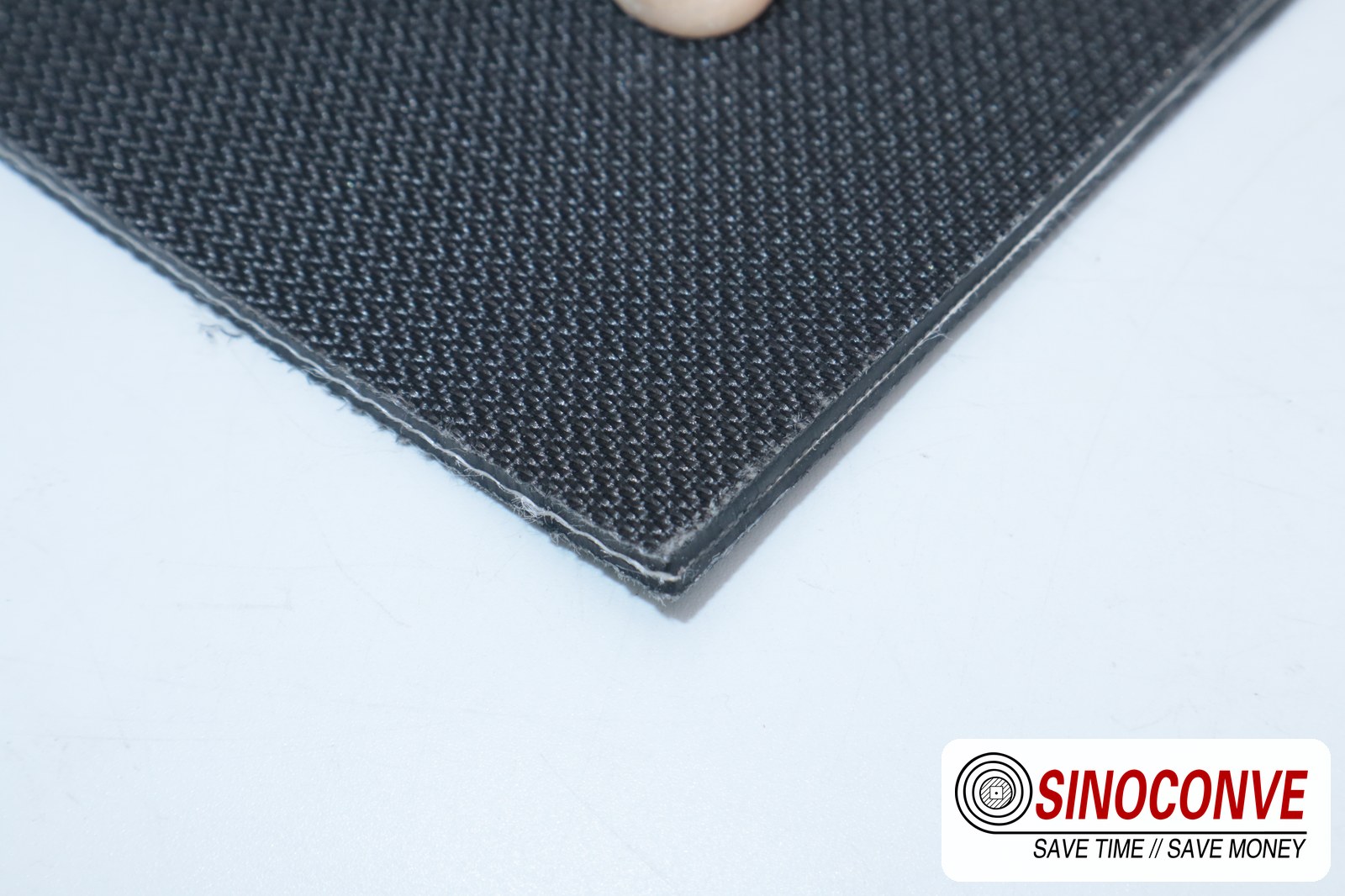
Take the panel temperature at belt contact and note how long it rests there. Then check a candidate heat-resistant conveyor belt grade and its joint, using the heat resistant conveyor belt guide as an introduction to available grades. The press setpoint is insufficient.
The PVC conveyor belt versus rubber conveyor belt comparison sets out basic construction differences. On a light transfer, check the pulley and panel contact conditions before comparing candidate grades. As a conveyor belt manufacturer, we need the machine data to advise on hot outfeed.
08Structure, Edge Damage and Board Width Changes
Width changes expose different belt margins and move offcut landing points. Review the full board size range, belt width and guides to avoid edge wear.
Trim Saw Edges and Width Changes
Record board width range, guides and saw discharge. Set belt width from the approved drawing. Our wholesale conveyor belts catalog shows ply and cover choices, but neither fixes a rubbing guide.
Check auxiliary drives during the same changeover. The transmission belt manufacturer range includes V-belts; match the replacement to pulley section, speed and drive arrangement rather than ordering by a rough visual comparison.
09Tracking a Wide Belt on Short Centres
A wide belt on closely spaced pulleys can rub an edge soon after it begins drifting. Note where the deviation starts. Inspect pulley squareness, the joint and material on the return before changing the tension.
Tracing the First Point of Drift
Observe the board entering this conveyor. If the belt moves sideways before loading, investigate machine alignment. If drift begins at impact, use our EP conveyor belt tracking guide to work through the loading and return. The conveyor belt distributor listing is unrelated to correcting this fault.
Compare cold and running alignment, take-up, deposits and splice. Our conveyor belt factory can review belt options once machine measurements exist; temperature alone does not assign fault.
10Splices Under Heat Cycling
A joint repeatedly bends over pulleys and may see heat. Its life depends on construction, workmanship, diameter and contact conditions. Inspect lift, profile and wear.
Splice Geometry Under Thermal Cycling
Use the approved joint drawing for this carcass and cover. Step, finger and mechanical joints are not interchangeable. The conveyor belt splicing buyer checklist covers access and spare material planning.
11Acceptance Checks and Changeover Planning
Confirm drawing, take-up, cleaner and joint before installation. Record an isolated-stop baseline. Use OEM and belt-maker acceptance limits, not a generic threshold.
| Item to accept before the belt goes on | How we check it on site | What counts as acceptable for handover |
|---|---|---|
| Belt dimensions and approved drawing | Check width, length and edge condition | Within the agreed manufacturer and OEM tolerances |
| Take-up travel | Record position after fitting and at operating state | Sufficient range per equipment and belt documentation |
| Joint profile and record | Inspect joint and installation record | Conforms to the approved splice specification |
| Cleaner setup | Check clearance, material and belt contact | Within cleaner and belt maker limits |
| Spares and joint materials | Check grade, lot and suitability | Correct approved stock for the outage plan |
During the outage, read the designation on any stacker drive scheduled for service. Share its pulley section with the V-belt manufacturer, especially if the existing belt has worn to a misleading profile.

12Buyer Questions
How do I estimate press-outfeed belt life?
Service life needs the contact temperature, cycle, cleaner and splice data. Compare failures with the selected grade, buildup, alignment and return conditions.
Can one belt type serve the press exit and the sanding line?
Assess them separately. Outfeed and sanding areas have different heat, dust and wear. One grade can serve both only if it meets each machine’s documented limits.
What causes a deposit beside the belt edges?
A band near either edge is a prompt to inspect the panel path. Compare its spacing on narrow and wide production runs. Photograph it before cleaning, then check the substance and cleaner condition with maintenance.
Is a rough top surface ever right on a panel line?
It can be useful where positioning or grip calls for it. Test whether the pattern marks the board or retains sanding dust. The correct face follows the machine and product, not the panel category alone.
What if the hot board cools quickly?
Maybe. Measure contact temperature and repeated exposure, including the return. Quick board cooling does not establish that a standard cover is safe.
What makes a wide belt drift only when the line is warm?
Record pulley positions and take-up setting before startup and once the machine reaches its normal condition. If the drift appears at one transfer, inspect its loading and cleaner. A hot frame may be involved, but measurements decide.
Which splice method suits a short, wide conveyor?
Select the joint from the belt maker’s drawing, pulley diameters and temperature exposure. Plan access and curing time for a rubber vulcanized joint; verify any alternative with the OEM and cleaner supplier.
What details should I send for a quote?
Send station, product, contact temperature, dimensions, pulleys, take-up, speed, cleaner, joint access and failure photos. Include board width range and cleaning agents.
Related Products You May Need
- Rubber conveyor belt for press exit and cooling run duty
- Heat-resistant conveyor belt grades for hot board contact
- PVC conveyor belt for light panel transfer conveyors
- Conveyor rollers and idlers for wide short panel frames