
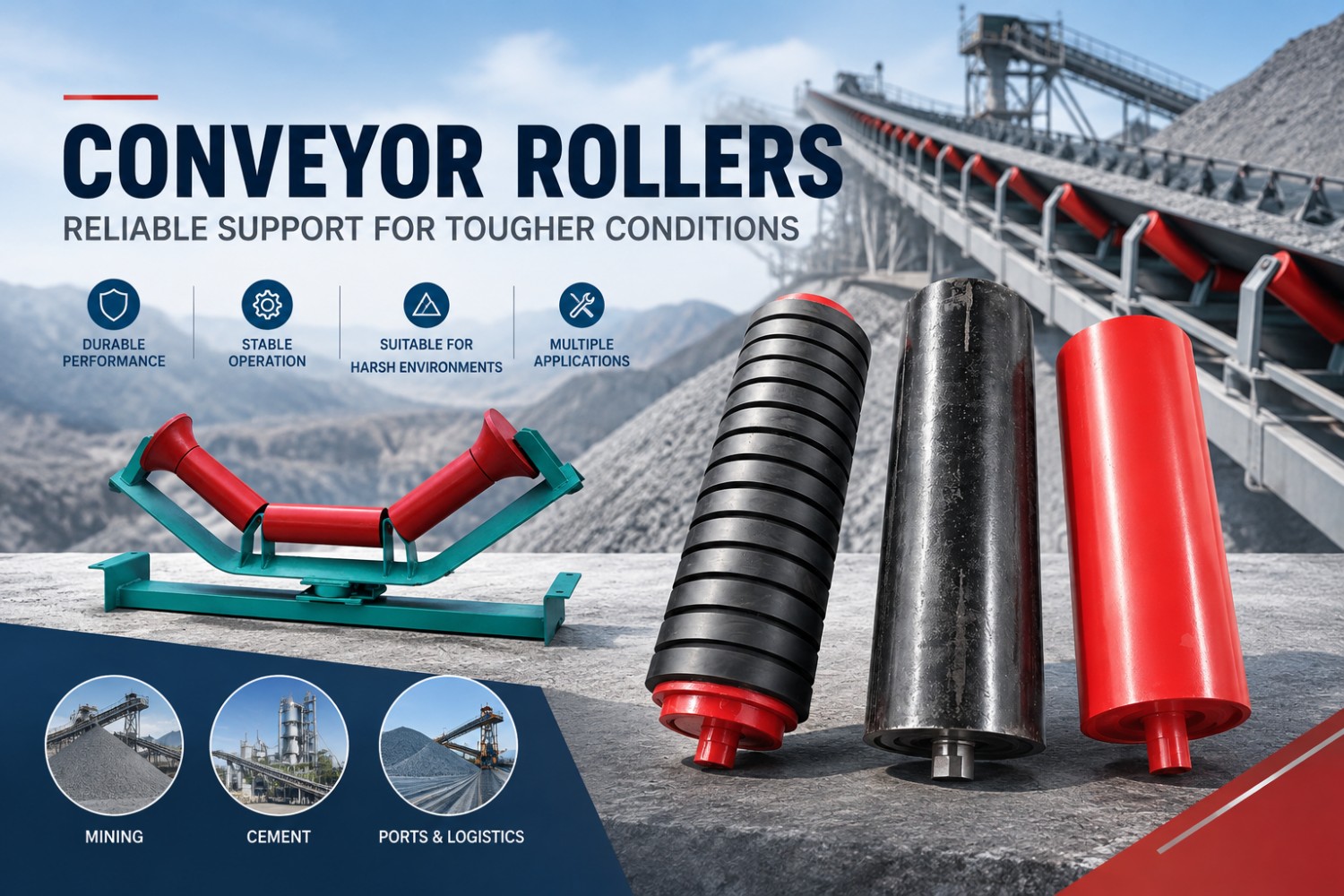
Sealed Conveyor Roller Manufacturer for Fine-Dust Industrial Environments
Fine dust changes the way a conveyor roller should be purchased. In a cement plant, crushing line, mineral-processing facility or other bulk-material operation, a roller can match the required diameter and shaft dimensions yet still become a maintenance problem if dust reaches the bearing area. The result may begin as rising rotational resistance, noise or heat and end with a seized roller, belt damage or an unplanned replacement.
For a procurement team, this makes the choice of a sealed conveyor roller manufacturer more than a price comparison. The supplier needs to understand the installed position, contamination level, load, speed, mounting interface and required inspection evidence. Just as importantly, the buyer needs an RFQ detailed enough to distinguish a technically suitable roller from one that simply looks interchangeable on a quotation.
Quick Answer: For fine-dust service, do not qualify a sealed conveyor roller from the words “dust proof” alone. Compare the sealing arrangement, bearing protection, dimensional compatibility, operating duty, manufacturing controls and agreed inspection evidence. A recognized conveyor standard can provide part of the technical baseline, but it does not by itself prove that a specific roller is suitable for your dust exposure.

1. Why Fine Dust Is a Different Roller Procurement Problem
A belt conveyor roller works close to the material stream, carryback and surrounding plant contamination. In cement and mineral-processing environments, fine particles can remain suspended, settle around roller ends or accumulate on return-side components. The purchasing problem is therefore not simply whether the roller has a seal. It is whether the complete bearing-protection arrangement is appropriate for the actual environment.
Contamination reaching a bearing can interfere with lubrication and rolling surfaces. The practical warning signs may include increasing resistance, abnormal noise, temperature rise, irregular rotation and eventually seizure. Once a roller stops rotating freely, the problem is no longer confined to the roller itself: a moving conveyor belt can rub against the stationary shell.
This is why a dust-related failure should not automatically lead to an order for a “heavier” roller. If contamination is the underlying mechanism, changing only shell thickness or nominal bearing size may leave the original problem unresolved.
| Operating Condition | Procurement Risk | Specification Implication |
|---|---|---|
| Continuous fine airborne dust | Contamination can challenge bearing protection. | Define the environment and request details of the proposed sealing arrangement rather than accepting a generic “sealed” description. |
| Dust plus moisture or washdown | The contamination problem is no longer dry dust alone. | State both dust and water exposure in the RFQ and ask how the proposed construction addresses the combined environment. |
| Heavy carryback on return side | Material buildup may affect roller rotation and belt support. | Review belt cleaning, roller position and buildup behavior instead of treating sealing as the only corrective action. |
| High-load or high-speed duty | A good seal cannot compensate for an unsuitable overall roller design. | Specify load/design information, belt speed, roller position, dimensions and bearing requirements together. |
2. What Should a Buyer Mean by “Sealed Conveyor Roller”?
The term sounds precise but often is not. Two suppliers can both quote a sealed conveyor roller while proposing different internal arrangements. Unless the RFQ defines what must be verified, purchasing may be comparing descriptions rather than equivalent constructions.
For bulk-material belt conveyors, the bearing area typically depends on a combination of components and interfaces rather than one visible seal. What matters is how the design restricts contaminant paths while allowing the roller to rotate correctly under its intended duty.
A useful supplier discussion should therefore cover:
- the sealing arrangement proposed for the roller ends;
- bearing type and arrangement;
- shaft and bearing-seat configuration;
- how the seal is retained and protected;
- lubrication arrangement where applicable;
- shell, housing and end construction;
- rotational resistance and runout requirements where specified by the project;
- the actual dust, moisture and operating conditions for which the roller is being offered.
RFQ Warning: “Dust proof roller required” is not a complete technical specification. Ask the bidder to identify the proposed construction and the evidence or inspection criteria that will be used for your order. Otherwise, suppliers may quote materially different products under the same description.
3. Seal Design Is Important, but It Is Not the Whole Roller
A common sourcing mistake is to make the seal the only qualification criterion. Fine-dust resistance matters, but a conveyor roller remains a mechanical component carrying load and rotating continuously.
The shell, shaft, bearings, bearing housings, seals and assembly quality work as a system. Poor concentricity or excessive runout can create vibration. An unsuitable shaft or bearing arrangement can create a load problem. Incorrect shaft ends can prevent installation. A seal that produces excessive drag would create another operating penalty even if its contamination protection looked impressive on paper.
The correct purchasing logic is therefore:
Environment → contamination risk → sealing requirement → complete roller construction → operating verification.
Not:
Fine dust → choose the roller with the most elaborate seal description.
For buyers reviewing the broader component specification, SINOCONVE's conveyor idler roller guide explains how dimensions, roller position, shaft ends, bearing protection and operating conditions interact.
4. Mining and Cement Plants Need Different Questions at Different Conveyor Positions
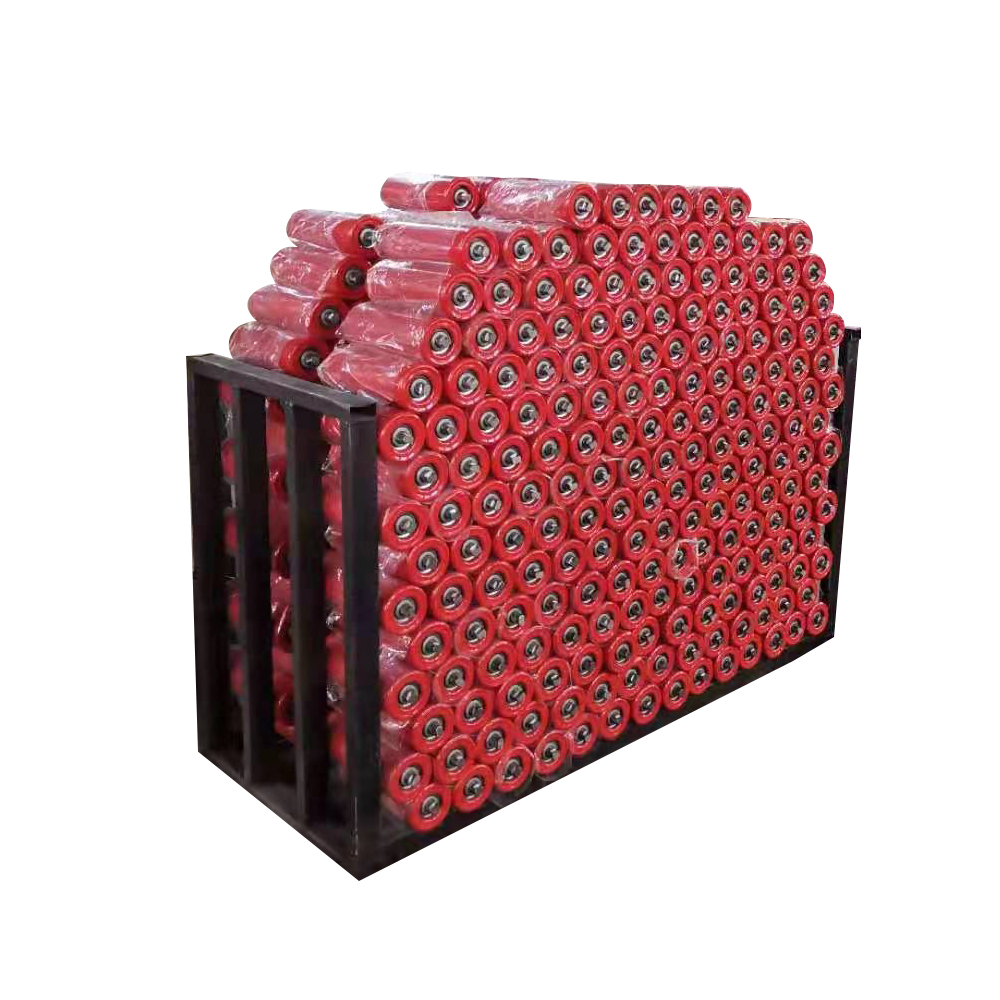
One roller specification should not automatically be copied across every position on a conveyor.
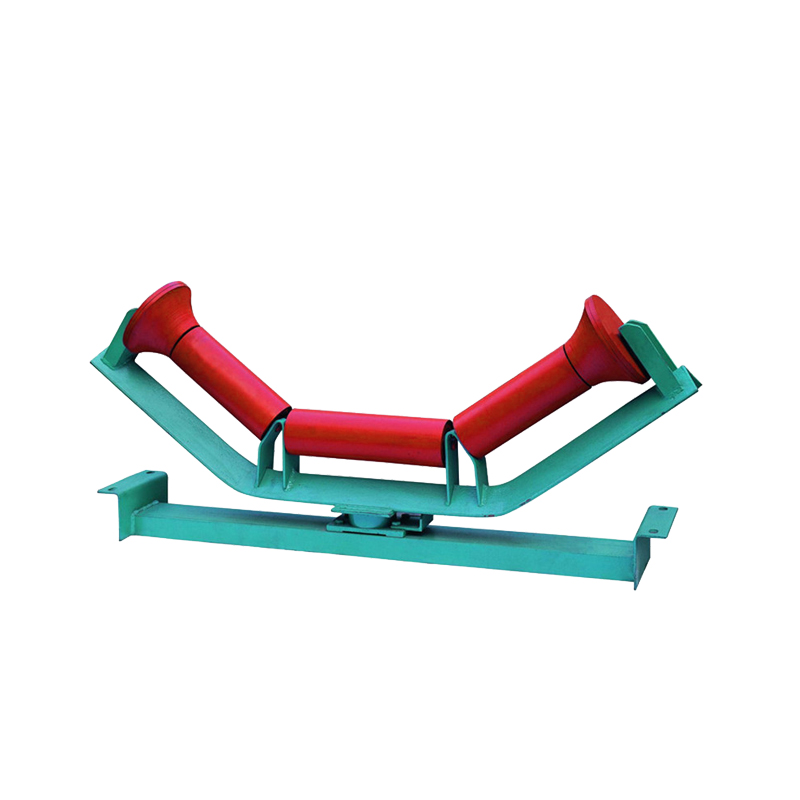
A carrying idler supports the loaded belt. A return roller supports the empty belt and can be exposed directly to carryback. An impact roller operates near a loading zone where shock and material spillage may dominate. Transition and tracking positions introduce other geometric requirements.
For a cement plant, the buyer should also identify where the dust originates. A roller near crushing or dry material transfer may face intense fine-particle contamination. A return roller may encounter adhered material from the belt. If moisture is also present, the contamination mechanism changes again.
Mining applications can combine dust with larger lump material, impact, outdoor exposure, water and long conveyor runs. A sealing requirement that makes sense for a relatively protected indoor conveyor should not be copied into a mine specification without reviewing the complete duty.
| Roller Position | What the Buyer Should Check | Why It Matters |
|---|---|---|
| Carrying roller | Load, belt speed, trough geometry, spacing, dust exposure and bearing protection | The roller must support the loaded belt while maintaining suitable rotation and geometry. |
| Return roller | Carryback, buildup, belt cleaning, contamination and surface condition | Material remaining on the belt can create a different contamination and buildup problem. |
| Impact position | Lump size, loading conditions, impact duty, support arrangement and contamination | Seal protection alone does not establish suitability for loading-zone impact. |
| Outdoor exposed position | Dust, rain, humidity, corrosion exposure and maintenance access | Multiple environmental mechanisms may need to be addressed together. |
SINOCONVE's guide to conveyor rollers for heavy-duty belt conveyor systems provides additional context for carrying, return and impact positions in mining and bulk-material applications.
5. Standards Should Define a Baseline, Not Replace Application Engineering
Supplier quotations often contain phrases such as “ISO standard” or “DIN standard.” For procurement, that statement is incomplete unless the applicable standard and project requirements are identified.
ISO 1537:1975 applies to idlers for specified troughed belt conveyors handling loose bulk materials. It addresses dimensions, arrangement and clearance for the configurations within its scope. It remains a current published ISO standard after confirmation in 2025.
That is useful for dimensional and arrangement control, but there is an important limitation: ISO 1537 is not, by itself, proof that a particular roller is dust-proof or that its sealing system is suitable for a cement plant or mine.
Where a project specification uses DIN, CEMA or another standard, the purchasing team should likewise state the exact requirement and edition where applicable. Then separate the project-specific requirements for contamination protection, load, dimensions, inspection and documentation.
Buyer Tip: Ask the supplier to provide a compliance statement against the exact specification and identify deviations. “Manufactured to international standards” is not a substitute for confirming which dimensional, performance and inspection requirements actually apply to the order.
6. How to Qualify a Sealed Conveyor Roller Manufacturer
For a bulk order, supplier qualification should test whether the manufacturer can repeatedly produce the agreed roller—not merely whether it can supply one acceptable sample.
6.1 Ask for a Construction Review Before Price Comparison
Send the same technical information to each bidder and request the proposed construction. If one quotation identifies the roller position, shell, shaft, bearing arrangement, sealing approach and applicable inspection criteria while another provides only diameter and price, the offers are not yet commercially comparable.
6.2 Review Manufacturing and Quality-Control Capability
Ask how incoming materials, in-process dimensions and finished rollers are controlled. The required checks depend on the project, but procurement may need to agree dimensional inspection, rotation-related checks, runout criteria, identification and documentation before production begins.
Ningbo Sinoconve Belt Co., Ltd. was established in 1988 and has more than 35 years of manufacturing experience. Its confirmed company quality process includes incoming raw-material inspection, in-process inspection and final inspection before shipment. Product test reports can be supplied, and third-party testing can be arranged where a customer has specific requirements.
6.3 Evaluate Customization and Drawing Control
Replacement projects often involve existing frames and interfaces that cannot be changed economically. SINOCONVE supports OEM/ODM production according to customer drawings, samples and technical requirements. For customized rollers, however, the approved drawing should remain the controlling document rather than relying on a product name alone.
The manufacturer's current conveyor roller product range provides a starting point for product discussion, while final construction should be confirmed against the actual application and purchase specification.
6.4 Ask for Order-Specific Evidence
A factory introduction tells you what a supplier says it can generally do. An industrial purchase needs evidence tied to the order.
Depending on the project, that can include:
- approved product or assembly drawings;
- dimensional inspection records;
- agreed product test reports;
- material or component documentation where specified;
- inspection and identification records;
- packing information;
- third-party inspection or testing when contractually required.
The document package should be agreed before manufacturing. Requesting new evidence after the rollers are finished can create delay or leave the buyer asking for records that were never part of the production plan.
7. The RFQ Data That Separates Serious Quotations from Guesswork
A sealed roller RFQ should give the manufacturer enough information to understand both fit and duty. Sending only “89 mm roller, 1,000 pieces” pushes technical assumptions back to the bidder.
| RFQ Item | What the Buyer Should Provide | Why It Matters |
|---|---|---|
| Roller position | Carrying, return, impact, transition, tracking or other position | Different positions have different load and contamination conditions. |
| Dimensions | Tube diameter, face length, overall length, shaft diameter and shaft-end dimensions | Prevents physical interchangeability problems. |
| Conveyor information | Belt width, belt speed, trough angle, idler spacing and relevant load/design data | Allows the proposed roller to be reviewed against its actual duty. |
| Material handled | Cement raw material, limestone, coal, ore or other bulk material; include relevant particle and contamination information | Material characteristics affect dust, buildup and loading conditions. |
| Environment | Fine dust, outdoor exposure, moisture, washdown, corrosion or unusual temperature conditions | Defines what the bearing-protection system must address. |
| Existing failure | Photos, maintenance observations and failed roller samples where available | Helps distinguish contamination from overload, buildup, alignment or other causes. |
| Standard and inspection | Applicable standard/edition, project drawing, acceptance criteria and required documents | Creates a common technical basis for quotation comparison. |
| Commercial data | Quantity, delivery destination, required schedule and packing requirements | Allows the supplier to prepare a meaningful commercial offer. |
8. How to Compare Two Conveyor Roller Suppliers
Once quotations arrive, unit price should be compared only after technical differences are normalized.
A lower-priced offer may be genuinely competitive. It may also reflect a different bearing, sealing arrangement, shaft, shell construction, inspection scope or packing assumption. Procurement needs to identify which.
| Comparison Point | What to Verify | Warning Sign |
|---|---|---|
| Sealing | Actual arrangement and intended environmental duty | Only “dust proof” appears on the quote. |
| Dimensions | Complete drawing and shaft-end geometry | Only diameter and face length are confirmed. |
| Duty | Roller position, load/design basis and belt speed | Supplier quotes without requesting application data. |
| Standards | Exact standard, edition and deviations | Generic “ISO/DIN quality” language. |
| Inspection | Agreed acceptance criteria and reports | Testing is discussed only after the PO. |
| Repeat orders | Drawing/revision and product identification control | No clear method for reproducing the approved configuration. |
For large mining and cement orders, this comparison is especially important because a small specification mismatch is multiplied across the entire installed quantity. SINOCONVE's conveyor roller manufacturer selection guide goes deeper into approved-vendor evaluation for mining and EPC procurement.
9. Investigate Failed Rollers Before Reordering
A repeat order based solely on the old part number can reproduce the same failure mechanism.
If rollers are seizing prematurely, examine where the failures occur. A cluster near a dusty transfer point suggests a different investigation from failures distributed along an entire conveyor. Check whether failed units show contamination, moisture, abnormal heat, buildup, physical damage or uneven wear.
Also inspect the surrounding system. Poor belt cleaning can load return rollers with carryback. Misalignment can create abnormal loading. A damaged frame can alter roller position. At a loading zone, impact conditions may exceed what the existing arrangement was designed to handle.
The useful question for the supplier is not simply, “Can you copy this roller?” It is, “Here is the existing roller, its dimensions, its installed position and the failure evidence—what needs to be confirmed before we reproduce or revise it?”
10. What SINOCONVE Can Support for a Roller RFQ
SINOCONVE supplies conveyor rollers as part of its industrial material-handling product range and supports customized production based on buyer drawings, samples and technical requirements.
For project and repeat-order procurement, the practical starting point is to provide the existing specification rather than ask for a generic “mining roller” or “cement roller.” The technical discussion can then address dimensions, application, sealing requirement, environmental exposure, inspection needs and quantity.
SINOCONVE's confirmed quality process includes raw-material inspection before production, in-process inspection and final inspection before shipment. Test reports can be provided, while third-party testing can be arranged where special customer requirements make it necessary. Buyers should state those requirements in the RFQ so the inspection scope can be confirmed before production.
For a broader view of available material-handling products, see the SINOCONVE industrial product range.
11. Frequently Asked Questions
11.1 Is a sealed conveyor roller completely dust-proof?
Do not assume so from the product name. “Sealed” can describe different constructions, and actual suitability depends on the seal arrangement, interfaces, operating environment and agreed performance requirements. For severe fine-dust service, ask the manufacturer what construction is proposed and what verification can be supplied.
11.2 Is ISO 1537 a dust-proof roller certification?
No. ISO 1537:1975 addresses dimensions, arrangement and clearance for specified idlers used on troughed belt conveyors handling loose bulk material. It does not automatically certify the dust-ingress performance of a particular roller.
11.3 What information is needed to quote a replacement conveyor roller?
At minimum, provide the roller position, tube diameter, face length, shaft dimensions and shaft-end geometry. For a meaningful technical review, also provide belt width and speed, conveyor/load information, operating environment, conveyed material, quantity, applicable standard and an existing drawing where available.
11.4 Can I send a failed roller sample instead of a drawing?
A sample can help, particularly for replacement work, and SINOCONVE supports customization from drawings or samples. For repeatability, however, dimensions and the final approved specification should still be documented before bulk production.
11.5 What should a cement plant tell the supplier about dust?
Describe where the roller operates, the material being handled, whether dust is continuously airborne or mainly deposited, whether carryback reaches the roller, and whether moisture, washdown or outdoor exposure is also present. These details are more useful than simply writing “dusty environment.”
11.6 Should I choose a larger bearing for a dusty conveyor?
Not automatically. Bearing size is only one part of roller design. If contamination is the root cause, increasing bearing size without addressing sealing and the operating environment may not solve the problem. Load, speed, shaft support, sealing and bearing arrangement should be reviewed together.
11.7 What should I request before approving a bulk order?
Agree the approved drawing, specification, applicable standards, inspection criteria, required reports, identification method, packing and any third-party inspection requirements before production. The exact document package should reflect the project rather than a generic checklist.
12. Prepare a Better Sealed Conveyor Roller RFQ
A fine-dust conveyor application should not be reduced to “dust-proof roller + quantity.” Before requesting a final quotation, prepare the existing roller drawing or measured dimensions, roller position, belt width and speed, relevant load information, conveyed material, dust and moisture conditions, required standard, quantity and photos of any existing failures.
SINOCONVE can review customized conveyor roller requirements against customer drawings, samples and operating information. Start with the SINOCONVE conveyor roller page, submit project details through the SINOCONVE inquiry page, or email sales@sinoconve.com.
Related Products
- Conveyor Roller — product entry for discussing customized industrial conveyor roller requirements.
- SINOCONVE Industrial Products — conveyor rollers, conveyor belts and related industrial belt products.