
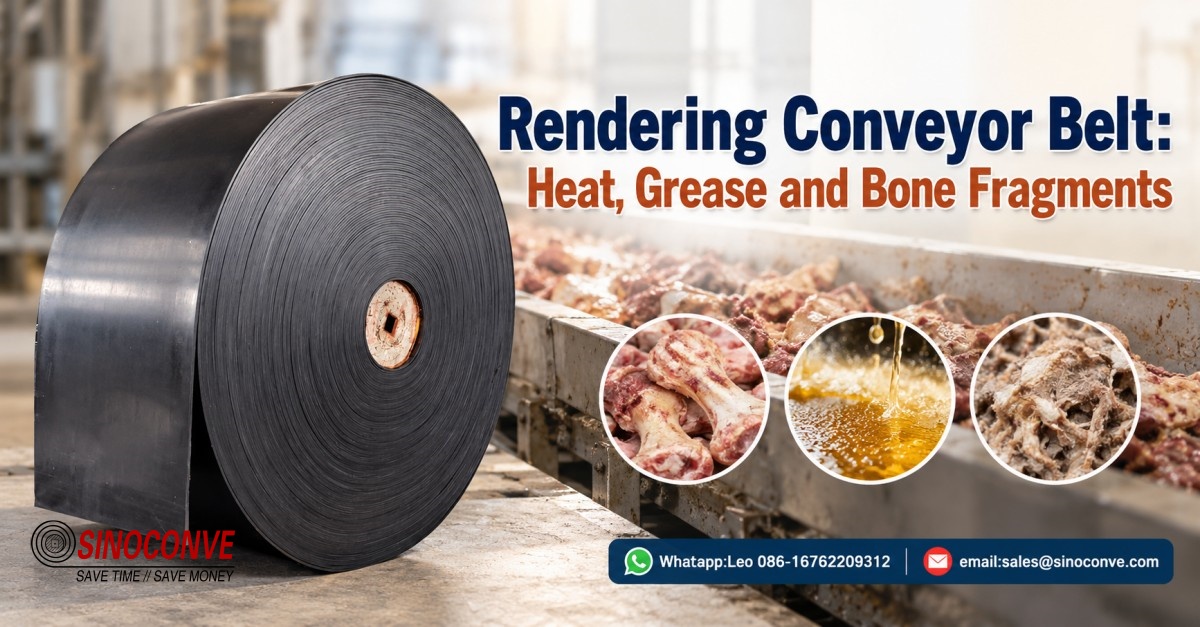
Rendering Conveyor Belt: Heat, Grease and Bone Fragments
At the receiving bin you may find wet bone on the belt. Downstream, the cooker discharge leaves hot fat; after pressing, cake clings to the head pulley. Stores may call all three rolls a “rendering belt,” but the failed rolls seldom look alike. Before ordering one more, walk from the bin to the meal cooler with the last three failure photographs in hand.

01Why a Rendering Plant Is Harder on a Belt Than a Cutting Floor
The cutting-room belt and the rendering belt can sit on either side of one wall. One may carry edible meat; the other handles diverted by-products, often under feed or by-product rules. Ask the quality manager where that boundary is drawn. A certificate on a white belt says little about how its cover will behave under hot animal fat, and a heavy black cover does not answer the finished meal’s contamination question.
On the floor, mark the last transfer from the edible area and the first receiving bin on the rendering side. Then list the duties separately: receiving impact; hot cooker discharge; oily press feed; dusty meal cooling. One belt specification for every location can hide the reason each failed. A cut at the loading chute calls for a different response from a swollen cover under the press.
02Heat, Grease and a Cover That Softens
The cooker operator knows the batch setpoint. For belt selection, I also want the material temperature as it lands, the length of its hot contact and what remains on the cover when the conveyor stops. A full cooker can coat a motionless belt with free fat; a short peak temperature on a datasheet does not describe that parked condition.
Oil resistance and heat resistance have to be checked together. An oil-resistant compound may have a lower permitted temperature than the process needs. The supplier should state the exposure it qualified, the test medium, the duration and the allowed change in cover properties. A mineral-oil swelling result is useful, but animal fat at the plant’s actual temperature is the more relevant question. Bando’s oil-resistant belt range, for example, distinguishes compound grades and cautions about elevated heat; the trade cannot be reduced to an NBR label.
Retain an offcut with the roll number on it. For a returned belt, compare that reference with a cooled section from the load path. Record thickness and hardness at several positions, sample temperatures, and photographs of the pulley bend and splice. One hot reading alongside a cold reference tells you little about degradation.
| Line stage | Material on the belt | Main check before specifying |
|---|---|---|
| Receiving and hopper feed | Wet carcass pieces and bone | Drop height, lump size and trapped metal |
| Coarse breaking | Mixed flesh, fragments and grit | Cutting at the skirt and load point |
| Cooker discharge | Hot material with free fat and water | Actual contact temperature and oil exposure |
| Press feed and cake discharge | Sticky cake with residual fat | Release at the head and return-side deposits |
| Dryer inlet and discharge | Warm, dusty meal | Cover heat history and dust at edges |
| Cooling and loadout | Dry meal and fines | Cleanliness, dust control and separation from wet zones |
Some stages use screw, drag chain or pump. Check which actually have a belt.
03Bone, Grit and Tramp Metal: Cut and Impact Damage
A bone point landing hard leaves a nick or puncture. The smaller chips we find behind a skirt leave a very different mark: one narrow bright line, often running much farther than the damaged patch at the feed. Sand can join them, especially at receiving. Before the worn belt is discarded, mark which groove lines up with a skirt and which puncture lines up with the chute. That map is more useful than calling both “abrasion.”
Start at the chute with the failed belt laid out beneath it. Can a fragment fall onto unsupported rubber? Does the feed land on one edge? Open the skirt and check what has been riding there. Cover thickness is an allowance, not protection against a bolt held under the seal. If there is a magnet or detector, test the whole rejection path under the plant’s procedure. An alarm is of little use when the flap stays shut. Hooks and pins from the plant itself belong in the hazard review.
04Fat Carryback and the Return Side
Look beneath the head pulley before blaming a tracking idler. Fat left by the primary cleaner can cool on the return run, collect meal fines and build a larger diameter on a roller. The belt then approaches that roller on a changing surface. A cleaned roller that becomes coated again within a shift is a useful clue.
A new blade is not automatically gentle. Look for an even contact mark at the head, then watch the film that goes past it. If one edge is untouched, check tensioner travel; if the cover shows a fresh groove, check blade setting and its compatibility with this hot cover. Put any secondary cleaner where maintenance can remove its collected fat.
| What you find | Likely route to the damage | Check at the next stop |
|---|---|---|
| Narrow polished line under a skirt | Bone or grit held at the contact | Lift the seal and inspect the trapped material |
| Edge cover lifting | Moisture entering damaged or open reinforcement | Expose the edge and inspect for a dark line |
| Fat-coated return roller | Carryback passing the head cleaner | Clean and watch how quickly the deposit returns |
| Long tear from a loading area | Embedded metal or a hard skirt obstruction | Inspect the skirt and feed before fitting a new belt |
05Condensate, Ammonia and What They Do at the Cut Edge
At a stop, check the pipe and roof above the belt’s parking position. A drip may land in one spot all night. The frame can direct moisture toward an edge or splice as well. If the liquid is suspect, have the plant identify it before specifying chemical resistance by name.
A dark edge line is an early warning. On a belt removed from service, open the affected area to see whether fabric is wet and adhesion has failed. The visible peel may be well downstream from the liquid entry. Specify edge and splice sealing with the belt maker, then remove the rubbing and standing water at the machine.
06Cover and Carcass Selection for Rendering Duty
Send a supplier more than the product name. Give the normal and peak material temperature, contact and stop times, fat content, wash chemicals, lump and bone size, drop height, belt speed, width, pulley diameters and the old belt’s failure photographs. Ask for the actual cover grade and oil/heat test evidence, not just “heavy duty.” A proposed thicker cover must still flex over the installed pulleys and form the required trough.
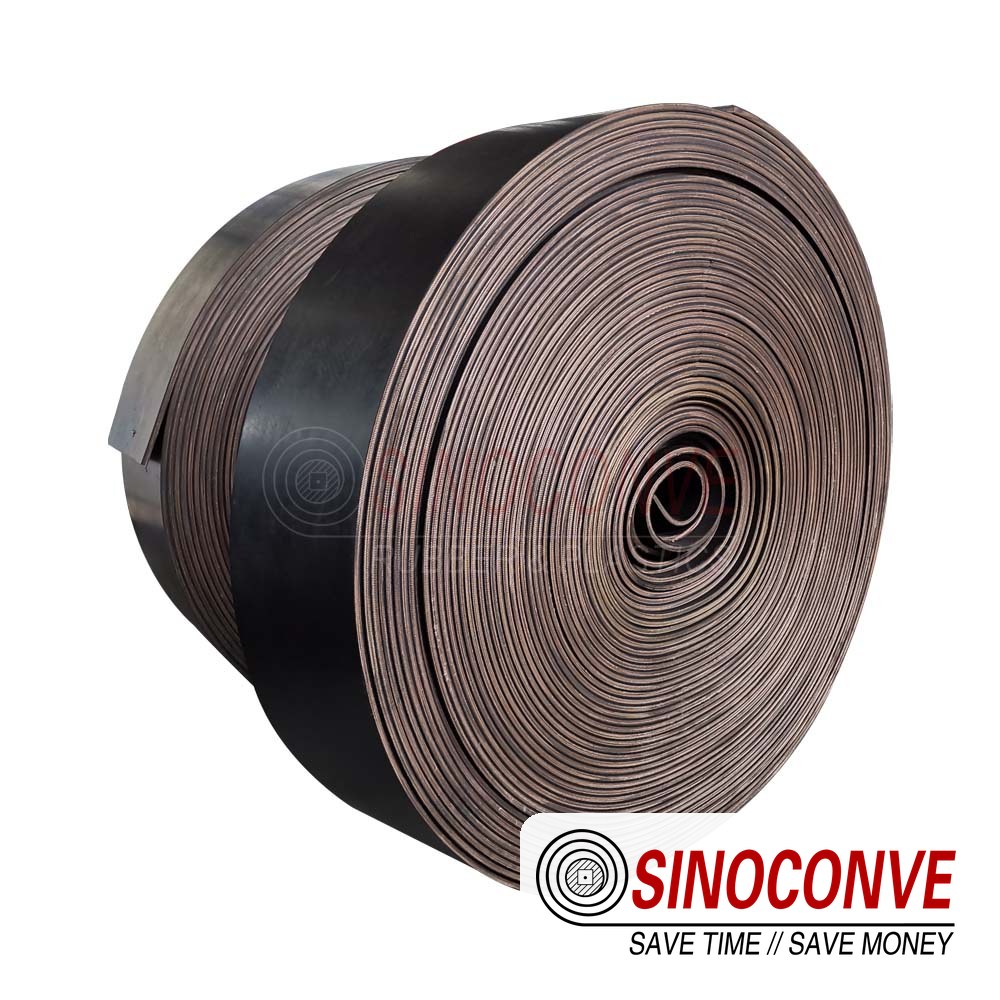
Use the conveyor design calculation for the carcass decision. The useful fields are working tension, take-up, pulley sizes, impact zone and the proposed splice. EP fabric is a familiar choice on many shorter bulk lines; long, high-tension runs may call for steel cord and its low elongation. That reinforcement does not change the force of a bone point dropped onto unsupported belt. Price the chute and support repair alongside any carcass upgrade.
07Hygiene Without Food-Grade Assumptions
Meal destined for feed and pet-food plants brings its own quality requirements. Ask for the final customer and the plant’s zone map. A raw-side cleaning tool or drain that reaches finished loadout can contaminate product after cooking.
Take the access covers off during the survey. The return and the space behind the skirt must be reachable. Note the cleaner’s concentration, temperature and contact time, and trace the wash runoff. If a buyer needs a particular contact-material declaration, request it by name. Independently, check the cover against heated animal fat.
08Inclines, Cleats and Transfer Points
Watch the incline close enough to distinguish the moving belt from the cake. Cake tumbling back on a moving surface calls for a material-handling change. Bring a genuinely wet sample to the profile trial. Measure angle, bed depth and the return clearance before a taller cleat is ordered.
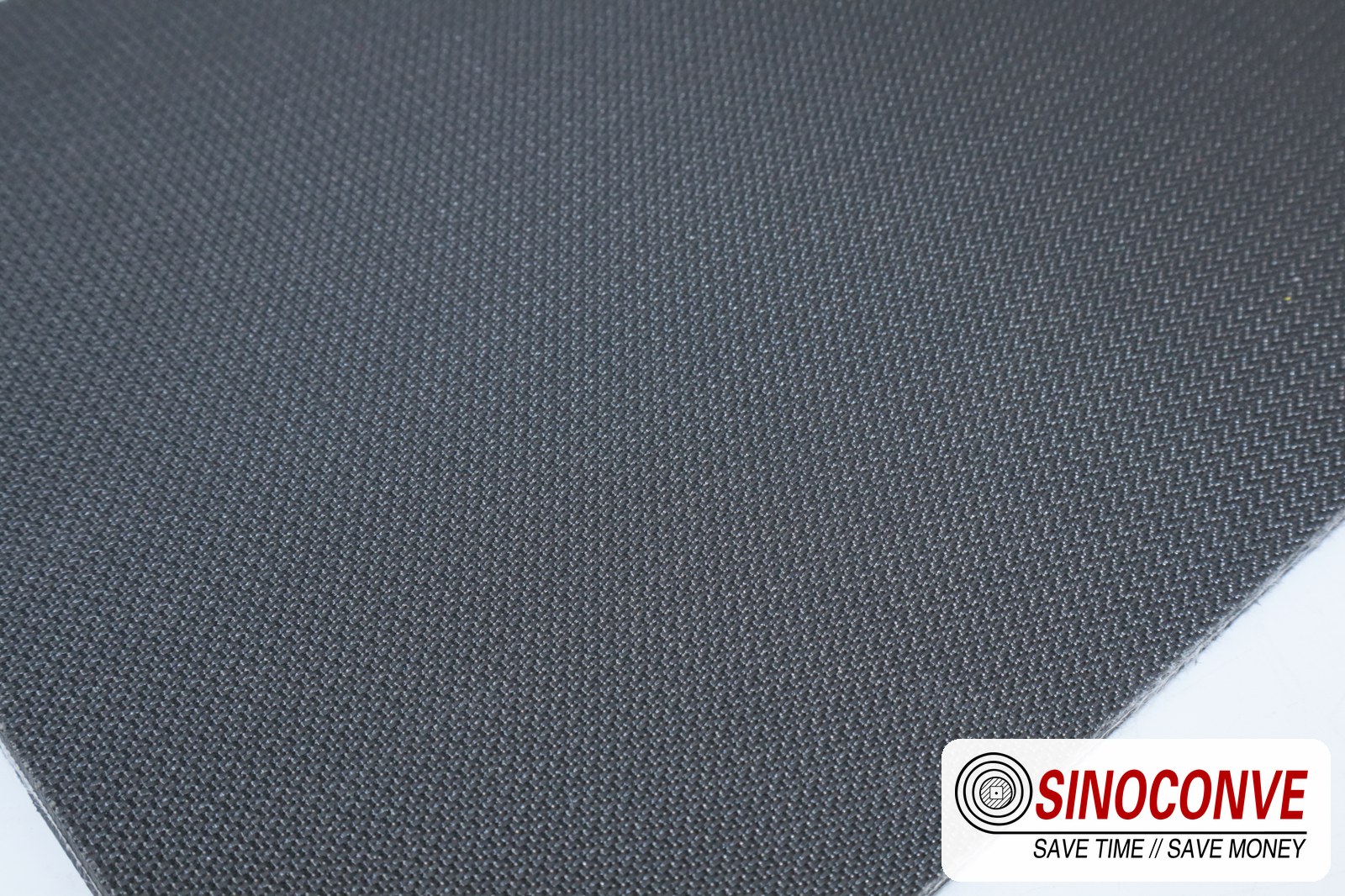
Put sample cake on the proposed chevron or straight-cleat profile and see what remains after discharge and cleaning. Rib pitch and cleat height control both hold and retention. At the chute, a straightedge across the support shows whether the belt dips below the impact zone. Open the skirt to find the bone chips that will otherwise score it.
09Cleaning, Drainage and Odour Control
Lift out large pieces before wet cleaning. The plant’s sanitation programme sets the cleaner and dwell; the belt and splice instructions set material limits. Shield a damaged edge from a direct pressure jet. A rinse that collects in the return tray has to be drained before restart.
A smell returning within a day suggests a place the brush, blade and spray never reached. Take off the skirt cover or return-roller guard and inspect those recesses. Alter the access or cleaning route once the pocket is found. Check, too, that raw-side drainage cannot reach the cooled meal.
10Tracking a Belt Under an Uneven Load
Note the belt’s behaviour at an empty bin, during full discharge and as the load runs down. A drift tied to load is evidence about feed position. At the stop, clean the return rollers and inspect pulleys and take-up. If the fault appears late in a shift, check the hot machine rather than relying only on a cold alignment reading.
After cleaning a coated roller, test again under load. A lateral kick every belt revolution points toward a joint or local edge fault. Do not turn a guide into a permanent rubbing surface just to make the empty run look straight.
11Acceptance Checks Before a Rendering Line Restarts
Photograph the chute and both edges before loading. Isolate the conveyor for the manual roller and skirt checks. On the empty run, follow the splice through the head, cleaner and return. Mark the exact thickness-gauge positions on a drawing so the next inspector can repeat them.

| Check before first load | Record at handover | Stop and correct if |
|---|---|---|
| Splice and cleaner passage | Joint method, alignment and photographs | A raised edge strikes the blade |
| Edges and cover | Construction, width and baseline condition | Reinforcement is exposed or the edge rubs |
| Skirts and loading | Gap, support and feed position | Seal traps hard fragments or feed lands off centre |
| Cleaning and drainage | Blade contact and drain route | Fat or wash water pools on the return |
| Empty and loaded trial | Tracking and roller condition | Belt wanders or a roller binds |
File the supplied grade and test sheet beside the splice record, pulley dimensions and first-run photographs. Schedule the first return visit on that record. It will be the reference when a wear line appears.
12Frequently Asked Questions
What makes a rendering belt different from any other heavy-duty belt?
Bone impact at receiving and a film of hot fat after pressing are separate cover duties, even where the belt widths happen to match.
Can we use a food-grade belt on the rendering line to keep purchasing simple?
Check the destination’s material rules, then the candidate belt’s hot-fat exposure data. “Food grade” is too broad a purchasing description for a press discharge.
How do we know when the cover has reached its heat limit?
Compare the temperature log with the maker’s continuous and peak ratings. Inspect a cooled sample for dimension change, cracking and bond loss, using a retained piece for hardness comparison.
Why does fat still appear on the return side when the scraper is new?
Look across the carry surface just after the blade. A stripe left at one side may match a low-contact patch on the blade and build-up on the first return roller. Check travel on the tensioner before changing the blade type.
Do we need a metal detector if the plant only processes its own material?
Metal can come from hooks, pins, wires and maintenance work on site. Set magnetic separation, detection and rejection according to the plant’s hazard assessment, then test the reject mechanism as well as the detector.
Is a mechanical fastener acceptable on these belts?
It depends on belt construction, operating tension, pulley sizes, cleaner arrangement and the fastener’s corrosion exposure. Ask the belt and fastener makers for an approved joint and inspect it under the site schedule. Do not assume every mechanical joint is temporary or every hot splice is suitable.
When should the belt be inspected, and how often after that?
Keep installation photographs and measurements at marked locations. Check the first run. Subsequent intervals can then reflect the cover loss actually measured, with an extra check after a wash or feed change.
Chevron or straight cleats for wet rendering material?
Check the incline and sample the material at the moisture and fat level seen in service. Trial the profile for carry capacity, cleanout and return clearance; neither pattern is automatically the right one for every wet load.
Related Products You May Need
For a hot oily stage, ask about a rubber conveyor belt with documented combined heat and fat resistance. An EP fabric conveyor belt may suit a shorter run when its tension and impact design check out. A heat resistant conveyor belt needs explicit oil compatibility; a chevron conveyor belt or cleated profile needs a cleanout trial on the incline.
Related Blog Posts
The rendering line’s adjacent decisions are covered in our guides to conveyor carryback, cleaning methods, heat resistant belt grades and EP belt tracking. Use the relevant one after the duty at this specific machine is clear.