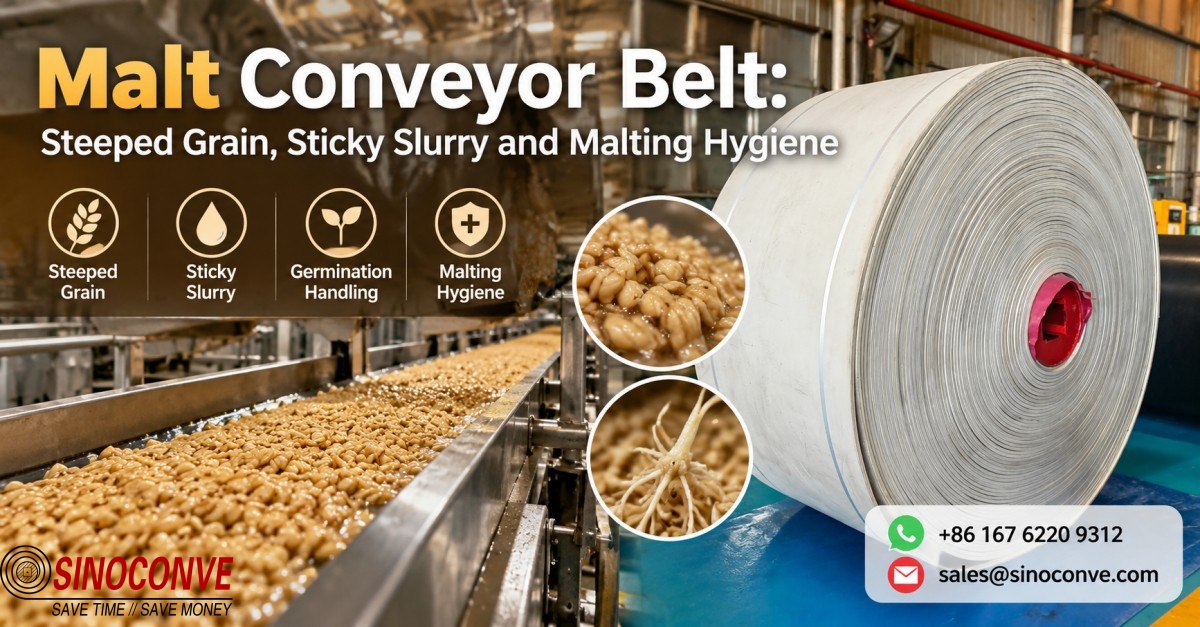
Malt Conveyor Belt: Steeped Grain, Sticky Slurry and Malting Hygiene
A malt conveyor belt handles a load that is alive when it arrives and dead by the time it leaves. Steeped barley carries surface water and sugar, germinating grain throws rootlets that wrap around anything rotating, and kilned malt arrives hot, dry and dusty within a few metres of the same frame. This guide follows the malting sequence, because the belt requirements change at every step. It covers water and adhesion from steeping to germination, the kiln section where heat and moisture shorten cover life, the debris that collects on idlers and return rollers, and the difference between carryback that a scraper removes and residue that only a washdown removes. A separate section defines where this page stops and the downstream filling and packaging line begins, with a link to that guide. Later sections cover hygiene design, surface choice, gentle handling of the kernel, tracking of light loads, transfers and silo dust, and the checks to settle before a season starts.

Wood Panel Conveyor Belt: MDF, Particleboard and Plywood Line Duty
A wood panel conveyor belt spends its life downstream of the heat, and that single fact separates it from the belts used in a log yard. The board leaving a hot press is warm, slightly tacky and dimensionally unstable, and it cools as it travels, so the belt sees a load whose temperature and grip change along the run. This guide follows that path from forming and pre-press through the press exit, cooling, sanding, trimming and stacking. It explains why resin and glue carryback is a different problem from ordinary dust, why sanding fines can be both an abrasive and an ignition concern, and how board width changes and short centres make tracking harder than on a long bulk conveyor. A dedicated section sets the boundary against portable sawmill equipment, so the two pages do not compete for the same searches. The closing sections cover cover selection, splice behaviour under repeated heat cycles, and the acceptance checks worth agreeing before a panel line restarts.

Biomass Conveyor Belt: Wood Pellets, Chips, Dust and Heat
A biomass conveyor belt is asked to move fuel that is never quite the same twice: pellets arrive dry and fragile, chips arrive wet and heavy, straw arrives light and stringy, and all three carry fines that settle on the frame and the return side. This guide starts with moisture, because moisture decides whether the load slides, sticks or freezes into a lump on the cover. It then separates pellets, chips and straw as three duty profiles, and explains why a cover that survives chips can still fail on pellets through impact and fracture rather than abrasion. Dust is handled twice: as an ignition and housekeeping question the belt can only influence, and as a carryback question the belt design does control. Later sections cover ash and sand contamination, cover and structure selection for fuel yards and boiler feed, incline angles at the silo, discharge and impact support, cleaning and the dust it creates, tracking on long runs, and the acceptance checks to settle before installation.
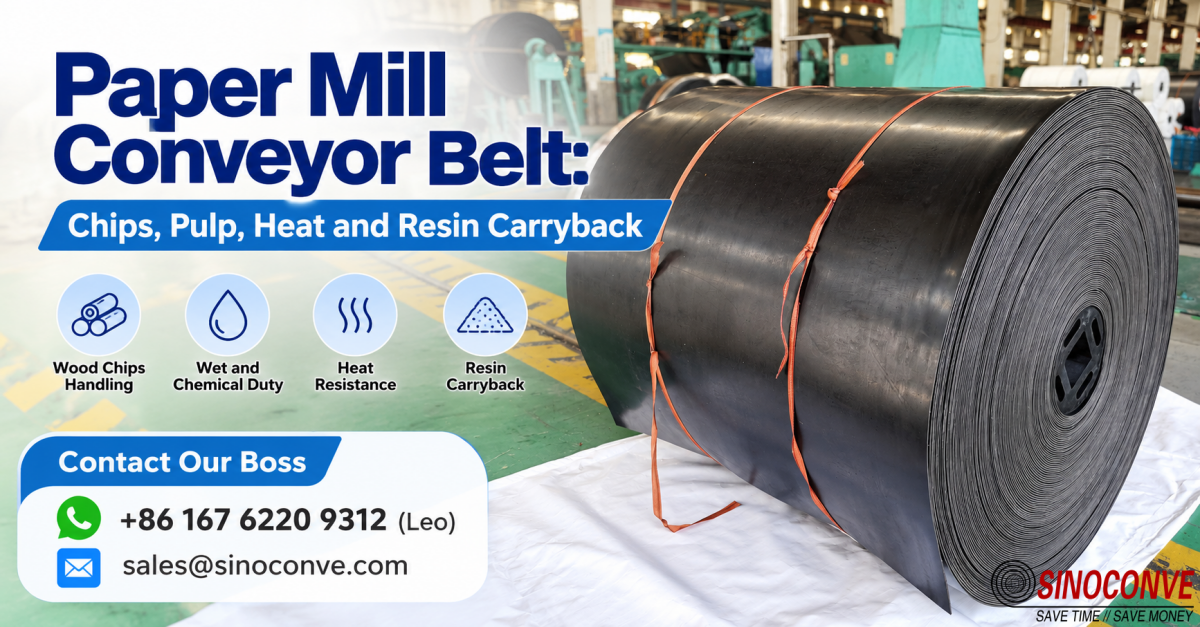
Paper Mill Conveyor Belt: Chips, Pulp, Heat and Resin Carryback
A paper mill asks one belt to do three jobs at once: carry a wet, sticky load, live in steam heat, and hold a splice together over a run long enough that nobody wants to walk it. Each is an ordinary conveying problem on its own. Together, on one belt in one building, the usual answers stop working. This guide follows five streams from the log yard to the finished reel, then takes each failure in turn: wet chips and bark that load and stick, pulp and sludge that carry chemical exposure, steam that shortens cover life, resin and pitch that ordinary scrapers cannot clear, and long high-tension runs where the splice is the weak point. Later sections cover tracking on elevated structures, cleaning systems that survive the environment, grade selection by stream, and what to settle inside a shutdown window before the line restarts.
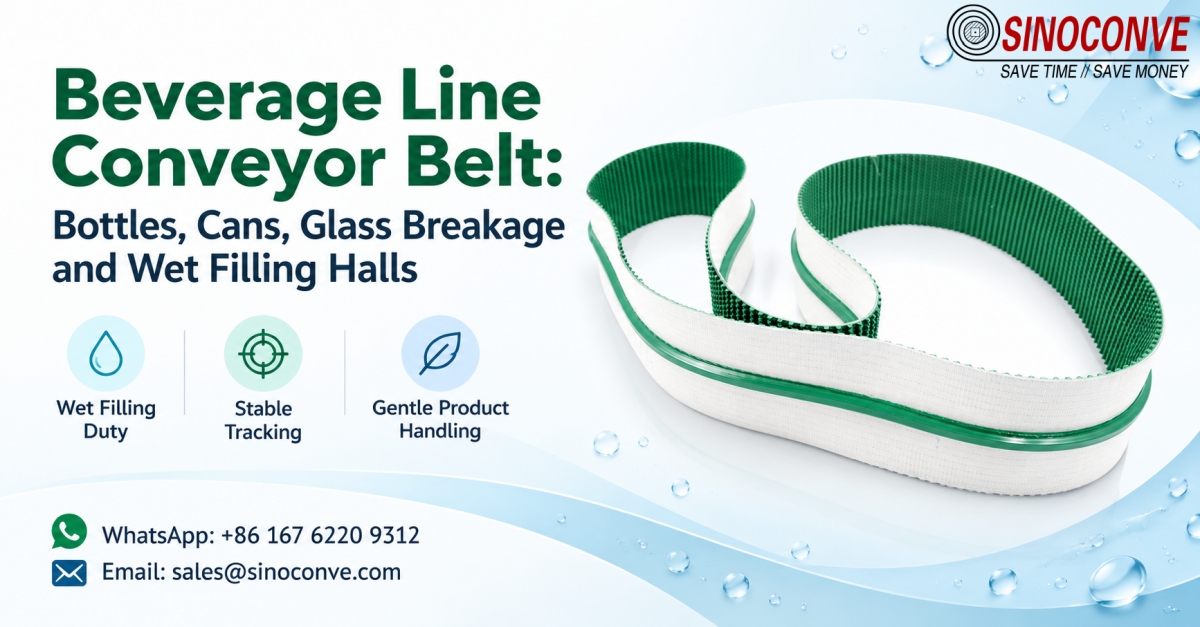
Beverage Line Conveyor Belt: Bottles, Cans, Glass Breakage and Wet Filling Halls
A beverage line punishes a belt in a way bulk conveying never does. The container is light, rigid and top-heavy once filled, and it touches the cover across a small patch of its base, so the belt is less about carrying load than about keeping an unstable object moving in a straight line through accumulation, transfer and changeover. This guide works through the four conditions that decide the answer: line speed and accumulation pressure, the different damage risks of glass, PET and aluminium, water and sugar syrup on the cover, and the cleaning window between products. It covers surface structure for bottle stability, guide rails and transfer plates, friction and noise at speed, tracking on long narrow runs, and why rubber is usually the wrong answer here. It closes with acceptance checks and a spares strategy for a plant running several lines on one site.
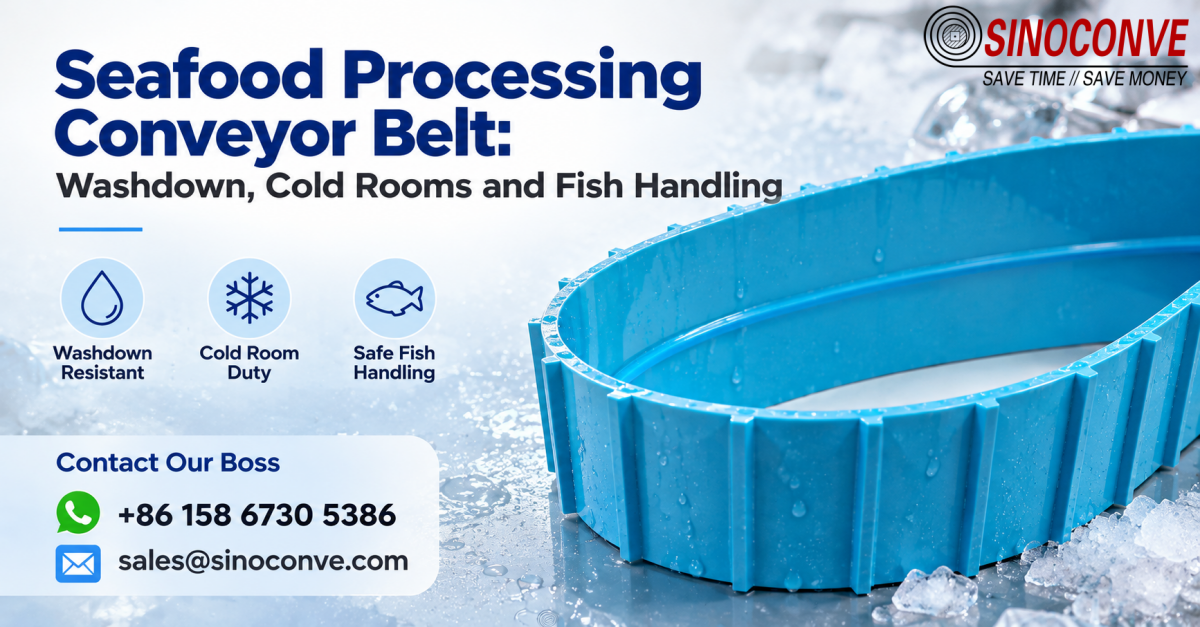
Seafood Processing Conveyor Belt: Washdown, Cold Rooms and Fish Handling
A seafood processing conveyor belt is judged on four conditions that arrive at the same time: brine, cleaning chemistry, cold air, and hard fragments of bone or shell. Any one of them is manageable on its own. Together they change which cover, which carcass and which edge design survive a shift. This guide starts at the receiving table and works through gutting, filleting, grading and packing, then into the freezer tunnel. It explains what chlorine and foam do to a cover at the cut edge rather than on the face, why a fine fish bone opens a cut that a knife does not, and how a cold room changes belt hardness enough to alter the minimum pulley diameter you can use. Later sections compare PVC, PU and rubber under wet-salt duty, set out when a dimpled or perforated surface helps drainage and when it only traps product, cover transfer points, tracking on a wet frame, and close with the documents and on-site trials to ask for before a belt enters a seafood hall.