Engineered belt solutions for demanding industries worldwide

Blog

Blog

Home/Blog
Recent Posts
Open Hinge Conveyor Belt: Abrasion Resistance, Sanitation and Selection

Open Hinge Conveyor Belt: Abrasion Resistance, Sanitation and Selection

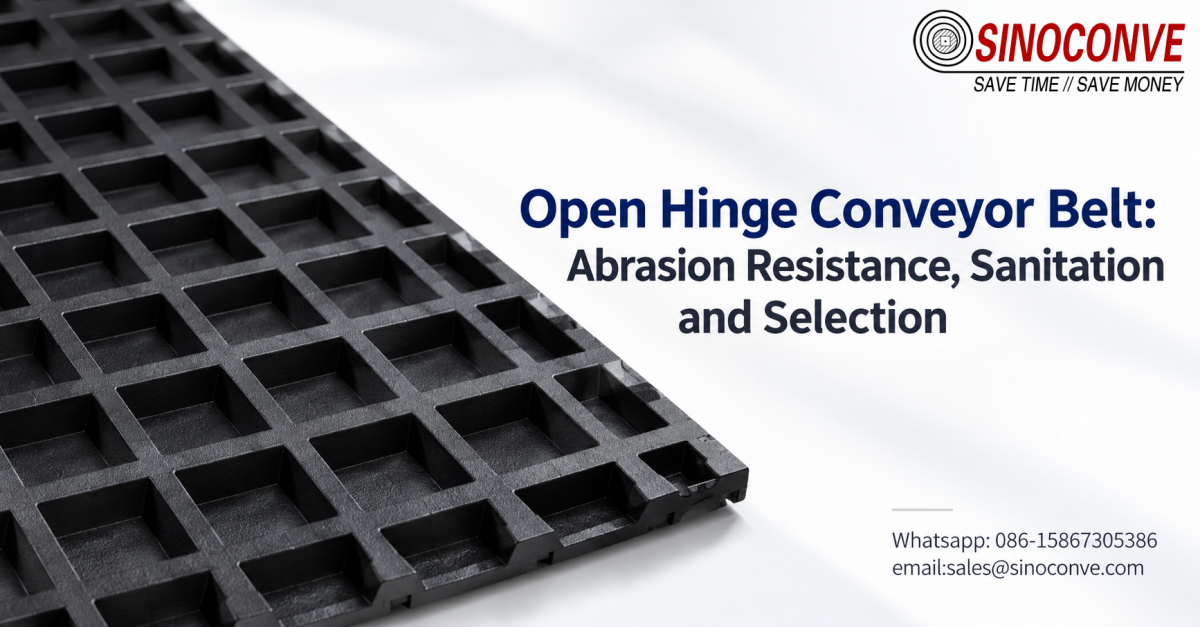
An open hinge conveyor belt is a modular belt whose crosswise hinge joints are deliberately left open, with through-holes and a slotted pin bore in place of the sealed joint line used on a straight-running belt. That single geometric decision changes three things at once: how abrasive fines leave the belt, how wash water passes through it, and how the hinge pin carries load and how fast it wears. This guide stays on that structure layer, comparing open and closed hinge geometry, explaining why open gaps shed fines instead of grinding them, setting out the four inputs that control pin wear life, weighing the sanitation trade-off that open drains well but is not self-cleaning, and comparing PP, POM, PE and stainless pin materials. It finishes with the duties that rule an open hinge out and the fields to pin down on a request sheet before you order.

Dairy Conveyor Belt: Hygiene, Washdown and Belt Selection

Dairy Conveyor Belt: Hygiene, Washdown and Belt Selection

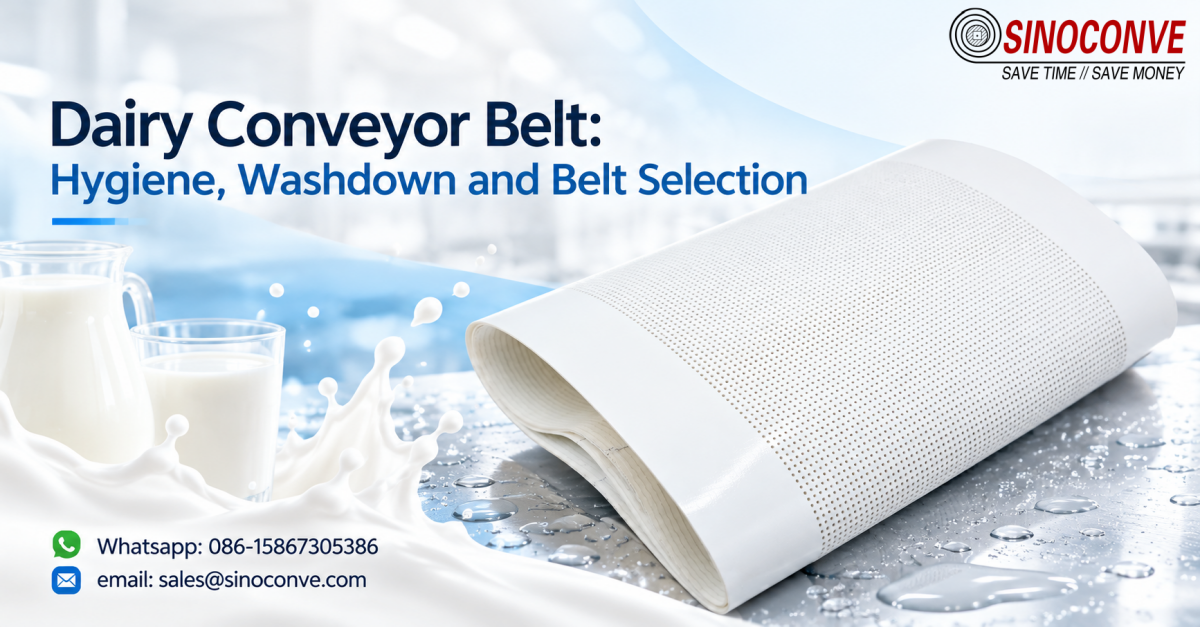
A dairy conveyor belt has to do two jobs that pull against each other: it must be a food-contact surface clean enough to pass a swab test, and it must keep running through caustic CIP, cold-room condensation and clinging milk powder without stretching, cracking or shedding material. This guide walks the line stage by stage, from raw milk receiving and clarification through fermentation and whey drainage, pre-fill buffering, filling and sealing, cold store and dispatch, to the milk powder and whey powder rooms, and names the selection constraint each stage imposes. It explains what dairy CIP chemistry does to a belt, why milk stone and biofilm set the real failure clock, how the joint and the edge decide cleanability, how PU, PVC, polyolefin and silicone compare on hydrolysis, acid and temperature, and it closes with the procurement and acceptance checklist our engineers sign against before a dairy belt leaves the plant.

Steel Cord Conveyor Belt Price: Cost Structure and Project Budgeting

Steel Cord Conveyor Belt Price: Cost Structure and Project Budgeting

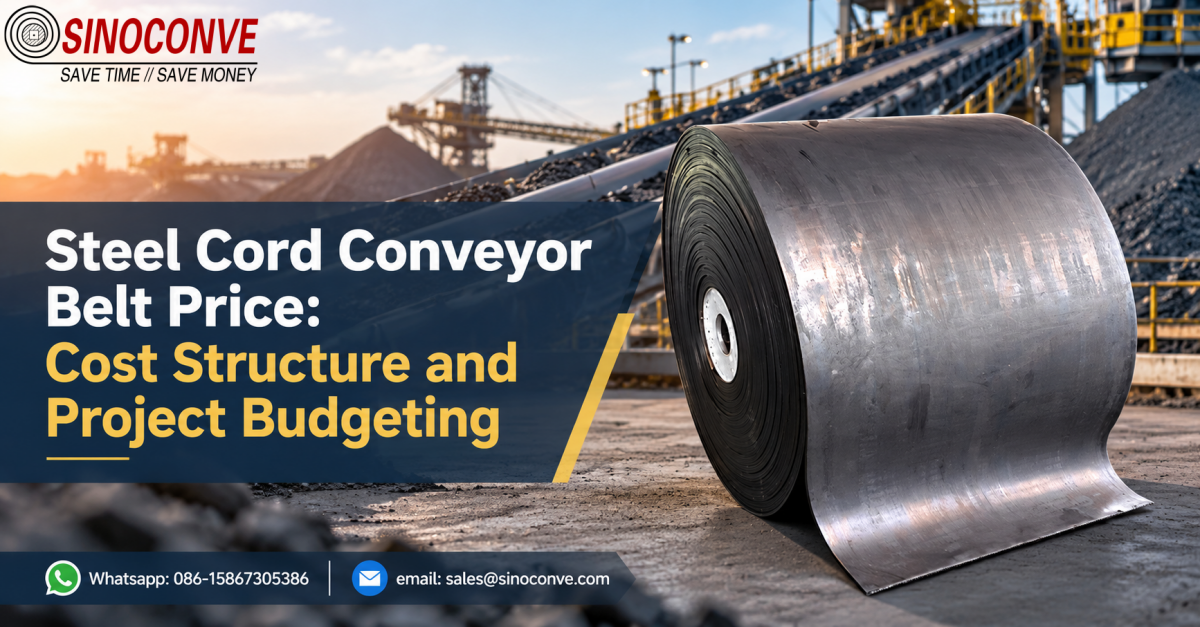
A steel cord conveyor belt price is not a rate per meter but a structure. This guide sets out the four things that have to be fixed before anyone can quote honestly: the ST grade that sets cord strength and belt mass, the cover compound and its two cover thicknesses, the splice method, and the boundaries of the project the belt will run inside. It explains how the steel cord carcass drives the cost baseline, why belt weight travels into freight and lifting, and why a steel cord splice is heavier work than a fabric joint. It then moves the accounting boundary outward, so the drive, the take-up, the roller grade and the shutdown window all sit inside the project budget rather than outside it, and it closes with the enquiry fields that move a quotation and the misjudgements that quietly waste a steel cord budget.

Vertical Conveyor Belt: Types, Selection and Buyer Checklist

Vertical Conveyor Belt: Types, Selection and Buyer Checklist

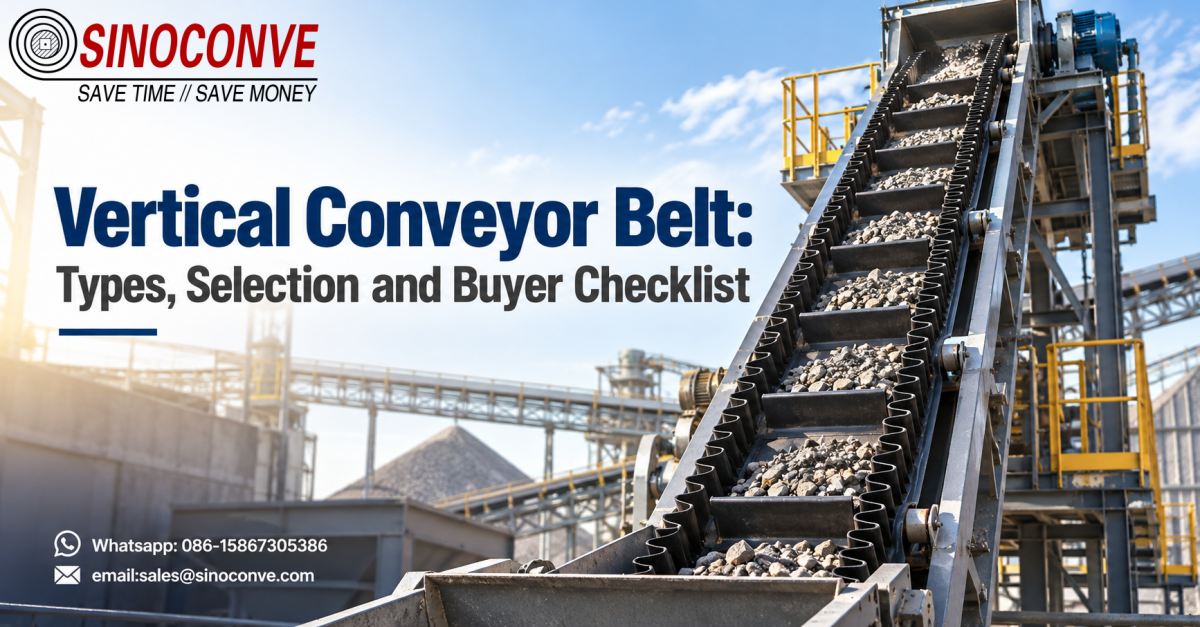
Vertical conveying is not one machine, and choosing the belt before the type is the most expensive mistake on a steep route. This guide compares the belt-based options, including corrugated sidewall belts with crossbars, sandwich gripping belts, pocket and bucket-belt hybrids, high-angle patterned belts and Z-shape layouts, and weighs each against bucket elevators, vertical screws, pneumatic lines and chain buckets. It sets out the duty facts that narrow the shortlist, a selection matrix that maps each duty factor to the type that usually wins, the failure modes that only appear on a vertical run, the capacity and power factors that move the needle, and the documents and on-site checks a buyer should hold at acceptance.

Conveyor Belts for Chemical and Fertilizer Plants

Conveyor Belts for Chemical and Fertilizer Plants

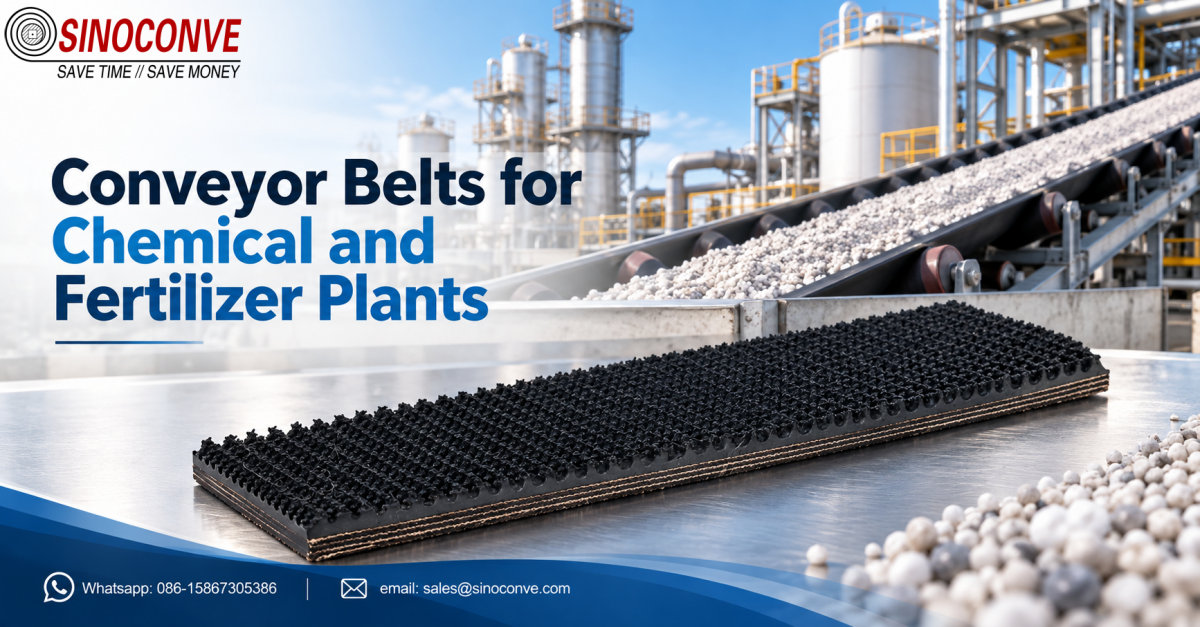
Chemical and fertilizer plants rarely run on a single belt, because the material changes from damp and lumpy at intake to hot and sticky at the granulator and dry and dusty at the bagger. This guide takes the whole route zone by zone, sets out the physical and chemical constraints each stage imposes, and explains how acids, alkalis, salts and oxidising nitrates attack cover, carcass and splice. It then pairs belt grades with the idlers, cleaning methods, enclosures and splice types that belong with them, covers heat, static and flame requirements in classified areas, and finishes with the procurement documents, acceptance checks and change-management steps that turn a good belt choice into a reliable line.

V Belt Size and Cross Reference: 8VX, XXH, PK and More

V Belt Size and Cross Reference: 8VX, XXH, PK and More

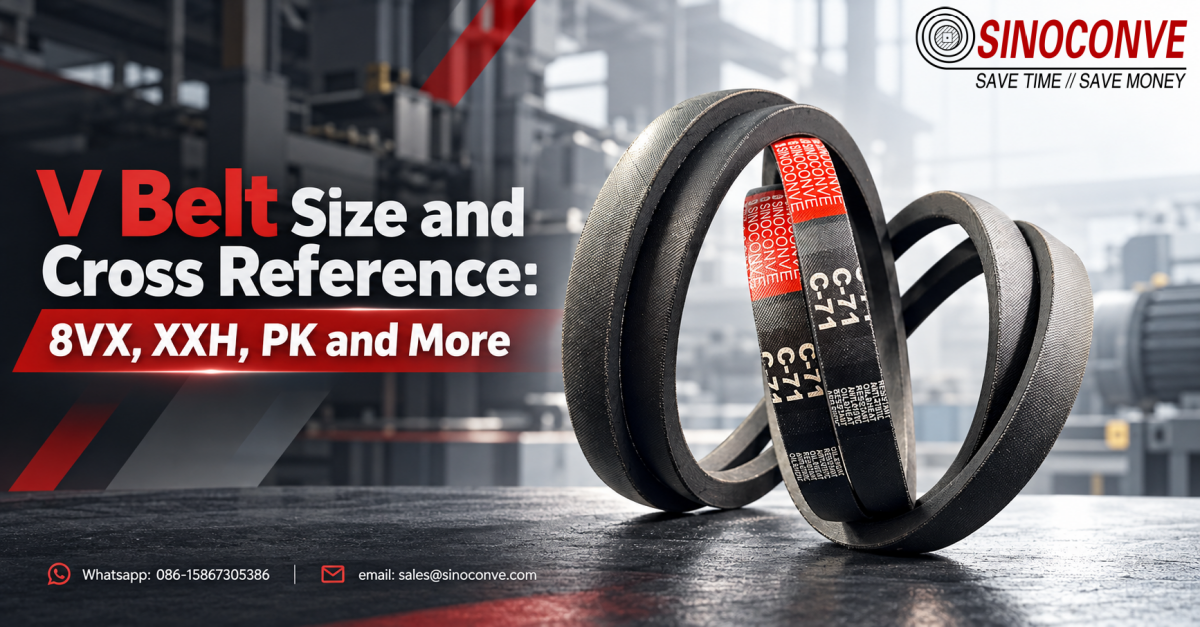
A V belt size is a two-part code: a section symbol that fixes the cross-section and a length figure that fixes the run around the pulleys. This guide explains how to read the classic A to E sections, the narrow 3V, 5V and 8V profiles with their cogged 8VX variants, the metric SPZ to SPC order and the multi-rib PK family, then shows how the length figure is read and why effective length and outside length are never the same number. It covers measuring a belt whose markings have worn away, the four facts to match when cross-referencing between brands, the substitution traps that quietly fail on the second shift, and the exact fields to send for a quote that fits the first time.


Open Hinge Conveyor Belt: Abrasion Resistance, Sanitation and Selection

Open Hinge Conveyor Belt: Abrasion Resistance, Sanitation and Selection

An open hinge conveyor belt is a modular belt whose crosswise hinge joints are deliberately left open, with through-holes and a slotted pin bore in place of the sealed joint line used on a straight-running belt. That single geometric decision changes three things at once: how abrasive fines leave the belt, how wash water passes through it, and how the hinge pin carries load and how fast it wears. This guide stays on that structure layer, comparing open and closed hinge geometry, explaining why open gaps shed fines instead of grinding them, setting out the four inputs that control pin wear life, weighing the sanitation trade-off that open drains well but is not self-cleaning, and comparing PP, POM, PE and stainless pin materials. It finishes with the duties that rule an open hinge out and the fields to pin down on a request sheet before you order.

Dairy Conveyor Belt: Hygiene, Washdown and Belt Selection

Dairy Conveyor Belt: Hygiene, Washdown and Belt Selection

A dairy conveyor belt has to do two jobs that pull against each other: it must be a food-contact surface clean enough to pass a swab test, and it must keep running through caustic CIP, cold-room condensation and clinging milk powder without stretching, cracking or shedding material. This guide walks the line stage by stage, from raw milk receiving and clarification through fermentation and whey drainage, pre-fill buffering, filling and sealing, cold store and dispatch, to the milk powder and whey powder rooms, and names the selection constraint each stage imposes. It explains what dairy CIP chemistry does to a belt, why milk stone and biofilm set the real failure clock, how the joint and the edge decide cleanability, how PU, PVC, polyolefin and silicone compare on hydrolysis, acid and temperature, and it closes with the procurement and acceptance checklist our engineers sign against before a dairy belt leaves the plant.

Steel Cord Conveyor Belt Price: Cost Structure and Project Budgeting

Steel Cord Conveyor Belt Price: Cost Structure and Project Budgeting

A steel cord conveyor belt price is not a rate per meter but a structure. This guide sets out the four things that have to be fixed before anyone can quote honestly: the ST grade that sets cord strength and belt mass, the cover compound and its two cover thicknesses, the splice method, and the boundaries of the project the belt will run inside. It explains how the steel cord carcass drives the cost baseline, why belt weight travels into freight and lifting, and why a steel cord splice is heavier work than a fabric joint. It then moves the accounting boundary outward, so the drive, the take-up, the roller grade and the shutdown window all sit inside the project budget rather than outside it, and it closes with the enquiry fields that move a quotation and the misjudgements that quietly waste a steel cord budget.

Vertical Conveyor Belt: Types, Selection and Buyer Checklist

Vertical Conveyor Belt: Types, Selection and Buyer Checklist

Vertical conveying is not one machine, and choosing the belt before the type is the most expensive mistake on a steep route. This guide compares the belt-based options, including corrugated sidewall belts with crossbars, sandwich gripping belts, pocket and bucket-belt hybrids, high-angle patterned belts and Z-shape layouts, and weighs each against bucket elevators, vertical screws, pneumatic lines and chain buckets. It sets out the duty facts that narrow the shortlist, a selection matrix that maps each duty factor to the type that usually wins, the failure modes that only appear on a vertical run, the capacity and power factors that move the needle, and the documents and on-site checks a buyer should hold at acceptance.

Conveyor Belts for Chemical and Fertilizer Plants

Conveyor Belts for Chemical and Fertilizer Plants

Chemical and fertilizer plants rarely run on a single belt, because the material changes from damp and lumpy at intake to hot and sticky at the granulator and dry and dusty at the bagger. This guide takes the whole route zone by zone, sets out the physical and chemical constraints each stage imposes, and explains how acids, alkalis, salts and oxidising nitrates attack cover, carcass and splice. It then pairs belt grades with the idlers, cleaning methods, enclosures and splice types that belong with them, covers heat, static and flame requirements in classified areas, and finishes with the procurement documents, acceptance checks and change-management steps that turn a good belt choice into a reliable line.

V Belt Size and Cross Reference: 8VX, XXH, PK and More

V Belt Size and Cross Reference: 8VX, XXH, PK and More

A V belt size is a two-part code: a section symbol that fixes the cross-section and a length figure that fixes the run around the pulleys. This guide explains how to read the classic A to E sections, the narrow 3V, 5V and 8V profiles with their cogged 8VX variants, the metric SPZ to SPC order and the multi-rib PK family, then shows how the length figure is read and why effective length and outside length are never the same number. It covers measuring a belt whose markings have worn away, the four facts to match when cross-referencing between brands, the substitution traps that quietly fail on the second shift, and the exact fields to send for a quote that fits the first time.
Explore more

We are committed to providing you with better products and services. Welcome to browse more content for details