
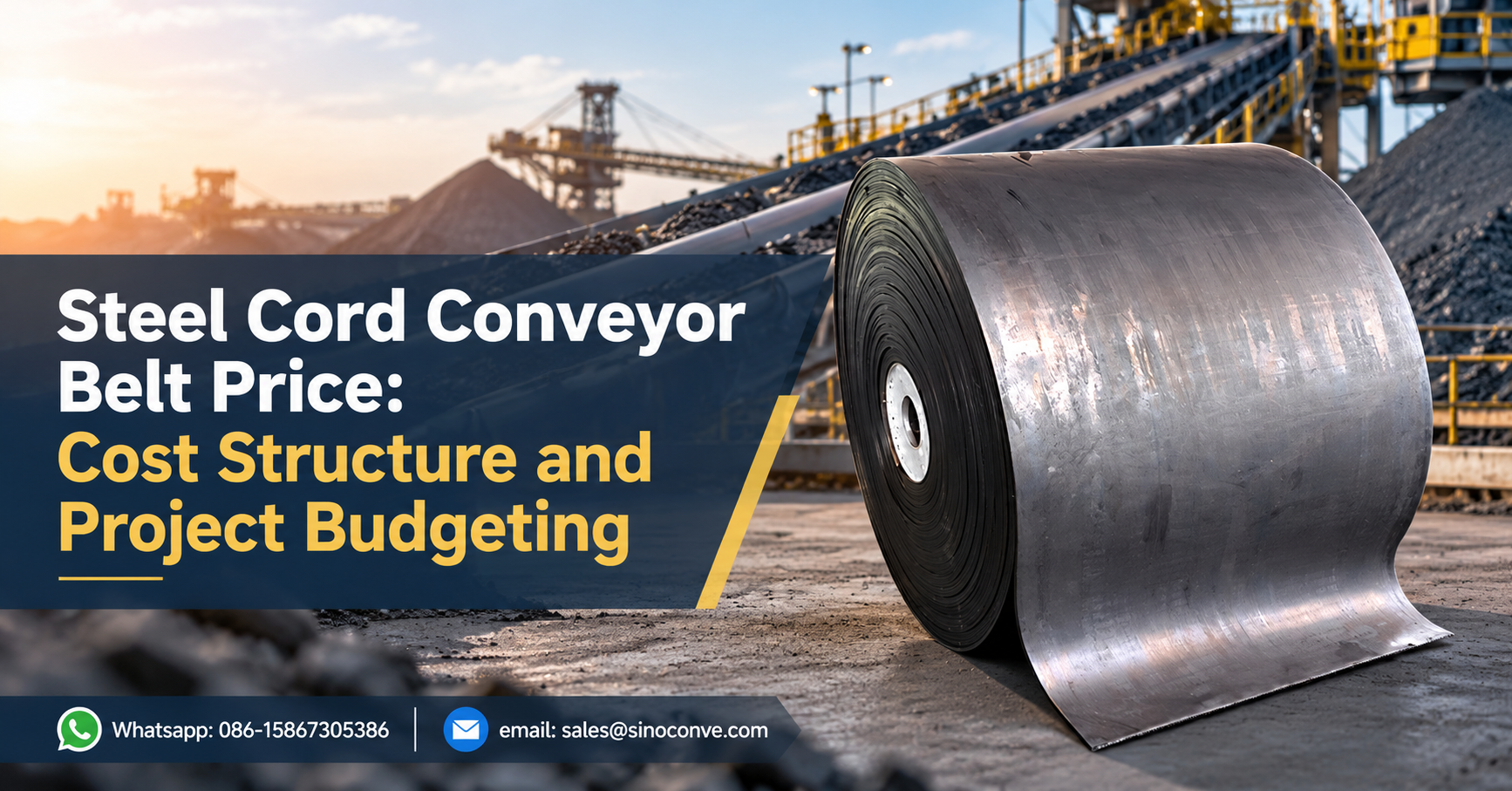
Ask three suppliers for the price of a steel cord conveyor belt and you will receive three numbers that refuse to sit next to each other, because a steel cord belt is not a catalogue item with a price stapled to its edge. Its cost is locked by a structure that has to be settled before anyone can quote honestly: the ST grade, the cover compound and its thickness, the splice method, and the boundaries of the project the belt will run inside. Until those four are fixed, a price per meter is a figure without a denominator.
This page is deliberately narrower than our general pricing notes. We build belts in Ningbo, and we sit inside steel cord projects where the belt is one line item in a very large budget, usually the line item that gets argued over longest. What follows covers how a steel cord belt is actually costed, why belt weight and splice work dominate here in a way they never do on a fabric belt, and how to budget a real project without publishing a figure that will be wrong before the ink dries. The broad price structure and a full three-year total cost model live in a separate article, and we point to it further down.

01The "Price per Meter" Trap on Steel Cord Belts
Two quotations can carry the same width, the same length and the same cover thickness and still describe belts that will not last the same number of years. One is a 1,200 mm ST1600 with a 6 mm abrasion-resistant cover and a vulcanized splice. The other is the same width at a lower ST grade, a thinner cover, and a bolted joint. On a two-kilometre overland line, the second belt will not reach its second summer, and yet its meter price was the lower of the two.
The meter was never the difference. The specification behind the meter was. That single confusion explains why no serious conveyor belt supplier quotes a steel cord belt from a width and a length alone, and why we push every enquiry back to the four decisions below.
Why a Steel Cord Belt Has No List Price
A fabric belt of a fixed width and ply count is close to a commodity. A catalogue number exists, a section table exists, and a rough price can be quoted from memory because the variables are few. A steel cord belt refuses that treatment. Its carcass is a longitudinal bed of steel cords, and each cord is a bundle of high-carbon wires twisted once or twice around a core, all held inside a layer of core rubber.
Cord count, cord diameter and cord pitch all shift as the ST grade climbs. So the belt that lands on site changes in mass, in stiffness and in cost while the width and the meter length stay identical on paper. We once compared two 1,400 mm belts, both drawn as ST2000, and measured a 3.4 kg per meter spread between them because one maker used a tighter cord pitch to reach the same rating. On a 2,600 meter flight that spread becomes tonnes of steel and rubber that nobody priced.
What Has to Be Fixed Before Anyone Can Quote
Four decisions come first, and each one moves the number on its own. The ST grade sets cord strength and belt mass. The cover compound and the two cover thicknesses set abrasion, heat or flame behaviour. The splice method decides whether the belt ships as an open length to be joined on site or as an endless loop. The project boundary decides everything the belt must fit, from pulley diameters and the troughing angle at the loading point to the ambient temperature the belt will live in.
Fix those four and the price becomes comparable. Skip one and you are comparing fiction.
As a conveyor belt manufacturer working from drawings rather than from a warehouse shelf, we would rather answer those four questions before we release a figure. The figure is a consequence of the specification, not an input to it.
02How the Steel Cord Carcass Sets the Cost Baseline
Every steel cord belt is a sandwich, and the cost lives in the filling. Rubber is the cheap part; the steel and the work that keeps the steel bonded are where the budget concentrates. Understand the cross-section and the shape of the price stops being mysterious.
The Cord Inside the Belt
Open a section and you find cords lying parallel along the belt, never woven. Each cord is built from fine high-carbon wires: a central wire, a layer twisted around it, and on heavier cords a second layer over the first. Twist direction and layer count change how the cord behaves under fatigue, and they change what the cord costs to make. Diameter is the other lever. A thicker cord carries more load but adds more steel per meter, and steel is far denser than the rubber around it.
Between and around the cords sits core rubber, formulated to grip the wires without cracking as the belt flexes over pulleys. Adhesion is invisible in a delivery photo and decisive at a splice. A belt that bonds well in the factory but poorly at the joint will fail at the joint, and on any industrial conveyor belt running a high-tension steel cord line, the joint is where the margin is thinnest.
Where the Money Sits in the Cross-Section
The table below maps the cross-section rather than listing prices. Read it as an order of magnitude, because the middle rows move the total far less than the top row does.
| Cost element inside the belt cross-section | What it is on a steel cord belt | How it behaves across a project |
|---|---|---|
| The steel cord carcass at the belt core | Longitudinal cords of twisted high-carbon wire set inside core rubber | Usually the largest single element, and it tracks the ST grade almost one for one |
| The adhesion layer that bonds the cords | Rubber that ties the cords to the surrounding core compound | Thin and cheap to add, but expensive to get wrong once a splice fails |
| The top cover facing the moving material | The abrasion or heat compound that carries the moving load | Grows with the damage class you specify rather than with the belt width |
| The bottom cover running against the pulleys | The pulley-side compound, usually thinner than the carrying cover | Small in cost, but large in effect on pulley grip and heat build-up |
| The edge construction guarding the outer cords | The vertical edge that shields the outermost cords from damage | Rarely a large line item, always the first place a misaligned belt gives up |
| The finished mass and its handling needs | The weight per meter and what it takes to move and lift the roll | A cost that leaves the belt price and comes back through freight and lifting |
Notice what the table leaves out: no separate line for width. Width scales the whole section, so it multiplies the elements already there instead of creating a new one. A quote that names only width and length has therefore told you very little.
03What an ST Grade Really Costs Inside the Belt
ST630, ST1000, ST1600, ST2500, ST4000. The digits after the letters are the nominal breaking strength of the carcass in newtons per millimetre of belt width, and this number is the most powerful lever on cost. Buyers treat it as a strength checkbox. It is better understood as a mass switch.
Reading ST630 to ST5400 as a Cost Ladder
Climb the grade ladder and two things happen together. Cord diameter grows, or cord pitch tightens, or both, so the belt gains strength and weight at the same time. A belt rated twice as strong is not twice as heavy, but it is meaningfully heavier, and every extra kilogram per meter is paid for once at the factory, again in transport, and a third time by the structure that carries the belt through its working life.
Grade also decides what the line can do. A higher ST grade lifts the same tonnage over a longer single flight or a steeper incline, which removes transfer points, and every transfer point removed is one less rubber conveyor belt wear zone and one less housekeeping problem. That is the real return on a higher grade: not a stronger belt for its own sake, but fewer places for the material to escape and fewer points to maintain.
One caution. Grade is often copied from a tender document that is years old. If the duty has changed since, the correct grade may already be different, and quoting the old one to keep the comparison tidy locks in the wrong mass, the wrong drive load and the wrong splice design all at once.
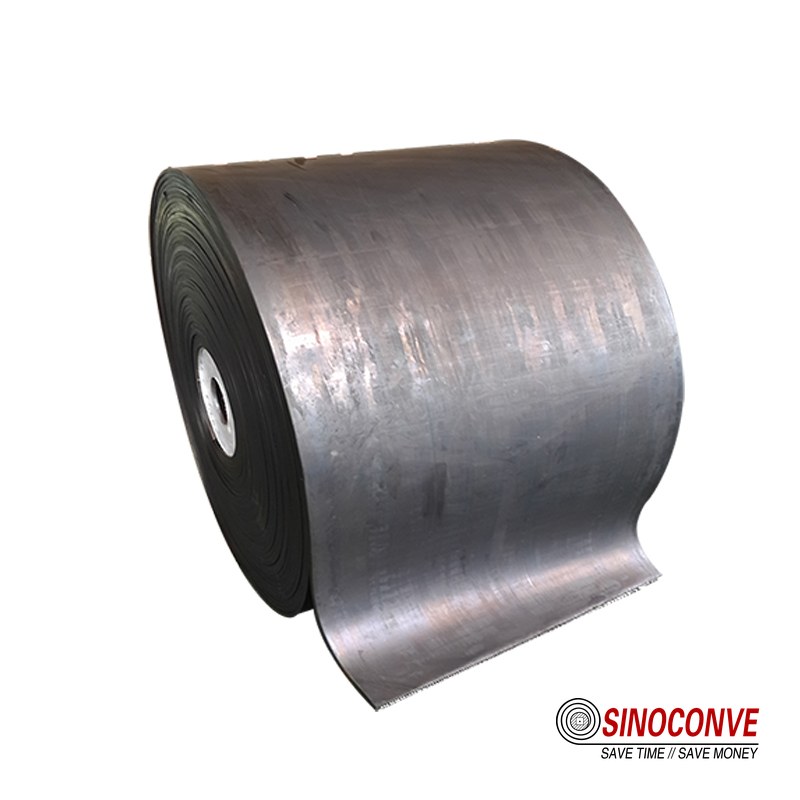
A steel cord belt carries its strength longitudinally, in cords rather than in woven plies.
04Cover Grade and Cover Thickness on a Steel Cord Belt
The cover is the part buyers stare at longest, and the part they most often reduce to a number. Thickness alone says almost nothing. A 6 mm top cover of the wrong compound can wear out sooner than a 4 mm cover of the right one, and on a steel cord belt the cover is a rated part with its own performance standard, not a rubber skin added for looks.
Why the Cover Is a Rated Part, Not a Thickness
Cover compounds are graded by what they resist, and the grading is measurable. Abrasion resistance is commonly stated as a volume loss in cubic millimetres under DIN 53516, with figures near 90 mm³ for premium wear grades, around 150 mm³ for standard heavy-duty, and 250 mm³ or higher for light duty. Heat grades are usually tied to the peak surface temperature the belt can survive, and flame grades to standard fire tests under a named regime. Grade I and Grade II abrasion classes under RMA practice, and the DIN 22102 cover classes, both describe the same idea in different words.
Thickness then does its own job. The top cover is a wear allowance: it is the millimetres you are willing to lose before the carcass is exposed. The bottom cover is a grip and heat surface at the pulleys, and it is almost always thinner, often by design. A buyer who demands a thick top cover but ignores the bottom cover has protected the belt where material hits it and left it thin where the drive pulls it.
Thickness with the wrong compound buys years of rubber and none of the wear resistance you paid for.
05Belt Weight and the Freight You Did Not Budget For
Belt mass is the cost that escapes the quotation entirely and reappears on the logistics invoice. On a fabric belt, mass is a footnote. On a steel cord belt, mass is a design output that travels with the order from the factory floor to the dock to the unloading yard.
What Belt Mass Does to a Purchase
Weight per meter decides four things at once. It sets the load the conveyor structure must carry and the inertia the drive must start. It fixes the size of the roll and therefore the equipment needed to lift and unroll it. It sets the freight class and, on long leads, the container plan. And it feeds back into the tension the belt itself must survive, because a heavier belt at the same grade carries more of its own weight up an incline.
None of this is hidden in a good enquiry. It is simply absent from a bad one, where the buyer lists a width and a length and expects a comparable figure. Two belts of the same width and grade can differ in mass enough to change how the roll moves off the truck, and the roll that nobody planned to lift is where site accidents and damaged belts begin.
Reading Belt Mass the Way a Project Does
Mass bands matter more than an exact kilogram figure at the enquiry stage, because the band tells you what the site has to be capable of. The table below frames the four rough bands we work with, in terms of what each one demands rather than what it costs.
| The belt mass band on a long line | What it means in the yard | What it changes in the budget |
|---|---|---|
| The ST630 to ST1000 lower mass band | Moderate cord density, so most rolls lift on a forklift or small crane | Standard freight and standard lifting, and the roll weight rarely forces special handling |
| The ST1250 to ST2000 working mass band | Heavier cords and heavier covers, and two-point lifting becomes normal | Freight rises with mass, and unloading needs a plan before the truck arrives |
| The ST2500 to ST3500 heavy mass band | High cord count, so a long single roll can pass several tonnes on its own | A crane or side-loader becomes mandatory, and port handling time grows accordingly |
| The ST4000 to ST5400 upper mass band | Very high cord density built for the longest and steepest single flights | Special transport, route limits and engineered lifting points all enter the picture |
A transmission belt manufacturer selling a wrapped V-belt deals with the opposite problem, where the product is light enough to post. Steel cord mass does not work that way, and the logistics line in a steel cord project is a live design constraint, not an afterthought.
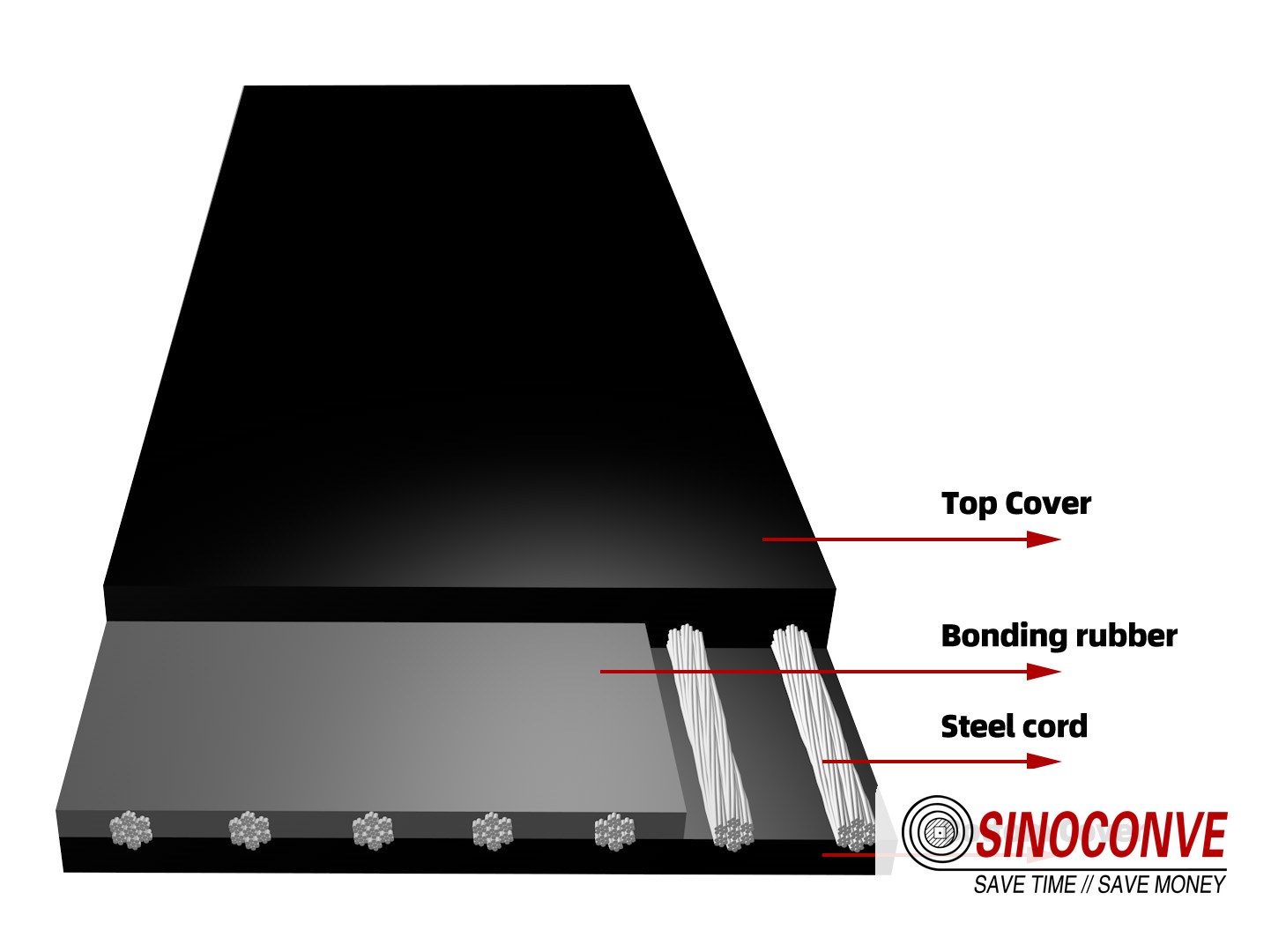
Cord spacing and cover thickness are read together, because mass and wear allowance travel as a pair.
06The Splice Cost That Gets Underestimated
Ask a buyer to describe a steel cord belt order and the splice is usually the last thing mentioned and the first thing that goes over budget. The belt arrives on a roll with a known mass and a known length. The joint is made on site, by people, in weather, inside a window that is almost always too short. That is where a project quietly spends money it never set aside.
Why a Steel Cord Splice Costs More Than a Fabric Splice
A fabric splice is a stepped joint: plies are cut back incrementally, the steps are stacked and cured, and the work is forgiving because the load is spread over many layers of textile. A steel cord splice is a cord-level job. Every cord has to be located, exposed, cut to the correct length and laid so that the cords from the two belt ends interleave at the design pitch, without any cord touching its neighbour where it should not. The rubber between cords is trimmed by hand, the surfaces are prepared in sequence, and the whole arrangement is then cured under pressure in a platen press.
The consequences of getting it wrong are permanent. A splice that is 5 mm off in cord alignment concentrates stress on a few cords, and those cords fail first, which is why a surprising number of steel cord belt failures begin at a joint that looked acceptable on the day it was made. There is also no second chance to hide the error: cutting a bad steel cord splice out and starting again shortens the belt a second time and costs another window.
Why the Joint Is a Project Cost, Not a Belt Accessory
Count what a single steel cord splice consumes: a trained crew, a press sized to the belt, vulcanizing equipment and its power supply, cure time that cannot be shortened much, and the shutdown hours around it. On a multi-flight line those costs multiply by the number of joints, and the joint count is set by roll length and transport limits, which were decided back when nobody was thinking about splices.
Our own experience is blunt on this point. A crew that is fast and a crew that is careful are not the same crew, and on steel cord work the careful one is cheaper over a project even when the day rate says otherwise. Most of the emergency splice repairs we get called to are second visits to a joint that was made under time pressure the first time.
Field note from our engineers: On a 2.4 km coal line in Southeast Asia, the belt was budgeted as belt plus freight, and the splice was treated as a minor line. The line needed six joints, and the joint list pushed the outage plan past the window the plant could accept. The fix was not a different belt. It was re-cutting the roll lengths so one fewer joint was needed, and running two splice crews in parallel while the press was busy. The belt specification never changed; the project plan did, and that is where the money was.
07Project-Level TCO: Where the Real Money Actually Sits
Here is the number most first-time steel cord buyers do not expect. On a long overland or trunk line, the belt itself is a small share of what the project spends to move material for the next decade. The rest is decided by the machines and the plan around the belt, and those decisions are locked in before the belt is ever ordered.
Five Elements a Long Steel Cord Line Magnifies
Each of the five below is ordinary on a short fabric conveyor and expensive on a long steel cord trunk. The reason is always the same: length and tension magnify whatever you got wrong. Drive and variable-frequency control head the list, because a long steel cord line needs gentle starting and precise torque limits to protect both belt and structure. Take-up and its travel come next, since a steel cord belt's elongation profile differs from a fabric belt, and a take-up sized out of fabric-belt habit will run out of stroke in mid-life. Then idler and pulley grade, where every rolling contact works harder under higher tension. Then the shutdown window, then splice rework, and both of those are measured in hours of lost production rather than in belt metres.
| A project cost element on a steel cord line | Why the steel cord line magnifies it | The place where buyers usually under-count |
|---|---|---|
| The drive and its variable-frequency control | A long line needs controlled starting and torque limits to protect the belt | The belt is blamed for symptoms that actually began in the drive sizing |
| The take-up unit and its available travel | Steel cord belts stretch differently, so take-up travel must be engineered for them | Travel is set from habit and runs out of stroke before the belt is half worn |
| The idler and pulley grade you select | Higher belt tension pushes every rolling contact harder than on a fabric line | Rollers and pulleys are bought on price while the belt pays the consequence |
| The shutdown window on a trunk line | A trunk line stops the whole plant, not just the one conveyor being worked on | The cost of stopped hours is treated as a footnote rather than a project cost |
| The cost of reworking a failed splice | A failed steel cord splice means cutting, re-preparing and re-curing the belt ends | Nobody budgets a second splice, so the first one carries all of the risk |
| The spare belt and rotation policy | Long lead times turn a spare belt into a planning decision rather than an emergency | Spares get bought after the first failure instead of before it is needed |
Why "Project" Is the Word That Separates This From a General TCO
A general three-year total cost model counts the belt, the energy to run it, and the maintenance it attracts. That model is correct and it is also the wrong frame for a steel cord trunk line, because it treats the conveyor as a standalone asset. A steel cord project never is one. It is a segment of a plant, a port or a mine plan, and a plant that orders wholesale conveyor belts across several lines is really buying uptime, not rubber.
So we move the accounting boundary outward. The question stops being what the belt costs and becomes what the whole conveying segment costs to own and to keep running for its design life, including the hours it is stopped. That shift is the reason this article exists separately from the general cost guide, and it is the reason the next section is about shutdown windows rather than about cover grades.
08Why a Trunk-Line Shutdown Window Dominates the Budget
A belt change on a short yard conveyor is a morning's work. A belt change on a steel cord trunk line is an event with a start time, a press schedule, a crew roster and a production plan built around it. The belt is the cheap part of that event. The stopped hours are the expensive part, and they are usually the part that was never priced.
What an Hour of Stopped Trunk Line Really Contains
When the trunk belt stops, everything behind it keeps producing for a while and nothing ahead of it receives. Stockpiles fill, downstream bins drain, and a calciner or a ship loader starts its own countdown. On a mine or port, the same hour reaches rail schedules and vessel laytime. None of that appears on a belt order, and all of it is decided by how well the belt and its splices were planned.
The practical lever is not to work faster under pressure. It is to reduce the number of things that must be done inside the window. Longer rolls mean fewer joints, which means fewer press cycles, which means a shorter outage.That trade is a planning decision made months earlier, and it is covered from the maintenance angle in our notes on conveying solutions for mining, where the cost of a stopped trunk line is an everyday argument rather than a theoretical one.
Weather decides the rest. A splice crew works outdoors in whatever the season offers, and a cure that needs a stable platen temperature does not care about the production plan. We have watched a window slip by a full shift because the press shelter was not up before the belt ends were stripped.
09Budgeting Three Real Buying Situations
Steel cord belts reach buyers through three doors, and each door changes what the budget should look like before a figure is ever discussed. The specification work is different, the number of joints is different, and the level of the plant that has to sign off is different.
Replacement on a Live Machine, and a Greenfield Project
The replacement case starts with a worn belt and a tempting shortcut: measure what came off and order the same. Resist it. A belt that has run its life has stretched, worn and flattened, and its dimensions are evidence of what happened to it rather than a specification for what should replace it. Go back to the design intent, confirm the duty and the grade against the current load, and treat the old belt as a cross-check only. One splice is normal here, and a conveyor belt distributor holding local stock can shorten the wait, though stock dimensions rarely match a worn design exactly.
The greenfield case runs through an EPC contractor or a design institute, and the budget question becomes one of interface. The belt maker is one of dozens of suppliers, and the boundary between what the belt figure includes and what the civils and mechanical packages carry must be written down. Does the belt price include the splice, the delivery to site, the unloading, the engineering support on site? Leave that boundary verbal and it will be argued at commissioning. Where the drive train is concerned, a V-belt manufacturer deals with a two-pulley geometry that fits on a bench; a steel cord line spans kilometres, and the interface list is correspondingly longer.
Multi-Flight Lines, Where Joint Count Sets the Total
Add flights and the arithmetic changes character. Each additional flight adds its own belt, its own joints and its own transfer point, and the transfer point is where belts, chutes and rollers all get worked hardest. In this setting the cost question is not the price of any single belt. It is the joint count across the whole line, because joints are where the labor, the press time and the outage hours concentrate.
So the useful budget move is to design the flight lengths around the maximum roll size that can be transported and lifted on site. That single decision can remove joints from the plan before anyone quotes, and it costs nothing to make early and a great deal to make late. Buyers who have run steel cord lines before tend to raise it in the first meeting; buyers on their first steel cord project usually raise it after the rolls have shipped.
10Quote Fields That Move a Steel Cord Belt Price
Two enquiries for the same line can return figures that differ by more than the buyer expects, and the reason is almost never the belt maker's margin. It is the set of fields the buyer chose to describe. Send the full set below and the responses become comparable, because each maker is pricing the same object.
The Fields That Change a Steel Cord Quotation Most
| An enquiry field that changes the quote | What to put in the enquiry | Why it moves the final number |
|---|---|---|
| The ST grade you design the belt to | The design grade, plus the class named in the tender document | Grade sets cord strength, belt mass and the largest single cost element |
| The cord pitch and the cord diameter | Spacing and cord diameter if your engineer has already fixed them | A tighter pitch reaches a rating with more mass and more cost behind it |
| The finished width and the full length | Finished width and full centre-to-centre length, in the same units | A length error becomes on-site cutting rather than a rounding difference |
| The cover grade and the cover thickness | Compound, and both the top and bottom cover thickness in millimetres | A thicker abrasion cover is a real increase, not a free upgrade on the quote |
| The splice method and the joint count | Vulcanized or mechanical, and how many joints the whole line needs | Every steel cord splice adds labour, equipment and another shutdown window |
| The roll length and the packing method | Preferred roll length and the packing that suits how you will unload | Longer rolls cut joint count but change freight and on-site lifting |
| The delivery point and unloading conditions | Port, site or inland yard, and the handling equipment available there | Handling conditions decide packing and can change the transport mode entirely |
| The inspection scope and the documents | Mill certificates, dimensional checks and any staged inspection you require | Inspection agreed up front is far cheaper than rework after the belt arrives |
A conveyor belt supplier cannot quote a comparable steel cord figure from width and length alone, and the reason is in the table above: eight fields decide the object, and a short enquiry answers only three of them. When we quote from our own conveyor belt factory, the enquiries that come back wrong are almost always missing the splice count, the cover thickness split, or the unloading conditions.
11Four Ways Projects Waste Money on Steel Cord Belts
None of these four is exotic. Each one is the default behaviour of a busy buyer, and each one moves real money out of a steel cord budget without ever showing up as a line item. Watch for them in your own enquiry before you blame a quote.
Four Misjudgements We See Repeatedly
First, comparing meter price while ignoring the splice and the freight. The two costs that were excluded from the comparison are the two most likely to exceed the difference the buyer was chasing.Second, applying fabric-belt thinking to a steel cord line, so that pulley diameters, take-up travel and troughing geometry are inherited from the smaller belt and quietly overload the heavier one. Third, ignoring roll weight against the site's real lifting capacity, which turns a modest saving on roll length into a crane hire and a damaged belt edge. Fourth, treating inspection and documentation as optional and adding them after the belt is built, when the stage inspections that would have caught a problem have already been missed.
There is a common root to all four. Each one optimises the belt in isolation and ignores the project around it, and the project around a steel cord belt is where most of the cost lives.
Field note from our engineers: A quarry bought two ST1250 belts on meter price and saved something on paper. The rolls arrived too heavy for the site's own telehandler, so a crane was hired twice, once to unload and once to move the belt to the incline. Then both splices had to be redone because the first crew was not equipped for steel cord work. The belt was fine both times. The savings lived in the belt line of the spreadsheet and were spent several lines lower, in places the buyer had not opened.
12How This Article Differs From Our General Cost Guide
We publish a separate, longer piece called conveyor belt cost, and it does a job this page does not attempt. That article covers the generic price drivers that apply to conveyor belts in general, walks through a full three-year total cost of ownership model with its formula, and lists the quote fields that matter when you are comparing bids on an ordinary fabric belt. If your belt is an EP or NN belt in a plant, that guide is the right starting point, and it is deliberately general because that is what a broad audience needs.
This page is the narrow slice that the general guide cannot hold. It assumes the belt is a steel cord belt, and it stays with the cost factors that only appear once steel cords are in the carcass: the cord specification and its link to the ST grade, the belt mass and its effect on freight and lifting, and the splice work that is far heavier on steel cords than on fabric. It also moves the accounting boundary out to the project, so the drive, the take-up, the roller grade and the shutdown window are all inside the budget rather than outside it. Where the two overlap, the general guide owns the topic and this page links back to it; where steel cords change the answer, this page owns it.
If your next question is which belt to specify rather than what it costs, the specification side is handled in steel cord conveyor belt buyers specifying, and the choice between the two carcass families is weighed in fabric vs steel cord conveyor belt. For the product side, the steel cord conveyor belt range shows the constructions we build, and heavier duty selection is discussed in our heavy duty selection guide. Splice economics are unpacked in the conveyor belt splicing guide, and roller and pulley loading in the conveyor roller guide.
Bring us the duty, the grade and the flight lengths, and we will cost the belt and the joints together rather than the belt alone. That is the only comparison that survives contact with a real shutdown window, and it is the one we would rather have with you before the order is placed.
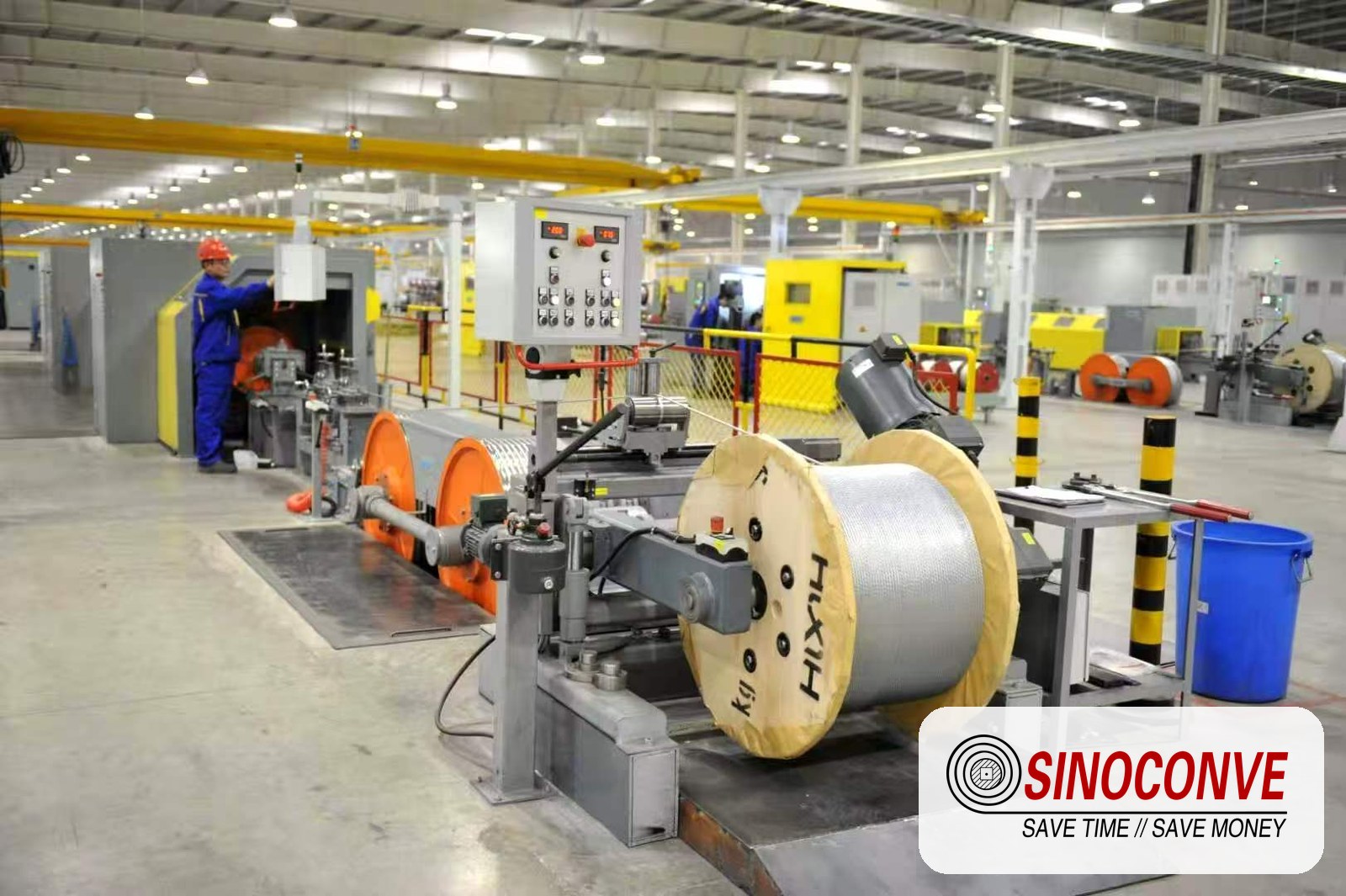
Heavy rolls, graded covers and site-ready splices are planned together, not ordered separately.

13Frequently Asked Questions
How is a steel cord conveyor belt priced?
It is priced from a structure rather than from a rate per meter. The ST grade fixes the carcass and its mass, the cover grade and thickness fix the wear allowance, the splice method fixes the on-site work, and the project boundary fixes the length, the joints and the delivery. Change any one of those and the figure moves. That is why we ask for the whole structure before we quote, and why a number sent against a width and a length is only a placeholder.
Why is a steel cord belt more expensive than a fabric belt?
The carcass carries the cost. A steel cord belt is built around longitudinal cords of twisted high-carbon wire held in core rubber, and steel costs more and weighs more than the woven textile plies of a fabric belt. The splice adds to the difference as well, because a cord-level joint takes longer and needs more equipment than a stepped fabric joint.
What is an ST grade, and does it change the price?
ST stands for steel cord, and the number after it is the nominal breaking strength of the carcass in newtons per millimetre of belt width. Raising the grade raises the cord strength, and with it the belt mass, so the price follows. Higher grades also allow longer single flights or steeper inclines, which can remove transfer points and pay for part of the increase somewhere else in the project.
How much of the project cost is the belt itself?
On a long trunk line, usually a small share, which is why we move the budget boundary outward to include the drive, the take-up, the roller grade and the shutdown window.
Is the splice included in the belt price?
Often it is not, and that is worth confirming in writing before you compare bids. Whether splicing is quoted separately, whether the belt ships endless, and whether the crew travels with the belt all change the total, and none of it is visible in a meter rate.
How do I compare two steel cord belt quotes?
Put both against the same eight fields first: grade, cord pitch, width and length, cover grade and thickness, splice method and count, roll length and packing, delivery point, and inspection requirements. If a field is missing from one quote, the two numbers are not describing the same belt. Then compare the total that the project will actually pay, and keep the belt figure and the splice and freight figures separate. A lower belt line next to a higher project total is a common result and an easy one to miss.
Does belt weight affect freight cost?
Yes, and on long overseas routes it affects it materially. Mass also decides the roll size, which decides the lifting equipment, so a heavier belt reaches into the budget twice, once on the freight invoice and once in the machinery needed to handle it on site.
Can I get a price from belt width and length alone?
Only a placeholder. Width and length describe an area of rubber, not a steel cord belt, so any figure built on them alone will have to be revised once the grade, the covers and the splice are known.
14Related Products You May Need
- Steel cord conveyor belts — ST-grade carcasses with graded covers, built to the flight and tension the project demands.
- Rubber conveyor belts — EP and NN fabric grades for the shorter flights and transfer lines around a steel cord trunk.
- Conveyor rollers and idlers — the rolling contacts that carry the belt and set part of the running cost.
- The full product catalog and frequently asked questions about ordering and lead times.
15Related Blog Posts
- Conveyor belt cost — the general price structure and the three-year total cost model this page builds on.
- Steel cord conveyor belt buyers specifying — what to send a maker before you ask for a figure.
- Fabric vs steel cord conveyor belt — when the heavier carcass is the right choice and when it is not.
- Steel cord rubber conveyor belt durability and the heavy duty selection guide.