Engineered belt solutions for demanding industries worldwide

Blog

Blog

Home/Blog
Recent Posts
Side Wall Belt Conveyor: System Design and Buyer Checklist

Side Wall Belt Conveyor: System Design and Buyer Checklist

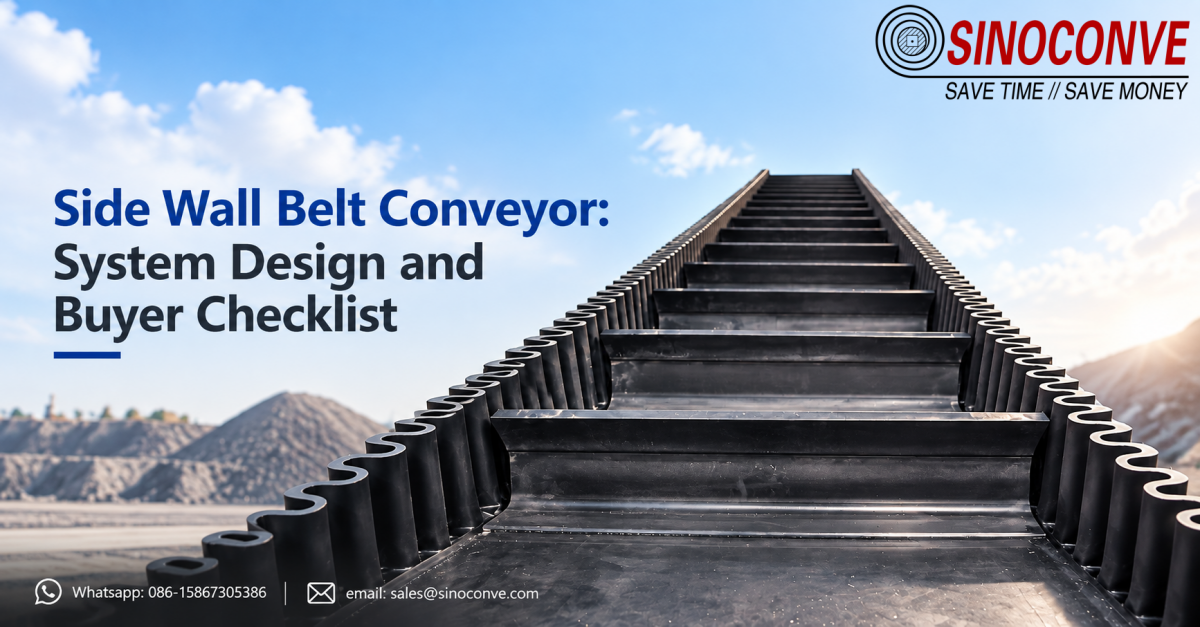
A side wall belt conveyor is a complete machine that uses a belt with corrugated side walls and cross cleats to form a flexible pocket, so material can be carried up a steep incline or almost vertically in one continuous run instead of through several transfer points. This guide works at the system level: how horizontal, inclined and vertical sections are combined, how infeed and discharge are arranged to avoid off centre loads and impact, why the folded return strand and take-up travel need more attention than on a flat belt, why a tall wall reacts strongly to side loads and how tracking is corrected, and how worn wall sections and cleats are replaced. It sets out when a steep unit beats a standard troughed line, what retrofitting one involves, and closes with the documents and site checks to request before you buy.

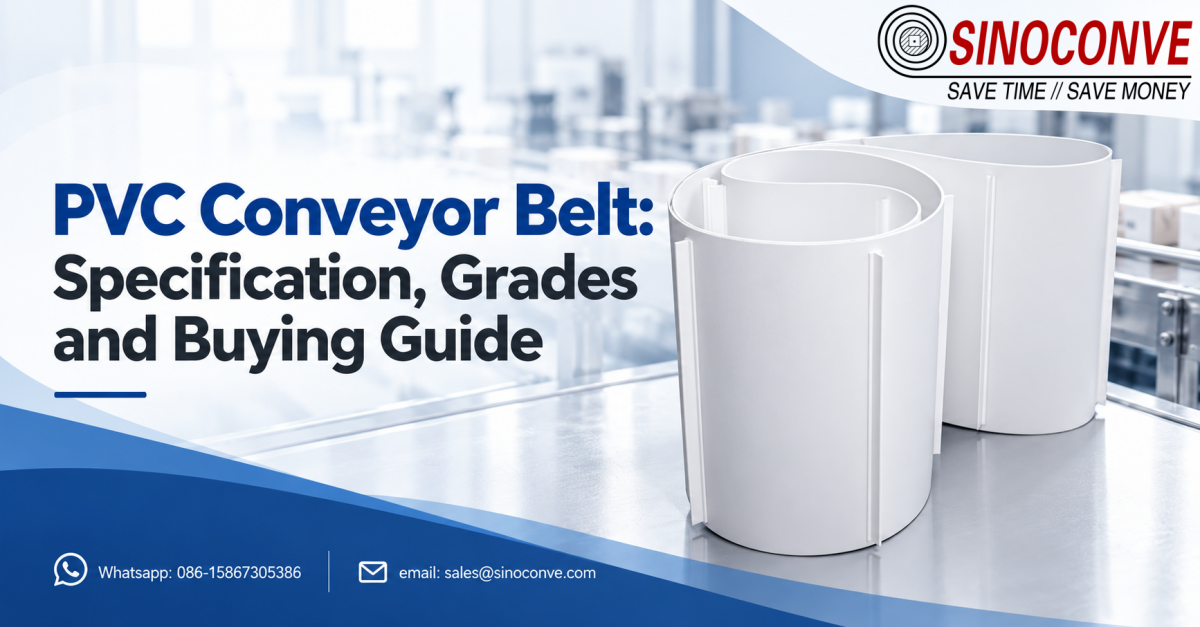
PVC Conveyor Belt: Specification, Grades and Buying Guide

PVC Conveyor Belt: Specification, Grades and Buying Guide

A PVC conveyor belt is a thermoplastic belt built from a woven fabric carcass coated with polyvinyl chloride covers. That construction is why food, packaging and logistics lines run on it: it wipes clean, resists water and mild chemicals, and can be heat-welded into a hygienic joint. This guide covers the specification fields that decide performance, including ply count and fabric type, cover thickness and hardness, total gauge, surface texture, colour coding, width and length tolerances, the minimum pulley rule and temperature limits. It shows how food grade, antistatic, oil resistant and low temperature grades are selected and evidenced, how hot welded, finger and mechanical joints trade strength against hygiene and repair speed, what a comparable enquiry must state, how to read a test report, and how to measure a belt on arrival. It closes with the buying mistakes that cost most later.

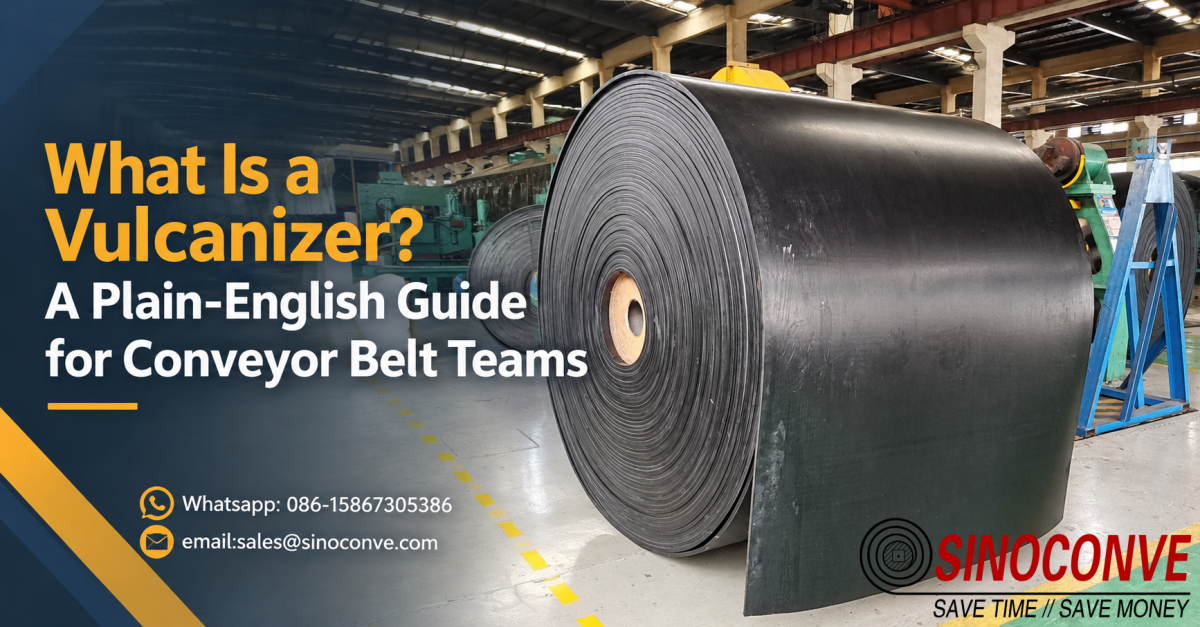
What Is a Vulcanizer? A Plain-English Guide for Conveyor Belt Teams

What Is a Vulcanizer? A Plain-English Guide for Conveyor Belt Teams

A vulcanizer cures rubber with heat and pressure so the compound cross-links into a strong elastic solid. Around conveyors the term almost always means a belt vulcanizing press, the machine that joins two prepared belt ends plus bonding compound into a splice as strong as the carcass. Away from conveying, the same word covers curing ovens, repair units and moulding presses used for roller lagging and abrasion lining. This guide explains what a vulcanizer does, how heating method, frame build and portability split the family into four different machines, which parts and cycle steps decide whether a splice lasts, how vulcanized, mechanical and cold-bond joints compare, where the equipment is used beyond belt splices, and the safety rules such a hot, heavy, clamped machine demands. It ends on the question most sites face: buy a press for your own crew, or buy splicing as a service.

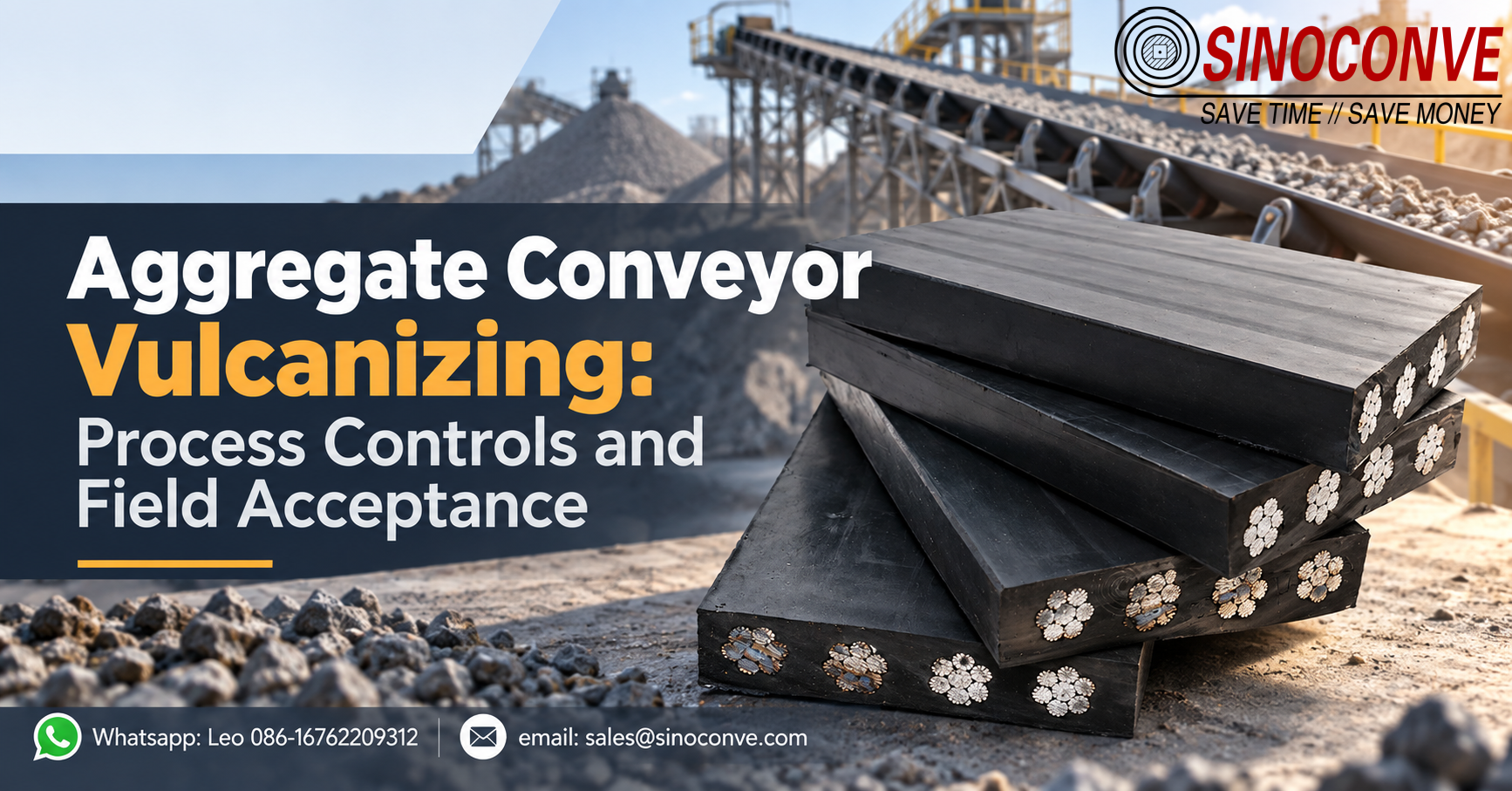
Aggregate Conveyor Vulcanizing: Process Controls and Field Acceptance

Aggregate Conveyor Vulcanizing: Process Controls and Field Acceptance

Aggregate conveyor vulcanizing takes the splice out of the workshop and onto the quarry, where belt thickness, dust, moisture, wind and shifting temperature press on the joint. This guide covers the process controls that decide whether a field cure holds: carcass and ply count on heavy belts, splice geometry, face preparation and contamination control, and the weather window a crew must respect. It explains why aggregate conveyor vulcanizing can take longer than a workshop splice, whether a steel-cord joint can be cured on site at all, how many joints one crew can complete inside a shutdown, and when to stop the whole plant versus one section. Field acceptance, load-out rules, temperature and humidity limits, cure verification without a cut sample, fastener use as a stop-gap, and stocking of splice material are all treated so a quarry can plan around a joint that lasts.

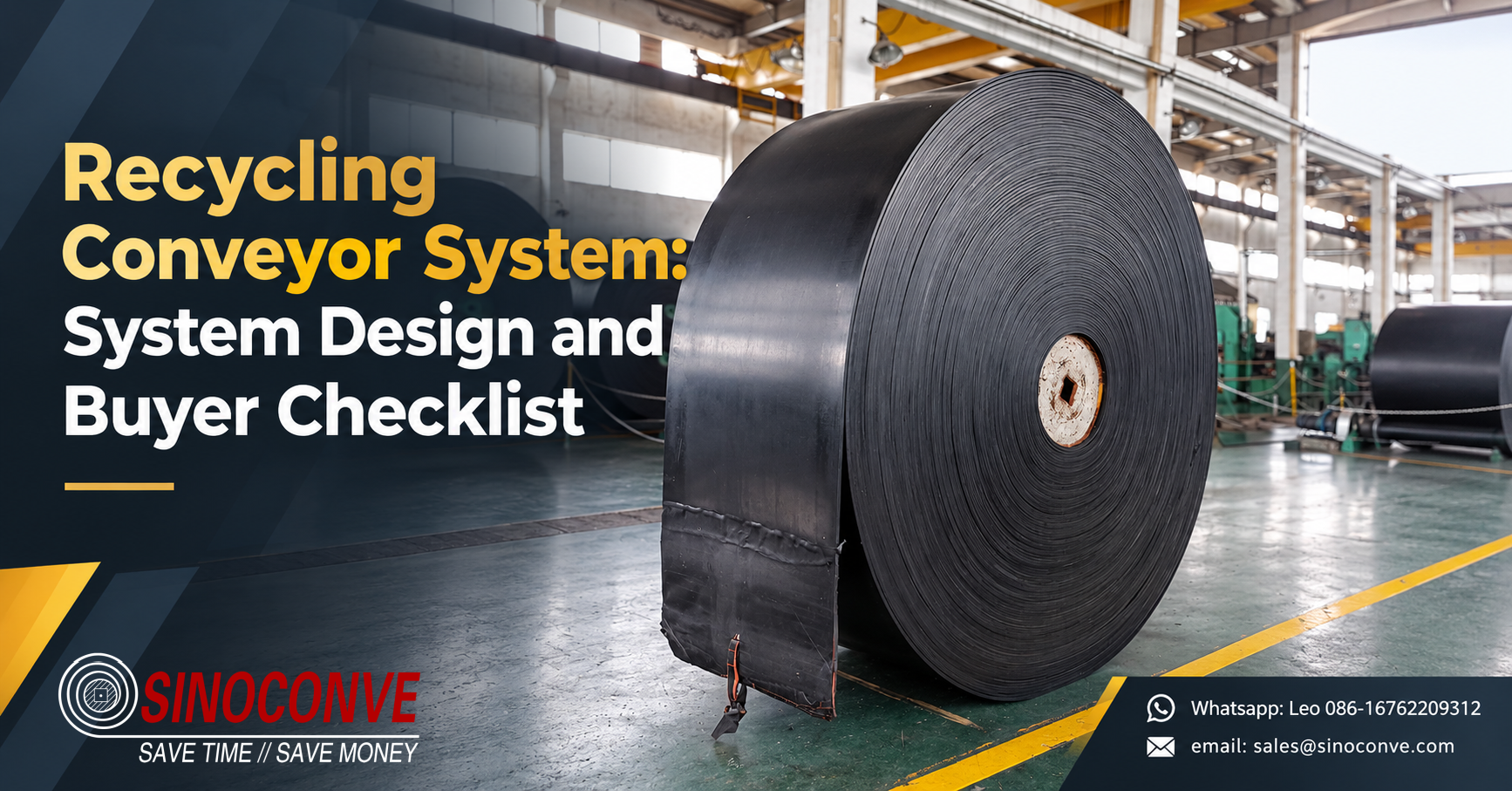
Recycling Conveyor System: System Design and Buyer Checklist

Recycling Conveyor System: System Design and Buyer Checklist

A recycling conveyor system has to carry mixed, unpredictable and abrasive waste, so design decisions that suit clean bulk handling often fail on a recycling line. This guide covers how to size a recycling conveyor belt when tonnage is only an estimate, why film and fibre wrap around idlers far faster on mixed waste, and how sorting cabins, transport runs and incline sections should be split across belts rather than shared on one. It works through cover thickness and compound for abrasive streams, shredder and metal detector placement, dust and odour control inside the building, and whether a modular belt beats a rubber belt for mixed waste. Picker numbers, sorting cabin layout and the design mistakes that cost the most over a system's life are covered, with a buyer checklist for belt, frame, drive and guarding before an order is placed.

Cogged V Belt: Profile, Drive Behavior and Application Limits

Cogged V Belt: Profile, Drive Behavior and Application Limits

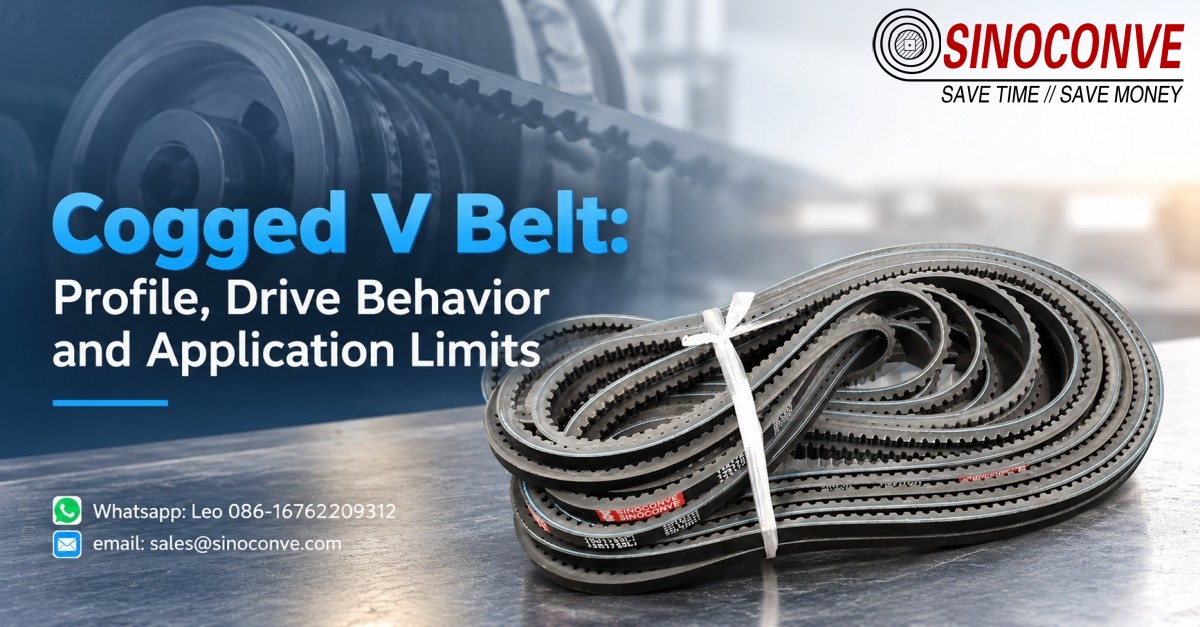
A cogged V belt carries moulded cogs on its underside that let the belt bend over smaller pulleys, run cooler, and transmit the same power from a narrower section than a wrapped belt. This guide sets out the cogged profile, how the cogged base changes drive behavior, and where cogged belts reach their application limits. It explains why a cogged belt can run on a smaller pulley, whether cogged belts are always raw edge, and what changes when a wrapped belt is swapped for a cogged one on existing pulleys - including the tension a new belt needs, why a cogged belt may sound noisier, and the cog root cracking that follows a misaligned or overloaded drive. Guidance on back-side idlers, power rating, service life against wrapped belts and the duties where cogged construction is worth its cost is included for maintenance and purchasing teams.


Side Wall Belt Conveyor: System Design and Buyer Checklist

Side Wall Belt Conveyor: System Design and Buyer Checklist

A side wall belt conveyor is a complete machine that uses a belt with corrugated side walls and cross cleats to form a flexible pocket, so material can be carried up a steep incline or almost vertically in one continuous run instead of through several transfer points. This guide works at the system level: how horizontal, inclined and vertical sections are combined, how infeed and discharge are arranged to avoid off centre loads and impact, why the folded return strand and take-up travel need more attention than on a flat belt, why a tall wall reacts strongly to side loads and how tracking is corrected, and how worn wall sections and cleats are replaced. It sets out when a steep unit beats a standard troughed line, what retrofitting one involves, and closes with the documents and site checks to request before you buy.

PVC Conveyor Belt: Specification, Grades and Buying Guide

PVC Conveyor Belt: Specification, Grades and Buying Guide

A PVC conveyor belt is a thermoplastic belt built from a woven fabric carcass coated with polyvinyl chloride covers. That construction is why food, packaging and logistics lines run on it: it wipes clean, resists water and mild chemicals, and can be heat-welded into a hygienic joint. This guide covers the specification fields that decide performance, including ply count and fabric type, cover thickness and hardness, total gauge, surface texture, colour coding, width and length tolerances, the minimum pulley rule and temperature limits. It shows how food grade, antistatic, oil resistant and low temperature grades are selected and evidenced, how hot welded, finger and mechanical joints trade strength against hygiene and repair speed, what a comparable enquiry must state, how to read a test report, and how to measure a belt on arrival. It closes with the buying mistakes that cost most later.

What Is a Vulcanizer? A Plain-English Guide for Conveyor Belt Teams

What Is a Vulcanizer? A Plain-English Guide for Conveyor Belt Teams

A vulcanizer cures rubber with heat and pressure so the compound cross-links into a strong elastic solid. Around conveyors the term almost always means a belt vulcanizing press, the machine that joins two prepared belt ends plus bonding compound into a splice as strong as the carcass. Away from conveying, the same word covers curing ovens, repair units and moulding presses used for roller lagging and abrasion lining. This guide explains what a vulcanizer does, how heating method, frame build and portability split the family into four different machines, which parts and cycle steps decide whether a splice lasts, how vulcanized, mechanical and cold-bond joints compare, where the equipment is used beyond belt splices, and the safety rules such a hot, heavy, clamped machine demands. It ends on the question most sites face: buy a press for your own crew, or buy splicing as a service.

Aggregate Conveyor Vulcanizing: Process Controls and Field Acceptance

Aggregate Conveyor Vulcanizing: Process Controls and Field Acceptance

Aggregate conveyor vulcanizing takes the splice out of the workshop and onto the quarry, where belt thickness, dust, moisture, wind and shifting temperature press on the joint. This guide covers the process controls that decide whether a field cure holds: carcass and ply count on heavy belts, splice geometry, face preparation and contamination control, and the weather window a crew must respect. It explains why aggregate conveyor vulcanizing can take longer than a workshop splice, whether a steel-cord joint can be cured on site at all, how many joints one crew can complete inside a shutdown, and when to stop the whole plant versus one section. Field acceptance, load-out rules, temperature and humidity limits, cure verification without a cut sample, fastener use as a stop-gap, and stocking of splice material are all treated so a quarry can plan around a joint that lasts.

Recycling Conveyor System: System Design and Buyer Checklist

Recycling Conveyor System: System Design and Buyer Checklist

A recycling conveyor system has to carry mixed, unpredictable and abrasive waste, so design decisions that suit clean bulk handling often fail on a recycling line. This guide covers how to size a recycling conveyor belt when tonnage is only an estimate, why film and fibre wrap around idlers far faster on mixed waste, and how sorting cabins, transport runs and incline sections should be split across belts rather than shared on one. It works through cover thickness and compound for abrasive streams, shredder and metal detector placement, dust and odour control inside the building, and whether a modular belt beats a rubber belt for mixed waste. Picker numbers, sorting cabin layout and the design mistakes that cost the most over a system's life are covered, with a buyer checklist for belt, frame, drive and guarding before an order is placed.

Cogged V Belt: Profile, Drive Behavior and Application Limits

Cogged V Belt: Profile, Drive Behavior and Application Limits

A cogged V belt carries moulded cogs on its underside that let the belt bend over smaller pulleys, run cooler, and transmit the same power from a narrower section than a wrapped belt. This guide sets out the cogged profile, how the cogged base changes drive behavior, and where cogged belts reach their application limits. It explains why a cogged belt can run on a smaller pulley, whether cogged belts are always raw edge, and what changes when a wrapped belt is swapped for a cogged one on existing pulleys - including the tension a new belt needs, why a cogged belt may sound noisier, and the cog root cracking that follows a misaligned or overloaded drive. Guidance on back-side idlers, power rating, service life against wrapped belts and the duties where cogged construction is worth its cost is included for maintenance and purchasing teams.
Explore more

We are committed to providing you with better products and services. Welcome to browse more content for details