A PVC conveyor belt is a light-duty belt whose carcass is woven fabric coated on both faces with polyvinyl chloride instead of vulcanized rubber. Fabric carries the tension, the PVC keeps the running surface flat and easy to wipe down, and the two are bonded into a single sheet that bends over small pulleys without cracking. Food packing halls, parcel sorters and light assembly lines pull these belts in large numbers for exactly that reason.
Color belongs to the purchasing conversation, not to the performance conversation. Green PVC conveyor belts dominate general conveying because the shade hides everyday scuffing and puts most products into clear contrast, and plenty of plants set a defined color for each zone: green across general packing, white wherever dairy or bakery product runs, blue where the quality team wants a bright visual marker at a glance. A buyer drawing up a shortlist of green PVC conveyor belt manufacturers, or hunting for a green PVC conveyor belt factory, should confirm one thing first, namely that the shade is a pigment decision inside the PVC compound. On its own it tells you nothing about food contact approval.
We build PVC and PU light belts in Ningbo alongside our rubber, chevron and V-belt lines, and most of the questions we field are procurement questions rather than engineering ones. The next few thousand words take the specification field by field, explain what each grade actually buys, compare the splice methods by strength and hygiene, set out the RFQ list that makes two quotes comparable, and close with the goods-in measurements that stop a bad roll before it is threaded onto the line.

01What a PVC Conveyor Belt Is and Why Lines Run on It
Anyone quoting a PVC conveyor belt should be able to name the plies, the fabric, the cover gauge and the pigment, because those four items describe almost the whole product. Nothing here is exotic. The material is thermoplastic, so the covers are fused onto the fabric under heat and pressure rather than cured into rubber, and that single fact produces the smooth, non-marking, easily cleaned face that light industry keeps asking for.
The Layers in Cross-Section
A finished PVC belt is a sandwich of three functional parts. A top cover of PVC compound sits over a fabric carcass, usually two to four plies of polyester warp with polyamide weft, and a bottom cover closes the other face. Product rides the top cover, the carcass takes the pull, and the bottom cover slides or rolls over the support. Total gauge on the belts we ship most often lands between 1.5 mm and 6 mm, and the split between cover and carcass is what a buyer is really choosing when the argument turns to thickness.
Two behaviors come straight out of that build. The carcass resists stretch, so a belt asked to carry a heavier load over a long center distance needs more plies or a stronger fabric rather than a thicker cover. Water and most oils slide straight off that coating, along with the standard cleaning chemistry of a washdown area, which is why one construction serves a bakery and a fresh vegetable line without a single change to the drawing.
Why the Same Belt Comes in Green, White and Blue
Color is where more orders go wrong than anywhere else. A plant standardizes on green for one product family and white for another, and a maintenance engineer under time pressure simply reorders the green one without checking that the white grade carried a different compound. Green usually means general conveying on a plant that wants scuffing to disappear. White turns up where food contact is routine, because a pale belt shows soil early and the hygiene team reads that as a signal. Blue is chosen far more often than people expect, mainly as a bright marker that separates one product stream or one zone from the next.
None of those three shades guarantees anything about food approval, low migration or antimicrobial performance. Those are properties of the compound and the test evidence behind it, not of the pigment. Two belts can look identical in a photograph and behave completely differently in a cabinet at minus 25 degrees. Ask for the compound reference and the migration result, and treat color as a labeling tool that helps your operators, which is what it is.
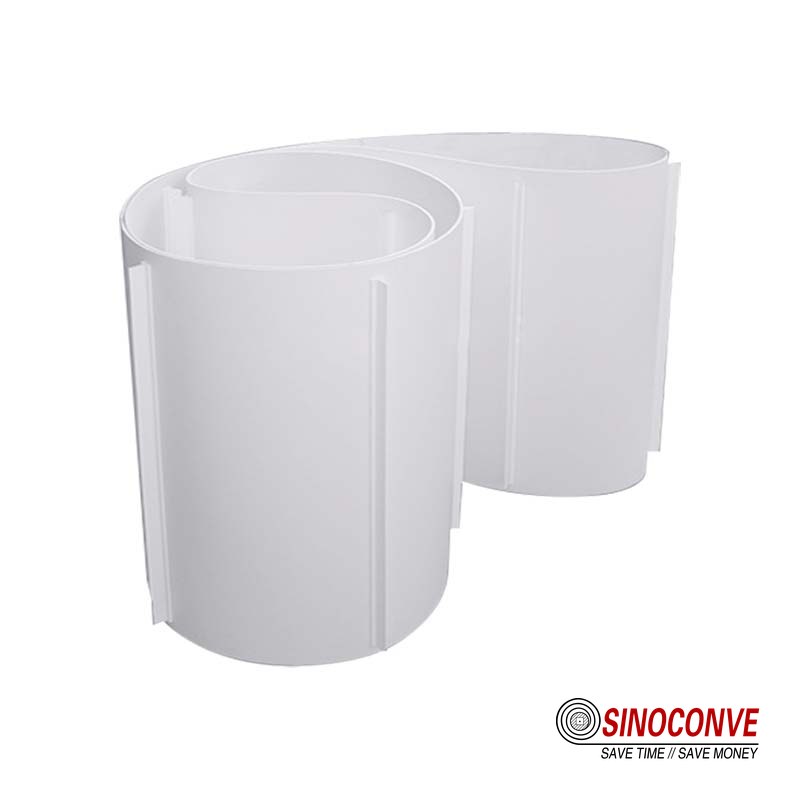
Green, white and blue PVC belts share a fabric carcass and differ in compound, pigment and surface finish, so color alone never identifies the duty.
02The Structural Specification: Carcass, Covers and Total Gauge
Specification sheets for light belts vary wildly between suppliers, and the reason is that nobody agrees on what to call the thickness. Some quote total gauge, some quote cover only, and a few quote the carcass alone and let the reader guess the rest. Fix the vocabulary before you compare anything, because a "3 mm belt" can mean 3 mm of cover or 3 mm overall. On our own drawings the number is always total gauge.
How Ply Count and Fabric Type Set the Belt's Strength
The carcass decides how far the belt can run before it stretches out of tolerance. Polyester warp with polyamide weft is the standard choice because the combination holds length stability while staying flexible in the cross direction, and two plies cover the short runs that dominate packing equipment. Three plies appear once center distances pass about 8 m or once the belt has to haul a heavier product load, and four plies are reserved for genuinely long, loaded runs where a 2 percent elongation would wreck the tracking.
Fabric type matters as much as ply count. A belt specified for a wet dairy line and a belt specified for a dry carton sorter can carry the same number of plies while differing in warp yarn, weft yarn and the heat history used to fuse them. That difference does not show on a delivery note. It shows eighteen months later, when one belt still tracks and the other has developed a wave along the edge.
Cover Thickness, Hardness and the Total Gauge It Adds Up To
Cover gauge exists to be worn away, so it is sized against abrasion rather than against load. A 0.5 mm top cover suits a light sorter handling cartons, while 1.5 mm or more belongs on a line dragging abrasive product such as washed root vegetables or mineral filler sacks. Cover hardness on PVC compounds commonly runs around 75 to 85 Shore A, and harder covers resist cutting and indentation better while softer ones grip slick product on an incline. That is a genuine trade, not a free upgrade.
Adding the three parts gives total gauge, and the whole question of conveyor roller compatibility hangs off that final number. Thicker belts need larger pulleys and longer transition zones, and they are harder to splice cleanly at the ends. When a client asks us to hold a total gauge of 2 mm but also demands a heavy, abrasive duty, we push back, because the two requirements pull in opposite directions and the belt is the loser.
03Surface Texture, Top-Face Patterns and Color Coding
Two belts can leave our works with identical carcass and gauge and still behave like different products, because the top face is molded, and the pattern on it decides grip, release and how fast the belt gets dirty. Surface finish is specified as carefully as thickness on any line we care about, yet it is the field most often left blank on a first enquiry.
Surface Patterns and the Job Each One Does
A smooth top face is the default for cartons, trays and anything that slides off at a transfer, and it is also the easiest face to scrape or wipe clean. A fine fabric impression adds grip without holding soil, which suits packed goods moving up a shallow rise. Diamond or rhombus embossing grips harder on inclines and on trays that would otherwise creep sideways, and round-dot patterns push water and oil out from under the product on wet lines where a smooth face would simply hydroplane.
Longitudinal ribs and transverse bars solve different problems again. Ribs run with the belt and give drainage plus a little directional grip on a washdown line, while transverse bars act as low cleats that hold loose product on a steeper climb without turning the belt into a full pocket design. Pick the pattern from the product and the angle, not from a catalog photograph, because a diamond face that grips a box beautifully can shred a soft bakery item.
Color Coding and What It Is Actually For
Color earns its place as an operational tool. A plant that runs four product families down one line can set four shades and let an operator see at a glance which belt is which, which matters most during a changeover or a cleaning shutdown. Some sites match the belt to the machine's own palette, others reserve a shade for the food contact zone so a quick glance confirms that the right belt is in the right place.
What color cannot do is certify hygiene. If your specification demands a food-grade compound, say so in words and ask for the supporting document, then treat the shade as a separate line on the order. We have seen buyers insist on white for food duty and discover on arrival that the belt was a general-purpose compound, which is an expensive way to learn that color and compliance are unrelated.
04Dimensions, Tolerances and the Minimum Pulley Rule
Light belts are cut to order, so almost every job is a custom width and a custom length rather than a stock roll. That freedom is useful and it is also the source of most dimensional disputes, because two suppliers can both promise a "1000 mm belt" and deliver widths that differ by enough to matter at the edges. Write the tolerance into the enquiry and the argument disappears.
Width, Length and How Tolerances Are Written
Width tolerances on a cut belt are usually quoted as a plus or minus band, and on our fabric-reinforced PVC belts we work to roughly plus or minus 2 mm on a 1000 mm belt, with tighter limits possible on narrow belts where an operator guides the product by eye. Edge straightness matters as much as nominal width, since a belt that wanders in and out by several millimeters will not hold a guide or a tracking profile reliably. Ask for the width band and the edge straightness limit together rather than as separate promises.
Length is quoted either as an open length or as a finished endless circumference. Confusing the two is a classic error. An endless belt of 10,000 mm circumference is not an open belt of 10,000 mm that will magically close to the same figure, because the splice consumes material. State which one you mean, and if the belt is to run on a fixed frame, send the measured pulley center distance and pulley diameters rather than a length your maintenance team estimated with a tape on a slack belt.
Minimum Pulley Diameter and Why It Cannot Be Ignored
Every belt has a smallest pulley it will happily bend around, and going below that figure is the single fastest way to crack a carcass. The limit scales with total gauge and stiffness, so a thin 2 mm belt tolerates a much tighter nose bar than a 5 mm belt with a heavy cover. On a food line with a small nose pulley, this constraint often decides the belt before anyone talks about color or price.
| Total gauge we normally quote in this band | Smallest pulley diameter we accept at this gauge | Duty where this band fits comfortably |
|---|---|---|
| Around 1.5 mm to 2.5 mm, the light end of our range | Roughly 25 mm to 40 mm, which suits small nose bars and tight transfer noses | Carton sorters, tray returns and small packaging machines with little room to spare |
| Around 3 mm to 4 mm, the workhorse gauge for general packing | Roughly 50 mm to 80 mm depending on ply count and fabric stiffness | Main packing lines, bakery and confectionery runs, and general assembly transfer |
| Around 5 mm to 6 mm, specified where covers must last | Roughly 100 mm to 150 mm, and we would rather add diameter than push below this | Wet vegetable lines, abrasive packed goods and heavier incline duty on light equipment |
Treat the middle column as a floor rather than a target. A belt run over a pulley below its minimum still works, and it still looks fine in the first month, which is exactly why the mistake survives so long. The carcass fatigues quietly along the flex line until one morning the belt splits across the middle and the line stops.
05Temperature Limits and Where PVC Starts to Behave Badly
Where PVC Sits on the Temperature Scale
PVC is a warm-weather material. A standard compound runs comfortably from about minus 10 degrees C to plus 70 degrees C, and the top of that band is a soft ceiling rather than a wall, because heat accelerates the plasticizer loss that makes the belt stiffen over time. Push a general-purpose belt toward 80 degrees C and it will still move, then crack at the flex line months earlier than the calendar suggests.
Cold is the harsher end. Standard PVC turns rigid well before a natural rubber belt does, so a belt that is fine at plus 5 degrees C in a warehouse can shatter on a cold start in an unheated annex at minus 15 degrees C. Low-temperature compounds extend usable flexibility further down, and if your line runs through a chiller or a freezer door, say so in the enquiry rather than after the first winter. Hot product is its own problem, and anything leaving an oven above 90 degrees C belongs on a heat-resistant rubber belt instead.
06Antistatic, Oil Resistance and Low-Temperature Grades
Three special grades come up again and again on light belt enquiries, and each one exists because a standard belt fails in a specific way. Static builds on a dry running belt. Oil and grease soften a PVC face. Cold stiffens it. None of the three problems is fixed by ordering a thicker belt, which is why the grade field deserves its own line on the RFQ rather than a note in the margin.
Antistatic and Surface Resistance
A belt running dry under a scraper or a light product can hold a charge that will not drain through ordinary PVC, and that charge is a real hazard near solvent vapor, fine organic dust or sensitive electronics. Antistatic compounds add a conductive path so the static leaks away, and the usual way to specify this is by surface resistance rather than by a vague "antistatic" label. Industry practice commonly cites a surface resistance at or below roughly 3 x 10&sup8; ohms for an antistatic belt, tested against a recognized method such as ISO 284 practice, and we ask clients to name the figure they need instead of accepting the word alone.
Where does this actually matter on a light line? A rewind or slitting station handling film, a bakery belt dragging dry flour, a sorter running in a solvent vapor zone. Workers also feel the problem before any instrument does, because a charged belt gives a sharp static shock at the loading point. Ordering an antistatic grade is cheap insurance against that, even on a line that has never had an incident, since dust and dry winter air change the odds.
Oil, Grease and Low-Temperature Service
Standard PVC tolerates occasional splash contact but not continuous exposure to grease or petroleum-based oil. A general-purpose face will swell, go tacky and lose its grip when oil pools on it shift after shift, and the fix is a compound formulated for oil resistance rather than a cleaning regime. As a conveyor belt manufacturer we also build oil-grade rubber belts for the heavy end of that problem, and clients occasionally arrive expecting a light PVC belt to do a job that belongs to an industrial conveyor belt carrying machine-oily scrap. Matching the material to the contaminant is cheaper than replacing a swollen belt twice a year.
Low temperature is the third grade worth naming separately. A standard compound stiffens below freezing, a low-temperature compound keeps usable flexibility further down, and the difference shows up first at the splice and along the narrow nose bars rather than in the middle of the belt. If the belt passes through a blast freezer or sits in a cold store overnight between shifts, specify the lowest temperature the belt will actually see, measured on the belt surface, not the temperature printed on the room's control panel.
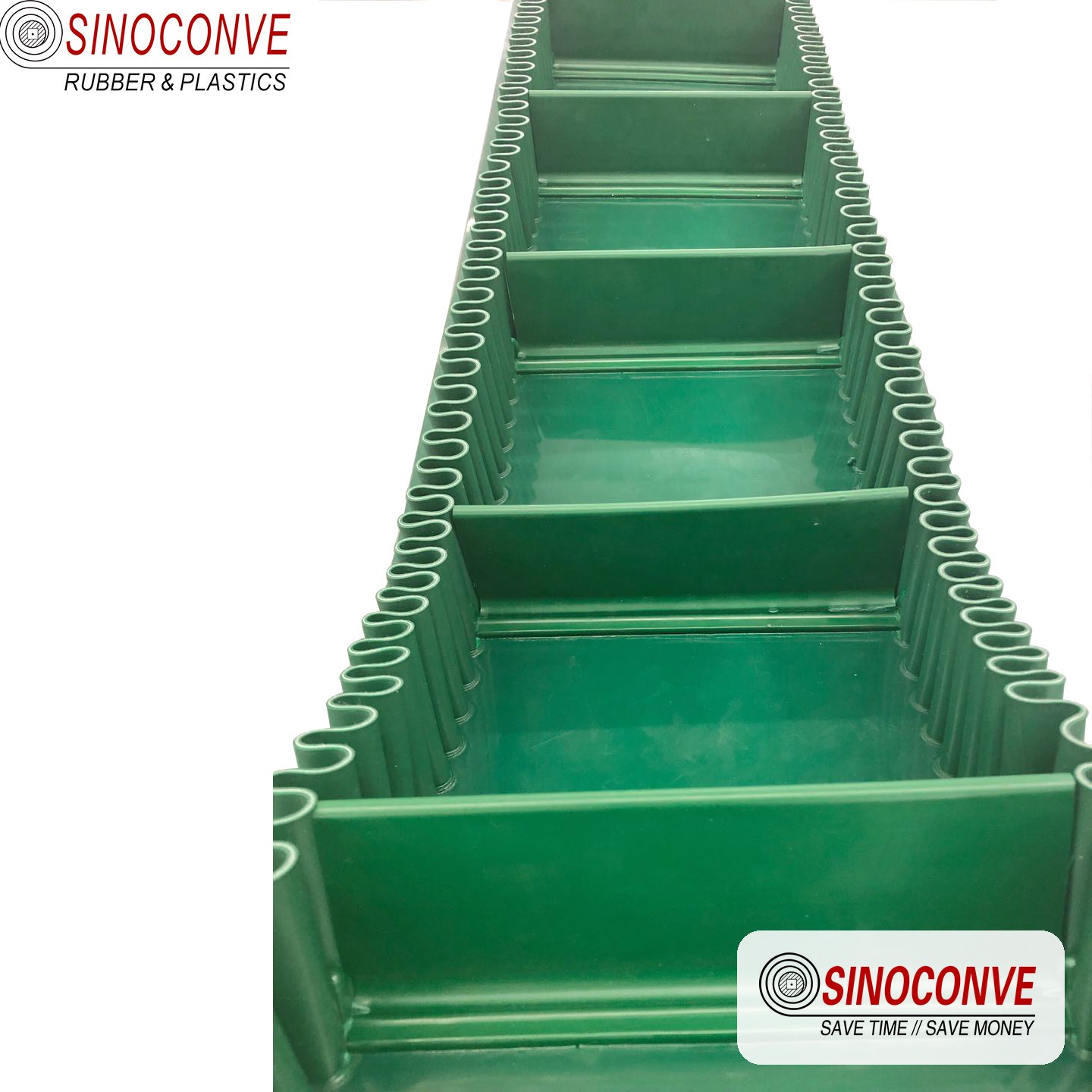
Surface pattern, guide profile and cover gauge are chosen together, because a change to any one of them shifts grip, cleaning and the minimum pulley diameter.
07Food-Grade and Non-Food-Grade: What the Evidence Has to Show
What the Evidence Has to Show
Food-grade is a claim about evidence, not a color and not a price tier. A food contact belt needs a compound whose constituents are acceptable for the intended contact, and the supplier should be able to hand over migration test data produced against a recognized method rather than a one-line statement. Ask which test was run, on which compound reference, and at which temperature and contact time, because a migration result measured for a dry cracker at room temperature says nothing about a hot, fatty sauce at 60 degrees C.
Cleanability belongs in the same conversation. A belt with crevices, an open fabric edge or a coarse pattern traps product and gives bacteria somewhere to sit, so a smooth or lightly embossed face paired with a hot-welded end splice is usually the easier belt to keep hygienic. Antimicrobial compounds exist and are requested often, yet they support a cleaning regime rather than replace it, and we always say so plainly. From our factory in Ningbo we supply both food-grade and general-purpose compounds, and the honest position is that the general-purpose belt is perfectly adequate for dry, non-food duty and the wrong belt for a dairy line.
One more distinction is worth setting down. A belt can be food contact compliant and still fail a plant's internal standard if the site also needs antistatic performance or low-temperature flexibility, because adding those properties to a food compound is a formulation exercise rather than a checkbox. Tell the supplier about every requirement at once, and the compound can be built to cover all of them instead of being patched later.
08Splices and Joints: Strength, Hygiene and Repair Trade-offs
How a belt is joined decides three things no cover grade can fix: the strength left at that point, how easily the joint cleans, and how quickly a maintenance team can recover from a failure. A light belt is spliced more often than a heavy one because the machines are short and the belts are changed more frequently, so the splice deserves a real decision rather than a default.
Hot-Welded, Finger and Step Splices
A hot-welded splice fuses the two ends under heat and pressure until the PVC flows across the joint, and it is the closest a light belt gets to a seamless surface. Strength retention is high, the joint is nearly flush, and a scraper passes over it without catching, which is why food and pharmaceutical lines favor it. The cost is time and a press on site, and the joint is permanent enough that it is not a field repair option for a crew without heat equipment.
Finger and step splices cut interlocking profiles into the two ends before they are welded, so the joint carries load across a much longer overlap and resists peeling far better than a simple butt joint. They take more skill to prepare, and a poorly cut finger pattern is worse than no pattern at all because the bond line ends up uneven. A high-precision slitter and a trained hand are what separate a good finger splice from an expensive one.
Mechanical Fasteners, Guides and Cleat Assembly
Mechanical lacing or plate fasteners trade strength and hygiene for speed. The joint can be fitted with hand tools in under an hour, which is why it survives on machines that get opened for cleaning every shift, but the fastener breaks the smooth surface and gives product and wash water somewhere to collect. Where hygiene is a priority, that trade usually loses. Uptime on a crude sorter sometimes makes it pay, though, and the honest answer depends on the line rather than on principle.
Guides, cleats and sidewalls are joined to light belts as separate assemblies, and each one adds a stress riser. A welded guide profile stiffens the edge zone, and a transverse cleat interrupts the top face. Both are worth having when the duty needs them, and both make the splice area harder to protect, so the joint is usually kept several hundred millimeters clear of any cleat or guide end. Our conveyor belt splicing guide walks through the joint preparation in more detail than fits here.
| Joint method a buyer can choose from | Strength and surface it leaves behind | Where it earns its place and where it does not |
|---|---|---|
| Hot-welded plain splice, fused under heat and pressure on a press | High strength retention with an almost flush surface that a scraper clears easily | Best choice for food and hygiene duty, provided a press and trained crew reach the site |
| Finger or step splice with interlocking ends cut before welding | Very good peel resistance across a long overlap when the profiles are cut accurately | Suits long, loaded runs where peel load is high, and punishes any sloppy cutting on site |
| Mechanical lacing or bolted plate fastener fitted with hand tools | Moderate strength with an interrupted surface that traps fine product and wash water | Fits rough sorters where fast field repair outranks hygiene, and rarely suits food contact zones |
09The RFQ Checklist: Fields a Comparable Quote Requires
Two quotes for "a green PVC belt, 1000 mm wide" cannot be compared, because each supplier will quietly fill the gaps with whatever suits the price. The only way to make light belt quotes comparable is to send the same completed field list to everyone, so that every reply answers the same questions. This is the commercial heart of the whole buying process, and it is where careful buyers save the most money without ever negotiating.
The Fields Every PVC Belt Enquiry Should Carry
Start with the geometry and the running conditions, then add the compound and the documentation. A supplier who receives width, length, total gauge, minimum pulley diameter, product handled, temperature range, cleaning method and splice preference can quote precisely and, just as usefully, can flag anything that will not work. Hand over only a color and a width, and the reply is a guess, with the guess getting generous where it is cheap and quiet where it is expensive.
| Field group the enquiry has to state | Why it changes the belt, the splice or the lead time | What a buyer should write on the form |
|---|---|---|
| Belt width, open length or endless circumference, and total gauge | Sets the cutting plan, the weight and whether the belt can be shipped as one piece or must be joined | Give nominal figures plus the tolerance you will accept, and say plainly whether length is open or endless |
| Smallest pulley or nose bar the belt must bend around | Caps total gauge and ply count, and rules out builds that would crack at the flex line in service | Send the measured pulley diameter, not an estimate, especially on the nose and drive pulleys |
| Product handled, its weight, and whether it is wet, oily or abrasive | Picks the cover gauge, hardness and surface pattern, and decides between food and general compound | Describe the product and the worst condition it creates, including any oil, fat or mineral content |
| Working temperature range and the cleaning method used each shift | Decides low-temperature or standard compound and whether the face must survive caustic wash chemicals | State the coldest and hottest the belt actually sees, and name the chemicals in the wash routine |
| Grade needs for food contact, antistatic, oil resistance and flame | Turns a standard compound into a formulated one and adds testing that has to be booked in advance | List every grade requirement together, with the test method or figure your plant will accept as proof |
| Preferred splice method, color, edge finish and any guide or cleat | Adds a press operation, a profiling step or a welded assembly that the factory must schedule | Name the joint you want and say whether the belt ships open or finished endless to size |
Buyers sourcing light belts across several sites often consolidate the enquiry to get better terms, and that is exactly the situation where a shared field list pays for itself. Placing that combined order under wholesale conveyor belts works only if every line on the schedule carries the same complete data. If a system integrator is assembling the package, hand them the same list, because as a conveyor belt supplier we would rather answer forty clear fields than five vague ones and a complaint later.
10Sampling, Testing and What a Useful Test Report Contains
Reading a Test Report Without Being Fooled
A test report is worth little unless it names the compound, the test method and the conditions. A single line reading "food grade, passed" tells a buyer nothing, while a report that records the migration test method, the contact temperature, the contact time and the compound reference gives the plant something it can defend to an auditor. Ask for the report on the exact compound you are buying, not on the product family in general.
Cover hardness deserves the same treatment. Shore A figures quoted without a test standard are nearly meaningless, and a five-point swing between two suppliers changes how a belt grips on an incline. Abrasion performance on light belts is usually less critical than on heavy rubber duty, where compounds are commonly compared against DIN 53516 practice and the cover grade comparison explains how those figures behave in the field. On a PVC light belt, gauge and pattern matter more than an abrasion number, and it is a mistake to chase the wrong metric.
Companies that also maintain drive equipment should note that the same workshop builds both product families. A packaging OEM sourcing a flat belt may also need a drive belt for the machine that feeds it, and in that case a question meant for a transmission belt manufacturer and a question meant for a V-belt manufacturer land on the same desk. Keeping the two lines on one purchase order simplifies the paperwork and the shipping, though the belt specifications stay entirely separate.
11Goods-In Acceptance: Measuring the Belt on Arrival
Measuring the Belt on Arrival
Acceptance happens at goods-in, not after the belt has run for three weeks and the return window has closed. Most disputes on light belts are settled with a tape, a caliper, a straight edge and a smell test, and none of those tools is expensive. Do the checks before the belt leaves the loading bay, while the roll is still banded and the paperwork is still fresh, because a claim made from memory two months later is much weaker.
| What a buyer verifies on arrival | How to check it with simple tools | What a compliant belt shows at this check |
|---|---|---|
| Total gauge, cover thickness and width against the order | Measure the gauge at five points with a caliper and lay a tape across the width in three places | Figures inside the agreed tolerance band with no thin patch near either edge |
| Surface defects, embedded grit and a consistent pattern | Unroll several meters in good light and run a hand along the full face and both edges | An even pattern with no blisters, no trapped particles and no raw uncoated fabric |
| Odor and migration on food-grade and low-temperature grades | Smell a cut sample in a warm room and compare the batch to the migration certificate supplied | A mild, neutral smell with documentation that matches the delivered compound reference |
| Antistatic performance where a surface resistance figure was ordered | Have the plant metrology team re-measure resistance on a cleaned section of the belt | A reading at or below the figure named in the order, taken under the agreed conditions |
| Splice strength and the surface left at the joint | Inspect the joint for alignment and request a pull coupon from the same production batch | A flush, well-cured joint with coupon results that match the agreed strength retention |
| Batch consistency across multiple rolls in one delivery | Compare compound reference codes, color and gauge between rolls from the same consignment | One compound reference and one color across the whole batch with no mixed production dates |
Record every figure in a receiving log, with the batch code against it. That single habit turns a future quality argument into a five-minute records check, and it also gives the supplier something concrete to act on if a genuine non-conformity turns up. Light belts fail rarely, but when they do, the plant that kept measurements always resolves the claim faster than the plant that did not.
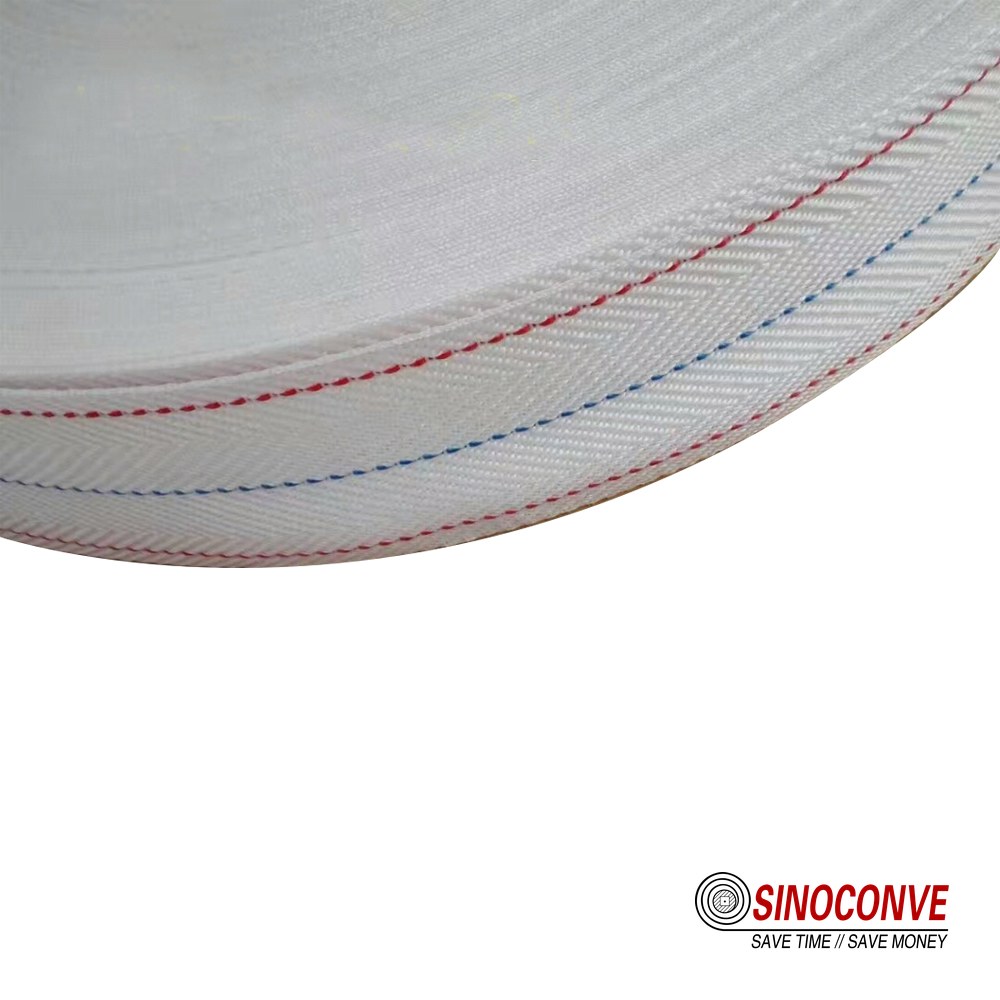
A belt that was specified against the field list runs quietly for years, and a belt that was ordered by color alone usually announces the mistake at the flex line.
12Common Buying Mistakes and What They Cost Later
Four mistakes account for most of the grief we see on light belt orders, and all four are avoidable with information the buyer already has. Ordering by color alone sits at the top of the list. A plant replaces a worn belt and reorders "the green 1000 mm one", without checking the compound, and ends up with a general-purpose belt on a food contact line that needed a migration-tested grade. The belt runs, the paperwork does not, and the auditor eventually finds the gap.
Ignoring the minimum pulley diameter is the second and the most expensive. A buyer orders the thinnest belt the budget allows to save on material, then fits it around a nose bar sized for the old, thicker belt. Nothing fails in the first month. The carcass fatigues quietly, and by month ten the belt has split at the flex line while the line is running at full speed. Nothing about that failure looks like a specification error, which is what makes it so common.
Leaving antistatic and low-temperature needs off the enquiry is the third. Both add cost, so a buyer who has not thought about them will not ask, and a supplier cannot quote for a requirement nobody stated. The fourth mistake is treating the splice as an afterthought. A belt chosen for a food line and then joined with mechanical lacing has given up the hygiene it was bought for. Every one of these errors is cheaper to prevent on the enquiry form than to fix in the plant, and none of them shows up in the delivered price, which is exactly why they persist.
Buyers who source through a conveyor belt distributor should push the same questions upstream to the manufacturer, because the distributor may not know the pulley diameters or the wash chemicals at the plant. The further the information travels from the person standing at the machine, the more it degrades, and the delivered belt reflects that loss. Keeping the plant's own conditions in the enquiry, rather than a distributor's summary of them, is the simplest protection there is.
13PVC Against PU and Rubber: Matching Material to Duty
PVC or PU, and When Rubber Wins
PVC and PU are the two light belt materials, and the choice between them turns on a handful of properties rather than on price alone. PVC is the more economical of the two and does most light conveying well, yet it stiffens in the cold and its edges can fray if a belt is mistracked for long. Polyurethane holds flexibility further down the temperature scale, resists cuts and oils better and takes a higher load per unit width, which is why it appears on tighter, faster machines and on freezers.
Rubber enters the picture once the duty stops being light. A rubber conveyor belt handles abrasive bulk, hot product and heavy impact in ways no light belt manages, and a plant that keeps reaching for PVC on a duty that needs rubber will keep replacing belts. From our conveyor belt factory in Ningbo we supply both families, so we have no reason to push one over the other, and the honest guidance is that the material should follow the duty rather than the other way round.
| Material a light line can be built around | Where this material performs best in daily service | Where it gives way, and what that means for the line |
|---|---|---|
| PVC, the economical thermoplastic used across general light conveying | Clean, dry product on moderate lines that value easy cleaning and simple splicing above all | Cold, heavy oil exposure and sharp product, any of which shortens its life noticeably |
| Polyurethane, a tougher thermoplastic for demanding light duty | Faster, tighter machines, oily product and colder spaces where PVC would stiffen early | Higher unit cost and a compound that some wash chemicals attack, so check the cleaning regime |
| Vulcanized rubber, built for heavy and abrasive bulk handling | Aggregate, hot material and impact loads that would destroy a light belt within weeks | Needs larger pulleys and heavier support, so it rarely fits a light machine frame |
One practical point closes the comparison. The three materials rarely meet on the same machine, but they often meet inside the same plant, and a maintenance team that standardizes blindly on whichever belt is cheapest will fight the same failures on every line. Look at the duty first. Then let the material follow.

14Frequently Asked Questions
What is a PVC conveyor belt?
It is a light-duty belt made from a woven fabric carcass coated with polyvinyl chloride on both faces, giving a flexible, easy to clean surface that runs over relatively small pulleys.
What is green PVC conveyor belt used for?
Green is mostly a plant preference rather than a functional grade, and the shade turns up across general conveying where it hides everyday scuffing and puts product into clear contrast. Food packing halls, parcel handling and light assembly lines all use it. Many sites set one color per zone so operators can confirm at a glance that the right belt is fitted. The pigment itself adds no performance, so a green belt is only as good as the compound underneath it.
Which is better, PVC or PU?
Neither wins outright, because the better material is the one that matches the duty. PVC costs less, cleans easily and suits clean, dry product on moderate speeds. PU keeps its flexibility in colder spaces and stands up to oil, cuts and higher loads per unit width, which is why it suits tighter and faster machines. Where the duty turns heavy, abrasive or hot, rubber takes over from both.
Is PVC food safe?
Only when the compound, not the color, is built and tested for food contact. Ask for migration test data on the exact compound reference you are buying, measured at the contact temperature and time your product actually creates. A general-purpose PVC belt is perfectly fine for dry, non-food conveying and the wrong choice for a dairy line, regardless of how it looks.
How thick should a PVC belt be?
Thickness follows the wear and the pulley, so a 2 mm belt suits a light sorter while 4 mm to 6 mm belongs on wet or abrasive duty, always subject to the smallest pulley diameter the frame allows.
How do you join PVC belts?
The usual answer is heat, applied either as a plain hot-welded splice or through interlocking finger and step profiles cut into the ends before welding. Mechanical lacing remains an option where a crew needs to fit a joint in under an hour and can accept a broken top surface.
What temperature can PVC belts handle?
A standard PVC compound runs comfortably from about minus 10 degrees C to plus 70 degrees C, and anything colder or hotter needs a dedicated compound rather than the standard one.
Does the color of a PVC belt mean it is food grade?
No, and this is the most common source of confusion on light belt orders. Color is a pigment choice that supports zoning, product separation and brand matching, while food contact compliance comes from the compound and its test evidence. A white belt can be general purpose and a green belt can be food grade, or the reverse.
Can a PVC belt be repaired on site?
Some failures can, provided the crew has the right equipment. A local damage can be patched with a portable heat press and matching compound, and a mechanically fastened joint can be refitted with hand tools in a hurry. Once a carcass has cracked through at the flex line, though, no field repair will bring back the strength the belt was bought with.
Related Products You May Need
- PVC conveyor belt and the full light belt range behind the enquiry forms above
- Rubber conveyor belt for the heavier, more abrasive duties a PVC belt should never be asked to carry
- Chevron conveyor belt when the incline sits beyond what a patterned light belt can grip
- Conveyor rollers selected to match the minimum pulley diameter on a light belt frame
- EP rubber conveyor belt where carcass strength and low stretch matter on longer runs
- Full product catalog covering light belts, fabric and steel cord belts, V-belts and timing belts
Related Blog Posts
- Conveyor belt splicing buyer's checklist and 12 things to verify before you order
- Conveyor belt splicing ultimate guide 2026 for joint methods and field tips
- Rubber conveyor belt cover grades explained for buyers comparing compound choices
- Conveyor belt cleaning methods and schedules when scrapers will not work
- Return side belt cleaning for keeping the running face free of carryback
- Dust resistant conveyor belt supplier selection notes for dusty light duty lines
- Conveyor belt cleaner selection and how it interacts with the belt surface