
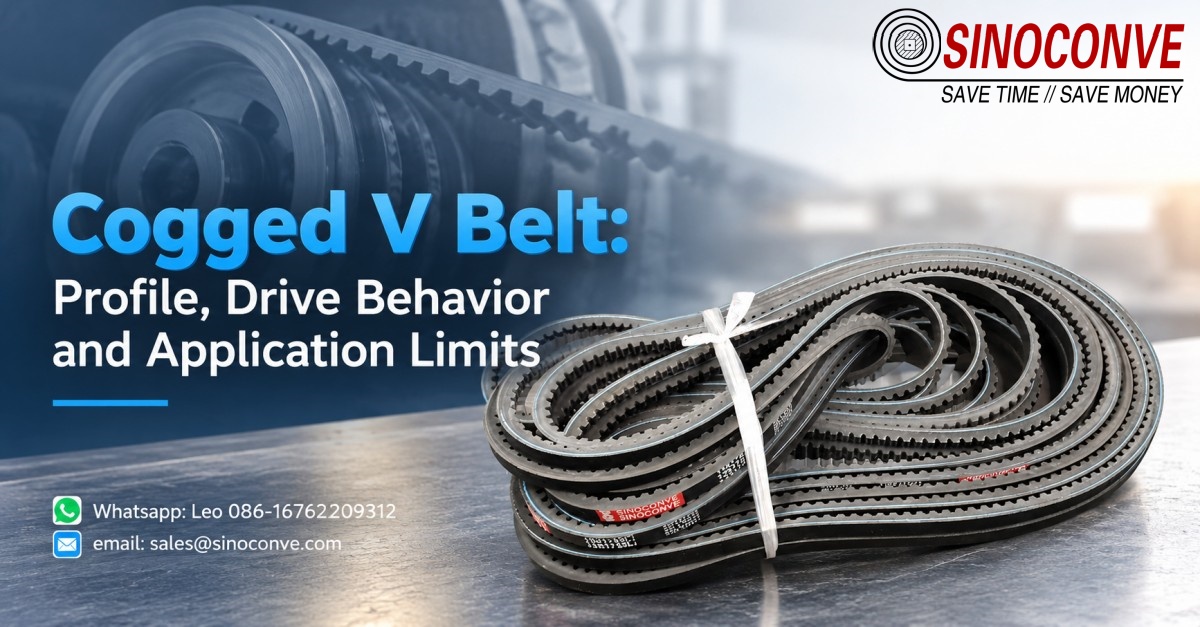
A cogged V belt is a drive belt whose underside is molded into a row of transverse teeth, and this article deals only with the industrial type that turns crushers, fans, compressors, mixers and process pumps. The teeth are not a grip feature. Cutting the base into cogs shifts the neutral axis of the cross-section outward whenever the belt bends, which lowers the bending stress at the outer rubber and lets a belt of a given strength run over a smaller pulley. Nearly every benefit and every limit of a cogged belt traces back to that one change.
We build V belts and conveyor belting in Ningbo, and a large share of our year is spent on quarry, cement and port drives. The same scene repeats often. An engineer swaps a solid wrapped belt for a cogged one, picks up a pulley step and a longer service interval, then applies the same swap where it does not belong and loses a set of belts inside six weeks. The belt was not faulty in either case. The duty was matched to the construction, or it was not.
What follows stays on the teeth. Why the bottom is cut, how the tooth pattern is laid out, what changes on a running drive once the base is cogged, where a cogged belt is the right call and where a wrapped belt still wins, a worked pulley check with real figures, the damage that shows up on cogs, and the fields worth fixing before an order is placed.

01What a Cogged V Belt Is, and Where the Teeth Sit
An industrial V belt carries its load through a trapezoidal rubber section with a cord layer running along the length near the top. That cord line resists tension, and everything below it grips the pulley groove and holds the cord in place. On a solid belt the lower region is a continuous slab of rubber. On a cogged belt the same region is interrupted by teeth, molded across the full width and repeating along the length at a fixed pitch.
The Toothed Underside, Described Without the Marketing Language
Each tooth is a compression block standing proud of the belt base, and each gap between two teeth is a folded hinge waiting to happen. Nothing else about the belt changes. The flanks still sit in the groove at the same included angle, the cord still carries the pull, and torque still travels through friction between rubber and pulley metal. What the teeth alter is how the rubber behaves once the belt is asked to bend around a pulley.
Two versions reach the market. The common one is raw edge, with a molded toothed base and cut rubber flanks carrying no fabric at all. The other keeps a fabric jacket over the flanks and shapes that jacket into the teeth as well. Both are cogged. The difference between them matters later, once friction and surface wear come into the discussion.
02Why the Bottom Is Cut Into Teeth at All
Bending is the quiet enemy of any drive belt. Every revolution takes the belt around the small pulley, then around the large one, and each trip flexes the section twice in opposite directions. The strain that flexing produces is set by the distance from the neutral axis of the section to the outermost rubber, divided by the radius of the pulley the belt is running over.
How Bending Moves the Neutral Axis
In a solid belt the neutral axis sits close to the cord, so the bottom rubber is far from it and takes the largest flexing strain. Cog the base and the picture changes. Inside a bend the teeth close against one another like a line of blocks tipping over, so the material between them compresses instead of stretching around a long outer radius, and the effective neutral axis migrates upward toward the cord line. In a section only a few millimeters tall, that migration changes the bending strain at the outer fiber by a large fraction.
Less strain at the outer fiber means less bending stress at the same pulley diameter, and that single fact unlocks everything a cogged belt is bought for.
Why That Shift Lets You Shrink the Pulley
A smaller pulley wraps the belt more tightly and raises the flexing strain, and once bending stress passes what the compound can survive, the bottom rubber starts to crack. Because the toothed section generates less bending stress, it tolerates a tighter radius before that ceiling is reached. Catalogues normally express the result as a minimum pulley diameter for each section, and the cogged figure commonly lands somewhere between two thirds and three quarters of the wrapped figure for the same profile.
Field note from our engineers: On a ball mill lube fan in a cement plant we inherited a drive that destroyed a wrapped SPB belt every seven or eight weeks. The motor pulley was 160 mm, chosen years earlier to clear a guard nobody wanted to move. Switching to a raw edge cogged belt of the same section, on the same pulley and the same tension, pushed the replacement interval past fourteen months. The wrapped belt had not been undersized for power. It had been undersized for bend radius, which is a different failure altogether.
Bending stress is not the only consequence of the teeth. They also change how the belt sheds heat and how it behaves over a back-side idler, and both effects are real on a machine that runs hot or reverses.
03Cog Geometry: Pitch, Depth and the Radius at the Root
Three dimensions decide how a cogged belt behaves, and all three are set by the mold rather than by the customer. Pitch is the center-to-center distance between two adjacent teeth measured along the belt. Depth is how far the teeth reach into the base. Root radius is the curve where a tooth flank meets the base of the gap, and it is the smallest and most easily overlooked number in the whole profile.
Pitch and Depth: the Two Numbers Molded Into the Teeth
A short pitch packs more hinging points into every meter of belt, which makes it supple over a tight pulley but leaves less rubber in each tooth to resist compression. Lengthen the pitch and each tooth becomes a bigger block with more crush strength, while the belt stiffens. Depth behaves in the same way. Cut the teeth deeper and flexibility improves, but you remove base rubber that separates the teeth from the cord line.
Depth therefore has to be chosen against belt thickness, not in isolation. On the heavier sections we keep the tooth depth to roughly a third of the total section height, and on a narrow classical profile the teeth are naturally shallower because there is simply less rubber to work with.
Root Radius and Why a Sharp Root Cracks
The root is where a cogged belt eventually fails, and the cause is stress concentration rather than compound quality. A tooth that meets the belt base through a sharp corner gathers bending strain into a thin line of rubber, and a thin line fatigues quickly. Give that corner a generous radius and the strain spreads over a longer curve, which is the whole trick behind a durable tooth. We keep the root radius close to a third of the tooth depth, and we treat an undercut, almost square root as a short-life item.
| Dimension of the cog profile we are setting | What it actually controls once the belt is running | What goes wrong when this dimension is pushed too far |
|---|---|---|
| Tooth pitch, measured as the distance from one tooth center to the next along the length. | It sets how many folding hinges exist per meter and therefore how smoothly the base rolls through a tight bend. | A pitch that is too long stiffens the belt and undoes the flexibility the teeth were cut for. |
| Tooth depth, taken from the base of the belt down to the tip of the cog. | It governs flexibility and the amount of base rubber left to crush against the groove floor. | Too deep and the tooth intrudes on the cord line, weakening the tension member that carries the load. |
| Root radius, the curve joining each tooth flank to the base of the neighbouring gap. | It spreads bending strain across a longer curve instead of concentrating it on a single line of rubber. | A sharp or undercut root concentrates the strain and drives early cracking at the base of every tooth. |
| Total section height and the position of the cord inside it. | They fix how much base rubber sits below the cord and how much the toothed base can compress safely. | A cord set low in the section leaves too little rubber under it for deep teeth to be cut cleanly. |
04Wrapped Cover Against Raw Edge: Two Different Friction Stories
Whether the flanks carry fabric changes the drive more than the teeth do, and the two features usually arrive together. Most cogged industrial belts are raw edge, and understanding why means looking at what happens between rubber and pulley metal under load.
What a Fabric Jacket Does to the Flanks
A wrapped belt wears a woven jacket over its top, base and both flanks. That jacket has a lower and more consistent coefficient of friction against a steel or cast iron groove, commonly quoted in the region of 0.25 to 0.3, and it protects the rubber underneath from abrasion and from oil mist. Low friction means less torque carried by each groove, and it also means the belt lets go gradually instead of grabbing. On a dusty or oily drive the jacket stays workable long after bare rubber would have polished itself smooth.
Raw Edge Friction and the Cogged Pairing
Strip the jacket away and the cut rubber flank engages the groove directly. The coefficient of friction climbs into the region of 0.4 to 0.5, so each groove transmits more torque and the drive can run on fewer belts or a lighter tension. That higher grip is why raw edge belongs on a hard-working machine, and it is also why the toothed base and the bare flank travel as a pair.
The trade is wear. A raw edge flank abrades against the groove every time the belt seats and releases, and it is less forgiving of a misaligned drive, so a factory that has sloppy pulley alignment will see flank wear long before a wrapped belt would complain. As a transmission belt manufacturer we quote both types, and we are honest with buyers that the raw edge version rewards a well-set drive and punishes a neglected one.
05Cord Position, Belt Thickness and What the Teeth Do to Both
The teeth only work because they sit below the cord line. That is the whole contract between the tension member and the toothed base. A belt whose cord is set low, or whose base is too thin, has little room to cut teeth without crowding the very fibers that carry the load, and a belt that crowds its own cord will stretch and fail in tension long before any tooth has a chance to help.
We see this most often on cheap imports sold as heavy duty drive belts. The section measures right on the outside, but the cord sits only a couple of millimeters under the cog valley, and the first sign of trouble is elongation rather than a broken tooth. There has to be a solid cushion of rubber between the deepest point of the cog and the first cord, and on a narrow section that cushion limits how deep the teeth can go. A belt works this way whether it drives a fan or carries stone, which is why the plant that molds these cogs often builds the belting too. As a conveyor belt manufacturer with our own presses, we set cord height against cog depth on the drawing.
Rubber selection follows the same logic, since the compound under the cord has to stay flexible across the whole temperature range the site will see. A rubber conveyor belt and a drive belt are cured from related compounds, and a plant that already controls compound mixing for one product line finds it much easier to control the other.
06Drive Behavior: What Actually Changes on the Machine
Once the base is cogged, four measurable things change on the drive. The section bends more easily, the smallest pulley it will accept gets smaller, the belt runs cooler, and the noise it makes takes on a different character. All four come from the same tooth pattern, and a buyer who understands them can tell a genuine improvement from a sales claim.
Bending Modulus and Why It Moves
Bending modulus describes how stiff a belt feels when asked to curve, and on a drive belt it matters more than tensile strength. A solid section bends as one continuous slab, so its bending modulus is high and the strain at the outer fiber is severe. Cut cogs into the base and the section stops behaving like a slab, acting instead like a chain of short blocks joined by thin hinges. A cogged belt on a small pulley flexes with roughly half to two thirds of the effort a solid belt of similar rating needs.
Minimum Pulley Diameter, Compared Honestly
The minimum pulley diameter is the number to argue about, because it decides whether a drive fits into the space the machine has. Catalogue figures vary between makers and must always be checked for the exact section, but the pattern is consistent enough to plan against. The toothed belt always permits the smaller pulley, and the gap widens as the section gets heavier.
| Classical section and the duty it usually serves | Smallest pulley commonly quoted for a wrapped belt | Smallest pulley commonly quoted for a raw edge cogged belt | What the difference opens up in the layout |
|---|---|---|---|
| SPZ, the narrow section that carries small fans, pumps and light workshop drives. | Somewhere near 71 mm on the small pulley for a wrapped belt at moderate speed. | Down toward 50 mm to 56 mm once the same section is molded with a toothed base. | A compact drive package where a wrapped belt would need a visibly larger motor pulley. |
| SPA, the middle section used on compressors, mixers and many process machines. | Around 112 mm is the figure most wrapped catalogues quote for the small pulley. | Roughly 75 mm to 80 mm is reachable when the base carries a full set of cogs. | More freedom to keep a high drive ratio without enlarging the driven pulley or the guard. |
| SPB, the heavier section behind crushers, large fans and mill auxiliaries. | About 180 mm is the wrapped minimum that we see quoted for serious duty. | Approximately 125 mm becomes permissible on a properly molded raw edge cogged belt. | The largest single gain, often the reason a stubborn drive can be made to fit at all. |
| SPC, the wide heavy section reserved for the most demanding industrial drives. | Roughly 224 mm would be the usual wrapped minimum for this section. | In the region of 180 mm is workable once the teeth relieve the bending stress. | A smaller head pulley on a heavy drive, which helps when the foundation is already fixed. |
Read that table as a planning guide rather than a specification. Every figure has to be confirmed against the maker's own data for the section, the speed and the pulley material, and we would never size a critical drive from a memory of last year's catalogue. The direction of travel is what matters when a layout is still open.
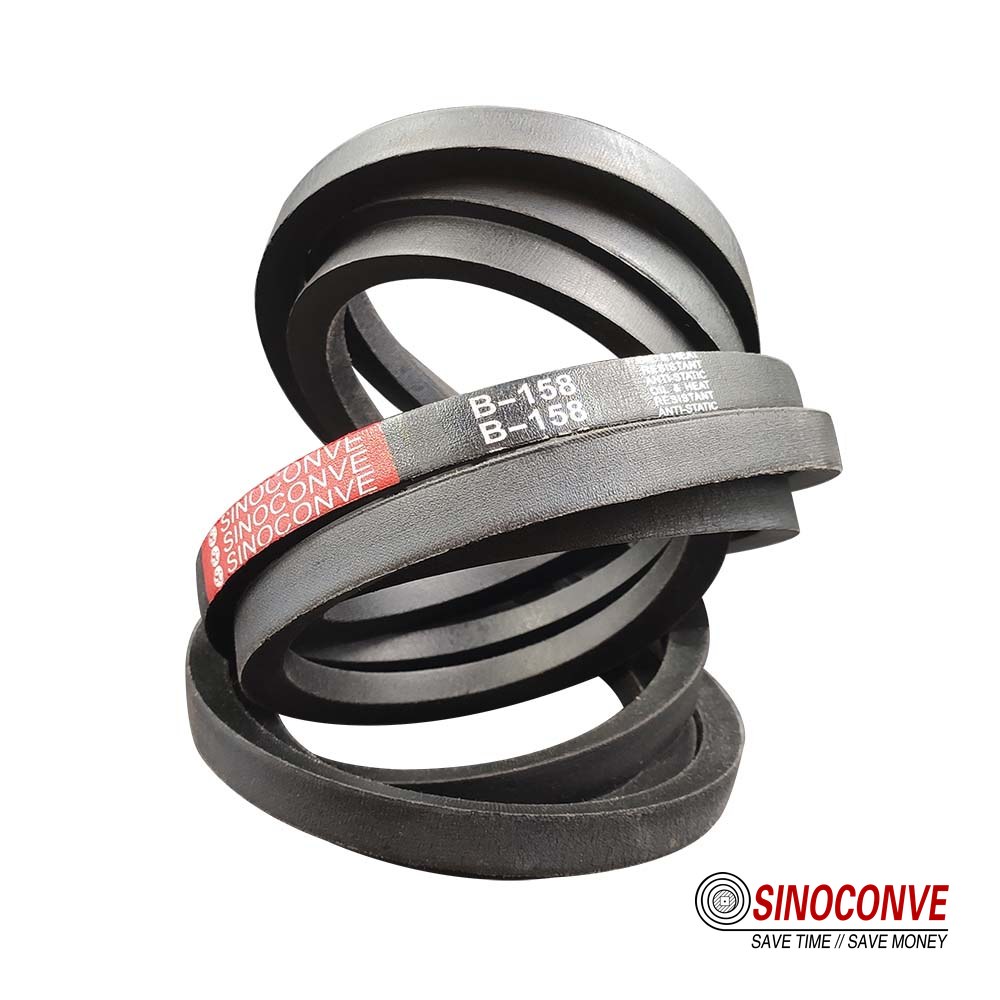
The toothed base sits below the cord line, and the teeth close against one another on the inside of every bend.
07Heat, Slip and Noise: What the Teeth Change on a Running Drive
A drive belt runs warm, and that warmth is the visible end of a process that starts inside the rubber. Every flex cycle converts a little energy into heat through hysteresis, so a belt that flexes with less strain wastes less of the drive power that way.
Temperature Rise, Slip and Noise on the Same Drive
The toothed base attacks heat at both ends. It generates less, because the flexing strain at the outer fiber is lower, and it sheds the rest faster, because the teeth add surface area and fan air past the belt. On a cement plant fan running 1,450 rpm against a 200 mm pulley we measured a raw edge cogged belt running 8 to 12 degrees Celsius cooler than the wrapped belt it replaced, at the same point, after two hours of steady load. A cooler belt ages more slowly.
Slip behaves in the opposite direction. A raw edge flank grips the groove harder, so the drive transmits its torque with lower installed tension, and the point at which the belt finally slips sits further up the load range. That is a genuine gain on a machine with overload spikes, since a belt that holds through a hard start does not glaze its own flanks. It also means a tension setting that suited a wrapped belt may be too tight for the cogged one.
Noise is the least discussed change and the most noticeable to the operator. A wrapped belt on a very small pulley tends to squeal, a sharp complaint that comes from the belt slipping at the groove floor in short bursts. A cogged raw edge belt usually removes that squeal, because it holds the groove instead of sliding. In its place comes a steady high note that follows the teeth past a fixed point, and at 10 m/s on a 10 mm pitch the teeth pass a spot about a thousand times a second, which sounds like a continuous hum. Most operators prefer the hum. Buyers comparing quotes on wholesale conveyor belts and drive belts sometimes forget that a badly worn groove will make any belt noisy.
08Back Bending Over Reverse Idlers
Plenty of industrial drives use a back-side idler, either to add wrap to the small pulley or simply to tension the belt from the flat back. A wrapped belt dislikes this arrangement, because reverse curvature pulls the jacket and the cord against their natural lay and can crack the base or throw the belt off a grooved idler.
Why a Toothed Base Tolerates Reverse Curvature
A cogged belt handles the same duty far more gracefully, for a reason that follows from the geometry. When the belt bends backwards over an idler, the teeth on the outside of that bend open apart rather than crushing together, so the belt has somewhere to put the extra curvature. The base rubber is not forced to stretch around a tight reverse radius, and a reverse bend that would crack a solid base becomes an ordinary event. This is why a raw edge cogged belt can run over a plain flat back-side idler to shorten a long center distance, an arrangement we would not endorse with a solid belt of the same section.
Two habits keep the arrangement healthy. Keep the back-side idler smooth and crowned rather than grooved, since the flat back of a cogged belt has nothing to sit in.Check it for roundness on every service, because a flat spot will hammer the base teeth on every revolution and start the cracking the cogs were meant to prevent. A conveyor belt distributor who understands both the drive side and the carrying side is worth more than one who only quotes a price.
09When a Cogged Belt Is the Right Answer
Three conditions pull a drive toward a toothed belt, and they tend to arrive together on the machines that give the most trouble. A small pulley, a high belt speed and a duty that starts and stops often are the classic trio, and each one loads the belt in a way the cogs are there to relieve.
Duty That Points Straight at a Cogged Belt
A small pulley is the clearest case. Any drive squeezed into a guard, a skid frame or an existing foundation ends up with a motor pulley smaller than the belt would like, and the toothed base is what makes that pulley survivable. High belt speed is the second, because as speed climbs the flex cycles per hour climb with it, and reducing the strain per cycle matters more than it does on a slow shaft. Frequent starting is the third, since a direct-on-line start slams a shock torque through the belt before the flanks have fully seated.
A quick check of the drive duty settles most of it. If the small pulley is below the wrapped minimum for the section, if the belt runs above roughly 20 m/s, or if the motor starts more than a few times an hour, the cogged belt is the safer default. Our own press shop molds both types, and as a conveyor belt factory and a V-belt manufacturer we would rather steer a drive to the right construction than sell a wrapped belt that comes back inside two months.
| Condition we find on the drive | What a toothed base does about it | Belt we would normally fit here |
|---|---|---|
| The motor pulley is physically smaller than the wrapped minimum for its section. | It bends around the tight radius with far less strain, so the base survives a pulley that would crack a solid belt. | Raw edge cogged is the only sensible choice, because a wrapped belt cannot be trusted at that diameter. |
| Belt speed is high, so the belt passes the small pulley many thousands of times each hour. | It cuts the strain generated on every pass and runs cooler, which stretches the fatigue life across the whole set. | Cogged again, because the same duty on a wrapped belt simply shortens the interval between replacements. |
| The machine starts and stops often, or sees heavy shock torque at the motor. | The bare flank grips harder, so the belt holds the groove instead of sliding when the load arrives suddenly. | Raw edge cogged, with tension set for the higher friction rather than copied from a wrapped belt. |
| Running tension is very high on a heavily loaded, steady drive with a large pulley. | The teeth help less here, because bending is not the limiting factor on a big pulley. | A wrapped belt often serves better, since its jacket protects the flanks under sustained load. |
| The drive sits in a dusty, gritty or oily area with poor pulley alignment. | The exposed rubber flank abrades quickly when grit gets between it and the groove metal. | Wrapped is the safer call, and alignment should be corrected before any belt of either type is fitted. |
10When the Wrapped Belt Still Wins
The wrapped belt is not the older, worse option waiting to be replaced. It is a different construction with its own advantages, and on some duties it is simply the correct one. Its fabric jacket protects the rubber from abrasion, holds up against oil mist and grit, and keeps friction stable as the belt ages instead of leaving bare rubber to polish itself smooth on a dirty pulley.
Cost matters as well. A wrapped belt is usually the cheaper article, and on a slow, well-aligned drive with a generous pulley it will give a long and uneventful life, so there is nothing to gain by paying for teeth the duty will never need. Where a site carries spares across many machines, standardizing on a wrapped belt that suits most of them is a legitimate decision, and no conveyor belt supplier should talk a buyer out of it just to move a premium line.
One more case is worth naming. A drive designed for a wrapped belt, with a large pulley and generous spacing, has no problem to solve. Fitting a cogged belt there fixes nothing and may outlast the flanks of a pulley already worn to the wrapped profile. Match the belt to the duty, not to the price list.
11A Worked Check: Same Power and Speed, Different Pulley
Numbers settle these arguments faster than opinions, so here is a drive worked both ways. The machine is a process fan absorbing 30 kW, driven by a 1,450 rpm motor at a ratio close to 1.5, with a service factor of 1.4 for a heavy, near-continuous duty. That gives a design power of 42 kW to be carried, and the section is SPB throughout.
Working the Minimum Diameter and the Belt Count
Option A uses a raw edge cogged belt on a 140 mm motor pulley, the size the existing guard will accept. Belt speed is pi times 140 mm times 1,450 rpm divided by 60,000, which lands at about 10.6 m/s. A per-belt rating in the region of 7.0 kW is commonly quoted at that diameter and speed, and an arc-of-contact correction near 0.95 brings the usable figure to about 6.65 kW per belt. Divide 42 kW by 6.65 kW and the drive needs 6.3 belts, so seven go on. The same plant builds the drive and the industrial conveyor belt behind the fan, and the same engineers size both.
Option B fits a wrapped belt, which cannot legally run on 140 mm in this section, so the motor pulley grows to 180 mm. Belt speed then rises to about 13.7 m/s, the per-belt rating climbs to roughly 9.5 kW, and after the same 0.95 correction each belt carries about 9.0 kW. Now 42 kW needs only 4.65 belts, so five are fitted. Fewer belts, a shorter pulley face and a cheaper belt.
The wrapped drive is the better drive if there is room for a 180 mm pulley, and it is cheaper on belts, tension and pulley face width. The cogged drive is the only drive that works at all if the guard will not move, and it costs more belts because the smaller pulley drops the belt speed and the power each belt can carry. The question is never whether cogged belts are better, only whether the space demands them.
One correction keeps the comparison fair. The raw edge belt grips with a higher coefficient of friction, so the seven-belt cogged drive can usually be tensioned lower than a wrapped belt carrying the same load, which pulls some of the extra bearing load back out of the smaller pulley. Our sizing software handles that automatically, and it is the sort of detail that turns a rough comparison into a buildable drive.
12Failure Modes: What the Damage Is Telling You
A cogged belt fails in a small number of ways, and each one points at a specific cause. Reading the damage correctly saves a set of belts, because replacing a worn belt without fixing the reason starts the clock again.
Root Cracks, Worn Teeth, Chunking and Stretch
Cracking at the root is the signature failure and almost always a bending problem rather than bad rubber. The cracks open along the base of the tooth, wider on the side that runs against the small pulley, and they trace back to a pulley smaller than the section wants, excessive tension, or a hot environment that has hardened the compound. Tooth faces wear flat when the grooves are rough or grit works between flank and metal. Chunking, where whole teeth break away, comes from impact or cold, when a stiff compound meets a shock load it cannot absorb.
Elongation is the quietest failure of the four and the one most often blamed on the wrong thing. A belt that has stretched beyond its take-up range usually has a cord problem rather than a tooth problem, and on the cheap imports described earlier it often means the cord was set too close to the cog valley and was loaded beyond its design strain. A cogged belt that has stretched that far cannot be re-tensioned back into service, and no amount of adjusting the motor slide will recover it.
| Damage we find on the removed belt | Mechanism that produced it in service | Action that actually removes the cause |
|---|---|---|
| Cracks along the root of the teeth, opening wider on the small pulley side. | Repeated bending through a radius tighter than the section can tolerate, made worse by over-tension. | Enlarge the small pulley to the permitted minimum and reset tension to the maker's figure. |
| Tooth tips worn flat and polished, with the flanks glazed and shiny. | Grit trapped between the belt and a rough or worn groove, plus chronic slip at the pulley face. | Renew the worn pulleys, shelter the drive from dust, and correct the tension that caused the slip. |
| Whole teeth broken away from the base in chunks, often near a pulley. | Shock loading, a stiff cold-start event, or a foreign object crushed between belt and groove. | Soften the start with a controlled starter or fit a compound rated for the site's coldest start. |
| The belt has stretched past the take-up and will no longer hold tension. | A cord set too close to the cog valley, or a tension member loaded beyond its design strain. | Return to a belt with proven cord placement and verify the elongation figure on the order. |
One diagnostic habit pays for itself. Photograph each failed belt next to a tape measure, note the running hours, and keep the record against the machine. A drive that eats belts every few months will usually show the same signature each time, which turns a guessing game into a straightforward fix.
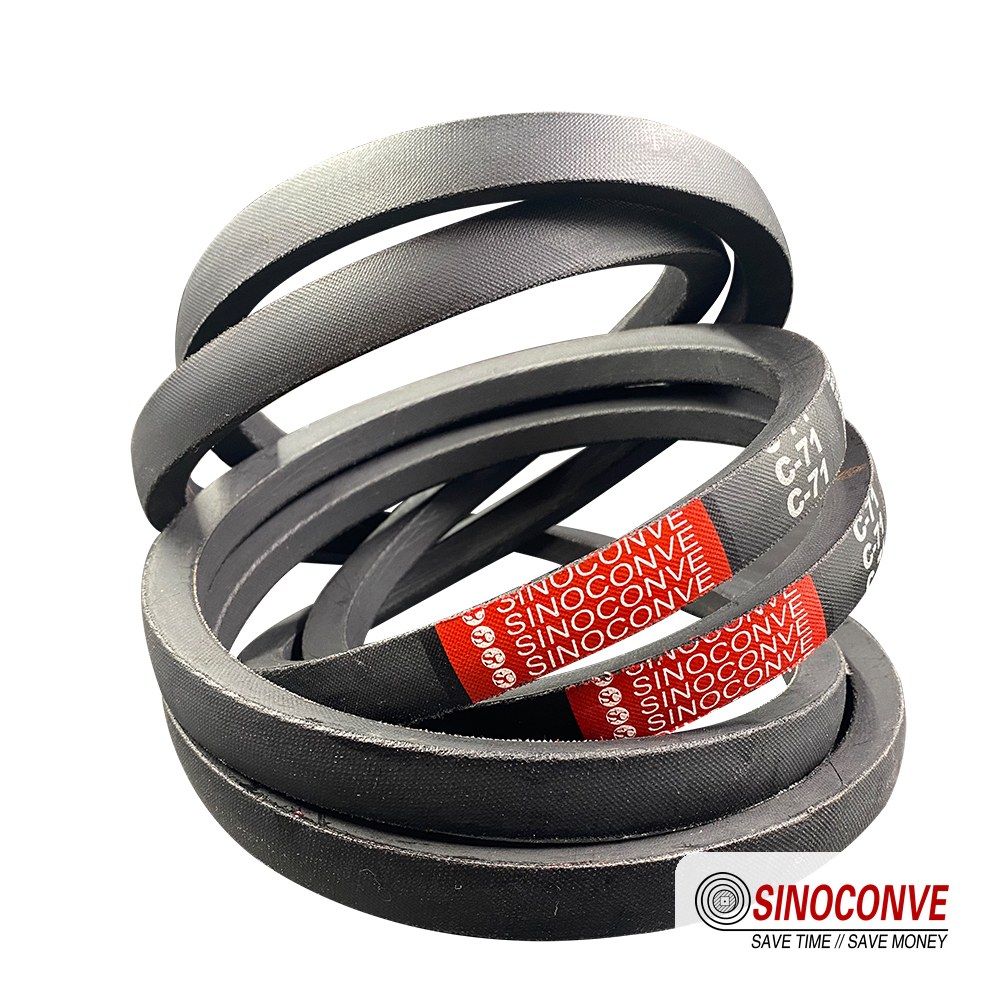
Tooth pitch and depth are chosen against the section height, so a narrow profile carries shallower cogs than a wide one.
13Procurement and Acceptance: Fields Worth Fixing on the Order
Most disagreements about a cogged belt are settled on paper before a single belt is molded, because the fields a buyer leaves vague are the fields a supplier is free to interpret. Cleaning up six of them removes almost all of the argument later.
Fields to Fix Before the Press Is Loaded
Start with the section and the profile, stated in the standard the two sides actually work to, because a nominal SPB from one maker and another is not automatically interchangeable in a worn groove. Then pin the tooth geometry, which means pitch, depth and the fact that the root is radiused rather than cut square. Ask for those figures in writing and compare them against the maker's drawing, since a tooth pattern that has been changed to save rubber is the most common way a belt is quietly cheapened.
Length tolerance and cord specification come next, and they belong together. Length is controlled as a datum length measured around the belt on a fixed gauge, and a set that varies will not share the load evenly, so a tight tolerance on the matched set matters more than on any single belt. The cord figure to insist on is elongation under load, because a stable cord keeps the drive in adjustment between services. Compound properties close the list, with temperature range, oil resistance and a low temperature rating evidenced by a test rather than a claim.
| Field to fix on the purchase order | How a buyer confirms it before shipment | Result we would expect on a compliant belt |
|---|---|---|
| The section, the profile and the standard the belt is built to. | Read the drawing against a physical sample and measure the flank angle in the groove. | A belt that seats on the flanks with the top just proud of the pulley rim. |
| Tooth pitch, tooth depth and a radiused root rather than a squared one. | Compare the molded teeth with the drawing and run a finger along the root curve. | Even teeth at a constant pitch, with a visible curve where each tooth meets the base. |
| Datum length and the tolerance applied to a matched set. | Measure each belt on the gauge and compare the spread across the whole set. | A set that sits inside a narrow length band so every belt carries a fair share. |
| Cord type and the elongation figure the cord is expected to hold. | Ask for the elongation result and check it against the tension the drive needs. | A belt that holds tension between services instead of creeping out of adjustment. |
| Compound temperature range, oil resistance and low temperature rating where relevant. | Read the certificate and, for cold duty, ask for a bend test at the site minimum. | A belt that stays flexible at the coldest start the site actually records. |
| Marking and traceability that ties the belt back to its own production record. | Check the brand, section and length marking, then ask for the batch record behind it. | A legible marking that can be traced if a failure has to be investigated later. |
14The Mistake of Buying a Cogged Belt as a Pricier General Belt
The most expensive misreading of this whole subject treats the cogged belt as simply a better grade of ordinary V belt and buys it everywhere on that basis. That view gets the economics backwards. On a drive with a generous pulley, a wrapped belt carries the load perfectly well for less money, and the teeth add nothing except cost.
A cogged belt is a solution to a specific geometric problem, and the problem is either present on the drive or it is not. When the pulley is small, when the speed is high, when the starts are frequent, or when a reverse idler has to be used, the toothed base earns its price. When none of those applies, the buyer has paid a premium for a feature the duty cannot use, and the familiar result is a cogged belt that costs more than the belt it replaced and lasts no longer.
There is a second half to the mistake. A buyer who thinks of the cogged belt as a universal upgrade will also fit one without changing the tension, and a raw edge belt tensioned like a wrapped one will overload its cord and fail in a way that looks like a manufacturing fault. Set the tension for the friction the belt actually has, check the pulley diameter against the section, and the cogged belt behaves exactly as its geometry promises.

15Frequently Asked Questions
Is a cogged V belt the same thing as a timing belt?
No, and mixing the two up wastes money on the wrong product. The teeth on a cogged V belt sit underneath a friction drive belt and never engage anything, while a timing belt meshes its teeth with a toothed pulley and transmits power by engagement, which is a completely different mechanism and a different family of industrial timing belts.
Why can a cogged belt run on a smaller pulley?
Because the toothed base bends with less stress at the outer rubber. When the belt curves, the cogs close together and let the base compress instead of stretching around a long radius, so the effective neutral axis moves toward the cord and the bending strain falls. A lower strain allows a tighter radius, which is why the catalogued minimum pulley diameter for a cogged section is smaller than the figure for the wrapped belt of the same profile.
Do cogged belts always come in raw edge form?
No, though raw edge is by far the most common pairing. A wrapped cogged belt keeps its fabric jacket over the flanks and molds the teeth into the jacket at the base, and it exists for drives where dust or oil would ruin an exposed rubber flank. You lose some friction and therefore some torque capacity, but you gain abrasion protection.
Can I simply swap a wrapped belt for a cogged one on the same pulleys?
Often yes, and it is one of the cheapest fixes for a drive with a tight pulley or a short service interval, but two checks should come first. Confirm the pulley diameter is now acceptable for the cogged section, since the whole point is that its minimum is smaller. Then reset the tension, because a raw edge flank grips harder and a belt tensioned to the old wrapped figure will run too tight. Change nothing and the belt may still fail early, which then gets blamed on the belt.
Do cogged belts need less tension than wrapped belts?
Usually yes, because the higher friction of a raw edge flank transmits the same torque with less installed tension, and that lower tension also removes some bearing load from the pulley shafts.
Why is my cogged belt noisier than the wrapped belt it replaced?
The noise has changed character rather than simply increased. A cogged belt tends to eliminate the sharp squeal of a wrapped belt slipping on a small pulley, and replaces it with a steady hum as the teeth pass a fixed point, which at speed can sound like a whine. If the sound is intermittent rather than steady, look instead for misalignment or a worn groove, because a belt that keeps slipping is the real problem.
What causes cogs to crack at the root?
Almost always repeated bending through a radius tighter than the section was designed to take, made worse by over-tension or a hot environment that has hardened the compound.
Does the cogged base reduce the power a belt can carry?
Not by itself, and the question usually confuses bending with tension. The teeth change how the belt bends, not how much tension the cord can hold, so a cogged belt and a solid belt of the same section and cord carry broadly comparable power. What does change is how the power is delivered, because the raw edge flank that goes with a cogged base grips harder. The lower belt speed a smaller pulley produces is a separate effect, and that is what forces a drive onto more belts.
Do cogged belts last longer than wrapped belts?
On a drive that suits them they often do, largely because they run cooler and flex with less strain, and that combination slows the ageing of the rubber. Fit one where the pulley is generous and the environment is dirty, and the wrapped belt will easily outlast it.
Can a cogged belt run over a back-side idler?
Yes, and this is one of its quieter advantages. A reverse idler bends the belt the opposite way, and on a cogged belt the teeth on the outside of that bend simply open apart, so the base is not forced to stretch around a tight reverse radius. A wrapped belt of the same section can crack its base or throw off the idler in the same arrangement. The reverse idler still has a minimum diameter, and it should be smooth and crowned rather than grooved, but the belt will take it.
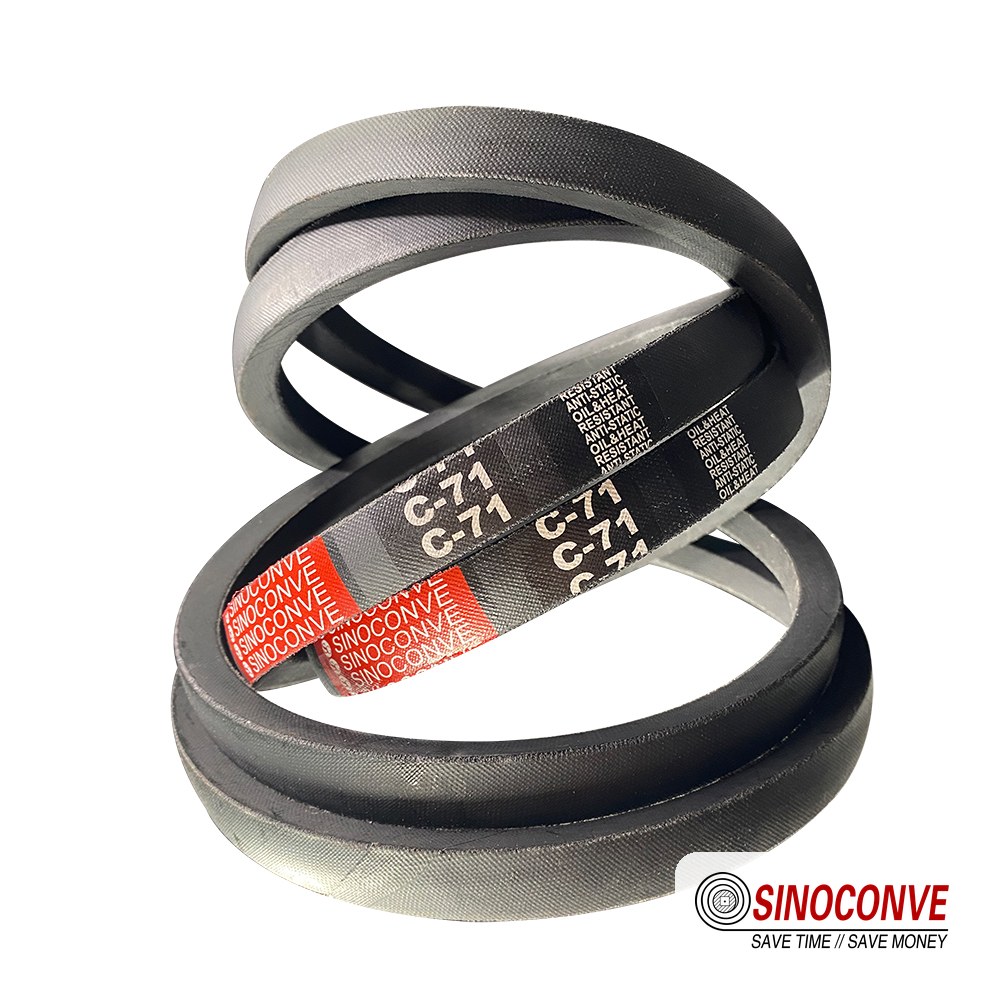
Cord placement is set against cog depth on the drawing, then checked on the finished belt before it leaves the press shop.
Whatever the drive in front of you looks like, the decision comes back to two numbers and one question. What diameter is the small pulley, and does its speed and duty load the belt heavily enough that bending matters. If the teeth help, fit them. If they do not, keep the wrapped belt and spend the money on alignment. Teams running heavy carrying lines beside these drives can read more on heavy duty belts for mining efficiency and on steel cord belt durability, or browse the whole range through the product catalog.
Related Products You May Need
- V belts in wrapped, raw edge and cogged form for crusher, fan and pump drives
- Timing belts where the drive needs fixed position rather than friction
- PU timing belts for compact automation and packaging drives
- Rubber conveyor belt built on the same compound platform as our drive belts
- EP rubber conveyor belt where carcass strength and low stretch matter most
- Steel cord conveyor belt for the high tension main lines feeding these drives
- Conveyor rollers and idlers matched to the same duty
- Full product catalog covering drive and carrying belts in one place
Related Blog Posts
- Abrasion resistant conveyor belts for quarry and aggregate duty
- Heavy duty rubber conveyor belt for mining efficiency
- Steel cord belt durability and material handling efficiency
- Belt cleaning methods, schedules and when scrapers will not work
- Impact roller selection for loading zones
- Port conveyor belt supply for bulk handling terminals
- Return side belt cleaning on industrial conveying lines