Engineered belt solutions for demanding industries worldwide

Blog

Blog

Home/Blog
Recent Posts
Conveyor Belt Drives for Aggregate Production: Power, Pulleys and Control

Conveyor Belt Drives for Aggregate Production: Power, Pulleys and Control

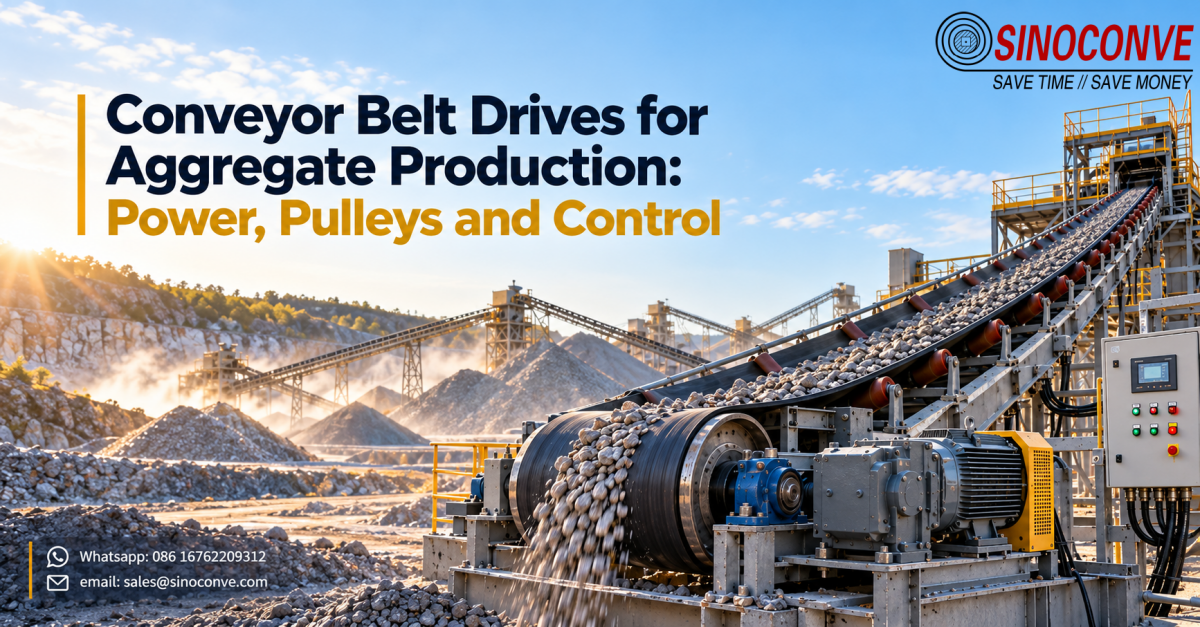
Conveyor drives for aggregate production are not chosen by fixing a motor size and moving on. The drive is set jointly by throughput, lift height, line length and incline, the starting method, and the stop-start sequence of the crushers and screens upstream, and when it is misapplied the belt rarely announces a drive fault: you see mistracking, slip under full load, abnormal elongation and a climbing energy bill. This guide works the drive and transmission layer of an aggregate line, from layout choice to acceptance on site. It separates drive faults from belt faults, compares head single pulley, head dual pulley, head-tail and intermediate drives, and reviews the motor, gearbox and pulley criteria that decide starting torque margin and the starting method. Slip and mistracking are treated as two different problems, before sections on lagging and cleaning, the return-side environment, the interface checklist that ties the drive to the belt, energy and site acceptance tests.

Link Belts vs V Belts: Which Drive Belt Fits Your Machine

Link Belts vs V Belts: Which Drive Belt Fits Your Machine

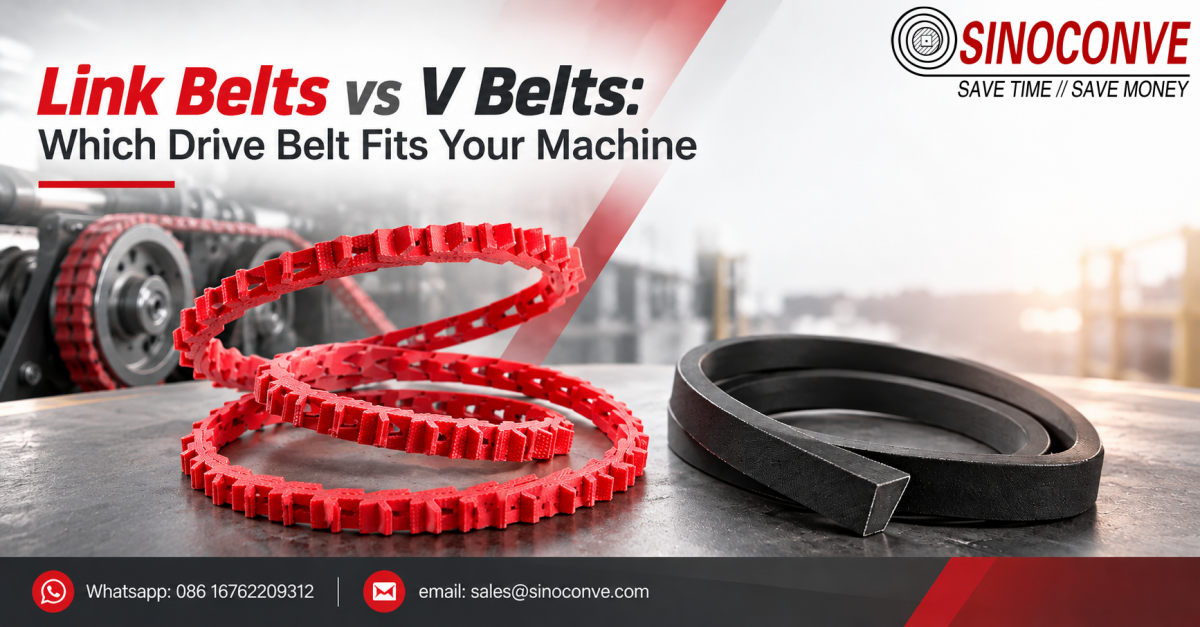
A link belt and a V belt solve two different problems, and this guide works the decision from the plant floor rather than from a catalogue. It explains what each belt is: a link belt assembled on the machine from detachable links joined with pins, so its length can be set and shortened in place, and a V belt cured as one endless ring that grips the pulley groove. It then sets out where a link belt wins, including drives that cannot be reached without pulling a shaft, emergency repairs and a spares policy built on one box of links, and where it loses: vibration and noise at speed, elongation, a lower load ceiling, link and pin wear, hygiene near open food, and a total cost that a low unit price hides. The V belt side of the argument, the decision matrix, the shop-floor retrofit sequence and the procurement checks are all covered, closing with answers to the questions that reach our desk most often.
Strong Plastic Conveyor Belt: Abrasion Resistance and Wear Life

Strong Plastic Conveyor Belt: Abrasion Resistance and Wear Life

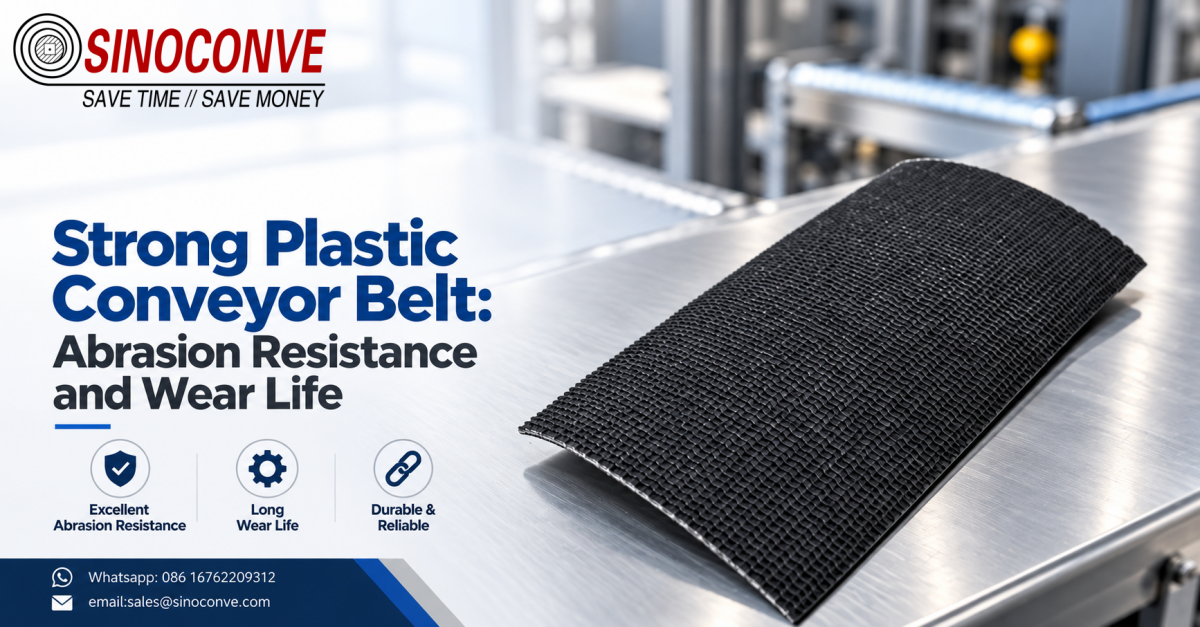
A strong plastic conveyor belt is easy to name and hard to specify, because strength on a plastic belt can mean stiffness, impact toughness or surface scratch resistance, and those three do not rise together. This guide stays on the material layer and works the four variables that decide how fast a plastic belt loses material: the polymer body, where crystallinity and molecular structure set the baseline; the fillers that shift it; the surface geometry that controls how far product slides against the face; and the medium, since water, oil, fine powder and dry dust each attack a belt differently. It compares how PP, PE, POM and PA wear, sets out what a filler adds and gives up, and walks the four wear mechanisms with the site symptom that points to each. Later sections cover geometry and wear rate, a duty-matching guide, why two abrasion claims cannot be compared unless they name the same method, the documents to request, and where a plastic belt stops being the right answer.
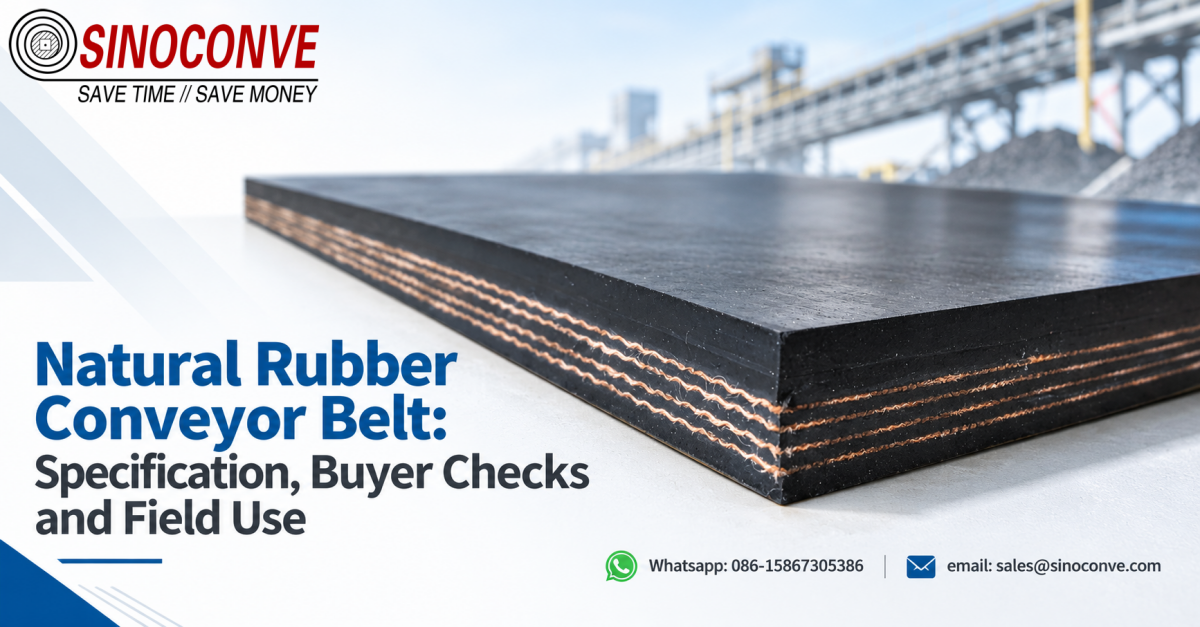
Natural Rubber Conveyor Belt: Specification, Buyer Checks and Field Use

Natural Rubber Conveyor Belt: Specification, Buyer Checks and Field Use

Natural rubber conveyor belts earn their place through strain-induced crystallization, the mechanism that makes the cover resist cutting, tearing and chunking at high-impact loading points. This guide stays on the material layer. It explains that mechanism, separates tensile strength from cut, tear and chunking resistance, and sets out the price of that strength in heat aging, ozone and oil. It compares natural rubber with SBR, BR, EPDM and NBR across wear, cut and tear, aging, oil, low temperature and cost, and explains why a blend rather than a pure natural rubber cover is usually the best recipe. It covers what else lives inside the compound, where natural rubber earns its keep, the hard boundaries where it should not be specified, how to ask for a cover during inquiry by requesting test-method names rather than bare values, and how to read field wear as normal loss or a compound that fell short. Storage and aging close the piece.
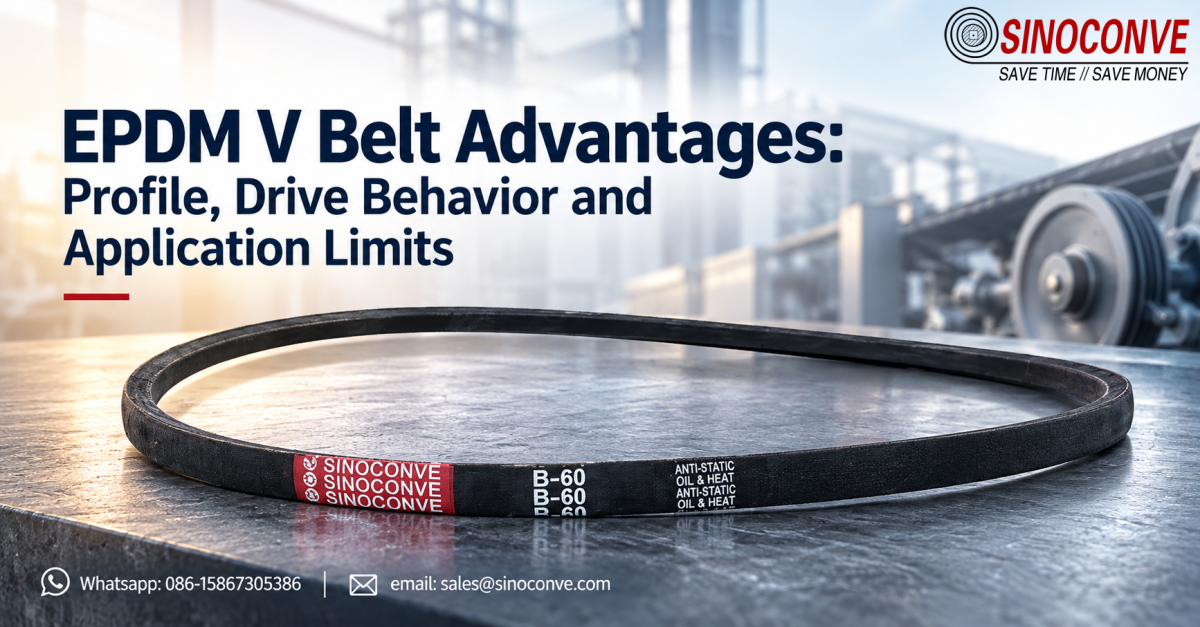
EPDM V Belt Advantages: Profile, Drive Behavior and Application Limits

EPDM V Belt Advantages: Profile, Drive Behavior and Application Limits

EPDM V belts win on environmental resistance rather than raw strength. The compound shrugs off the ozone, weather, heat, water and steam that age natural rubber and SBR faster, and it pays for that durability with weak mineral oil resistance. This guide stays on the material layer. It explains the saturated backbone and non-polar chemistry behind those strengths and limits, compares natural rubber, SBR, chloroprene, EPDM and HNBR across heat, ozone, oil, water, fatigue and low temperature, and shows the situations where EPDM clearly earns its keep. It sets out the hard limits, oil and grease first among them, and explains what changes on the drive when the compound changes, including initial tension, startup slip and batch elongation consistency. It closes with how to specify EPDM in a request for quote, the misconceptions that cost buyers money, and how to verify a compound before you approve a sample. Drive design and belt sizing are left to their own dedicated pages.

Power Plant Conveyor Belt: Application Design and Procurement Checklist

Power Plant Conveyor Belt: Application Design and Procurement Checklist

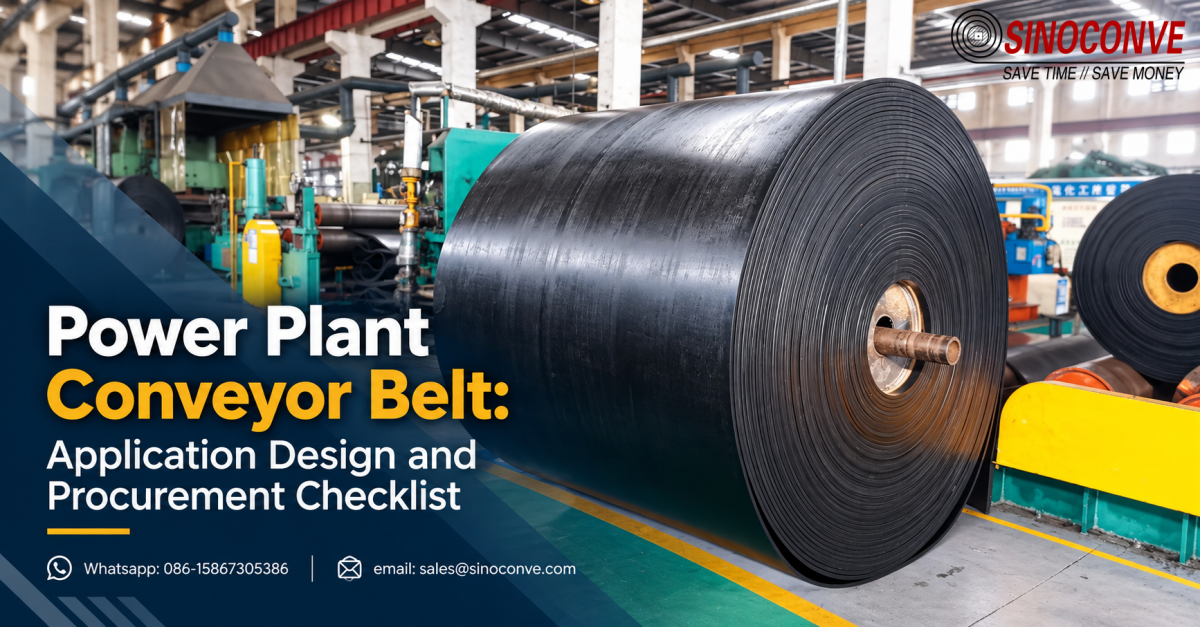
A power plant conveyor belt is not chosen by a single temperature rating. It is chosen by the zone it runs in, because fuel receiving, boiler feed, bottom-ash, flue-gas desulfurization and sludge lines each place a different material, moisture level and heat load on the same belt. This guide walks the plant as a material map: what each zone carries, what the belt faces there, and the selection consequence it pushes you toward. It explains how biomass, RDF and SRF fuels change the choice, where the fire, dust and static questions come from on a non-coal line, and how to combine belt, roller, cleaning and splice into a set that survives each zone. It closes with downtime and redundancy thinking and a procurement and acceptance checklist of the documents and site checks to request before a belt ships. Readers who need coal flame-resistance test detail are pointed to our dedicated coal power plant belt article.


Conveyor Belt Drives for Aggregate Production: Power, Pulleys and Control

Conveyor Belt Drives for Aggregate Production: Power, Pulleys and Control

Conveyor drives for aggregate production are not chosen by fixing a motor size and moving on. The drive is set jointly by throughput, lift height, line length and incline, the starting method, and the stop-start sequence of the crushers and screens upstream, and when it is misapplied the belt rarely announces a drive fault: you see mistracking, slip under full load, abnormal elongation and a climbing energy bill. This guide works the drive and transmission layer of an aggregate line, from layout choice to acceptance on site. It separates drive faults from belt faults, compares head single pulley, head dual pulley, head-tail and intermediate drives, and reviews the motor, gearbox and pulley criteria that decide starting torque margin and the starting method. Slip and mistracking are treated as two different problems, before sections on lagging and cleaning, the return-side environment, the interface checklist that ties the drive to the belt, energy and site acceptance tests.

Link Belts vs V Belts: Which Drive Belt Fits Your Machine

Link Belts vs V Belts: Which Drive Belt Fits Your Machine

A link belt and a V belt solve two different problems, and this guide works the decision from the plant floor rather than from a catalogue. It explains what each belt is: a link belt assembled on the machine from detachable links joined with pins, so its length can be set and shortened in place, and a V belt cured as one endless ring that grips the pulley groove. It then sets out where a link belt wins, including drives that cannot be reached without pulling a shaft, emergency repairs and a spares policy built on one box of links, and where it loses: vibration and noise at speed, elongation, a lower load ceiling, link and pin wear, hygiene near open food, and a total cost that a low unit price hides. The V belt side of the argument, the decision matrix, the shop-floor retrofit sequence and the procurement checks are all covered, closing with answers to the questions that reach our desk most often.

Strong Plastic Conveyor Belt: Abrasion Resistance and Wear Life

Strong Plastic Conveyor Belt: Abrasion Resistance and Wear Life

A strong plastic conveyor belt is easy to name and hard to specify, because strength on a plastic belt can mean stiffness, impact toughness or surface scratch resistance, and those three do not rise together. This guide stays on the material layer and works the four variables that decide how fast a plastic belt loses material: the polymer body, where crystallinity and molecular structure set the baseline; the fillers that shift it; the surface geometry that controls how far product slides against the face; and the medium, since water, oil, fine powder and dry dust each attack a belt differently. It compares how PP, PE, POM and PA wear, sets out what a filler adds and gives up, and walks the four wear mechanisms with the site symptom that points to each. Later sections cover geometry and wear rate, a duty-matching guide, why two abrasion claims cannot be compared unless they name the same method, the documents to request, and where a plastic belt stops being the right answer.

Natural Rubber Conveyor Belt: Specification, Buyer Checks and Field Use

Natural Rubber Conveyor Belt: Specification, Buyer Checks and Field Use

Natural rubber conveyor belts earn their place through strain-induced crystallization, the mechanism that makes the cover resist cutting, tearing and chunking at high-impact loading points. This guide stays on the material layer. It explains that mechanism, separates tensile strength from cut, tear and chunking resistance, and sets out the price of that strength in heat aging, ozone and oil. It compares natural rubber with SBR, BR, EPDM and NBR across wear, cut and tear, aging, oil, low temperature and cost, and explains why a blend rather than a pure natural rubber cover is usually the best recipe. It covers what else lives inside the compound, where natural rubber earns its keep, the hard boundaries where it should not be specified, how to ask for a cover during inquiry by requesting test-method names rather than bare values, and how to read field wear as normal loss or a compound that fell short. Storage and aging close the piece.

EPDM V Belt Advantages: Profile, Drive Behavior and Application Limits
SINOCONVE
Oct 12, 2026

EPDM V Belt Advantages: Profile, Drive Behavior and Application Limits

EPDM V belts win on environmental resistance rather than raw strength. The compound shrugs off the ozone, weather, heat, water and steam that age natural rubber and SBR faster, and it pays for that durability with weak mineral oil resistance. This guide stays on the material layer. It explains the saturated backbone and non-polar chemistry behind those strengths and limits, compares natural rubber, SBR, chloroprene, EPDM and HNBR across heat, ozone, oil, water, fatigue and low temperature, and shows the situations where EPDM clearly earns its keep. It sets out the hard limits, oil and grease first among them, and explains what changes on the drive when the compound changes, including initial tension, startup slip and batch elongation consistency. It closes with how to specify EPDM in a request for quote, the misconceptions that cost buyers money, and how to verify a compound before you approve a sample. Drive design and belt sizing are left to their own dedicated pages.

Power Plant Conveyor Belt: Application Design and Procurement Checklist

Power Plant Conveyor Belt: Application Design and Procurement Checklist

A power plant conveyor belt is not chosen by a single temperature rating. It is chosen by the zone it runs in, because fuel receiving, boiler feed, bottom-ash, flue-gas desulfurization and sludge lines each place a different material, moisture level and heat load on the same belt. This guide walks the plant as a material map: what each zone carries, what the belt faces there, and the selection consequence it pushes you toward. It explains how biomass, RDF and SRF fuels change the choice, where the fire, dust and static questions come from on a non-coal line, and how to combine belt, roller, cleaning and splice into a set that survives each zone. It closes with downtime and redundancy thinking and a procurement and acceptance checklist of the documents and site checks to request before a belt ships. Readers who need coal flame-resistance test detail are pointed to our dedicated coal power plant belt article.
Explore more

We are committed to providing you with better products and services. Welcome to browse more content for details