
EPDM V-belts win on environmental resistance, not on raw strength. The compound shrugs off ozone, weather, heat, water, and steam that age natural rubber and SBR quickly, and it pays for that durability with weak mineral oil resistance. So the decision is never "is EPDM better than rubber?" It is always "does my drive fight the environment, or does it fight oil?" We will show you how to read that question for your own line, and then how to buy the right compound without paying a premium for a label that does nothing for you.

01EPDM on the Belt: Where the Compound Earns Its Place
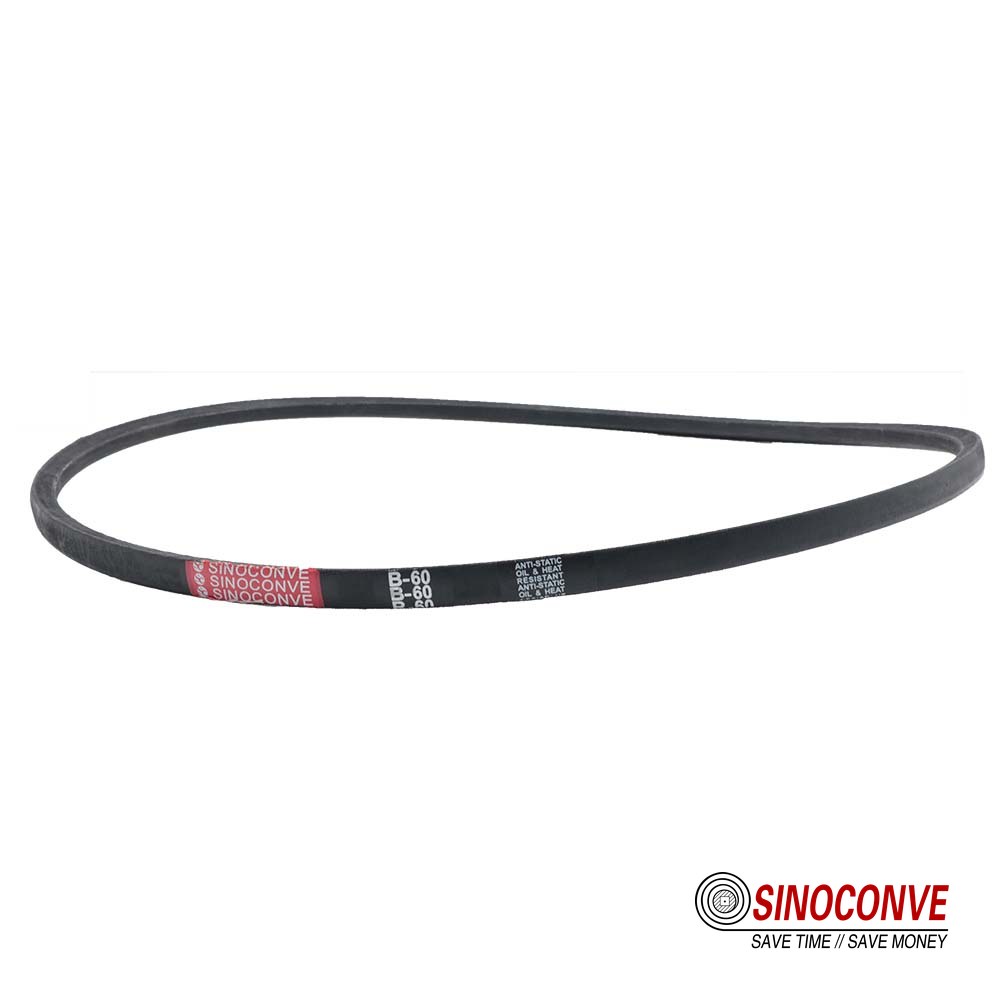
Most buying conversations about V-belts start and stop at profile and length. Those two fields matter, but they tell you nothing about how the belt will age inside your building. A belt that is dimensionally correct can still crack beside a paint oven, swell in a washdown bay, or harden on a rooftop drive. The compound is the part of the belt that actually lives in your environment, and EPDM is the family buyers reach for when that environment is the enemy.
As a V-belt manufacturer we carry the full rubber family for a reason. No single compound wins everywhere. Natural rubber, SBR, chloroprene, EPDM, and HNBR each solve a different problem on the factory floor, so we stock and compound all of them. EPDM occupies one specific corner of that map, and ordering it for the wrong corner is the most common mistake we see on incoming requests.
EPDM's reputation is deserved but narrow. It is not a universal upgrade. Treat it as a specialist for outdoor, humid, hot, and wet duty, and as a liability anywhere mineral oil is present.
Field note from our engineers: On one quarry line the same profile of belt ran fine indoors for years, then failed in under a season after the machine was moved under an open canopy. The compound, not the profile, was what changed. Reordering by size alone would have repeated the failure.
The rest of this article stays on that material layer. We will not re-teach drive geometry here, and we will not walk through section codes and length charts, because those live in their own dedicated pages on this site. What we cover is how EPDM behaves, where it pays off, where it fails, and how to ask for it so the belt you receive is the belt you actually meant to buy.
02What EPDM Is and Why Its Backbone Matters
EPDM stands for ethylene propylene diene monomer. The name matters less than one structural fact: its polymer chain is saturated, which means it has no reactive double bonds left exposed along the spine. That single detail explains almost everything good and bad about the material on a drive.
A saturated backbone that ignores oxygen and ozone
Rubber degrades outdoors mostly through attack by ozone and by oxygen working on the double bonds in the chain. Natural rubber and SBR are full of those bonds, so a small crack at the surface becomes a tear that grows with every flex. EPDM has almost none of those open sites, so the attack has no place to grab.
The practical result is a belt that sits in the sun, beside a boiler, or under a steam vent without the surface crazing that marks older belts. This is why you see EPDM on equipment that lives outside, on dryers, and in hot humid rooms.
A non-polar polymer that hates oil
That same chemistry has a downside. EPDM is non-polar, and mineral oils and greases are non-polar too, so the two want to mix. A belt soaked in oil will swell, soften, and lose tension, and no amount of care will bring it back. We state this early because it drives every selection decision that follows.
Remember the pairing: saturated backbone gives you weather and heat and steam. Non-polar backbone takes away oil. Hold both facts together and the rest of this article is just working out the consequences.
The third monomer in EPDM's name is the diene, and it is there for a specific reason. A fully saturated chain cannot be cross-linked by ordinary sulfur, so a small amount of diene is built in to give the cure something to latch onto. That cure is what turns raw rubber into a belt that holds its shape, resists permanent set under tension, and returns to form after every flex. Getting that balance right is compounding work, not a marketing detail, and it is another reason two belts can both say EPDM and still behave very differently on the same machine.
03Five Compounds Side by Side: How EPDM Compares
Rankings like "best" hide the real question, which is "best for what." We judge each compound family against six conditions that actually show up on drives: heat, ozone and weather, oil, water and steam, dynamic fatigue, and low temperature. Read down a column to compare, or across a row to see what one compound is good at.
How to read this comparison
The cells below are written as working notes, not as absolute grades. A real belt is a formulated product, so a skilled compounder can push any family partway toward another. Use the table to pick a starting family, then let the supplier's data sheet and your own trials settle the rest.
| Compound type being compared in this table | Resistance to heat aging over time | Resistance to ozone and weathering outdoors | Resistance to mineral oil and grease | Resistance to water and steam washdown | Resistance to dynamic fatigue and shock loads | Flexibility retained at low ambient temperature |
|---|---|---|---|---|---|---|
| Natural rubber (NR) offers high resilience, tensile strength, and strong tear resistance. | Natural rubber hardens and cracks under sustained heat, so it stays away from hot drives. | Natural rubber cracks quickly under ozone and UV, which makes exposed outdoor runs a problem. | Natural rubber swells in mineral oil and grease, so oily machine rooms are not its job. | Natural rubber tolerates plain water reasonably well but steam exposure shortens its service life. | Natural rubber has excellent dynamic fatigue life because it resists crack growth during repeated flexing. | Natural rubber stays flexible in cold weather down to a point, then stiffens before it cracks. |
| SBR is a general-purpose synthetic that processes easily and wears well at a lower cost. | SBR survives moderate heat better than natural rubber but still ages faster than EPDM under warmth. | SBR resists ozone poorly on its own and needs protective additives for any outdoor exposure. | SBR swells noticeably in mineral oil and is generally a poor choice around lubricated machinery. | SBR handles ordinary water fine but degrades when steam and high humidity are continuous. | SBR builds up heat under repeated flexing, so its dynamic fatigue life trails natural rubber. | SBR stiffens at low temperatures and can turn brittle sooner than natural rubber in cold climates. |
| Chloroprene (CR) balances moderate oil resistance with good weathering and useful flame resistance. | Chloroprene tolerates moderate heat well and generally outlasts natural rubber in warm service. | Chloroprene resists ozone and weathering far better than natural rubber or SBR. | Chloroprene handles some oil and grease better than EPDM but not as well as nitrile rubber. | Chloroprene performs well in damp conditions and tolerates steam reasonably for industrial use. | Chloroprene offers fair dynamic fatigue life, though it can stiffen over long flexing service. | Chloroprene stiffens in cold weather sooner than EPDM and natural rubber, limiting freezer use. |
| EPDM pairs outstanding weather and heat resistance with weak oil resistance, a trade to plan around. | EPDM resists heat aging very well and keeps its flexibility through sustained warm operation. | EPDM shrugs off ozone, UV, and weather, which is why exposed outdoor drives run on it for years. | EPDM swells badly in mineral oil and grease, so it belongs nowhere near an oiled gearbox or chain bath. | EPDM tolerates water, steam, and humidity extremely well, making it the pick for washdown and damp shops. | EPDM shows good dynamic fatigue resistance when the compound is designed for flexing duty. | EPDM stays flexible at low temperatures, which helps cold-climate and outdoor startup. |
| HNBR delivers strong oil, heat, and abrasion resistance for demanding drives with oily environments. | HNBR resists heat and oxidation very well, often outperforming standard nitrile in hot service. | HNBR handles ozone and weather better than plain nitrile but still trails EPDM outdoors. | HNBR resists mineral oil, fuels, and many fluids, making it the choice where oil is unavoidable. | HNBR copes with water and steam decently, though EPDM remains the cleaner wet-service pick. | HNBR offers good dynamic properties and holds up under flexing in tough mechanical duty. | HNBR can be compounded for low-temperature service but standard grades stiffen in the cold. |
Look at the two columns that decide most EPDM calls: oil resistance and ozone plus weather. If your line has both a lubricated section and an outdoor section, one belt family may not cover both, and that is exactly the kind of conflict worth flagging to a supplier before you order.
Chloroprene sits in the middle on purpose, handling some oil while still weathering reasonably well, which is why it turns up on general-purpose industrial drives where neither extreme dominates. HNBR takes the other side, trading weather resistance for genuine oil and heat service. Between these five families, almost every drive on a plant has a natural home once the environment is named.
Two belts can both be stamped EPDM and still live very different lives on the same machine, because the carbon black loading, the cure system, and the amount of antioxidant in the recipe all shift heat life and flex life even though none of those details appear on the sleeve. The polymer name starts a decision. It never finishes one. A supplier's certificate plus a short trial on your own machine is the only thing that actually closes the loop.
04Four Situations Where EPDM Clearly Earns Its Keep
The four scenes below come up again and again in the field. Each one stresses a different part of the material, and each one is where a natural rubber or SBR belt quietly gives up while the machine keeps running long enough to hide the cause.
Outdoor, humid, and wide-swing duty
Think of a drive that sits on a rooftop, a balcony line, or beside an open loading bay. It sees morning dew, afternoon sun, and a swing from cold night to hot day, every single day. Ozone and ultraviolet attack the surface continuously, and a natural rubber belt will show a web of fine cracks at the flex points within a season or two.
EPDM ignores that attack almost entirely. Its saturated backbone has no open bonds for ozone to break, so the surface stays intact and the cracks never get their starting point. This is the single clearest case for paying attention to compound rather than just profile.
Watch the flex points when you inspect. On a drive that is running well, the flanks stay smooth and there is no dusting of cracked rubber around the pulley, while a failing belt leaves fine crumbs and a web of surface lines that spread outward from the bend. If you catch those cracks early, you can still change the compound before the belt lets go and takes the machine down.
High humidity and wide temperature swings
Outdoor and coastal plants also fight moisture, not just sun. Rubber that absorbs water loses strength and swells at the surface, and repeated wet-dry cycles accelerate the damage. EPDM takes up very little water, which keeps its dimensions and its flexing behavior stable through wet seasons.
That stability is worth more than it sounds. A belt that swells changes its effective length, which changes tension, which changes slip and wear. Remove the swelling and you remove a whole family of "mystery" tension problems on lines that run through damp air or monsoon weather.
On a humid line the check is dimensional. Watch the tension after a wet week, because a swelling belt will read loose without anyone ever touching it. EPDM keeps those numbers steadier, and steadier numbers mean fewer mid-season tension calls.
Field note from our engineers: Coastal plants fight salt as well as sun. Salt spray corrodes metal and accelerates the surface attack on ordinary rubber, while EPDM's sealed surface shrugs most of it off. When a port or a seaside facility reports short belt life, we look at ozone and salt together before we touch anything else.
05Heat, Steam and Frequent Starts: Why EPDM Survives Them
The next two scenes move indoors, where the attack is thermal and mechanical rather than solar. EPDM's reputation here is real, but it comes with conditions you should understand before you trust it.
Sustained warmth and steam
Dryers, ovens, hot air handlers, and laundry and finishing rooms all run warm and often wet. Heat accelerates the aging of every rubber, but it attacks natural rubber and SBR much faster than EPDM. The belt hardens, then cracks at the flanks, then starts to slip.
EPDM holds its flexibility far longer under the same warmth, and it does not fear the steam that rides along with the heat in these rooms. That combination is why a dryer or a steamy wash line is such a natural EPDM application.
What we deliberately will not give you is a temperature ceiling in degrees. That number depends on the specific recipe, the load, the running time, and the ambient, so any single figure we printed here would be misleading. Ask the supplier for the rating of the exact compound under your conditions, and confirm it with a short trial on the real machine.
Frequent starts, shock loads, and reversals
Machines that start and stop often, reverse, or take a sudden jam put a flexing, shearing load into the belt every cycle. A compound that builds internal heat or cracks at the surface under repeated bending will fail here long before a steady-speed drive would.
EPDM, when formulated for it, flexes cleanly and resists the crack growth that repeated bending drives.We are careful with that phrase because it is the honest version: EPDM is good at this, not automatically good.The compounder has to build the recipe for flex life, so this is another place where the label alone does not finish the job.
On a stop-start line, the sign of a good match is quiet, smooth starts with no chirp at the groove and no visible slip even when the load comes on hard, which tells you the compound is releasing cleanly instead of sticking. Listen for that first moment of engagement. If the chirp grows louder over a few days, tension or alignment is drifting, and the fix is usually an adjustment rather than a new belt.
06The Hard Limits That Separate Good Fits From Bad Ones
Every material has a line it cannot cross, and EPDM's lines are sharper than most. Ignore them and the belt will fail in a way that looks like a bad product when it was actually a bad match. Here are the three limits that decide whether EPDM belongs on your drive at all.
Oil and grease are the first disqualifier
If the drive sits anywhere oil can reach it, EPDM is the wrong answer. Gearbox breathers, chain oilers, hydraulic leaks, cutting fluid mist, and simply greasy hands during maintenance all count. The belt will swell, soften, and lose its grip, and the failure often reads as slipping rather than as a chemistry problem.
The fix is not a thicker EPDM belt. It is a different family. Where oil is unavoidable, nitrile or hydrogenated nitrile grades are the standard switch, because they are built to live in contact with hydrocarbons. If a supplier offers you EPDM for an oily spot, that is a signal to ask harder questions.
Strong solvents and certain polar fluids can also attack EPDM even though they are not mineral oil. Ketones, esters, and some aggressive cleaning chemicals are the ones to watch, and the safe rule is to name every fluid that touches the belt when you quote. What a rubber tolerates depends on the exact chemical, so guessing here is how a weather-proof belt dies young in a chemical bay.
Heat has an absolute ceiling, but we will not print a number
EPDM tolerates heat better than most rubbers, and that fact invites buyers to push it too far. Beyond the compound's ceiling the belt hardens, loses elasticity, and cracks, and once that hardening sets in it does not recover. The ceiling is real and it is absolute for a given recipe.
We deliberately leave the number blank here. The safe limit changes with the compound, the load, the ambient temperature, the belt speed, and how long the machine runs each day, so a single printed figure would be worse than useless. Get the rating for your exact compound and your exact duty, then leave a margin rather than running right at the edge.
Replacing a belt is never just a length match
A common failure path starts when someone swaps an old natural rubber belt for an EPDM belt of the same section and length, expecting a straight upgrade. The two compounds stretch and sit differently under tension, so the new belt may run looser or tighter than the old one did, and the machine may slip or whine until it is re-tensioned.
Different batches and different compounders can also vary, which is why a careful plant checks tension after any compound change. We cover what to watch on the drive in the next section, because this is where material choice quietly becomes a maintenance problem.
When you change the compound or the supplier, run a short checklist before the belt goes into service, and write down the tension travel, the groove fit, and a baseline for startup slip and noise so a later change has something to be compared against. Record the numbers. Pull one belt from the batch and keep it for a consistency check against the next delivery. A change you cannot measure is a change you cannot defend.
07What Changes on the Drive When the Compound Changes
You do not need to be a drive designer to feel a compound change at the machine. Hardness and rebound show up as tension behavior, startup slip, and noise, and a sharp ear or hand will catch all three. This section is about the observable effects, not the design math, which lives in our dedicated drive article.
Initial tension and how well it holds
Harder compounds stretch less under the same load, and every compound relaxes a little after the first hours of running. A belt that is too hard sits too tight on the pulley and loads the bearings. One that is too soft sags and slips. The compound sets where that balance falls.
When you change compound families, the tension you used to set by feel or by gauge no longer means the same thing. Re-tension after the swap, then re-check it after the belt has bedded in, because that is where most quiet compound-related failures hide.
Slip and noise at startup
A compound with high rebound grips and releases the groove differently at the moment the pulley starts to turn. You may hear a short chirp that was not there before, or see a touch more slip on a loaded start. Neither is automatically a defect, but both are a signal that the belt and the groove are not yet agreeing.
The right response is to check tension and alignment, not to immediately condemn the belt. Track what changed against the old compound, and bring that observation to the supplier if it does not settle.
Batch-to-batch consistency of elongation
One reason a plant standardizes on a single supplier for a given machine is elongation consistency. If every reorder comes back with a slightly different modulus, the maintenance crew ends up chasing tension forever. A disciplined compounder controls that spread, and a buyer can ask for it to be demonstrated.
When you place a repeat order, ask the supplier whether the compound recipe and the elongation range have stayed the same as the belt you are already running. That single question prevents more field confusion than almost any other on a running line.
| What changed when you make this substitution | What you notice at the machine | What to re-check first on site |
|---|---|---|
| A harder compound replaced a softer one. | The belt sits tighter, the drive whines a little, and bearings run warmer at the shaft. | Loosen to the correct running tension and re-check after the belt has bedded in. |
| A softer compound replaced a harder one. | The belt sags and slips on loaded starts, with a short chirp as the pulley turns. | Tighten in small steps and confirm the slip clears without overloading the bearings. |
| Elongation differs between batches from different compounders. | Tension drifts after each reorder, and the same machine needs different settings each time. | Confirm the recipe and elongation range with the supplier before the next reorder. |
For machines where slip of any kind is unacceptable, the conversation often moves from V-belts to synchronous drives, and a timing belt is the standard answer there. We keep that family separate in our industrial timing belts guide, because a toothed drive solves a different problem than a compound ever will.
08How to Specify EPDM in a Request for Quote
The difference between a belt that fits and one that is merely "EPDM" usually comes down to what you put in the request. Write the compound requirement out loud instead of leaving it implied, and the supplier has no room to substitute a cheaper family on a guess.
The fields that actually matter
Give the section and the effective length, of course, but then add the environment and the duty. State the ambient temperature range you expect, whether the drive runs wet or dry, how often it starts and stops, and whether oil or grease can reach it. Those five facts steer the compound far more than a part number ever will.
Where the drive is one of many on a line, give the annual usage as well. A wholesale conveyor belts buyer and a single-machine buyer need different quoting, and we treat them differently, so tell us which one you are.
Why compound proof matters more than a label
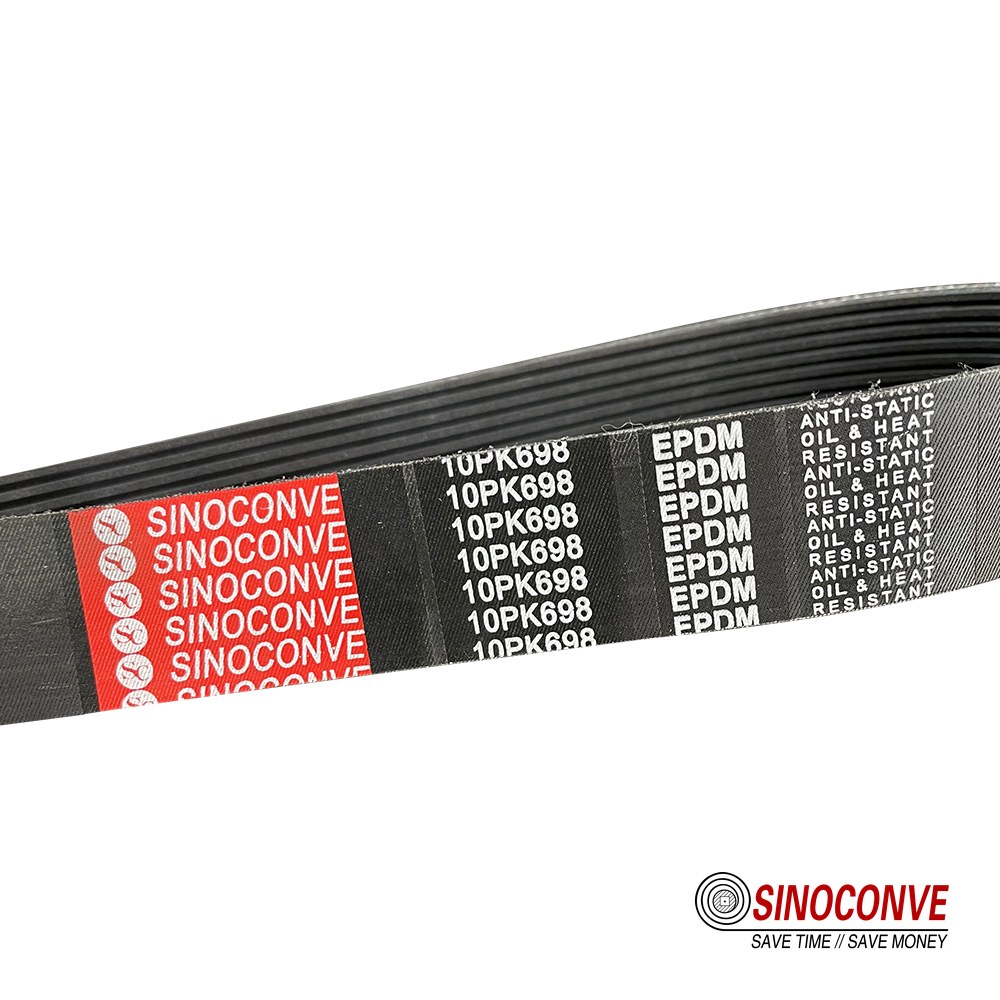
"EPDM" printed on a sleeve is not the same as a compound certificate. Ask for the grade or the certificate that names the polymer, and state whether the drive needs anti-static properties. This is where the request turns from a wish into a checkable order, and it protects you against the most common bait-and-switch in the trade.
| Field to send with your inquiry | Why the supplier needs this field | What a careful supplier does with it |
|---|---|---|
| Section code and effective length of the belt. | This pins the physical fit so the quote matches the groove and the span. | Checks the profile against the catalogue and flags any non-standard length for confirmation. |
| Ambient temperature range and whether the drive runs wet or dry. | Heat and moisture decide whether EPDM is right and which recipe to compound. | Selects the polymer and the heat and steam resistance grade for the stated duty. |
| Start-stop frequency and any shock or reversing load. | Flexing duty changes the fatigue design of the compound, not just the size. | Builds the recipe for flex life and confirms the cord and cover work together. |
| Whether oil, grease, or solvent mist can reach the belt. | Oil exposure disqualifies EPDM and points the order toward a nitrile grade instead. | Recommends the correct family and says so in writing rather than quietly substituting. |
| Polymer grade or certificate, plus any anti-static requirement. | A certificate proves the compound is what the sleeve claims, which a label cannot. | Supplies the grade evidence and adds conductive compounding where the line needs it. |
| Annual usage and the number of machines on the line. | Volume changes how the quote is built and what repeat consistency you can expect. | Stabilizes the recipe across reorders so elongation stays consistent run to run. |
As a conveyor belt supplier we see requests that arrive with nothing but a part number, and requests that arrive with a paragraph of duty detail. The second kind gets quoted correctly the first time, and the first kind generates a string of clarifying emails that slow the whole order down.
09Four Misconceptions That Cost Buyers Money
Wrong beliefs about EPDM are not harmless opinions. They turn into reorders, downtime, and scrap, and most of them survive because nobody stops to write the assumption down. Four of them show up in our inbox constantly.
The first is treating EPDM as a universal upgrade that simply "costs more and lasts longer." It lasts longer only in the environments it was built for. On a cool, dry, clean indoor drive, a natural rubber or SBR belt may deliver better value, because you are paying for weather resistance you will never use. Ask what the belt will actually be exposed to before you spend on protection the room does not need.
The second mistake is reaching for EPDM on a machine that sits near oil. A pump room, a gearbox line, or a machine shop will destroy an EPDM belt through swelling, and the symptom shows up as slippage that gets blamed on tension. Oil means nitrile or hydrogenated nitrile, and no amount of EPDM enthusiasm changes that chemistry. If a salesman pushes EPDM into that room anyway, the belt will carry the failure, not the salesman.
The third error is comparing quotes on price alone while the compound is never named. Two belts can carry the same profile and length and still be made of entirely different polymers, with very different lives. A cheaper sleeve that quietly arrives in natural rubber will not survive the rooftop that justified buying EPDM in the first place. Name the polymer on every quote so two prices are actually comparable.
The fourth and sneakiest is accepting the word "EPDM" printed on a box without any grade or certificate behind it. A label is cheap. A certificate that names the polymer and the batch is the only thing that proves what the belt actually is, and we treat that difference as the line between a real quote and a gamble. A certificate costs the supplier almost nothing to produce when the belt is genuine.
The same discipline applies across the rest of our catalog. Whether someone is buying an industrial conveyor belt for a crusher or a rubber conveyor belt for a stockyard, the polymer and the grade are the real product, and the asking is the same.
10What This Article Deliberately Leaves Out
This page is a material layer, and it stops at the edge of that layer on purpose. SINOCONVE has written deeper, dedicated pages for the other layers of a V-belt decision, and we would rather point you to them than duplicate them badly here.
Where the drive design and size pages take over
If you are choosing pulleys, settling center distance, setting tension, or working out a speed ratio, that is drive design, and it belongs on our industrial V belt drive page. We have not restated that math here, because mixing it into a compound article would just make both subjects harder to use.
If your question is about section codes, profile letters, effective lengths, or which belt replaces which, that is identification and cross-referencing, and it lives on our V belt size cross reference page. We name sections in passing here only to connect a quote to a physical belt, never to re-teach the sizing system.
Two more neighbors are worth naming so nothing is lost. Cogged belts and their toothed bottom-cord structure are a different topic entirely, covered on our cogged V belt page, and the question of whether belt depth drives application limits is treated on its own page as well. Neither is a compound question, so neither appears here in detail.
This kind of boundary is how a manufacturer keeps a catalog honest. We are a transmission belt manufacturer as well as a conveyor belt manufacturer, and both sides share the same rule: each page answers one layer well instead of three layers poorly.
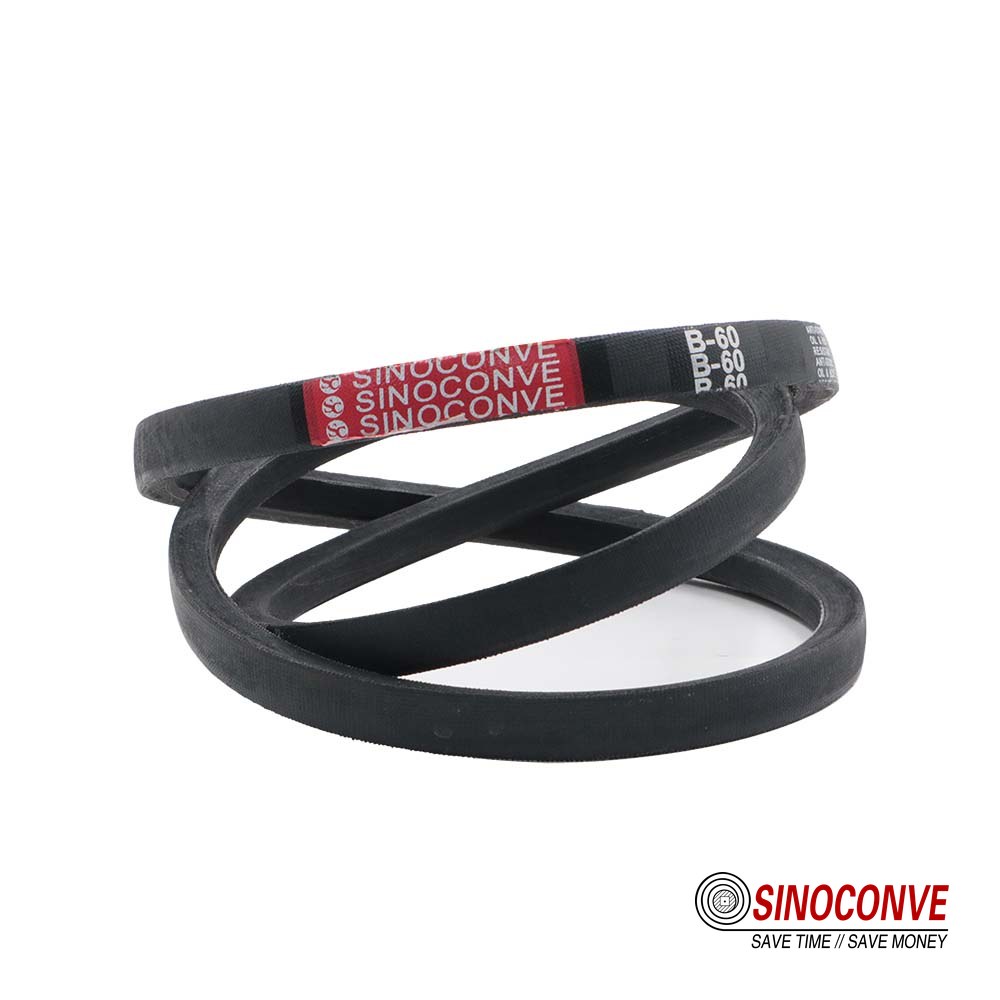
11Verifying the Compound Before You Approve a Sample
A data sheet is a promise, and a sample is where you test whether the promise holds. You do not need a laboratory to catch the biggest problems; a few deliberate checks on the real machine tell you most of what you need to know.
What to ask for in writing
Ask for the polymer grade or certificate, the heat and oil resistance data for that exact recipe, and the elongation range so you can confirm repeat consistency later. Ask whether the anti-static requirement is met, and have the supplier confirm in writing that the belt is EPDM rather than a blend quietly passed off as EPDM.
This is a standard ask, not a favor. A supplier who cannot name the polymer or supply its certificate is telling you something important about how their belts are actually sourced, and you should treat that silence as data.
What to test when the sample lands
Run the sample on one machine, not the whole line, and watch tension, slip, and noise over the first few shifts. Put it in the hottest, wettest, or most exposed spot you actually have, because that is where a compound mismatch shows first. Then re-check tension after the belt beds in and compare the number to the old compound.
If the belt is for an outdoor or humid duty, leave one sample installed through a weather change if your schedule allows. A belt that survives a week indoors proves little; the outdoor swing is the test you actually paid for.
Field note from our engineers: A food packing plant once trialed EPDM belts for a washdown line and rejected them after three days of heavy slip. The belts were correct; the tension had never been re-set for the softer compound. One adjustment later the same belts ran clean for the rest of the season.
That distinction matters more than most buyers expect. When a trial belt misbehaves, separate the compound fault from the setup fault before you write the verdict, because the two look identical at first glance.
For teams that buy across a wide range, the same verification habit pays on every category. A conveyor belt distributor stocking many profiles, or a conveyor belt factory running repeat orders, both live and die by whether the polymer on the certificate matches the polymer in the belt. The principle does not change with the belt type.
12Choosing by Duty Cycle, Not by a Single Number
There is no single EPDM "grade" to memorize, and chasing one will lead you in circles. The honest way to choose is to describe the whole duty cycle, then let the compound follow from it. The table below is the short version of that logic.
| If your duty matches this description | The compound family leans toward this | Why that family suits the duty |
|---|---|---|
| Outdoor, humid, or wide temperature swings with no oil present. | EPDM is the natural first choice for the weather and ozone resistance. | Its saturated backbone ignores ozone and UV and takes up very little water. |
| Warm, steamy, or washdown duty indoors with clean surroundings. | EPDM again, because heat, steam, and humidity are its home ground. | It keeps flexibility through sustained warmth and does not fear the wet. |
| Oil, grease, or solvent mist anywhere near the drive. | Nitrile or hydrogenated nitrile instead, because EPDM will swell and slip. | EPDM is non-polar and absorbs mineral oil, which destroys tension and grip. |
| Cool, dry, clean indoor running with steady speed. | Natural rubber or SBR may deliver better value than a paid-for EPDM upgrade. | You are buying weather resistance you will never use on a clean indoor line. |
| Frequent starts, shocks, or reversing loads with moderate conditions. | EPDM works when compounded for flex life, but confirm it rather than assume it. | Flex life is a recipe decision, so the label alone does not finish the job. |
That final row is the one to remember. "EPDM" tells you the polymer family; it does not tell you the compound is right for your exact flexing duty. State the duty cycle, ask for the recipe built for it, and verify with a trial. Those three steps convert a material choice into a working belt.

13Frequently Asked Questions
What is an EPDM V belt?
It is a V belt whose rubber cover is based on ethylene propylene diene monomer instead of natural rubber or SBR, with the same profile and length but different chemistry in the cover.
Is EPDM better than rubber for V belts?
Only in specific environments. For outdoor, hot, wet, or steamy duty it usually outlasts natural rubber, and that is where its reputation comes from. For cool, dry, clean indoor duty a natural rubber or SBR belt is often the better value. The word "better" only makes sense after you name the environment, so start there rather than with the polymer.
Can I use an EPDM belt where there is oil?
No. Mineral oil and grease make EPDM swell, soften, and slip, so keep it away from gearboxes, chain oilers, and cutting fluid mist. Where oil is present, switch to a nitrile or hydrogenated nitrile grade instead. This is the single most important boundary on the material, and no amount of tension will rescue a belt that has already swollen.
What is the temperature limit of an EPDM V belt?
There is no single number we can honestly print. The limit depends on the recipe, the load, the speed, the ambient, and the running hours, so a blanket figure would mislead you. Ask the supplier for the rating of the exact compound under your conditions, and confirm it with a trial on the real machine. Leave a margin below the ceiling rather than running right at it.
Why do EPDM belts last longer outdoors?
Ozone and ultraviolet attack the double bonds in natural rubber and SBR, starting surface cracks that grow with every flex. EPDM's chain is saturated, so there is almost nothing for that attack to grab. Less attack means fewer cracks, and fewer cracks mean a longer life under the sun.
How do I know a belt is really EPDM?
Ask for the polymer grade or a certificate that names it, because a printed label alone proves nothing.
Does EPDM change the pulley or tension setting?
It can change the tension setting, because EPDM may stretch and sit differently than the belt it replaces, so re-tension after the swap and again after bedding in.
When should I choose natural rubber or SBR instead of EPDM?
Choose them on cool, dry, clean indoor drives where weather resistance buys you nothing. Natural rubber also offers excellent flex and tear resistance, which suits steady moderate-duty machines. The goal is to pay for the protection you actually use, not the protection that sounds impressive.
How do I ask a supplier for the right EPDM compound?
Give the section and effective length, then describe the environment and the duty: temperature range, wet or dry, start-stop frequency, and any oil nearby. Add the annual usage and ask for the polymer certificate. Those details let the supplier compound the recipe for your line instead of guessing at it.
Can an EPDM belt replace a neoprene belt?
Sometimes, but only after you confirm the environment. EPDM weathers and resists heat and steam better than neoprene, while neoprene handles oil and grease that EPDM cannot. If the drive is dry and hot or wet and clean, the swap usually works; if oil is present, keep the neoprene or move to nitrile.
Related Products You May Need
- Industrial V-belts — the full rubber family, including EPDM, natural rubber, SBR, chloroprene, and HNBR grades for every drive environment.
- Timing belts — synchronous drives where a fixed ratio and no slip matter more than compound flexibility.
- Heat-resistant conveyor belts — for hot material handling on the conveyor side of the plant.
- EP rubber conveyor belts — fabric-cored belts for bulk conveying across mining, quarry, and port duty.
- Rubber conveyor belts — the general-purpose workhorse for heavy bulk material handling.
Related Blog Posts
- Industrial V belt drive: design, tension, and ratio — the drive-geometry layer this article leaves to its own page.
- V belt size cross reference — section codes, lengths, and which belt replaces which.
- Cogged V belts — the toothed bottom-cord structure and where it helps on small pulleys.
- Industrial timing belts for precise drives — the synchronous-drive alternative when slip cannot be tolerated.
- Is the depth of a V belt critical to application — how cross-section depth changes what a belt can do.