
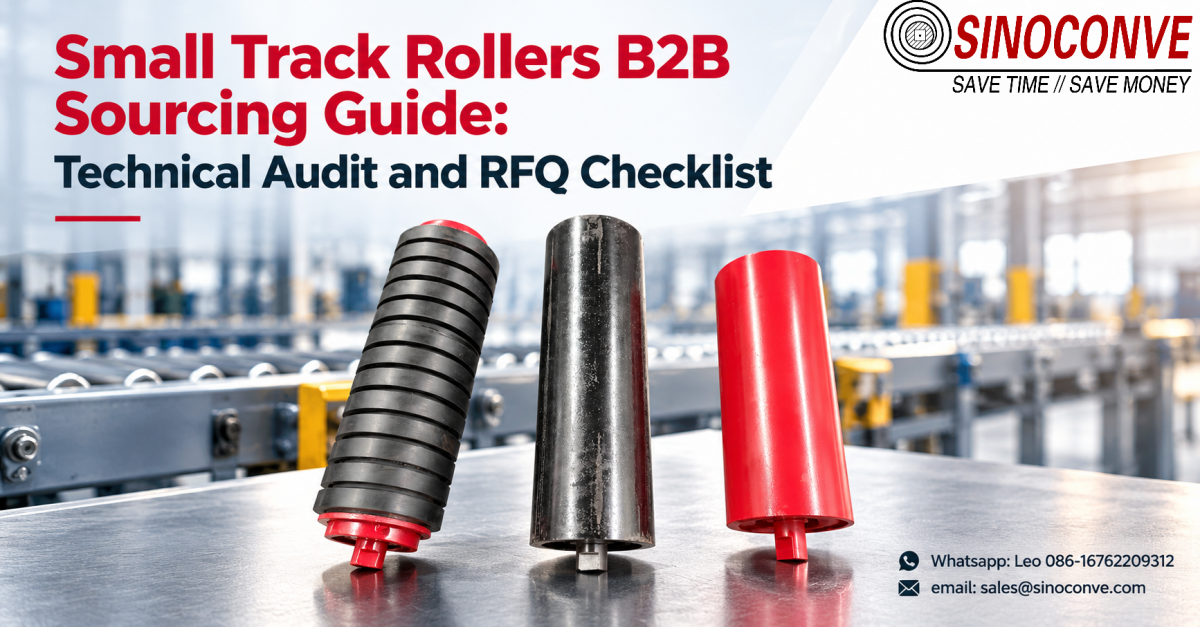
A small track roller is a drawing-controlled, priced component, and unit price is the last variable a buyer should compare. Before any quotation can be read properly, audit four things: bearing and seal class, tube wall and end-cap tolerance, dynamic load evidence at the stated RPM, and run-to-run batch consistency. Our rule is blunt. Never accept a quotation that arrives without a roller drawing, a load figure tied to a named speed, and a defined seal type. Those three documents decide whether two suppliers are quoting the same part or two different parts that happen to share a diameter.
That sounds like procurement discipline rather than engineering. In practice it is both. We have watched a 40 percent spread between three quotations for the same O.D. 50 mm steel roller collapse to under 7 percent once six missing RFQ fields were supplied. The rollers on offer never changed. Only the description did. A small track roller carries a belt, a cart, a tray or a package across a short span at low speed and high cycle count, and nothing about that duty is exotic. What makes it expensive is silence: an unstated wall thickness, an unnamed seal, a load number with no speed attached to it.
This page hands you the working set. There is a 12-item technical audit for the pre-quote stage, an 18-field RFQ sheet, a method for normalizing quotations that carry different seal classes, an incoming inspection plan with gauges and pass/fail rules, and a batch consistency record you can keep for a year. Treat the whole thing as a template. Most fields in it came from an order that went wrong the first time.

01What "Small Track Rollers" Means in a B2B Order
Three buyers write three different lines on a purchase order and all three expect the same object. One writes "small rollers, O.D. 38". Another writes "short pitch rollers for the track section". A third writes "track rollers for the cart rail". Diameter, pitch and mounting method are what actually separate those requests, and the drawing is what settles the argument when the words get vague.
Three Names, One Component
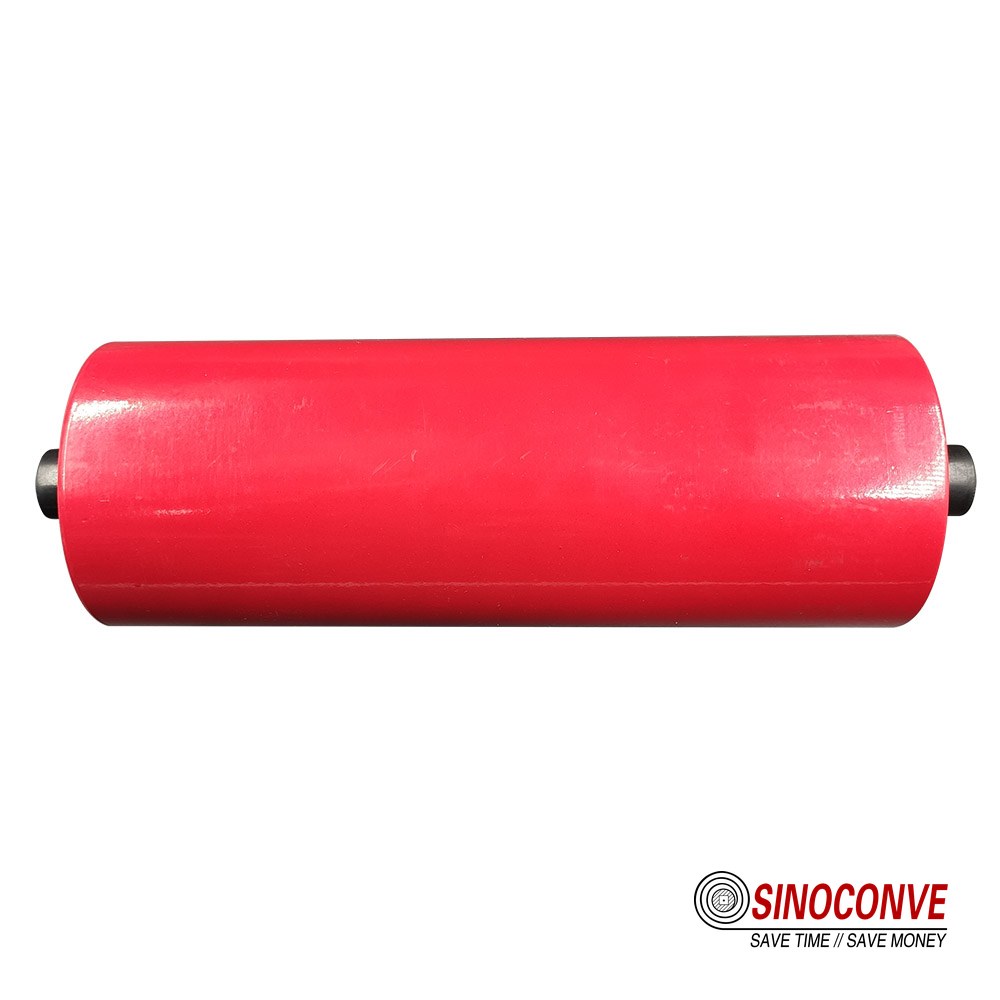
In our quotation inbox the phrase "small track roller" usually means a roller under roughly 60 mm outside diameter running on a short centre distance, often inside a guided track or a rail-guided cart. The same part is also called a mini roller, a small-diameter idler or a track wheel, and none of those names is a specification. So the request has to be converted into dimensions before money is discussed, starting with outside diameter, face length and shaft arrangement. Without those three, the conversation moves to photographs and a sample.
Why the Word "Small" Changes the Audit
Small rollers are cheap per piece, which is exactly why they get ordered without a drawing. A 40 mm roller costing a few dollars looks like a consumable, so the audit that a 200 mm roller always gets is skipped. That is backwards, because a small roller turns faster for the same belt speed. A 200 mm roller on a 2.0 m/s belt turns at about 191 rpm; a 50 mm roller on the same belt turns at roughly 764 rpm. Same tonnage, four times the bearing revolutions. When a small roller seizes inside six months, that arithmetic is usually the first thing nobody checked.
What the Term Does Not Cover
The name also attracts requests that belong somewhere else. A roller needed to cushion falling rock is an impact duty, not a small-track duty. A roller used to track or centre a belt solves a different problem. Buyers who want the structural comparison of roller families should read our conveyor idler roller guide first, then come back here for the purchasing sequence. This article stays on the commercial and audit side: what to ask, what to demand as evidence, and what to measure when the pallet arrives.
| Application | Roller Duty | Typical Diameter Range | Order Quantity Band | Critical Spec |
|---|---|---|---|---|
| Parcel sorter track | Carries shoe and cart weight at high cycle rate | 30 to 50 mm | 200 to 5,000 pcs | Runout and start-up torque |
| Narrow belt transfer | Supports light belt and product between pulleys | 38 to 60 mm | 50 to 800 pcs | Face length and shaft fit |
| Packaging machine infeed | Guides film or pouch, low load, washdown exposure | 25 to 45 mm | 20 to 300 pcs | Surface finish and seal class |
| Rail-guided cart line | Takes radial load plus side thrust on curves | 40 to 70 mm | 100 to 2,000 pcs | Shaft-end geometry and hardness |
| Dusty bulk transfer | Light support in abrasive air, infrequent washdown | 50 to 89 mm | 100 to 1,200 pcs | Seal type and labyrinth depth |
Note what the table does with quantity. Nothing about a small track roller is engineered differently at 200 pieces than at 5,000, but the economics change completely. Above roughly 500 pcs, tooling for a specific end cap and a dedicated seal usually pays for itself, and the buyer should ask whether the supplier is offering a machined one-off or a repeatable production item. That question sits at the centre of this guide.
Field note from our engineers: A sorting-line customer sent us 60 seized rollers from a dusty section running near 38 °C. Fourteen of the sixty had the seal lip seated off-centre in the housing groove, visible only once the end cap was pressed off. We changed their incoming routine to eight rollers per batch on a 300-hour run plus 96 hours of salt spray. Their rework volume fell to about a quarter of the previous level within two shipments.
02Where These Rollers Sit on the Machine
Position tells you more about the specification than the roller name does. The same O.D. 50 mm shell behaves differently as a belt support, a cart wheel or a guide roller, because the load direction, the contamination exposure and the consequence of failure all change with location. We map position before we quote.
Conveyor and Sorter Duties
On a narrow belt conveyor the roller is a support element: mostly vertical load, continuous rotation, and a failure that announces itself when the belt starts to sag. On a sorter shoe or cart track the roller is a travel element that accelerates and decelerates thousands of times per shift, and when it fails the machine usually faults out before anything looks worn. Same steel, different failure mode.
That difference decides which evidence you ask for. Continuous support duty is judged on radial load capacity and runout. Repeated start-stop duty is judged on bearing selection, seal friction and breakaway torque of the assembly. Asking both positions for the same load certificate usually returns a certificate that covers neither.
Packaging and Cart Roles
Inside a packaging machine the roller is often a guide rather than a carrier, holding film or a tray against a reference surface under 50 N. The critical properties there are surface finish, concentricity and hygiene compatibility, not load rating, which is why position is a mandatory field on our RFQ sheet rather than a note.
What Position Tells You About the Spec
Three questions recover the position quickly. Is the roller supporting, guiding or travelling? Does the load arrive vertically, laterally or as repeated impact? And what happens on the line in the ten minutes after the roller stops turning?
Where the position is a heavy loading or transfer point, the roller is no longer a small-track item and should be specified as such. Our guide to the impact roller supplier route explains why shock loading needs a different evidence set, and it is worth reading before you let one roller type cover both duties. In plants that also run main haulage belts, the roller spec travels with the belt choice, so the same audit is often run alongside a industrial conveyor belt review.
| Position | What It Carries | Failure Mode to Check | Spec That Changes First |
|---|---|---|---|
| Carrying run, narrow belt | Belt plus product weight, steady | Seizure, shell flat spotting | Radial load and shell wall |
| Sorter shoe track | Shoe, cart, package, lateral thrust | Bearing spalling, race brinelling | Bearing class and shaft hardness |
| Film or pouch guide | Film tension only | Surface marking, runout | Surface finish and concentricity |
| Transfer between belts | Product mass, occasional impact | Shaft bending, end-cap cracking | Shaft diameter and end-cap material |
| Washdown zone | Light load, water and chemical spray | Corrosion at shaft ends, grease washout | Seal class and surface treatment |
03The Technical Audit: 12 Items to Verify Before You Quote
This audit exists because a roller quotation is a technical document wearing commercial clothes, and every line of it can be checked. We run the twelve items below before sending a price, and we expect the same rigour from any supplier we buy from.
How to Run the Audit
Two engineers can complete the table in about three hours with the drawing on the bench. Work outward from geometry to load path to environment to documentation, and do not start with price, because starting with price biases the audit toward whatever the cheapest supplier happens to offer.
The Items Buyers Skip Most Often
Five rows below account for most of the arguments we see after delivery: shaft-end geometry, seal type, load at speed, end-cap retention and batch tolerance. Each is ignored for a different reason and each is checkable in one question.
For a general view of what these components are built to do, the roller range on the conveyor roller catalogue page is a useful reference point, and a supplier should be comfortable sending comparable data for a small-track version of the same part.
| Listen to this. | Evidence Required | Pass Criteria | Common Gap | Risk if Skipped |
|---|---|---|---|---|
| 1. Outside diameter | Dimensioned drawing with tolerance | Nominal plus a stated band | Nominal only | Belt or track interference |
| 2. Face length | Separate from overall length | Both dimensions stated | One figure for both | Frame clash on assembly |
| 3. Tube wall thickness | Wall figure with material grade | Minimum wall declared | "Standard wall" | Denting under point load |
| 4. Shaft diameter and ends | End-view drawing or photo | Flats, threads or grooves shown | "Standard shaft" | Roller will not mount |
| 5. Radial runout | Measured value on a sample | Within the limit you set | Not mentioned at all | Tracking drift, vibration |
| 6. Bearing designation | Named part or approved equivalent | Class and clearance stated | "Good bearing" | Early seizure |
| 7. Seal type | Section sketch or sample cutaway | Named seal family | "Sealed" with no detail | Dust ingress, grease loss |
| 8. Load at speed | Load figure with an RPM value | Both numbers on one line | Load without speed | Overload in service |
| 9. Grease type and fill | Product name or grade and fill ratio | Grade stated, temperature range given | "Pre-lubricated" | Washout or stiff rotation |
| 10. End-cap retention | Method stated: press, weld, stake, clip | Method plus pull-off criterion | Method not described | Cap walk-off, bearing exposure |
| 11. Surface treatment | Coating spec with thickness range | Micron range or standard named | "Galvanized" alone | Corrosion at shaft ends |
| 12. Batch tolerance | Stated control band across lots | Band agreed in writing | Only the drawing limit given | Mixed fit on one line |
Twelve rows, twelve one-line questions. A supplier who can answer all of them is ready for a conveyor belt supplier level of technical dialogue rather than a trading conversation, and the quotation that follows will be comparable with any other supplier who answered the same twelve.
04Reading a Roller Drawing: What a Complete Datasheet Must Contain
The drawing is the contract. A price without a drawing is an opinion about a part that has not been defined yet, and no amount of negotiation fixes that later. When a supplier sends a quotation with no attached drawing, the correct reply is not a counter-offer but a request for the drawing.
The Fields That Must Never Be Blank
We treat a roller drawing as incomplete if any of eleven fields is missing: diameter, face length, overall length, wall thickness, material grade, shaft diameter, shaft-end geometry, bearing position, bearing designation, seal arrangement and coating. A one-page sketch with a revision block is enough, but it has to answer all eleven, because each maps to a manufacturing step a shop can get wrong independently. Our test is whether a machinist who has never spoken to your plant could produce the part from the sheet alone. If a phone call is needed for a dimension, the sheet failed.
A Rejection Case We Still Quote
A European integrator once sent us a roller enquiry with a single line: "O.D. 50, steel, sealed". We replied asking for the eleven fields and offering two working days to review. The buyer's own drawing, once located, showed a 4 mm wall against the 2.5 mm that the cheapest bidder had assumed, a stepped shaft with two machined flats, and a triple-lip seal. None of those three features was visible in the original one-line description, and each added cost. The lesson is not that the cheap bidder was dishonest. It is that the requirement was never transmitted.
Because we build both rollers and belting, we see this from both sides. When we sit on the supply side of a project that also needs a main haulage belt, the buying team often runs the same exercise twice, once with a conveyor belt manufacturer and once with a roller shop. The discipline is identical: define the geometry, then argue about money.
Projects that combine rollers, pulleys and belting in one package are usually handled through a single source, which is why we recommend that the roller drawing register and the conveyor roller and pulley supplier interface drawings be kept in the same revision folder. Two drawing sets with different revision letters is a reliable way to ship the wrong part.
| Drawing Field | Unit | Why It Matters | Acceptable Source |
|---|---|---|---|
| Outside diameter | mm | Sets belt contact and frame clearance | Approved drawing or measured sample |
| Face length | mm | Controls support width and cap position | Drawing, stated apart from overall length |
| Overall length | mm | Decides whether the roller fits the frame slot | Dimensioned drawing |
| Wall thickness | mm | Decides dent resistance and bearing seat stiffness | Drawing or section sketch |
| Tube material grade | Grade code | Affects corrosion and weldability | Mill certificate reference |
| Shaft diameter | mm | Sets bearing fit and bending strength | Drawing with tolerance |
| Shaft-end geometry | Flats, slots, threads | Determines mounting and retention | End view, photo or physical sample |
| Bearing position | mm from end | Sets the support span and internal geometry | Section drawing |
| Bearing designation | Part code | Sets load class and speed limit | Named part or approved equivalent list |
| Seal arrangement | Type and position | Controls contamination and grease retention | Cutaway sketch or sample section |
| Coating or surface | micron range | Sets corrosion life and surface grip | Coating standard plus thickness range |
Eleven fields, one page. Anything less and you are buying a diameter, not a roller.
05Bearing and Seal Class: How to Probe Real Limits
Bearings and seals are where small rollers are silently downgraded. Nobody sees them on a delivered pallet and nobody notices until the first seizure, so the audit has to happen in conversation, before the order, phrased so that a weak supplier has nowhere to stand.
Bearing Questions That Separate Suppliers
Do not ask "what bearing do you use". Ask for the bearing class, the internal clearance, and the rated speed of the assembled roller rather than of the bearing alone, since a catalog number says nothing about how it was fitted, preloaded or lubricated. Then ask what the assembly's breakaway torque is at 20 °C, because that number exposes whether the seal is dragging on the shaft or the bearing seat is too tight. One further question only a real production shop can answer: how do you verify that the bearing is seated square in the end cap? An answer naming a fixture, a press depth stop or a measured seat depth is a good sign; an answer that restates the drawing tolerance is not.
Seal Geometry and the Dust Test
Seal class matters more on a small roller than on a large one, because the lip passes the same dust more often per hour. For a dusty transfer we normally specify a labyrinth path plus a contact lip, and for washdown a lip with a defined wiper. Ask for a photograph of a sectioned roller, not a part number. A section tells you the number of barriers, the lip contact angle and whether there is a grease reservoir behind the seal.
Where fine dust is the dominant risk, the sealing discussion overlaps with what we build into our sealed conveyor roller for fine dust designs, and the reasoning carries over to a 50 mm track roller unchanged. If the same plant also moves material on belting, remember that seal performance on rollers and cover grade on a rubber conveyor belt are linked by the same dust load, and a single dust survey answers both questions.
| Audit Question | Expected Answer | Red-Flag Answer |
|---|---|---|
| What bearing class and clearance are fitted? | Named class with clearance code and the environment it suits | "Standard bearing" |
| How is the bearing seated square? | Named fixture, press stop or measured seat depth | Restates the drawing tolerance |
| What is the breakaway torque of the assembly? | A measured figure at a stated temperature | "Low, it spins freely" |
| Which seal family is used? | Family named, with the number of barriers | "It is sealed" |
| Can you send a sectioned sample? | Yes, cut through the seal and cap | Only external photographs |
| What grease grade and fill ratio? | Grade, temperature range and percentage fill | "Pre-lubricated for life" |
| Has a dust or salt test been run? | Test name, duration and result | "Our product is durable" |
Read the red-flag column as a test, not as an accusation. A trading company with no factory often cannot answer rows three, five and seven at all, and it is better to learn that in week one than in month six.
06Shaft, Tube and End-Cap Tolerance: The Numbers to Ask For
Tolerance is the part of a roller order that nobody argues about until assembly day. Give us any quotation without tolerances and we can predict the follow-up email.
Shaft Diameter and Runout
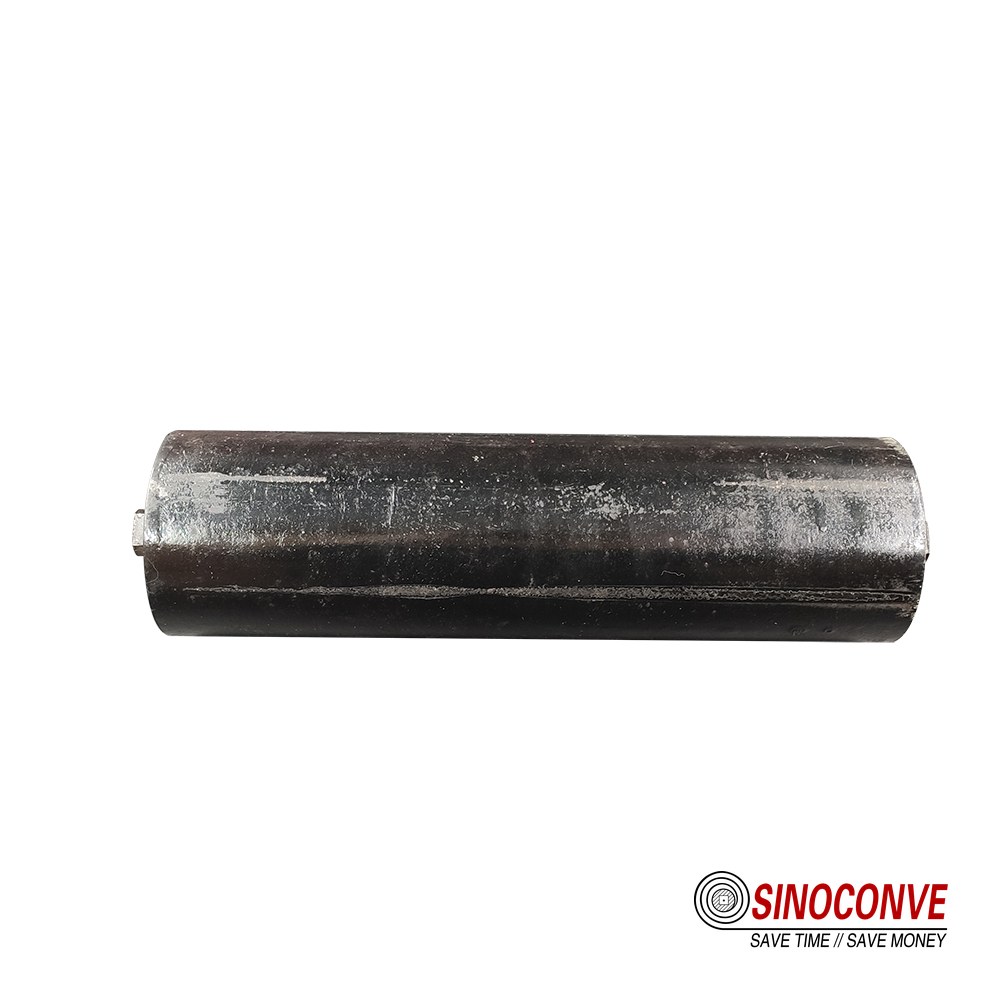
Shaft diameter on a small roller usually falls between 10 and 20 mm, and the fit that matters is the bearing seat. A common band is h6 to h7 there, with a slightly looser fit at the mounting end so the roller installs without a press. Runout is the number buyers forget. On a 50 mm roller turning at 764 rpm, 0.3 mm of radial runout is a visible vibration source; we ask for 0.10 mm or better on the shell and 0.05 mm on the bearing journal, measured on a bench with a dial indicator rather than trusted from a drawing note.
Tube Wall and Straightness
Wall thickness decides two things buyers rarely link: how the shell resists a point load, and how well the bearing seat holds its roundness after welding. A 2.5 mm wall on a 50 mm roller suits light duty but dents under a dropped lump, while 4 mm costs more steel and roughly 30 percent more weight. Straightness follows the same decision. We ask for a maximum bow of 0.25 mm per 300 mm of face length, measured on a surface plate.
End-Cap Fit and Retention
The end cap is the least glamorous part on the drawing and the most common cause of a returned roller. Ask how the cap is fixed, then ask what force would remove it. Press fit alone is acceptable on some designs but needs a stated interference range. Welded caps resist better in dusty duty but complicate a bearing change. Staked or clipped caps sit in between and are usually the pragmatic choice for a serviceable small roller. Whatever the method, the quotation should name it.
Buyers who need the structural context behind these numbers find it in our reference on conveyor roller types and load ratings, while the numbers below are the ones we actually write into a purchase order. The same discipline of fitting a rotating element into a tight envelope appears on the drive side of a plant, where a transmission belt manufacturer faces an equivalent problem with pulley grooves and belt section dimensions.
| Dimension | Typical Value | Tolerance Band | Consequence if Out |
|---|---|---|---|
| Bearing seat diameter | 10 to 20 mm | h6 to h7 | Inner race slip or over-tight fit, early noise |
| Mounting end diameter | Same nominal | h9 to h11 | Frame slot damaged during installation |
| Shell outside diameter | 38 to 60 mm | Plus zero, minus 0.20 mm | Belt or track surface mismatch |
| Radial runout, shell | 0.08 mm measured | 0.10 mm max | Vibration, tracking drift, noise |
| Axial runout | 0.05 mm measured | 0.08 mm max | End thrust into the frame, seal wear |
| Straightness | 0.15 mm per 300 mm | 0.25 mm per 300 mm max | Uneven belt contact, uneven wear |
| Cap press interference | 0.03 to 0.06 mm | Stated range required | Cap walk-off or cap cracking |
| Face length | Per drawing | Plus or minus 0.5 mm | Frame interference on assembly |
07Coatings and Surface Options: When Galvanizing, HDPE or Rubber Pays Off
Surface treatment is usually the first line item a buyer drops to hit a target price, and it is usually the wrong one. On a small roller the coating does two jobs at once: it protects the shell and shaft ends from corrosion, and it changes how the surface behaves against the belt or the track.
Cost Ranking of Common Treatments
In ascending order of cost the usual options are bare steel with oil, zinc plating, hot-dip galvanizing, polymer sleeving such as HDPE, and rubber covering. The jump from plating to hot-dip galvanizing is small against the whole order and almost always justified in wet or coastal air. Polymer sleeving costs more again but solves a specific problem by stopping belt marking and cutting noise, which is why it appears so often in packaging and food lines.
One practical caution. A coating thickness range must appear in the quotation. "Galvanized" alone has described everything from 8 to 85 microns, and a 12 micron flash coat is not the same product as a heavy hot-dip layer. Ask for the range, then verify it on arrival with a magnetic gauge on at least three rollers per batch.
| Surface Option | Relative Cost Index | Best Environment | Avoid When |
|---|---|---|---|
| Bare steel, oiled | 1.0 | Dry indoor sorter, stable humidity | Any washdown or coastal air |
| Zinc plating | 1.2 | Indoor with occasional damp | Abrasive contact, heavy impact |
| Hot-dip galvanizing | 1.6 | Outdoor, wet, coastal, fertilizer plant | Tight cap fits where buildup blocks assembly |
| HDPE or polymer sleeve | 2.4 | Packaging, film, marking-sensitive product | Hot material above roughly 80 °C |
| Rubber covering | 3.1 | Grip duty, incline, noise reduction | Cleanroom or blade-edge contact |
A roller order rarely travels alone. Where the same plant also buys the belt running over it, coating decisions and cover decisions get made together, and the practical route is to place them with one conveyor belt factory so that roller surface and belt cover are specified against one duty statement. If material is discharged from a steep incline, that same order may involve a conveyor belt distributor sourcing a patterned belt, and the roller spacing then has to be agreed before either part is released.
08Load Rating Evidence: Ask for Data, Not Adjectives
"Heavy duty" is not a load rating. A quotation should carry a number in newtons or kilograms attached to a rotational speed; without the speed, the figure is decorative.
A Worked Load Calculation for a Small Roller
Say a narrow transfer carries a package stream with a maximum distributed mass of 180 kg over a 2.4 m supported span, with rollers on a 120 mm pitch. Twenty rollers means an average load of 9 kg each, about 88 N. Apply the two multipliers buyers leave out. If the belt has a trough or the load is uneven, one roller can take 1.5 to 2 times the average, so budget 180 N. Add a start-stop dynamic factor of 1.3 and the design figure becomes roughly 230 N per roller at 764 rpm.
That is the number to send. A supplier who confirms 230 N continuous at 764 rpm with a stated bearing life on an L10 basis has answered the question. A supplier who replies that the roller "easily handles 500 kg" has not, because 500 kg in what direction, at what speed, for how many hours?
What "Rated Load" Usually Leaves Out
Three omissions are common: speed, load direction and the mounting condition. A roller rated for radial load may be asked to take thrust on a curved track, and one supported at two bearing positions behaves differently from one supported at the shaft ends only. Ask for the assumption, not just the result.
Where a design is already running and the question is whether it can be pushed harder, our notes on steel conveyor belt roller performance cover how load and speed interact over time, and the general selection logic is set out in the conveyor roller selection guide. If your order sits inside a larger bulk-handling package, the roller rating and the belt rating should be reviewed together, and a volume buyer running the wholesale conveyor belts route for several sites usually standardises both at once.
| Evidence Item | Strong Supplier Response | Weak Supplier Response |
|---|---|---|
| Continuous load figure | Newtons or kilograms with the calculation shown | A single impressive tonnage figure |
| Speed reference | RPM value linked to the load figure | Speed described as "normal" |
| Load direction | Radial and thrust values stated separately | One figure for everything |
| Life basis | Bearing life method named with hours | "Long service life" |
| Test evidence | Bench or rig record on a comparable size | Photos of a different product |
Field note from our engineers: One RFQ reached us as "50 mm roller, steel". We replied requesting six extra fields: wall thickness, shaft tolerance, seal type, dynamic load at speed, surface treatment and packing. The three quotations that had differed by 40 percent converged to within 7 percent once all three suppliers quoted the same six fields. Nobody changed their factory. The specification changed.
09Capability Boundary Questions: What a Supplier Genuinely Cannot Do
Every factory has an edge. The useful question is not whether a supplier has limits, because all of them do, but whether it knows where they are and says so before the order rather than after the second batch fails.
The Three Answer Zones
Map every answer into one of three zones. Zone one is "we do this today, here is the drawing and a photo of the tooling". Zone two is "we have not made this size or seal arrangement before, so we would need a sample and a trial run". Zone three is "we cannot hold that tolerance or that diameter band on our equipment". A healthy supplier is comfortable in all three and not embarrassed by zone three; one that answers everything in zone one is either very large or not telling you the whole story.
We use boundaries the same way on our own drive products. There is a practical upper limit to what a single-stage drive can transmit before a different configuration is needed, and a V-belt manufacturer who pretends otherwise ends up with a failed application rather than a repeat order. Small rollers are no different. Say what you can hold, then design around it.
How to Write a Boundary Question
A boundary question names the parameter, the value and the direction of the risk. "Can you hold 0.05 mm runout on a 40 mm roller with a 4 mm wall?" is a boundary question. "Do you have good quality control?" is not. The first can be answered with a fixture and a gauge; the second can only be answered with reassurance.
Ask at least four boundary questions in every roller enquiry: the smallest and largest diameter you can quote without new tooling, the tightest runout you can hold in production rather than in a sample, the maximum order quantity you can run in one lot, and the shaft-end features you can machine in house rather than buying in. For projects that stretch these limits, our work on conveyor roller manufacturer for mining applications shows how we handle sizes that sit outside a light-duty tool set.
| Capability | Can Do Today | Needs Evaluation | Cannot Do |
|---|---|---|---|
| Shell diameter 38 to 60 mm | Standard tube stock, existing end caps | Non-standard wall or material grade | Below 20 mm outside diameter |
| Runout tighter than drawing | 0.08 mm routine on small shells | 0.03 mm with extra truing and gauging | Grinding to sub-micron at this size |
| Seal arrangements | Labyrinth plus lip, single and double | Triple lip or special compound lip | Custom-moulded lip within one week |
| Shaft-end features | Flats, grooves, threads, drilled ends | Splines or keyways on small shafts | Integral gear cutting on a 12 mm shaft |
| Batch size | 200 to 5,000 pcs per run | 50,000 pcs with scheduling changes | Single-piece same-day delivery |
| Coating | Plating, galvanizing, polymer sleeve, rubber | Specialist aerospace-type finishes | Hard chrome to 60 HRC on thin tube |
10The RFQ Field Sheet: 18 Fields We Always Send
An RFQ is an engineering document that happens to trigger a price. Eighteen fields is not bureaucracy; it is the minimum that lets three suppliers quote the same object.
The Mandatory Core
Nine of the eighteen fields are mandatory in the sense that a quotation without them is not comparable: geometry, quantity, destination and the acceptance document. If a buyer cannot fill the mandatory core, the next step is a technical call rather than a request for price.
The Fields That Fix Price
Four fields move price more than any other. Wall thickness sets steel weight, seal class sets component cost and assembly time, surface treatment adds a process step, and packing sets freight volume, which on a light product often outweighs the unit price gap between two suppliers. Fill these four and even a vague remainder yields comparable quotations.
How to Send It
Send the sheet as a spreadsheet with one row per line item, and attach the drawing to every row rather than once for the whole enquiry. Then require the quotation to repeat the field values back. A quotation that echoes your inputs is easy to audit; prose is not.
| RFQ Field | Unit | Mandatory | Reason | Example Entry |
|---|---|---|---|---|
| 1. Item and drawing number | Text | Yes | Ties the quote to one controlled document | TR-050-A Rev C |
| 2. Outside diameter | mm | Yes | Primary geometric control | 50.0 minus 0.20 |
| 3. Face and overall length | mm | Yes | Prevents frame clash | 180 / 232 |
| 4. Wall thickness | mm | Yes | Drives steel weight and price | 3.0 min |
| 5. Tube material | Grade | Yes | Corrosion and weld behaviour | Carbon steel, welded tube |
| 6. Shaft diameter | mm | Yes | Bearing fit and strength | 15 h6 / h9 |
| 7. Shaft-end geometry | Sketch | Yes | Installation compatibility | Flat 12 mm, 8 mm from end |
| 8. Bearing requirement | Class | Yes | Load class and speed limit | 6202-2RS class, or equivalent |
| 9. Seal type | Family | Yes | Contamination and grease life | Labyrinth plus contact lip |
| 10. Dynamic load at speed | N at rpm | No | Lets the supplier size the bearing | 230 N at 764 rpm |
| 11. Rotational speed | rpm | No | Without it a load figure is meaningless | 764 max, 610 typical |
| 12. Duty hours per day | h | No | Sets grease and bearing life target | 20 h, 6 days |
| 13. Environment | Description | No | Dust, water, chemical, temperature | Dusty indoor, 38 °C, no washdown |
| 14. Surface treatment | Spec | No | Corrosion life and surface behaviour | Hot-dip galvanized, 45 to 65 micron |
| 15. Quantity and lot split | pcs | Yes | Sheets and tube buying minimums | 1,200 pcs in 3 lots |
| 16. Required delivery | Date | Yes | Exposes whether scheduling is realistic | First lot within 30 days |
| 17. Inspection and documents | List | Yes | Defines what must be measured and recorded | Dimension report, runout, coating gauge |
| 18. Packing and destination | Spec | Yes | Landed cost and transit damage | Wooden pallet, 500 pcs per layer |
When we receive this sheet filled in, we can usually return a price within three working days. When we receive a photograph and a diameter, we return a question list instead. Buyers who want to see how a complete roller specification is presented can also browse the full conveyor roller supplier range as a reference for how fields map to finished products.
11Quotation Comparison: Normalizing Price, MOQ and Lead Time
Three quotations for the same roller will never look alike, because each supplier prices a slightly different interpretation. Normalizing turns three numbers into one decision.
Building the Normalized Score
Convert every quotation to a common basis first. Landed cost per piece is the starting point: unit price plus packing plus freight, divided by the quantity actually delivered. Then weigh the technical items that carry real cost in service. A supplier quoting a single-lip seal against one quoting a labyrinth plus lip is not offering a cheaper roller; it is offering a shorter service interval.
We score on six weighted lines: landed cost per piece, seal class, load evidence, documented tolerances, lead time reliability and MOQ flexibility. The weighting is a buyer decision, but the scores must come from documents rather than impressions.
The Freight Trap
On a light product this is the trap that costs most. A supplier 800 km further away with a 4 percent lower unit price can lose that advantage once pallet volume is priced. Ask for the packed volume per 1,000 pieces in cubic metres, not just the weight, because two suppliers can ship the same roller with a 30 percent volume difference depending on how caps are nested and pallets stacked.
Where the order sits inside a wider conveyor package, the comparison should include the system items too, and the checks in our notes on conveyor rollers for belt systems show how roller choice and frame design interact on the same evaluation sheet.
| Supplier | Unit Price | MOQ | Lead Time | Seal Type | Load Evidence | Normalized Score |
|---|---|---|---|---|---|---|
| Supplier A | 4.10 USD | 1,000 pcs | 35 days | Single lip | Load only, no speed | 62 |
| Supplier B | 4.55 USD | 500 pcs | 30 days | Labyrinth plus lip | 230 N at 764 rpm | 84 |
| Supplier C | 3.85 USD | 5,000 pcs | 55 days | Not stated | "Heavy duty" | 49 |
The lowest unit price finishes last on this sheet, and that outcome is not unusual. Note also that the scores are indicative rather than formulaic; a plant with no dust problem would weight the seal line much lower and the outcome could reverse.
12Sample and First-Article Approval Workflow
For a custom small roller, the sample is cheap insurance. The cost of one prototype run is usually recovered the first time it prevents a wrong batch of 1,200 pieces from being accepted.
Timeline and Hold Points
A normal sequence runs pre-production sample, dimensional report, buyer fit check, sealed sample approval, then first-article inspection on the first production lot, and only then batch release. Each stage has a hold point that requires a written release from the buyer. Verbal go-aheads are the single most common reason a bad batch ships.
What a Sealed Sample Should Mean
A sealed sample is a physical reference, signed and dated by both sides, stored where it cannot be altered. When a dispute arises about surface finish or seal fit nine months later, the sealed sample settles it. Keep one at the factory and one at the buyer's site. Photographs are a useful supplement and a poor substitute.
For custom or OEM roller programs, the same workflow applies whether the part is a light track roller or a heavier project item, and the approach we use on OEM conveyor idler manufacturer work is to fix the sample approval stage before tooling is committed.
The timings we plan around are three to seven days to freeze the drawing, ten to twenty days for three to five pre-production pieces with a report, five to ten days for your fit check on the machine, two days to sign the sealed sample, two extra days on the first lot for first-article inspection, and one day for the written batch release. Each block ends with a written release, not a telephone call.
13Incoming Inspection: Sampling, Gauges and Pass/Fail Rules
Incoming inspection is the last chance to catch a bad roll before it reaches a machine. It has to be quick, repeatable and written down, or it will be skipped the first busy afternoon.
Gauges and Frequency
A workable kit for small track rollers is short: a digital caliper for length and diameter, a micrometer for shaft diameter, a dial indicator and surface plate for runout, a magnetic coating gauge, and a torque wrench small enough to read breakaway torque. Add a hand magnifier for seal and cap inspection. Frequency should follow lot size, and a common plan is a square-root sample with a minimum of five pieces and a maximum of twenty.
Pass/Fail Rules
Write the rule as a number, not an adjective. If any sampled roller exceeds the runout limit, the lot is held and the supplier is asked for a containment plan covering the whole shipment. If one roller fails a dimension that no other roller fails, a re-inspection of the full lot is still cheaper than a line stop later. Some buyers ask how to detect problems that gauges cannot see; the visual checks used on our self aligning roller inspections cover surface marks, seal displacement and cap seating, and the same sequence transfers to a 40 mm track roller.
| Inspection Item | Gauge | Sample Size | Accept | Reject |
|---|---|---|---|---|
| Outside diameter | Caliper | 8 per lot | Within drawing band | Any piece outside the band |
| Face length | Caliper | 8 per lot | Plus or minus 0.5 mm | Two or more pieces outside |
| Shaft diameter | Micrometer | 5 per lot | Within the fit band | Any piece out of fit band |
| Radial runout | Dial indicator | 5 per lot | 0.10 mm or less | Any piece above 0.10 mm |
| Coating thickness | Magnetic gauge | 3 per lot, 3 points each | Above the stated minimum | Below minimum on two points |
| Breakaway torque | Small torque wrench | 3 per lot | Below the agreed limit | Above limit on any piece |
| Seal and cap seating | Magnifier and visual | All on the top layer | No displacement, even seam | Any visible lip displacement |
| Packing and marking | Visual | Every pallet | Matches the packing spec | Mixed lots or missing lot label |
14Batch Consistency: Tracking Run-to-Run Variation
A roller that passes inspection in March and fails in August is usually not a quality failure. It is a consistency failure, and it shows up as variation between lots rather than as a defect inside one lot.
What to Record
Keep a one-page log per part number. For every lot, record the lot number, the date, the measured outside diameter average, the runout maximum, the shaft diameter, the coating thickness and the breakaway torque. Six numbers per lot, taken from the inspector's own sheet. Over a year you will have twelve to forty data points, and trends become visible that a single inspection can never reveal.
Control Bands
Agree bands with the supplier rather than relying on the drawing limits. A drawing limit of 0.10 mm runout is a pass-or-fail line; a control band of 0.06 mm warns you long before a lot is rejected. We use roughly two thirds of the drawing limit as the internal working band. When three consecutive lots drift toward the upper half of the band, that is the moment to ask the supplier whether tube stock or a fixture changed.
| Lot | O.D. Average | Runout Max | Shaft Diameter | Coating | Deviation Band |
|---|---|---|---|---|---|
| L-2401 | 49.92 mm | 0.06 mm | 14.99 mm | 52 micron | Baseline |
| L-2402 | 49.90 mm | 0.07 mm | 14.98 mm | 50 micron | Within band |
| L-2403 | 49.86 mm | 0.09 mm | 14.97 mm | 47 micron | Drifting up |
| L-2404 | 49.88 mm | 0.05 mm | 14.99 mm | 54 micron | Corrected after tool change |
That fourth row is what a consistency log is for. Three lots drifted, the supplier changed a truing fixture, and the trend reversed. No single inspection would have caught it, and no scrap was generated before the correction.
15Packing, Marking and In-Transit Damage Control
Small rollers travel badly. The seal is exposed at both ends, the shaft ends are the first thing to bend, and a light product invites a supplier to reduce packing to save volume. Packing is a specification item, not an afterthought.
Packing Specification
VCI paper is cheap insurance for anything travelling by sea for more than three weeks, especially on a galvanized surface.
Marking and Identification
Every pallet needs the part number, the drawing revision, the lot number, the quantity and the production date. Lot marking is what makes the consistency log work, and it is often the first thing a price-cutting supplier drops. If a delivered pallet has no lot label, the batch cannot be traced back to a run, which weakens every later claim.
Damage Control and Claims
Photograph the pallet before unloading and again after opening the top layer. Container sweat and pallet collapse both leave signatures that are hard to prove two weeks later. Damage found at the site gate is a transport claim; damage found after the pallet has been stored outdoors for a month is usually not.
Write the spec as a list of seven points: wooden or heavy plywood pallet with a fitted tray, no more than six to eight layers, a corrugated or foam separator between layers, stretch wrap plus VCI paper as a moisture barrier, a label carrying part number, revision, lot, quantity and date, a sleeve or cap on exposed shaft ends, and a container check for dryness, odour and rust traces before loading.
16Warranty, Spares and Claim Handling
A warranty on a small roller should describe a failure mode, not a feeling. Statements such as "one year against defects" are only useful if the parties agree in advance what counts as a defect and what counts as wear.
Warranty Ranges Usually Quoted
Industry terms are commonly written as "subject to actual operating conditions and approved drawings", and sealed bearings normally sit in the defect category rather than the wear category.
Spares Strategy
Because a small roller is inexpensive, the sensible spares policy is a small buffer rather than a repair program. We usually suggest holding 2 to 3 percent of the installed quantity as line spares, plus a full spare set for any position where a stoppage costs more than the whole order. Keep spares indoors and in the original packing; a spares shelf next to a washdown line is a slow-motion failure.
Claim Evidence
A claim moves faster with four documents: the lot number, a photograph of the failed part before dismantling, the running hours, and the measured load or speed at the position. Suppliers are rightly cautious about claims where the roller was run beyond its stated rating, and the fastest way to close that argument is to have the rating on the RFQ sheet from the beginning.
The pattern to insist on is straightforward. A warranty period of 12 to 24 months from shipment, or a running-hours figure in the 6,000 to 12,000 h band, whichever comes first. Bearing seizure, seal failure and cap retention are defect items and are checked against the sealed sample and the drawing; coating wear, impact damage and overload are consumption items and are checked against the load and speed you stated on the RFQ. The remedy is normally replacement or credit, with freight and inspection costs agreed case by case.
None of this is complicated, and all of it is visible in advance. The buyer who sends a complete RFQ, keeps a sealed sample, logs lot data and photographs the pallet is not doing more paperwork than the buyer who does none of it; that buyer is simply doing it before the failure instead of afterwards. If a roller program expands into belting, pulleys or drive components, the same disciplined sheet can be applied to a wider product catalog without changing the method.

17Frequently Asked Questions About Small Track Roller Sourcing
What exactly counts as a small track roller in a B2B order?
Anything you order against a drawing under roughly 60 mm outside diameter that runs on a short centre distance, usually inside a guided track, a rail-guided cart or a narrow transfer. The name matters far less than whether you can state outside diameter, face length and shaft arrangement in writing.
How do I verify a supplier's roller load rating before placing an order?
Ask for a load figure in newtons or kilograms that is attached to a rotational speed and a life basis. A number without a speed cannot be checked. If a supplier cannot show the assumption behind the figure, treat the rating as a description rather than a specification.
Which seal type should I ask for in a dusty loading zone?
For fine dust we normally specify a labyrinth path combined with a contact lip, because the labyrinth sheds the bulk of the particles before the lip sees them. Ask for a sectioned sample rather than a part number, so you can count the barriers yourself and check whether there is a grease reservoir behind the lip. In a washdown area, add a defined wiper and confirm the shaft-end treatment as well.
Is a lower unit price ever the right call for small track rollers?
Yes, but only after the technical scope is identical. When two suppliers quote the same drawing, the same seal class and the same load evidence, then the lower price is simply the better price and you should take it. The problem is that quotations rarely arrive on the same scope, and a 4 percent unit-price advantage disappears quickly if the seals are single-lip or the packing volume is larger.
What is the minimum information a roller drawing must contain?
Eleven fields: outside diameter, face length, overall length, wall thickness, tube material grade, shaft diameter, shaft-end geometry, bearing position, bearing designation, seal arrangement and coating. A one-page sketch with a revision block is fine. A sheet missing any of the eleven is not, because each field maps to a step a shop can get wrong on its own.
How many samples should I approve before a batch run?
We suggest three to five pre-production pieces plus one signed and dated sealed sample. Three to five gives you enough instances to detect a systematic offset rather than a one-off error. The sealed sample is what settles a dispute nine months later, so keep a copy at each site.
What incoming inspection items catch a bad roll most often?
Radial runout and seal or cap seating, in our experience. Runout catches a bent or badly welded shell, and cap seating catches the displacement that leads to seizure later. Coating thickness with a magnetic gauge is the next most productive check, because a thin flash coat is hard to see and easy to under-specify.
Can one supplier hold batch consistency across a full year?
Yes, if two conditions hold. The supplier must control its own tube sourcing and truing fixtures, and the buyer must log lot data so drift is visible. A supplier with a fixed process and a buyer with a log will hold a band of roughly two thirds of the drawing tolerance for a year without much drama. Remove either half and consistency becomes luck.
What RFQ fields do buyers usually forget?
Rotational speed, duty hours, packing specification and the inspection document list. Speed is forgotten because buyers think load alone defines the duty. Packing is forgotten because it feels commercial rather than technical, and it is often the second largest driver of landed cost on a light part.
How is MOQ normally quoted for custom small track rollers?
Usually between 200 and 1,000 pieces for a roller that uses existing tube stock and an existing end cap, and it rises sharply when a new cap, a new seal mould or a special shaft feature is involved. Ask the supplier to separate the tooling or set-up charge from the unit price, so you can see what a smaller first batch actually costs.
What does a seal failure usually indicate about supplier controls?
Most often it points to assembly control rather than to the seal itself. A lip seated off-centre, a cap pressed at an angle or a grease fill that was guessed will each produce the same field symptom, and each is a process issue. Send photographs of the failed ends, not just the bearing designation, and ask for the seating method.
How should I compare two quotations with different seal classes?
Do not compare them directly. Convert both to a cost per operating year using the expected service interval for each seal class, then compare. A single-lip roller that costs 10 percent less but is replaced every sixteen months can be more expensive than a labyrinth plus lip roller that runs for three years, and the arithmetic usually makes that obvious.
18Related Products You May Need
- Conveyor Rollers for roller programs that extend beyond light track duty.
- Rubber Conveyor Belts for the belt that runs over the same frame.
- PVC Conveyor Belts for light, clean and marking-sensitive transfers.
- V-Belts for the drive side of the same machine.
- Timing Belts for indexed positions that feed a small roller track.
19Related Blog Posts
- Conveyor Idler Roller Guide: How to Choose the Right One for the selection logic behind the audit.
- Impact Roller Supplier for Loading Zones for the shock-loading evidence set.
- Sealed Conveyor Roller Manufacturer for Fine Dust for seal detail on contaminated duty.
- Conveyor Roller Ultimate Guide 2026 for the full component picture.
- OEM Conveyor Idler Manufacturer for Projects for custom programs and approvals.