Engineered belt solutions for demanding industries worldwide

Blog

Blog

Home/Blog
Recent Posts
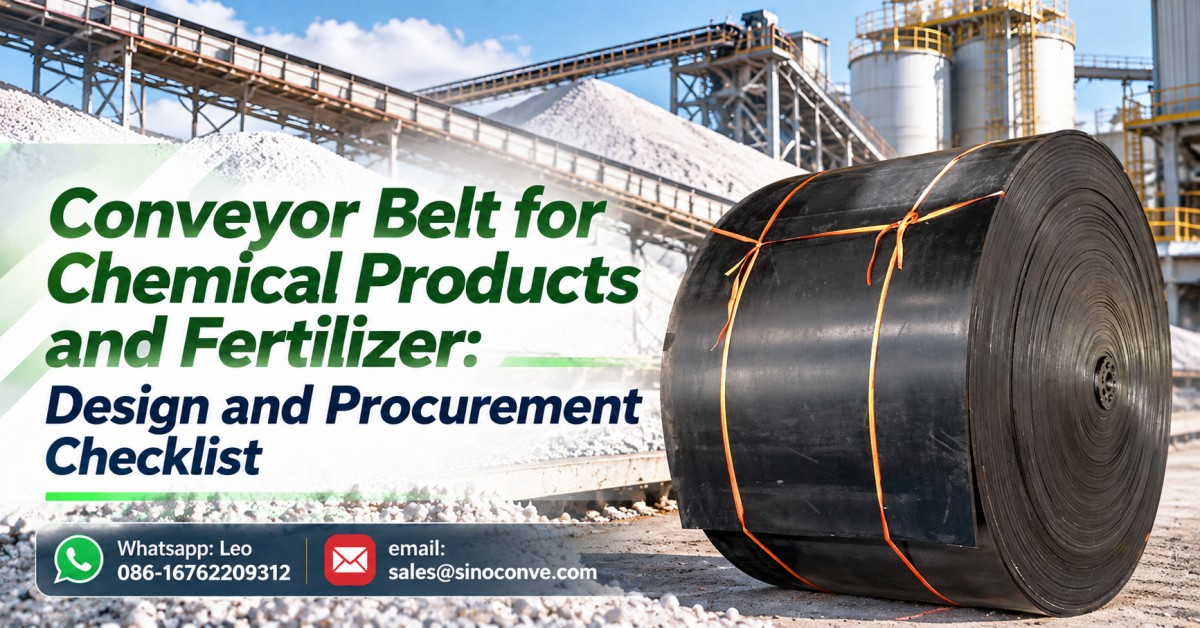
Conveyor Belt for Chemical Products and Fertilizer: Design and Procurement Checklist

Conveyor Belt for Chemical Products and Fertilizer: Design and Procurement Checklist

A fertilizer or chemical line is specified zone by zone, because the feed hopper, transfer towers and bagging floor punish a belt in different ways. This checklist begins with a material-property register covering hygroscopic and caking loads, then maps the corrosion, temperature and moisture pathways that change along the process. It sets cover, carcass and interlayer rules, and explains why caking cargo is a cover-and-cleaning problem rather than a carcass-strength problem. Belt type by zone, component combinations, contamination control between product grades and cleaning regimes are all covered. Dust and explosive-atmosphere risk, splice integrity and support structures under corrosive exposure each get their own section. The final part gives procurement acceptance clauses, incoming inspection documents, and a cost model across the replacement cycle. Buyers receive three deliverables they can paste straight into a scope of work.

Food Packaging Conveyor: Line Design, Zoning and Hygiene Requirements

Food Packaging Conveyor: Line Design, Zoning and Hygiene Requirements

A food packaging conveyor is designed zone by zone, not belt by belt, and this guide shows how to do it in that order. It starts by mapping a line into raw, cooked and packing zones, then sets hygiene class, cleaning regime and belt type separately for each one. Cross-zone transition points, line layout, and slope and decline rules for packaged product are covered with worked figures rather than opinions. Separate sections deal with drainage and floor fall, material trapping points, belt surface finish and colour control, wet-zone hardware, and allergen segregation at changeover. Verification methods such as swabs, ATP readings and visual checks are explained, along with a commissioning sequence to follow before handover. It finishes with the KPIs that reveal a failing line early. The result is a document a plant engineer can hand to a contractor on Monday morning.
Small Track Rollers B2B Sourcing Guide: Technical Audit and RFQ Checklist

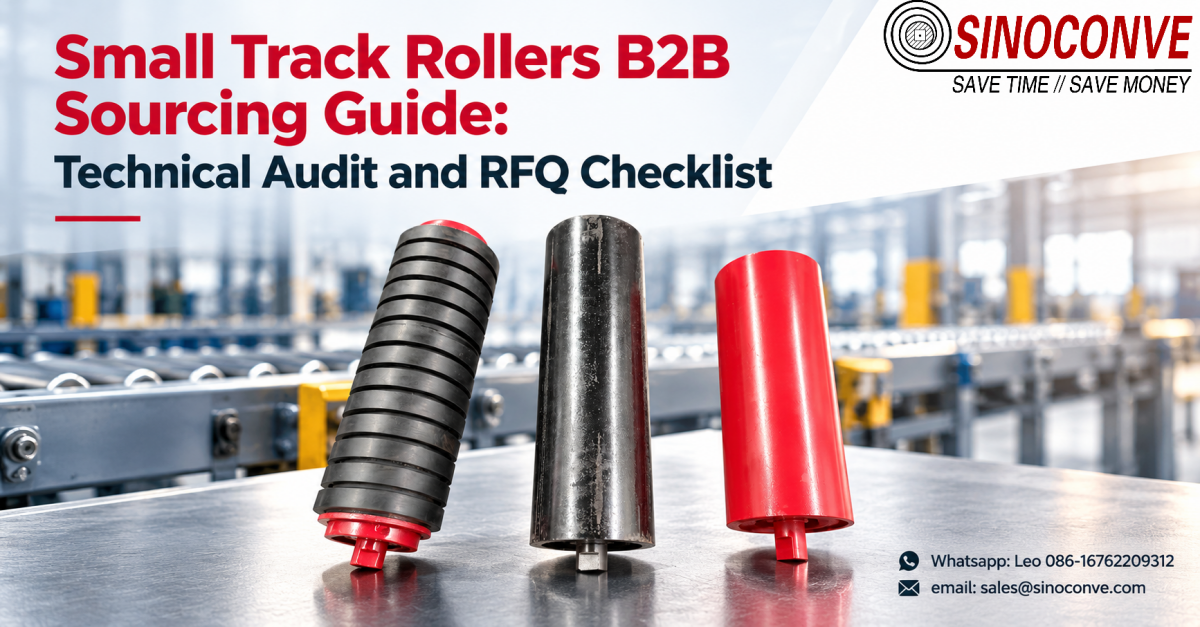
Small Track Rollers B2B Sourcing Guide: Technical Audit and RFQ Checklist

A small track roller is a drawing-controlled component, and unit price is the last variable worth comparing. This guide sets out a twelve-item technical audit covering bearing and seal class, tube wall and end-cap tolerance, dynamic load evidence tied to a named speed, and run-to-run batch consistency. It explains how to read a roller drawing, which eleven fields a complete datasheet must contain, and how to probe real bearing and seal limits before a quotation is issued. Coating and surface options are compared for when galvanizing, HDPE or rubber genuinely pays off. The second half turns the audit into paperwork: an eighteen-field RFQ sheet, a method for normalising price, MOQ and lead time, a sample and first-article approval workflow, incoming inspection rules, and a batch consistency tracking routine. It closes with packing, marking, warranty and claim handling. Buyers can use it to turn a wide quotation spread into a defensible, like-for-like comparison.

Cogged Belts: Profile, Drive Behavior and Application Limits

Cogged Belts: Profile, Drive Behavior and Application Limits

Cogged belts are notched V-belts that transmit torque through friction at the pulley sidewalls; their molded notches improve flexing and heat release but do not create synchronous timing. This engineering entry clarifies the overlapping terms cogged, notched, molded-notch and raw-edge, then separates them from timing belts and toothed conveyor belts. It introduces AX, BX and CX classical families, XPZ through XPC metric narrow profiles, and 3VX or 5VX inch-oriented profiles while directing exact dimensions to the applicable manufacturer data. Construction sections cover tensile cords, adhesion rubber, compression blocks, notch roots and raw sidewalls. The guide then connects notch geometry with bending loss, temperature, minimum pulley logic, belt speed, wrap angle and idler position. It closes with tension, alignment, sheave wear, matched-set discipline, failure diagnosis, replacement measurements and a buyer RFQ checklist.

Packaging Machine Belts: Hygiene, Grip and Line-Design Requirements

Packaging Machine Belts: Hygiene, Grip and Line-Design Requirements

Packaging machines usually combine several belt families rather than one universal construction. This guide maps the line from infeed and metering through indexing, sealing, pull-down, labeling, checkweighing, outfeed and accumulation. It shows where flat PVC or PU belts, coated timing belts, seamless loops, side belts, vacuum belts and high-grip profiles belong without repeating the separate coated-timing-belt or PVC-versus-rubber articles. Hygiene is divided into direct food contact, secondary packaging and dry or washdown cleaning regimes, with a document path for the exact quoted construction. Engineering sections cover grip and release, cover hardness, contamination, small pulleys, nosebars, splice geometry, static control, perforations, guides and temperature exposure. Worked examples for pouch, carton and parcel stations lead into incoming inspection, commissioning and a complete RFQ checklist.

Quickly Align Rollers: Selection, Setup and Failure Diagnosis

Quickly Align Rollers: Selection, Setup and Failure Diagnosis

This field guide turns an urgent conveyor tracking complaint into a controlled alignment procedure. It starts with lockout and fixed measurement stations, then separates local drift, progressive drift and once-per-revolution movement. The article explains how to distinguish frame or idler skew from off-center loading, carryback, pulley buildup, a seized roller, unequal tension or a crooked splice. A ten-minute triage route is separated from a full geometric survey, with practical tools and stop conditions for each. The adjustment sequence marks the original position, changes only one variable, observes several complete belt revolutions and repeats the test under documented load. Carrying-side, return-side and reversible conveyors are treated separately. The final sections provide an acceptance record, replacement-roller RFQ fields and failure patterns that should not be forced into alignment with extra steering.


Conveyor Belt for Chemical Products and Fertilizer: Design and Procurement Checklist

Conveyor Belt for Chemical Products and Fertilizer: Design and Procurement Checklist

A fertilizer or chemical line is specified zone by zone, because the feed hopper, transfer towers and bagging floor punish a belt in different ways. This checklist begins with a material-property register covering hygroscopic and caking loads, then maps the corrosion, temperature and moisture pathways that change along the process. It sets cover, carcass and interlayer rules, and explains why caking cargo is a cover-and-cleaning problem rather than a carcass-strength problem. Belt type by zone, component combinations, contamination control between product grades and cleaning regimes are all covered. Dust and explosive-atmosphere risk, splice integrity and support structures under corrosive exposure each get their own section. The final part gives procurement acceptance clauses, incoming inspection documents, and a cost model across the replacement cycle. Buyers receive three deliverables they can paste straight into a scope of work.

Food Packaging Conveyor: Line Design, Zoning and Hygiene Requirements

Food Packaging Conveyor: Line Design, Zoning and Hygiene Requirements

A food packaging conveyor is designed zone by zone, not belt by belt, and this guide shows how to do it in that order. It starts by mapping a line into raw, cooked and packing zones, then sets hygiene class, cleaning regime and belt type separately for each one. Cross-zone transition points, line layout, and slope and decline rules for packaged product are covered with worked figures rather than opinions. Separate sections deal with drainage and floor fall, material trapping points, belt surface finish and colour control, wet-zone hardware, and allergen segregation at changeover. Verification methods such as swabs, ATP readings and visual checks are explained, along with a commissioning sequence to follow before handover. It finishes with the KPIs that reveal a failing line early. The result is a document a plant engineer can hand to a contractor on Monday morning.

Small Track Rollers B2B Sourcing Guide: Technical Audit and RFQ Checklist

Small Track Rollers B2B Sourcing Guide: Technical Audit and RFQ Checklist

A small track roller is a drawing-controlled component, and unit price is the last variable worth comparing. This guide sets out a twelve-item technical audit covering bearing and seal class, tube wall and end-cap tolerance, dynamic load evidence tied to a named speed, and run-to-run batch consistency. It explains how to read a roller drawing, which eleven fields a complete datasheet must contain, and how to probe real bearing and seal limits before a quotation is issued. Coating and surface options are compared for when galvanizing, HDPE or rubber genuinely pays off. The second half turns the audit into paperwork: an eighteen-field RFQ sheet, a method for normalising price, MOQ and lead time, a sample and first-article approval workflow, incoming inspection rules, and a batch consistency tracking routine. It closes with packing, marking, warranty and claim handling. Buyers can use it to turn a wide quotation spread into a defensible, like-for-like comparison.

Cogged Belts: Profile, Drive Behavior and Application Limits

Cogged Belts: Profile, Drive Behavior and Application Limits

Cogged belts are notched V-belts that transmit torque through friction at the pulley sidewalls; their molded notches improve flexing and heat release but do not create synchronous timing. This engineering entry clarifies the overlapping terms cogged, notched, molded-notch and raw-edge, then separates them from timing belts and toothed conveyor belts. It introduces AX, BX and CX classical families, XPZ through XPC metric narrow profiles, and 3VX or 5VX inch-oriented profiles while directing exact dimensions to the applicable manufacturer data. Construction sections cover tensile cords, adhesion rubber, compression blocks, notch roots and raw sidewalls. The guide then connects notch geometry with bending loss, temperature, minimum pulley logic, belt speed, wrap angle and idler position. It closes with tension, alignment, sheave wear, matched-set discipline, failure diagnosis, replacement measurements and a buyer RFQ checklist.

Packaging Machine Belts: Hygiene, Grip and Line-Design Requirements
SINOCONVE
Sep 23, 2026

Packaging Machine Belts: Hygiene, Grip and Line-Design Requirements

Packaging machines usually combine several belt families rather than one universal construction. This guide maps the line from infeed and metering through indexing, sealing, pull-down, labeling, checkweighing, outfeed and accumulation. It shows where flat PVC or PU belts, coated timing belts, seamless loops, side belts, vacuum belts and high-grip profiles belong without repeating the separate coated-timing-belt or PVC-versus-rubber articles. Hygiene is divided into direct food contact, secondary packaging and dry or washdown cleaning regimes, with a document path for the exact quoted construction. Engineering sections cover grip and release, cover hardness, contamination, small pulleys, nosebars, splice geometry, static control, perforations, guides and temperature exposure. Worked examples for pouch, carton and parcel stations lead into incoming inspection, commissioning and a complete RFQ checklist.

Quickly Align Rollers: Selection, Setup and Failure Diagnosis

Quickly Align Rollers: Selection, Setup and Failure Diagnosis

This field guide turns an urgent conveyor tracking complaint into a controlled alignment procedure. It starts with lockout and fixed measurement stations, then separates local drift, progressive drift and once-per-revolution movement. The article explains how to distinguish frame or idler skew from off-center loading, carryback, pulley buildup, a seized roller, unequal tension or a crooked splice. A ten-minute triage route is separated from a full geometric survey, with practical tools and stop conditions for each. The adjustment sequence marks the original position, changes only one variable, observes several complete belt revolutions and repeats the test under documented load. Carrying-side, return-side and reversible conveyors are treated separately. The final sections provide an acceptance record, replacement-roller RFQ fields and failure patterns that should not be forced into alignment with extra steering.
Explore more

We are committed to providing you with better products and services. Welcome to browse more content for details