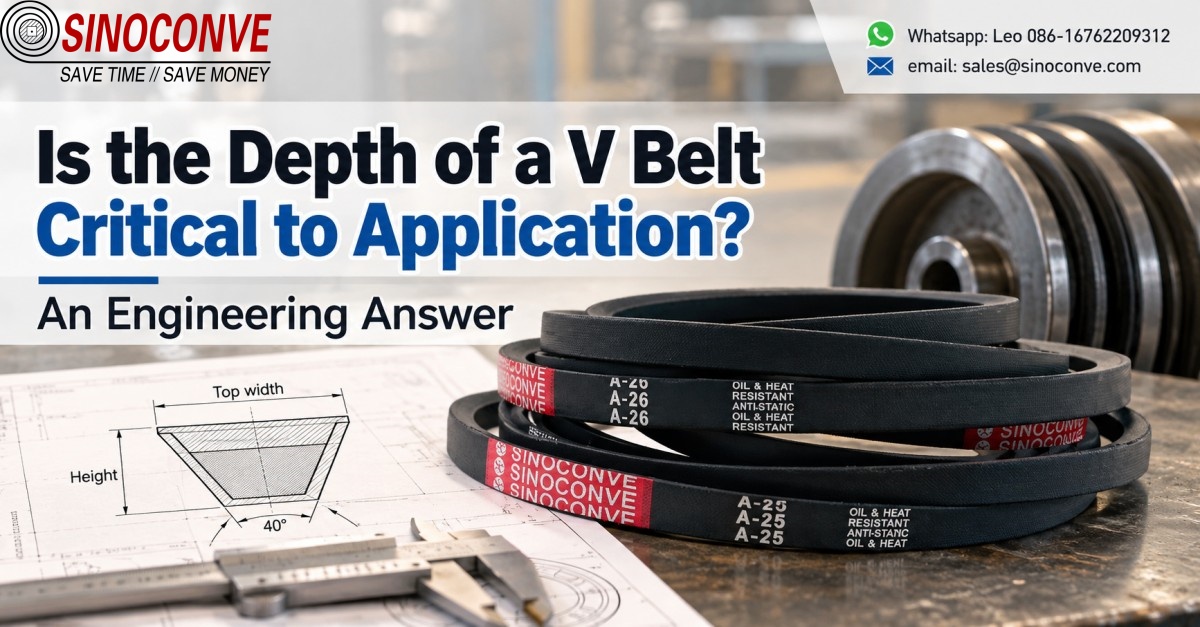
Is the Depth of a V Belt Critical to Application? An Engineering Answer
Short answer: the depth of a V belt rarely wrecks a drive on its own, but it is the usual reason a drive ends up under-rated, runs hot or slips on the sheave already bolted to the frame. This engineering answer opens with that two-paragraph prose conclusion, then works the seating logic in full. It covers cross-section geometry and the datum line, the wedge principle that puts the load on the flanks rather than the base, two hand-checkable worked examples on contact area and bending strain, bottoming out and insufficient depth, classic versus narrow sections, how cogging changes flexure rather than the wedge, and a depth-only reference column set. It closes with a symptom-to-cause failure table, a six-step selection procedure that screens pulley diameter against belt height, and the height and set-matching tolerances worth writing into the purchase order.
Poultry Conveyor Belt: Hygiene, Grip and Line-Design Requirements
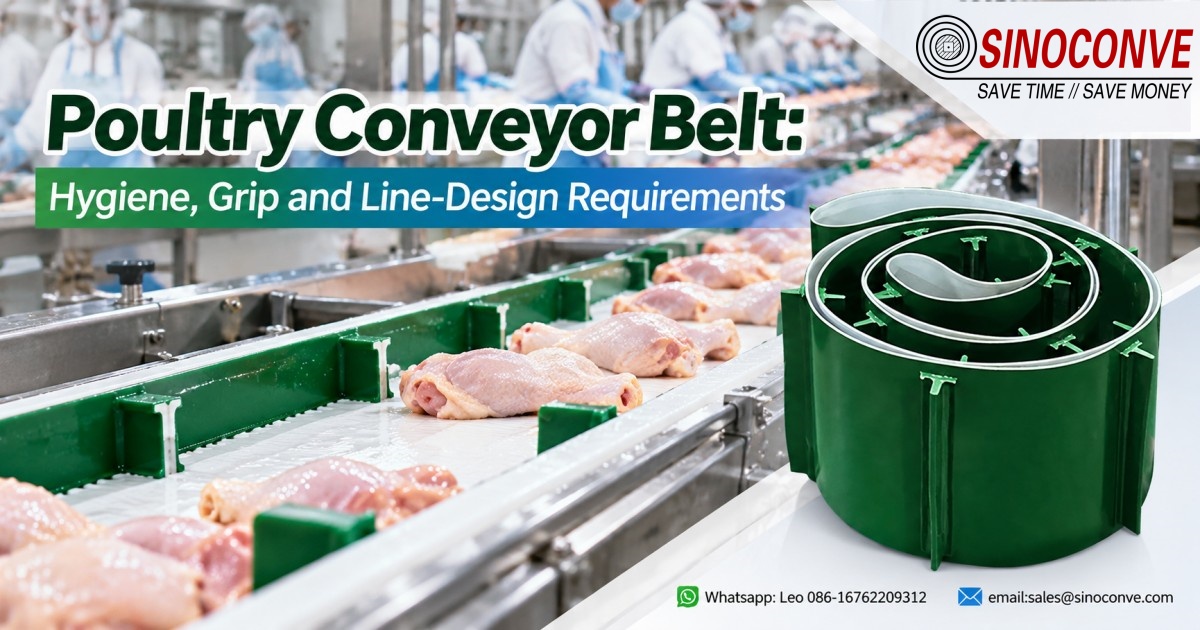
Poultry processing asks one belt to survive hot rendered fat, standing water, bone splinters and knife tips, and a washdown cycle that runs several times a shift with hot chlorinated chemistry. This guide maps every station from live-hang and crate return through cut-up, deboning and portioning to grading, weighing and packing, and recommends the right belt for each. It compares food-grade PVC, PU and polyolefin under fat, cold and sanitizer exposure, explains why blue and white are functional HACCP colours rather than styling, and shows how bone and knife damage becomes a foreign-body risk. Acceptance testing, a procurement checklist, minimum pulley diameters and a simple total-cost sum round out the decision map.
Reducing Carryback Sludge: Selection, Setup and Failure Diagnosis
Carryback only becomes a real problem once it turns to sludge: wet fines that pack the return idlers, force the belt off centre and trip the line. This guide explains why adding another scraper rarely fixes reducing carryback sludge, and where the money belongs instead. It walks the cause chain from adhesion to secondary buildup, transfer-point containment with skirtboards and chutes, return-side flow control, wash-water volume and reuse, solid-liquid separation, and a worked sump-sizing example for a 1,200 mm belt moving 1,000 t/h at 2.8 m/s. It closes with a six-reason failure diagnosis, shift-level cleaning routines, an RFQ checklist and the commissioning mistakes that quietly undo a good design.
PU Timing Belts Manufacturer: Technical Audit and RFQ Checklist
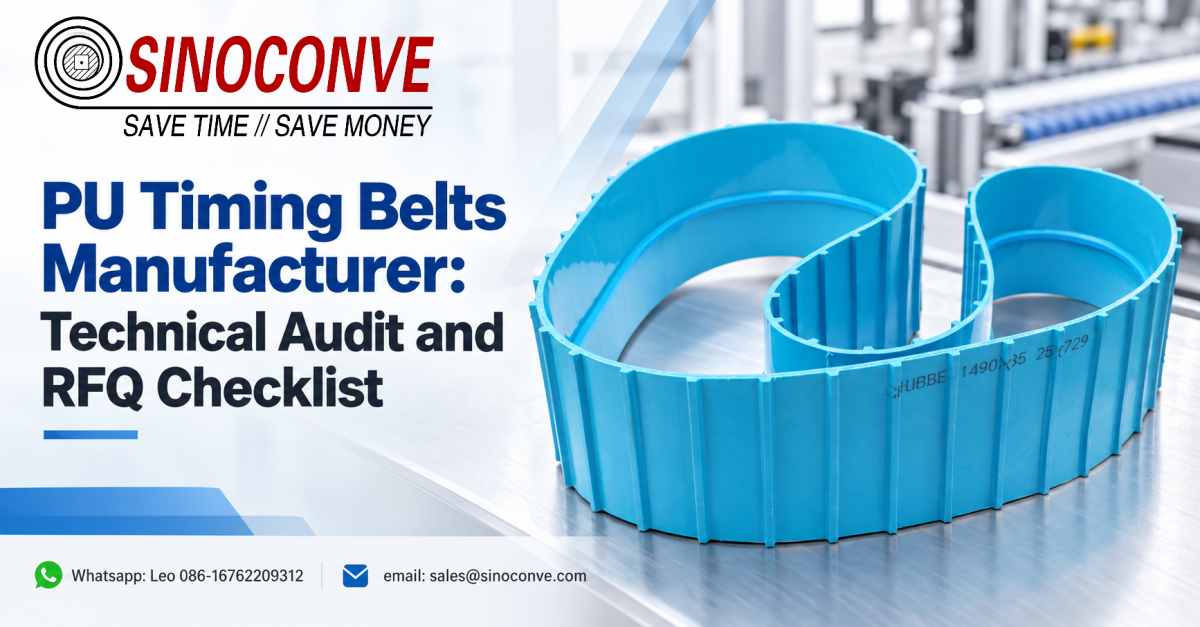
Qualify a PU timing belt manufacturer with documents, not with a sample, because two belts can look identical on a bench and still come off two different processes. This guide sets three questions to ask before reading a price: which pitches and tooth profiles are moulded in house, whether a belt is endless by moulding or jointed, and how batch-to-batch dimensional variation is recorded. It explains how to audit mould and tooling capability, verify a truly endless belt, and confirm cord and backing consistency. Dimensional inspection items, mechanical test evidence by standard, surface treatment capability and batch records are each covered. The second half turns the audit into paperwork with an RFQ field sheet, a sample validation workflow, first-article approval, packing and traceability, and price, MOQ and lead-time normalisation. Warranty and claim handling close the process.
Agriculture Conveyor Support: System Design and Buyer Checklist
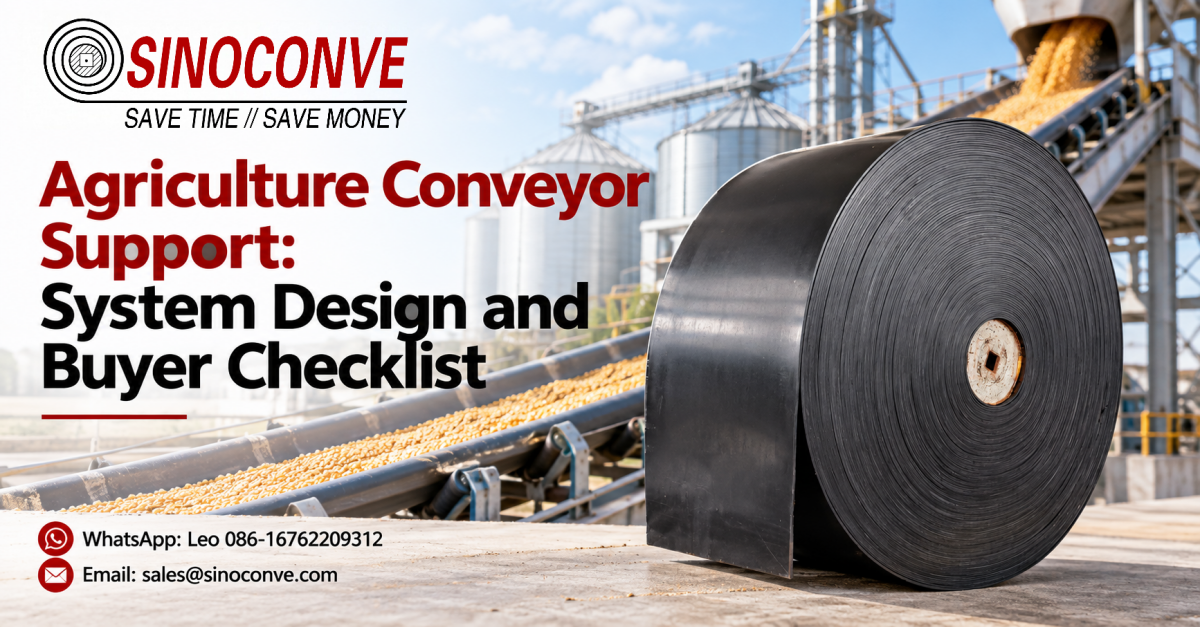
Farm conveying support is spaced from load, not from habit. On grain or produce running up to about 0.6 tonnes per metre, this guide sets carry idlers at roughly 1.2 to 1.5 metres and frame bays at 2.0 to 3.0 metres, then tightens both around every loading and transfer point. On mobile or portable units the limiting factor is frame stiffness under wind and uneven ground, so support spacing is reduced before belt tension is increased. Idler spacing, frame and truss spacing, load calculations and troughing angle each get a dedicated section. Open-air exposure, dust and chaff accumulation, ground conditions and foundations, maintenance access, and drive and take-up support are all covered. It finishes with an inspection route, a buyer checklist and expected service lives for support components.
Idler Roller Types: Selection, Setup and Failure Diagnosis
Idler roller types are decided by position and duty, not by preference, and this guide gives the four installation numbers to work to. Carry idlers sit every 1.0 to 1.5 metres, return idlers every 2.5 to 3.0 metres, impact idlers at every loading point, and self-aligning idlers roughly every 30 to 50 metres. It then describes each position family in turn, including spiral and rubber-disc idlers, disc return rollers versus flat return, and bearing and seal selection by environment. Spacing rules, load per roller station and a selection matrix by duty are provided with worked figures. A failure diagnosis section distinguishes a seized or flat-spotted roller from belt mistracking, which is the most common misdiagnosis on site. Installation tolerances, replacement strategy and spares planning close the guide.