Glass Cullet Conveyor Belt: Sharp Shards, Heat and Colour Sorting
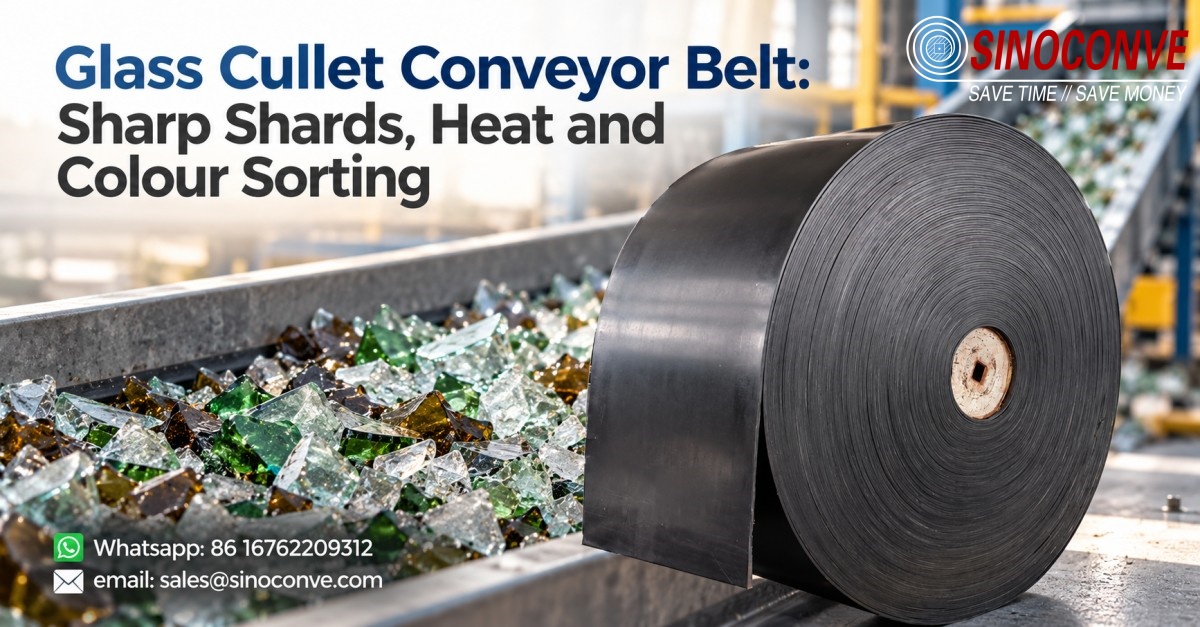
Cullet does not wear a belt out so much as cut it. A shard edge reaches the carcass through a cover that was chosen for abrasion, and once moisture gets into that cut the plies start to separate. This guide separates the two cullet sources that are usually treated as one duty: hot cullet taken from the forming side of a container plant, where heat sits on top of the cutting problem, and cold mixed cullet from a recycling line, where water, glass powder and ceramic contamination do the damage. It explains why a harder cover is not automatically better, how a chevron or cleated surface changes spillage on an incline, why the belt face matters to an optical sorter, and why both wet washing and dry scraping carry a cost on this material. Later sections cover splice choice, edge damage at skirt rubber, tracking when spillage builds up on rollers, and the points worth settling before a line restarts.
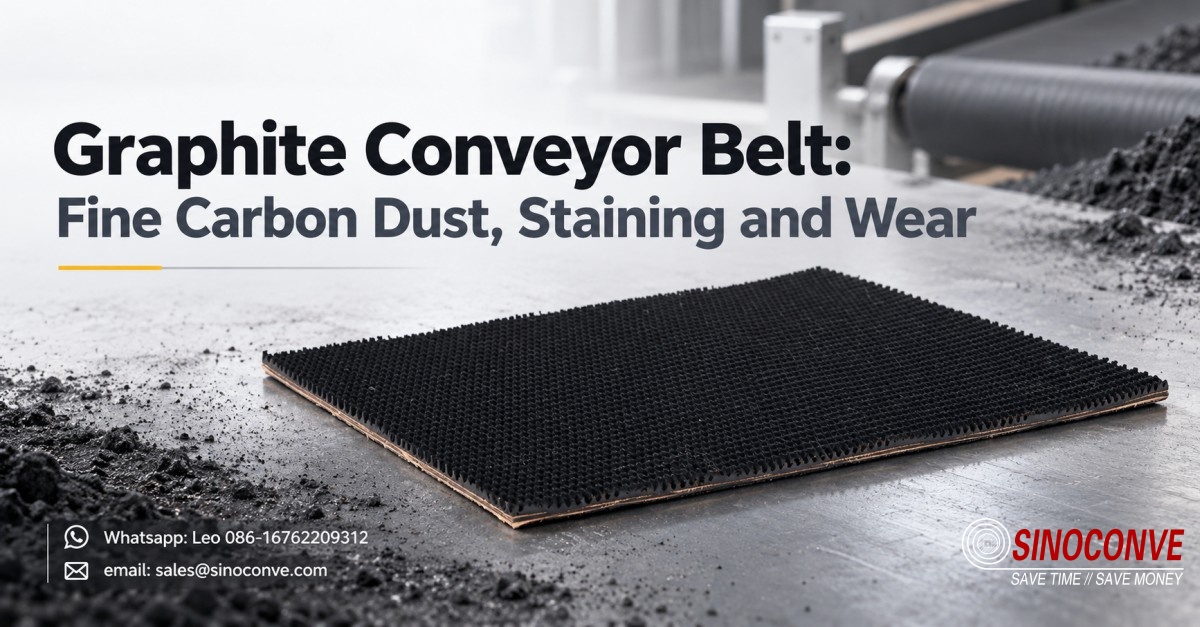
Graphite Conveyor Belt: Fine Carbon Dust, Staining and Wear
Graphite is a mineral only in the geological sense. On a belt it behaves like a lubricant, a pigment and a conductor at the same time, and none of those behaviours is helped by the usual answer to abrasive dust. It does not cut a cover so much as migrate into it, stain everything it touches and bridge gaps that were meant to stay clean. This guide starts from the dust rather than the load, then follows what it does: where it settles, how carryback returns it to the frame, why conductivity turns a housekeeping issue into an electrical one, and how a small amount of contamination becomes a product purity claim. Later sections cover cover and carcass selection, sealing and skirting, splice choice, dry cleaning rather than washdown, tracking when rollers collect build-up, and the acceptance checks and spares worth holding.
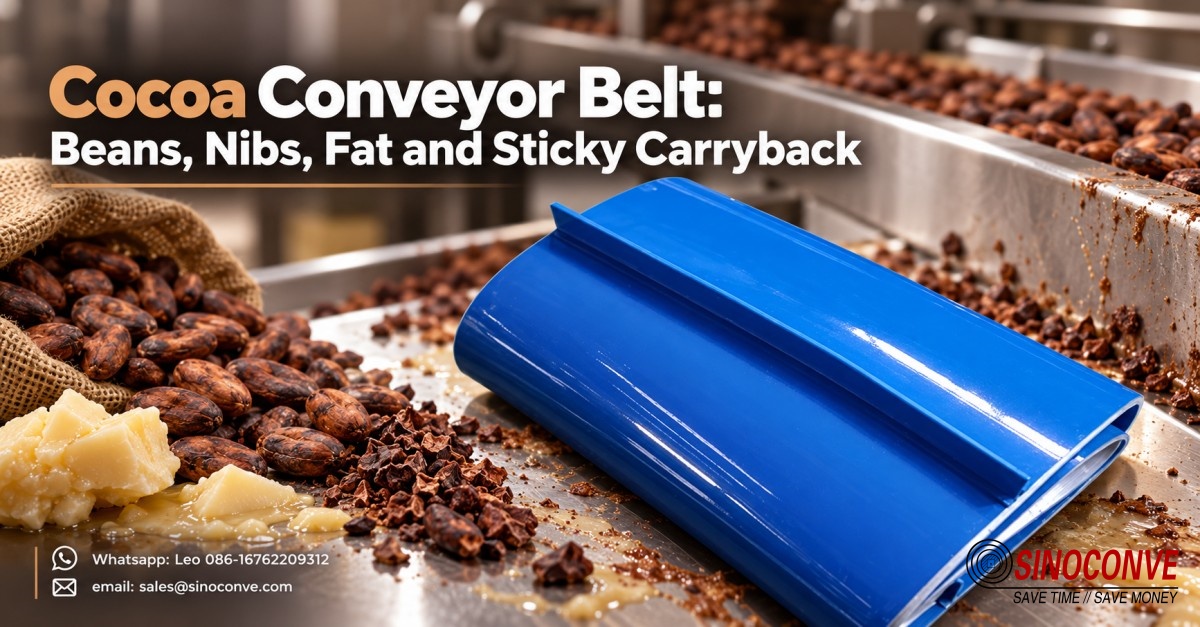
Cocoa Conveyor Belt: Beans, Nibs, Fat and Sticky Carryback
Cocoa arrives at a belt as a dry bean and leaves it as something closer to paste, and the change happens while the product is on the belt. Roasting drives fat to the surface, breaking releases nib and husk, and winnowing throws a fine dust that settles on every surface. The result is a cover that turns tacky, a return side that carries product back, and a cleaning problem that cannot be solved with water alone. This guide follows the bean through cleaning, roasting, breaking and winnowing to the point where grinding takes over. It separates fat from heat and from husk dust, because each needs a different answer, and it treats flavour carryover as a quality issue rather than a housekeeping one. Later sections cover material choice, inclines and fragile product, dry cleaning before wet, tracking in a warm plant, and the checks to settle before a cocoa line starts.
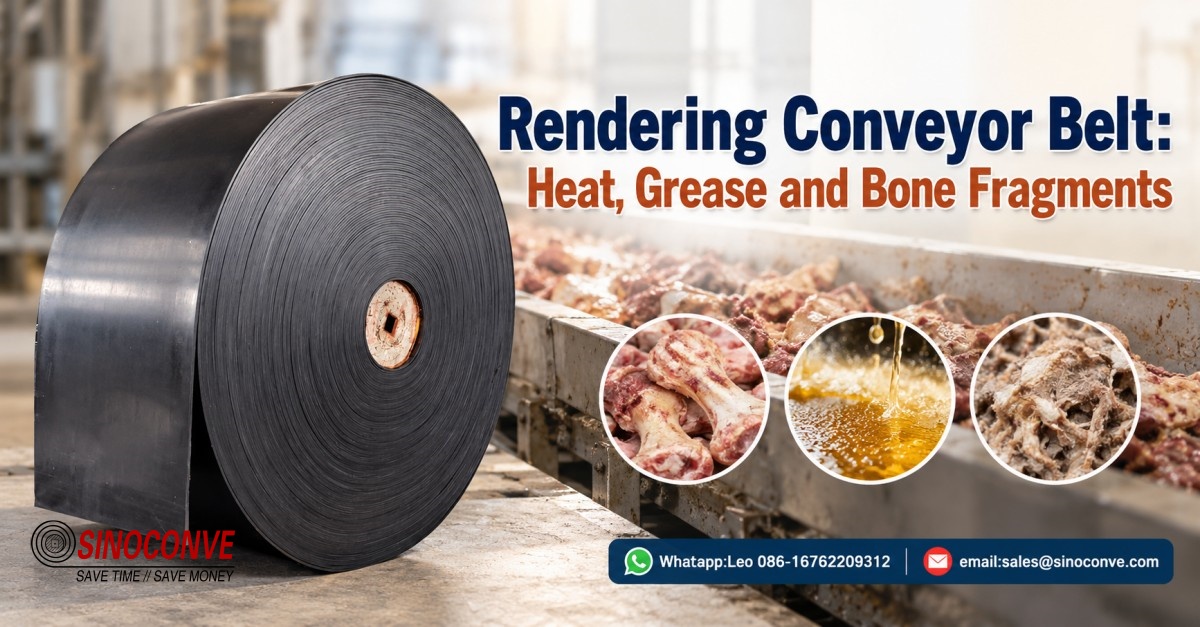
Rendering Conveyor Belt: Heat, Grease and Bone Fragments
A rendering plant is not a food line with the hygiene switched off. It is a hot, wet, greasy process that turns by-products into meal and tallow, and it punishes a belt in ways a cutting floor never does. Fat softens a cover that was specified for abrasion, bone and tramp metal cut it, and condensate from warm wet air finds every cut edge. This guide follows the sequence from reception through crushing, cooking, pressing and drying, and treats each stage as a separate duty rather than one generic heavy load. It explains why carryback on the return side becomes a fire and housekeeping problem, why a food-grade claim does not automatically apply here and what to specify instead, how inclines and transfer points concentrate damage, and how to clean a line that stays warm all day. It closes with tracking under uneven load and the acceptance checks to settle before a restart.
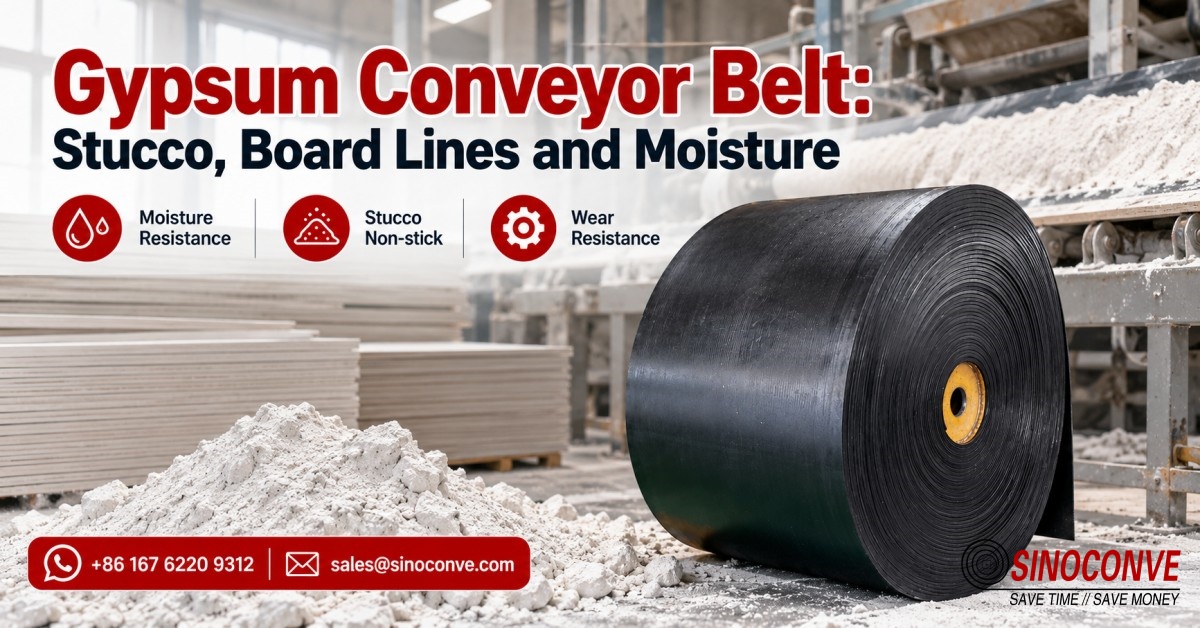
Gypsum Conveyor Belt: Stucco, Board Lines and Moisture
A gypsum conveyor belt works in a line that looks like a board plant and behaves nothing like one. Stucco is a powder that sets when it meets water, so the belt must release a wet slurry board without tearing it and without holding set material on the cover. Downstream, the dryer brings heat and steam, and the saw and trim stations bring a fine dust that packs into every gap. This guide separates gypsum from wood-based panel lines, then follows the sequence from calcination to stacking. It covers release and grip as competing requirements, why stucco dust is a setting problem rather than a cleaning problem, how board edges and knives damage a cover, and how heat and steam in the dryer shorten its life. Later sections cover splice and tracking on a board line, transfer and surface protection, cleaning between product changes, and the checks to settle before a line starts.
Lime Conveyor Belt: Quicklime Heat, Dust and Abrasion
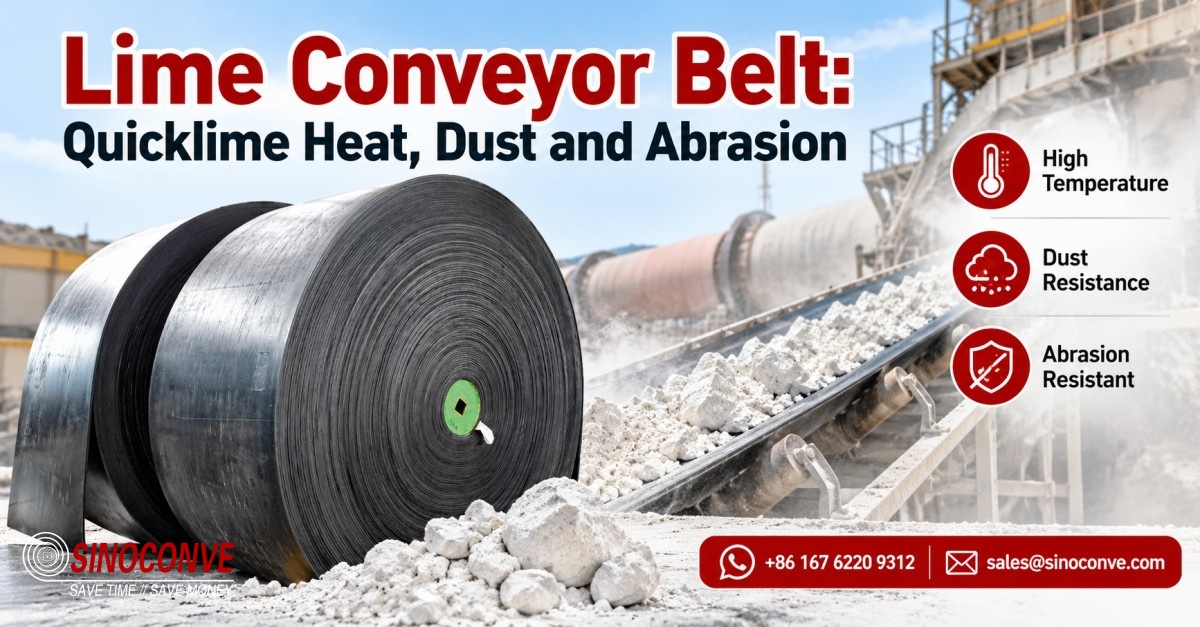
A lime conveyor belt meets its hardest conditions in the first few metres after the kiln, where hot quicklime arrives with fine alkaline dust and no warning. Cement is not the same duty: clinker cools before it travels far, while lime can leave the kiln and reach the belt almost immediately. This guide keeps that distinction at the centre. It separates quicklime, hydrated lime and milk of lime as three duties with different temperature, moisture and dust behaviour, then follows each failure: heat that shortens cover life, alkaline dust that attacks the cut edge, hard fines that grind the cover, and splices that open under repeated heat cycles. It closes with transfer points, dry cleaning rather than washdown, and the acceptance checks and spares a lime plant should hold before a shutdown.