

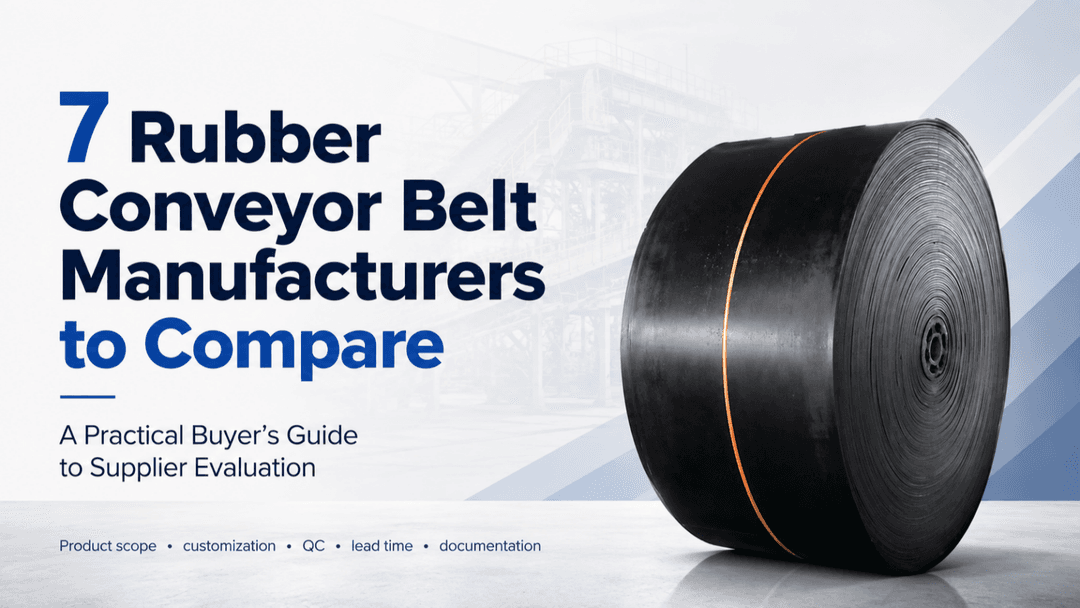
Rubber Conveyor Belt Manufacturers: 7 Global Suppliers Buyers Can Compare
Comparing rubber conveyor belt manufacturers requires more than checking brand size or price per meter. This guide reviews seven global manufacturers from different sourcing profiles and explains how buyers should evaluate production scope, fabric versus steel cord capability, customization, testing, documentation, lead time, and application fit. It also shows where SINOCONVE fits for distributors, importers, replacement orders, and industrial projects, with a practical RFQ checklist to help buyers obtain technically comparable quotations.
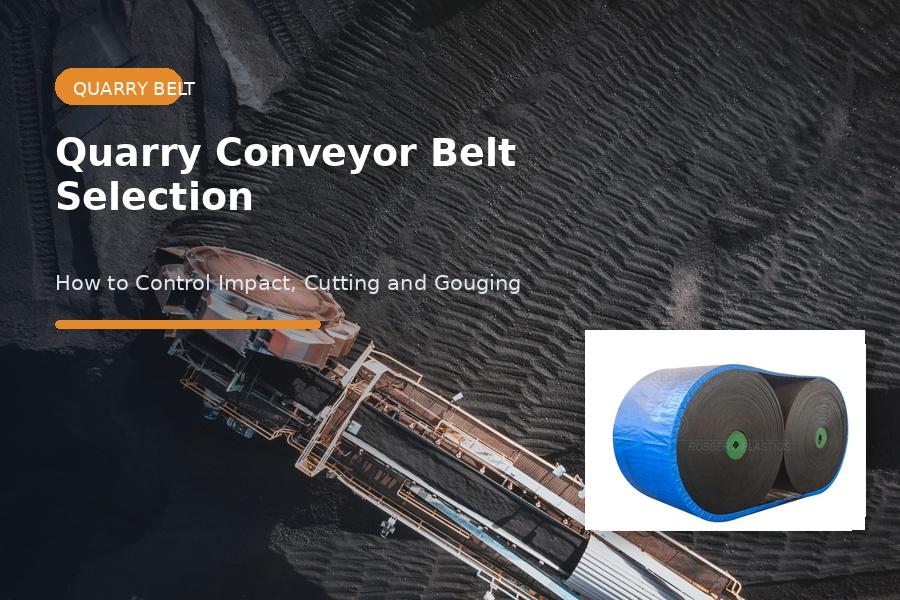
Quarry Conveyor Belt Selection: How to Control Impact, Cutting and Gouging
Quarry and crusher belts often fail from impact, cutting, gouging, mistracking, or loading-zone damage before uniform wear reaches its limit. Use this field-focused selection method to reduce repeat replacement.
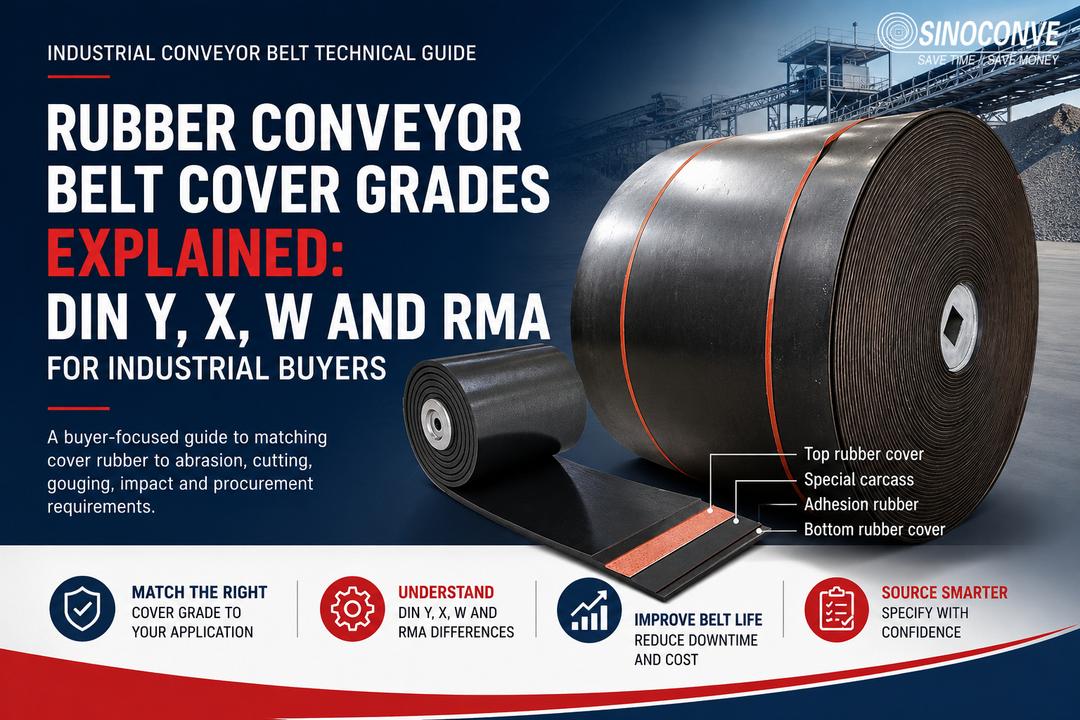
Rubber Conveyor Belt Cover Grades Explained: DIN Y, X, W and RMA for Industrial Buyers
Conveyor belt cover grades should be selected around the actual failure mechanism, not simply the grade with the lowest abrasion number. This guide compares DIN Y, DIN X and DIN W, explains where RMA Grade I and Grade II fit in industrial procurement, and shows how abrasion, cutting, gouging and impact change the specification decision. It also gives buyers a practical RFQ and verification framework for comparing rubber conveyor belt quotations without relying on grade labels alone.
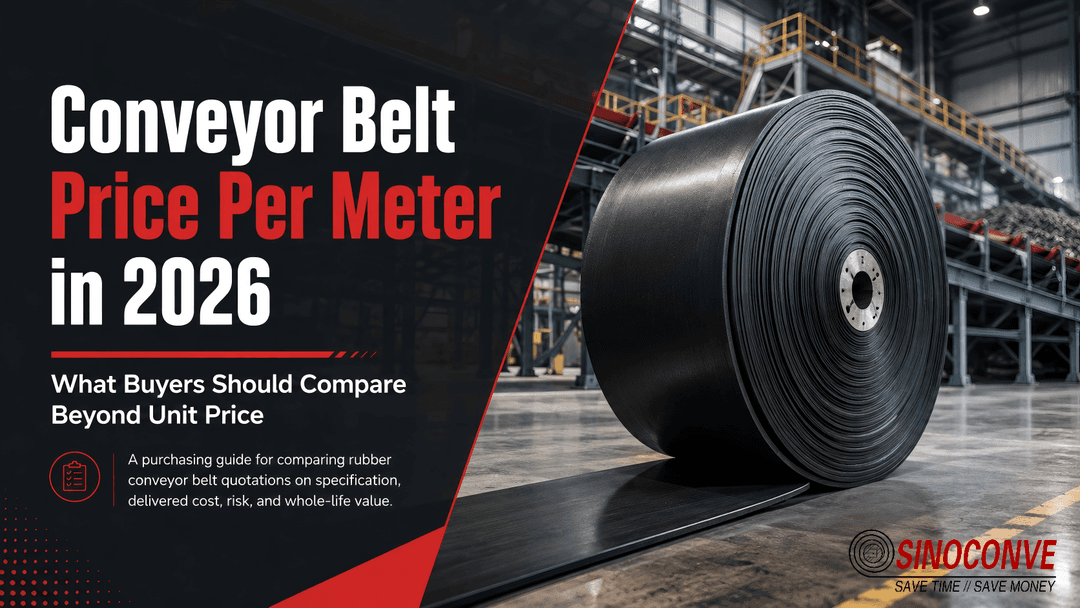
Conveyor Belt Price Per Meter in 2026: What Buyers Should Compare Beyond Unit Price
Conveyor belt price per meter is meaningful only when buyers compare the same technical and commercial scope. This guide explains how belt width, carcass strength, cover thickness, rubber compound, customization, testing, packing, and trade terms affect rubber conveyor belt price. It also shows how to normalize supplier quotations, compare landed and whole-life cost, verify current standards and test evidence, and prepare a clearer RFQ so purchasing teams can distinguish a genuinely competitive offer from an incomplete low-price quote.
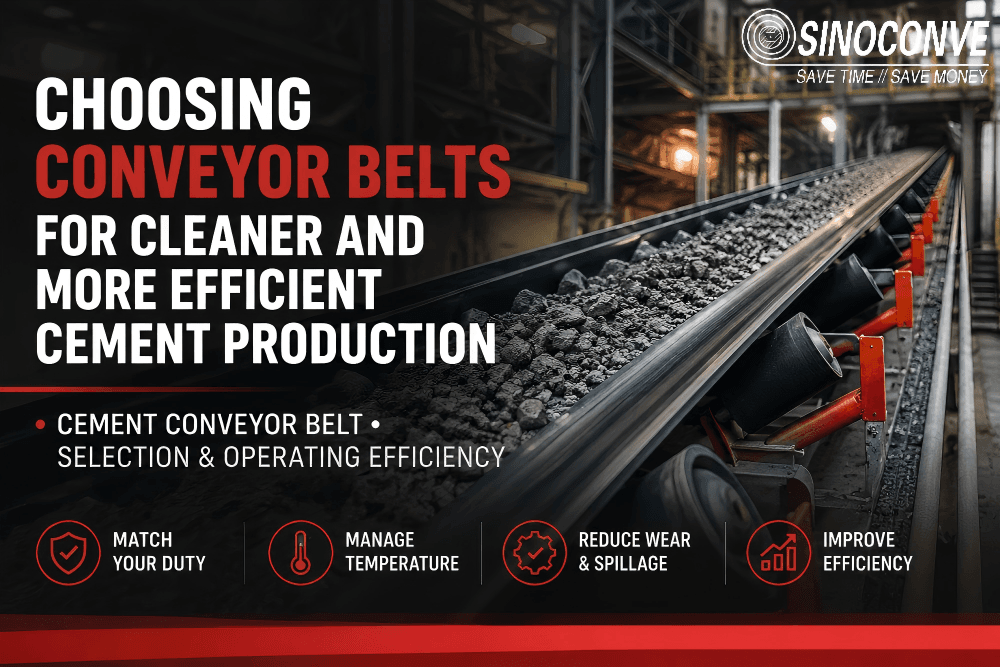
Choosing Conveyor Belts for Cleaner and More Efficient Cement Production
Cement plants expose conveyor belts to very different duties, from abrasive limestone and fine powders to hot clinker. This guide explains how material temperature, abrasion, impact, carcass strength, cover properties, splice design, pulley geometry, and conveyor conditions should influence belt selection. It also shows why cleaner material handling depends on more than a belt grade alone, and gives cement plant engineers and procurement teams a practical method for diagnosing failures, preparing RFQs, and comparing technically equivalent belt proposals.
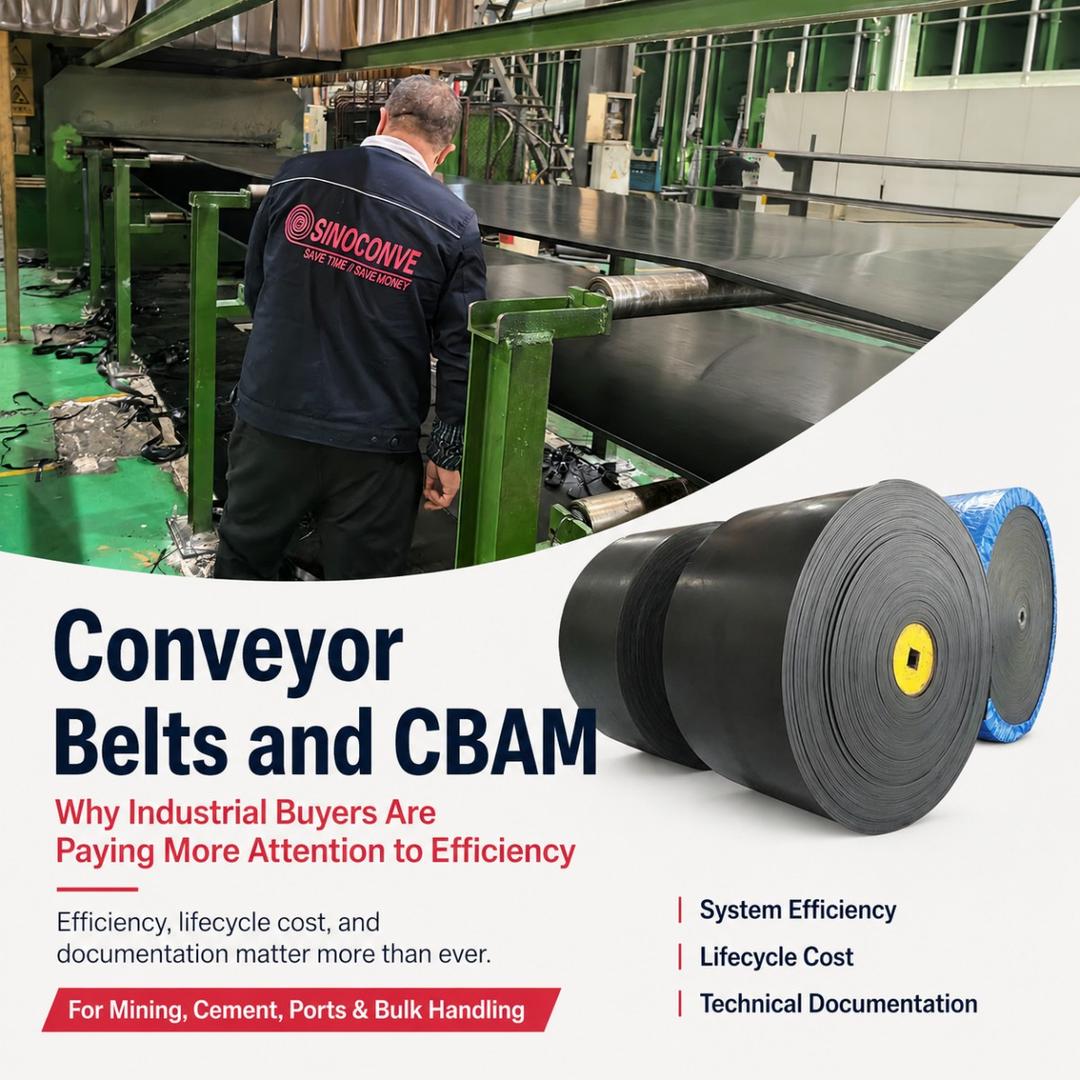
Conveyor Belts and CBAM: Why Industrial Buyers Are Paying More Attention to Efficiency
CBAM does not directly regulate conveyor belts, but it is changing how industrial buyers evaluate energy use, lifecycle cost, and technical documentation. This article explains where conveyor belt efficiency matters, what to verify in an RFQ, and how to avoid weak “low-carbon” claims.
Explore more
We are committed to providing you with better products and services. Welcome to browse more content for details