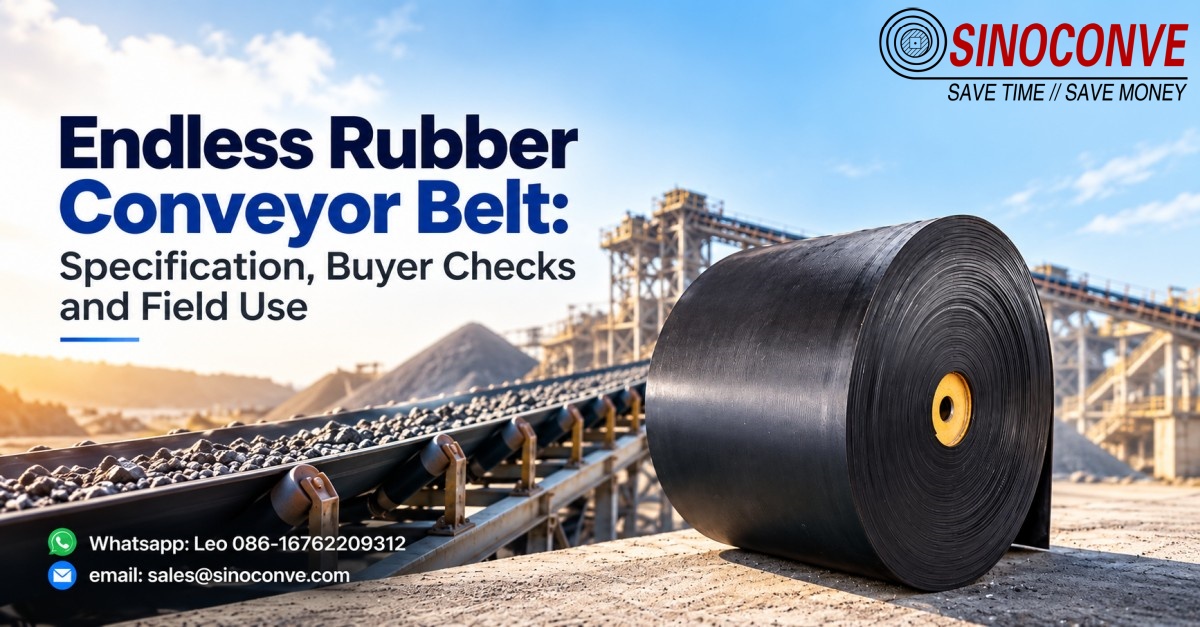
Endless Rubber Conveyor Belt: Specification, Buyer Checks and Field Use
An endless rubber conveyor belt is cured as a closed ring instead of being joined on site, so the carcass carries no splice and the loop runs with one less weak point. This guide explains what endless construction can and cannot deliver: the loop sizes that can be cured as a true ring, the length tolerance worth writing into a purchase order, and the differences between moulded endless and welded loops that look identical in a photograph. It covers specification of cover grade, ply and carcass for duty, and the buyer checks that separate a controlled loop from an oversized one. It also explains why an endless belt can still drift when pulley alignment and crowning are wrong. Field experience from crushing and mining circuits shows expected service life, on-site repair limits and when the extra spend pays back.
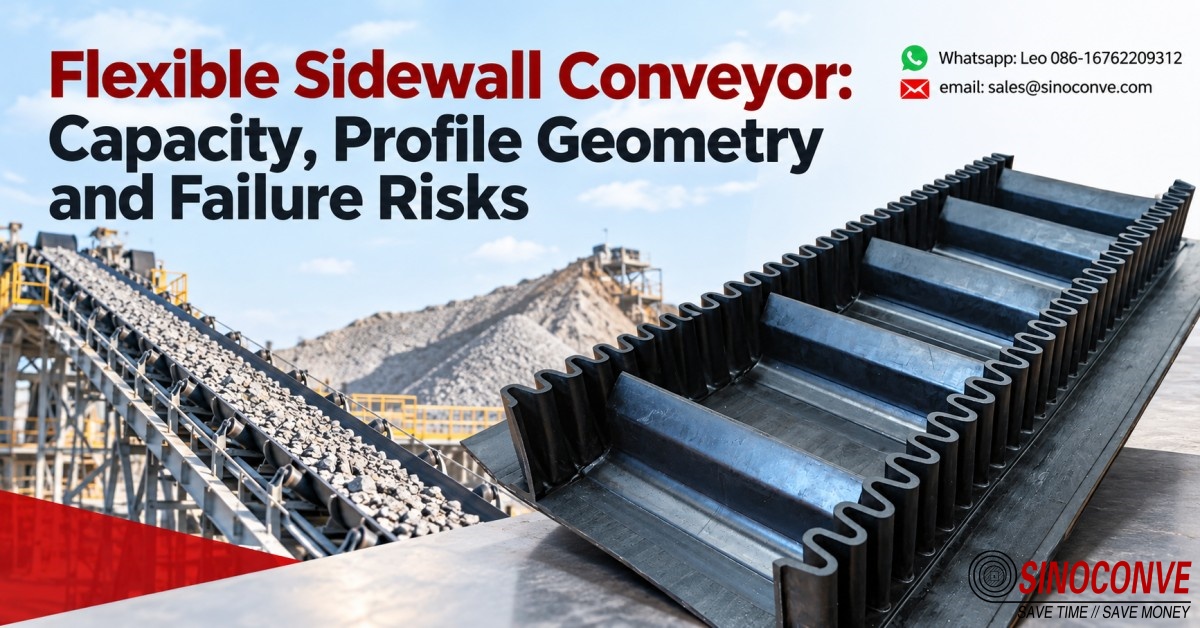
Flexible Sidewall Conveyor: Capacity, Profile Geometry and Failure Risks
Flexible sidewall conveyors move bulk material up inclines a flat belt cannot hold, and their capacity depends on the trough formed by two corrugated walls and transverse cleats rather than on belt width alone. This guide works through the capacity calculation, how sidewall height and cleat pitch are chosen for a given incline, and the profile geometry that stops material spilling at the corners. It then covers the failure risks that actually stop these belts - cracking at the sidewall root, corrugation fatigue in cold weather, and cleat tear-off where the bond or fixing is under-designed - and shows how to read each one from the damage pattern. Field checks for base width, wall height tolerance, cleat spacing and return idler clearance are set out so a delivery can be verified against the drawing before the belt is fitted.
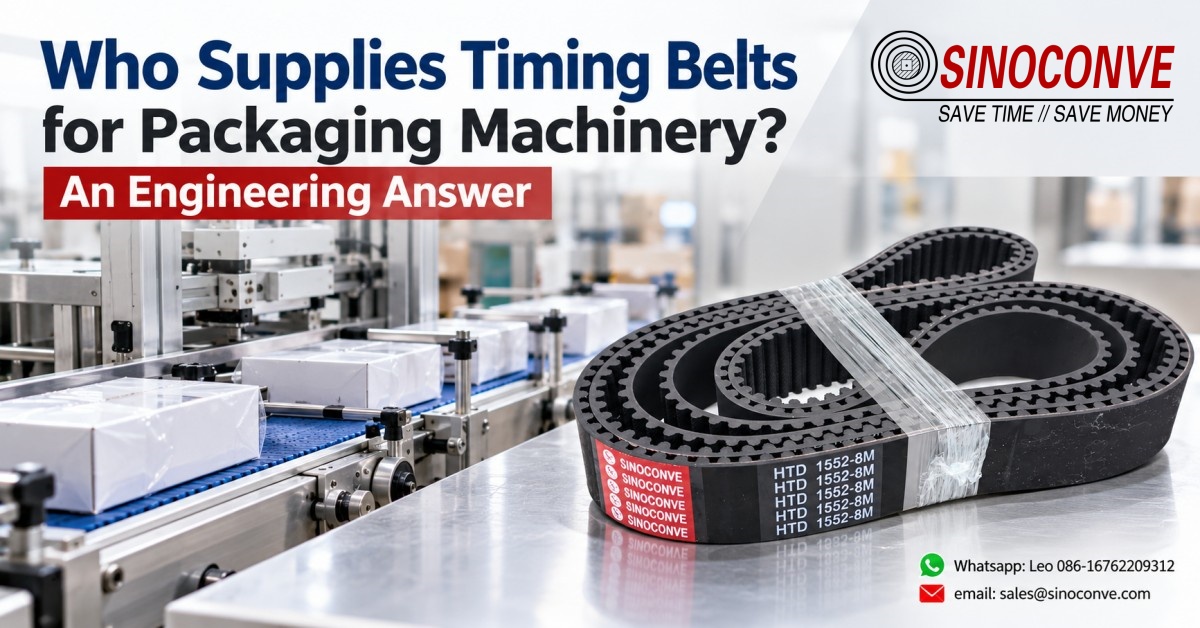
Who Supplies Timing Belts for Packaging Machinery? An Engineering Answer
Packaging machinery timing belts rarely come from the OEM. They come from industrial belt manufacturers, converters, distributors and the OEM's own aftermarket channel, and those four answer very different questions. This guide shows how to tell a belt maker from a belt reseller, how to work a supplier capability checklist, and why the right answer changes with machine class. It covers matching belt geometry to intermittent indexing versus continuous film duty, positioning accuracy and repeatability, compound and cord selection, joint and endless construction, batch consistency, spares depth and lead time. It closes with the first checks to run when a new belt fails early and a sourcing sequence - duty match, sample trial, dimensional consistency, spares, commercial terms - that keeps an indexing line landing on the same position eighteen months after the first belt was fitted.
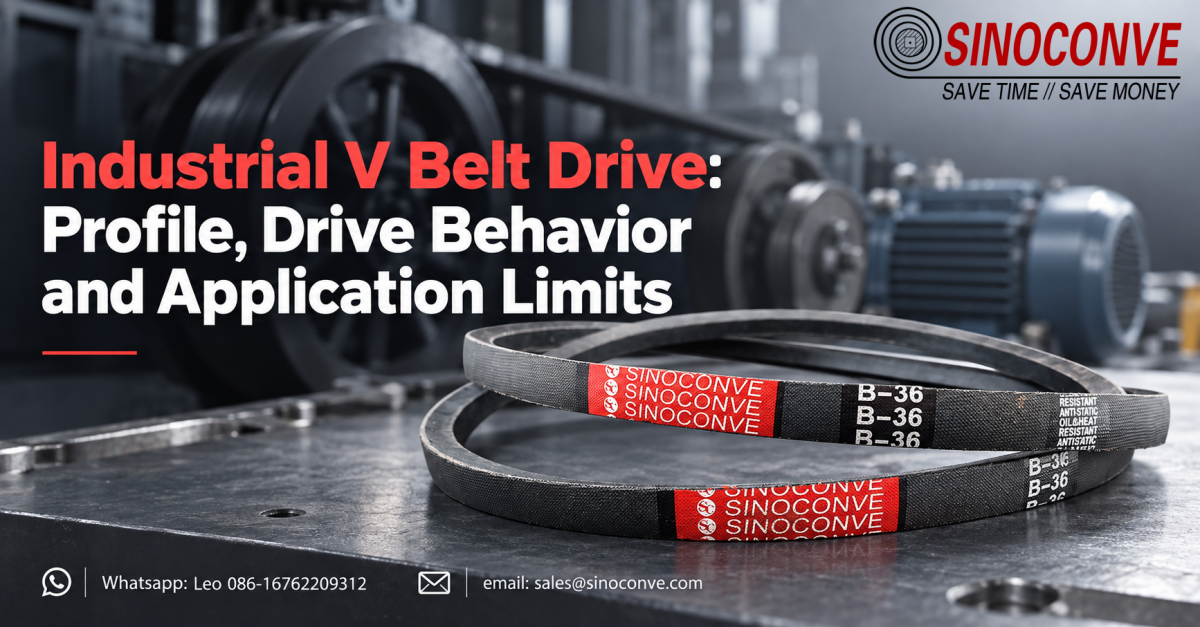
Industrial V Belt Drive: Profile, Drive Behavior and Application Limits
An industrial V belt drive turns torque into grip through wedge action, and this guide follows that physics into purchasing decisions. It sets out the section profile family, A, B, C and D plus the SPZ to SPC metric range, then explains how wedge angle and effective diameter produce the speed ratio, and why arc of contact, elastic creep and true slip must be kept apart when a drive underperforms. Tension gets a practical section on how much to set and how often to recheck, together with the equal-length rule for matched sets and the alignment and offset problems that quietly cause most premature failures. A worked example sizes a drive from power, torque and speed, and application limits state honestly when a V belt is the wrong answer. Failure modes and prevention, procurement and acceptance fields, and a comparison with timing belts and banded sets complete the article.
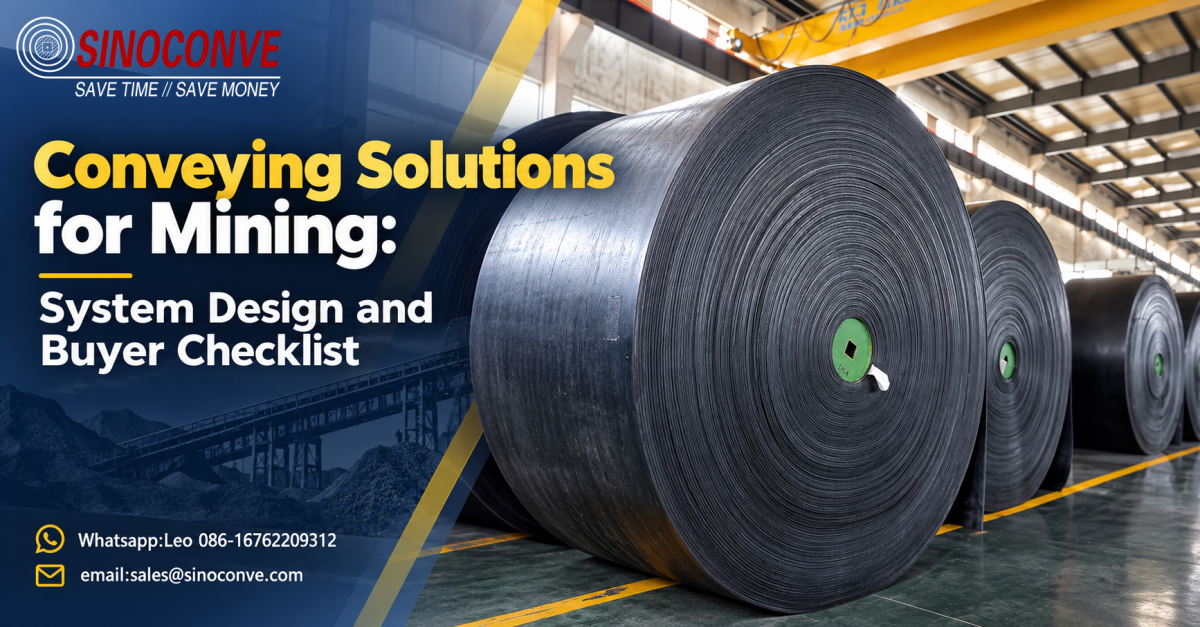
Conveying Solutions for Mining: System Design and Buyer Checklist
Conveying solutions for mining are decided at the system boundary, long before a belt is priced, and this guide works from that boundary inward. It sets where a mining conveying design starts and stops, then covers route selection and transfer points across a mine site, capacity and incline checks that close the numbers before purchase, and drive, tension and starting behaviour for long or loaded starts. A component combination matrix maps which part serves which segment, so nothing is over-specified or left out, followed by the effect of environment, dust and climate on the design. The underground to surface transition, long flights, stockyards and loading interfaces each get a section, with a purchasing checklist and acceptance criteria for a mining conveying solution, the common design errors that surface late, and how this design view divides work with our service article and systems page.
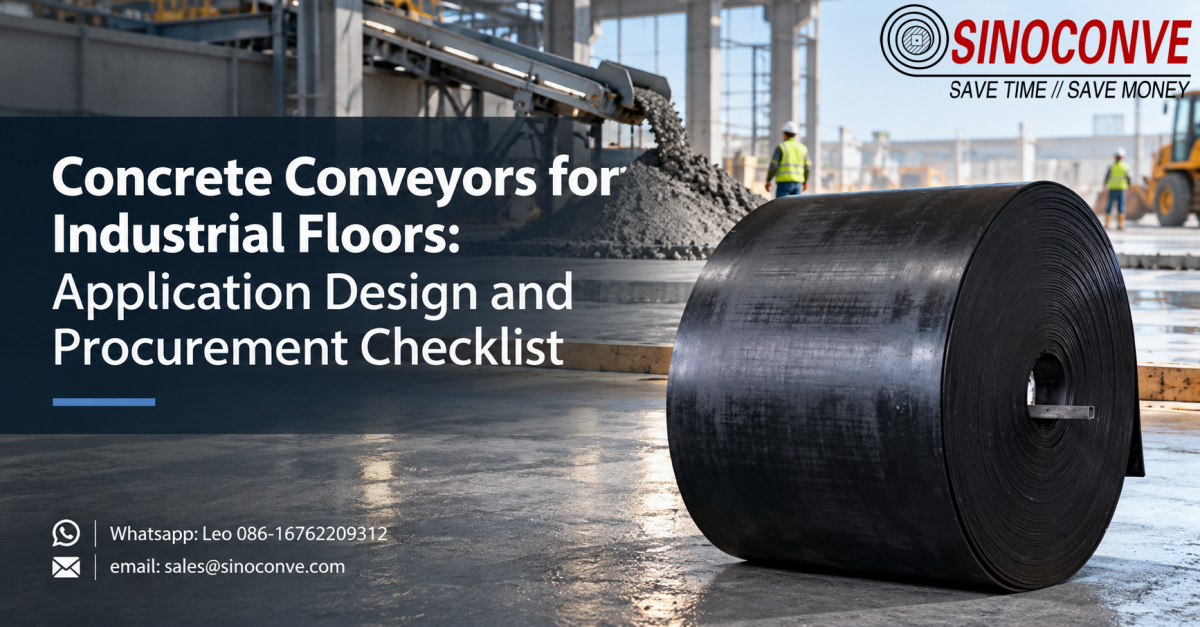
Concrete Conveyors for Industrial Floors: Application Design and Procurement Checklist
Concrete conveyors for industrial floors serve two duties that should never share one specification, and this guide separates them before it specifies anything. It zones a floor pour from discharge to clean-up, then shows how slump and aggregate size choose the conveying method rather than the other way round. Belt construction for concrete placement duty is covered in terms of cover compound, carcass, jointing and cleaning, followed by the equipment combinations and the interfaces between them. A capacity check converts cubic metres per hour into belt width and speed, and cold joints are treated as a supply discipline problem with the practices that prevent them. Field risks on a floor pour, traffic, curing lifts and temporary crossings, the design mistakes we keep finding on slabs, a procurement checklist, acceptance criteria, documentation evidence and the differences from our other concrete articles close the page.