Engineered belt solutions for demanding industries worldwide

Recent Posts
Aggregate Conveyor Vulcanizing: Process Controls and Field Acceptance

Aggregate Conveyor Vulcanizing: Process Controls and Field Acceptance

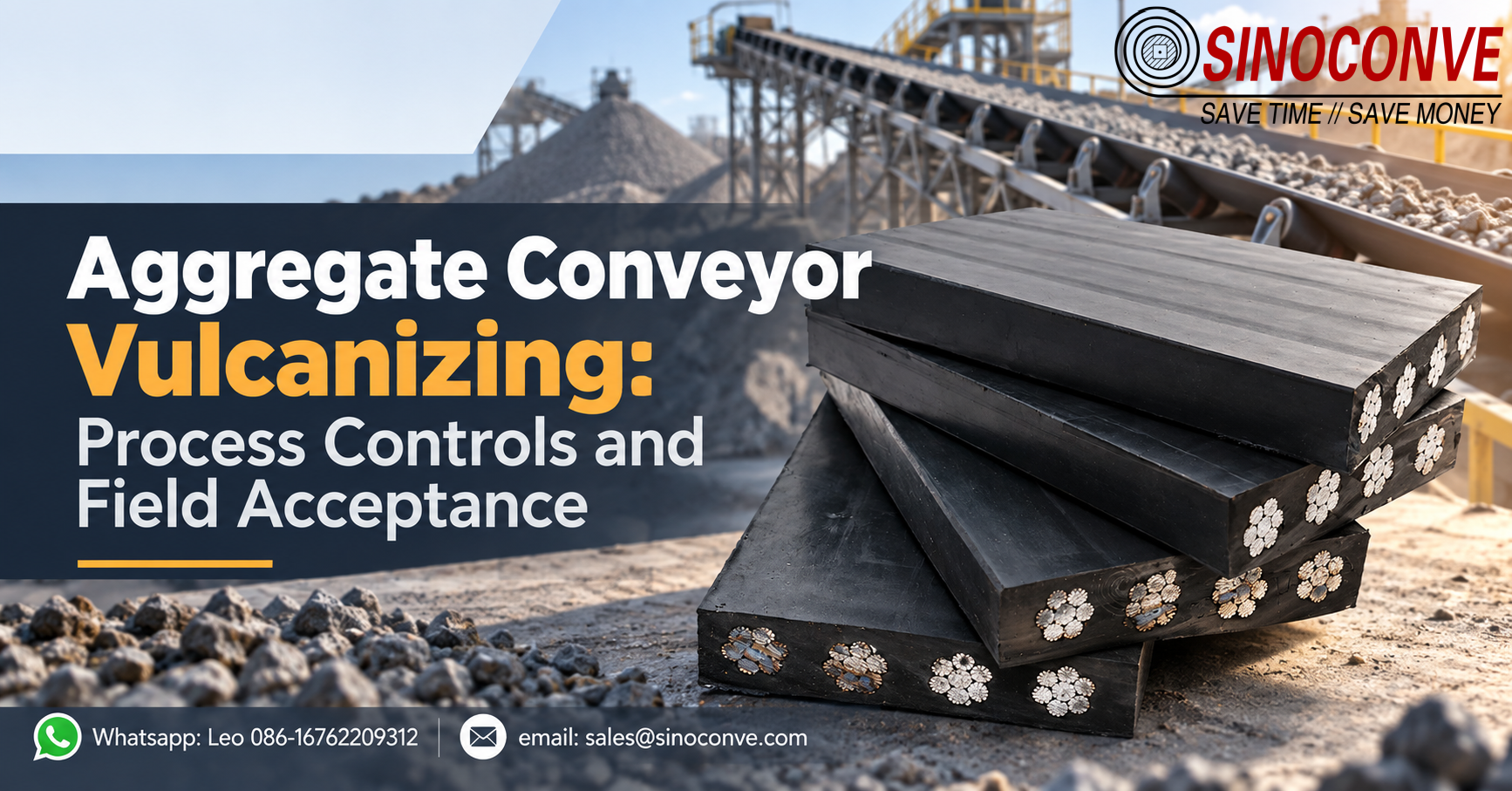
Aggregate conveyor vulcanizing takes the splice out of the workshop and onto the quarry, where belt thickness, dust, moisture, wind and shifting temperature press on the joint. This guide covers the process controls that decide whether a field cure holds: carcass and ply count on heavy belts, splice geometry, face preparation and contamination control, and the weather window a crew must respect. It explains why aggregate conveyor vulcanizing can take longer than a workshop splice, whether a steel-cord joint can be cured on site at all, how many joints one crew can complete inside a shutdown, and when to stop the whole plant versus one section. Field acceptance, load-out rules, temperature and humidity limits, cure verification without a cut sample, fastener use as a stop-gap, and stocking of splice material are all treated so a quarry can plan around a joint that lasts.

Recycling Conveyor System: System Design and Buyer Checklist

Recycling Conveyor System: System Design and Buyer Checklist

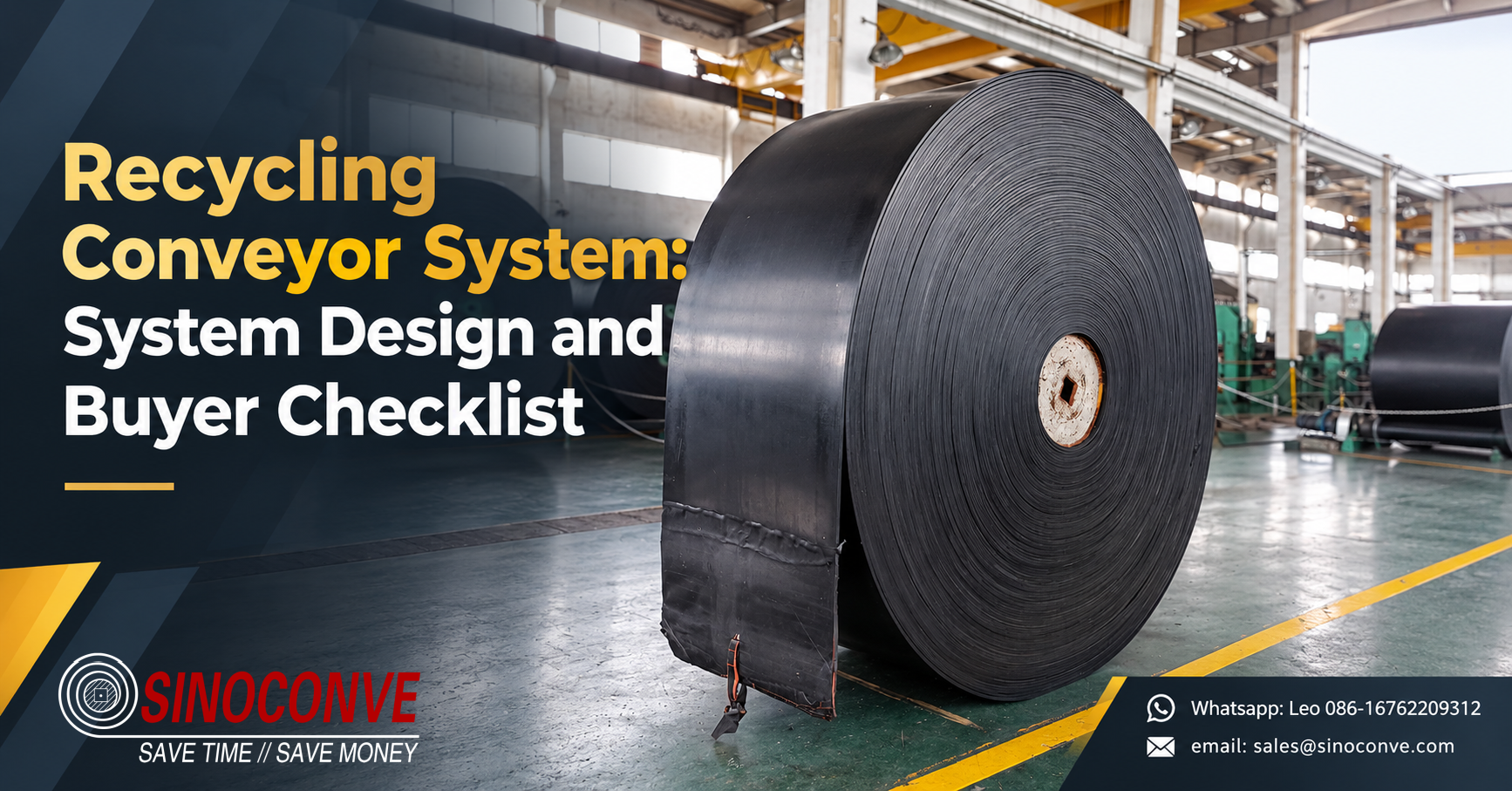
A recycling conveyor system has to carry mixed, unpredictable and abrasive waste, so design decisions that suit clean bulk handling often fail on a recycling line. This guide covers how to size a recycling conveyor belt when tonnage is only an estimate, why film and fibre wrap around idlers far faster on mixed waste, and how sorting cabins, transport runs and incline sections should be split across belts rather than shared on one. It works through cover thickness and compound for abrasive streams, shredder and metal detector placement, dust and odour control inside the building, and whether a modular belt beats a rubber belt for mixed waste. Picker numbers, sorting cabin layout and the design mistakes that cost the most over a system's life are covered, with a buyer checklist for belt, frame, drive and guarding before an order is placed.

Cogged V Belt: Profile, Drive Behavior and Application Limits

Cogged V Belt: Profile, Drive Behavior and Application Limits

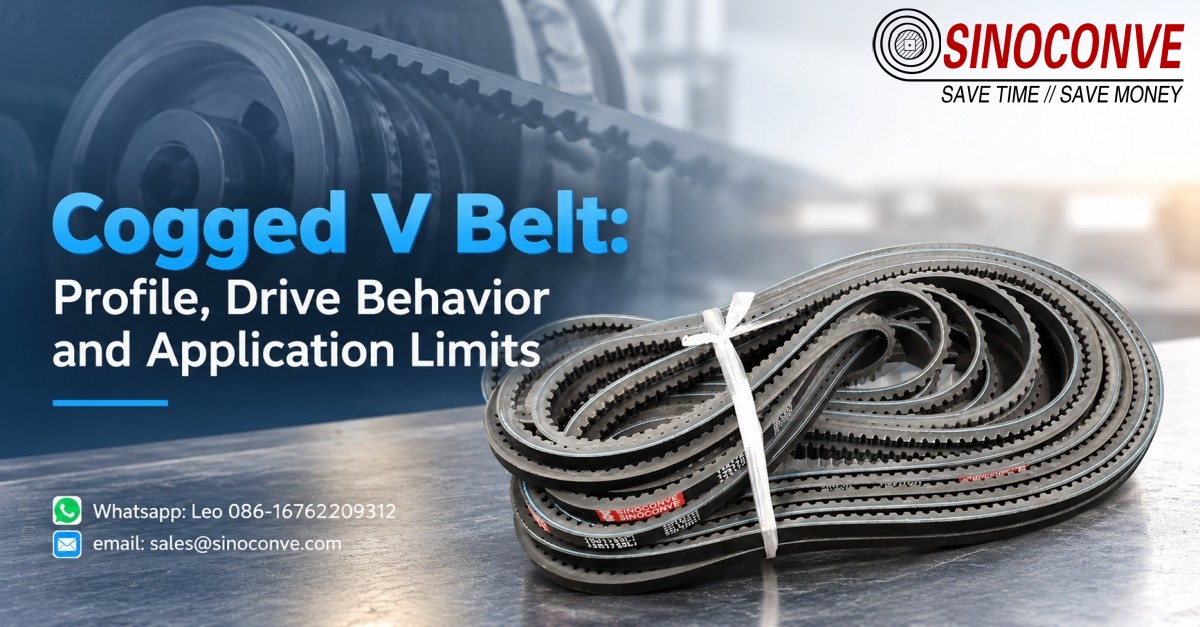
A cogged V belt carries moulded cogs on its underside that let the belt bend over smaller pulleys, run cooler, and transmit the same power from a narrower section than a wrapped belt. This guide sets out the cogged profile, how the cogged base changes drive behavior, and where cogged belts reach their application limits. It explains why a cogged belt can run on a smaller pulley, whether cogged belts are always raw edge, and what changes when a wrapped belt is swapped for a cogged one on existing pulleys - including the tension a new belt needs, why a cogged belt may sound noisier, and the cog root cracking that follows a misaligned or overloaded drive. Guidance on back-side idlers, power rating, service life against wrapped belts and the duties where cogged construction is worth its cost is included for maintenance and purchasing teams.

Self Aligning Roller for Belt Conveyor: Selection, Setup and Failure Diagnosis

Self Aligning Roller for Belt Conveyor: Selection, Setup and Failure Diagnosis

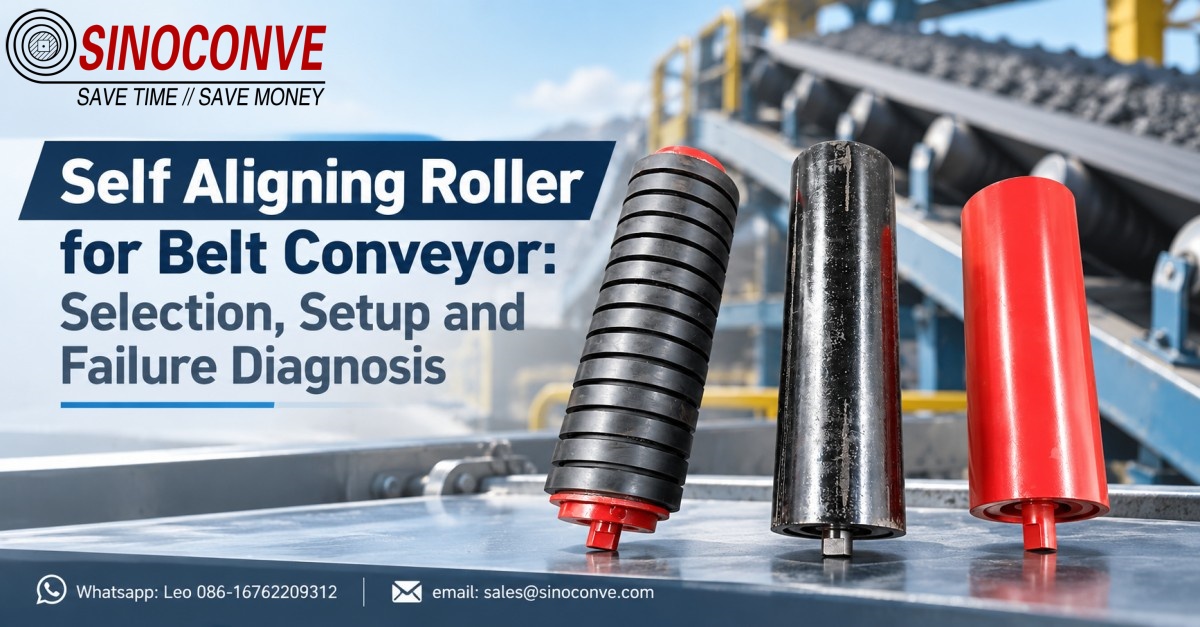
Self aligning rollers, also called training rollers or training idlers, correct belt drift by using angled rolls that steer the belt back toward the centre of the conveyor. This guide covers how many training sets a conveyor actually needs, where the first set belongs relative to the drive, the tilt angle that produces correction without scuffing the belt edge, and the trough angle a training set should match. It explains why a training roller cannot fix a belt that was cut off-square at the splice, and why new rollers sometimes fail to stop drift that originates in the structure, the loading point or the pulley. Selection guidance for roller diameter, bearing and frame, inspection intervals, and the wear signs that call for replacement help maintenance teams separate a tracking problem from a belt, structure or loading fault before ordering parts.

Conveyor Systems Food Processing: Process Controls and Field Acceptance

Conveyor Systems Food Processing: Process Controls and Field Acceptance

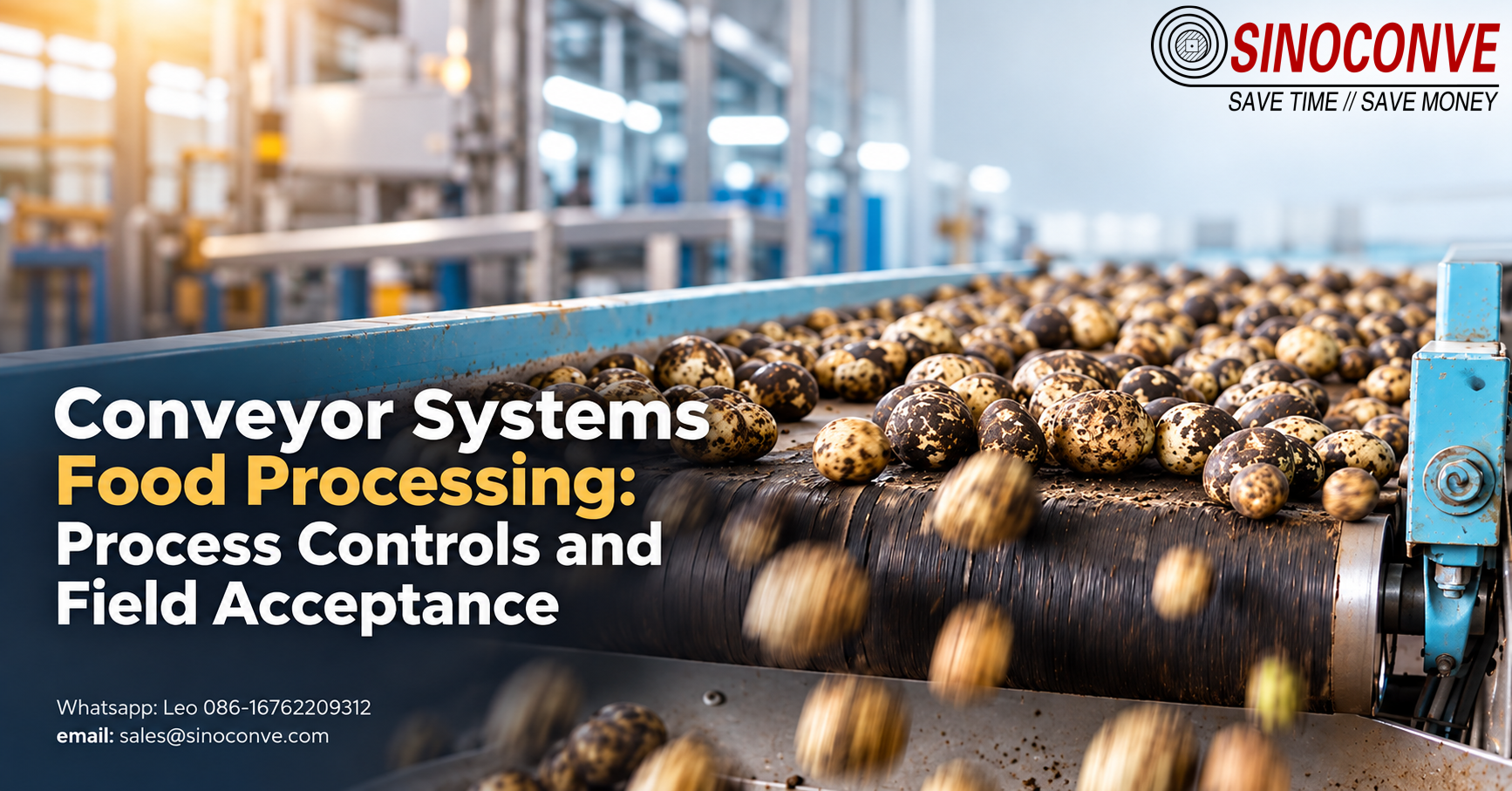
Conveyor systems in food processing are specified by hygiene, cleanability and product contact far more than by tonnage, and the decisions made before any equipment vendor is chosen decide how the line performs at audit. This guide covers belt selection for wet, dry and ready-to-eat duties, washdown temperature ratings, the difference between fabric and modular belts in hygiene terms, and the documentation a food-grade belt should arrive with. It works through buffer accumulation between segments, metal detector placement on a cooked-product line, crossing hygiene zone boundaries, and cleaning frequency and method. Field acceptance is treated as an engineering exercise: what to measure, what to record, and the common design mistakes - shared frames, blind corners, uncontrolled drainage - that buyers can catch on paper before installation.

Conveyor Belt Vulcanising Process: Process Controls and Field Acceptance

Conveyor Belt Vulcanising Process: Process Controls and Field Acceptance

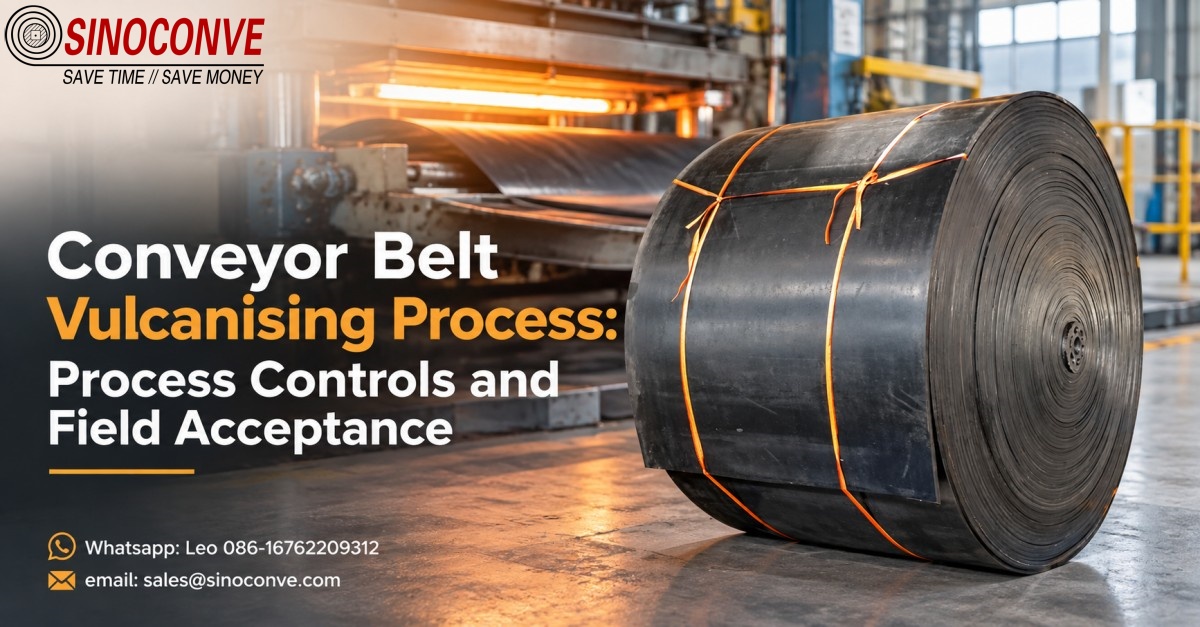
Conveyor belt vulcanising is a controlled cure, not a repair shortcut, and the result depends on four variables held together: interface temperature, platen pressure, cure time and cleanliness at the joint face. This guide sets out the process controls that matter from first cut to back in service, including how step length and splice geometry are chosen for the belt carcass, how platen temperature and pressure are set and monitored, and why interface thermocouples matter even when the press has its own controller. It then covers field acceptance - joint efficiency against parent belt strength, what a soft or gummy edge tells you, the humidity and rain limits for outdoor work, and how to verify a joint without cutting a sample. Repair-versus-replace decisions and the records a crew should leave behind close the sequence.


Aggregate Conveyor Vulcanizing: Process Controls and Field Acceptance

Aggregate Conveyor Vulcanizing: Process Controls and Field Acceptance

Aggregate conveyor vulcanizing takes the splice out of the workshop and onto the quarry, where belt thickness, dust, moisture, wind and shifting temperature press on the joint. This guide covers the process controls that decide whether a field cure holds: carcass and ply count on heavy belts, splice geometry, face preparation and contamination control, and the weather window a crew must respect. It explains why aggregate conveyor vulcanizing can take longer than a workshop splice, whether a steel-cord joint can be cured on site at all, how many joints one crew can complete inside a shutdown, and when to stop the whole plant versus one section. Field acceptance, load-out rules, temperature and humidity limits, cure verification without a cut sample, fastener use as a stop-gap, and stocking of splice material are all treated so a quarry can plan around a joint that lasts.

Recycling Conveyor System: System Design and Buyer Checklist

Recycling Conveyor System: System Design and Buyer Checklist

A recycling conveyor system has to carry mixed, unpredictable and abrasive waste, so design decisions that suit clean bulk handling often fail on a recycling line. This guide covers how to size a recycling conveyor belt when tonnage is only an estimate, why film and fibre wrap around idlers far faster on mixed waste, and how sorting cabins, transport runs and incline sections should be split across belts rather than shared on one. It works through cover thickness and compound for abrasive streams, shredder and metal detector placement, dust and odour control inside the building, and whether a modular belt beats a rubber belt for mixed waste. Picker numbers, sorting cabin layout and the design mistakes that cost the most over a system's life are covered, with a buyer checklist for belt, frame, drive and guarding before an order is placed.

Cogged V Belt: Profile, Drive Behavior and Application Limits

Cogged V Belt: Profile, Drive Behavior and Application Limits

A cogged V belt carries moulded cogs on its underside that let the belt bend over smaller pulleys, run cooler, and transmit the same power from a narrower section than a wrapped belt. This guide sets out the cogged profile, how the cogged base changes drive behavior, and where cogged belts reach their application limits. It explains why a cogged belt can run on a smaller pulley, whether cogged belts are always raw edge, and what changes when a wrapped belt is swapped for a cogged one on existing pulleys - including the tension a new belt needs, why a cogged belt may sound noisier, and the cog root cracking that follows a misaligned or overloaded drive. Guidance on back-side idlers, power rating, service life against wrapped belts and the duties where cogged construction is worth its cost is included for maintenance and purchasing teams.

Self Aligning Roller for Belt Conveyor: Selection, Setup and Failure Diagnosis

Self Aligning Roller for Belt Conveyor: Selection, Setup and Failure Diagnosis

Self aligning rollers, also called training rollers or training idlers, correct belt drift by using angled rolls that steer the belt back toward the centre of the conveyor. This guide covers how many training sets a conveyor actually needs, where the first set belongs relative to the drive, the tilt angle that produces correction without scuffing the belt edge, and the trough angle a training set should match. It explains why a training roller cannot fix a belt that was cut off-square at the splice, and why new rollers sometimes fail to stop drift that originates in the structure, the loading point or the pulley. Selection guidance for roller diameter, bearing and frame, inspection intervals, and the wear signs that call for replacement help maintenance teams separate a tracking problem from a belt, structure or loading fault before ordering parts.

Conveyor Systems Food Processing: Process Controls and Field Acceptance

Conveyor Systems Food Processing: Process Controls and Field Acceptance

Conveyor systems in food processing are specified by hygiene, cleanability and product contact far more than by tonnage, and the decisions made before any equipment vendor is chosen decide how the line performs at audit. This guide covers belt selection for wet, dry and ready-to-eat duties, washdown temperature ratings, the difference between fabric and modular belts in hygiene terms, and the documentation a food-grade belt should arrive with. It works through buffer accumulation between segments, metal detector placement on a cooked-product line, crossing hygiene zone boundaries, and cleaning frequency and method. Field acceptance is treated as an engineering exercise: what to measure, what to record, and the common design mistakes - shared frames, blind corners, uncontrolled drainage - that buyers can catch on paper before installation.

Conveyor Belt Vulcanising Process: Process Controls and Field Acceptance

Conveyor Belt Vulcanising Process: Process Controls and Field Acceptance

Conveyor belt vulcanising is a controlled cure, not a repair shortcut, and the result depends on four variables held together: interface temperature, platen pressure, cure time and cleanliness at the joint face. This guide sets out the process controls that matter from first cut to back in service, including how step length and splice geometry are chosen for the belt carcass, how platen temperature and pressure are set and monitored, and why interface thermocouples matter even when the press has its own controller. It then covers field acceptance - joint efficiency against parent belt strength, what a soft or gummy edge tells you, the humidity and rain limits for outdoor work, and how to verify a joint without cutting a sample. Repair-versus-replace decisions and the records a crew should leave behind close the sequence.
Explore more

We are committed to providing you with better products and services. Welcome to browse more content for details