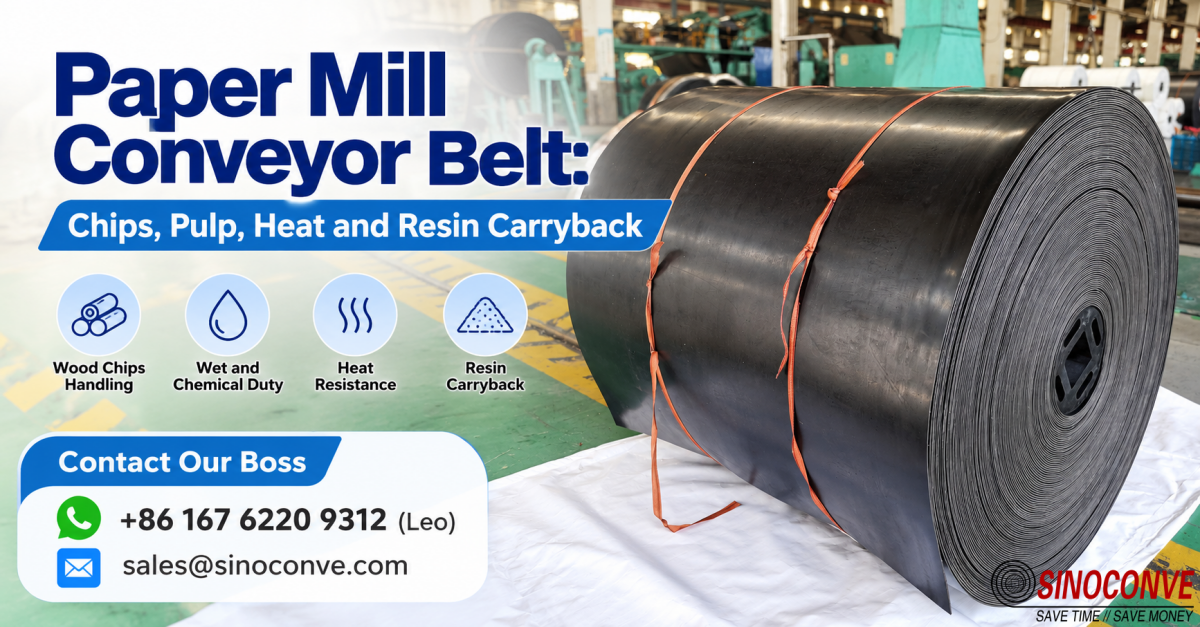
Paper Mill Conveyor Belt: Chips, Pulp, Heat and Resin Carryback
A paper mill asks one belt to do three jobs at once: carry a wet, sticky load, live in steam heat, and hold a splice together over a run long enough that nobody wants to walk it. Each is an ordinary conveying problem on its own. Together, on one belt in one building, the usual answers stop working. This guide follows five streams from the log yard to the finished reel, then takes each failure in turn: wet chips and bark that load and stick, pulp and sludge that carry chemical exposure, steam that shortens cover life, resin and pitch that ordinary scrapers cannot clear, and long high-tension runs where the splice is the weak point. Later sections cover tracking on elevated structures, cleaning systems that survive the environment, grade selection by stream, and what to settle inside a shutdown window before the line restarts.
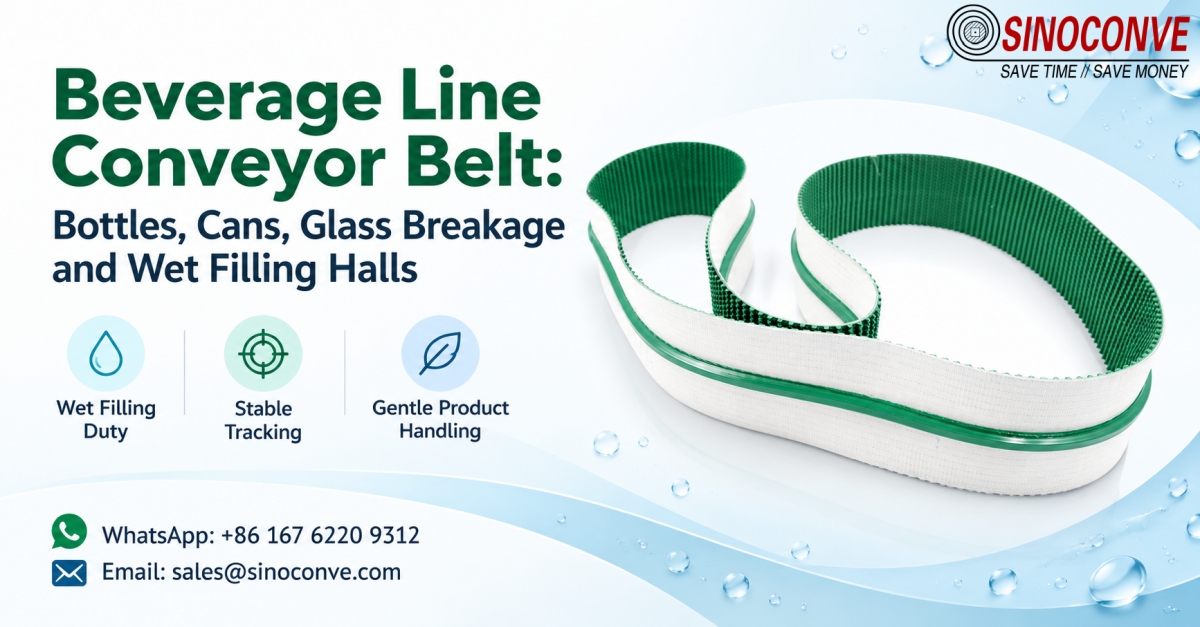
Beverage Line Conveyor Belt: Bottles, Cans, Glass Breakage and Wet Filling Halls
A beverage line punishes a belt in a way bulk conveying never does. The container is light, rigid and top-heavy once filled, and it touches the cover across a small patch of its base, so the belt is less about carrying load than about keeping an unstable object moving in a straight line through accumulation, transfer and changeover. This guide works through the four conditions that decide the answer: line speed and accumulation pressure, the different damage risks of glass, PET and aluminium, water and sugar syrup on the cover, and the cleaning window between products. It covers surface structure for bottle stability, guide rails and transfer plates, friction and noise at speed, tracking on long narrow runs, and why rubber is usually the wrong answer here. It closes with acceptance checks and a spares strategy for a plant running several lines on one site.
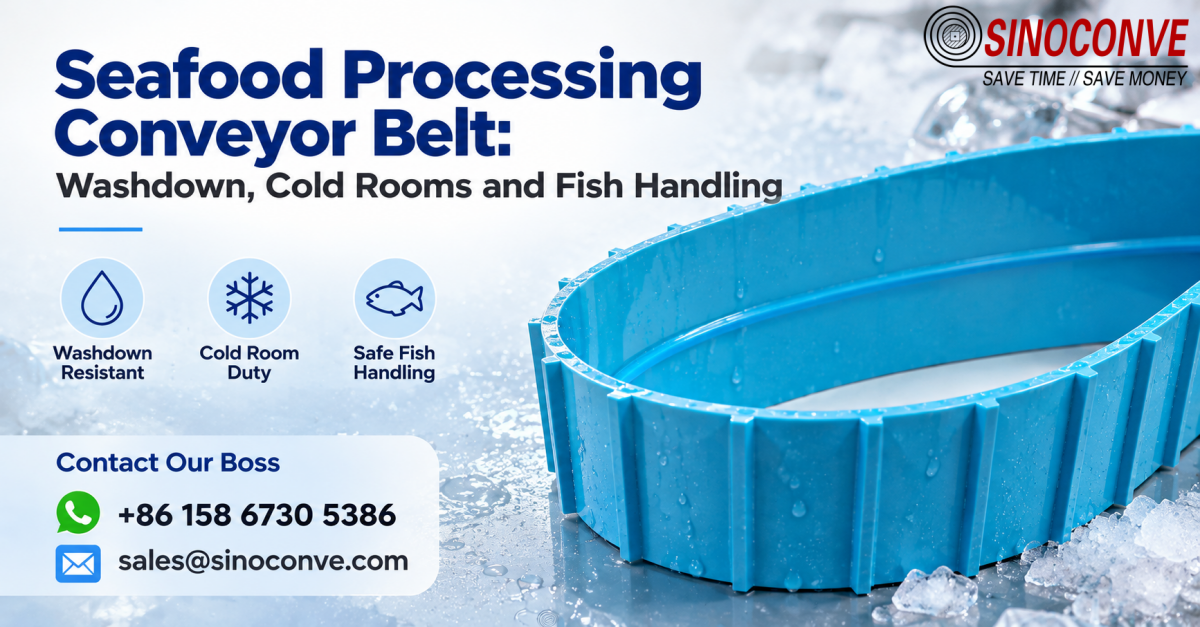
Seafood Processing Conveyor Belt: Washdown, Cold Rooms and Fish Handling
A seafood processing conveyor belt is judged on four conditions that arrive at the same time: brine, cleaning chemistry, cold air, and hard fragments of bone or shell. Any one of them is manageable on its own. Together they change which cover, which carcass and which edge design survive a shift. This guide starts at the receiving table and works through gutting, filleting, grading and packing, then into the freezer tunnel. It explains what chlorine and foam do to a cover at the cut edge rather than on the face, why a fine fish bone opens a cut that a knife does not, and how a cold room changes belt hardness enough to alter the minimum pulley diameter you can use. Later sections compare PVC, PU and rubber under wet-salt duty, set out when a dimpled or perforated surface helps drainage and when it only traps product, cover transfer points, tracking on a wet frame, and close with the documents and on-site trials to ask for before a belt enters a seafood hall.
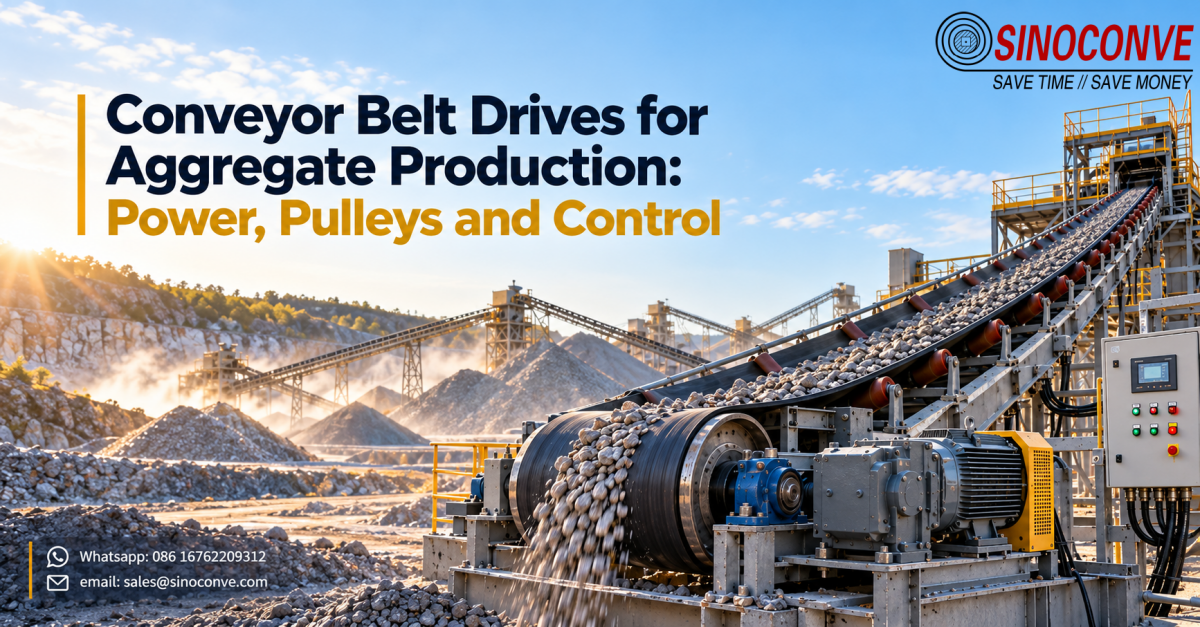
Conveyor Belt Drives for Aggregate Production: Power, Pulleys and Control
Conveyor drives for aggregate production are not chosen by fixing a motor size and moving on. The drive is set jointly by throughput, lift height, line length and incline, the starting method, and the stop-start sequence of the crushers and screens upstream, and when it is misapplied the belt rarely announces a drive fault: you see mistracking, slip under full load, abnormal elongation and a climbing energy bill. This guide works the drive and transmission layer of an aggregate line, from layout choice to acceptance on site. It separates drive faults from belt faults, compares head single pulley, head dual pulley, head-tail and intermediate drives, and reviews the motor, gearbox and pulley criteria that decide starting torque margin and the starting method. Slip and mistracking are treated as two different problems, before sections on lagging and cleaning, the return-side environment, the interface checklist that ties the drive to the belt, energy and site acceptance tests.
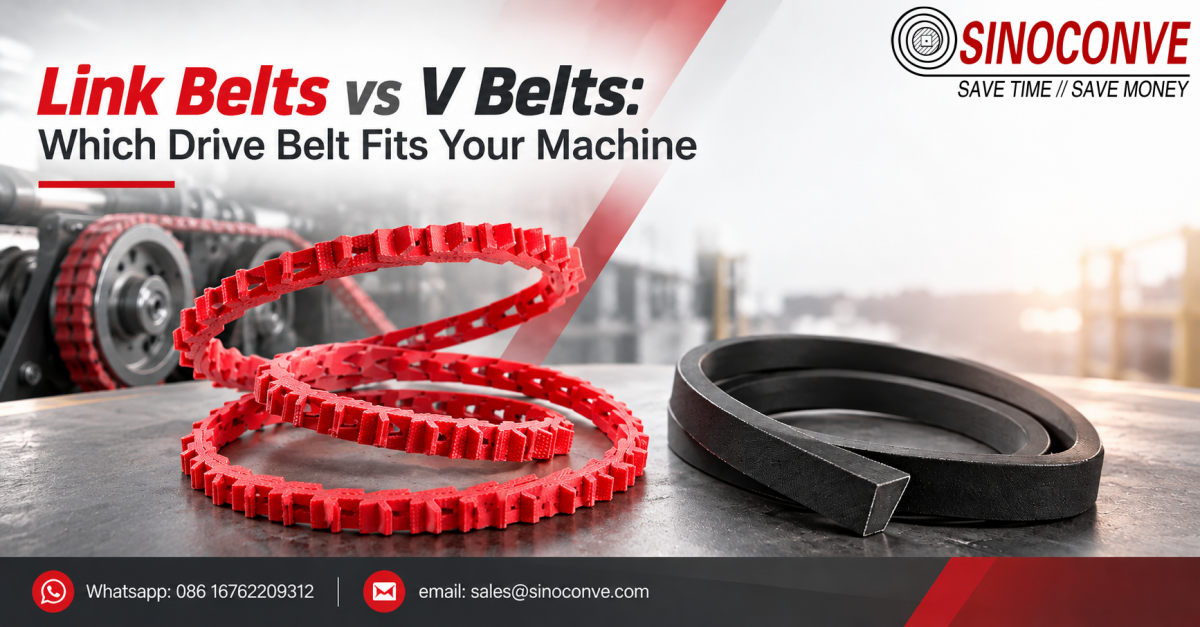
Link Belts vs V Belts: Which Drive Belt Fits Your Machine
A link belt and a V belt solve two different problems, and this guide works the decision from the plant floor rather than from a catalogue. It explains what each belt is: a link belt assembled on the machine from detachable links joined with pins, so its length can be set and shortened in place, and a V belt cured as one endless ring that grips the pulley groove. It then sets out where a link belt wins, including drives that cannot be reached without pulling a shaft, emergency repairs and a spares policy built on one box of links, and where it loses: vibration and noise at speed, elongation, a lower load ceiling, link and pin wear, hygiene near open food, and a total cost that a low unit price hides. The V belt side of the argument, the decision matrix, the shop-floor retrofit sequence and the procurement checks are all covered, closing with answers to the questions that reach our desk most often.
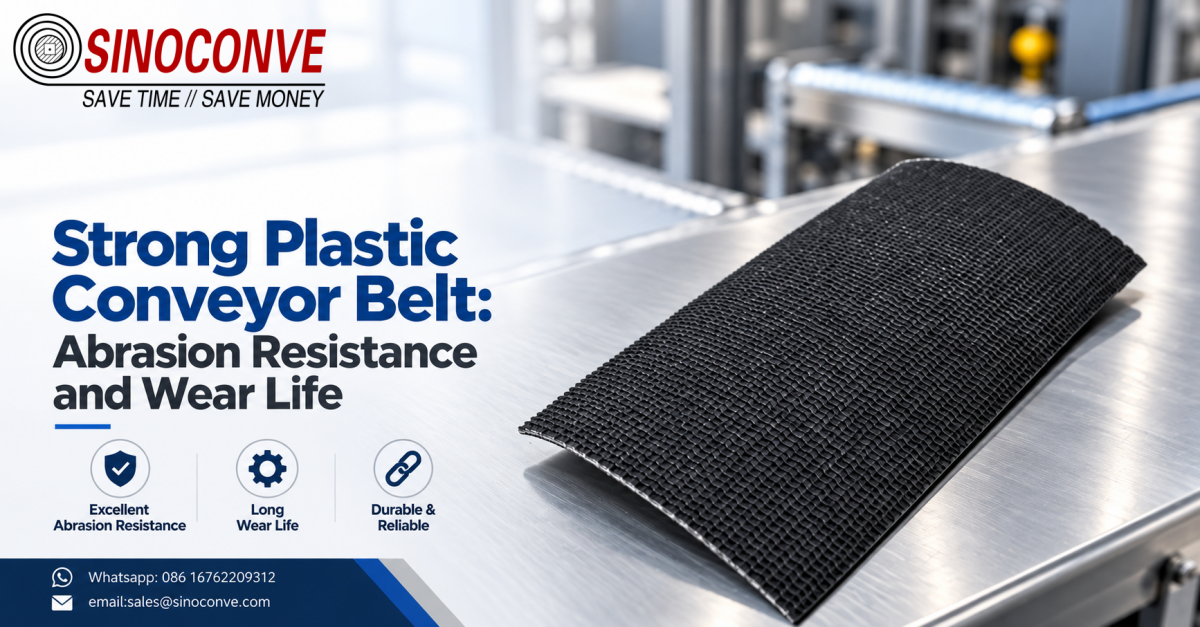
Strong Plastic Conveyor Belt: Abrasion Resistance and Wear Life
A strong plastic conveyor belt is easy to name and hard to specify, because strength on a plastic belt can mean stiffness, impact toughness or surface scratch resistance, and those three do not rise together. This guide stays on the material layer and works the four variables that decide how fast a plastic belt loses material: the polymer body, where crystallinity and molecular structure set the baseline; the fillers that shift it; the surface geometry that controls how far product slides against the face; and the medium, since water, oil, fine powder and dry dust each attack a belt differently. It compares how PP, PE, POM and PA wear, sets out what a filler adds and gives up, and walks the four wear mechanisms with the site symptom that points to each. Later sections cover geometry and wear rate, a duty-matching guide, why two abrasion claims cannot be compared unless they name the same method, the documents to request, and where a plastic belt stops being the right answer.