Conveyor Belt Cleaning: Methods, Schedules and When Scrapers Will Not Work
Carryback is usually treated as a housekeeping problem, which is why it keeps coming back. This guide reads it as a cost line instead: what the returned material is worth, what the extra cleaning hours and worn rollers add up to, and what the same tonnage does to belt life. It then works through the methods in the order of what they can actually remove, mechanical scrapers, rotary brushes, wash boxes, air knives, ploughs, and the return-side spiral and disc rollers that clean by geometry rather than by a blade edge. The central section covers the five cases where a scraper simply will not work, chevron and patterned belts, cleated and sidewall belts, mechanical fastener joints, high-moisture clay and belts whose cover is already worn through, and gives an alternative route for each one. Material matrices, wear inspection intervals, six failure modes, alignment and joint constraints, a cost comparison and twelve field mistakes close the guide.
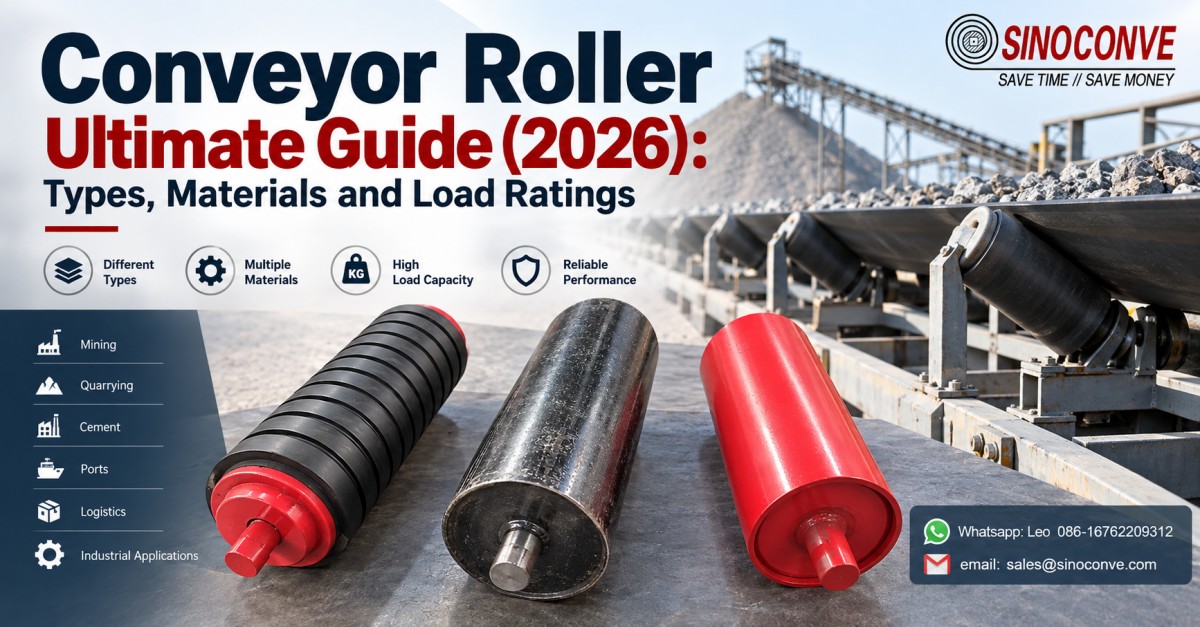
Conveyor Roller Ultimate Guide (2026): Types, Materials and Load Ratings
A conveyor roller looks like the simplest component on the line and carries the most expensive mistakes. This guide separates the two questions buyers mix up: where a roller sits, which decides its duty, and what it is built to do, which decides its shape. It walks through the six position-based types from carrying and return through impact and transition, then the function-based families, tracking, spiral and rubber-disc cleaning rollers, and what each one is actually for. Shell material gets its own treatment, carbon steel against stainless, polymer and ceramic, followed by the part that cheap rollers cut first: bearings, seal arrangement and grease. Load rating is worked through with the equation and a full example, because roller pitch and trough angle decide the load long before the shell diameter does. The closing sections cover shell diameter against rotational speed, bearing life, installation and alignment, and the four ways rollers fail.
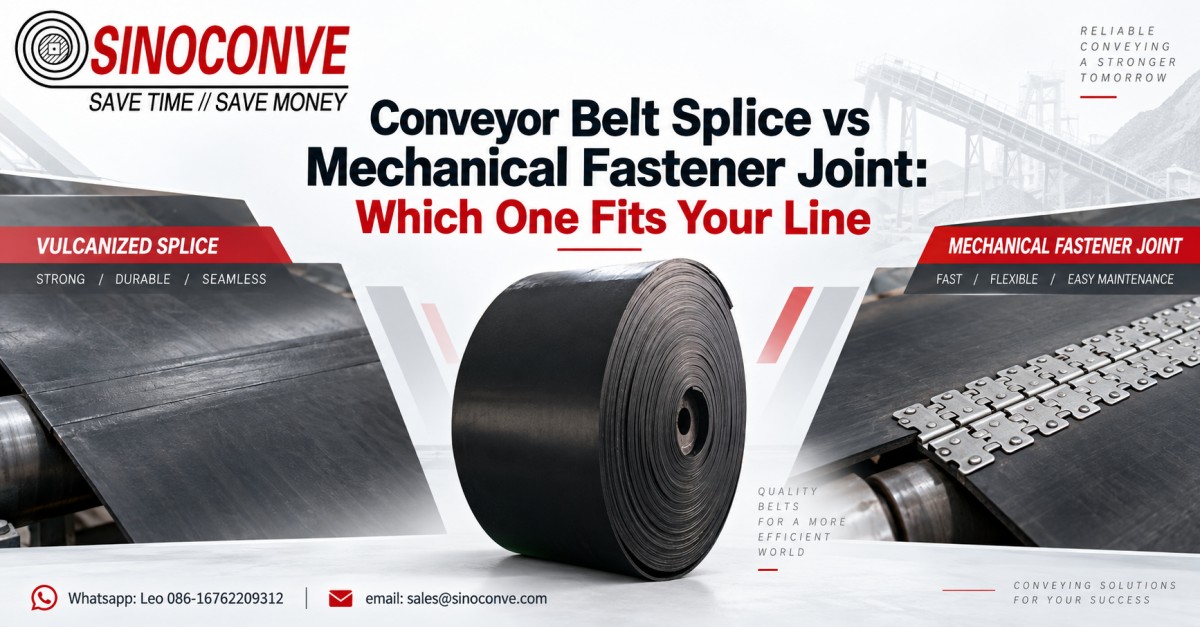
Conveyor Belt Splice vs Mechanical Fastener Joint: Which One Fits Your Line
The argument between a hot vulcanized splice and a mechanical fastener joint is usually settled by whoever has the belt stopped in front of them, and that is the wrong way round. This comparison puts the two methods side by side on the only terms that matter when you are choosing: how much of the belt's own strength the joint keeps, how long the line is down, what the joint costs over three years, and whether the site can actually cure a splice. It works through the eight-row comparison matrix, a three-year life cycle cost example on a 1,200 mm five-ply belt, and a decision tree that runs from ply count and belt width through power availability, humidity and material temperature. It also covers the cases where a fastener is the better answer rather than a compromise, and the five ways mechanical joints fail in service when they are used outside their limits.
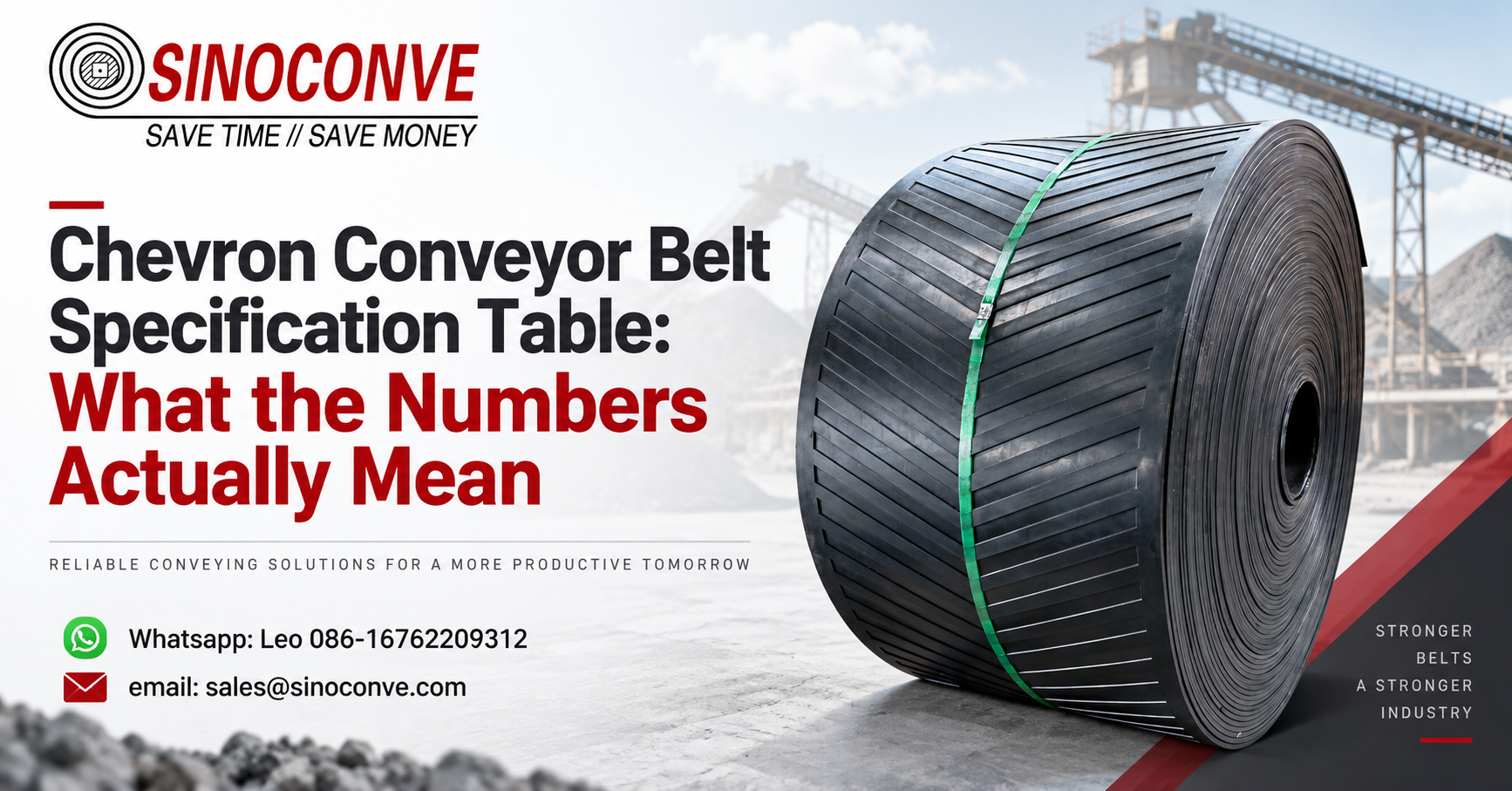
Chevron Conveyor Belt Specification Table: What the Numbers Actually Mean
Most chevron belt buyers read the specification table forwards, from belt width downwards, and end up with a pattern that does not hold the load. This guide reads it backwards instead. It starts from the two figures the site actually knows: the incline the conveyor has to climb and the throughput it has to carry. From there it shows how pattern height, pitch and chevron angle set the gripping capacity, how pattern volume is subtracted from the trough cross section before throughput is calculated, and why the same belt climbs a dry aggregate at one angle and a wet sticky clay at a much shallower one. The carcass rows come next, ply count and DIN 22102 cover grade, followed by the sidewall and cleat columns that take a conveyor past the limits of a plain chevron belt. It closes with cleaning trouble, the mistakes buyers make most often and a worked incline calculation.
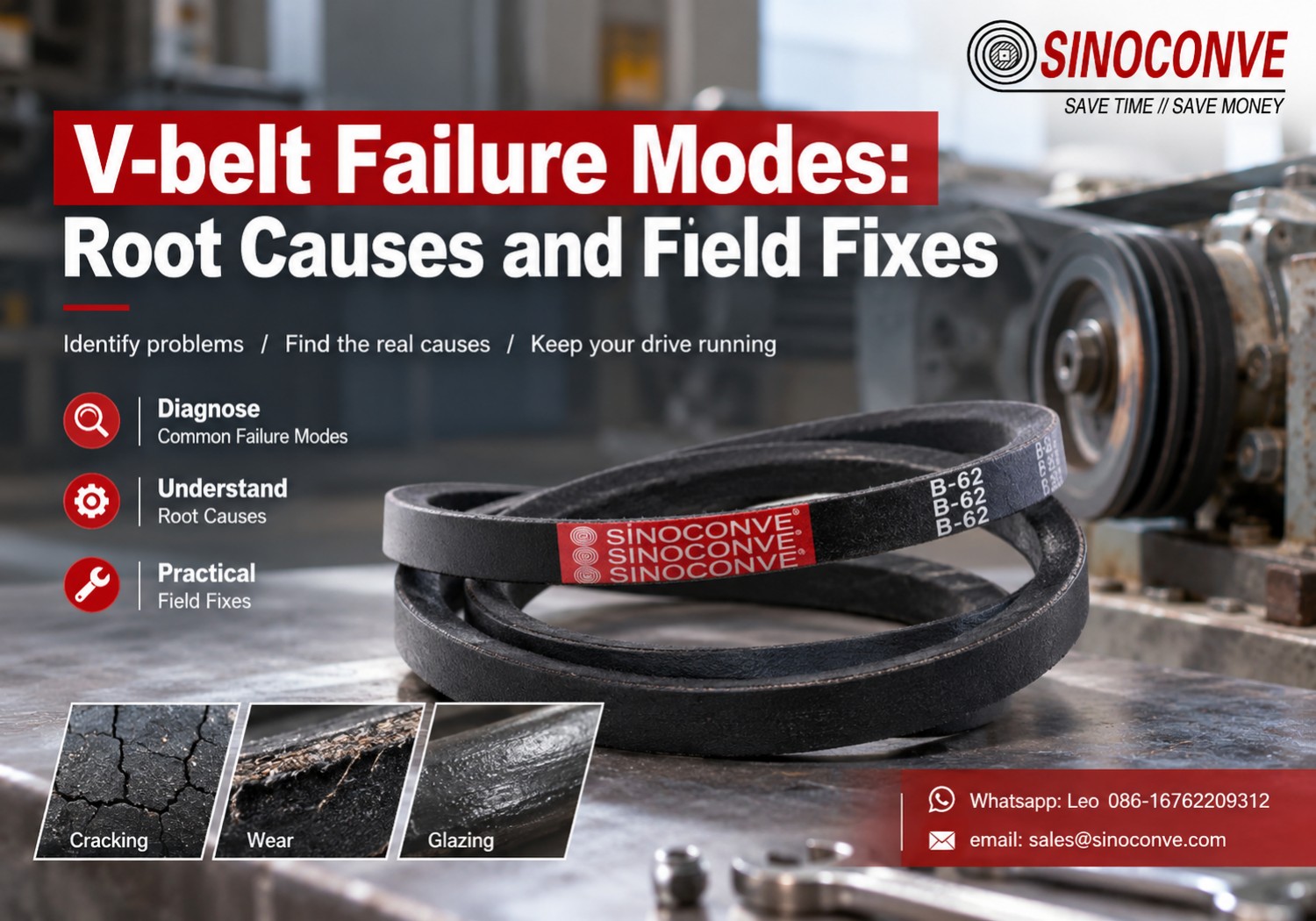
V-belt Failure Modes: Root Causes and Field Fixes
A V-belt is usually replaced rather than diagnosed, which is why the same drive eats a set every three months. This is a field diagnosis manual built around one discipline: symptom, measurement, root cause, fix. It covers nine failure modes we see on industrial drives, from bottom cracking and cog root fatigue through top cover lifting, transverse breaks, slip and glazing, elongation beyond the take-up, groove wear and profile mismatch, and matched sets that were never actually matched. Each mode names the visible symptom, the measurement that confirms it and the repair that holds. A dedicated section deals with concrete mixer drives, where heavy starts, dust abrasion and frequent reversing shorten belt life and where section codes and tension figures behave differently from a steady duty drive. The closing sections cover oil, heat, ozone and cold, a ten-minute field kit checklist and the questions buyers ask before ordering.
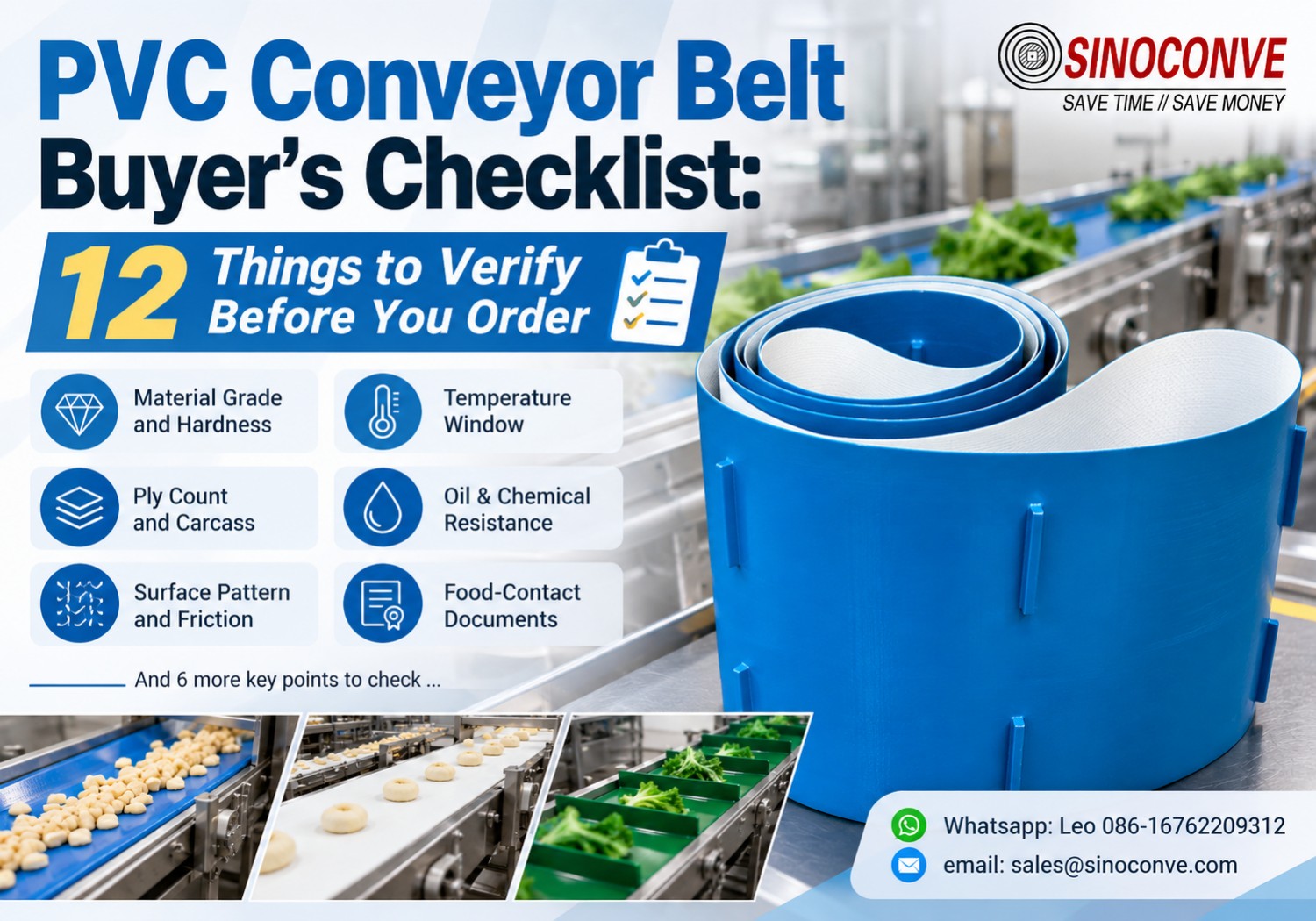
PVC Conveyor Belt Buyer's Checklist: 12 Things to Verify Before You Order
A PVC or PU belt quotation is easy to compare on price and hard to compare on substance. This is the twelve-point checklist we work through before signing off a light duty belt order, written so a buyer can run it against any supplier. It starts with material grade and hardness, then moves through ply count and carcass construction, surface pattern and the friction figure that decides whether an incline actually climbs, colour and food contact suitability, and the thickness tolerances where cheap quotes quietly win. Splice method, joint strength, the temperature window and low temperature brittleness each get their own acceptance check, along with oil, grease and cleaning chemical resistance and how to read the CIP sheet. Edges, guide strips, cleats and sidewalls are covered before the commercial side: food contact documentation, packing and roll direction, total cost of ownership and warranty boundaries.