Engineered belt solutions for demanding industries worldwide

Recent Posts
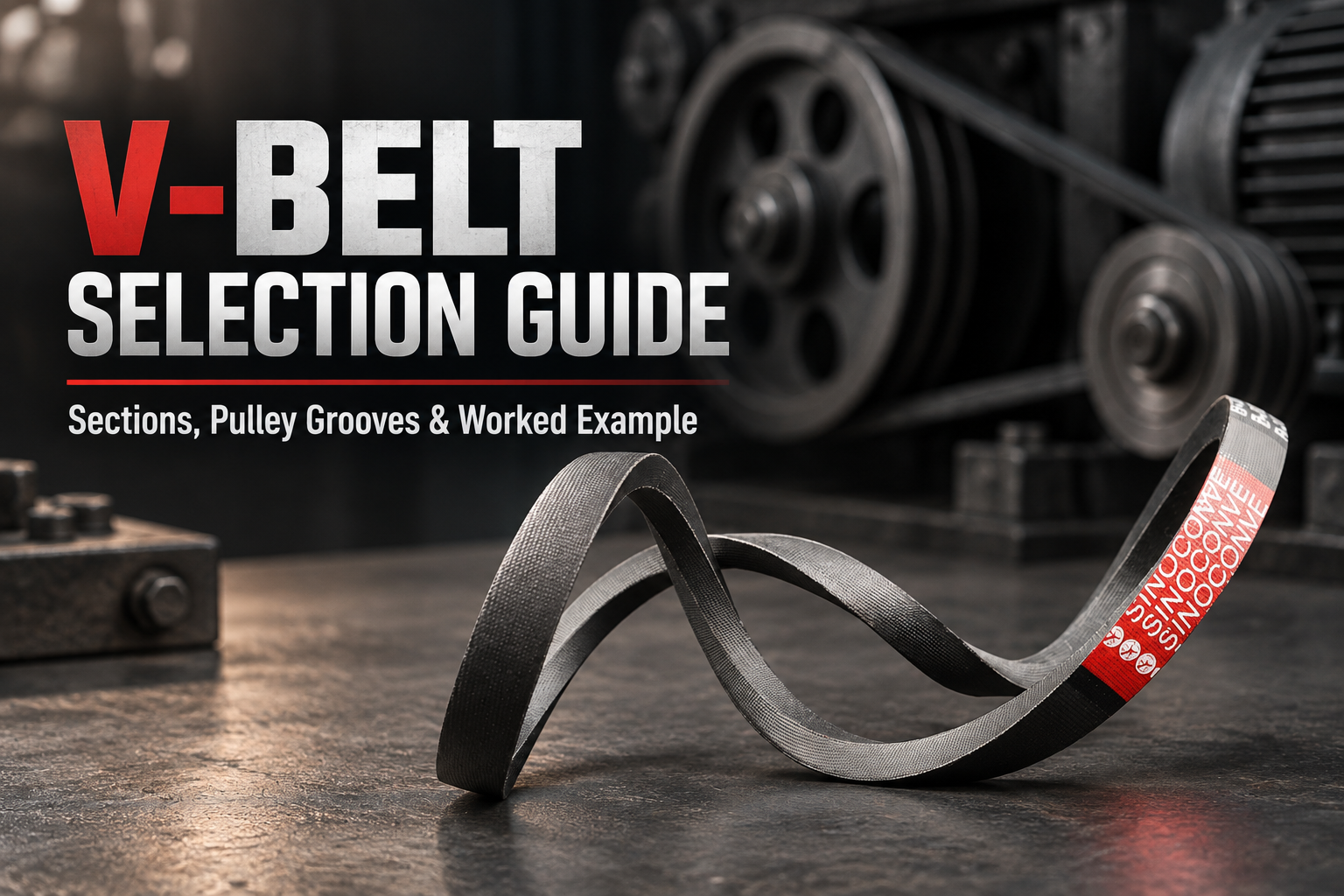
V-belt Ultimate Guide (2026): Profiles, Sizes and How to Choose

V-belt Ultimate Guide (2026): Profiles, Sizes and How to Choose

Most V-belt failures start with the wrong section, not a bad belt. This guide explains how a V-belt actually transmits torque through the pulley groove, then gives the section table you need — A/B/C/D/E alongside SPZ, SPA, SPB and SPC, with top width, pitch width and height — and why the belt section has to match the groove it runs in. It includes a full worked selection example: design power from a 30 kW motor at 1,470 rpm with a 1.5 service factor, section choice, datum length, number of belts and belt speed check. We also cover what to do when grooves are worn, when to specify cogged, wrapped or raw-edge belts, the difference between industrial and agricultural duty, and where multi-ribbed PK belts take over. A transmission belt manufacturer's view on installation, tensioning, maintenance intervals and the failure modes we see in the field, plus MOQ, lead time and how to get comparable quotations.
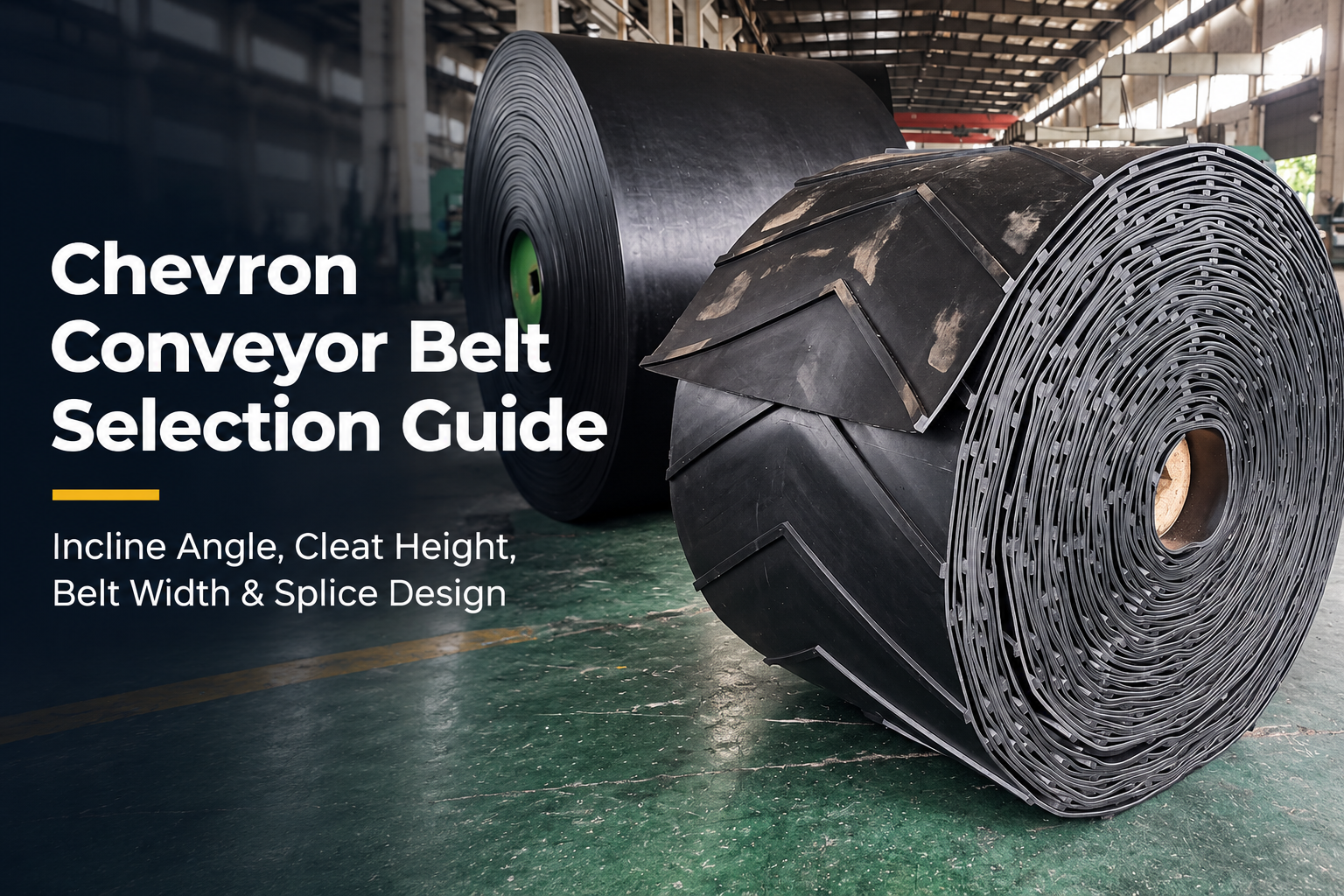
Chevron Conveyor Belt Ultimate Guide (2026): Types, Grades and How to Choose

Chevron Conveyor Belt Ultimate Guide (2026): Types, Grades and How to Choose

Chevron conveyor belts only pay off when the incline genuinely exceeds what a flat belt can hold — and choosing the pattern is where most projects go wrong. This guide sets out the decision in order: confirm the real incline after the chute and skirt modifications, then match cleat height and pattern spacing to material size and angle, then check width, carcass and cover grade. It includes a pattern table covering C5, C10 and C15 cleats with cleat width, pitch and height, an incline-to-pattern matrix, and a comparison of chevron, T-cleat and herringbone profiles. We also cover chevron versus corrugated sidewall belts, port and bulk terminal duties, how to splice a profiled belt so the cleats realign, carryback and spillage control, and the selection checklist we use before quoting. Written by a conveyor belt manufacturer that supplies profiled belts into quarry, port and aggregate operations, with MOQ and lead time guidance.

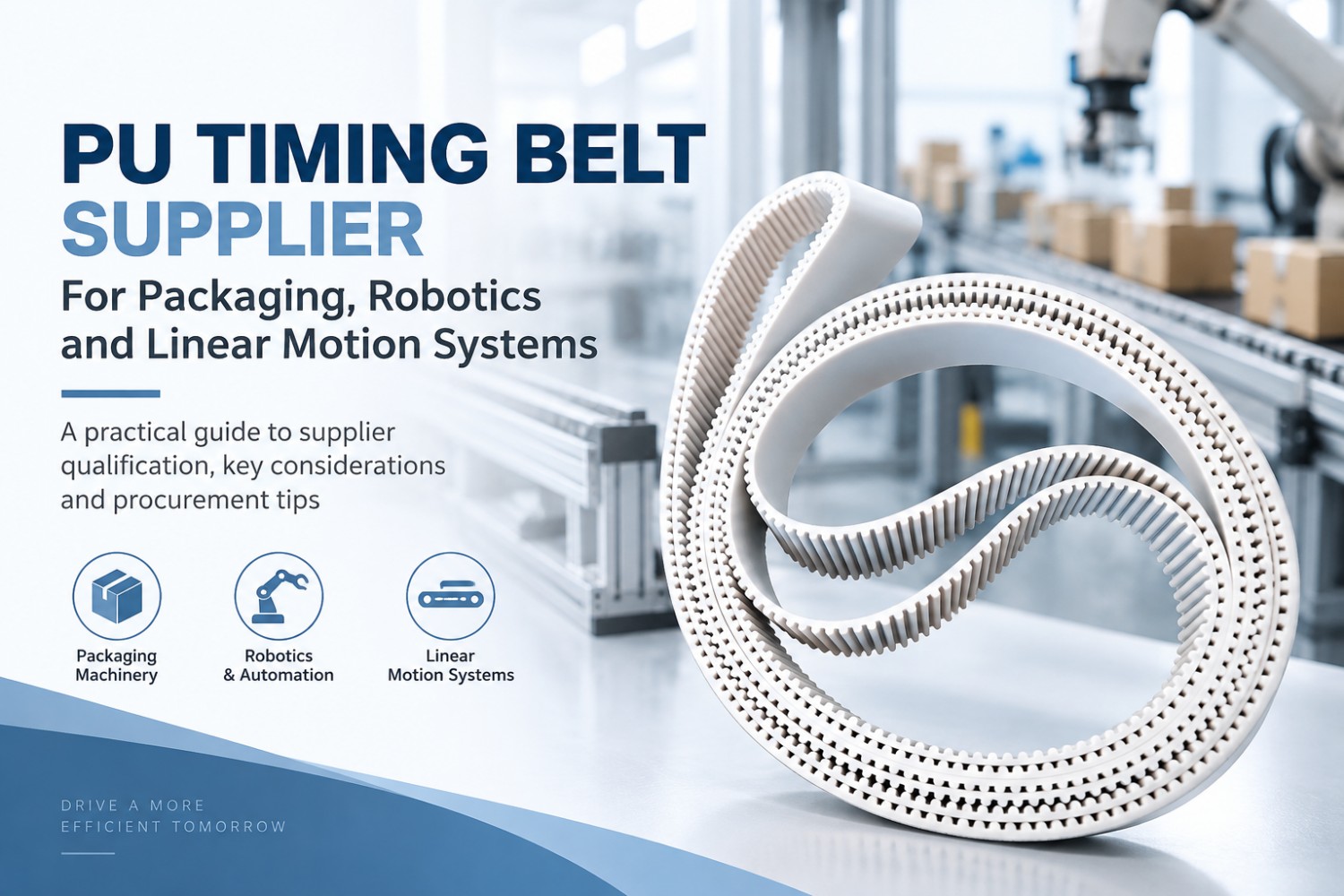
PU Timing Belt Supplier for Packaging, Robotics and Linear Motion Systems

PU Timing Belt Supplier for Packaging, Robotics and Linear Motion Systems

Selecting a PU timing belt supplier for packaging, robotics or linear motion systems requires more than comparing belt price and delivery. OEM buyers need to verify tooth and pulley compatibility, tensile-member construction, working surfaces, motion conditions, sample approval and batch consistency. This guide explains how to qualify polyurethane timing belts technically and commercially, what information belongs in an RFQ, which supplier red flags deserve attention, and how to move from prototype validation to repeatable bulk sourcing.

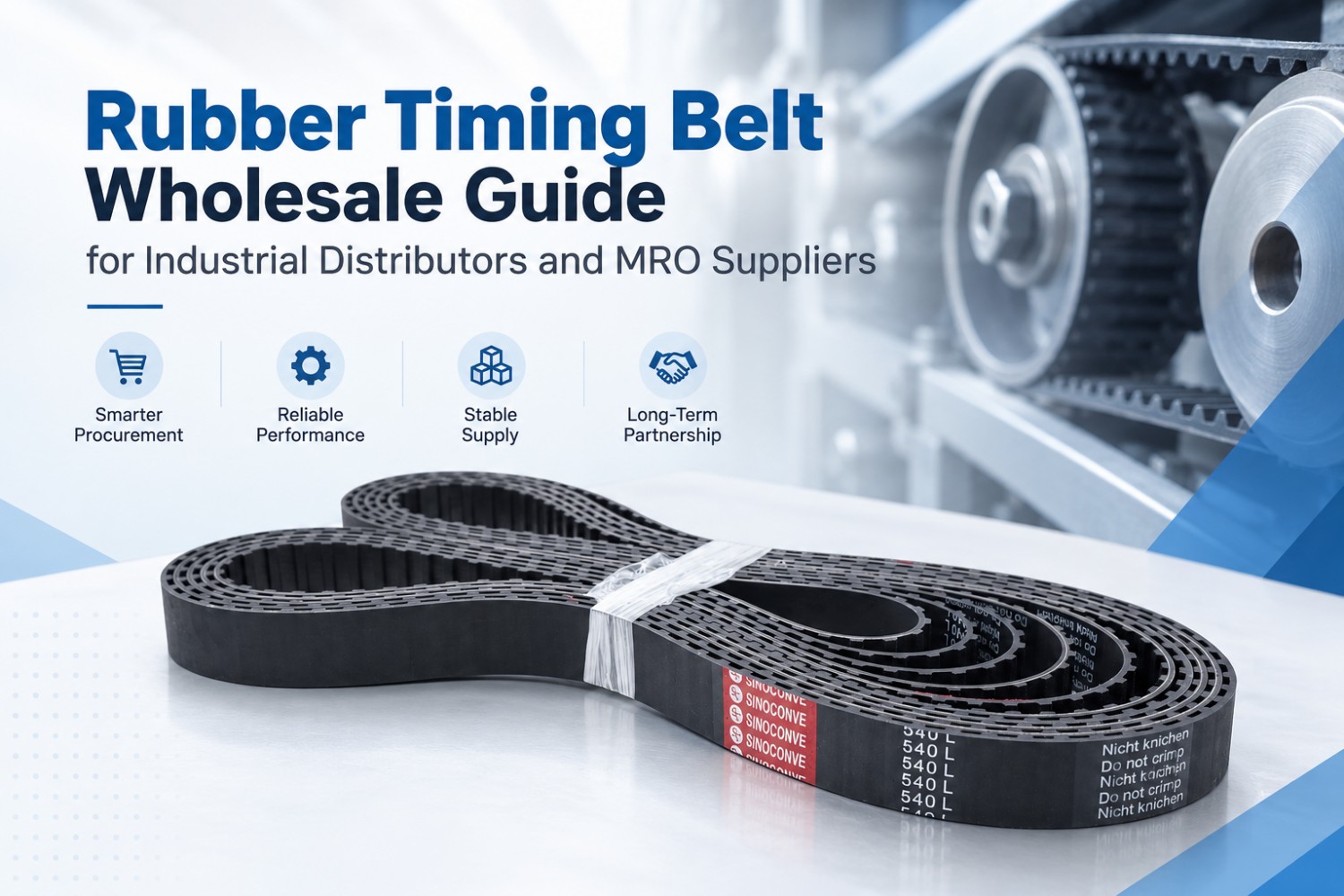
Rubber Timing Belt Wholesale Guide for Industrial Distributors and MRO Suppliers

Rubber Timing Belt Wholesale Guide for Industrial Distributors and MRO Suppliers

Wholesale timing belt purchasing requires more than comparing unit prices. Industrial distributors and MRO suppliers need to control tooth profile, dimensions, pulley compatibility, sample approval, batch consistency, MOQ, private labeling, QC documentation and repeat-order identification. This guide explains how to prepare a technically comparable rubber timing belt RFQ, evaluate supplier capability, manage multi-SKU inventory risk and verify the commercial details that matter before moving from samples to bulk orders.

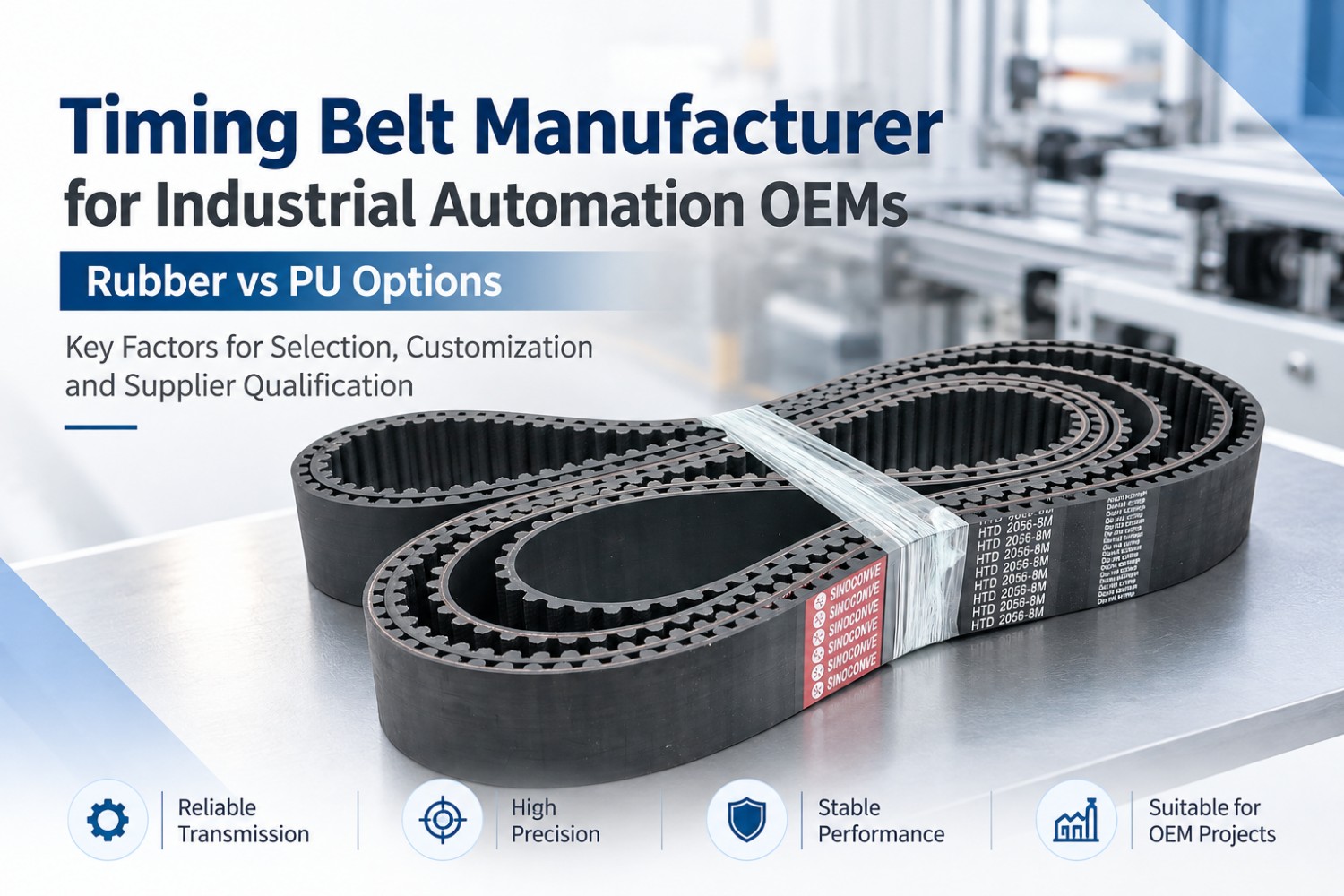
Timing Belt Manufacturer for Industrial Automation OEMs: Rubber vs PU Options

Timing Belt Manufacturer for Industrial Automation OEMs: Rubber vs PU Options

Industrial automation OEMs need more than a timing belt quotation: they need a repeatable specification that works from prototype through mass production. This guide explains how to evaluate a timing belt manufacturer, compare rubber and PU options, verify tooth and pulley compatibility, control drawings and sample approval, and define quality requirements for repeat orders. It also provides a practical RFQ framework for OEM buyers sourcing custom synchronous belts for automation machinery, packaging systems, indexing equipment and other precision drives.

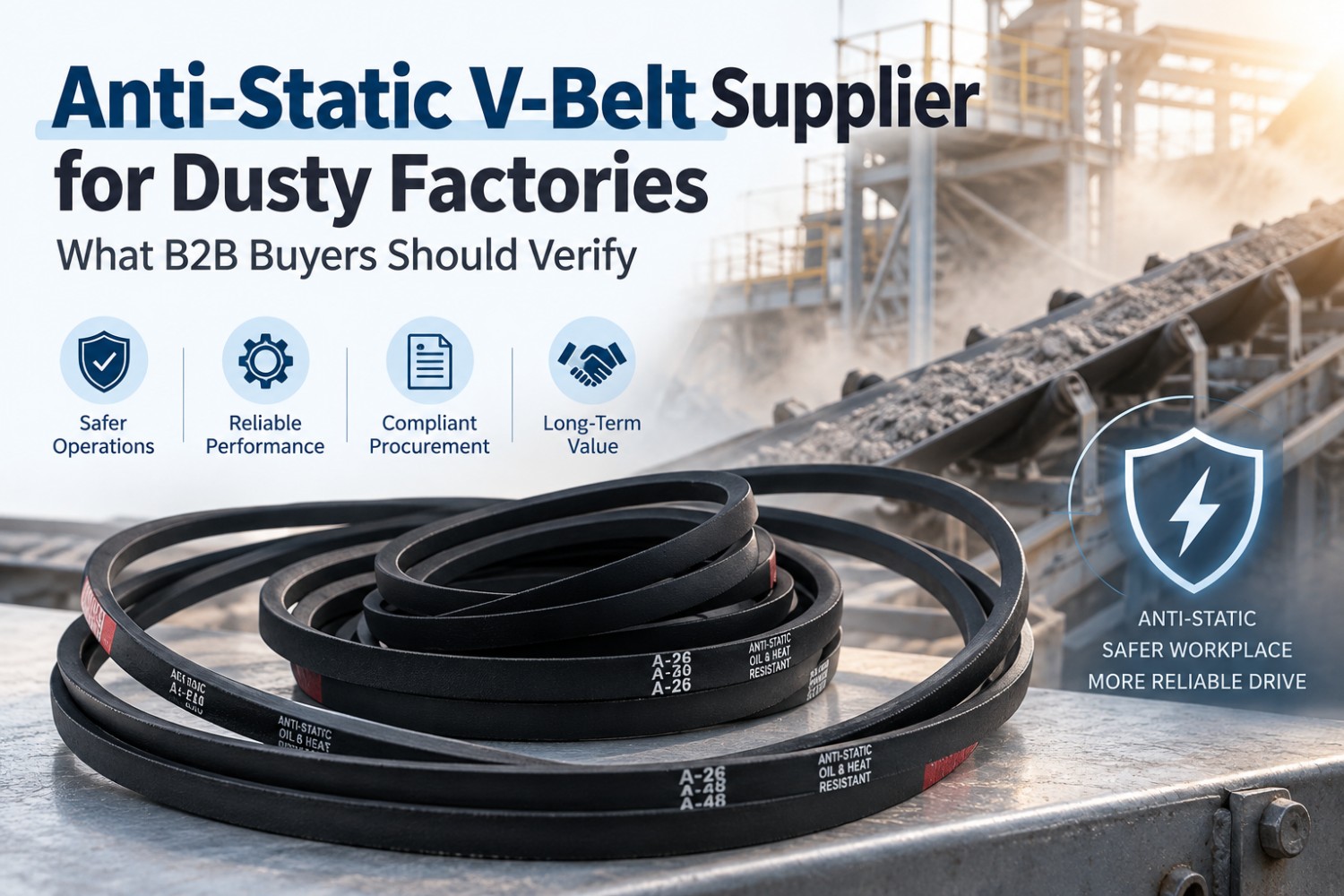
Anti-Static V-Belt Supplier for Dusty Factories: What B2B Buyers Should Verify

Anti-Static V-Belt Supplier for Dusty Factories: What B2B Buyers Should Verify

Buying an anti-static V-belt for a dusty factory requires more than checking a catalog claim. Procurement teams need to verify the exact belt specification, applicable electrical-conductivity requirement, test method, documentation, traceability and supplier production controls. This guide explains how B2B buyers can qualify an anti-static V-belt supplier, evaluate ISO 1813-related evidence, avoid common RFQ mistakes, manage sample approval and prepare the technical and commercial information needed for a more reliable bulk-order decision.


V-belt Ultimate Guide (2026): Profiles, Sizes and How to Choose

V-belt Ultimate Guide (2026): Profiles, Sizes and How to Choose

Most V-belt failures start with the wrong section, not a bad belt. This guide explains how a V-belt actually transmits torque through the pulley groove, then gives the section table you need — A/B/C/D/E alongside SPZ, SPA, SPB and SPC, with top width, pitch width and height — and why the belt section has to match the groove it runs in. It includes a full worked selection example: design power from a 30 kW motor at 1,470 rpm with a 1.5 service factor, section choice, datum length, number of belts and belt speed check. We also cover what to do when grooves are worn, when to specify cogged, wrapped or raw-edge belts, the difference between industrial and agricultural duty, and where multi-ribbed PK belts take over. A transmission belt manufacturer's view on installation, tensioning, maintenance intervals and the failure modes we see in the field, plus MOQ, lead time and how to get comparable quotations.

Chevron Conveyor Belt Ultimate Guide (2026): Types, Grades and How to Choose

Chevron Conveyor Belt Ultimate Guide (2026): Types, Grades and How to Choose

Chevron conveyor belts only pay off when the incline genuinely exceeds what a flat belt can hold — and choosing the pattern is where most projects go wrong. This guide sets out the decision in order: confirm the real incline after the chute and skirt modifications, then match cleat height and pattern spacing to material size and angle, then check width, carcass and cover grade. It includes a pattern table covering C5, C10 and C15 cleats with cleat width, pitch and height, an incline-to-pattern matrix, and a comparison of chevron, T-cleat and herringbone profiles. We also cover chevron versus corrugated sidewall belts, port and bulk terminal duties, how to splice a profiled belt so the cleats realign, carryback and spillage control, and the selection checklist we use before quoting. Written by a conveyor belt manufacturer that supplies profiled belts into quarry, port and aggregate operations, with MOQ and lead time guidance.

PU Timing Belt Supplier for Packaging, Robotics and Linear Motion Systems
SINOCONVE
Sep 08, 2026

PU Timing Belt Supplier for Packaging, Robotics and Linear Motion Systems

Selecting a PU timing belt supplier for packaging, robotics or linear motion systems requires more than comparing belt price and delivery. OEM buyers need to verify tooth and pulley compatibility, tensile-member construction, working surfaces, motion conditions, sample approval and batch consistency. This guide explains how to qualify polyurethane timing belts technically and commercially, what information belongs in an RFQ, which supplier red flags deserve attention, and how to move from prototype validation to repeatable bulk sourcing.

Rubber Timing Belt Wholesale Guide for Industrial Distributors and MRO Suppliers
SINOCONVE
Sep 08, 2026

Rubber Timing Belt Wholesale Guide for Industrial Distributors and MRO Suppliers

Wholesale timing belt purchasing requires more than comparing unit prices. Industrial distributors and MRO suppliers need to control tooth profile, dimensions, pulley compatibility, sample approval, batch consistency, MOQ, private labeling, QC documentation and repeat-order identification. This guide explains how to prepare a technically comparable rubber timing belt RFQ, evaluate supplier capability, manage multi-SKU inventory risk and verify the commercial details that matter before moving from samples to bulk orders.

Timing Belt Manufacturer for Industrial Automation OEMs: Rubber vs PU Options
SINOCONVE
Sep 08, 2026

Timing Belt Manufacturer for Industrial Automation OEMs: Rubber vs PU Options

Industrial automation OEMs need more than a timing belt quotation: they need a repeatable specification that works from prototype through mass production. This guide explains how to evaluate a timing belt manufacturer, compare rubber and PU options, verify tooth and pulley compatibility, control drawings and sample approval, and define quality requirements for repeat orders. It also provides a practical RFQ framework for OEM buyers sourcing custom synchronous belts for automation machinery, packaging systems, indexing equipment and other precision drives.

Anti-Static V-Belt Supplier for Dusty Factories: What B2B Buyers Should Verify
SINOCONVE
Sep 07, 2026

Anti-Static V-Belt Supplier for Dusty Factories: What B2B Buyers Should Verify

Buying an anti-static V-belt for a dusty factory requires more than checking a catalog claim. Procurement teams need to verify the exact belt specification, applicable electrical-conductivity requirement, test method, documentation, traceability and supplier production controls. This guide explains how B2B buyers can qualify an anti-static V-belt supplier, evaluate ISO 1813-related evidence, avoid common RFQ mistakes, manage sample approval and prepare the technical and commercial information needed for a more reliable bulk-order decision.
Explore more

We are committed to providing you with better products and services. Welcome to browse more content for details