When a drive system fails, the belt is usually the first thing that gets replaced and the last thing that gets specified correctly. Multi-ribbed belts — poly-V belts — are particularly prone to this problem because two belts can look nearly identical externally while performing very differently under load.
PH and PK are the two ribbed belt types that come up most frequently in light industrial, medical, office automation, and automotive drive applications. They are not interchangeable. The rib pitch, load capacity, and flexibility characteristics put them in separate categories — and using one where the other is specified is a reliable way to produce early belt failure or drive system noise.
This guide covers what separates the two types, where each is used, and what to check before specifying a ribbed belt for a new or replacement application.
01What Is a Ribbed Belt?
A ribbed belt — also called a multi-ribbed belt or poly-V belt — runs longitudinal ribs along its inner surface. Those ribs mesh with matching grooves on the pulley, which is what gives the belt its grip and prevents slippage under load. The load is distributed across all ribs simultaneously, which allows a narrower belt to transmit more power than a traditional V-belt of the same width.
The practical consequence is that ribbed belts work well in compact layouts and at high speeds where a V-belt would need to be either much wider or run at lower speeds to maintain grip. Belt drive systems based on ribbed belts are standard in applications where both compactness and efficient power transfer matter: small motors, automotive accessory drives, HVAC blowers, and precision equipment.

02PH Belt: Specifications and Applications
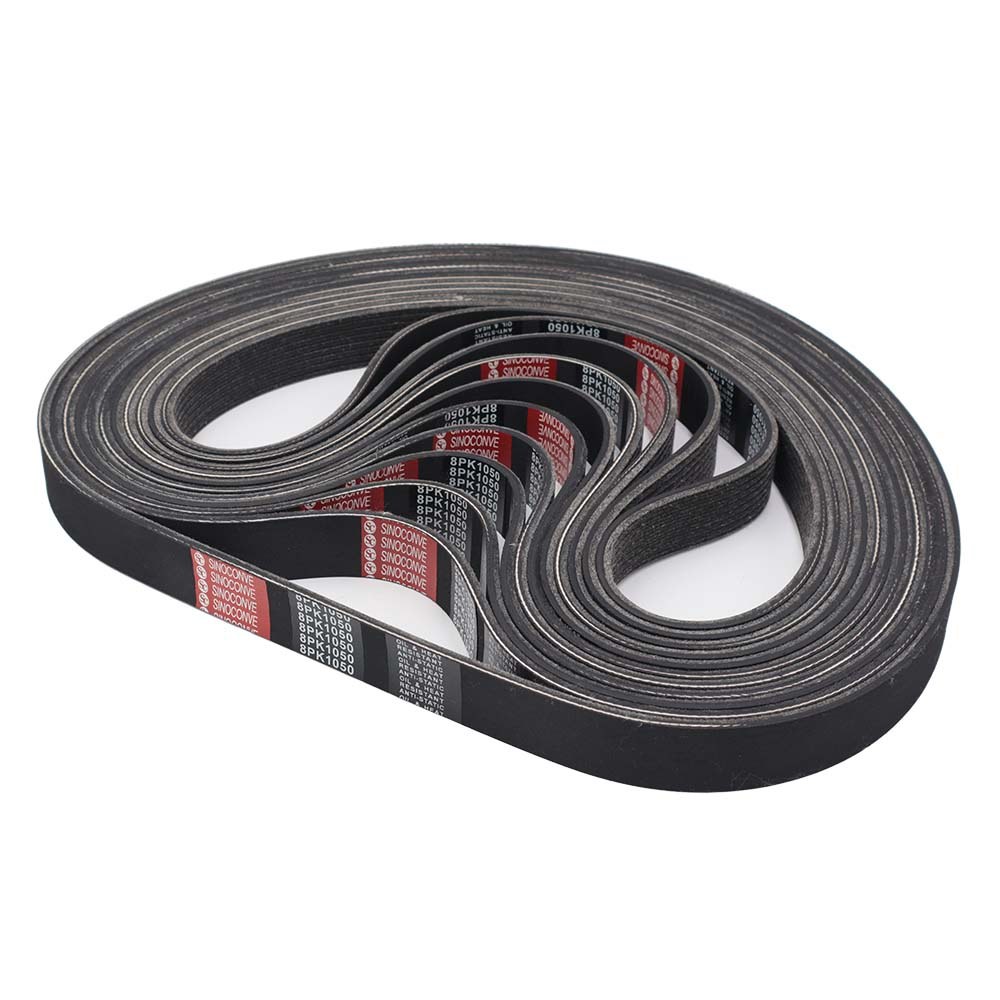
PH belts run a 1.6 mm rib pitch — the narrowest in common industrial use. That small pitch produces a very flexible belt that wraps easily around small-diameter pulleys and runs quietly at high rotational speeds. The trade-off is load capacity: PH belts are light-duty by design.
Where PH belts are the right choice is anywhere the drive is fast, the torque is low, and noise matters. Laboratory centrifuges, diagnostic equipment, and dental chairs use PH belts because the operating environment demands quiet running and the loads are not high. Office automation equipment — copiers, printers, scanners, laminators — has used PH belts as a drive belt for motors for the same reasons: compact geometry, low noise, and minimal vibration.
3D printers, pick-and-place robotic arms, and small linear actuators are newer applications where PH belt construction suits the requirement: high speed, low torque, precise positioning, and minimal backlash. In these systems, the belt is part of the motion control architecture, not just a power transmission element.
As a PH belt supplier, Sinoconve produces PH belts to standard pitch geometry with anti-static and FDA-grade compound options for cleanroom and medical equipment applications.
03PK Belt: Specifications and Applications
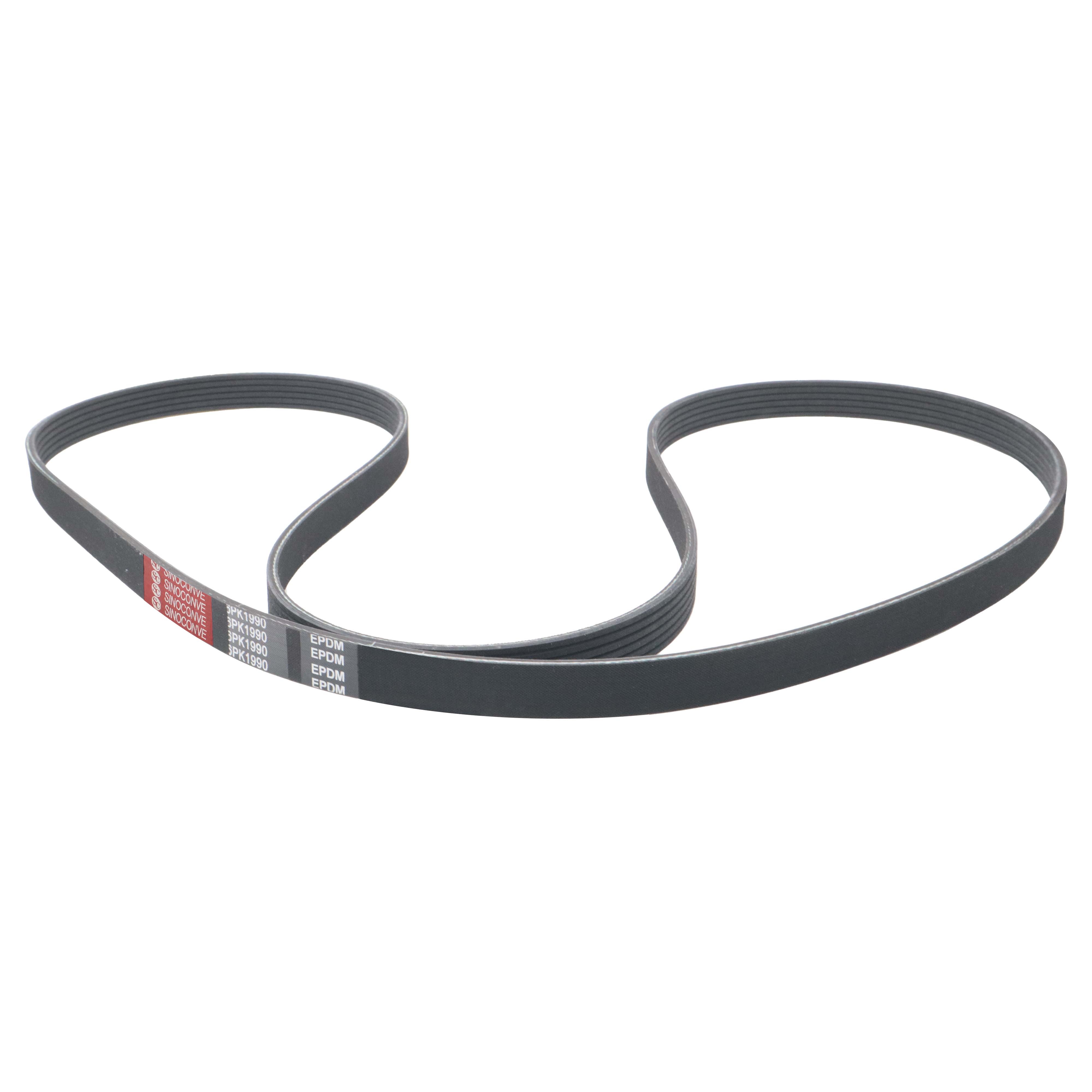
PK belts run a 3.56 mm rib pitch — more than double the PH. The wider pitch means deeper ribs, larger contact area on the pulley, and significantly higher load capacity. PK belts are medium to heavy-duty, and their most visible application is the automotive serpentine drive: a single PK belt looping around the crankshaft pulley to drive the alternator, power steering pump, water pump, AC compressor, and cooling fan simultaneously.
That application illustrates what PK construction is optimized for: sustained torque transfer, dynamic tension variation as each driven accessory changes load, thermal cycling in an engine bay environment, and long service intervals without adjustment. EPDM compound — standard in automotive-grade PK belts — handles the heat and oil exposure that would degrade standard rubber.
Industrial belt drive systems using PK belts include HVAC blowers and air handling units, agricultural harvesting and irrigation equipment, construction machinery drives, and high-speed packaging and food processing lines. In these applications, the belt runs continuously under meaningful load, and replacement is disruptive enough that service life and resistance to fatigue matter more than purchase price.
Common PK belt configurations — 4PK, 6PK, 9PK — indicate the number of ribs. More ribs means wider belt and higher power capacity. Specifying the correct rib count for the drive is as important as specifying the correct pitch.
04PH vs PK: Direct Comparison
|
Feature |
PH Belt |
PK Belt |
|
Rib Pitch |
1.6 mm |
3.56 mm |
|
Load Capacity |
Light-duty |
Medium to heavy-duty |
|
Flexibility |
Very high — suits small pulleys |
Moderate |
|
Operating Speed |
High |
High |
|
Noise Level |
Ultra-quiet |
Low |
|
Typical Use |
Medical, office automation, robotics, 3D printers |
Automotive, HVAC, agricultural, packaging machinery |
|
Compound Options |
Anti-static, FDA-grade available |
EPDM, CR, oil- and heat-resistant |
05Five Factors That Determine Which Belt to Specify
1. Torque load and power demand
Low-torque, high-speed drive? PH. Medium to high torque — engine accessories, compressors, industrial fans? PK. Over-specifying wastes cost and may affect belt flexibility around small pulleys. Under-specifying causes slippage, noise, and early failure.
2. Pulley compatibility
Rib pitch and rib count must match the pulley groove specification exactly. A PH belt cannot run on a PK pulley and vice versa. For multi-ribbed belt drive systems, confirm groove depth and pulley material — steel, aluminum, and plastic pulleys have different dimensional tolerances that affect fit. If retrofitting from flat belts, the pulleys likely need re-machining.
3. Operating environment
Engine bay, commercial kitchen, or outdoor installation: use PK with EPDM or CR compound for heat and oil resistance. Cleanroom, medical, or food contact: PH with FDA-grade or anti-static compound. Dusty outdoor conditions: confirm whether a closed-flank design is available for the pitch you need.
4. Space and layout
Tight center distances and small pulley diameters favor PH construction. Serpentine routing through multiple pulleys needs consistent tension across all contact points — confirm belt flexibility suits the routing geometry before finalizing the layout.
5. Duty cycle and replacement access
Continuous-duty systems — HVAC, 24-hour packaging lines — need belts with certified fatigue resistance and low elongation. If the system is accessed frequently for replacement (rental equipment, R&D rigs), standard pitch and length belts are easier to source in the field than custom specifications.
06Common Specification Mistakes
Selecting by length and width alone without confirming rib pitch is probably the most common mistake. Two belts with the same external dimensions can have different rib profiles entirely.
Assuming compound grade from visual appearance is another. A black ribbed belt from one supplier may be standard rubber; the same color from another may be EPDM. In environments with heat or oil exposure, that difference shows up in months rather than years.
Treating rib count as adjustable is a third issue. Running a 6PK belt on a system designed for 4PK changes the belt tension distribution and can overload the pulley flanges. The rib count in the part number is a design specification, not a range.
07Sinoconve Ribbed Belt Range
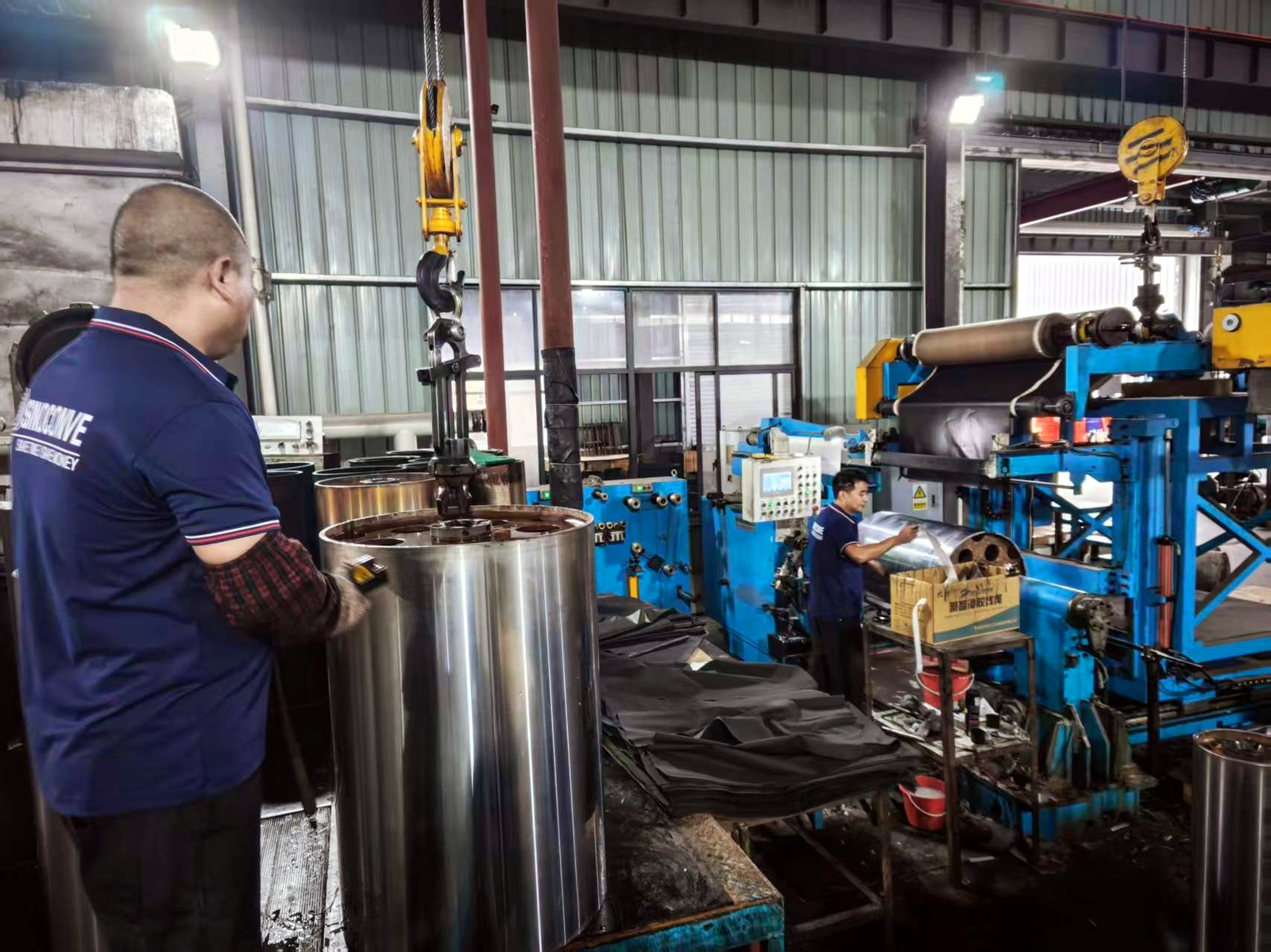
Ningbo Sinoconve Belt Co., Ltd. manufactures PH, PJ, PK, and PL series ribbed belts to international pitch and rib geometry standards. As both a PH belt supplier and PK belt manufacturer, the company offers standard and custom configurations covering belt length, rib count, compound grade, and surface treatment.
Available options include wear-resistant, anti-static, oil-resistant, and FDA-grade compounds. OEM and ODM production is available for appliance, automotive, and industrial equipment brands. All belts are tension-tested and fatigue-tested in-house before shipment.
For drive belt for motors in medical equipment, office automation, or precision robotics: PH series. For automotive serpentine drives, HVAC blowers, agricultural machinery, and industrial belt drive systems under sustained load: PK series. Contact Sinoconve's technical team through the company homepage for application-specific recommendations.
📩 Contact our technical team via the Sinoconve homepage or contact us directly for tailored belt solutions.

Products You May Need
| V-Belt Wrapped, cogged and banded V-belts for industrial drives. |
Timing Belt Synchronous belts for precision drives. |
| Rubber Conveyor Belt Multi-ply fabric belting for bulk handling. |
EP Rubber Conveyor Belt EP carcass belts for abrasive duties. |
| Full Product Catalog Browse the complete SINOCONVE range. |
Contact Us Send your drive data for a factory-direct quote. |
Related Blog Posts
- Automotive PK Belt: What Buyers Should Know Before Choosing One
- PK Belt vs PJ Belt: How to Choose the Right Ribbed Transmission Belt
- Transmission Belt Guide: Choosing and Maintaining a V Belt
- V-Belt Buying Guide: Profiles, Lengths and Application
- Car Transmission Belt Evolution: SINOCONVE 6PK1735
- How Importers Can Reduce Supply Risk When Choosing an Industrial Belt Supplier