
A Transmission Belt does not usually attract attention while the drive is healthy. It becomes interesting only after the machine starts telling on itself: belt dust under the guard, a hot sheave, squeal at start-up, vibration after a load change, or output speed that no longer follows the motor. At that point, replacing the visible rubber belt may get the line running again, but it may not solve the cause.
For maintenance engineers and sourcing teams, the useful question is not just which V belt fits the pulley today. It is whether the belt section, rubber compound, cord reinforcement, pulley groove, tension method, and working environment agree with each other. When they do, the drive stays quiet. When they do not, the same failure comes back as a routine spare-part problem.
This guide is written for buyers, maintenance teams, and equipment builders who already know what a V belt is, but want a more technical way to choose, inspect, and maintain a drive belt in industrial service.
What a V Belt Really Controls in a Drive
A V belt transmits torque by friction, but the wedge shape changes the way that friction works. As the belt enters the sheave groove, side contact builds grip. The belt should sit low enough to engage the groove properly, but not so low that the bottom of the belt carries the load. Bottoming out reduces side pressure, creates heat, and often gets misread as poor belt quality.
A Transmission Belt also acts as a small shock absorber between the driver and driven component. On fans, pumps, compressors, agricultural machinery, and workshop equipment, that elasticity can protect the drive from abrupt load changes. The same elasticity becomes a weakness if the belt is undersized, over-tensioned, contaminated with oil, or forced around a pulley that does not match its section.
For this reason, V belt selection is part of drive design, not just replacement purchasing. A belt code is the starting point; the sheave condition and duty cycle decide whether the replacement will last.
Where Selection Usually Goes Wrong
The first mistake is buying from the marking alone. A printed code on the old rubber belt is useful, especially for common sizes, but markings wear off, replacements may have been wrong before, and pulleys may have changed during equipment repair.
The second mistake is using tension as a cure for every slip problem. A slipping drive may need more tension, but it may also have polished sheaves, oil contamination, mismatched belts, weak wrap angle, or pulley misalignment. Tightening the belt can quiet the noise for a short period while transferring the damage to bearings and shafts.
The third mistake appears in multi-belt drives. Replacing only one belt in a matched set changes load sharing. The newest belt often carries more load than the others, then overheats or stretches unevenly. In production plants, this looks like a cheap repair. In service records, it usually becomes repeat maintenance.
Selection Factors That Matter Before Ordering
|
Selection point |
What to check |
Why it matters in service |
|
Belt section |
A, B, C, SPZ, SPA, SPB, SPC, or OEM profile |
Wrong section changes groove contact and heat generation |
|
Effective length |
Match old code with machine manual when possible |
Too short overloads bearings; too long forces poor tension range |
|
Sheave groove |
Wear, polish, rust, groove angle, bottoming marks |
A new V belt cannot run correctly in a damaged groove |
|
Drive load |
Steady fan load, shock load, start-stop cycle, compressor load |
Duty cycle affects belt construction and tension stability |
|
Environment |
Heat, oil mist, dust, outdoor moisture, cleaning chemicals |
A rubber belt fails faster when the compound does not fit the surroundings |
|
Maintenance access |
Easy guard removal, limited adjustment space, spare availability |
Hard-to-access drives need more conservative belt choice |
Rubber Belt Construction: What Buyers Should Ask
A rubber belt is not just molded rubber. In an industrial V belt, the rubber compound, fabric cover, tensile cord, and bonding layer all affect service life. The cover protects the belt from abrasion and pulley contact. The cord carries the tensile load. The rubber body controls flexibility and heat behavior.
If the supplier only confirms the outside size but not the construction style, the purchasing team still has an information gap. Wrapped belts, raw-edge belts, cogged belts, and banded belts can all be called V belts in casual discussion, but they do not behave the same under heat, bending, and shock.
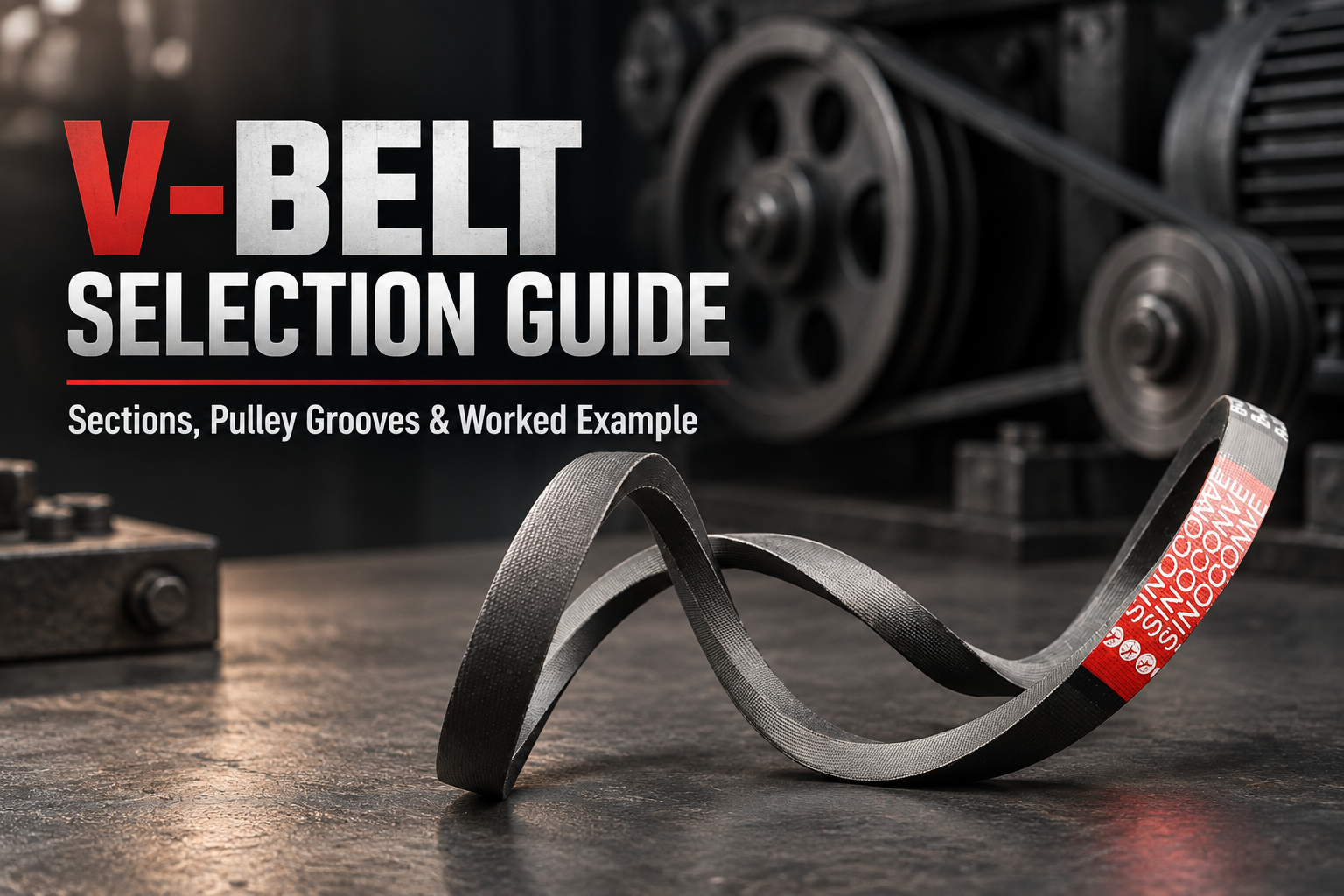
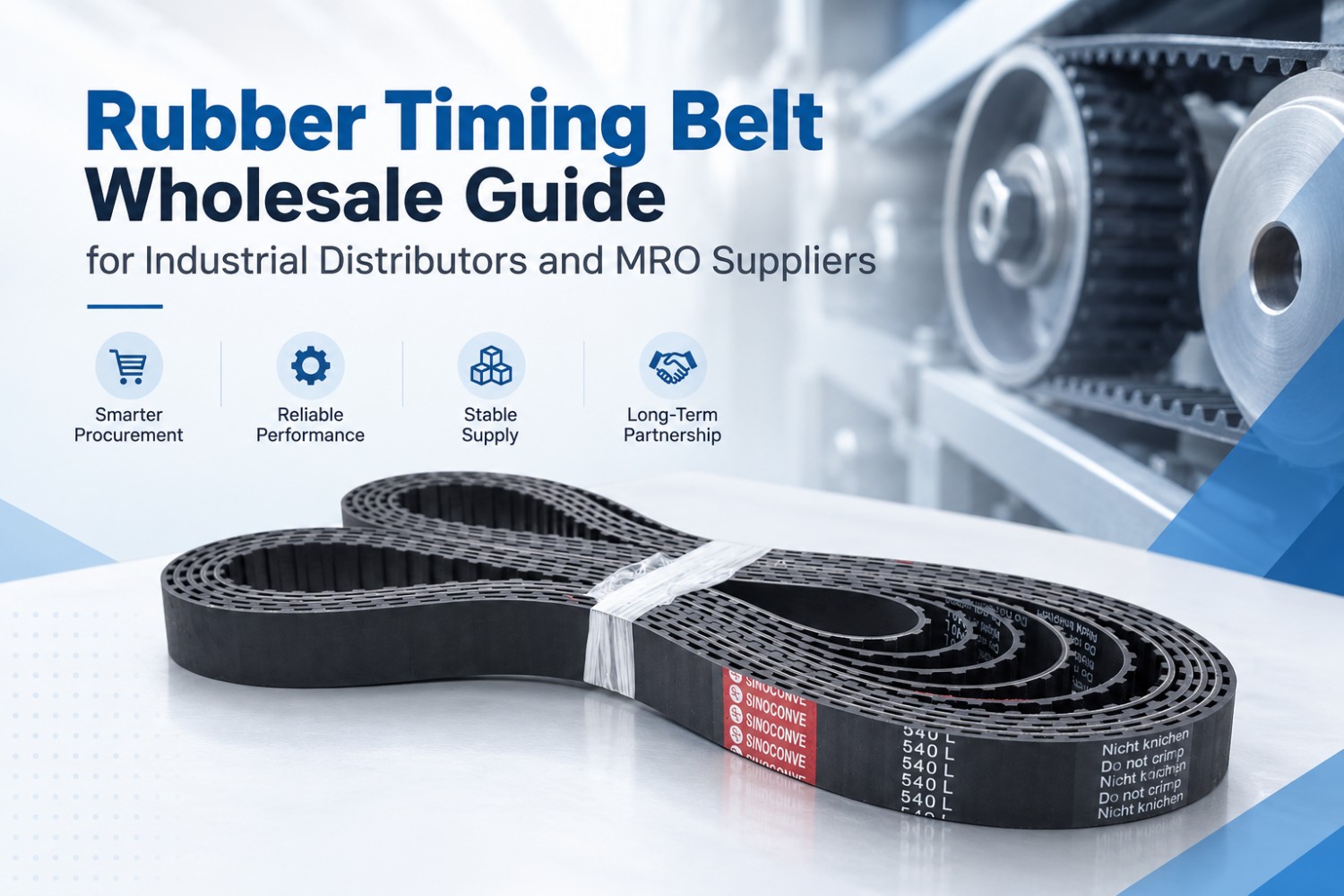
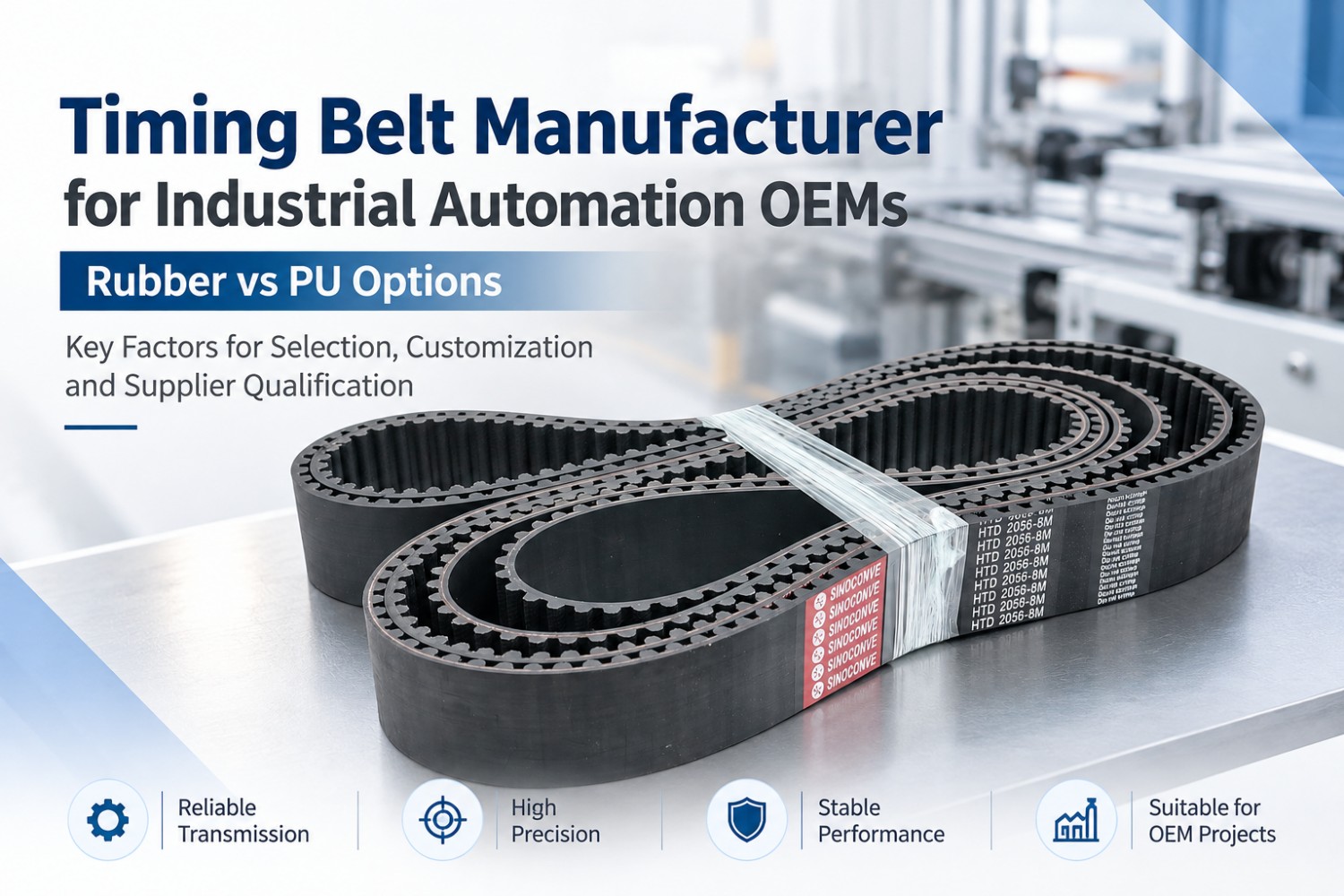
SINOCONVE supplies transmission belt products for industrial and agricultural drive systems, including rubber V belts and related drive belt options. For repeat orders, the fastest path is usually to provide the printed belt code, old belt photos, pulley photos, quantity, and working conditions. That supports the company principle of Save Time, Save Money: fewer wrong samples, less back-and-forth confirmation, and fewer early failures caused by mismatched belts.
How to Maintain a V Belt Without Guesswork
To maintain a belt properly, start with observation rather than adjustment. Remove the guard, look at the belt sidewalls, check for glazing, inspect the groove contact pattern, and look for rubber dust around the base of the drive. Dust usually means friction somewhere. Glazing usually means heat. Cracking can come from age, small pulley diameter, chemical exposure, or wrong storage conditions.
Tension should be checked after installation and again after initial running, especially where the drive sees high starts or changing load. The correct value depends on the drive design, so the machine manual or supplier guidance should override guesswork. A belt that feels tight by hand may still be wrong; hand feel is not a tension method.
To maintain spares, store belts away from direct sunlight, ozone sources, solvents, and high heat. Do not hang heavy belts on narrow hooks for long periods. Deformed storage can create a problem before the belt ever reaches the machine.
Failure Signs and What They Usually Point To
|
Observed symptom |
Likely area to inspect |
Practical note |
|
Squeal at start-up |
Tension, overload, contamination |
Do not tighten before checking pulley condition |
|
Glazed sidewalls |
Heat, slip, worn sheave groove |
Often appears after repeated micro-slip |
|
Frayed edge |
Misalignment, damaged guard, tracking contact |
Edge damage is not normal running wear |
|
Rubber dust near drive |
Slip, groove mismatch, over-tension |
Dust location often tells where contact is wrong |
|
Cracks across belt |
Age, heat, small pulley, ozone exposure |
Check storage and pulley diameter before blaming only the belt |
|
Different wear in multi-belt set |
Uneven tension, mixed belt age, non-matched belts |
Replace as a set where the drive requires matched belts |
When a Standard V Belt Is Not Enough
A standard wrapped V belt remains useful on many general drives: fans, small pumps, workshop machinery, light conveyors, and agricultural equipment with moderate load. The moment the drive uses smaller pulleys, higher speed, higher temperature, frequent starts, or compact layout, other belt constructions may be worth considering.
Cogged or raw-edge belts can bend more easily around smaller pulleys and may run cooler in some layouts. Banded belts help where vibration or belt whip affects multi-belt drives. Narrow wedge belts may carry higher power in compact spaces when the pulley system is designed for them. The important point is simple: the machine decides the belt, not the catalog photo.
Replacement Information Worth Sending to a Supplier
|
Information |
Why it helps |
|
Old belt code and clear photos |
Confirms section and length when marking is readable |
|
Machine model or drive drawing |
Helps identify whether the drive is standard or modified |
|
Pulley/sheave photos |
Shows groove wear, alignment clues, and possible bottoming |
|
Operating load and start frequency |
Separates steady-duty drives from shock-loaded systems |
|
Environment description |
Heat, oil, dust, moisture, outdoor storage, chemical exposure |
|
Quantity, packaging, and spare plan |
Useful for distributors, OEM buyers, and maintenance stock |
FAQ
Is a V belt a Transmission Belt?
Yes. A V belt is one of the common transmission belt types used for pulley-based power transfer. The broader category also includes flat belts, timing belts, multi-ribbed belts, and other drive designs.
Can the same rubber belt marking be used for every replacement?
The marking is helpful, but it should be checked against the pulley section, machine manual, and drive condition. A previous replacement may already have been wrong.
How do I maintain a V belt in a critical drive?
Keep the drive clean, inspect sidewalls and grooves, confirm alignment, check tension after run-in, and replace matched sets together when the drive requires it.
Why does a new belt fail quickly?
Common causes include worn sheaves, wrong belt section, oil contamination, excessive tension, poor alignment, too-small pulleys, or a belt construction that does not fit the duty cycle.
Practical Closing Note
A Transmission Belt is a small purchase compared with the machine around it, but it can decide whether that machine runs cleanly or keeps asking for attention. For industrial buyers, the right V belt is not simply the one with the lowest unit price. It is the rubber belt that fits the sheave, load, speed, environment, and maintenance plan.
Before ordering, confirm the belt code, check the drive condition, and send enough application detail to the supplier. That approach is slower than guessing for about five minutes, then faster for the rest of the order cycle.